
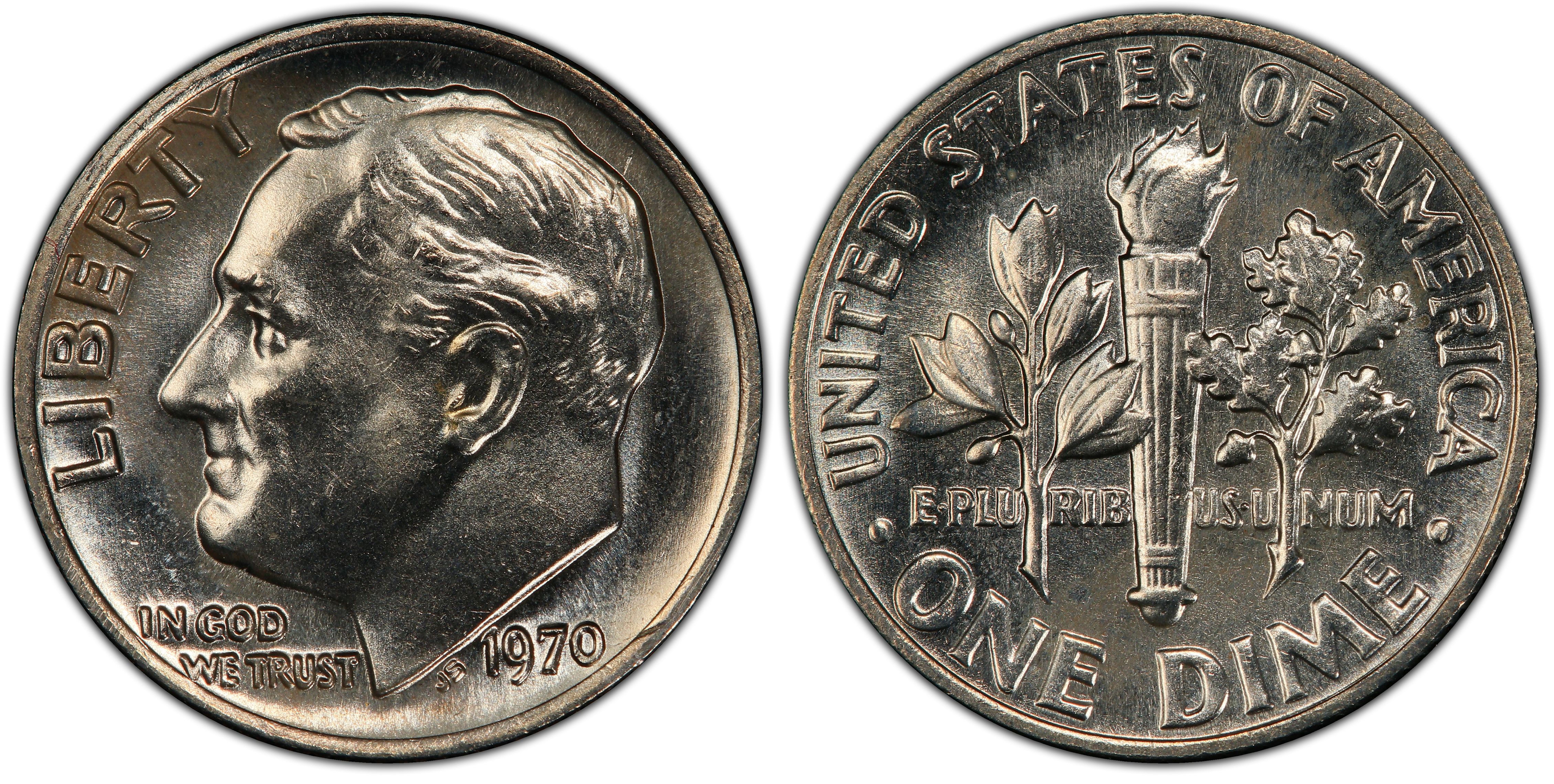
PCGS MS66FB

PCGS MS65FB
- PCGS #:
- 85137
- Designer:
- John R. Sinnock
- Edge:
- Reeded
- Diameter:
- 17.90 millimeters
- Weight:
- 2.27 grams
- Mintage:
- 345,570,000
- Mint:
- Philadelphia
- Metal:
- 75% Copper, 25% Nickel over a pure Copper center
- Auction Record:
- $2,295 • MS66FB • 08-07-2018 • eBay
Rarity and Survival Estimates Learn More
| Survival Estimate | |
|---|---|
| All Grades | 691,140 |
| 60 or Better | 691,140 |
| 65 or Better | 6,911 |
| Numismatic Rarity | |
|---|---|
| All Grades | R-1.4 |
| 60 or Better | R-1.4 |
| 65 or Better | R-3.6 |
| Relative Rarity By Type All Specs in this Type | |
|---|---|
| All Grades | 6 / 45 TIE |
| 60 or Better | 6 / 45 TIE |
| 65 or Better | 8 / 45 |
| Relative Rarity By Series All Specs in this Series | |
|---|---|
| All Grades | 6 / 45 TIE |
| 60 or Better | 6 / 45 TIE |
| 65 or Better | 8 / 45 |
Condition Census What Is This?
|
#1 PCGS MS66FB
Brilliant, save for a thin layer of scattered, faint russet toning. |
|
#2 PCGS MS65FB
"The Erasmus Hall Registry Set of Roosevelt Dimes," GreatCollections, January 23, 2022, Lot 1095154 - $1,065.38; "The Old North State Collection" (PCGS Set Registry). Brilliant. |
|
#2 PCGS MS65FB
"The Halcyon Collection" (PCGS Set Registry). A faint hint of butterscotch toning washes over the obverse, which is otherwise brilliant save for a circular red spot below the bust truncation. |
|
#2 PCGS MS65FB
"The BLT Roosevelt Dime Collection" (PCGS Set Registry). |
| #5 PCGS MS64FB |
The 1970-P Roosevelt Dime is very common in most grades. Examples in circulated grades up to about MS65 condition can be found in circulation. Only in MS66 condition does it become somewhat scarce. In MS67 it is very difficult with very few known examples. With Full Bands it is scarce in any condition as the coins had poor details struck on the reverse bands for this issue. Any example displaying Full Bands is very scarce.
The 1970 Roosevelt Dime
With a mintage of 345,570,000 pieces, the 1970 Roosevelt Dime (#85137) arrived four years after the U.S. Mint ceased production of 90% silver dimes (last dated 1964, but struck through 1966). While this figure would have been staggering during the silver era, it actually represented a significant dip compared to the billion-coin mintages seen during the mid-60s "date freeze."
The year 1970 was the first full year under Mint Director Mary T. Brooks, who took office in late 1969. It was a period of logistical shifts; the Philadelphia Mint was transitioning between its third and fourth facilities, and the cooling economy had lowered the overall demand for new coinage.
The Mint was also experimenting with technology. While standard presses struck two to four dimes per stroke, a high-speed "Superpress" developed with General Motors, intended to strike 144 coins per revolution, failed to meet expectations and was shelved. Additionally, the Mint was still outsourcing its clad strip production, a process it wouldn't bring in-house until 1972.
Clad Circulation and Gresham’s Law
By 1970, Gresham’s Law, which is the economic tendency for "bad money" to drive "good money" out of circulation, had largely taken effect. Most silver coinage had been hoarded by speculators or reclaimed by the Treasury Department. While silver dimes still appeared occasionally in change, the copper-nickel clad version had become the undisputed standard. The Mint's massive production of clad coins would have drowned out the remaining silver "tenor" regardless.
Collecting the 1970 Roosevelt Dime
Today, after more than 50 years in circulation, 1970 Roosevelt Dimes still turn up occasionally in pocket change. However, most are heavily worn (VF grade or lower) and hold no premium over their 10-cent face value.
The market for uncirculated 1970 dimes is trifurcated based on condition and certification:
- Raw Uncirculated: $2. These are often pulled from the 1970 Uncirculated Mint Set. They range in quality, typically appearing dull to brilliant, and rarely possess the strike depth required for a Full Bands designation.
- PCGS Certified: Collectors seek coins that would grade PCGS MS66 or finer due to the costs of certification.
- PCGS Certified with Full Bands: With Full Bands, the 1970 business strike Roosevelt Dime is more ellusive than the famous 1970 "No S" Proof Roosevelt Dime Mint Error (#5248). The condition census with this attribution includes an example graded PCGS MS64FB.
Distinguishing the 1970 Philadelphia Dime from the 1970 "No S" Proof
Circulation-strike dimes from Philadelphia do not bear a mintmark. Beginners often confuse these common coins with the rare 1970 "No S" Proof Dime, a famous error where the San Francisco "S" mint mark was omitted from a Proof die. Unless your dime features the mirror-like surfaces and sharp relief of a Proof strike, and was originally issued within a 1970 Proof Set, the absence of a mintmark simply indicates it was struck at the Philadelphia Mint
* * *.