



Classic Head Half Eagles by die pairing Showcase Image Gallery
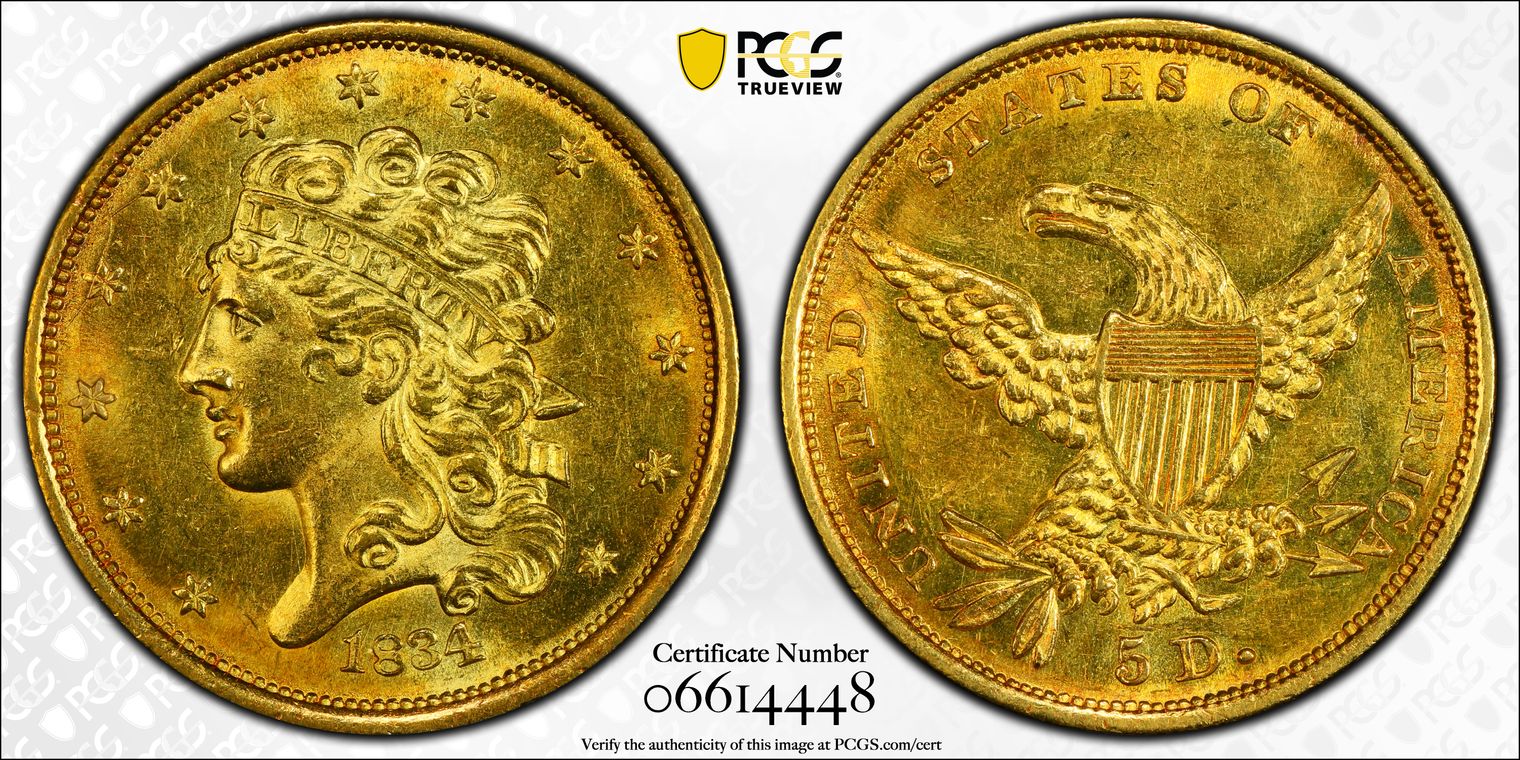
CAC, HM-1, late die state, R-3. Obverse 1: Script 8, Date with low 8 and 4; the large 4 is close to hair curl. This obverse is unique. Reverse A: Tongue, no berry, Leaf 4 over Leaf 3. This coin has an exceptional strike with booming frosty luster. It is yellow-gold with deep reddish hues at the periphery. The obverse has dramatic scallop die cracks from the rim between stars two and three, through the bottom of stars three through six to the rim. An outstanding example of a Classic Head Half Eagle. Purchased from Doug Winter in his sale of the MARK GHIORSO collection; ex: Heritage 1/2019: 5666.
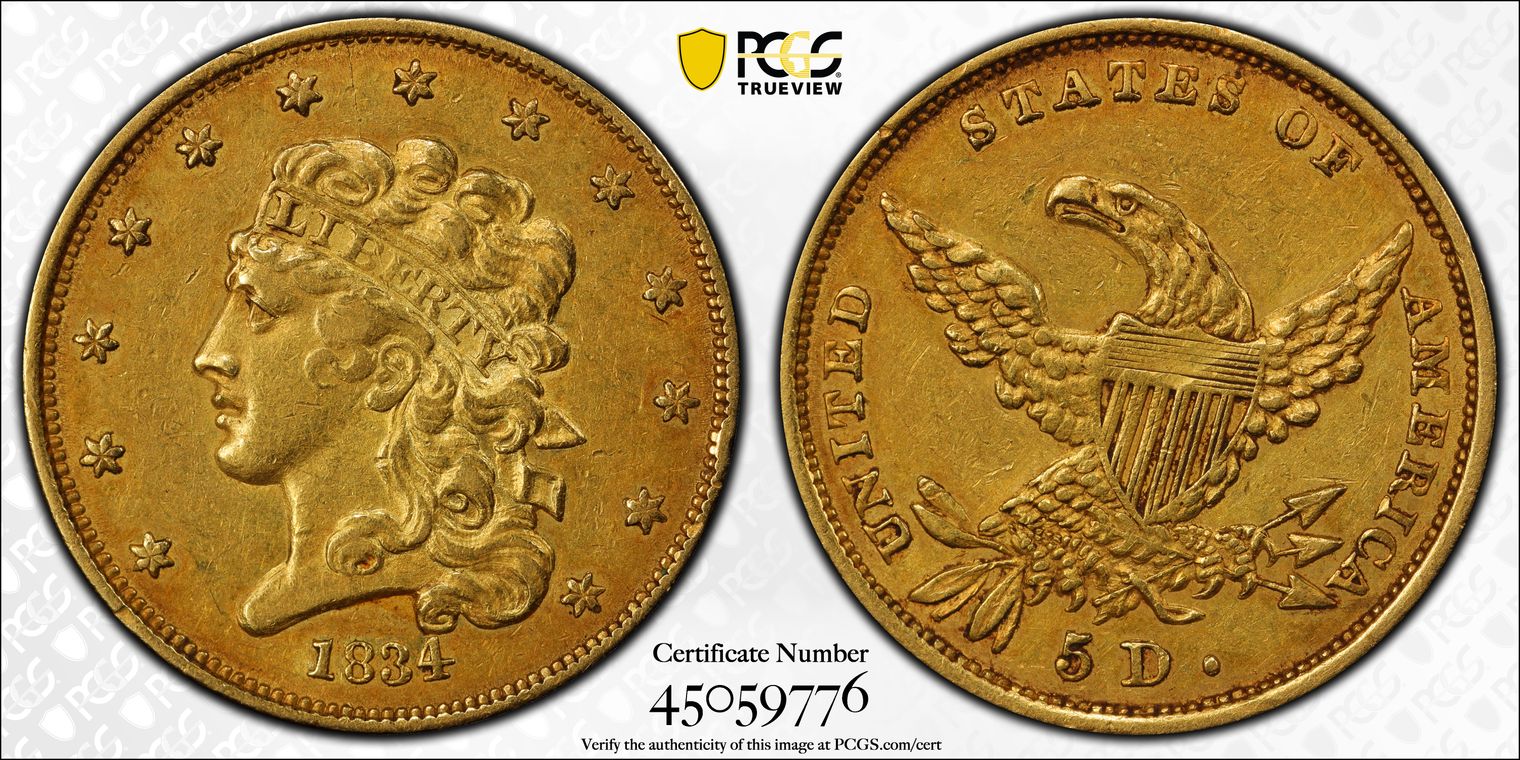
CAC, HM-2, R-4. Obverse 2: Block 8, 4 nearly touches Liberty’s lower curl; this obverse is unique. Reverse B: 5 left of arrow, middle arrow shaft missing left of the eagle’s claw. This example is russet colored with burnt-orange gold toning near the periphery. There is “dirt” in many of the design elements; the eye appeal is very strong for an AU example of this date. Like most examples of this variety, it has a die crack evident between stars six and seven. Purchased on eBay (as an NGC AU55).
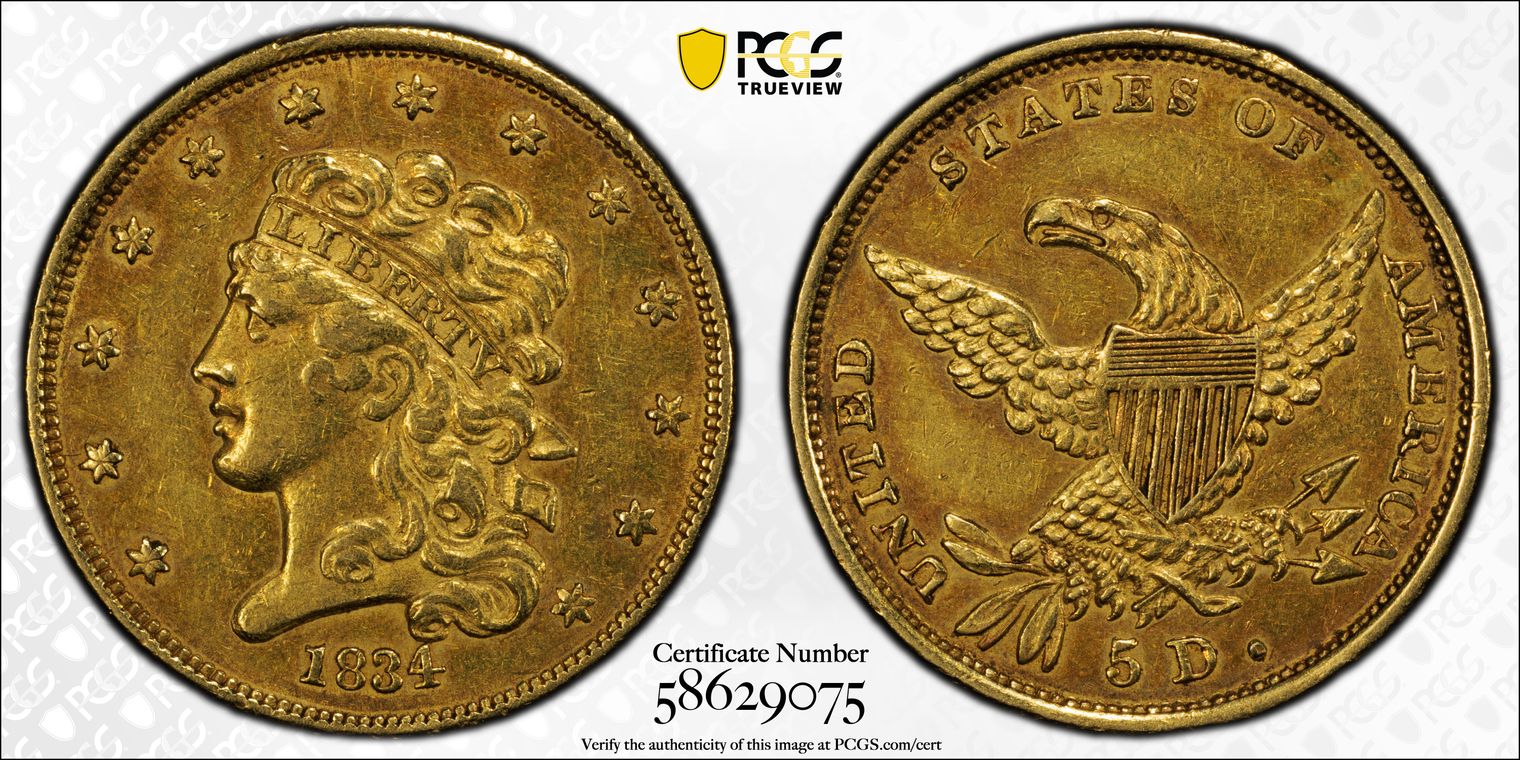
CAC, HM-2, R-4. Obverse 2: Block 8, 4 nearly touches Liberty’s lower curl; this obverse is unique. Reverse B: 5 left of arrow, middle arrow shaft missing left of the eagle’s claw. This example is russet colored with burnt-orange gold toning throughout. The eye appeal is exceptional for an AU coin. There is a die crack that starts between stars six and seven and travels between B and E. Purchased from Paul Nugget.
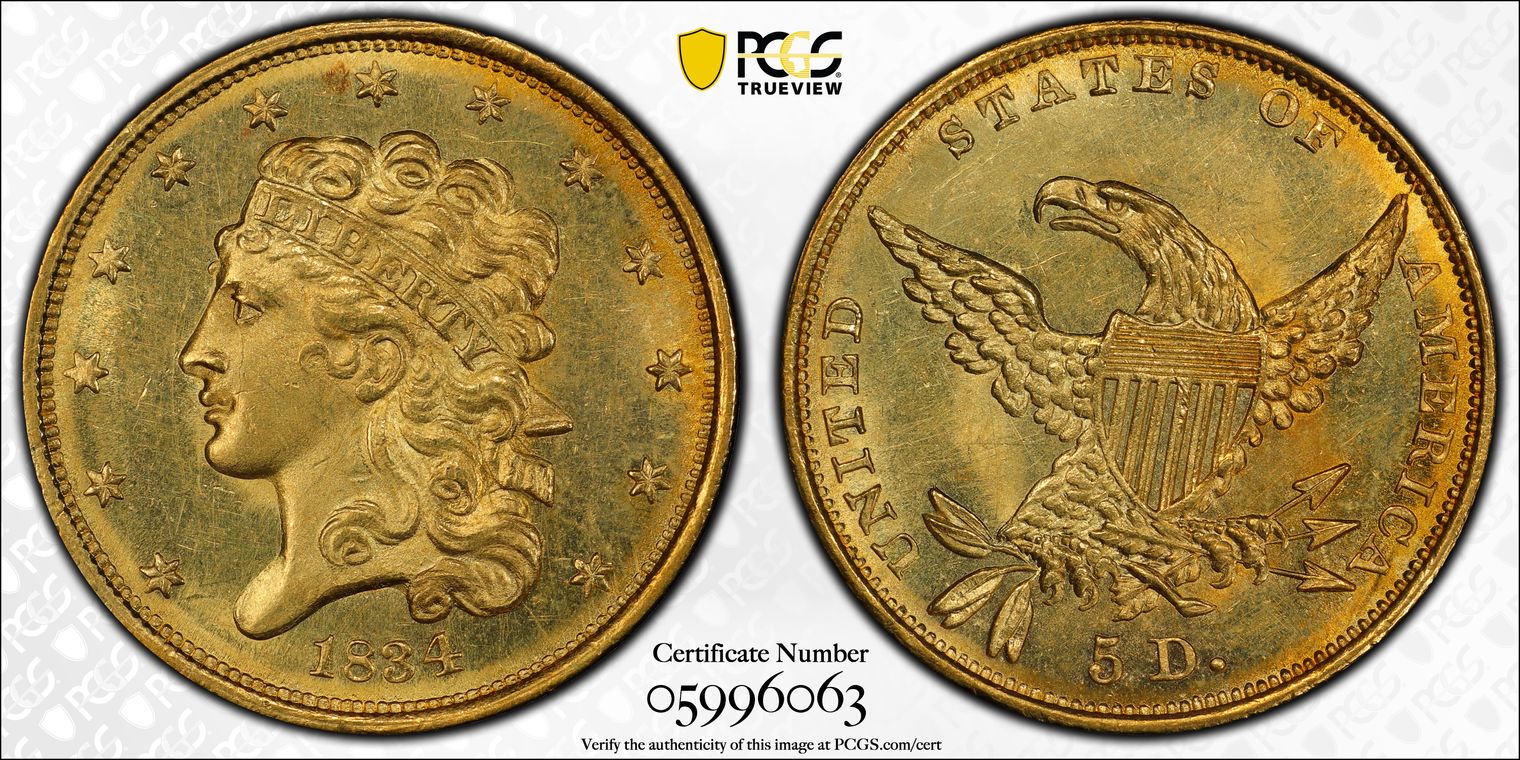
CAC, HM-3, late die state, R-2. Obverse 3: Script 8, the 3 and 4 are distant in the date. Reverse C: 5 below D in “5D”, sagging leaf 3 over 4 and no tongue. This coin has deep orange tones which adhere to the margins, while the centers are lighter yellow gold with semi reflective fields. The devices are almost fully struck, except for stars 3 and 4. Contact marks are minor. It has a die crack on the obverse from the eye to the back of the mouth. The reverse has a crack from the left wingtip to the rim and between the lower tips of the second and third arrow heads. Purchased from GreatCollections.
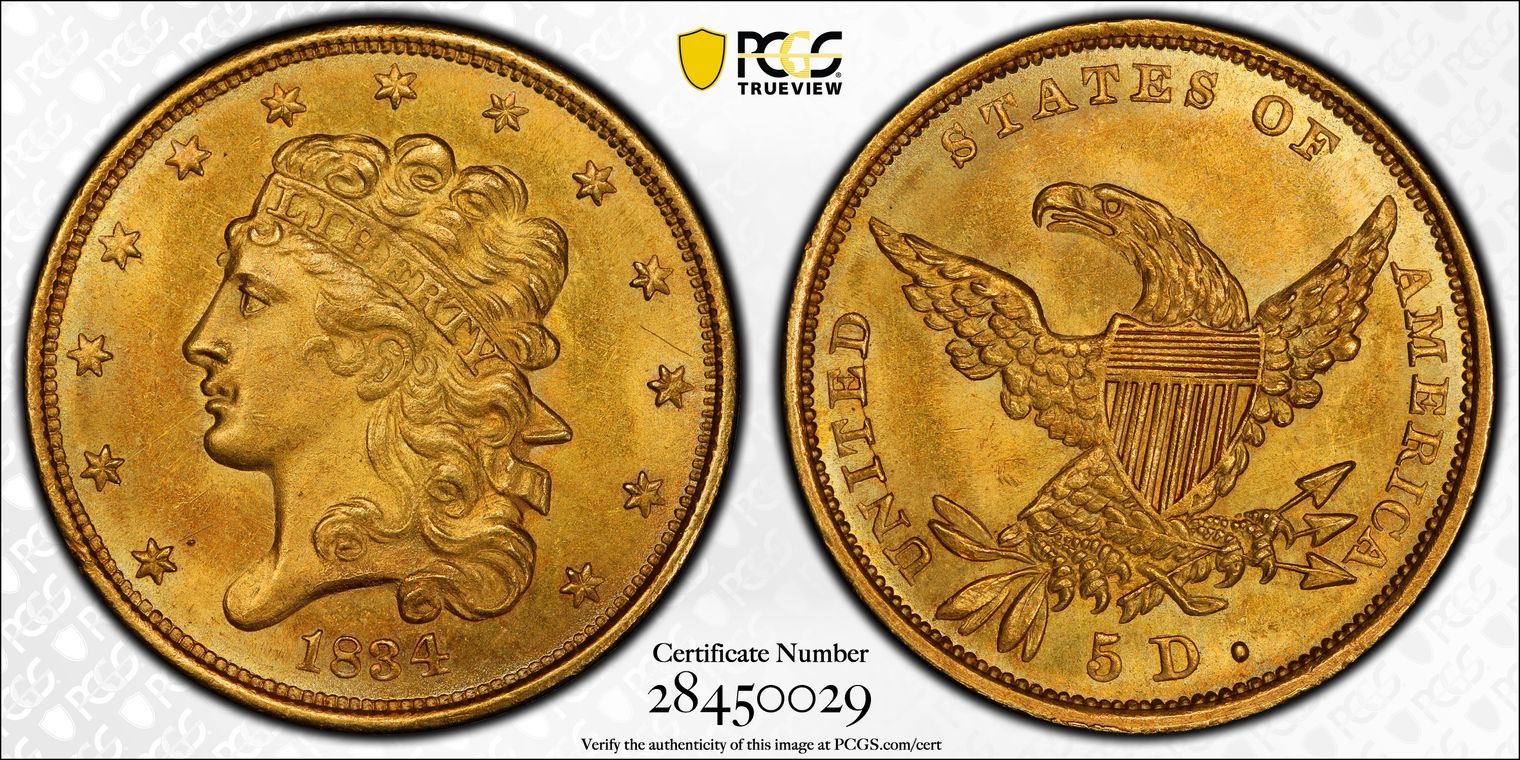
CAC, HM-4, R-5+. Obverse 3: Script 8, the 3 and 4 are distant in the date (same as HM-3). Reverse B: 5 left of arrow, middle arrow shaft missing left of the eagle’s claw (same as HM-2). This is the finest known HM-4, the rarest die pairing in 1834. It is over four times scarcer than the Crosslet 4. On this example, the strike is extremely strong, showing only minor weakness on stars three through five and the BE in the Liberty Band. The luster is frosty, displaying a full cartwheel effect. Brilliant orange and bluish toning are highlighted throughout. The obverse has a die crack running from the eye to the back of the mouth and the reverse has a die crack running along the lower portion of NITED in UNITED. A stunning example of a Classic Head Half Eagle. Purchased from Crescent City Numismatics.
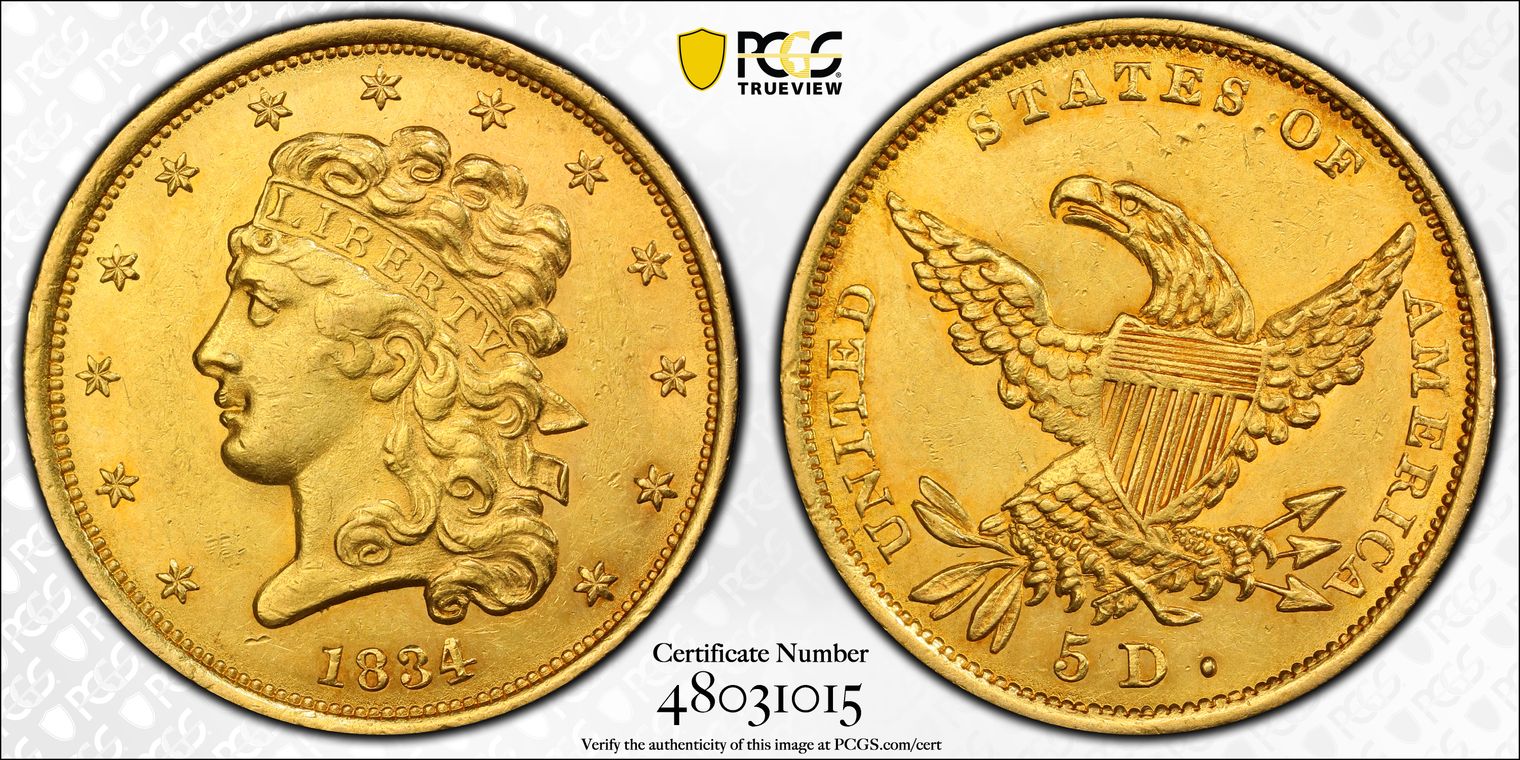
HM-6, “early” die state, R-5. Obverse 4 is the same die as HM-5. Reverse B is the same die as HM-2 and HM-4. This is a rare die pairing with fewer than 80 survivors. This example has a strong strike except for the centers where the hair below the liberty band is weak on the obverse and the junction of the left wing and shield are weak. There are full radial lines on all stars. The color is a consistent green-gold, the luster is plentiful and the ticks/hit minimal for the grade. Like all HM-6, there is a die crack that runs from the rim to the left of N through the bottom of the remaining letters in UNITED. The crack continues very faintly to the right of D but does not approach the rim to the right. In later die states, this crack becomes much heavier and ultimately leads to the demise of the reverse die. Purchased from AURUM Trading.
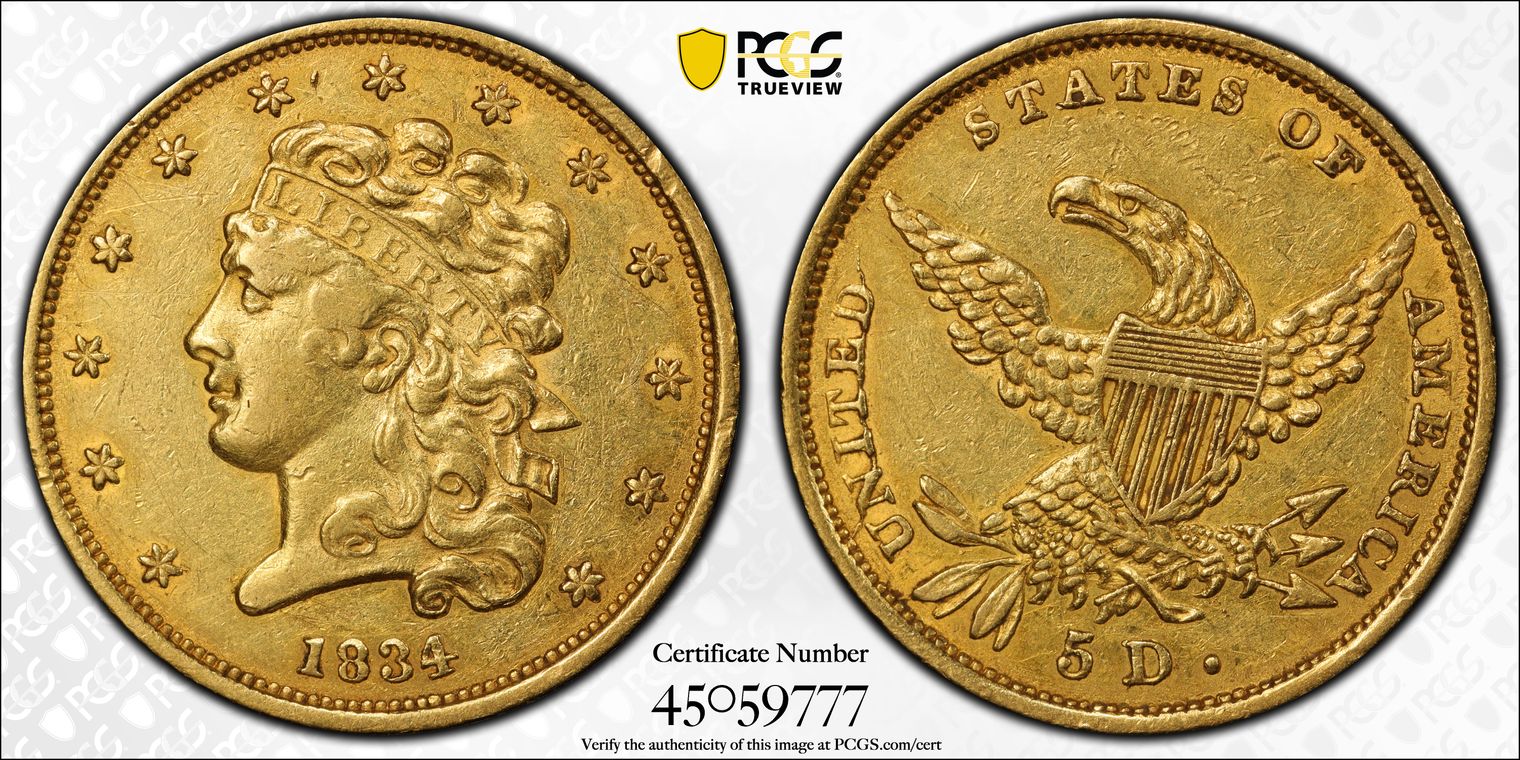
HM-6, “later” die state, R-5. Obverse 4 is the same die as HM-5. Reverse B is the same die as HM-2 and HM-4. This is a rare die pairing with fewer than 80 survivors. This is a crusty, green gold example with a wonderful visual impression. It is a typical HM-6 with a reverse die crack that runs along the base of all letters in UNITED except for the U, connecting with the rim above N and to the right of D. Purchased from GreatCollections (as an NGC AU55).
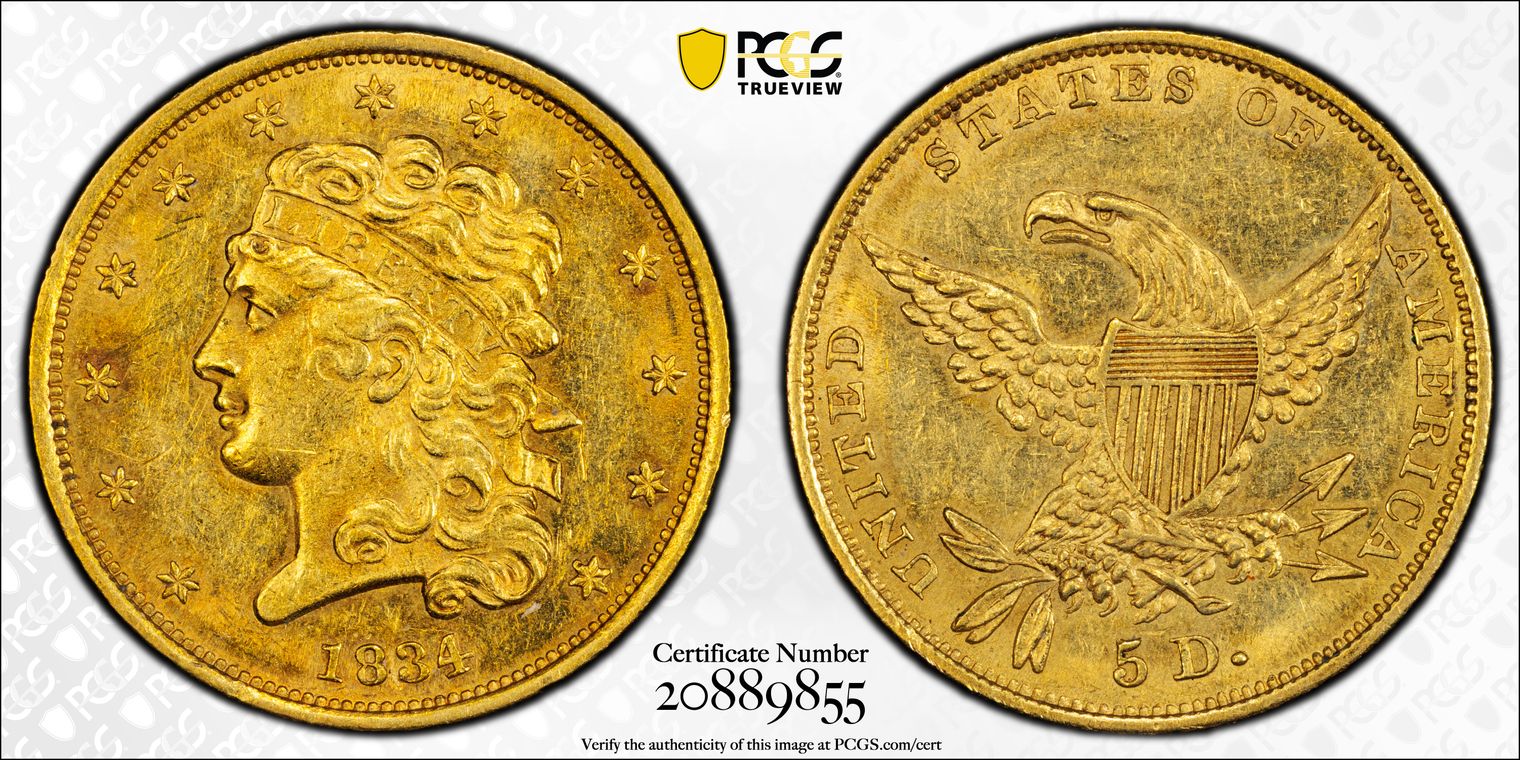
CAC, HM-7, late die state, R-3. Obverse 4 is the same die as HM-3 and HM-4. Reverse C is the same die as HM-3. An excellent AU Classic Gold coin. This coin is orange gold with abundant frosty cartwheel luster. Like many late die state instances of this pairing, the reverse has die cracks from both wing tips to the rim and between the lower tips of the second and third arrowhead. Purchased from New York Gold Mart.
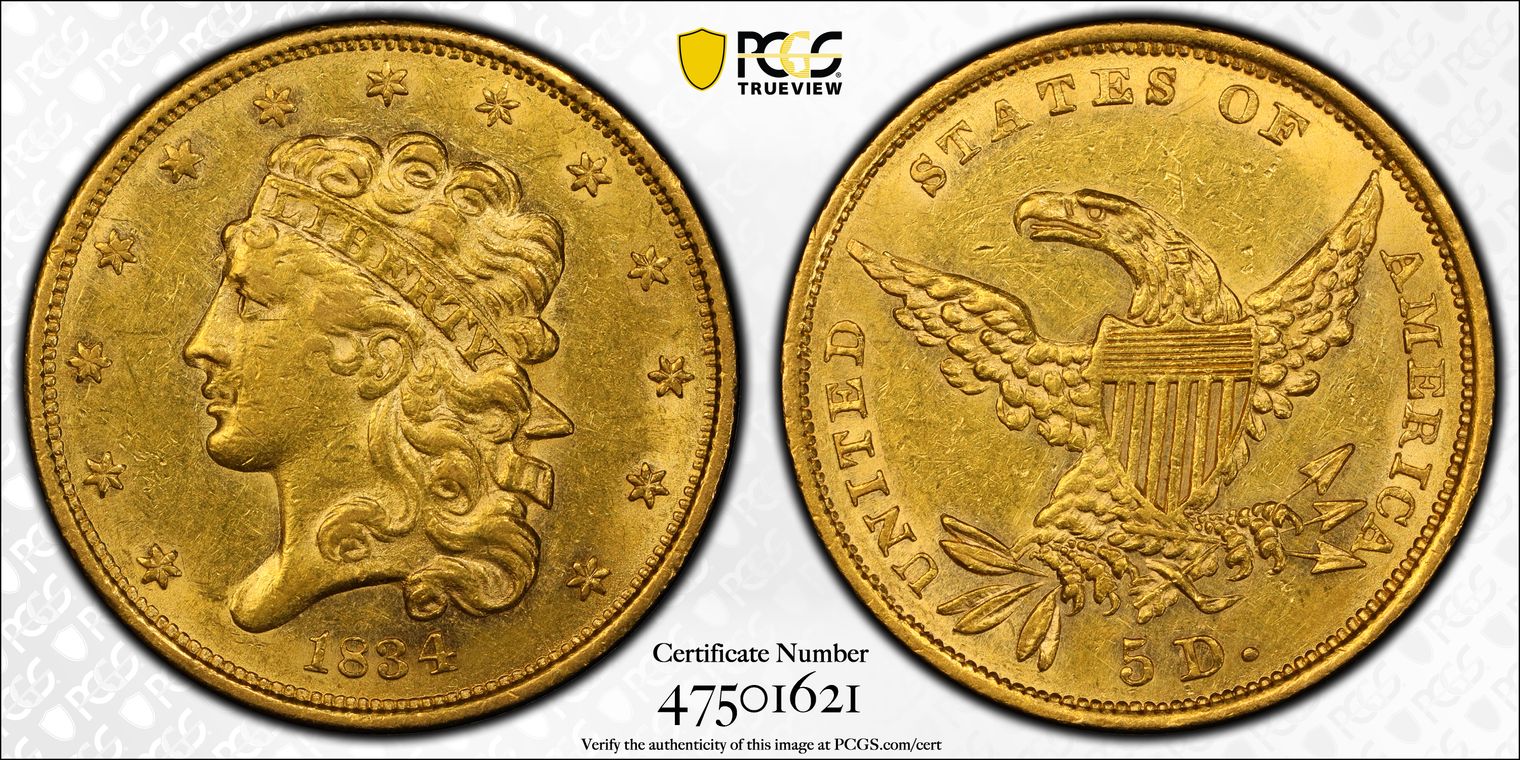
HM-8, R-4+. Obverse 3 is the same die as HM-3 and HM-4. Reverse A is the same die as HM-1 and HM-5. This is a scarce variety with only about 110 remaining examples. Very lustrous for the grade with a reasonably strong strike. The underlying color is green gold. The obverse has a die crack within and below the eye which gives the impression of a “tear” and another die crack from the bottom of the hair between the date and star 13 to the rim. The reverse has a die crack from the right wingtip to the rim. Stack’s Bowers 3/23: 7015.
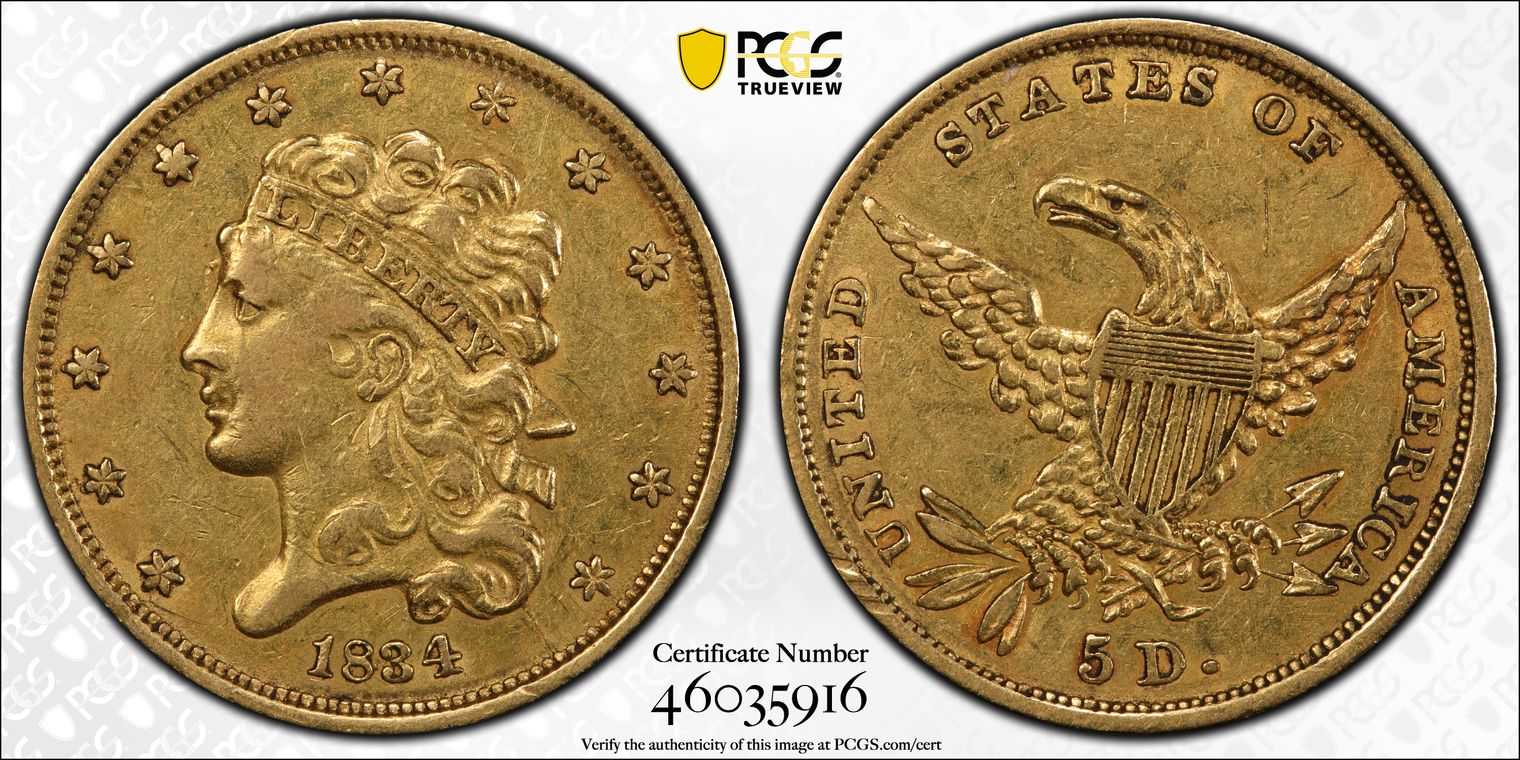
CAC, HM-8, “late die state”, R-4+, McCLOSKEY. This is a very original green-gold example with light orange toning. The strike shows weakness on the central devices, particularly on the obverse. The obverse "scarface" die crack runs vertically through Liberty's eye and upper cheek (this is hard to see in the TrueView photos). A second die crack is quite visible at 5:00 from the rim to Liberty's hair; this crack forms a Y in the lower hair curl and traverses upward through the hair. A third die crack connects the 2:00 arm of star 10 with the rim. A fourth crack connects the lowest curl above the hair band with the top ribbon. This was the last use of obverse 3. The reverse has a die crack from the eagle’s right wingtip to the rim. Purchased from Doug Winter, ex: Heritage 1/22:4373 (The McCloskey Collection) where it sold as an NGC XF45 CAC.
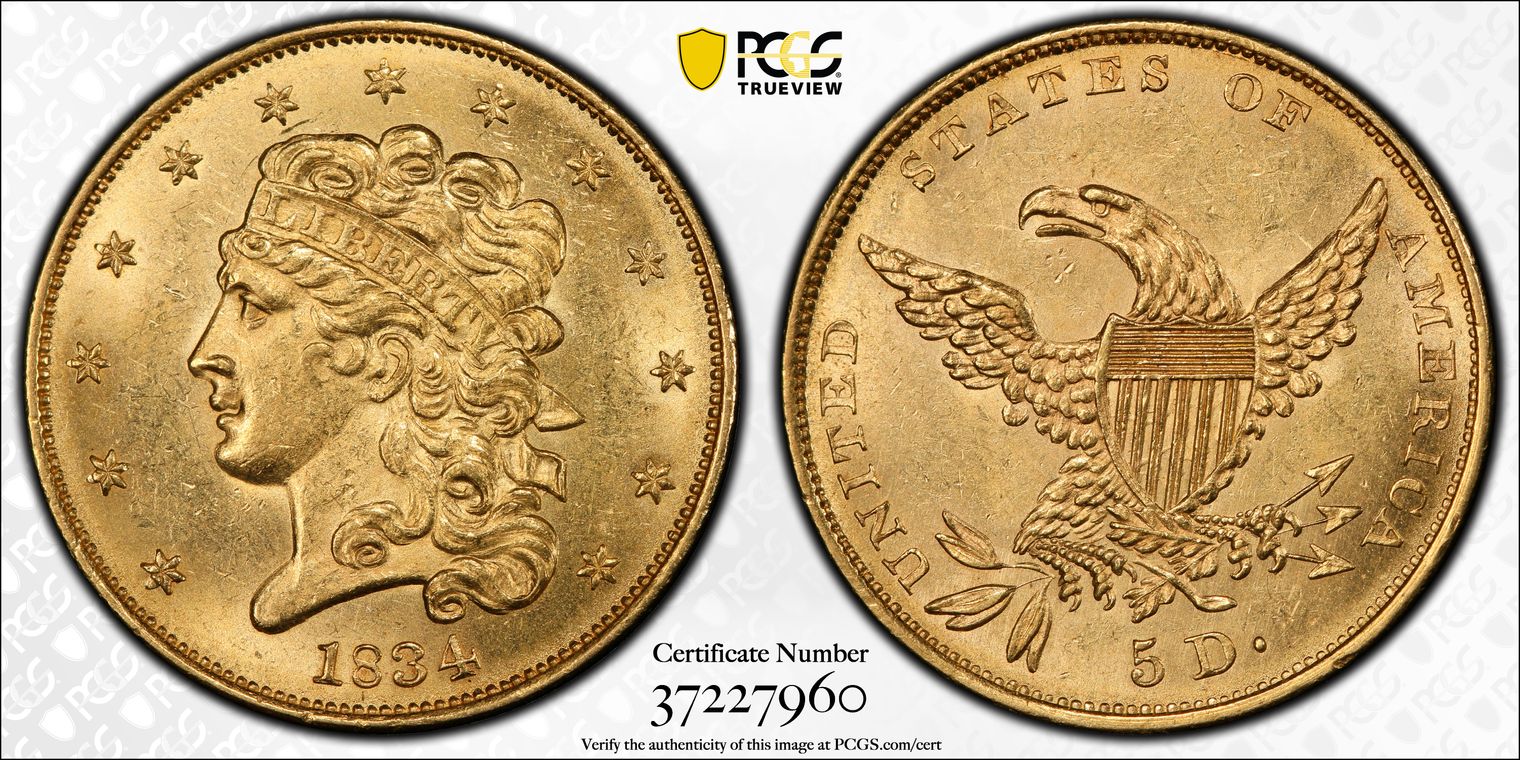
CAC, HM-9, R-4. Obverse 5: Script 8 and the well-known Crosslet 4 in the date; this obverse is unique. Reverse D: There is no tongue, no berry and the 5 is directly below the arrow feather. This example is the first of only two UNC coins verified by CAC for this variety. It has beautiful, original “skin” and is highly reflective with satiny, semi-prooflike luster. The strike is extremely strong for the type; the color is yellow gold. Reverse D exhibits a distinct die clash within the vertical shield stripes. It is the ERT and part of Y from the obverse of 1835 HM-1. 1835 HM-1 was minted prior to the 1834 Crosslet 4. Purchased from Crescent City Numismatics; ex: Bowers and Ruddy 10/77 (Fairfield Collection): 1770.
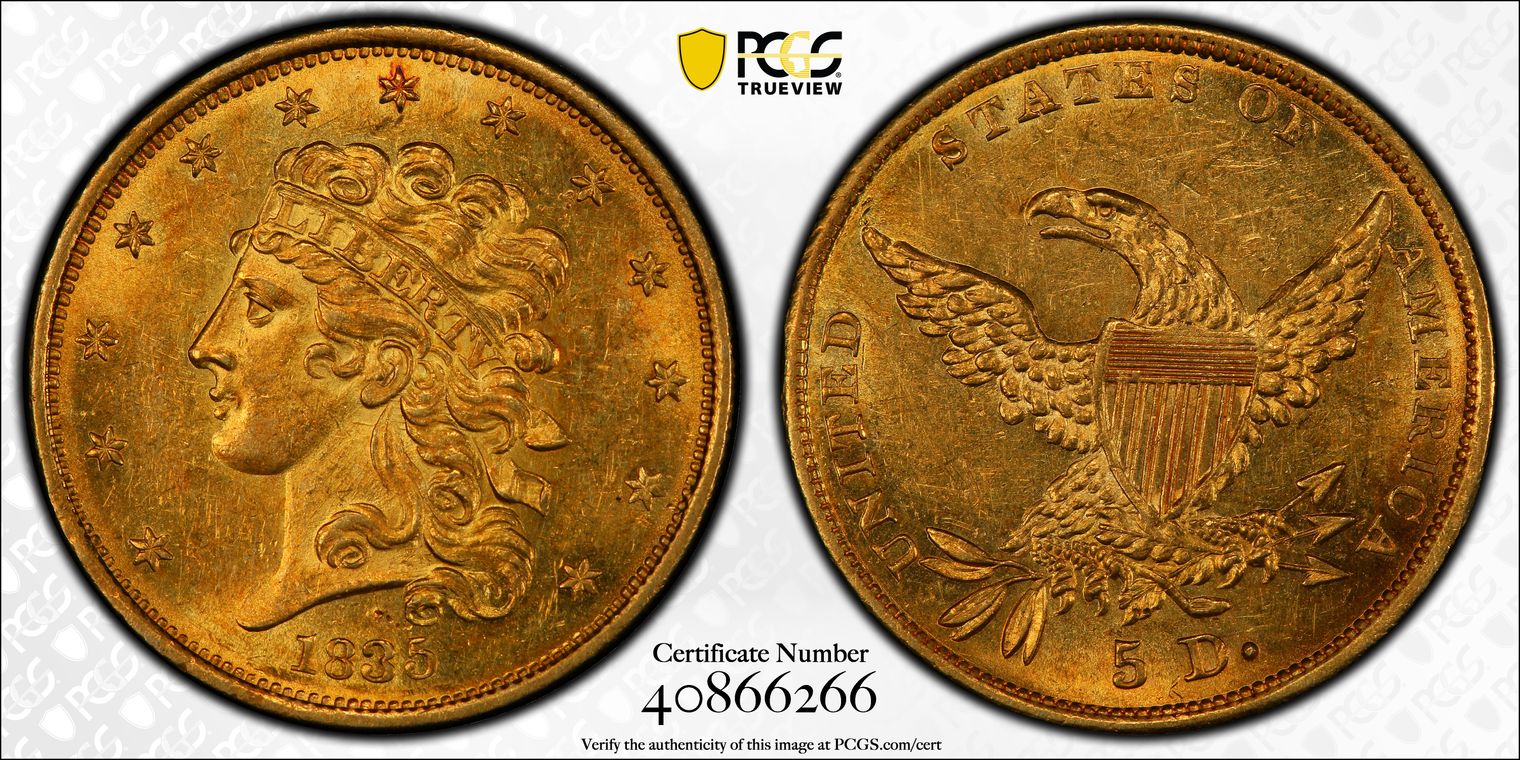
HM-3, R-5+. Obverse 1 is the same die as HM-1 and HM-2. Reverse E: Leaves 1 and 2 are near the U in UNITED. HM-3 is rare with approximately 35 suspected survivors; this is perhaps the finest known example of this variety. Exceptionally vivid reddish-gold surfaces are also intensely lustrous in a predominantly frosty texture. Direct lighting calls forth subtle semi-reflective qualities from the fields. Razor sharp striking detail further enhances the appeal of this example. Like all examples of this die pairing, the obverse has clash marks in Liberty’s band, hair, and ear. Stack’s Bowers 3/20: 4182.
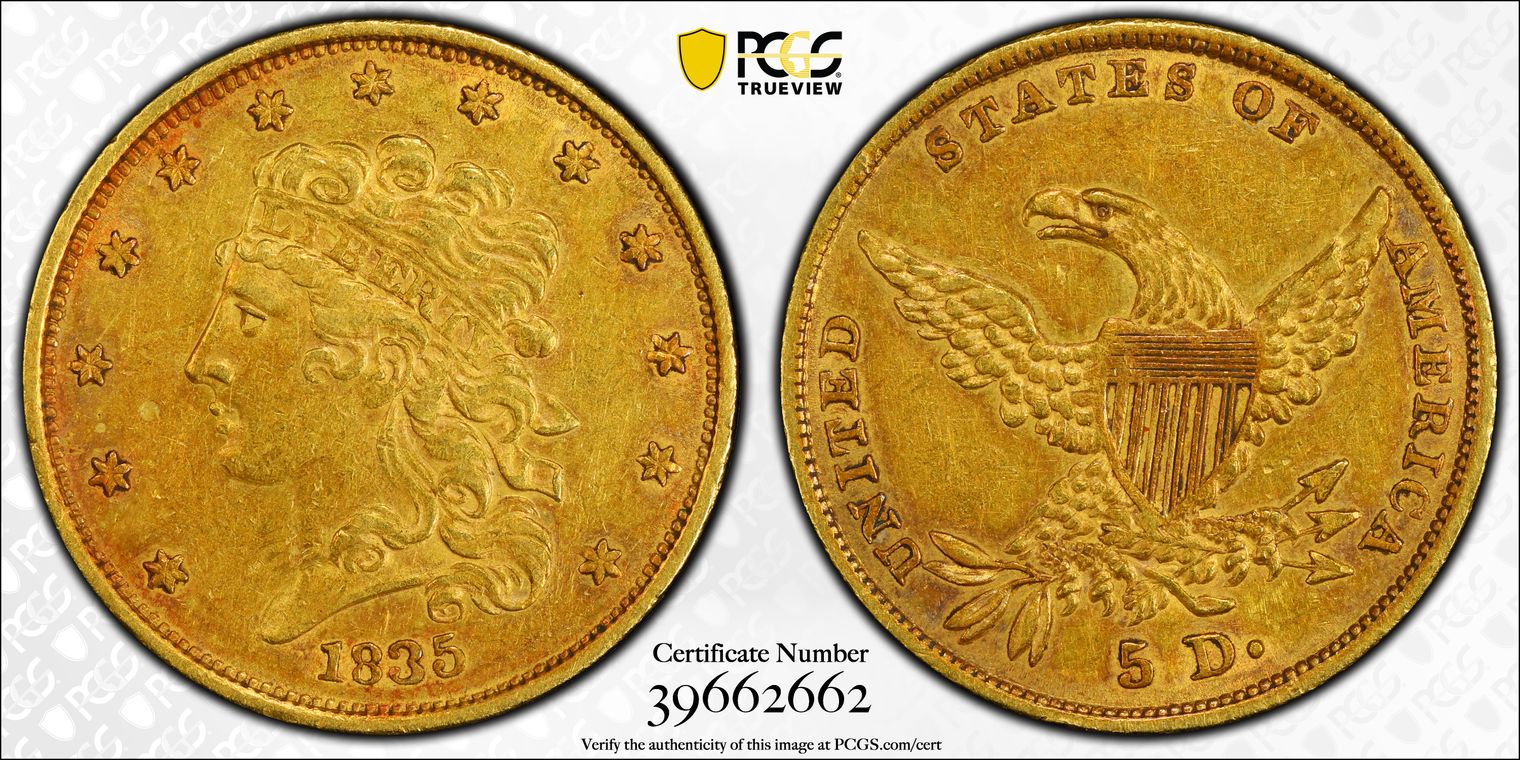
CAC, HM-3, R5+. Obverse 1: Short, fat 1, short center spike on 3, E tilts left and cheek curl is nearly complete circle with curl within. Reverse E: No tongue, no berry; leaf 2 nearly touches the U in UNITED. HM-3 is rare with approximately 35 suspected survivors. The strike is strong except for the normal weakness in the curls below Liberty’s hair band. Deep russet color covers lightly abraded surfaces. The obverse has die clash marks of the Eagles shield in Liberty’s band, hair, and ear. The reverse has a die crack from the right facing wing to the rim. Purchased from Doug Winter in his sale of the MARK GHIORSO collection; ex: GC 9/2020: 884123.
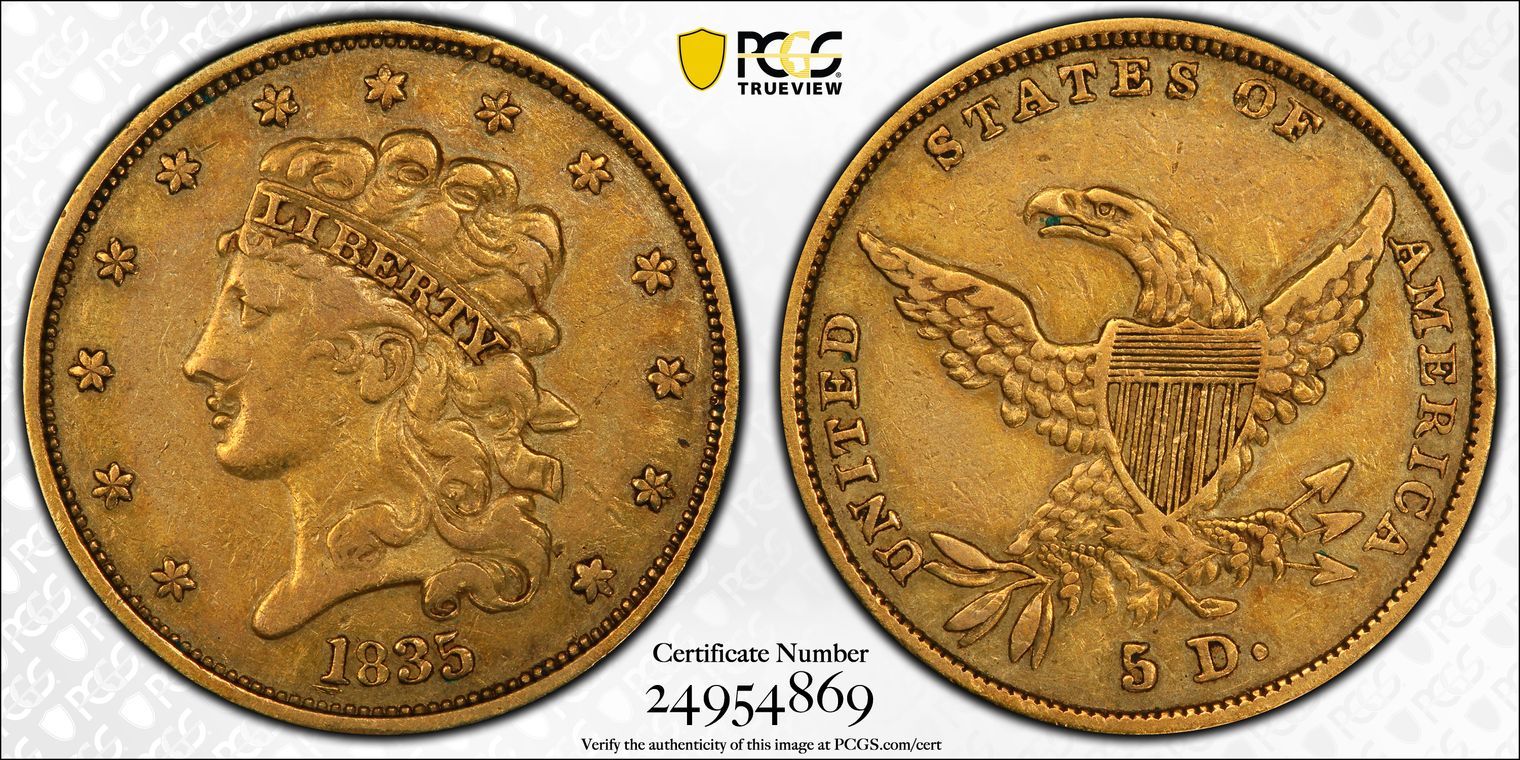
CAC, HM-5, R-6+/7. Obverse 2: Tall 1 and block 8 in the date. Reverse E is the same die as HM-3. This pairing of 1835 Half Eagle trails only the 1836 HM-9 in rarity among Classic Head Half Eagles. There are fifteen or fewer suspected survivors including both circulation strike and proof examples. This example has very “clean” even surfaces. The color is orange-gold with some residual luster, particularly at the periphery. If coins had nicknames, this one would be Serendipity. I generally don’t look for coins on eBay, preferring to buy from known dealers. When I couldn’t find anything for a while, I decided to look and there it was. Because of the CAC sticker it was priced like a XF45 but of course I snapped it up. Purchased on eBay.
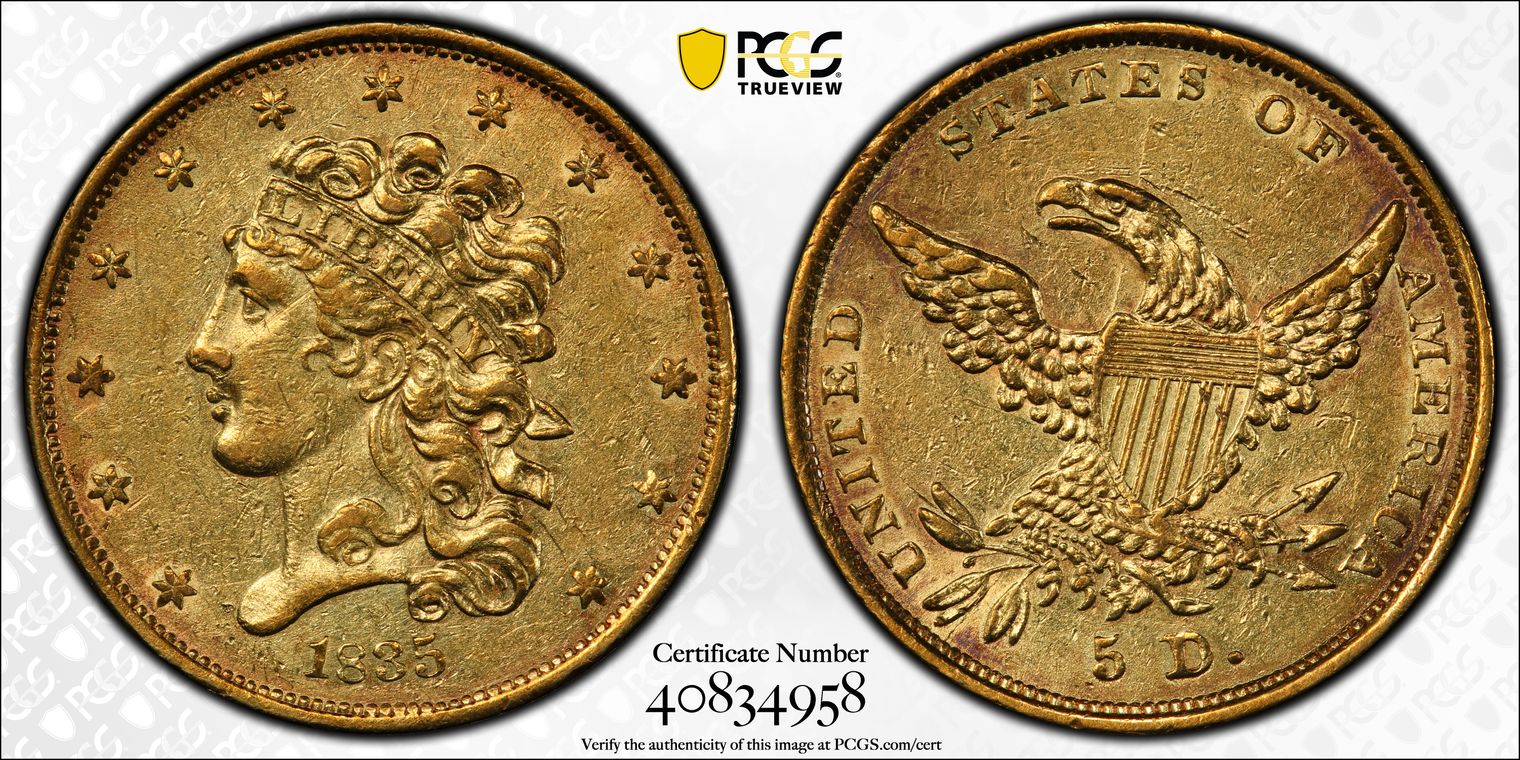
HM-7, R-6. Obverse 3: This is the only Script 8 obverse in 1835. Reverse F: There is a berry and the D in 5D is repunched. This is the only reverse in 1835 with a berry. Yet another very rare 1835 variety with only 20 expected survivors. This coin has a great deal of frosty luster in the recessed areas and less wear than normally seen on an XF45. The color is much lighter than depicted on the TrueView image. The reverse has a die crack starting below Leaf 4 and running through the eagle’s left side and neck almost to the E in STATES. Purchased from Doug Winter.
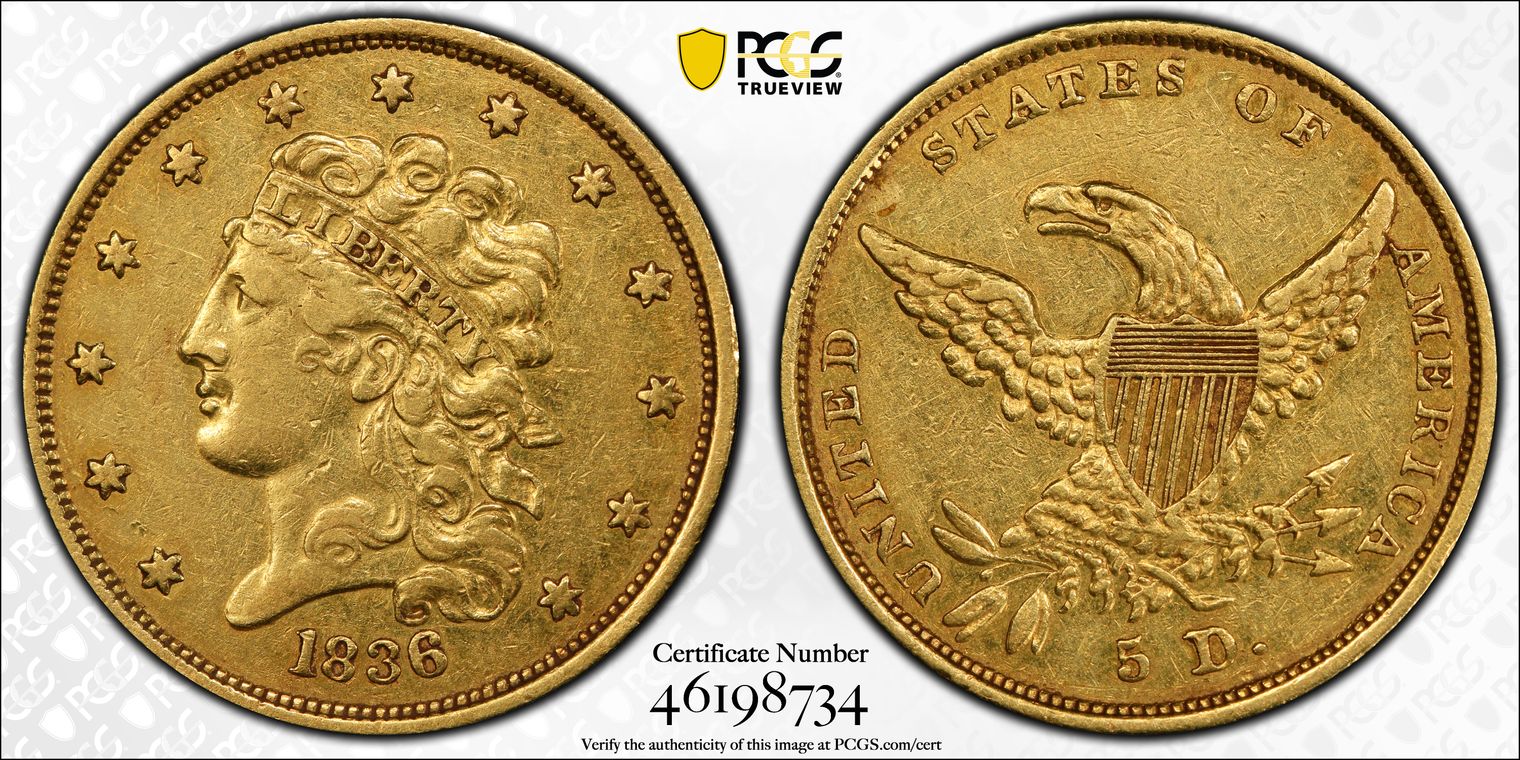
CAC, HM-1, early die state, R-6. Obverse 1: Single forelock curl, straight nose, large 6 tilts left close to curl. Reverse F is the same die as HM-7 in 1835. It is the second rarest die pairing in 1836 with only 20 expected survivors. This coin is green gold with slight orange toning toward the periphery. The strike is good, and the coin is very pleasing for an XF40. This example does not have the obverse die crack between stars 5 and 6 that is a normal characteristic of this obverse die or the reverse die crack that frequently exists vertically through the E in States. Purchased from Crescent City Numismatics (as an NGC XF45).
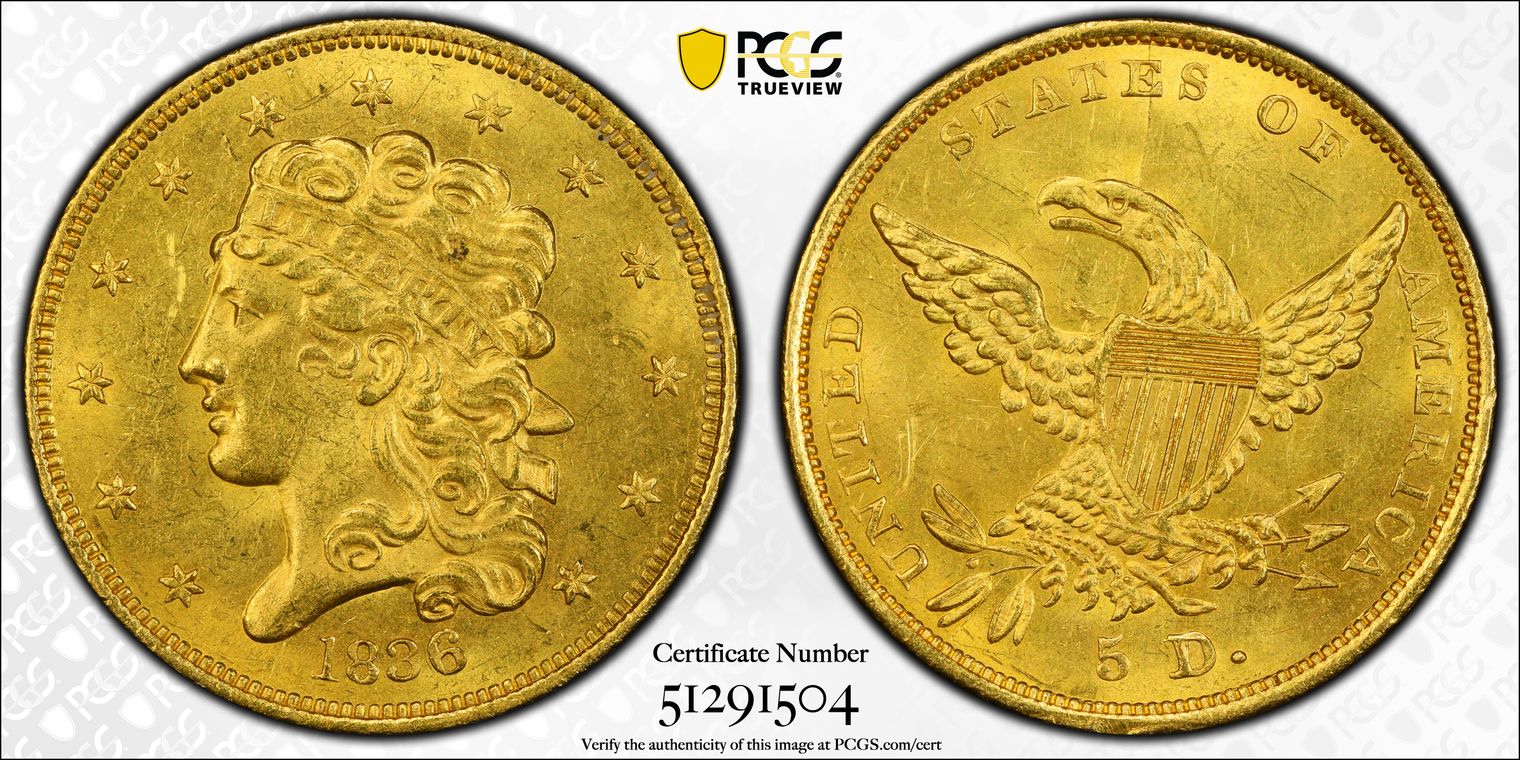
HM-2, R-4+. Obverse 2: First Use. Double forelock, Tall 1, 6 tilts left directly under hair curl; rim-to-rim die crack from Star 8 through 6 in the date. Reverse F: Third Use. No tongue, large berry, D in 5D is repunched and widely spaced; rim-to-rim die crack through the E in STATES down to the right edge of leaf 4. This is a scarce 1836 pairing with only 100 suspected survivors. This is one of only three known Uncirculated examples of this variety. The strike is strong with only minor weakness in the curls below LIBERTY; the small marks are consistent with an MS62/63. The cartwheel luster is abundant on both the obverse and reverse. The color is honey-gold. Both the obverse and reverse rim to rim die cracks on this example are very shallow, perhaps indicating an early strike of this die pairing. Purchased from Paul Nugget.
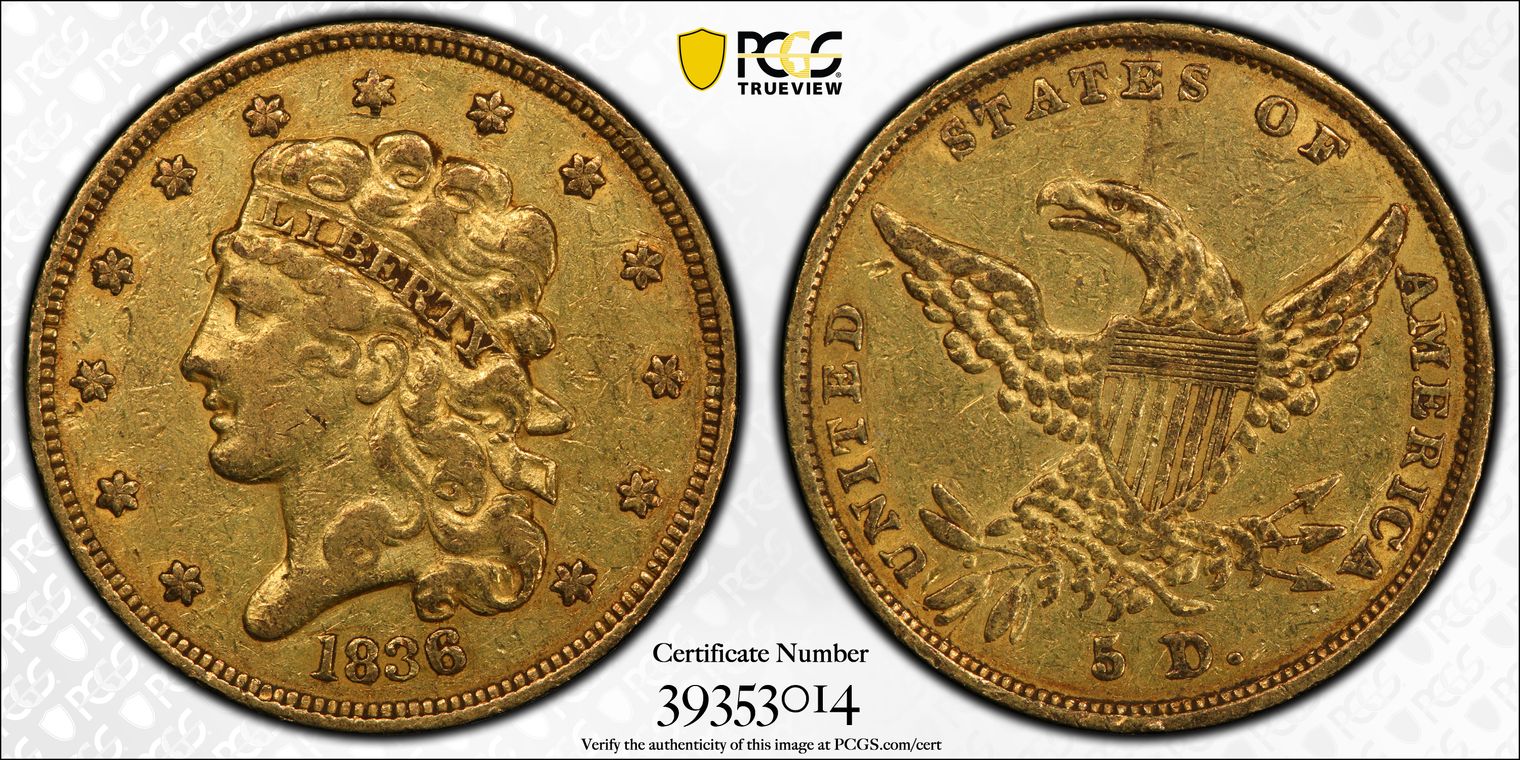
CAC, HM-2, R-4+, FAIRMONT. Pleasing honey-gold surfaces exhibit tinges of pale olive as the coin rotates under a light. Boldly defined overall with appreciable luster remaining. As with most examples of this variety, there are vertical die cracks on both the obverse and reverse. Stack’s Bowers 8/20: 1335, The Fairmont Collection.
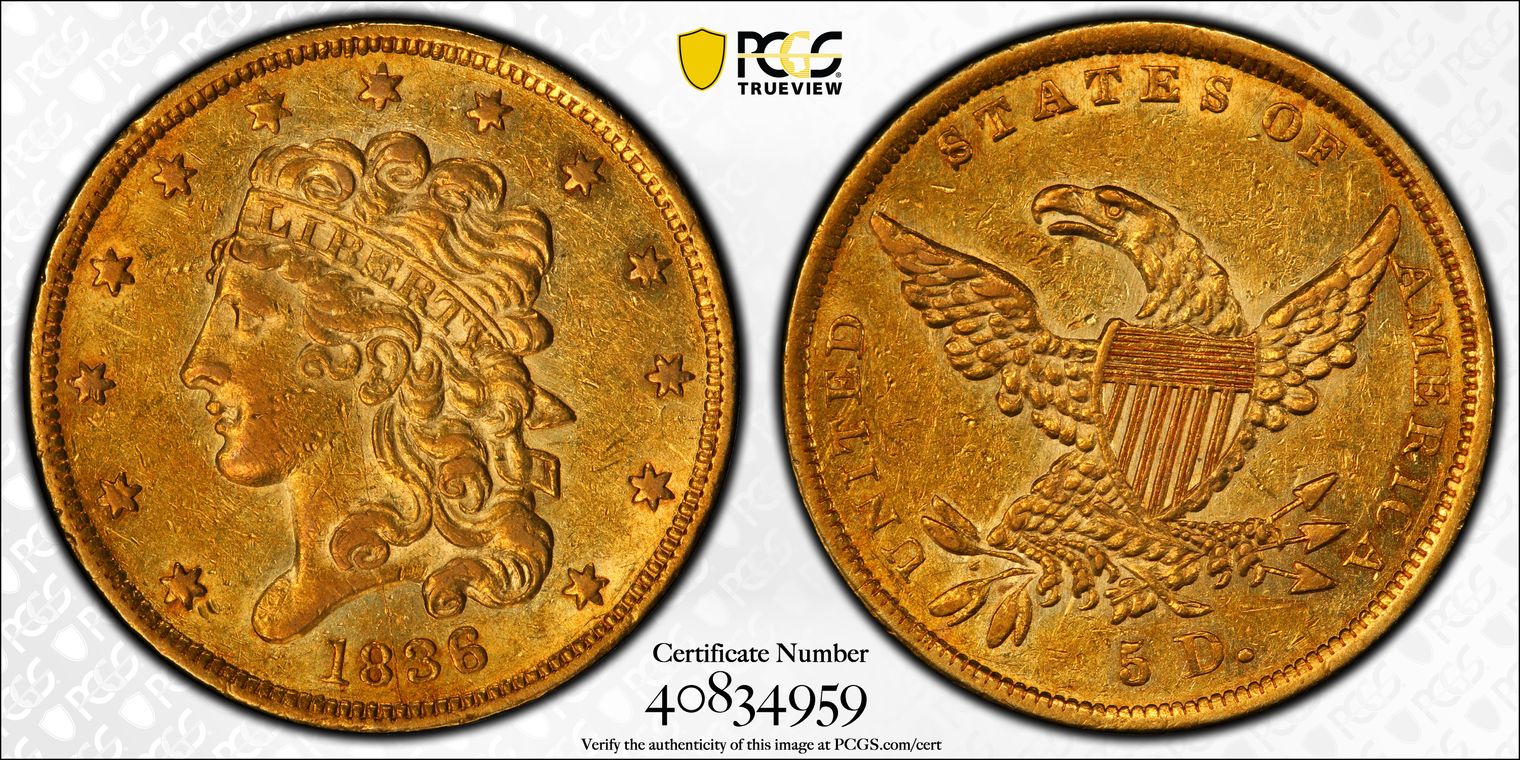
HM-5, “normal die state”, R-5. Obverse 4: Double forelock with large top curl, tall 1 below 8, L in LIBERTY is high and tilted left; this obverse is unique. Reverse H: Small berry with no stem, 5 directly under the feather; this reverse is unique. It is the orange-gold color that this die pair is known for, with a strong strike of the central devices. The luster is outstanding for the grade. This obverse has the characteristic extreme flatness of the stars as well as the die crack that extends upward and nearly vertically between the 8 and 3 up to Liberty’s hair below the Liberty Band. Heritage 9/20: 21676.
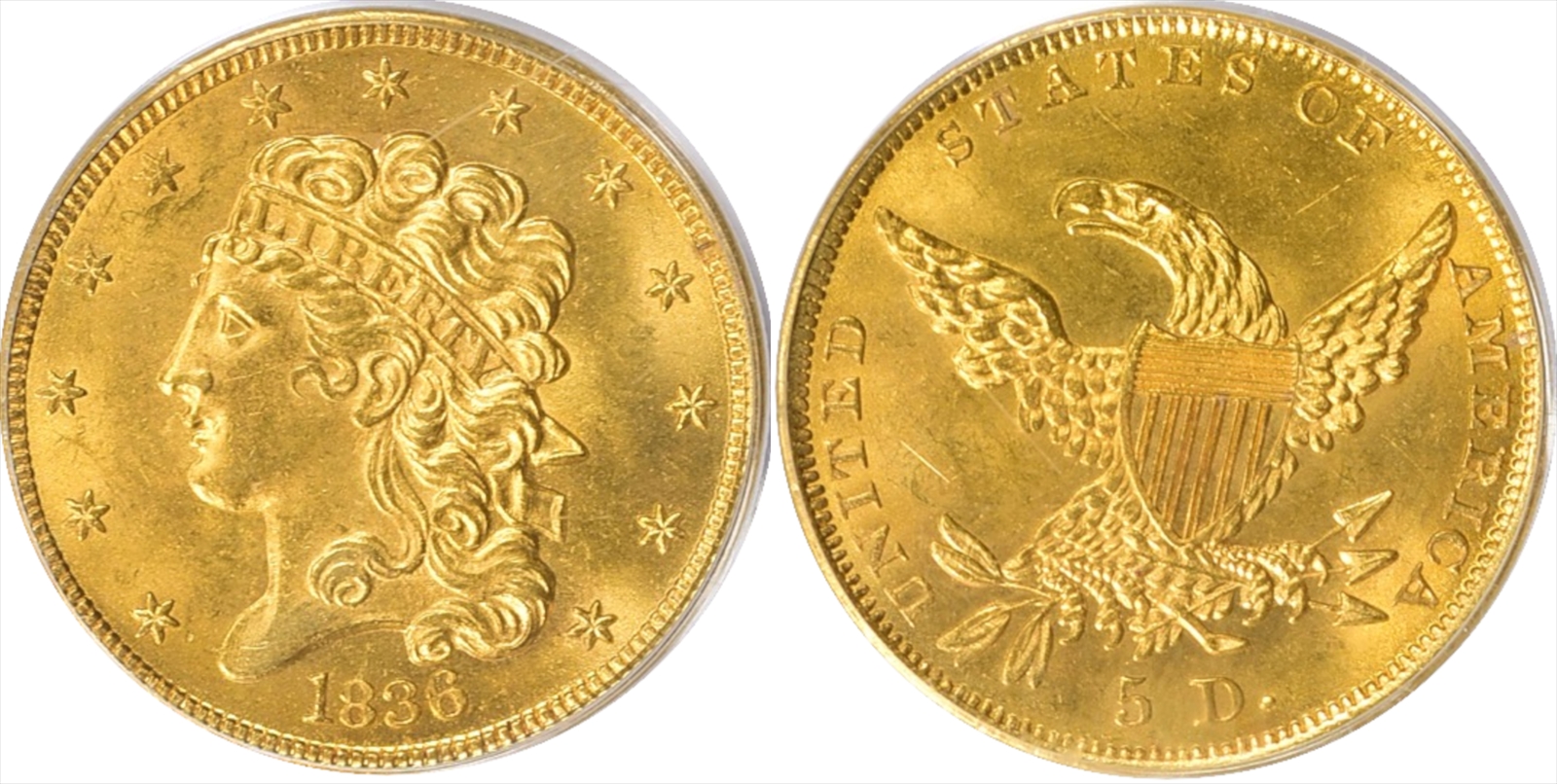
CAC/OGH, HM-7, R-3. Obverse 5 is the same die as HM-6. Reverse G is the same die as HM-4. This is the most common 1836 die marriage. The swirling cartwheel luster is exceptional. This orange-gold example has a strong strike except for weakness in stars five and six, a characteristic for this die pairing. GreatCollections 10/20: 885891.
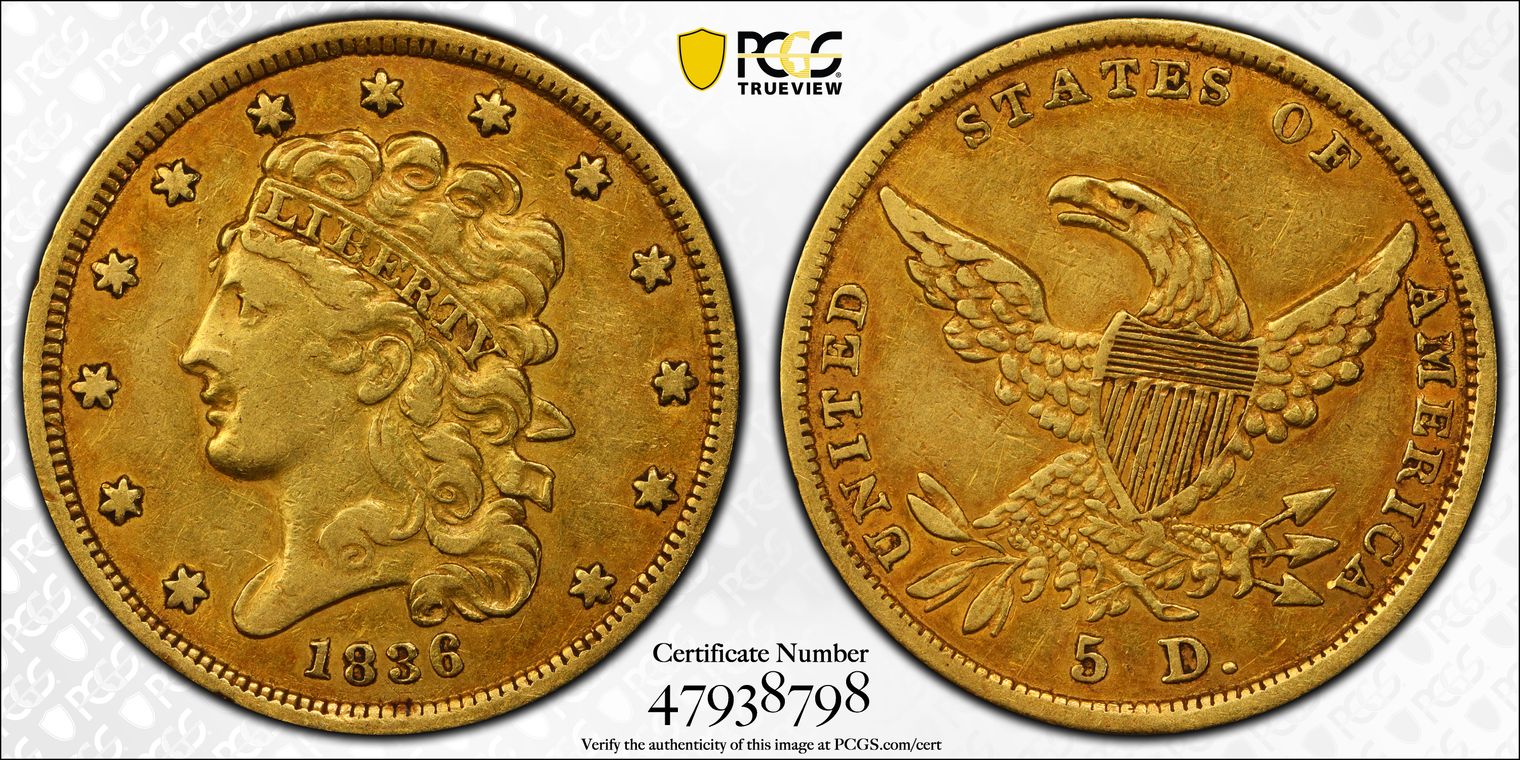
CAC, HM-8, “later die state”, R-4. Doug Winter describes this coin as “A Gem for the grade with rich totally natural reddish and orange-gold color’. The strike is soft on the obverse central devices. There is a die crack from the right wingtip to the rim. Purchased from Doug Winter.
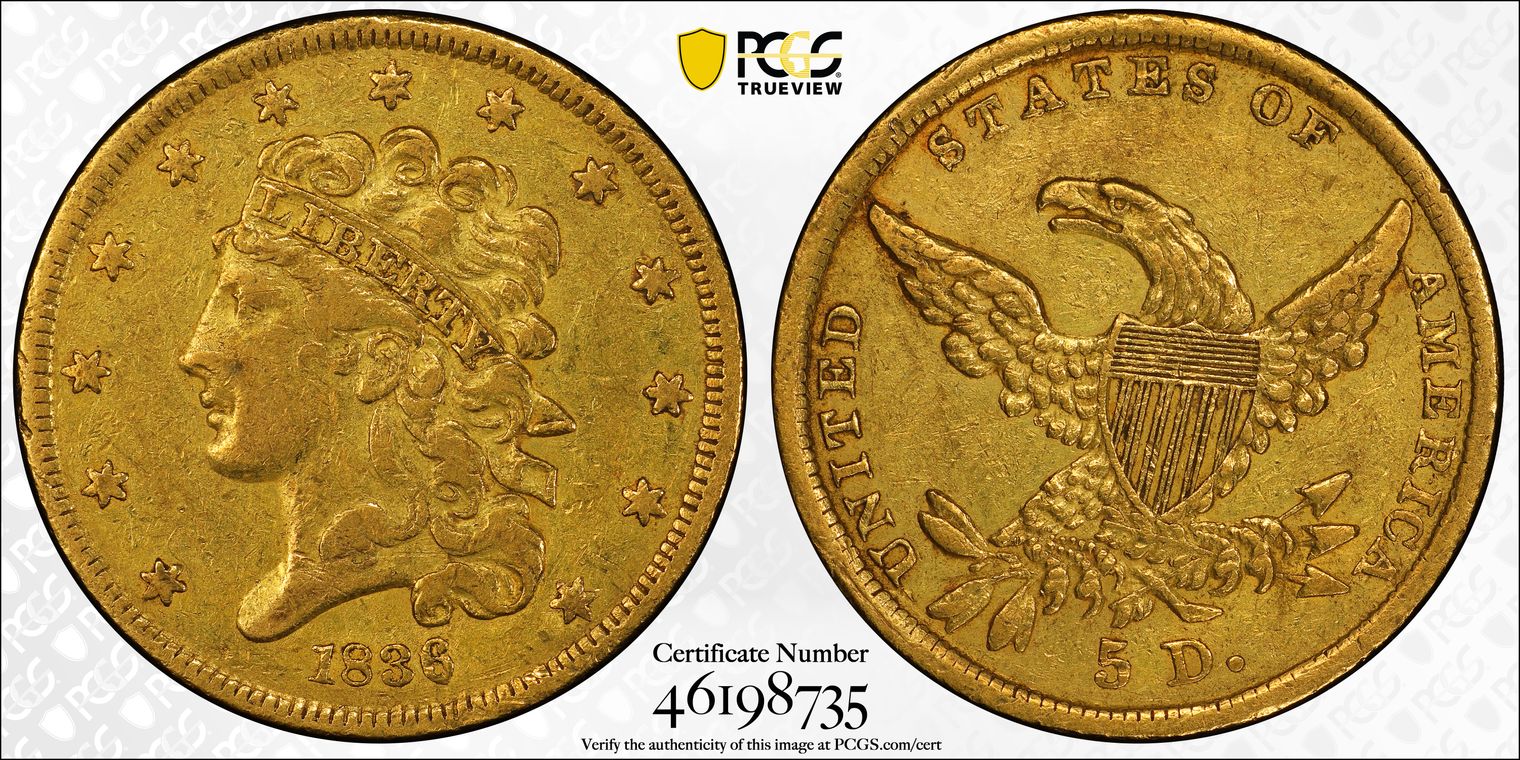
CAC, HM-9, R-7, Haynor. Obverse 7: Script 8, the only 1836 Half Eagle with this style; this obverse is unique. Reverse J: Floating serif of an extra letter to the left of U in UNITED; this reverse is unique. This is the rarest die pairing in the Classic Head Half Eagle series; probably fewer than 10 examples have survived. It is easily identified because it is the only Script 8 in 1836. Warmly and evenly patinated in honey-gold, light olive highlights mingle nicely over both sides. The surfaces are moderately abraded. Stack’s Bowers 8/22: 5050 (Daryl Haynor’s The Virginian Collection); ex Heritage 10/2014: 4998 (as an NGC XF40 CAC).
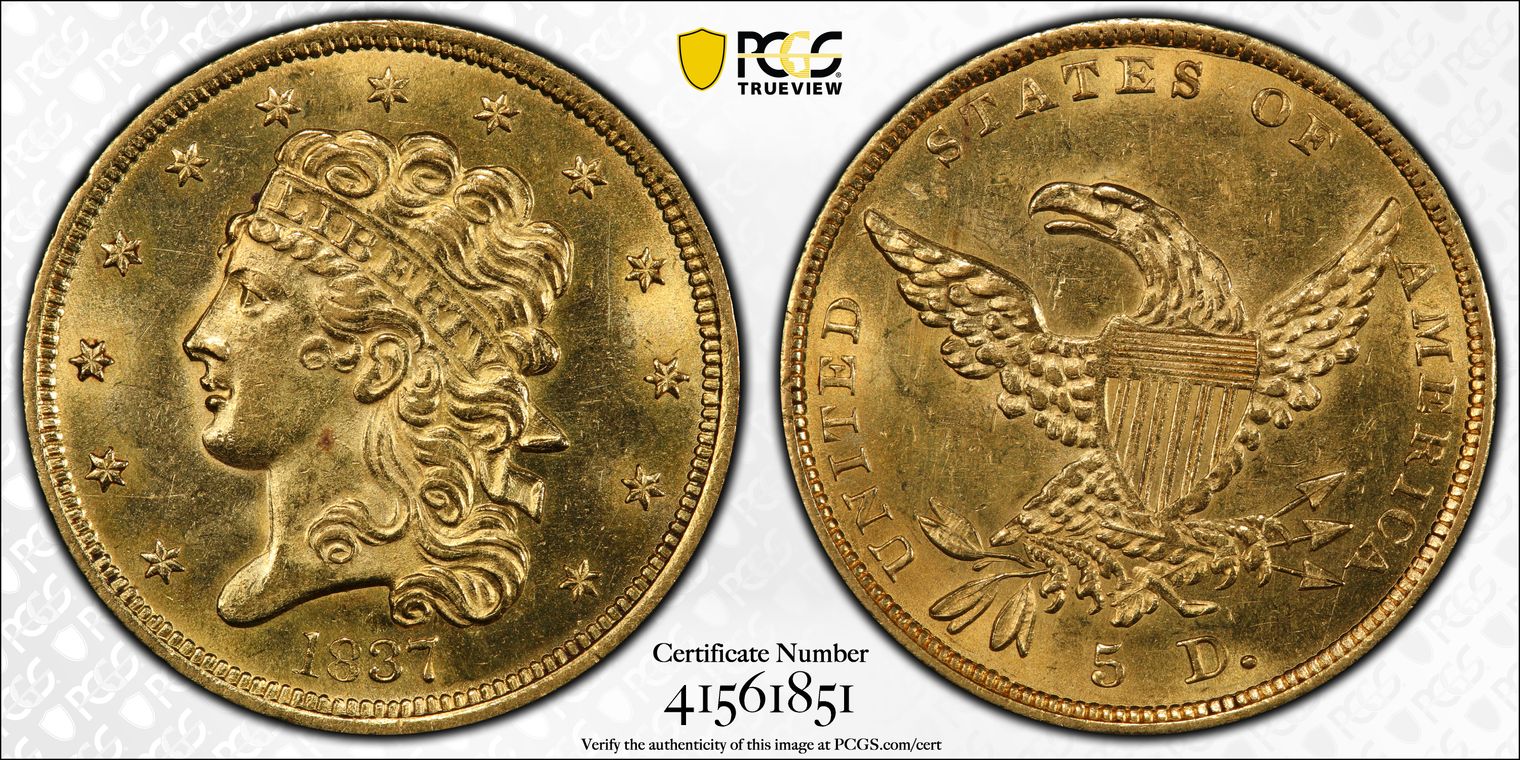
HM-1, R-4. Obverse 1: Block 8, Double forelock; this obverse is unique. Reverse K: Shaft of 2nd arrowhead intact, small berry with stem detached from branch; this reverse is unique. This die pairing is the scarcest of the 1837s. This example is exceptionally lustrous with a strong cartwheel effect. The strike is very strong except for slight weakness in the hair below liberty. In his manuscript, Daryl Haynor describes a somewhat unique color for this variety; lemon-gold or mustard-gold. This example is the best example of mustard-gold I have seen in this series. Purchased from Heritage.
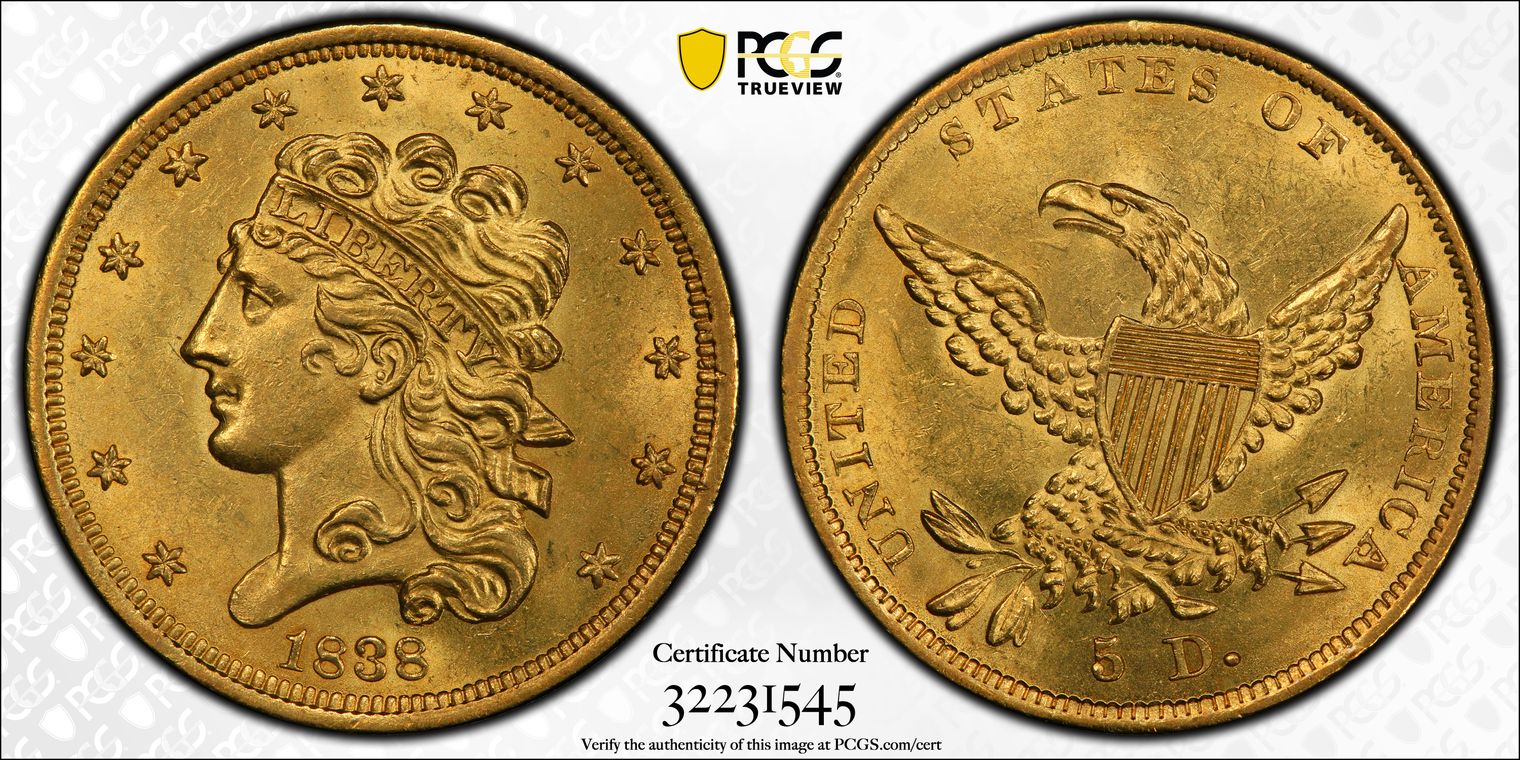
CAC, HM-1, R-3. Obverse 1: Tall curved serif on 1, center dot in ear; this obverse is unique. Reverse L is the same die as HM-2 in 1837. Beaming, satiny mint luster blooms with a vivid brilliance on both sides. Boldly struck up on the obverse and reverse, the details are crisp and show impressive frost on the devices. There is a clash mark on the reverse in the eagle’s mouth and below the beak. Legend Auctions 10/20: 378.
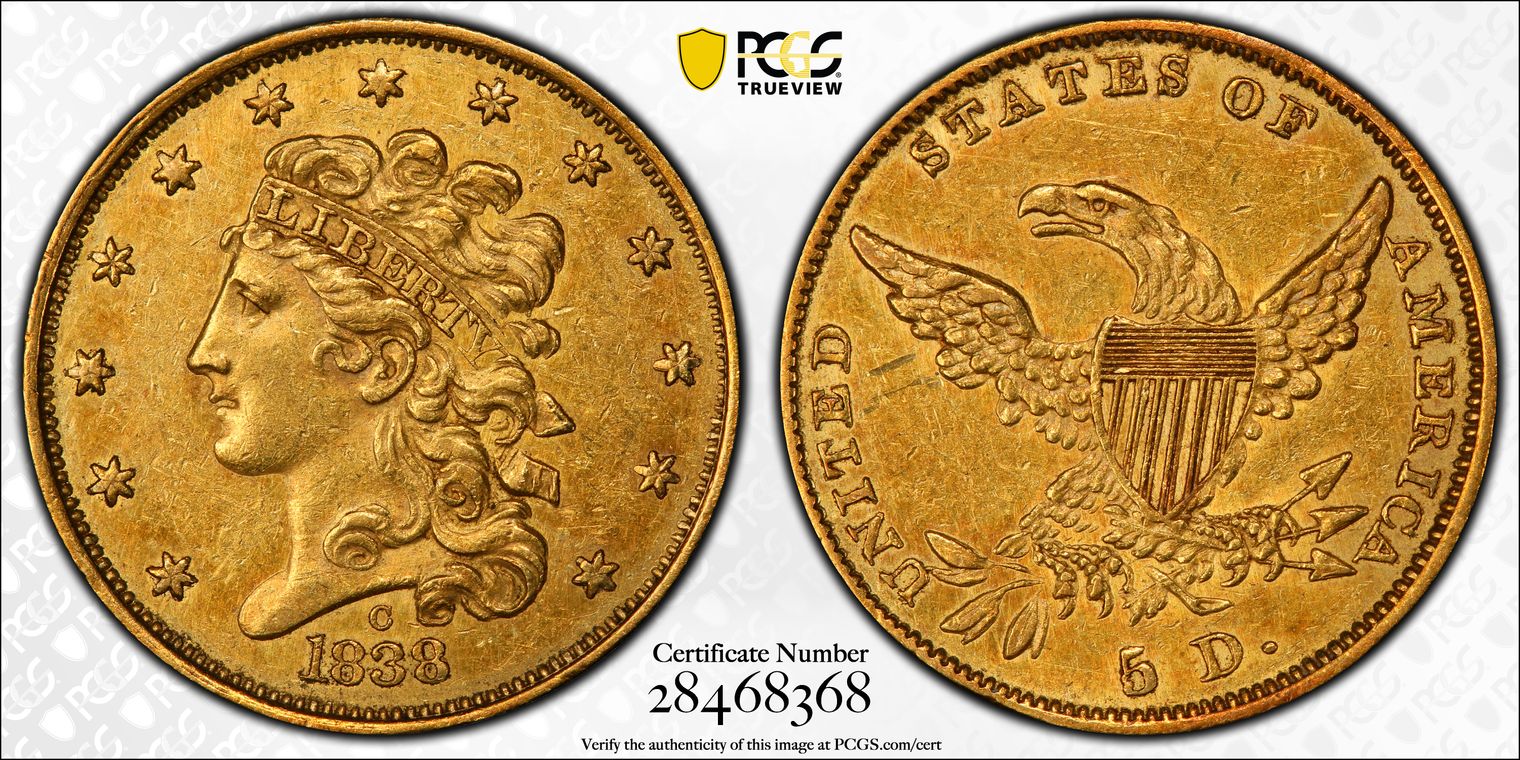
CAC, HM-2, early die state, R-7. Obverse 1: There is only one obverse die for the ’38-C. Reverse Q: Leaf 2 touches the U in UNITED; this reverse is unique. The 1838-C is the rarest date/mint combination in the Classic Head Half Eagle series and this pairing is the rarer of two distinct pairings. This example is very original with green-gold color and rich orange highlights. The strike shows much sharper detail than normal for this mint. It was minted before the die crack which normally bisects the reverse of this pairing. There are only three or four known examples in this state. This is a truly exceptional example of this very rare type. Purchased from Doug Winter.
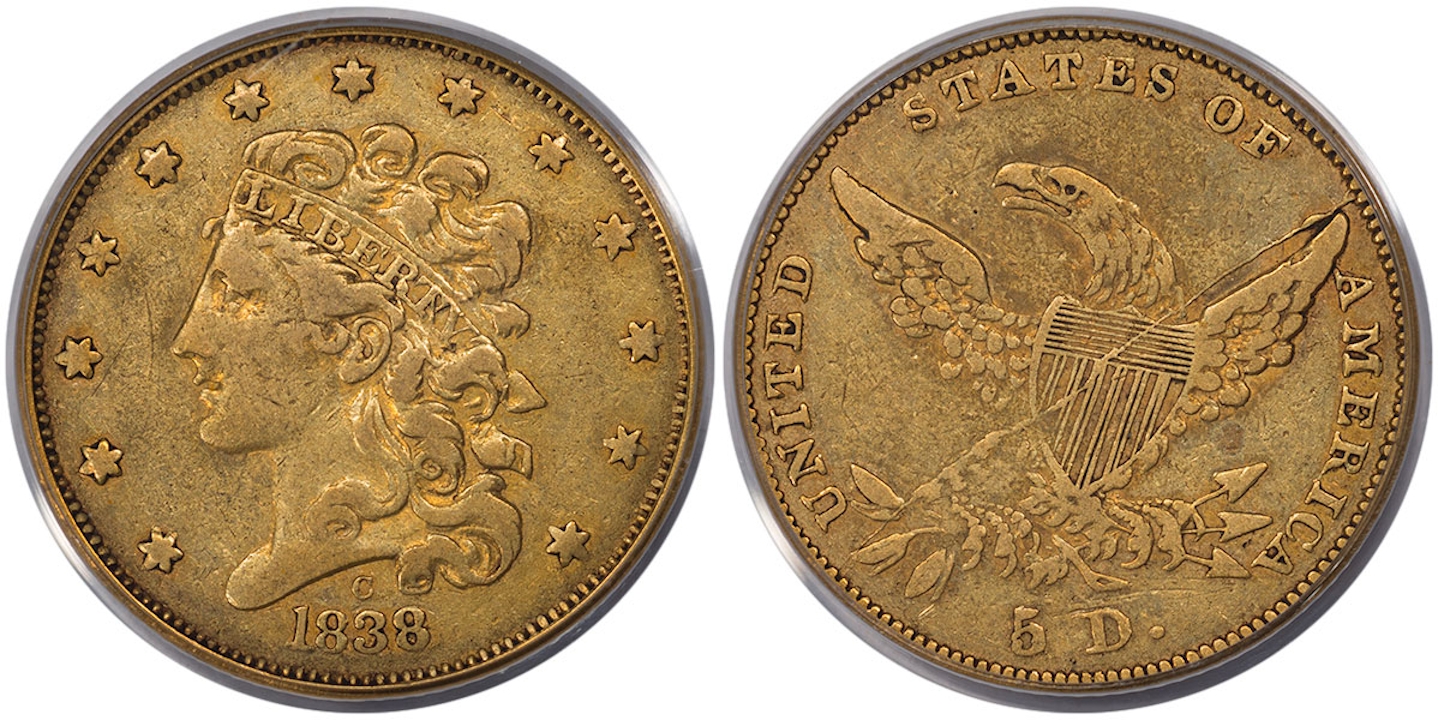
CAC/OGH, HM-2, late die state, R-5. This example is a “crusty old soldier” which exhibits great olive gold color with orange highlights. It has original dirt in the recessed areas, a lovely example of this date. It has the characteristic die crack which bisects the reverse from 2 o’clock to 8 o’clock. Purchased from Crescent City Numismatics.
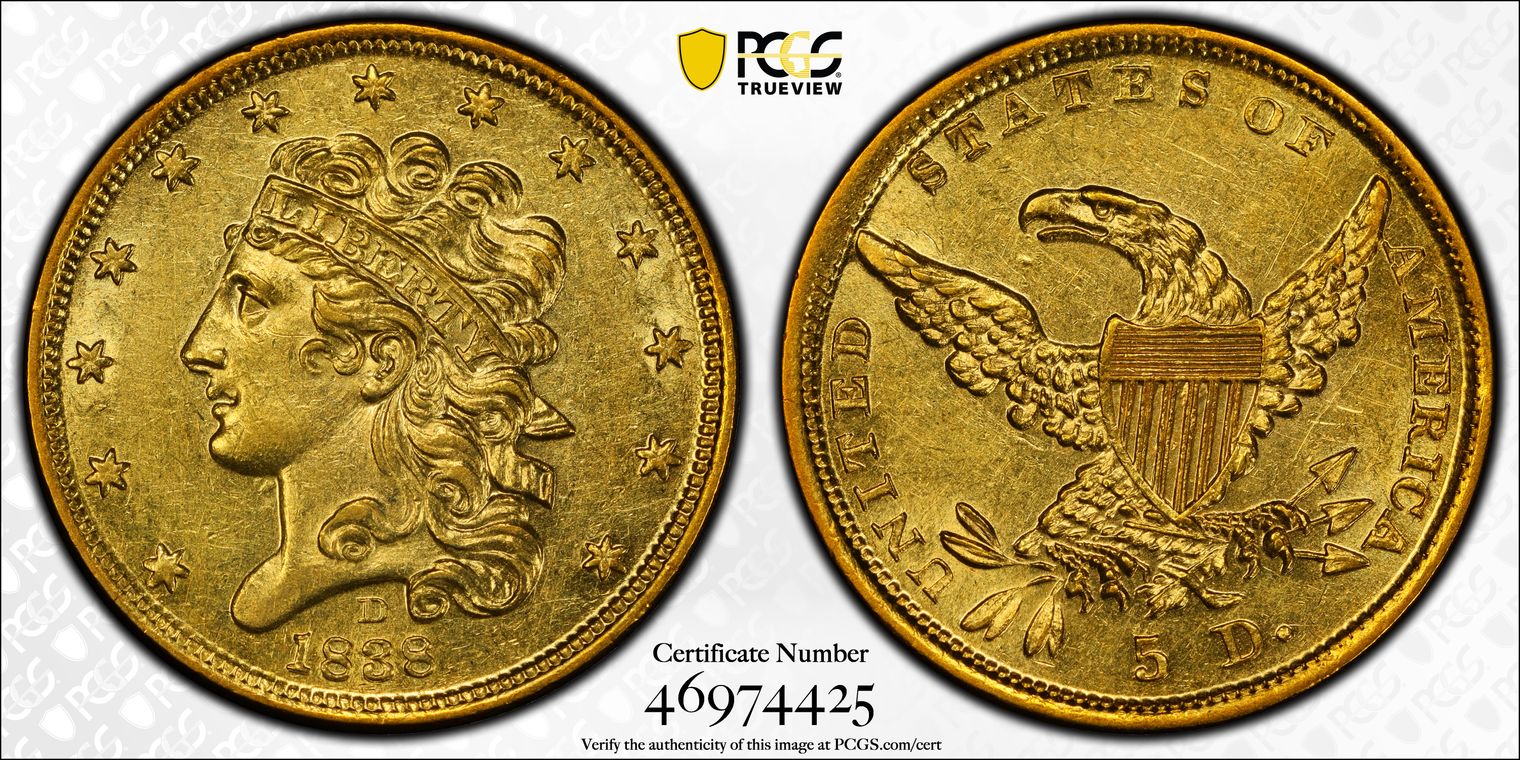
HM -1, R-3. Obverse 1, Reverse R: There is only one die pair known for the 1838-D half eagle; both the obverse and reverse are unique dies. The most recent estimate is that only 10-12 examples are known in mint state. The strike on this yellow gold example is exceptional; the only weakness is on the peripheral stars where the radial lines are generally missing; this probably resulted from excessive die polishing. The texture is a subtle frost with prooflike characteristics, particularly on the reverse. There is some die rust evident with raised “bumps” in front of the top of the throat.

CAC, HM -1, R-3. Obverse 1, Reverse R: There is only one die pair known for the 1838-D half eagle; both the obverse and reverse are unique dies. The half eagle was the first denomination produced at the Dahlonega Mint. This crusty, original coin has appreciable dirt clinging to the devices on both obverse and reverse. It has rich honey-orange and medium rose colors; the surfaces retain appreciable satin luster that is brightest in the protected areas around and among the design elements. It is well struck in general and mostly sharp and is free of troublesome marks with a pleasingly smooth appearance in hand. Stack’s Bowers 8/24: 3324; ex: Heritage 8/14: 5651.