



DDR's Coin Album

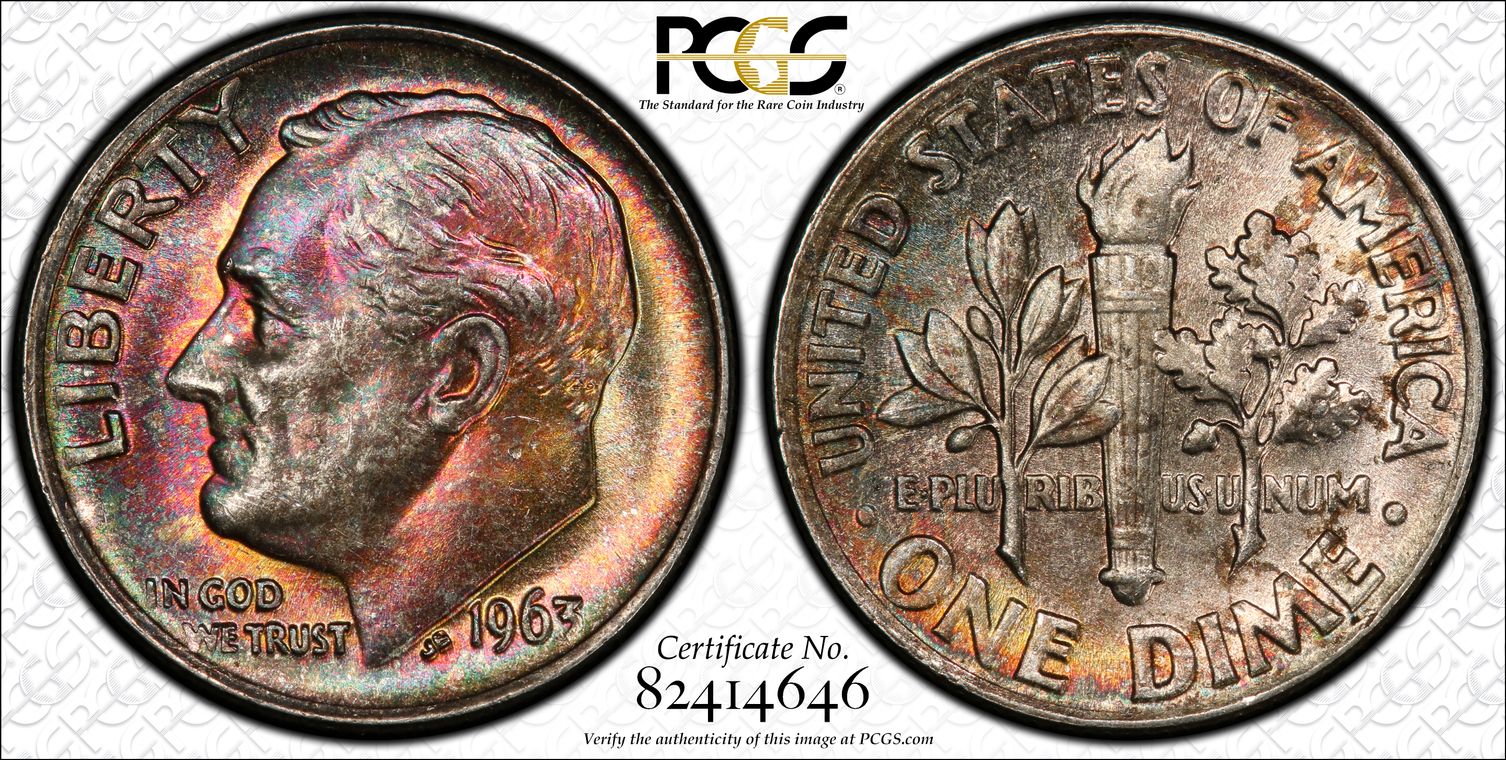
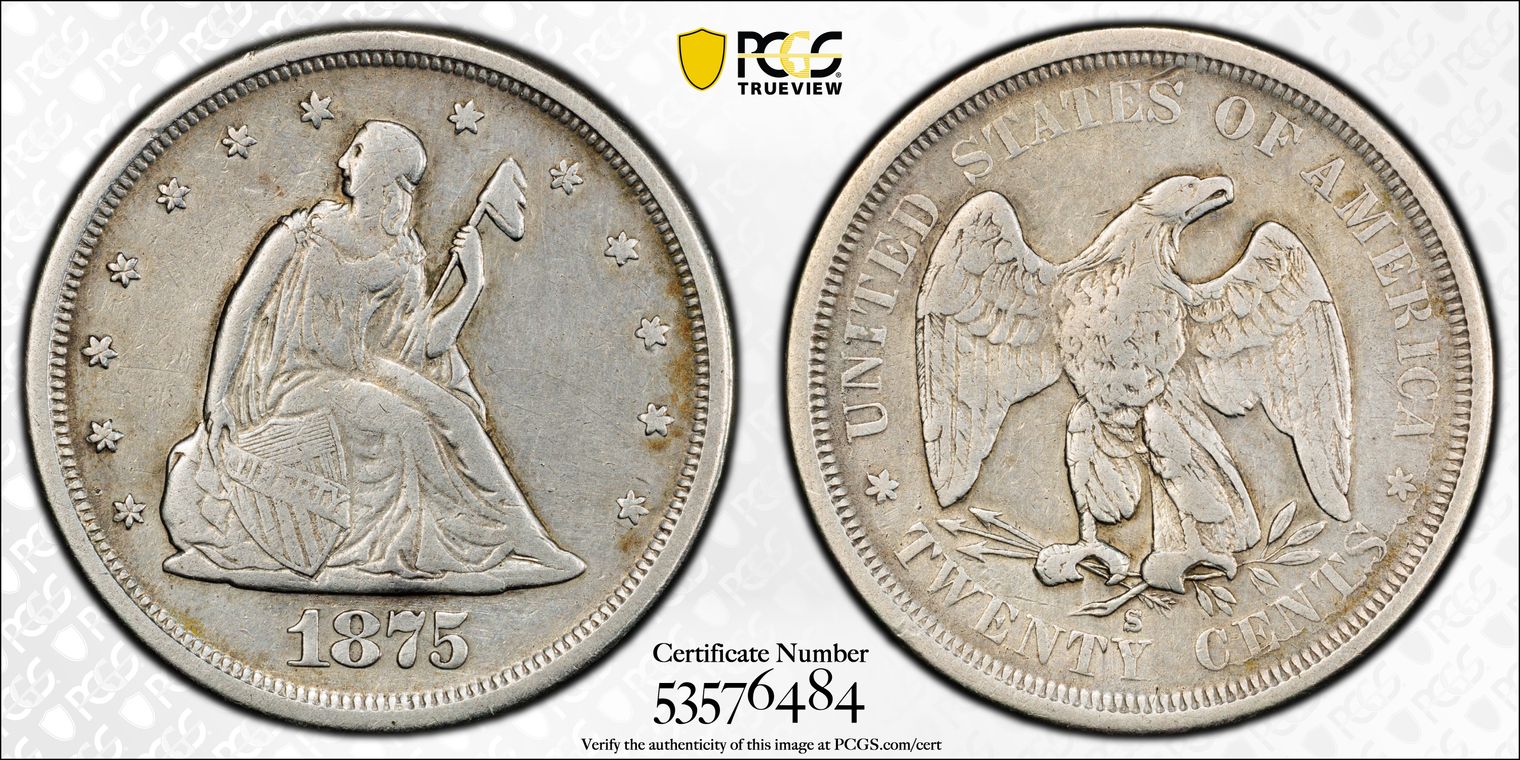
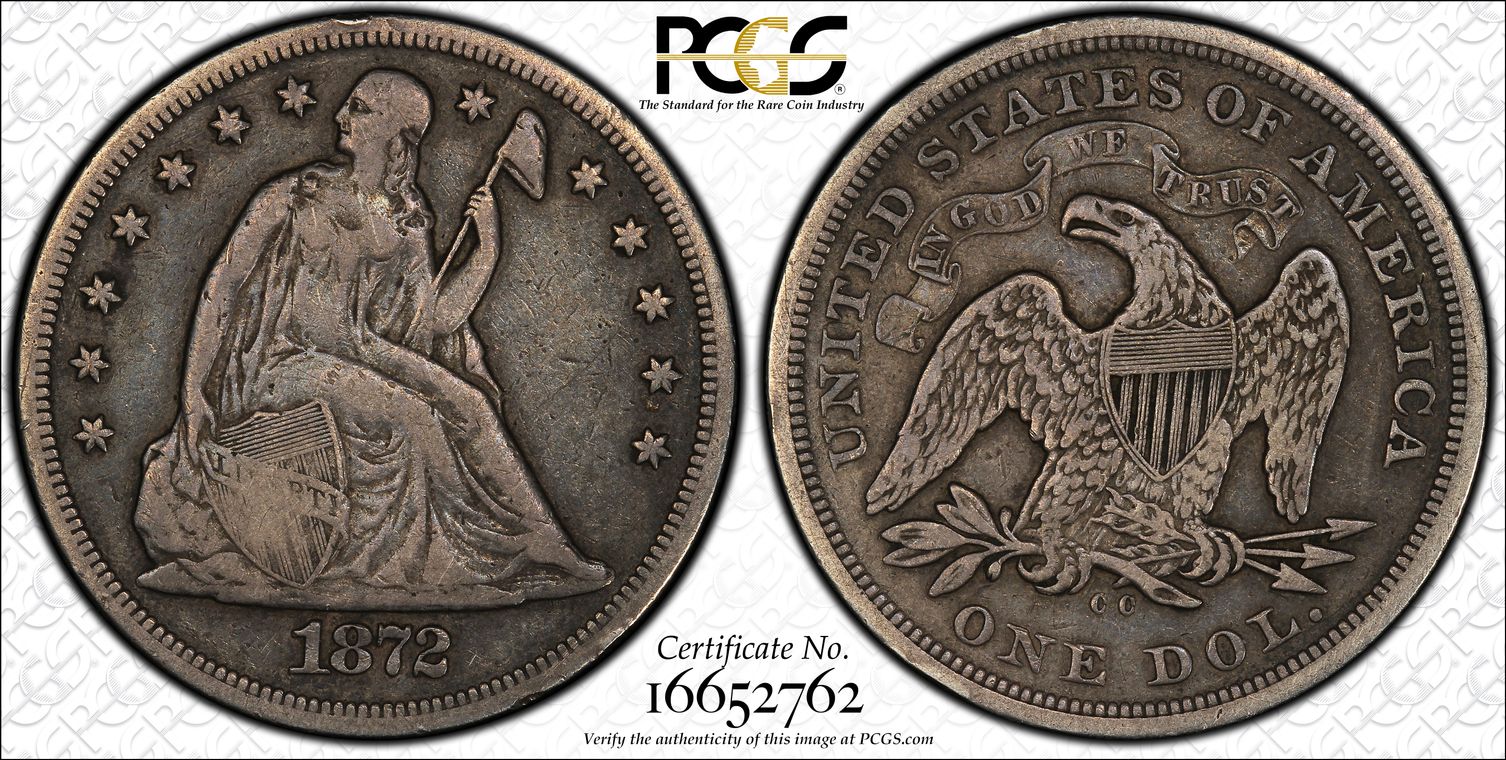
Mintage picked up but only slightly in 1872, creating another scarce and desirable coin for collectors. (Mintage 3,150, survivorship 140-210.)
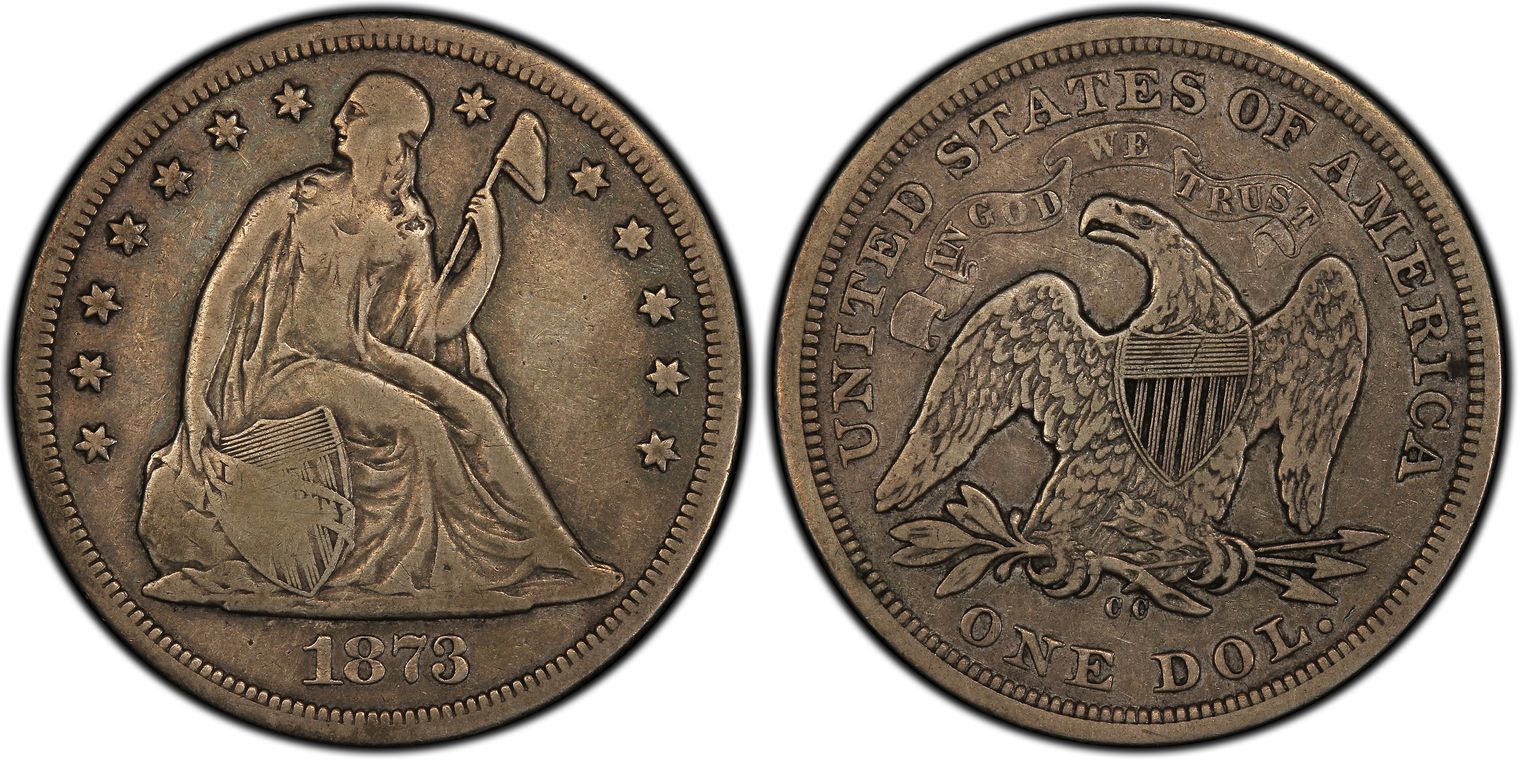
The 1873-CC is the rarest, and most expensive, of all of the Carson City Silver Dollars. 1,000 were minted in January of 1873 and another 1,300 in March. And then that was it, as the Carson City Mint turned to coining Trade Dollars for export to the Orient. Survivorship is tiny, less than 100 in all circulated grades. Some have speculated that the second group of 1,300 minted in March were quickly melted when the Coinage Act became law on April 1, or were turned in to be made into Trade Dollars. Whatever the reason, the 1873-CC Seated Liberty Dollar is recognized as a true rarity in any grade. (Mintage 2,300; survivorship 60-90.)
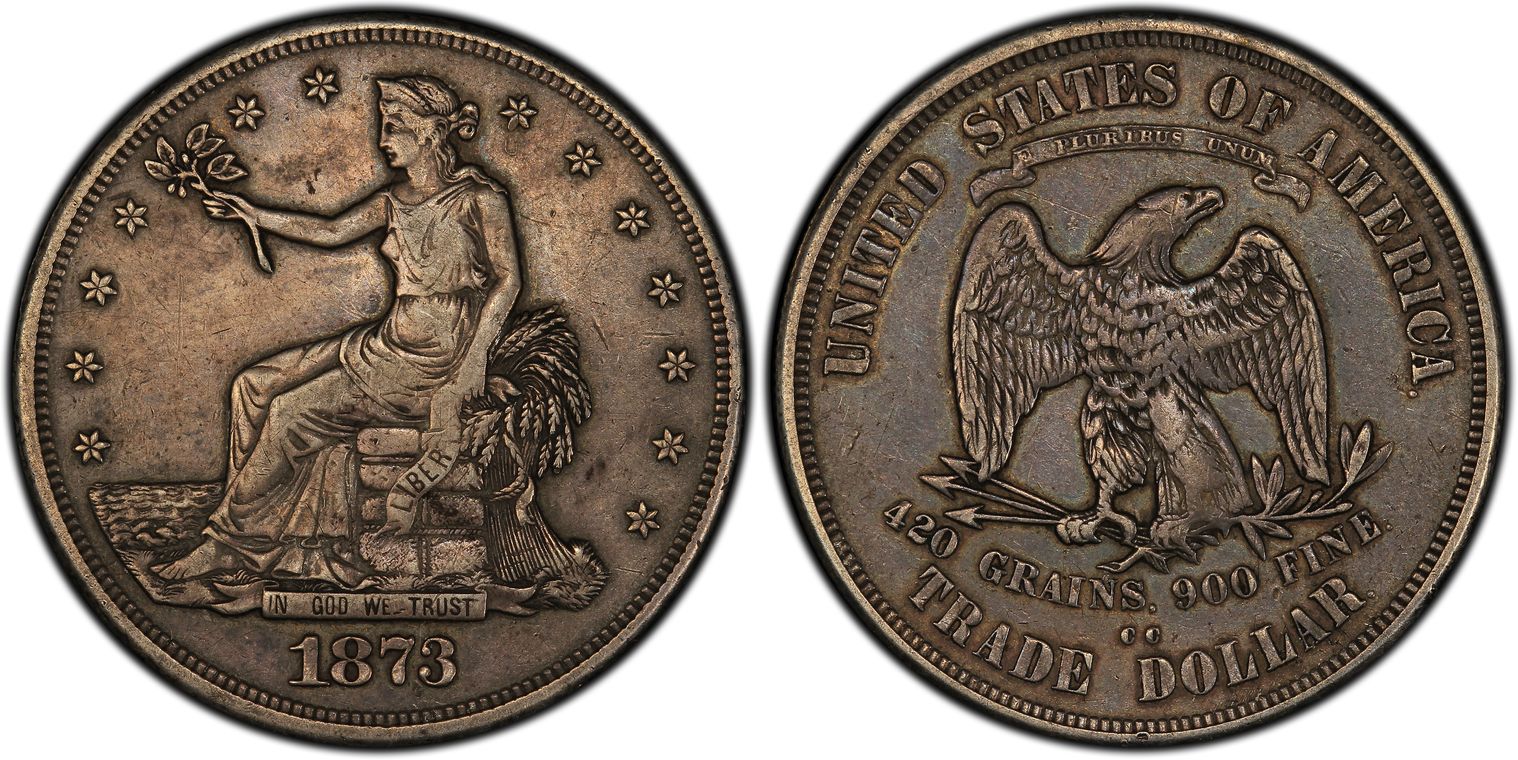
Produced for trade with China, most were transported by horse and wagon from Carson City to Virginia City, then by rail to San Francisco, where they were loaded onto ships headed to Asia. Most made it across the sea to China, although some circulated locally. This example, which I purchased from a Stacks-Bowers auction years ago, is one that apparently stayed in the United States. The 1873-CC is one of the keys of the Trade Dollar series. (Mintage 124,000; survivorship 1-2,000.)
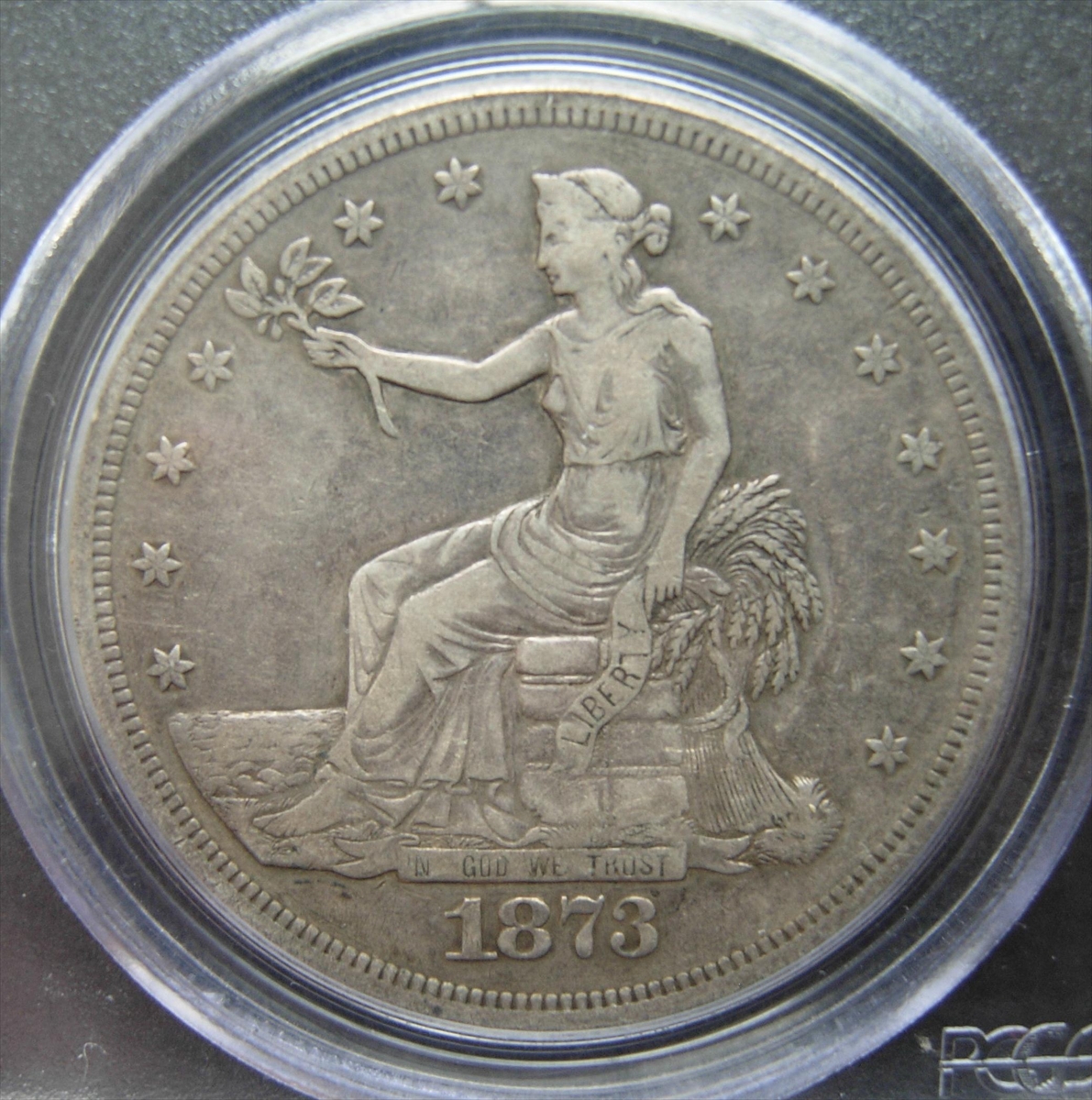
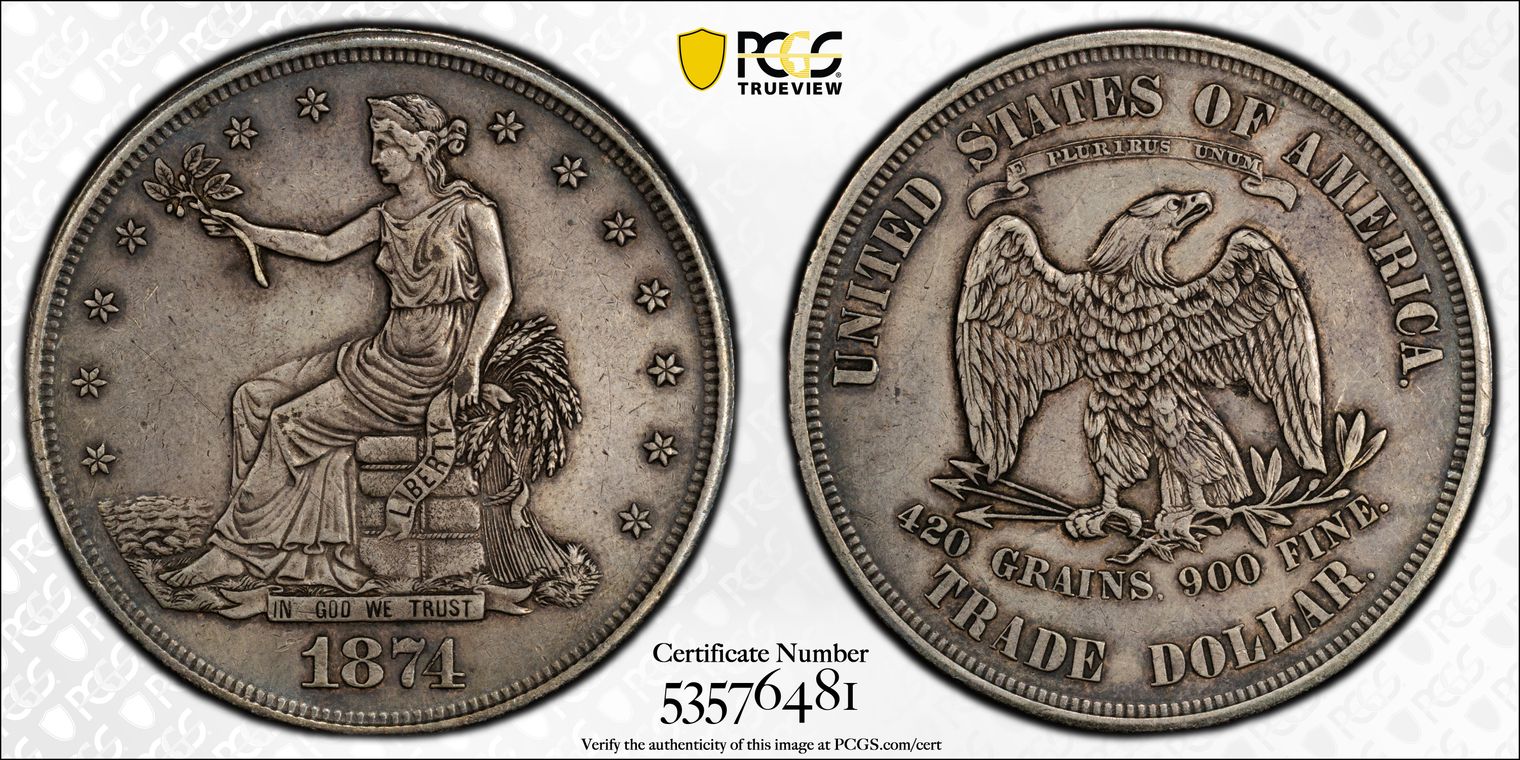
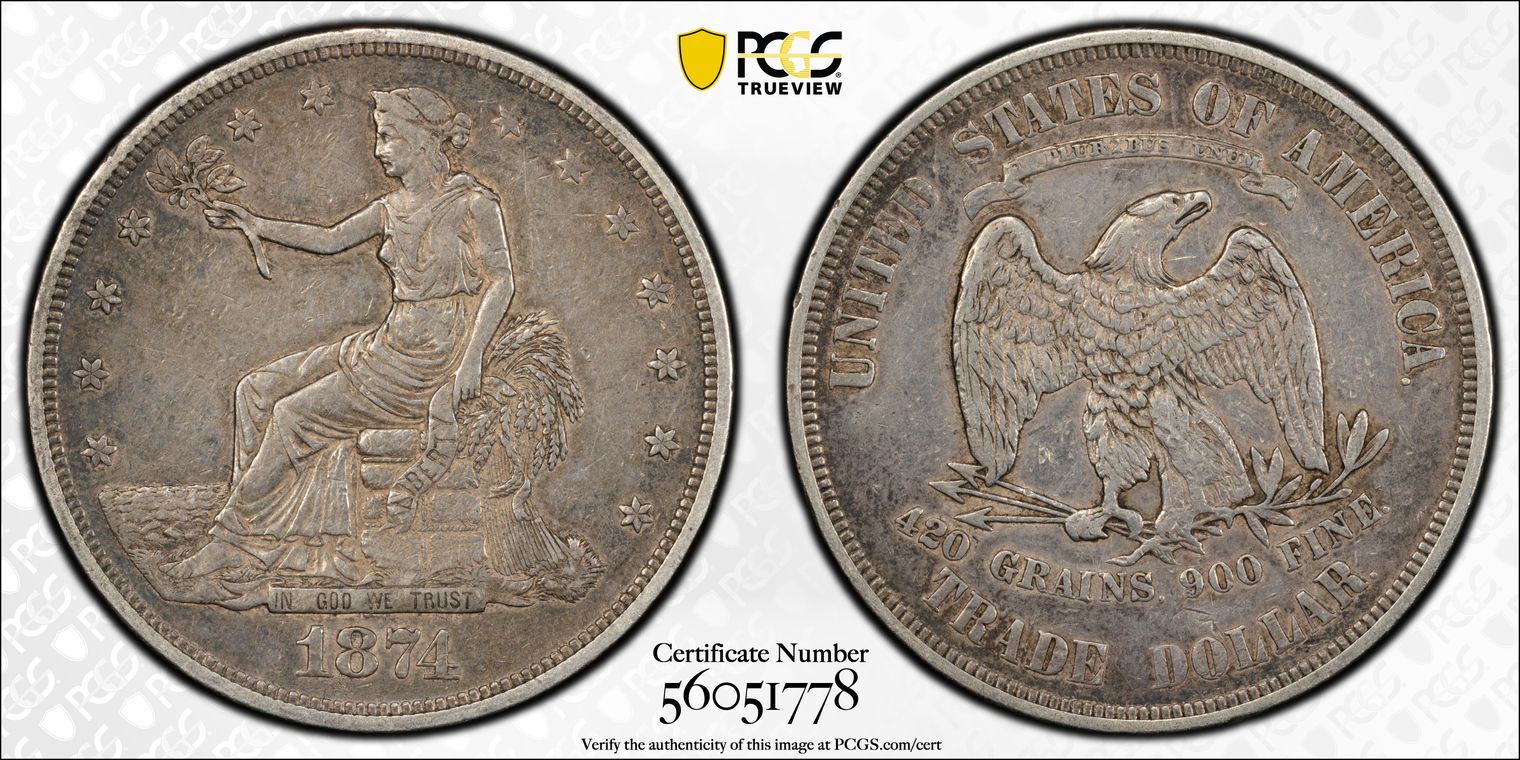
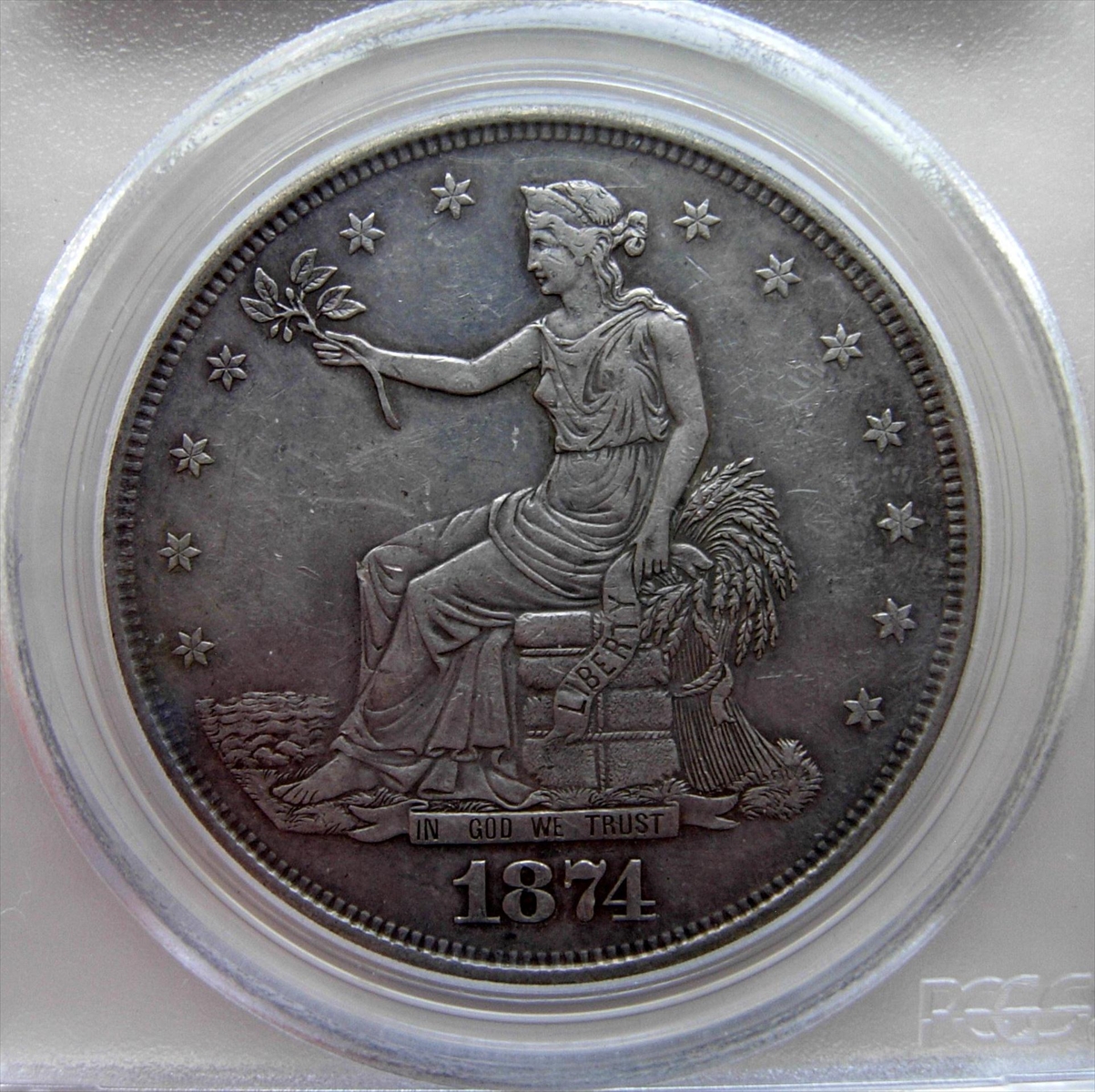
Very difficult to find. Bowers estimates 2,500-4,500 survived, but I believe the real number is much lower.
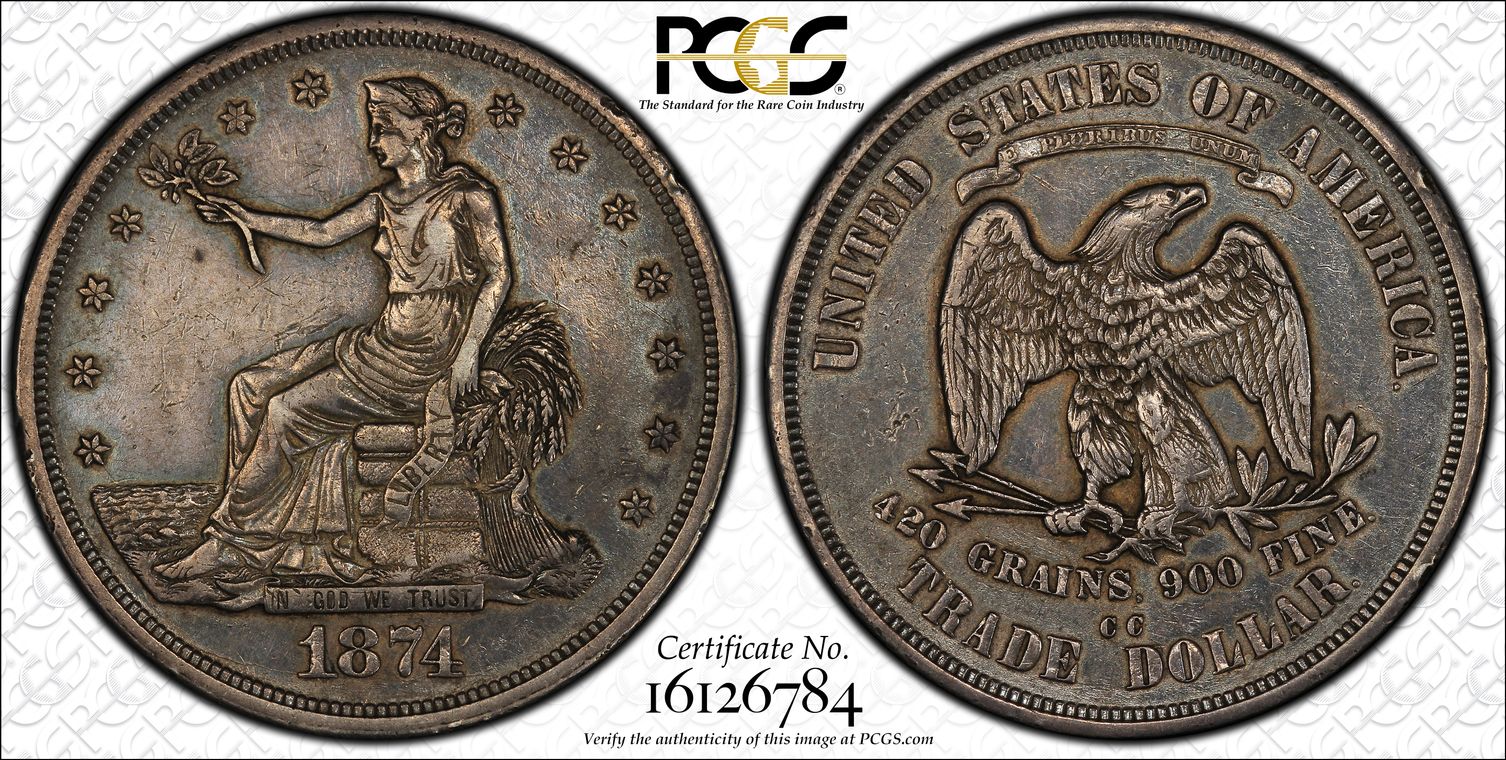
Trade dollar production in Carson City ramped up to over 1.3 million in 1874, most were shipped to China. 1874-CC Trade Dollars are (relatively speaking) common, both with or without chop marks. (Mintage 1,373,200; survivorship 2,500-5,000.)
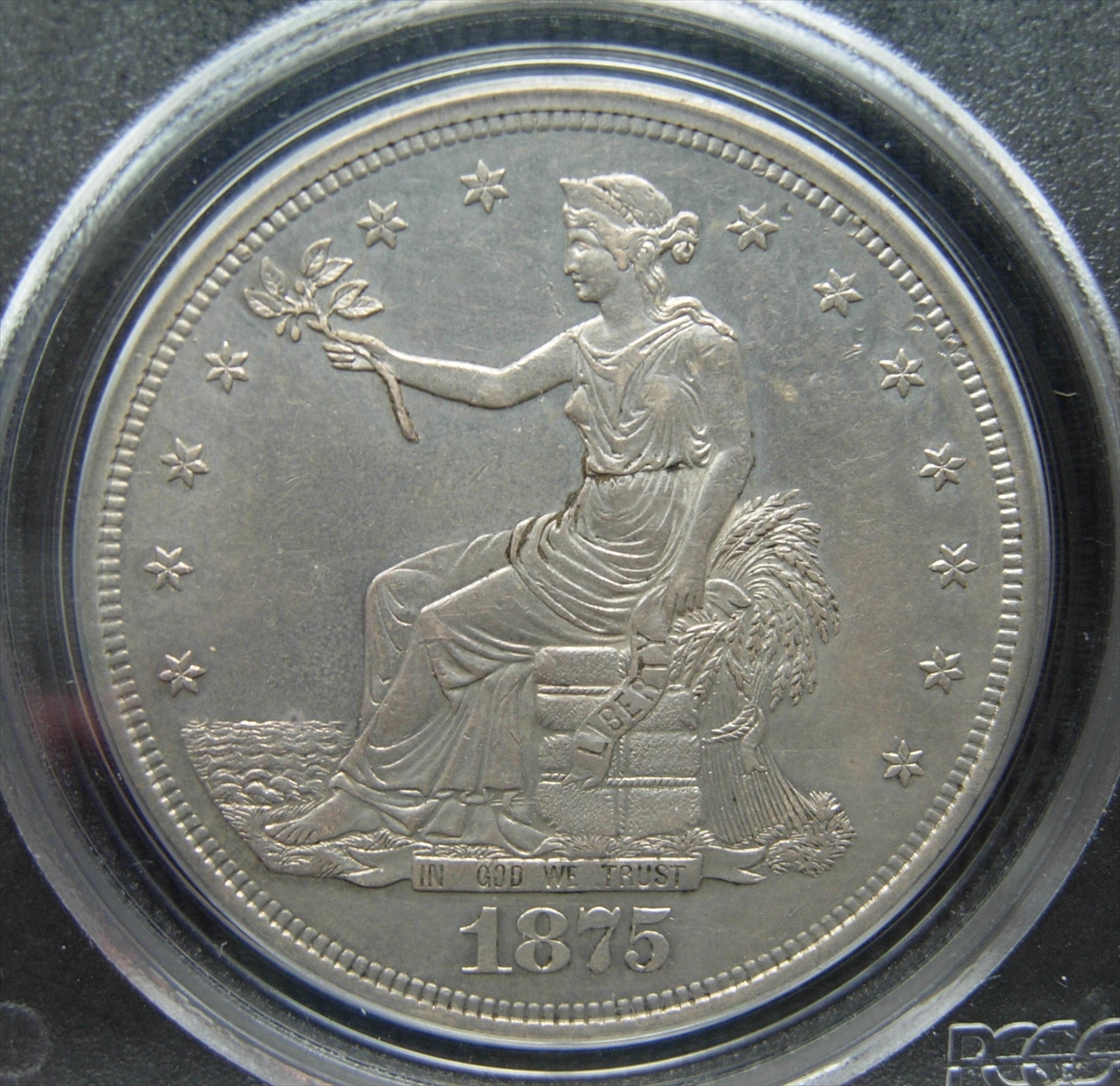
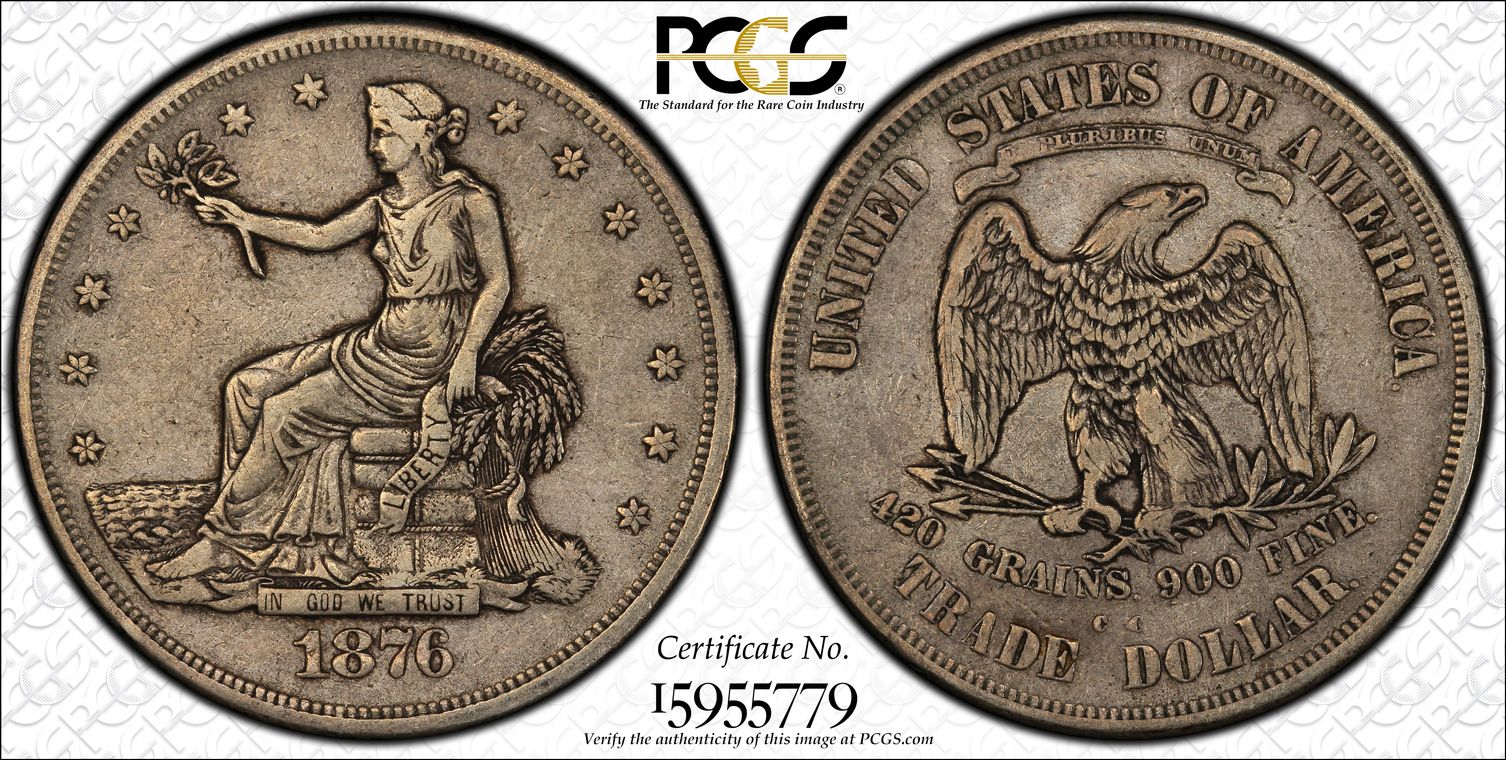
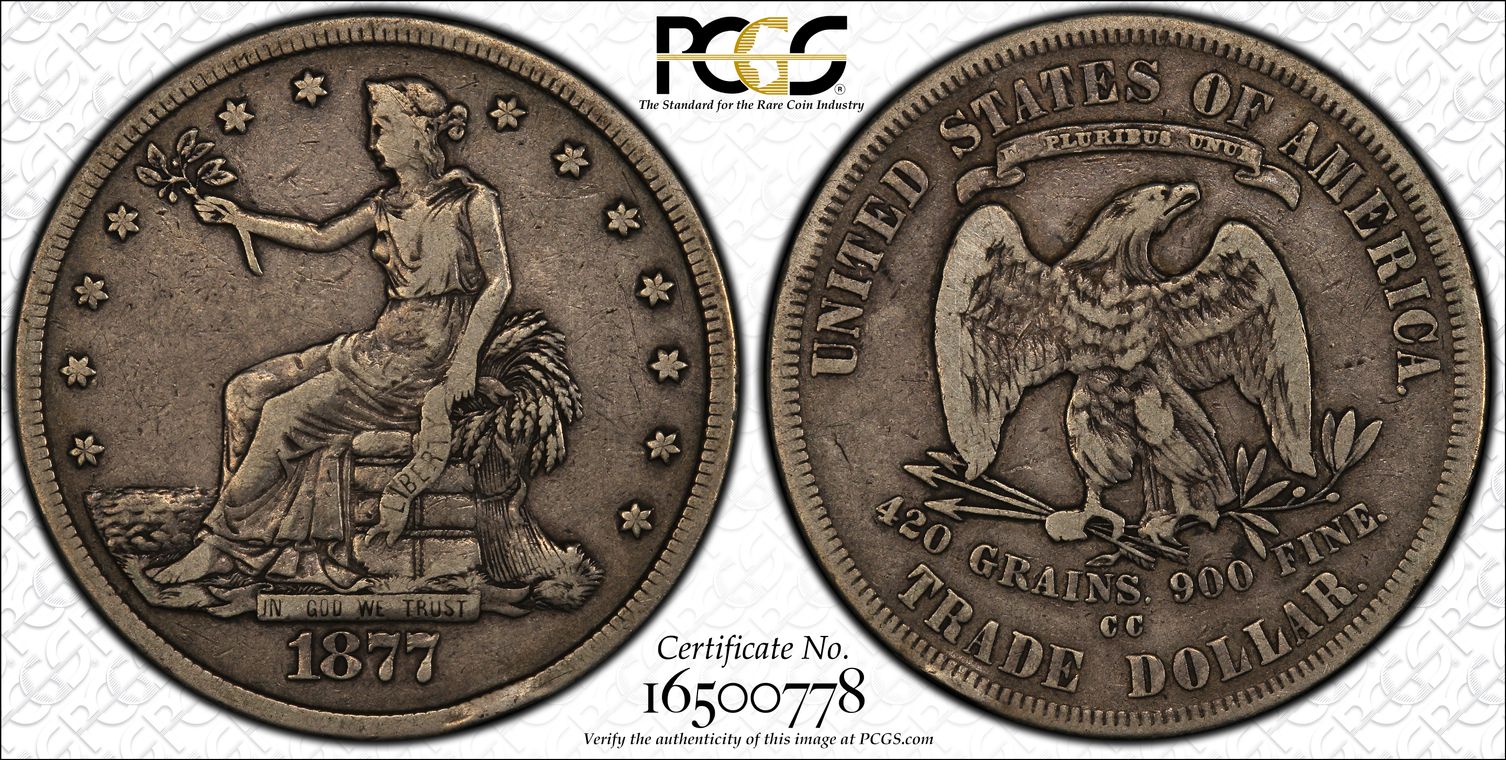
What makes the 1876-CC particularly interesting is that there are three very distinct reverse types: Type I; Type I Double Die Reverse (DDR); and Type II. Type II is the more common of the three. The Type I DDR is the most famous, with an easily seen doubled reverse, and prices for the DDR are significantly higher. However, even though it is priced the same as the Type II, the Type I without the DDR, like this one, is actually the rarest of the three. (Mintage 509,000; survivorship 1,500-2,500.)
This is a nice, circulated example of a Trade Dollar that remained in the United States. (Mintage 534,000; survivorship 400-800.)
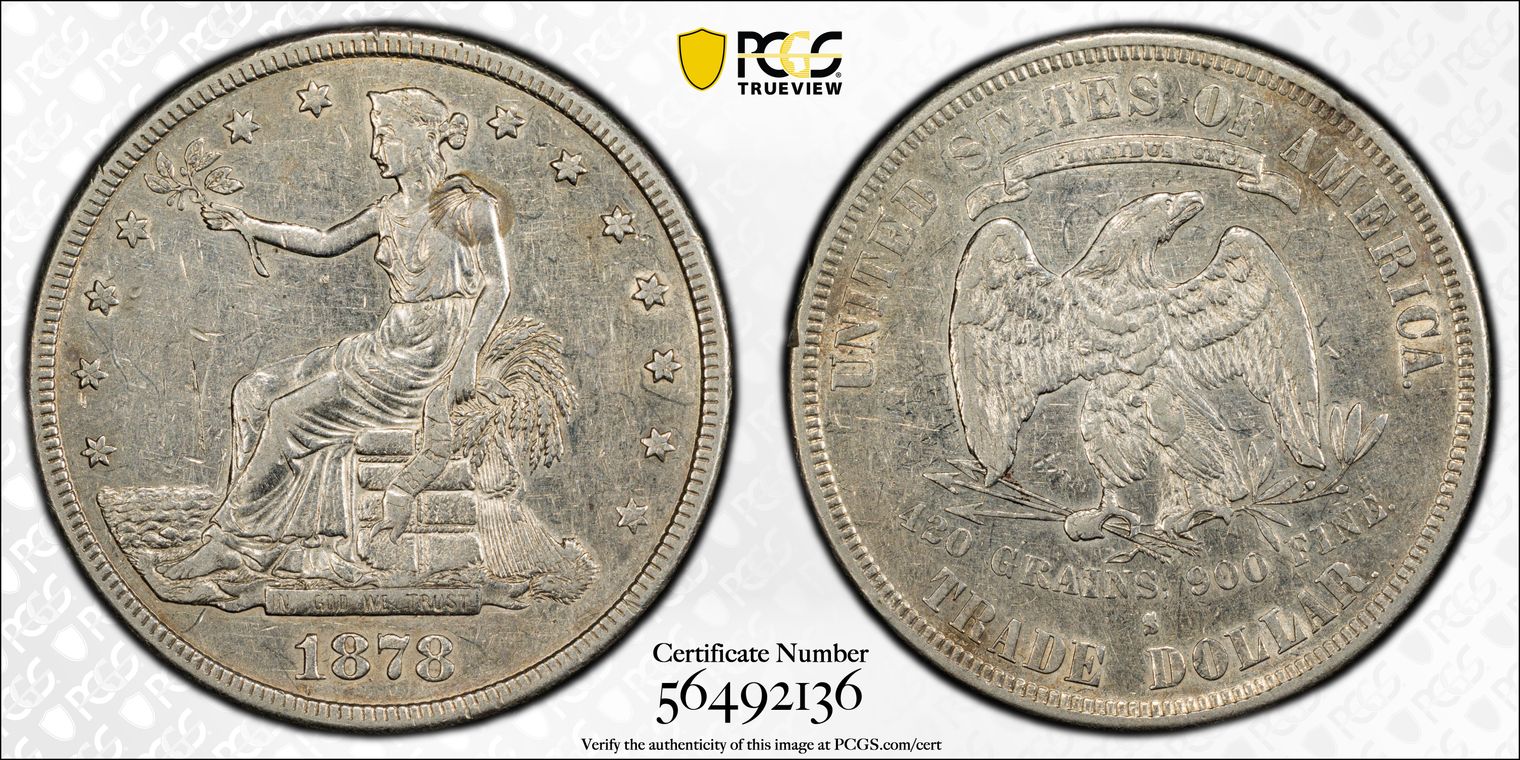
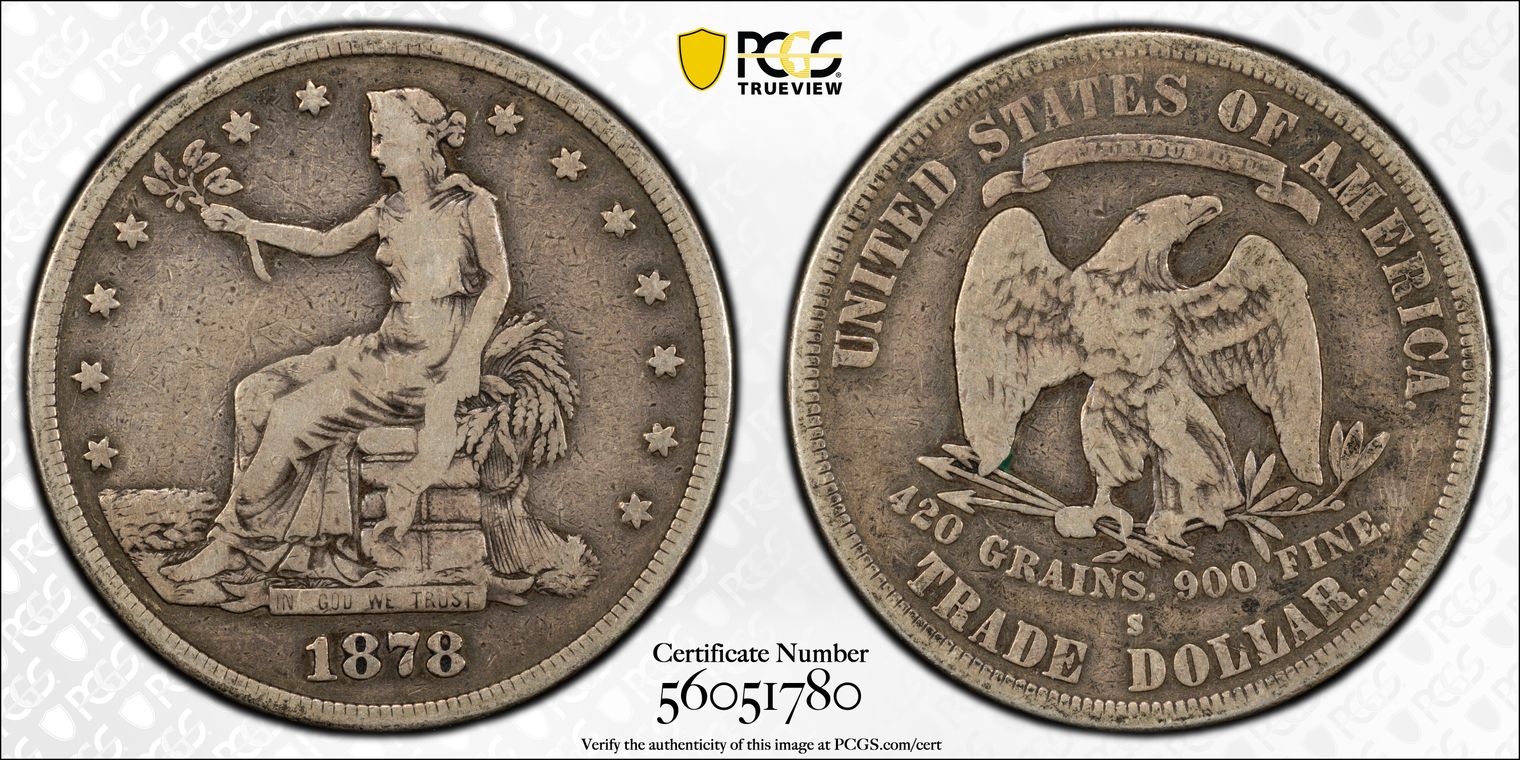
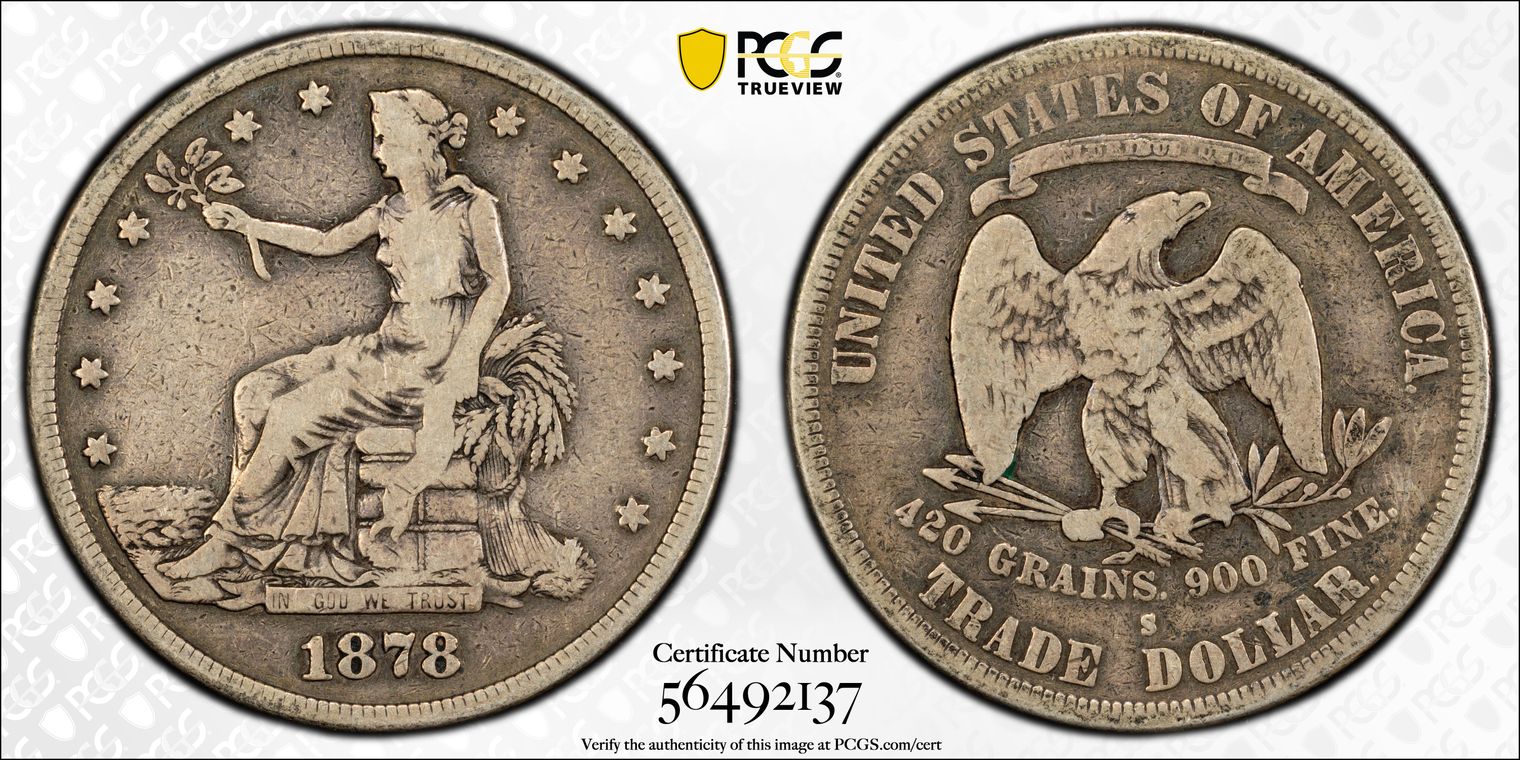
This well-worn example is actually a DDR! I need to talk to PCGS about this one.
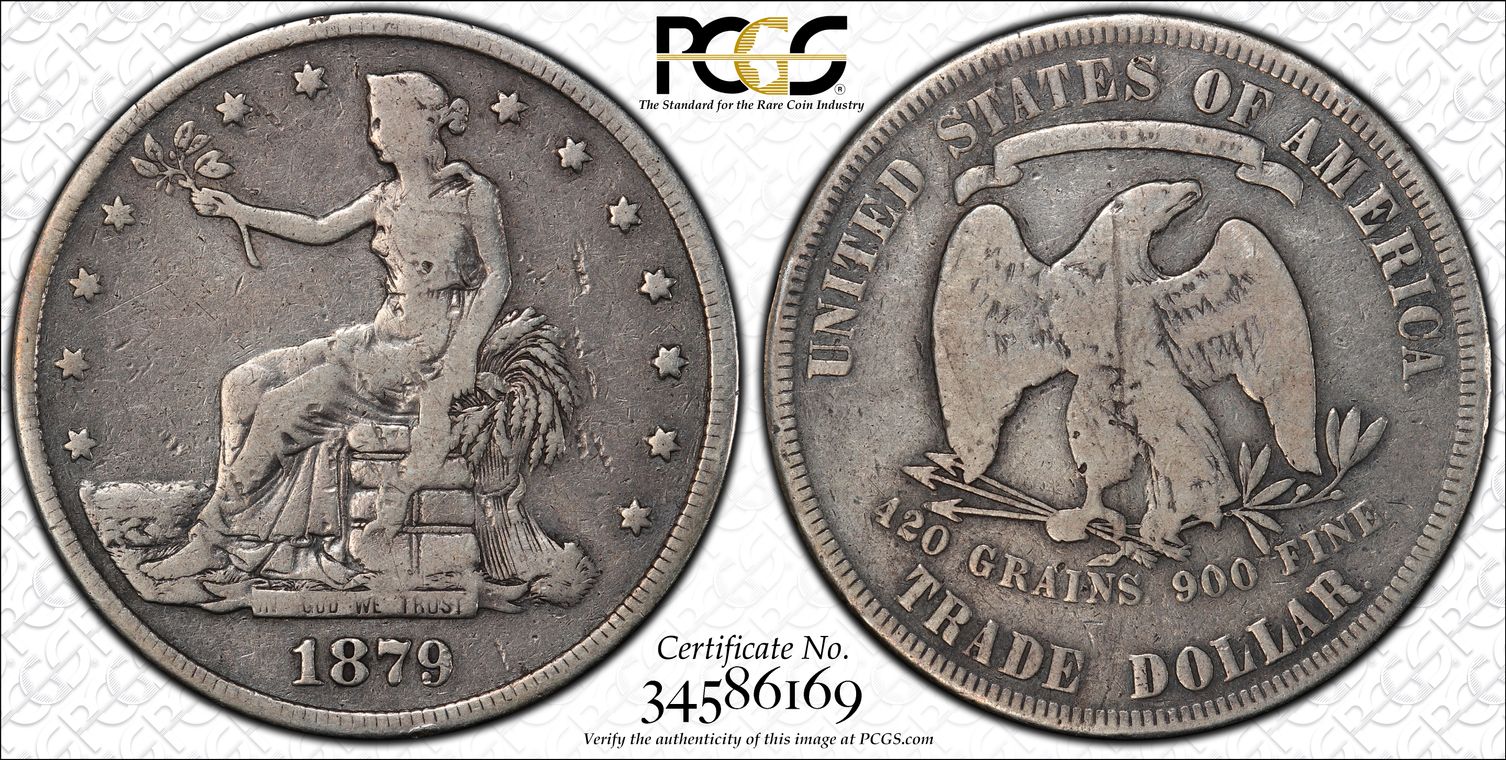
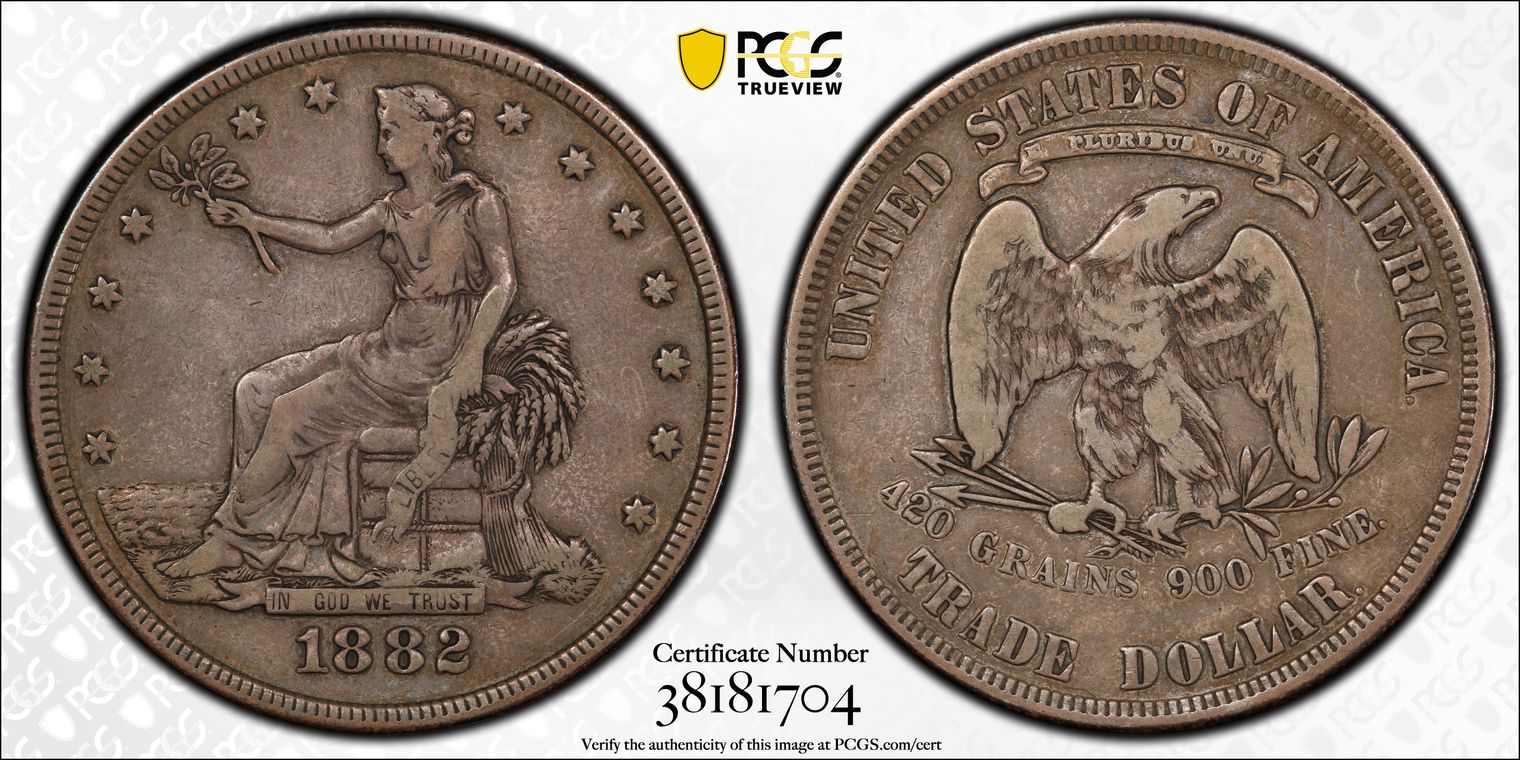
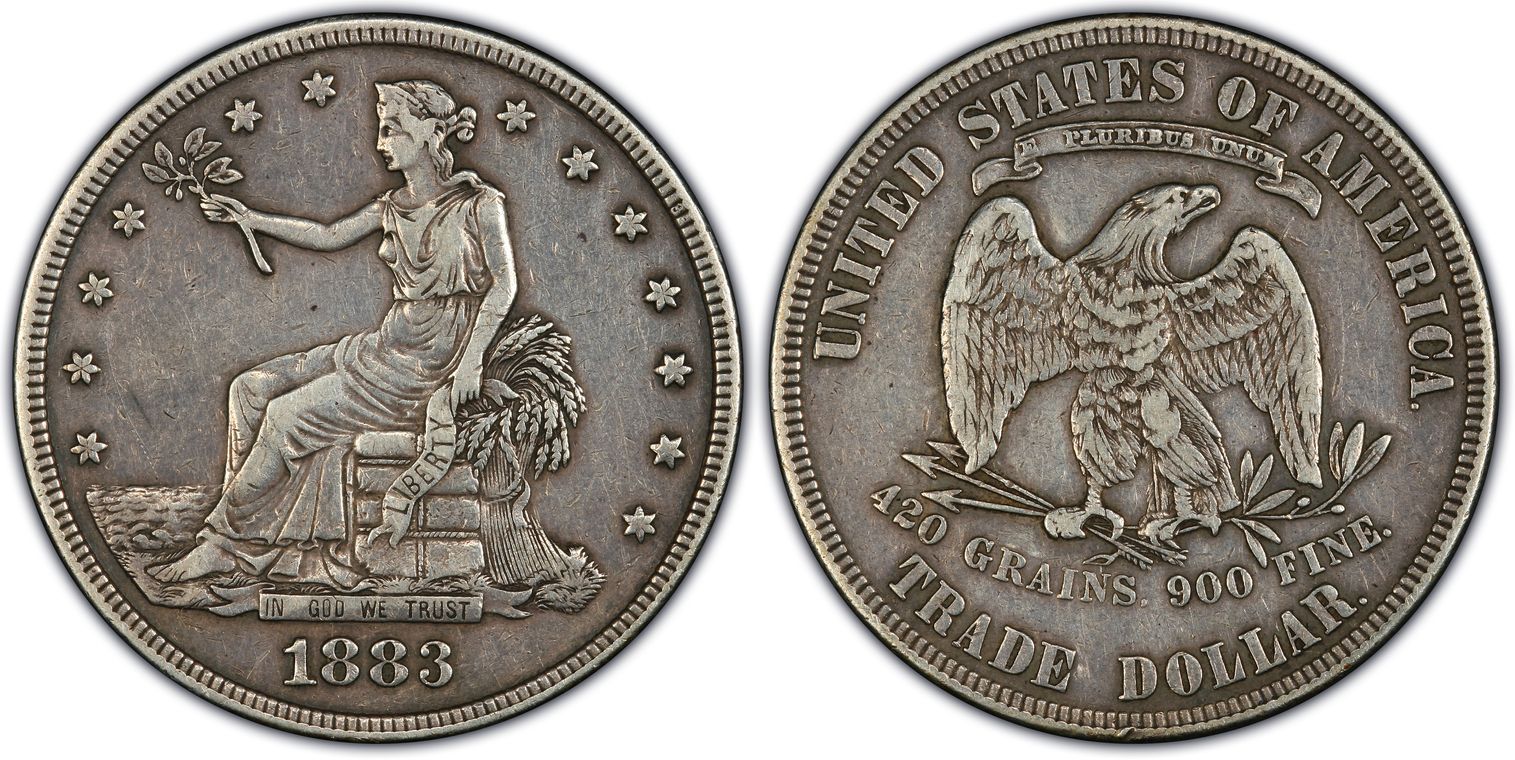
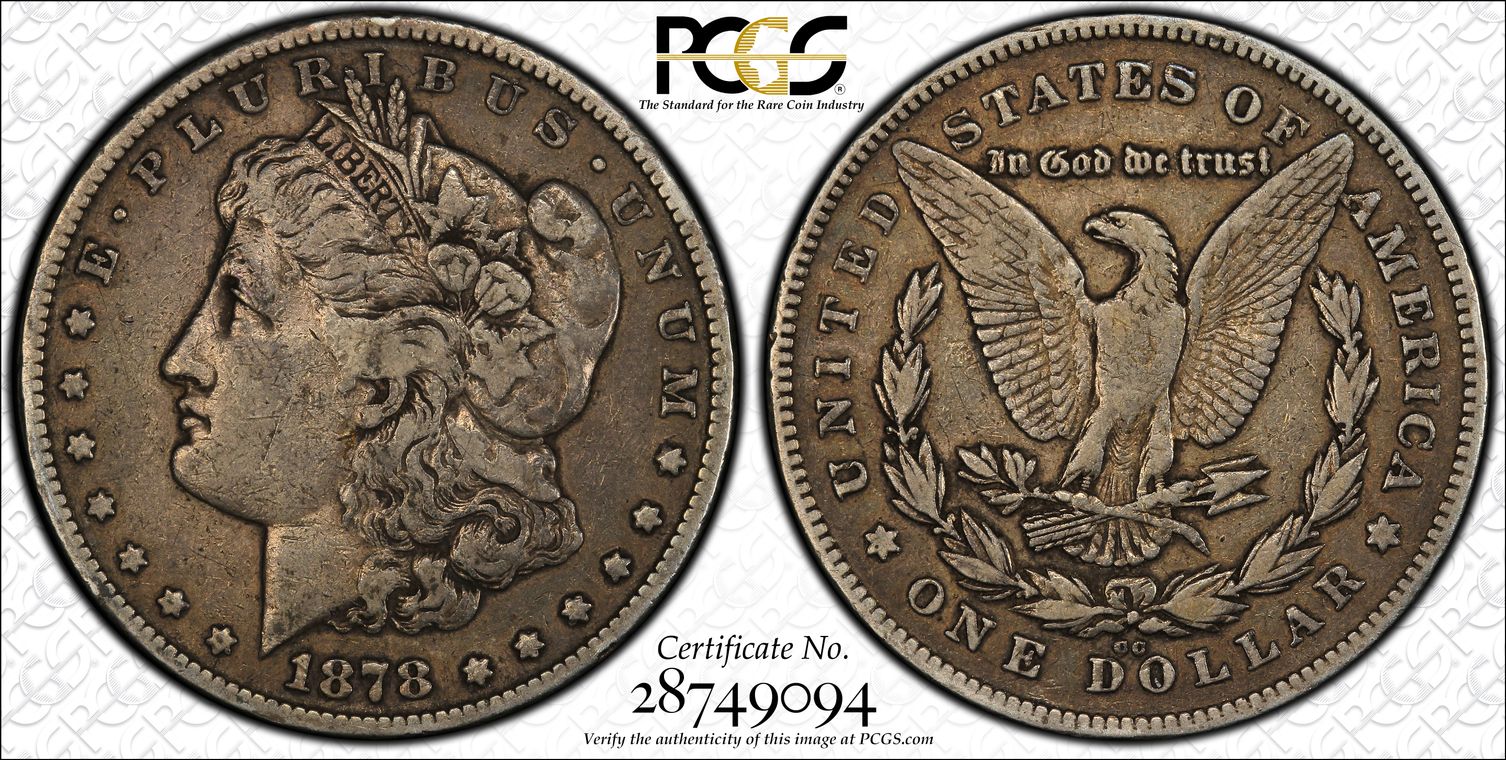
Shortly after the last of the Trade Dollars were minted, the Carson City mint began to churn out Morgan Dollars. All told, over 13.8 million were minted in Carson City, 3 times the amount of Trade Dollars and 725 times the number of Liberty Seated Dollars. Some of the 78-CCs were released locally, but many were shipped east. The 78-CC is one of the more available of the CC Morgan Dollars. (Mintage 2.2 million; survivorship in circulated grades is about 75-125,000.)
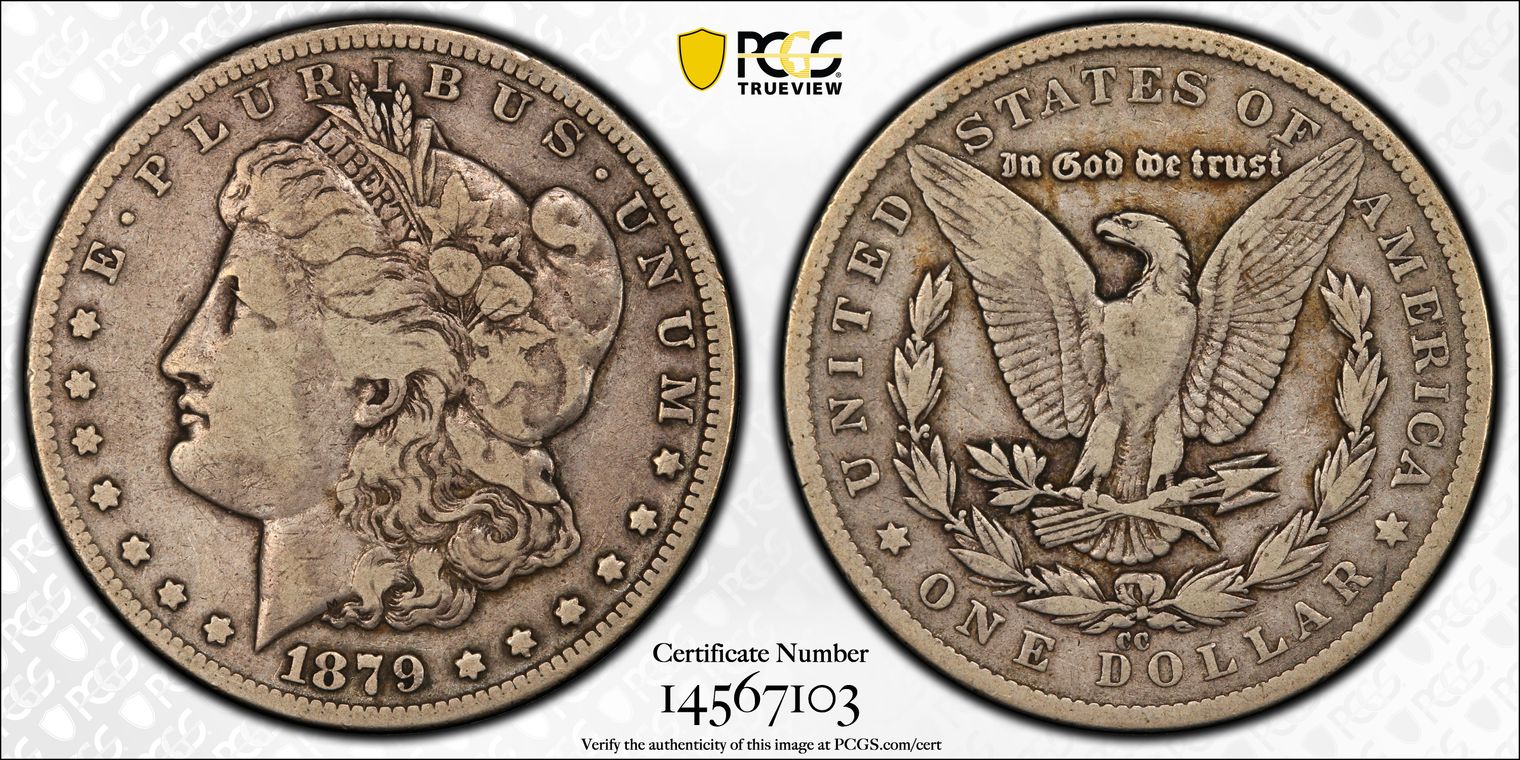
The 79-CC is one of the scarcest of the early Morgan years (1878-1885.) Only 756,000 were minted and only about 1500-3000 survive.
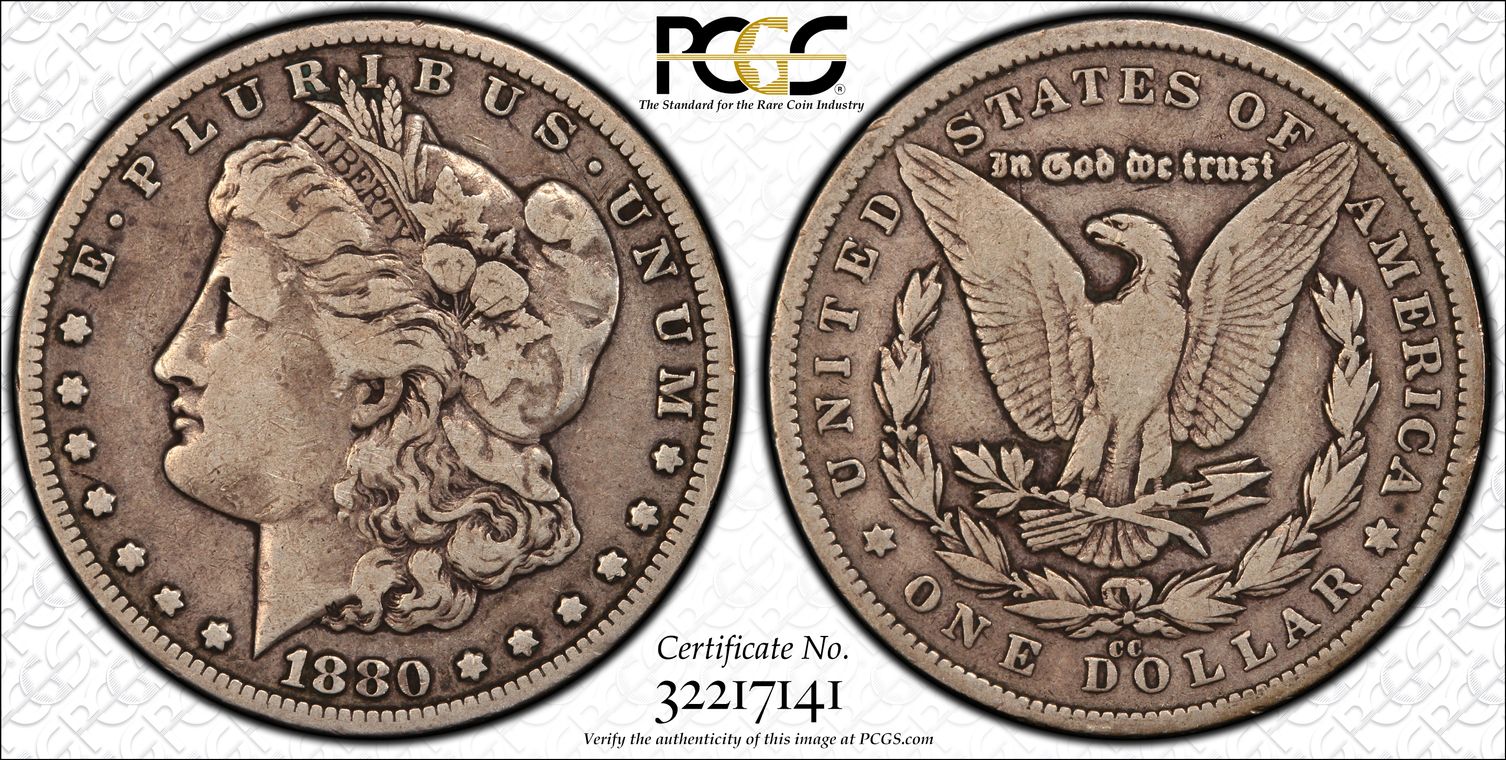
591,000 were minted, but 96,000 were melted at the mint because they were underweight, leaving a net mintage of 495,000. Survivorship in circulated grades is 10-20,000, although several hundred thousand exist in Uncirculated. It is quite possible that most of the 1880-CCs minted over 135 years ago still exist today.
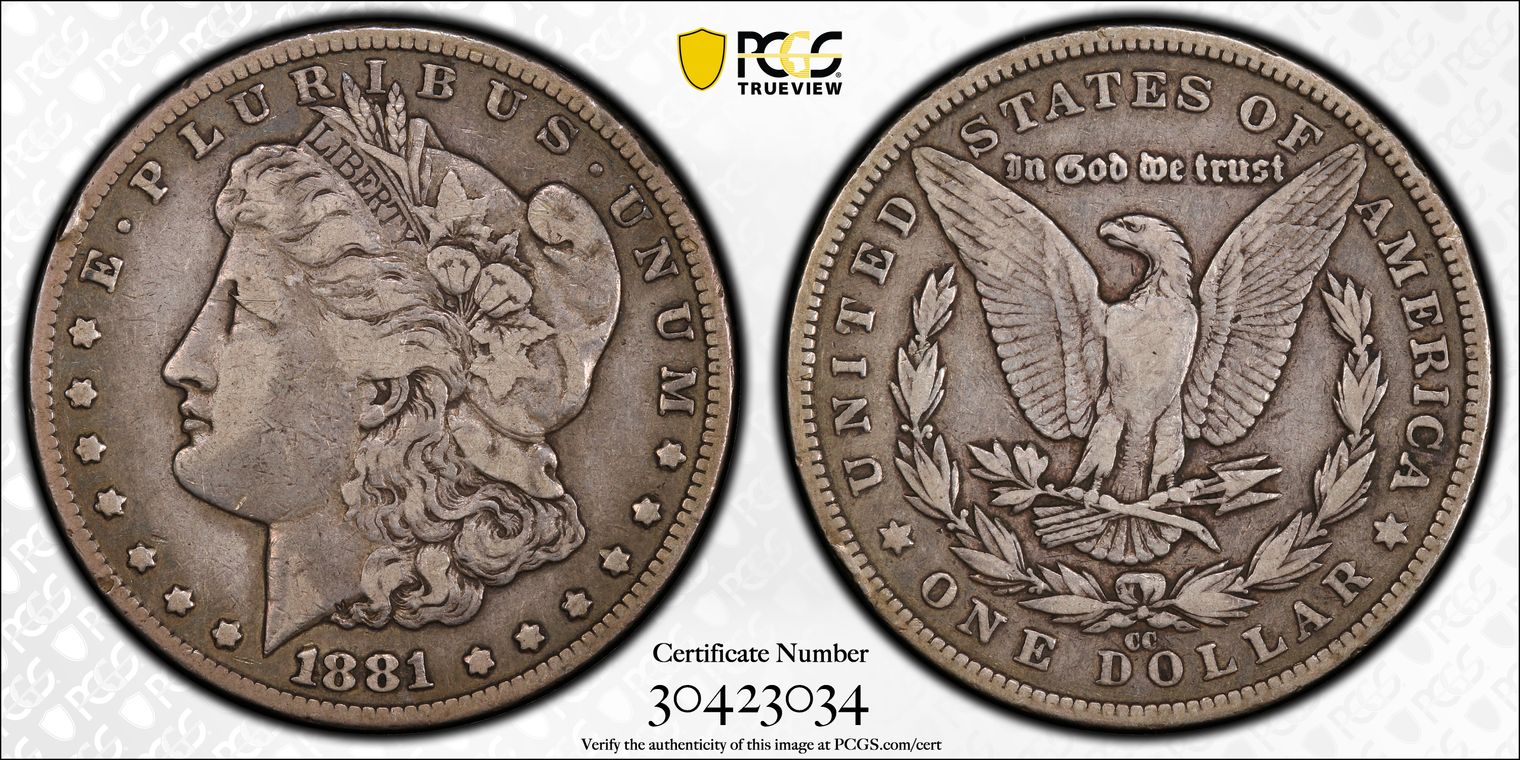
Only 296,000 were minted by April 1, 1881, when coinage of silver dollars was suspended for the year. Nearly all remained in the mint vault until 1885 when they were shipped to U.S. Treasury Department facilities in Washington, D.C. and San Francisco. Only a very few were released locally, including this one. Circulated survivorship is around 3,500-6,000. Most of the original mintage survives to this day in Uncirculated condition.
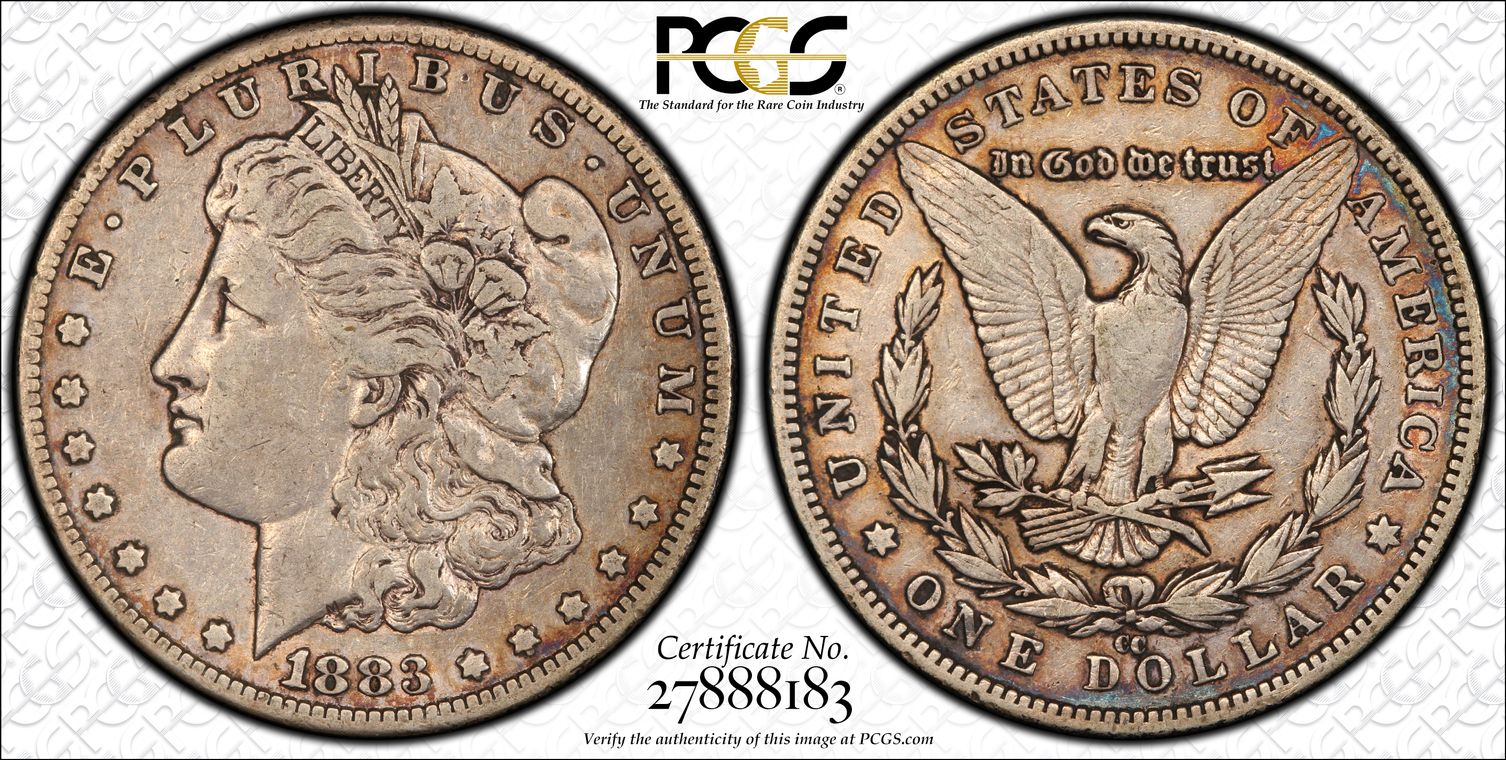
1883 was another year of high silver dollar production at the Carson City mint, over 1.2 million silver dollars were produced. And again, as in the preceding years, most were put into storage. In fact, the GSA population was over 750,000 meaning that over 60 percent survived until the GSA sales in the 1970s. This one may have spent some time in a cardboard album after circulating extensively, as rose and blue toning is just starting to peek out from around the rims.
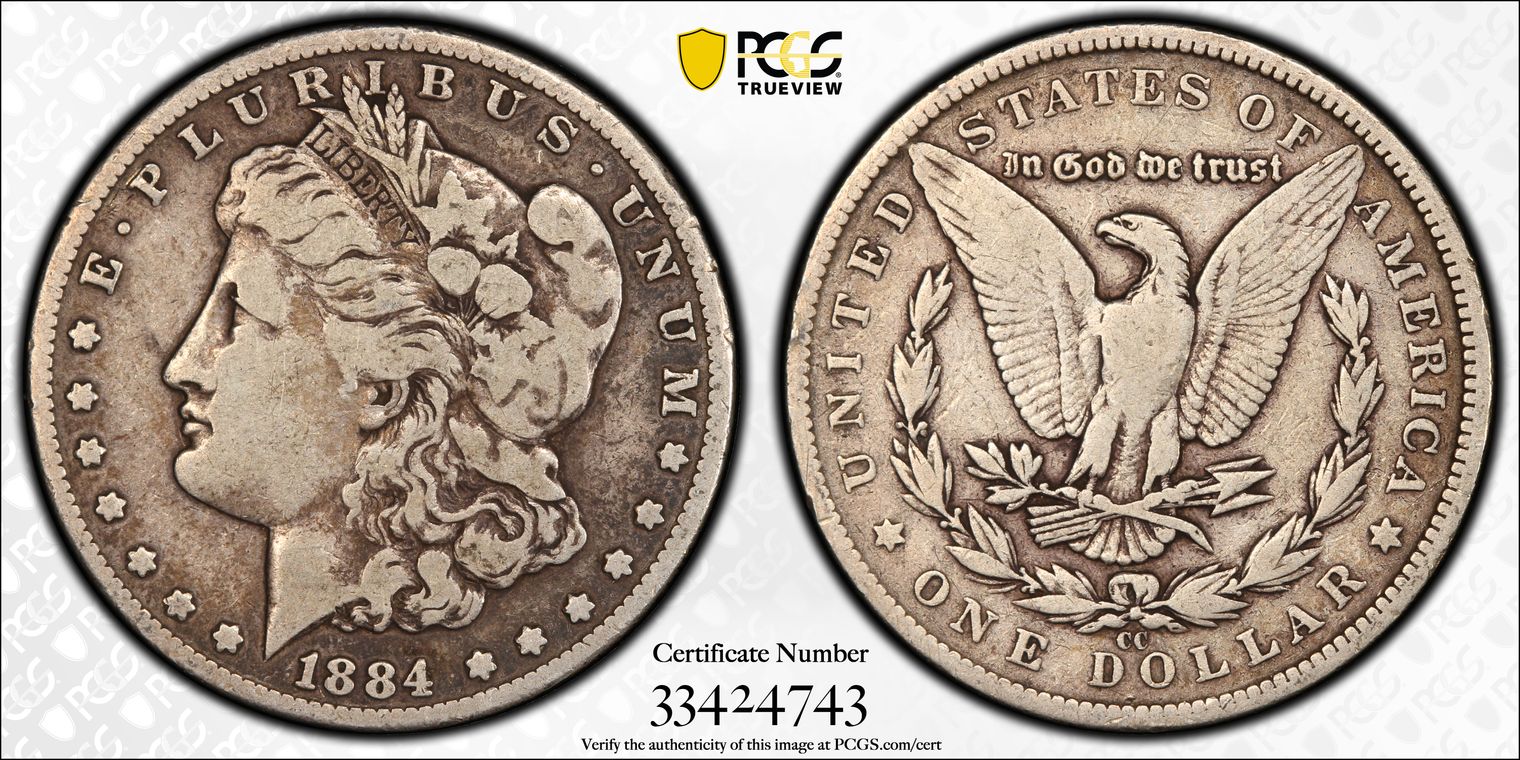
Almost every single one of the over 1.1 million silver dollars minted by the Carson City mint in 1884 stayed in vaults. A few were purportedly paid out in 1938-1939, but even as late as 1964, approximately 85 percent of the original mintage remained in U.S. government vaults. That’s what makes well-worn examples like this F-15 specimen so difficult to find.
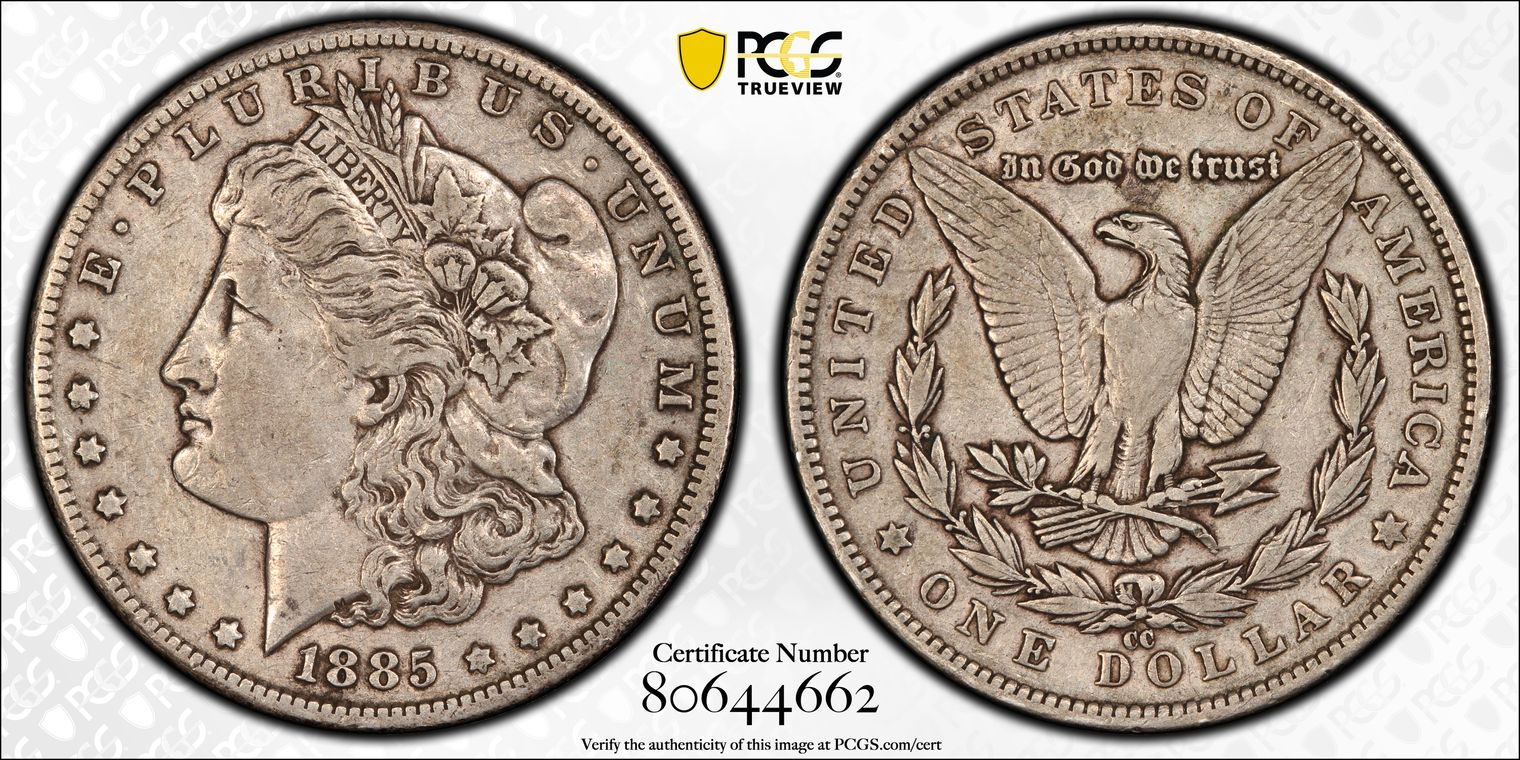
The 1885-CC is the rarest circulated Carson City Morgan Dollar and one of my favorite all-time coins. Few were made, only 228,000, and only a handful made it into circulation. It is a challenge to find a nice, circulated example. The photo does not quite do this coin justice as it is darker, and more original looking in hand. Bowers estimates 2-4,000 exist today in circulated condition; most of the original mintage still survives today in Uncirculated condition.
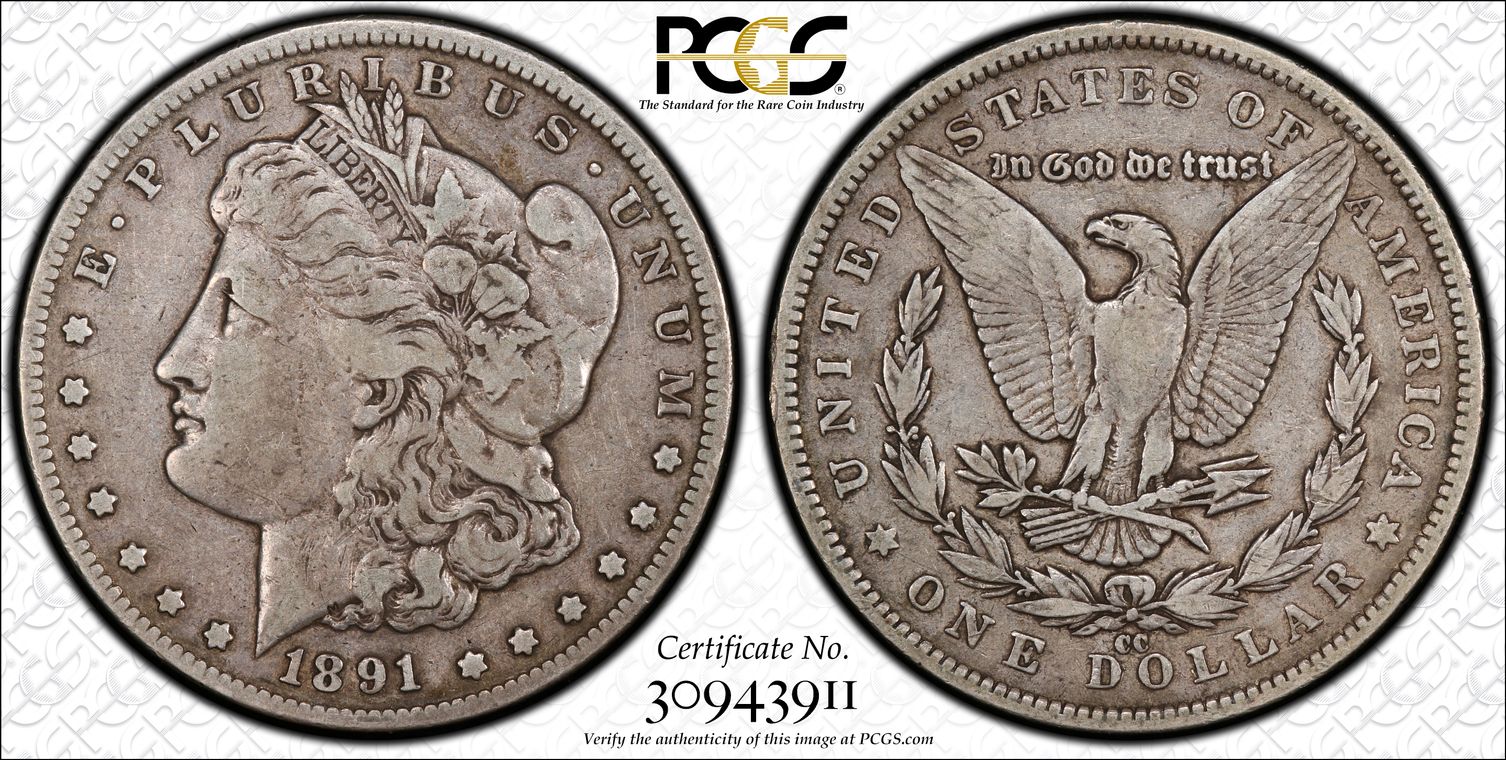
Also fairly common is the 91-CC, many are believed to have been put in circulation shortly after being minted. More were later released in the 1920’s, 30’s and 40’s. Few, if any, were left in storage by the 1960’s. Mintage 1.6 million, about 90-170,000 exist today.
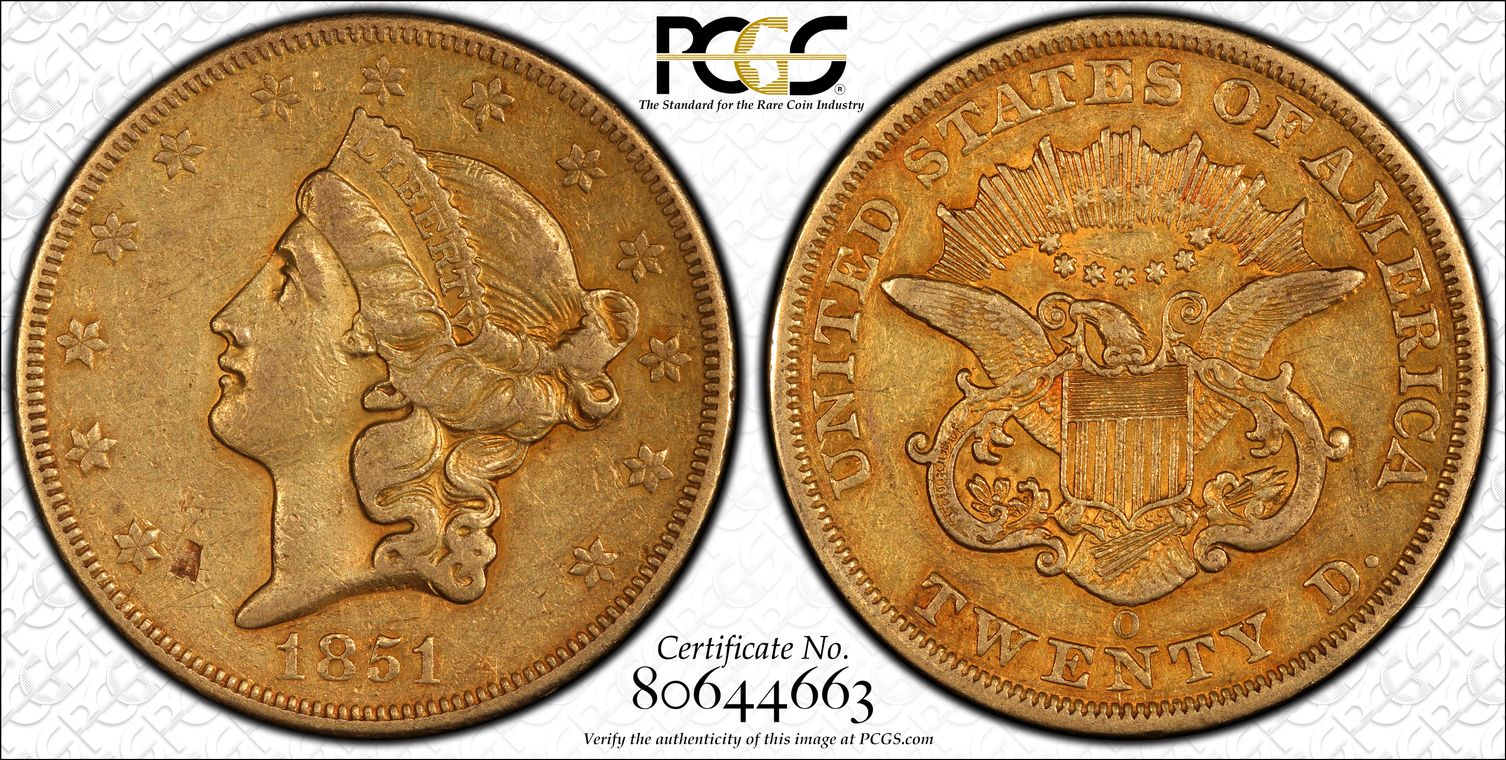
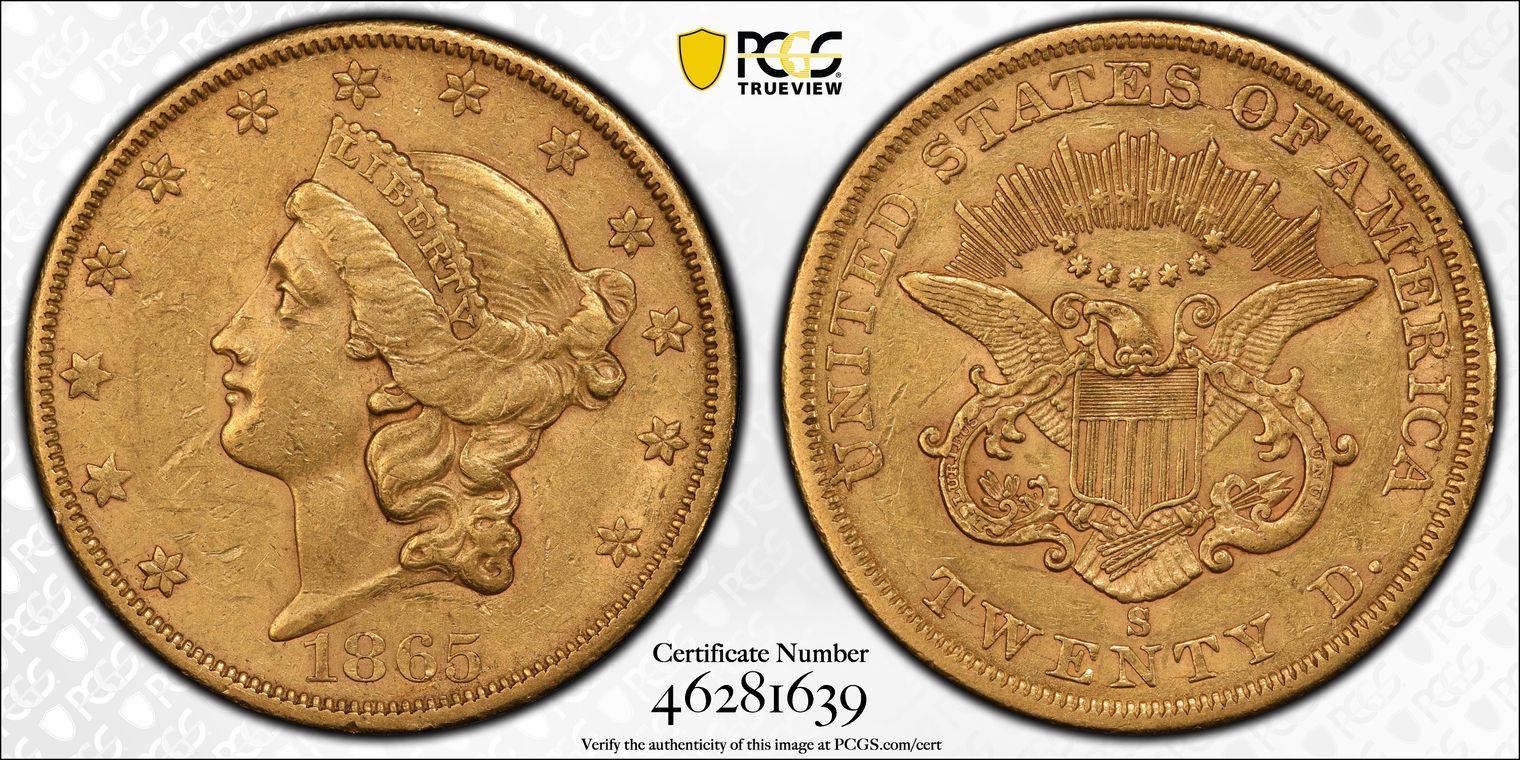
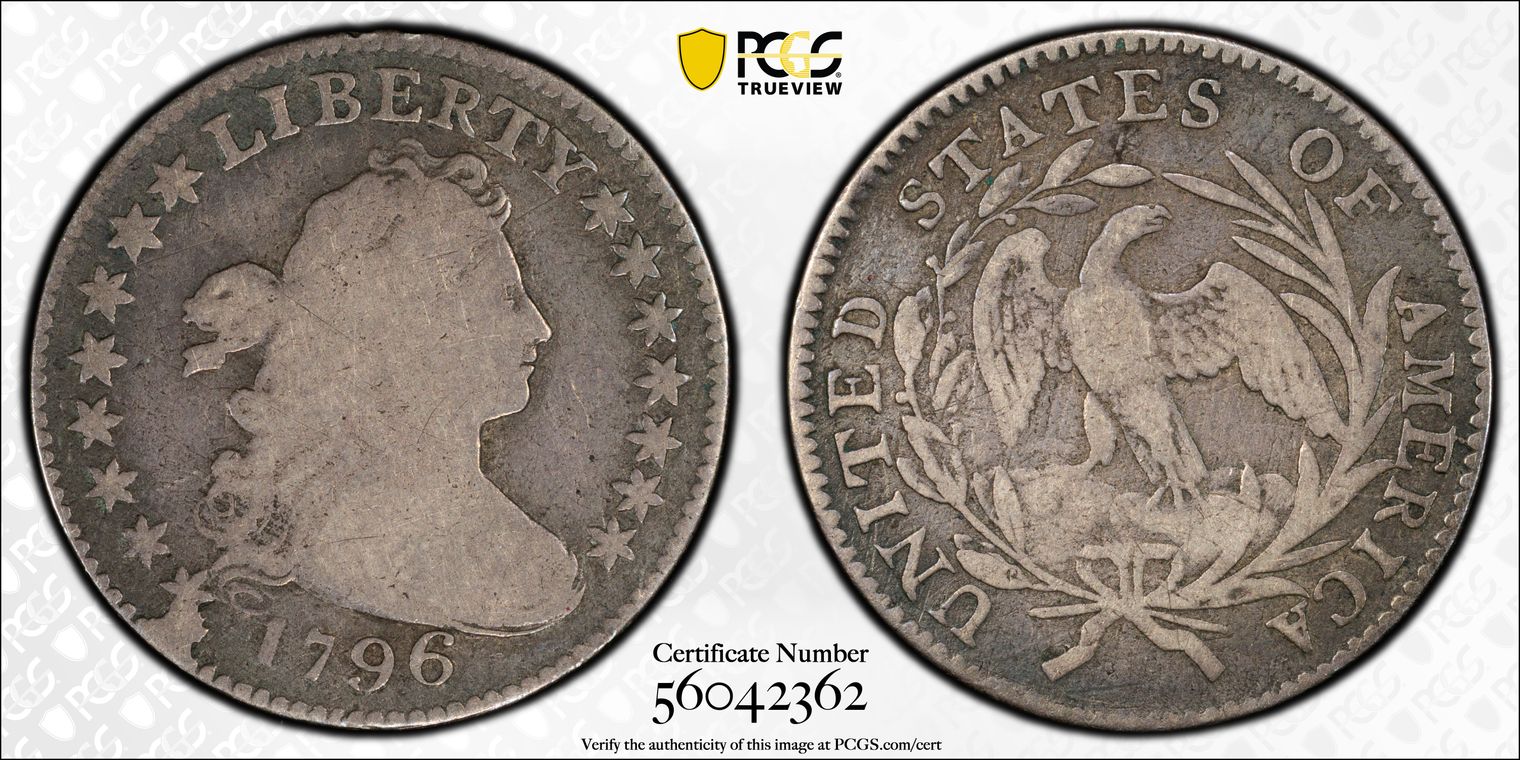
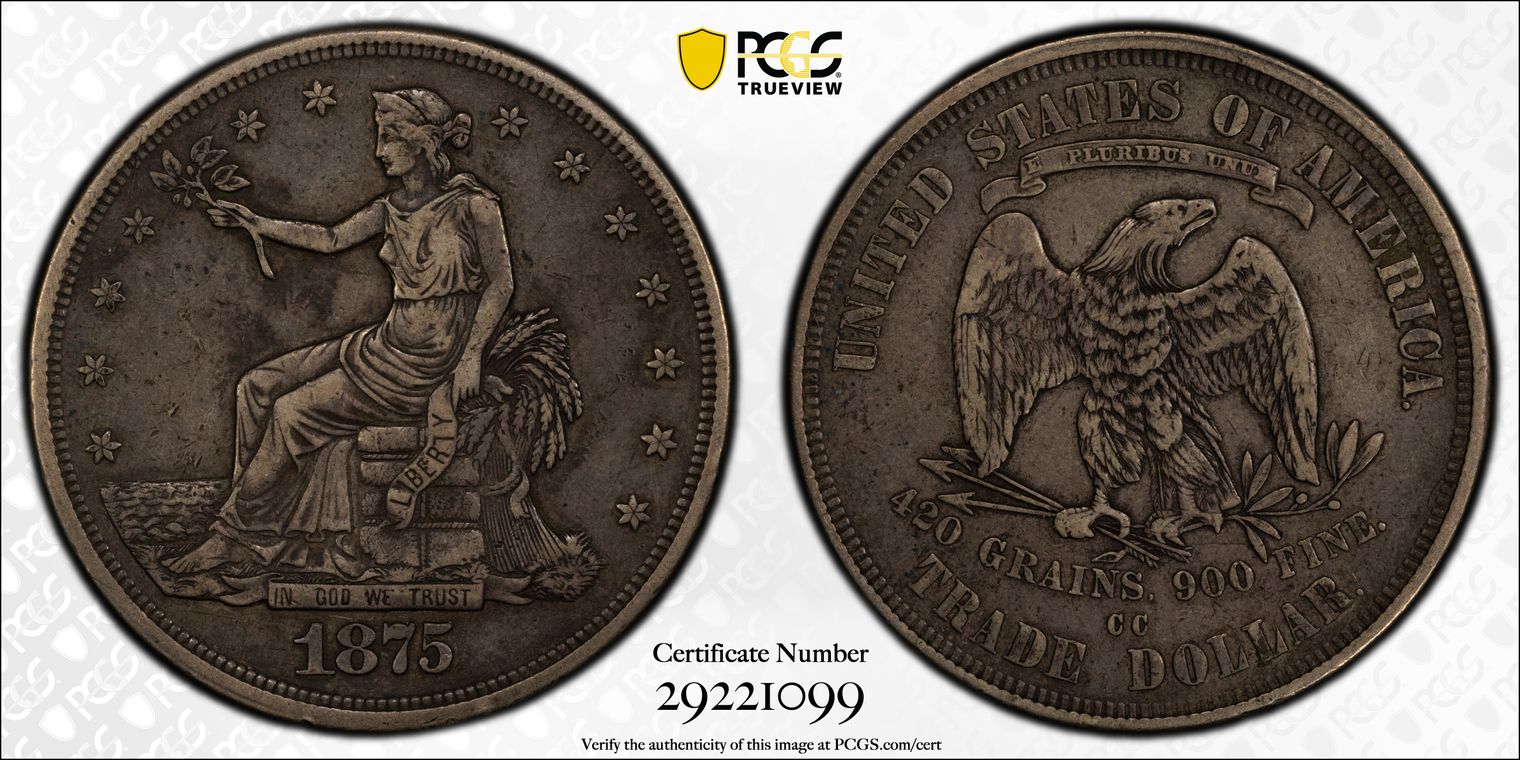
Like the 1874-CC, the 1875-CC was produced in relatively high numbers. Most went to China, but a fairly significant number stayed in the United States and circulated here. There are two varieties, a Type I reverse with a berry under the eagle’s claw, and a Type II reverse, without the berry. The vast majority are Type I; this, however, is the very scarce Type II variety. (Mintage 1,573,700; survivorship 4,000-8,000.)
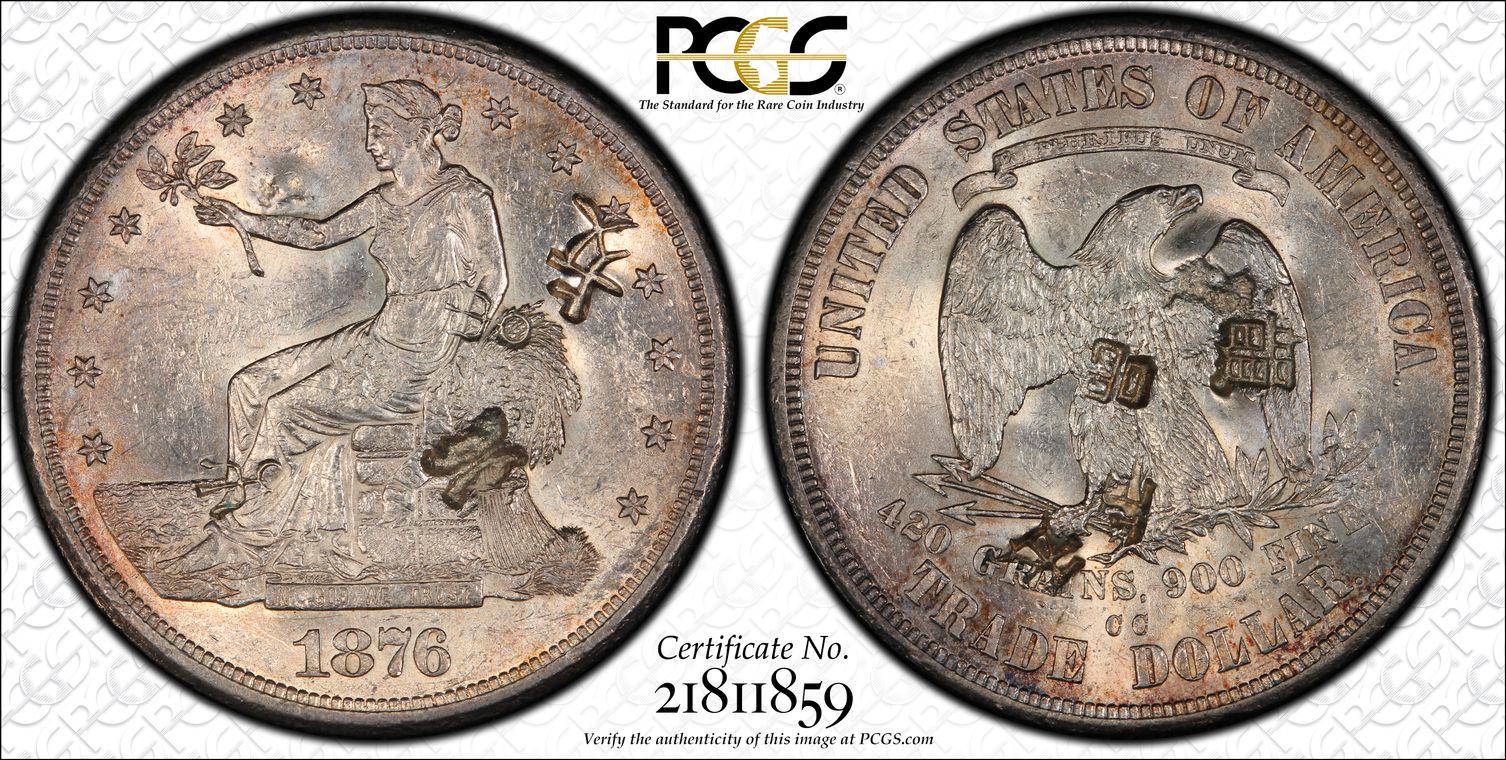
This is the highest graded chopmarked 76-CC with a Double Die Reverse. A neat error, the doubling is pronounced and easily visible to the naked eye.
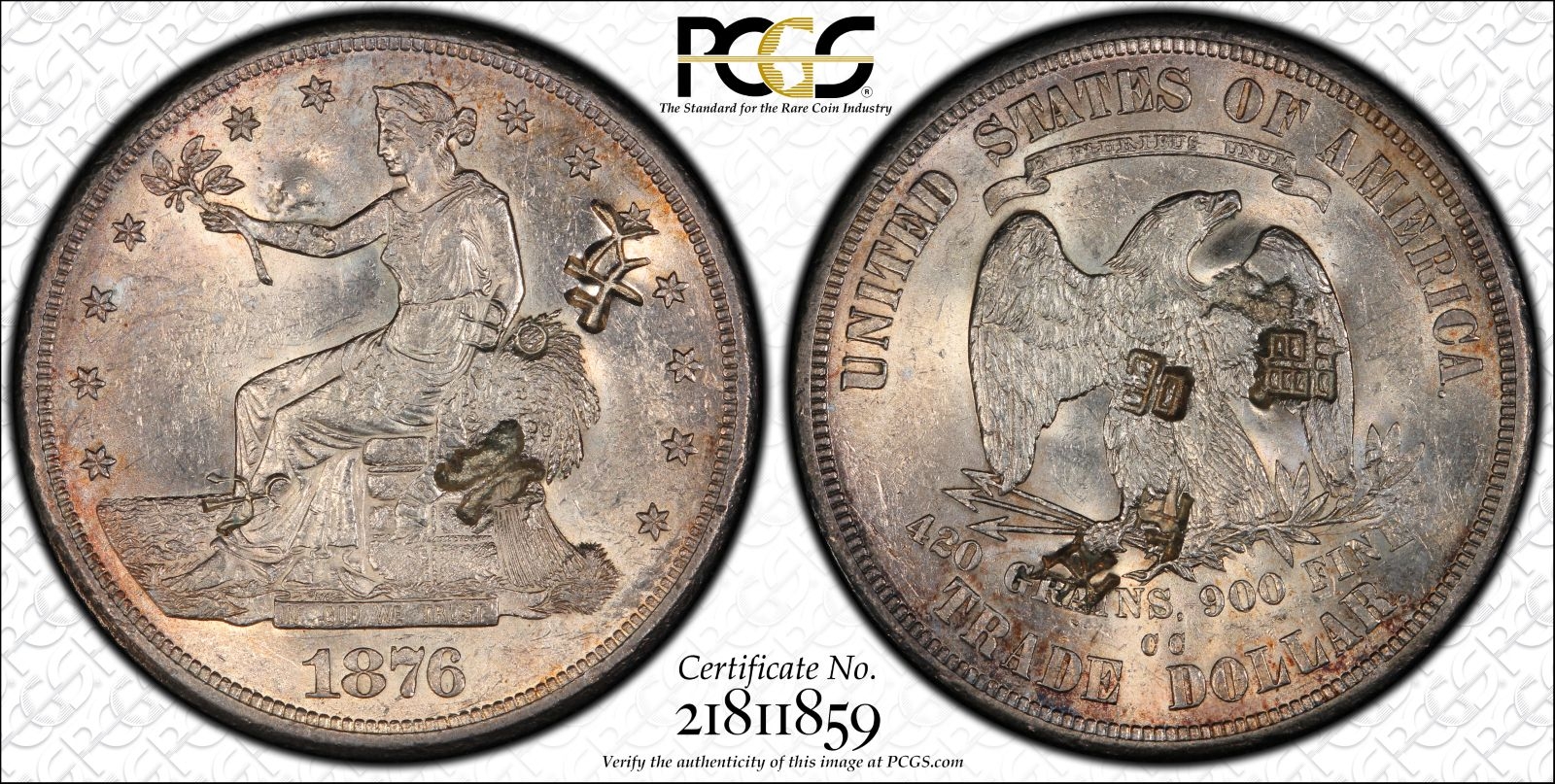
This is the highest graded chopmarked 76-CC with a Double Die Reverse. A neat error, the doubling is pronounced and easily visible to the naked eye.
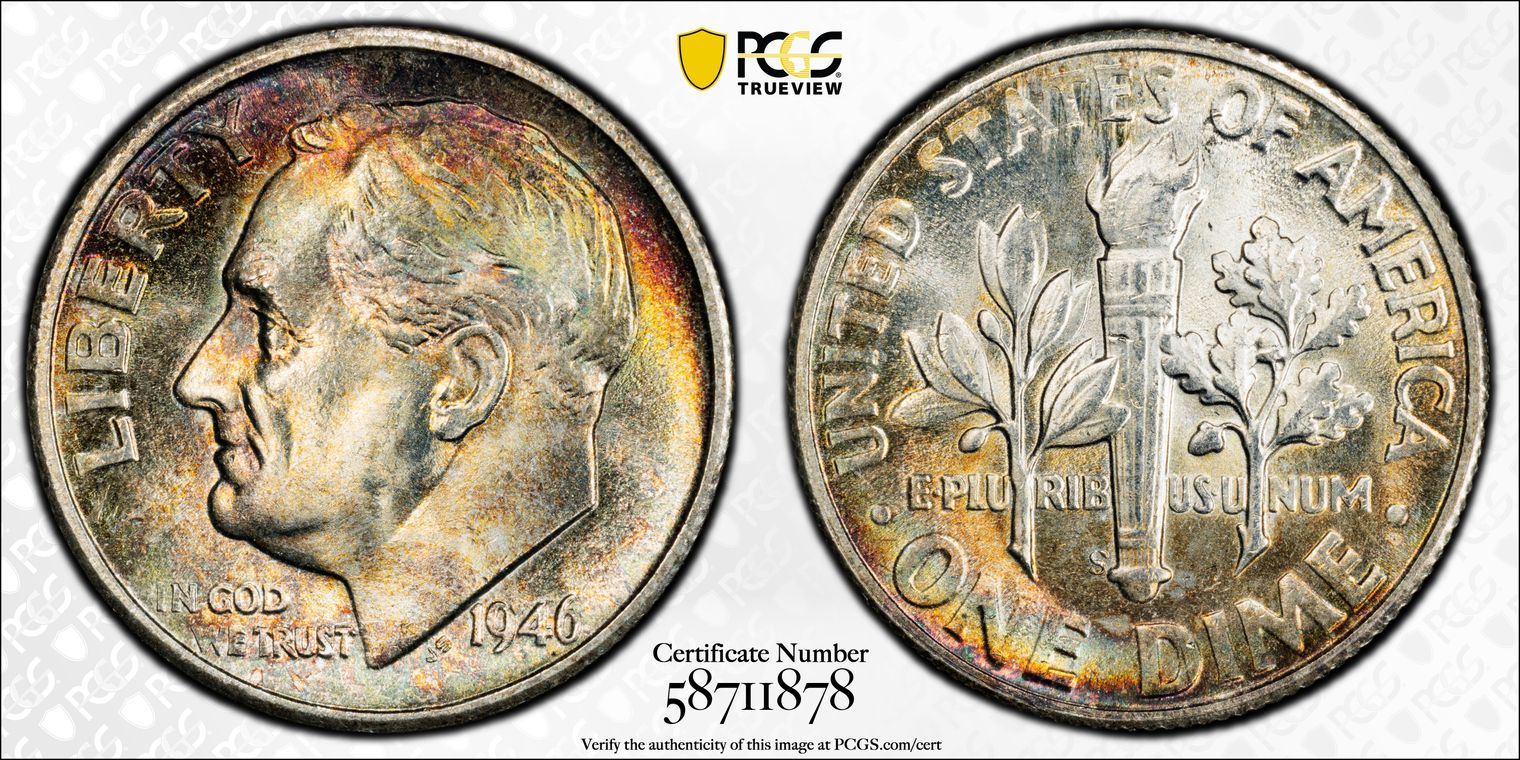
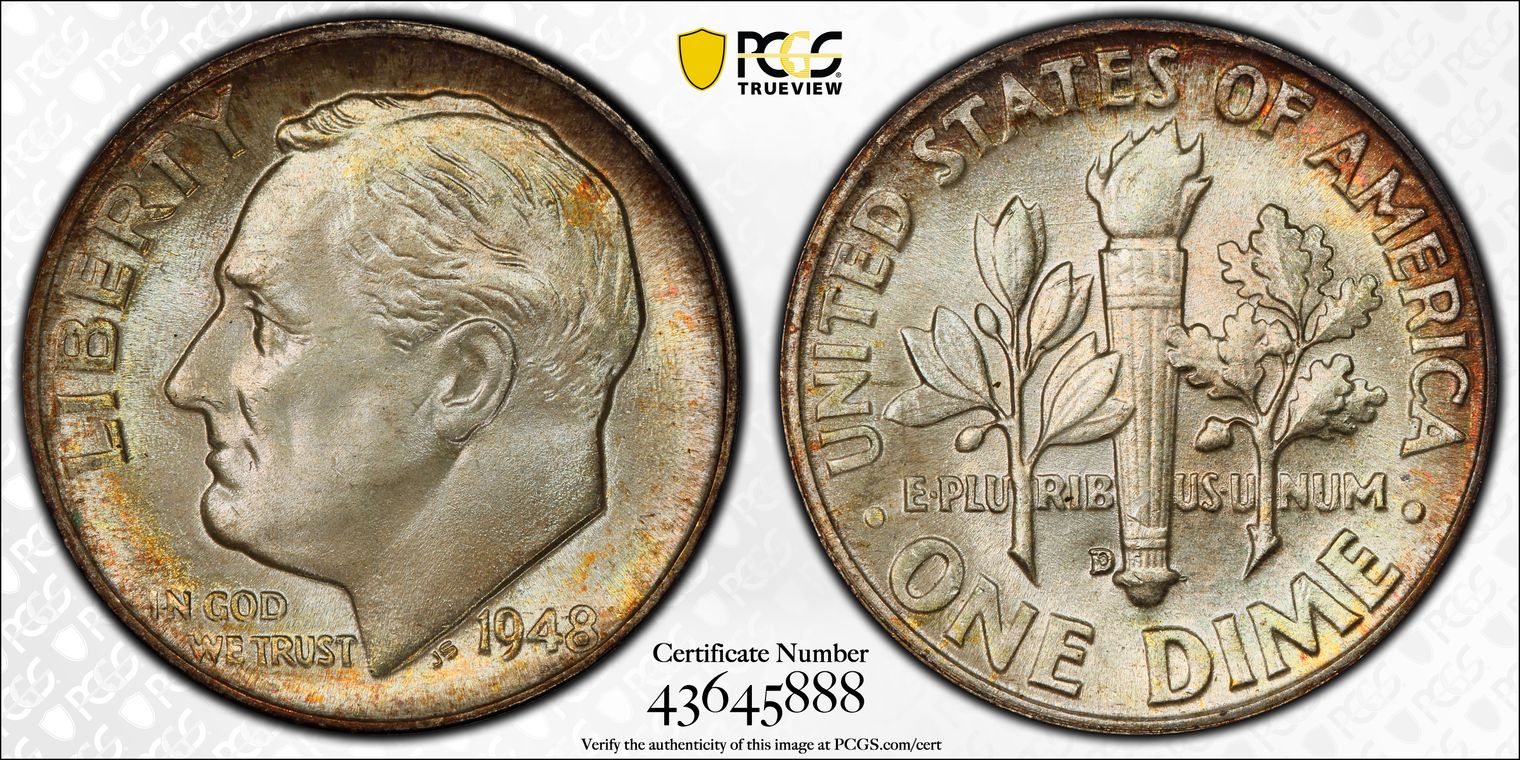
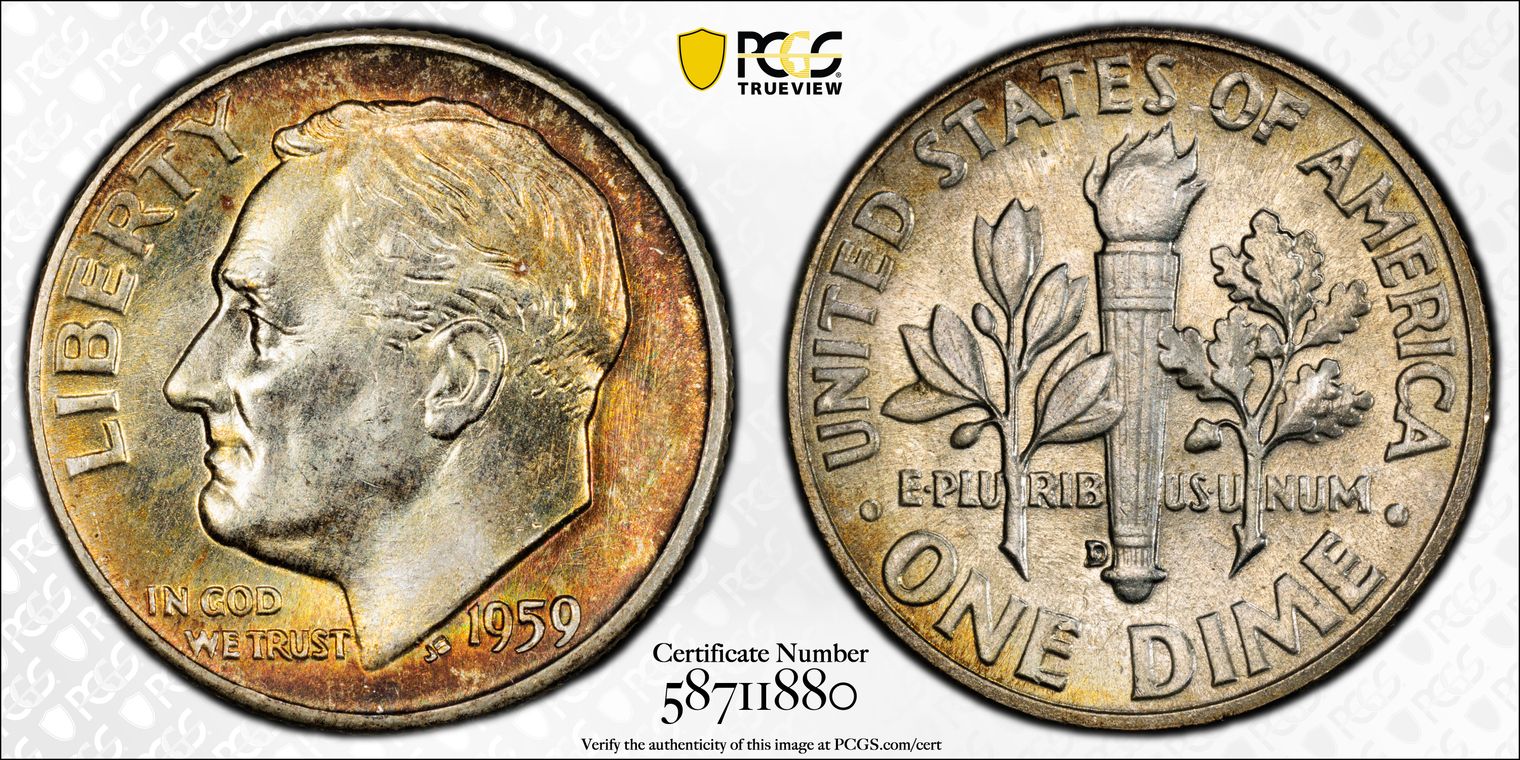
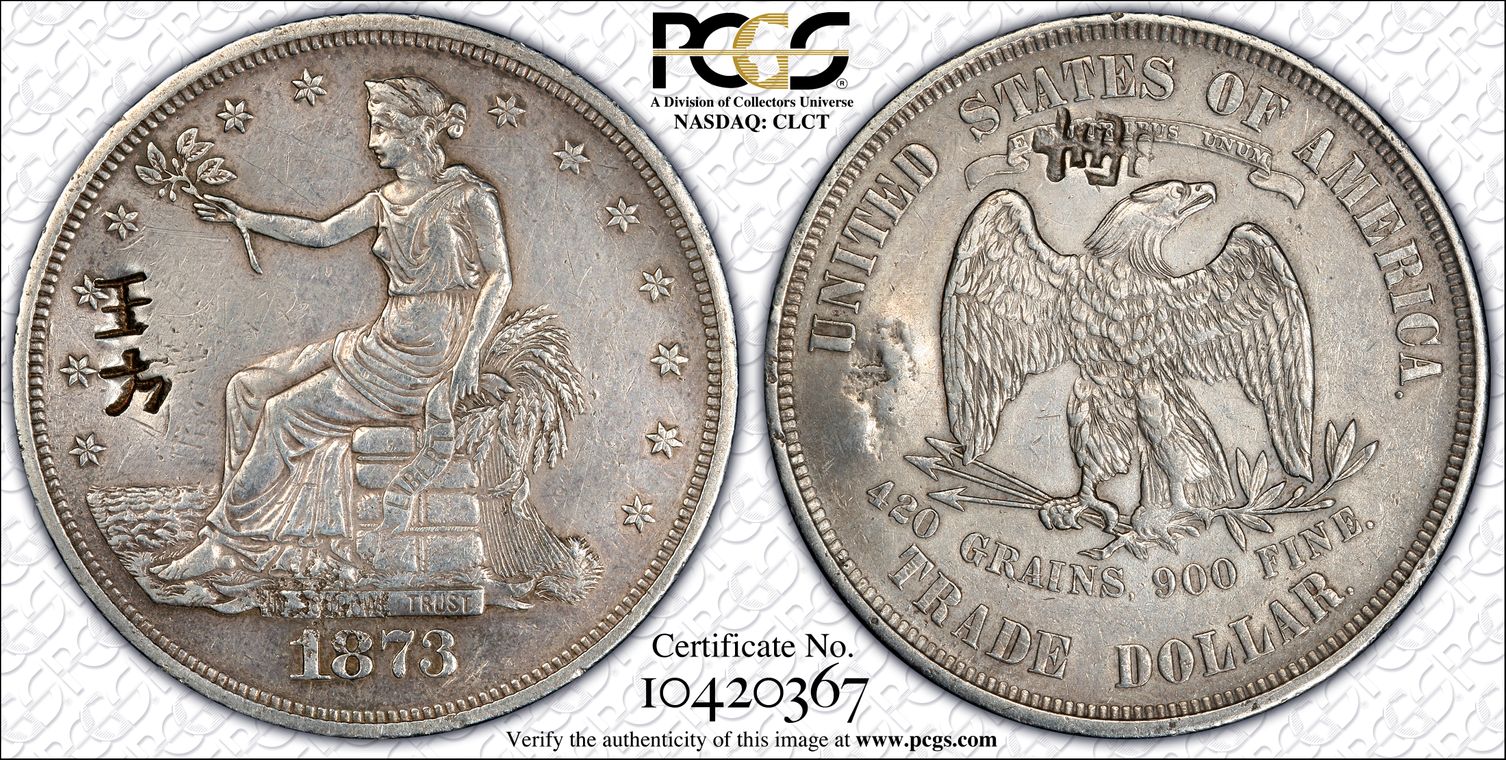
The 73-P is one of the most difficult Trade Dollars to find chopmarked. On the obverse are two carefully placed chops: the first one is "wang" which can be translated into "king;" the second one "feng" which can mean "seal." An intriguing combination! This coin has been owned by a number of prominent Trade Dollar collectors over the years. I am very happy to have it in my collection.
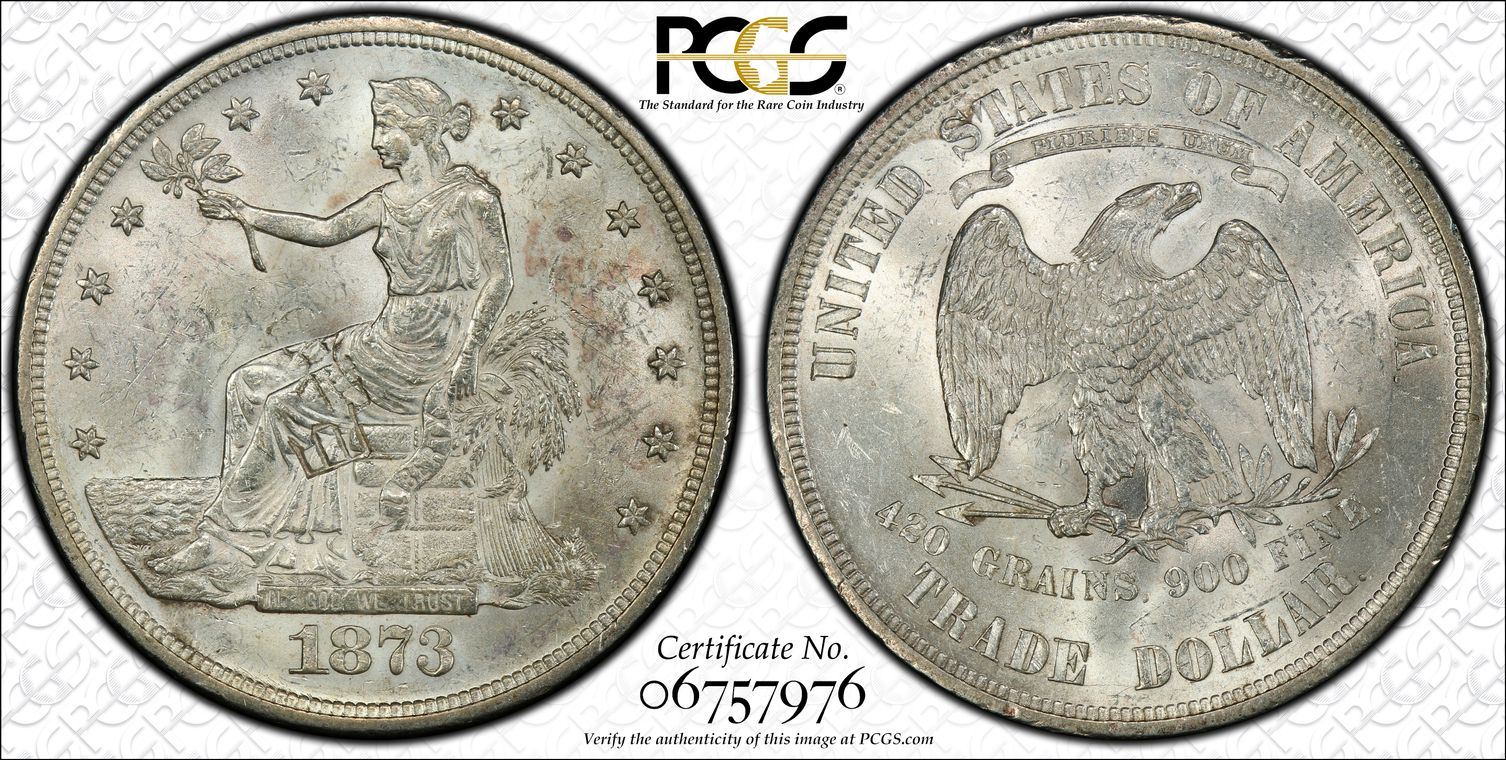
The 73-P Trade Dollar is probably the third rarest of the series, behind the 75-P and the 78-CC. This example was plucked raw from eBay and quickly made its way into the Legend Collection. Very few 73-Ps have been certified; this is one of the finest.
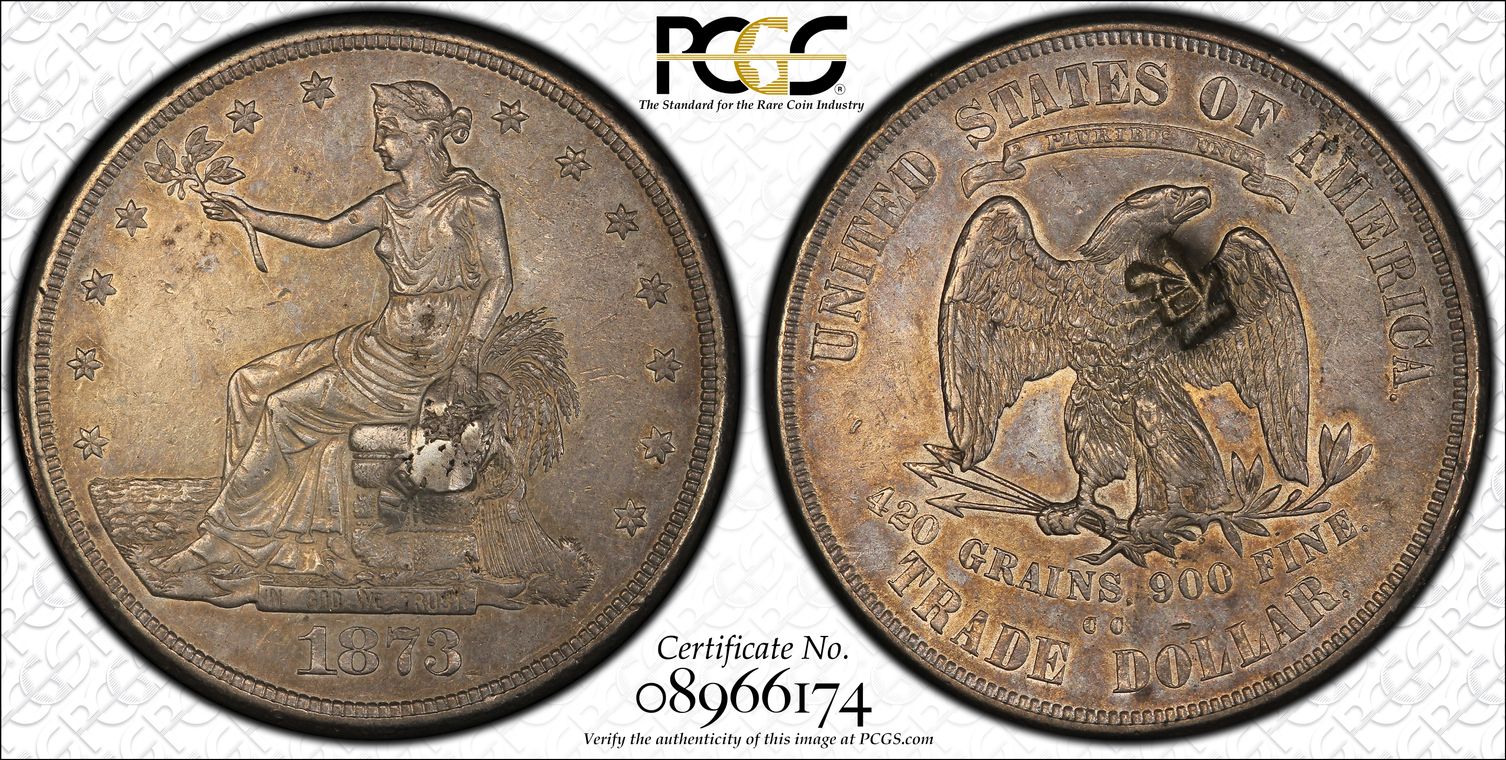
ex-Rose. Frank Rose was the godfather of chopmark collecting and wrote the standard book "Chopmarks."
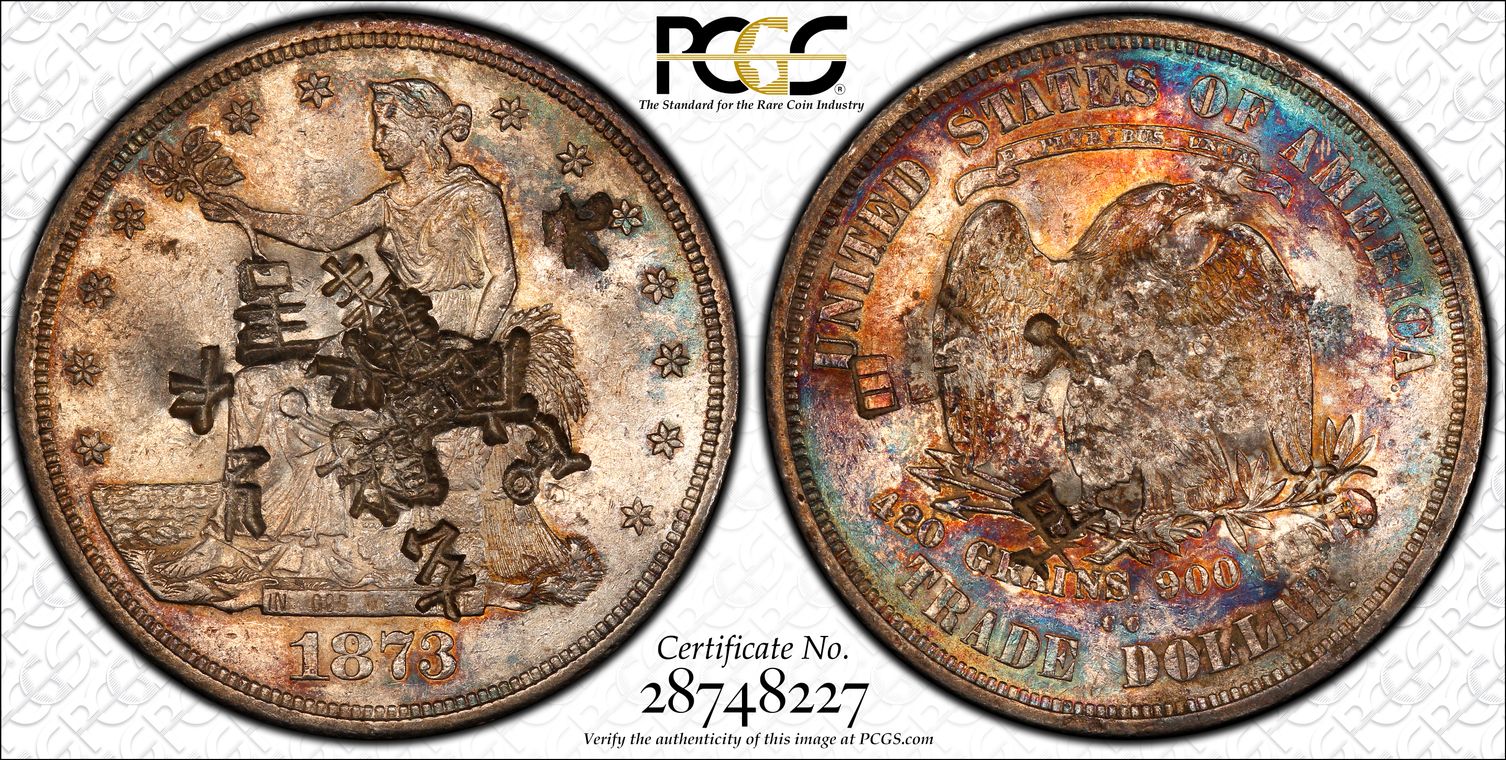
The 1873-CC is one of the keys to the Trade Dollar series, chopmarked or not. Chopmarked Trade Dollars rarely come as colorfully toned as this one, although in hand the coin is a bit more silvery on the obverse and more silvery and blue/green on the reverse. I acquired the coin from a noted Trade Dollar expert, who acquired it from Everett Jones, founder and for several decades President of the Chopmark Collectors Club.
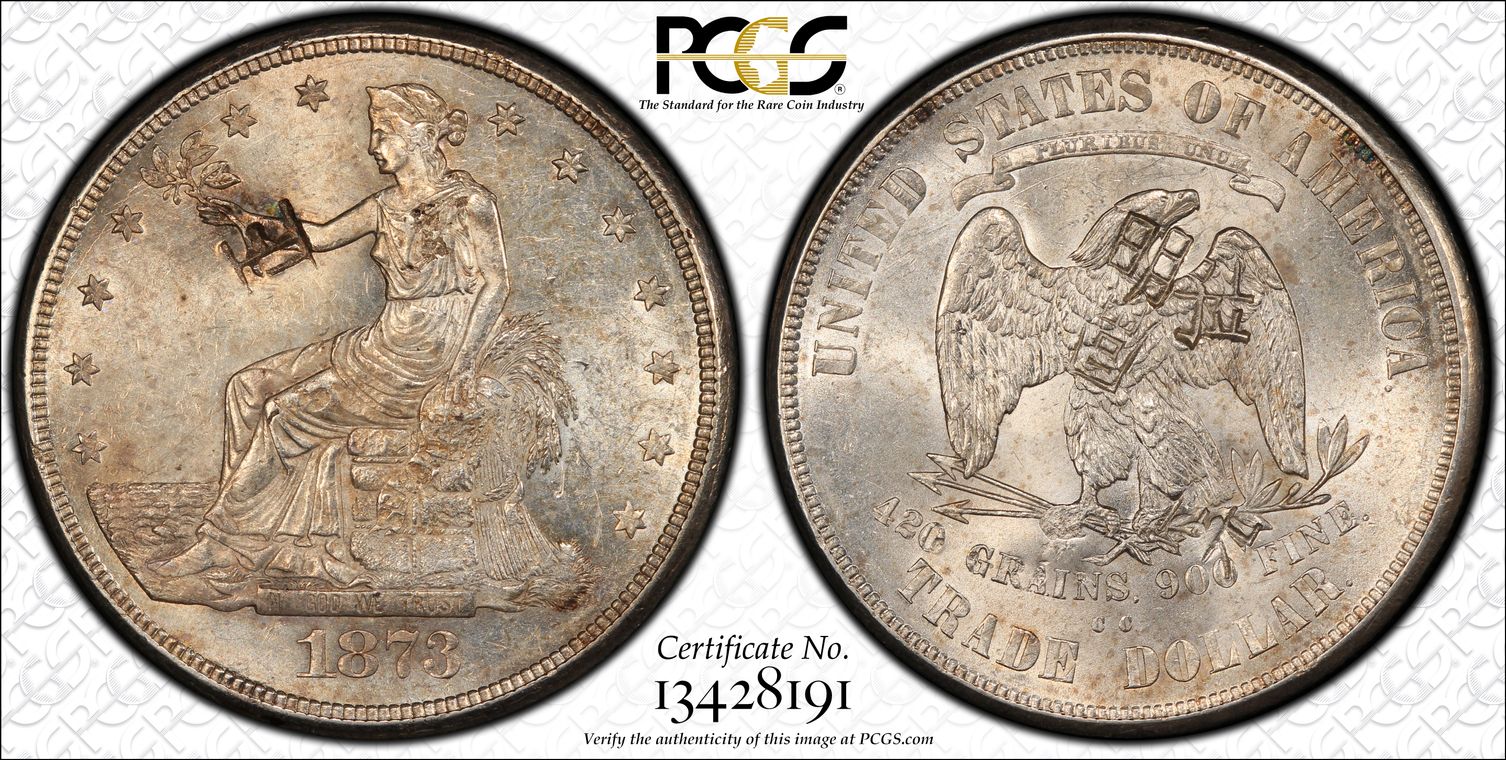
With a mintage of only 124,5000, the 1873-CC is one of the keys to the series, chopmarked or not.
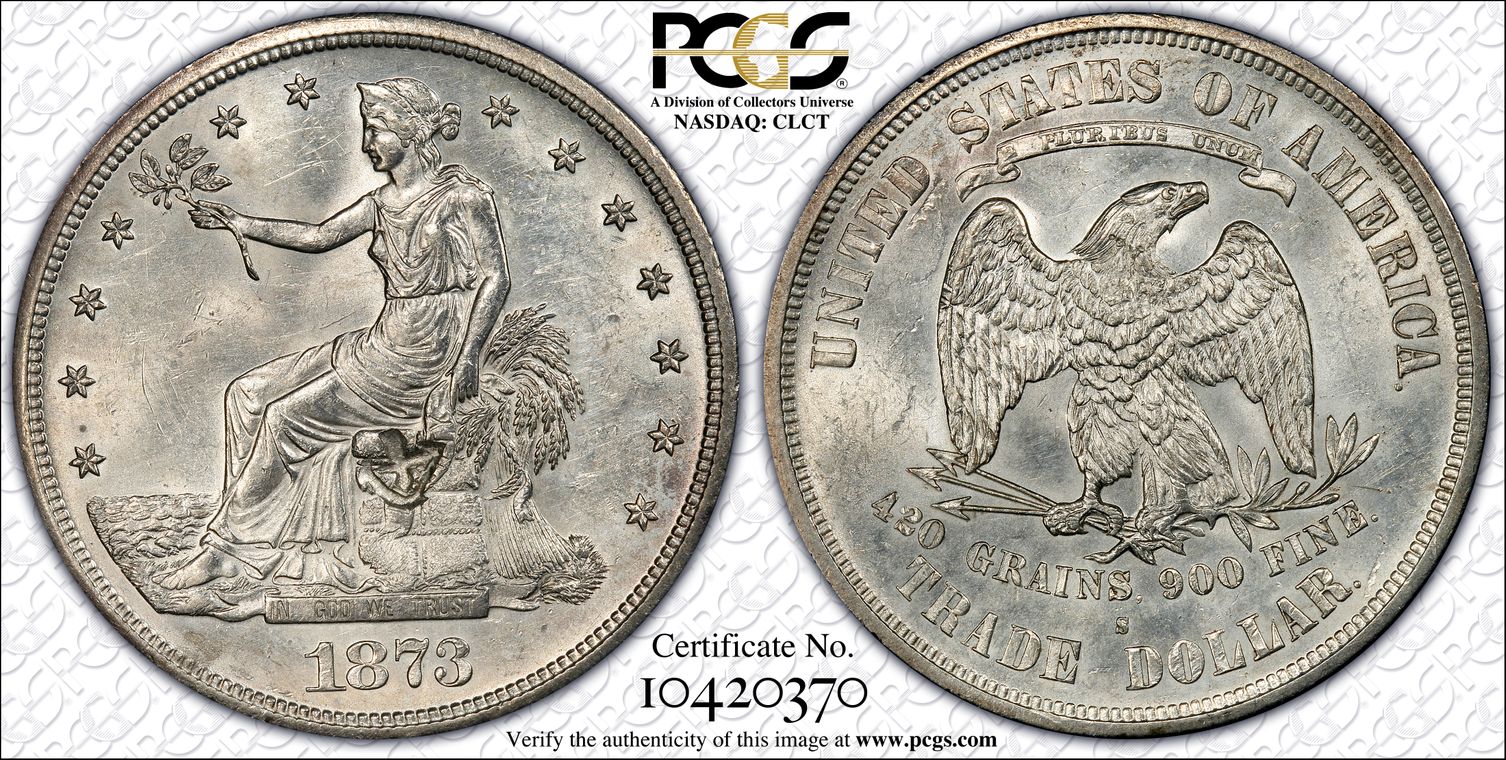
Nice example of one of the first Trade Dollars to make it over to China. Scarce in uncirculated grades.
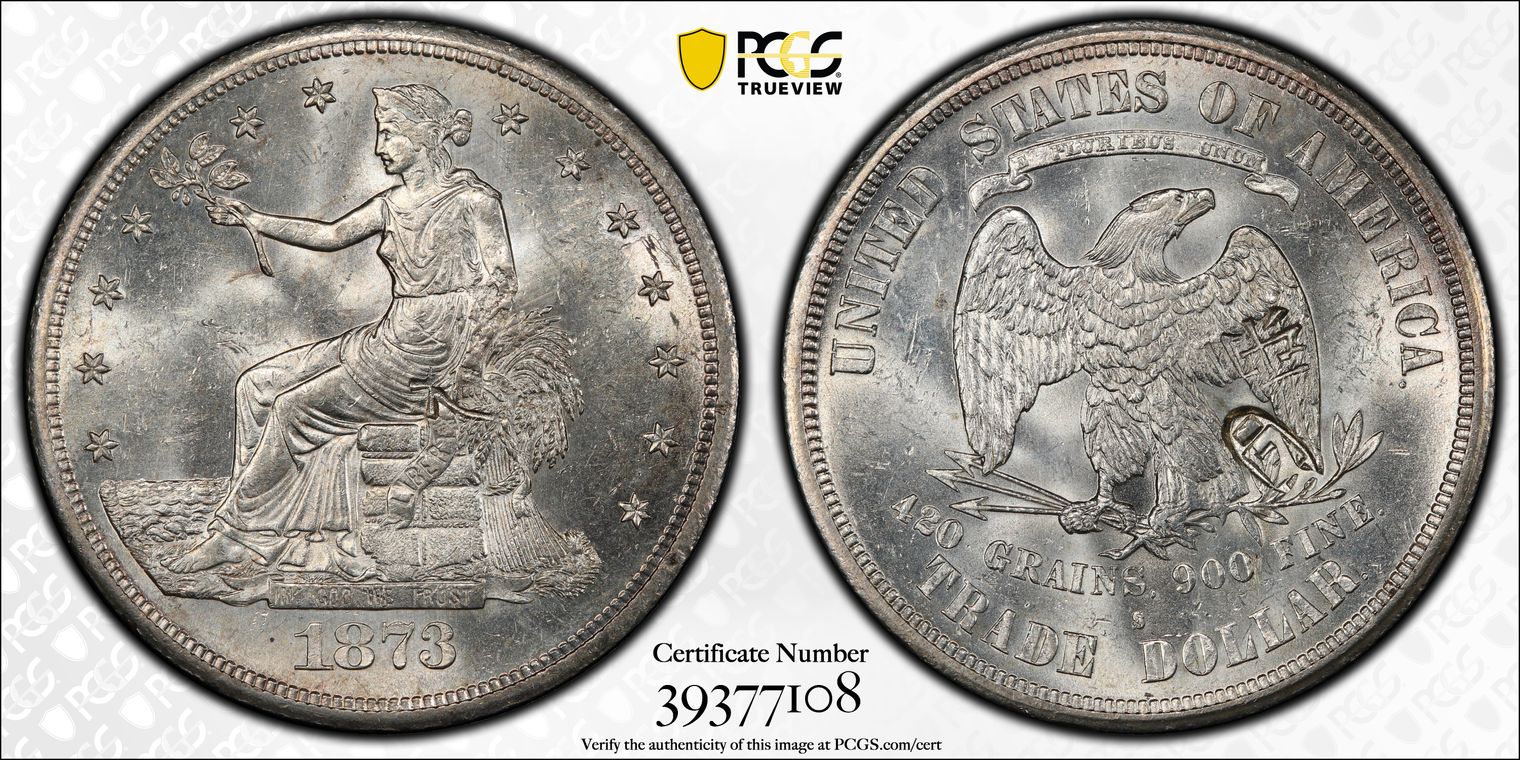
This is a very nice mint state example of an 1873-S, the most difficult San Francisco Trade dollar to find chop marked. They exist, but are not as nearly common as the other San Francisco issues. One light chop on the obverse, near Miss Liberty's left hand and two interesting, more distinct chop marks on the reverse. Originally from the Northwest collection

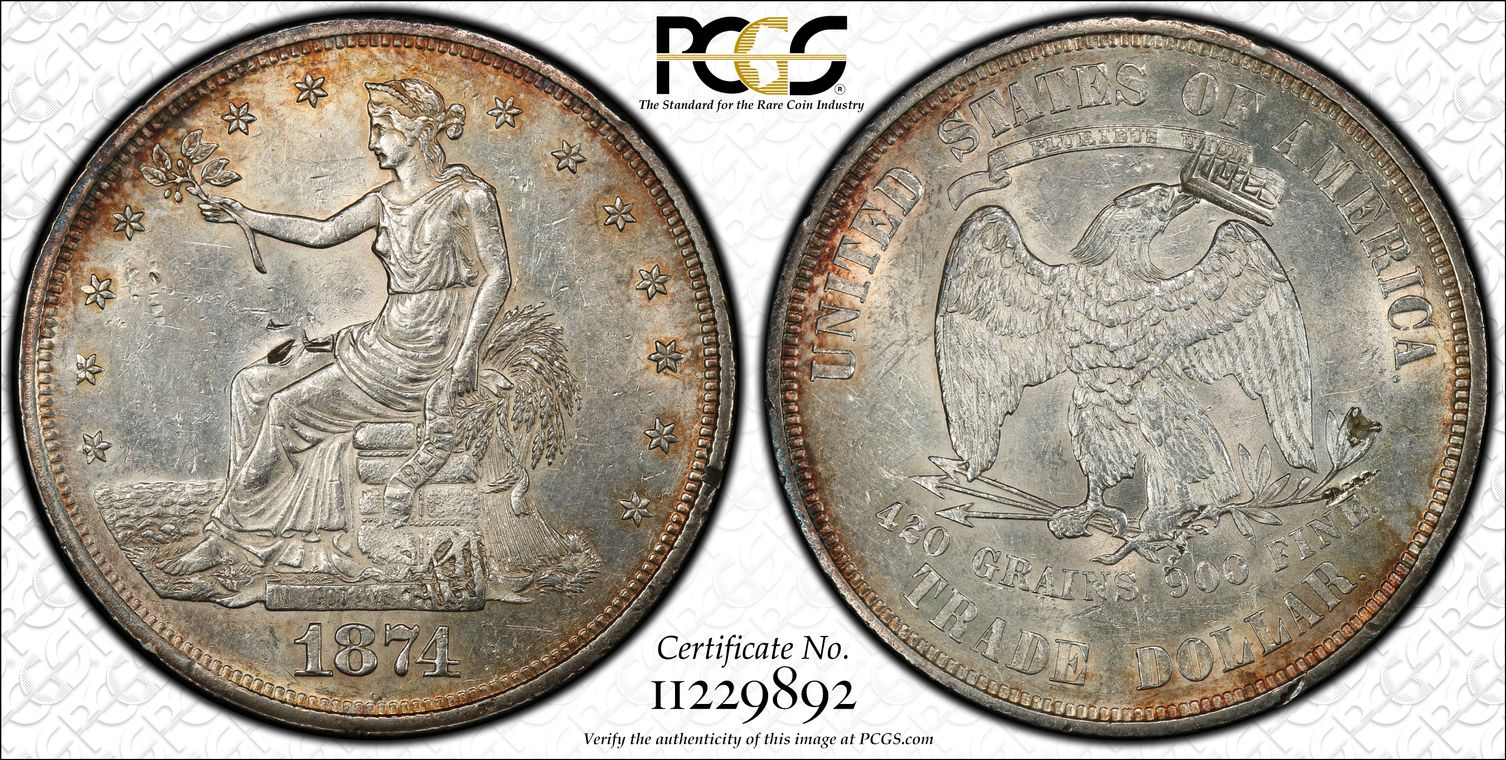
Another P mint Trade Dollar that is very difficult to find chopmarked. Most Philadelphia Trade Dollars circulated domestically although a handful, like this one. did make it to the Orient. Many went via London. There is an interesting oblong, incuse chopmark near the eagle's beak.
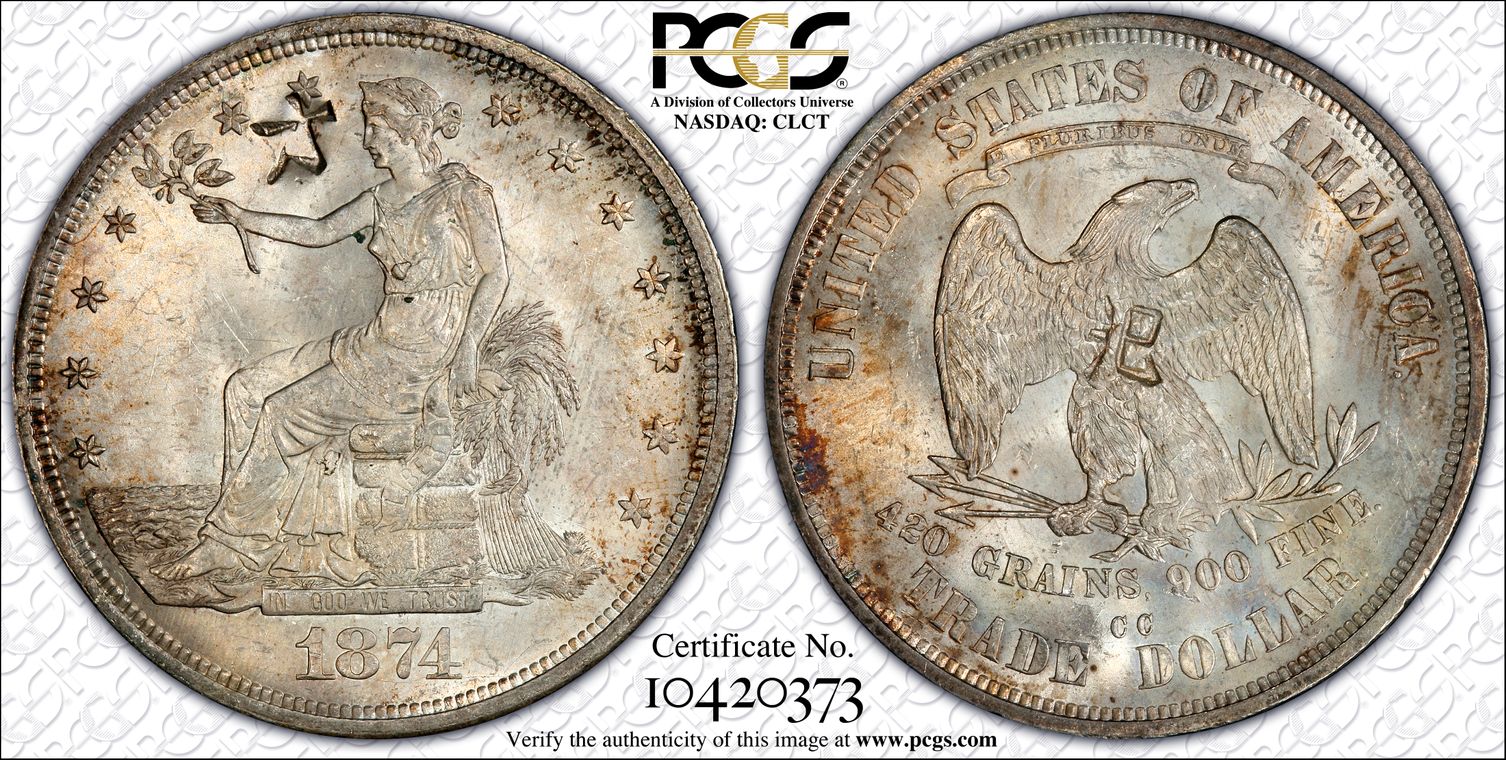
Readily available chopmarked, but rarely in this state of preservation. Most of the mintage of 1.4 million coins were shipped to China to purchased imports.
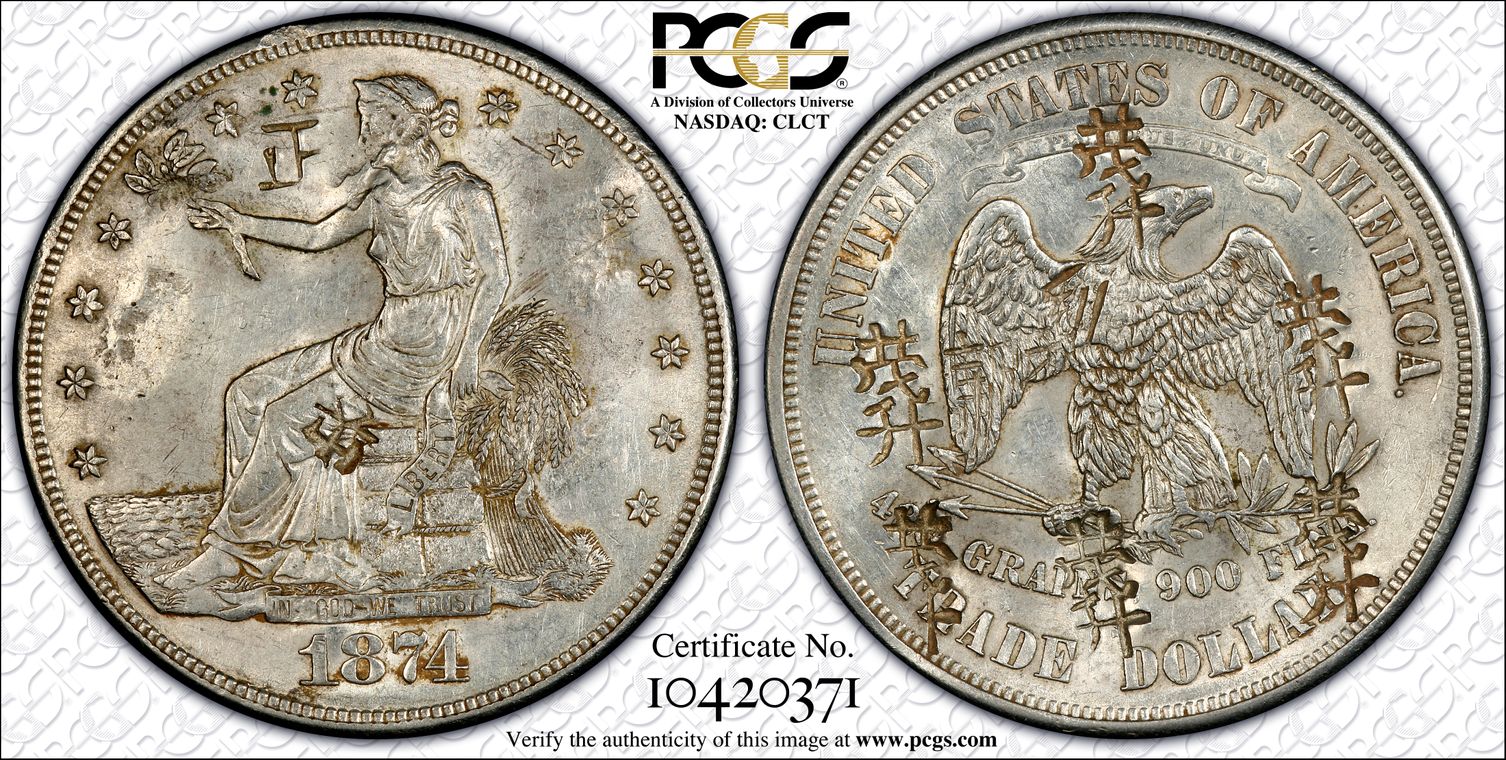
The reverse chop mark is that of the Mao Sheng bank, a bank in Hong Kong (and possibly) Shanghai.
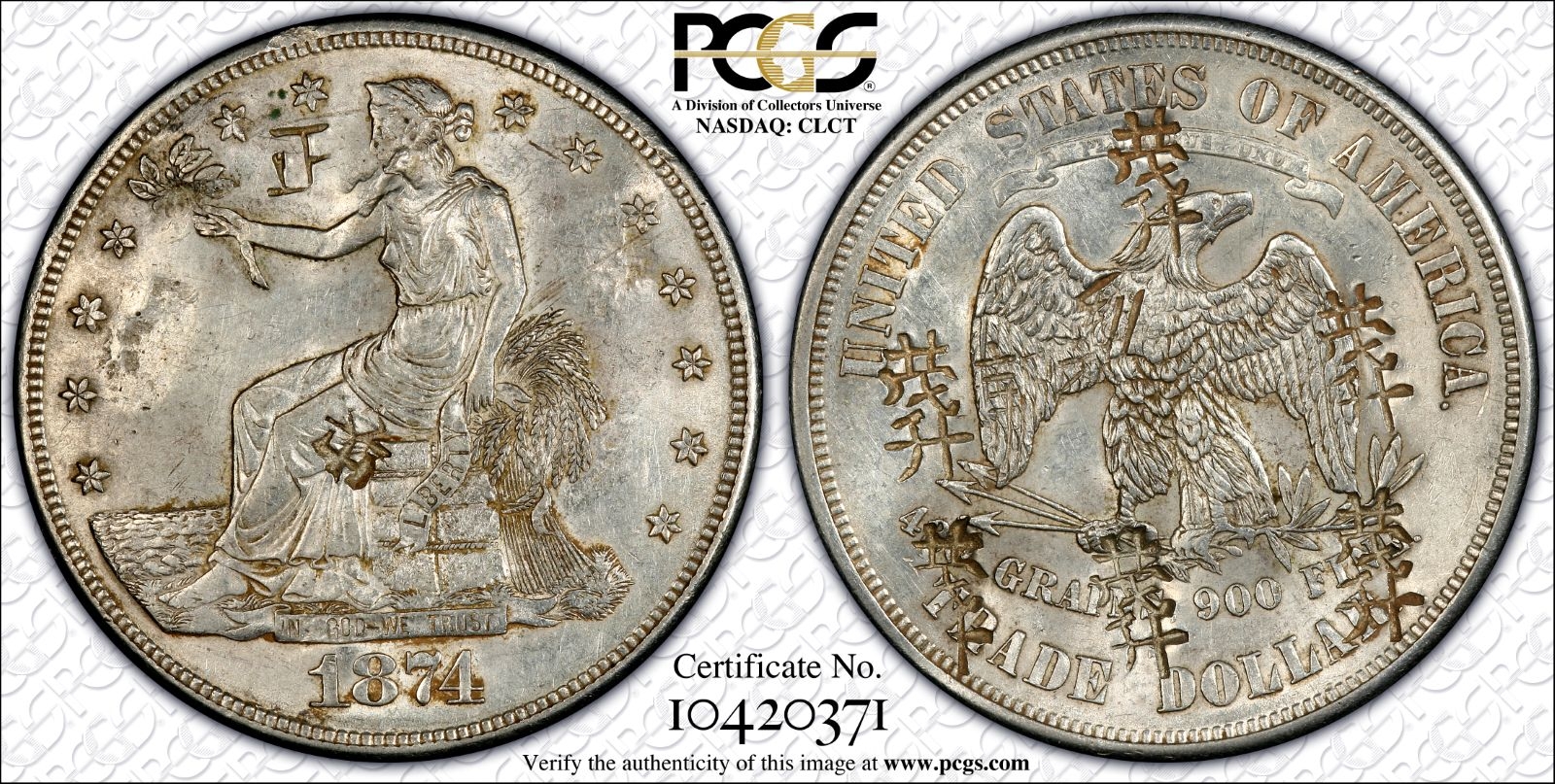
The reverse chop mark is that of the Mao Sheng bank, a bank in Hong Kong (and possibly) Shanghai.
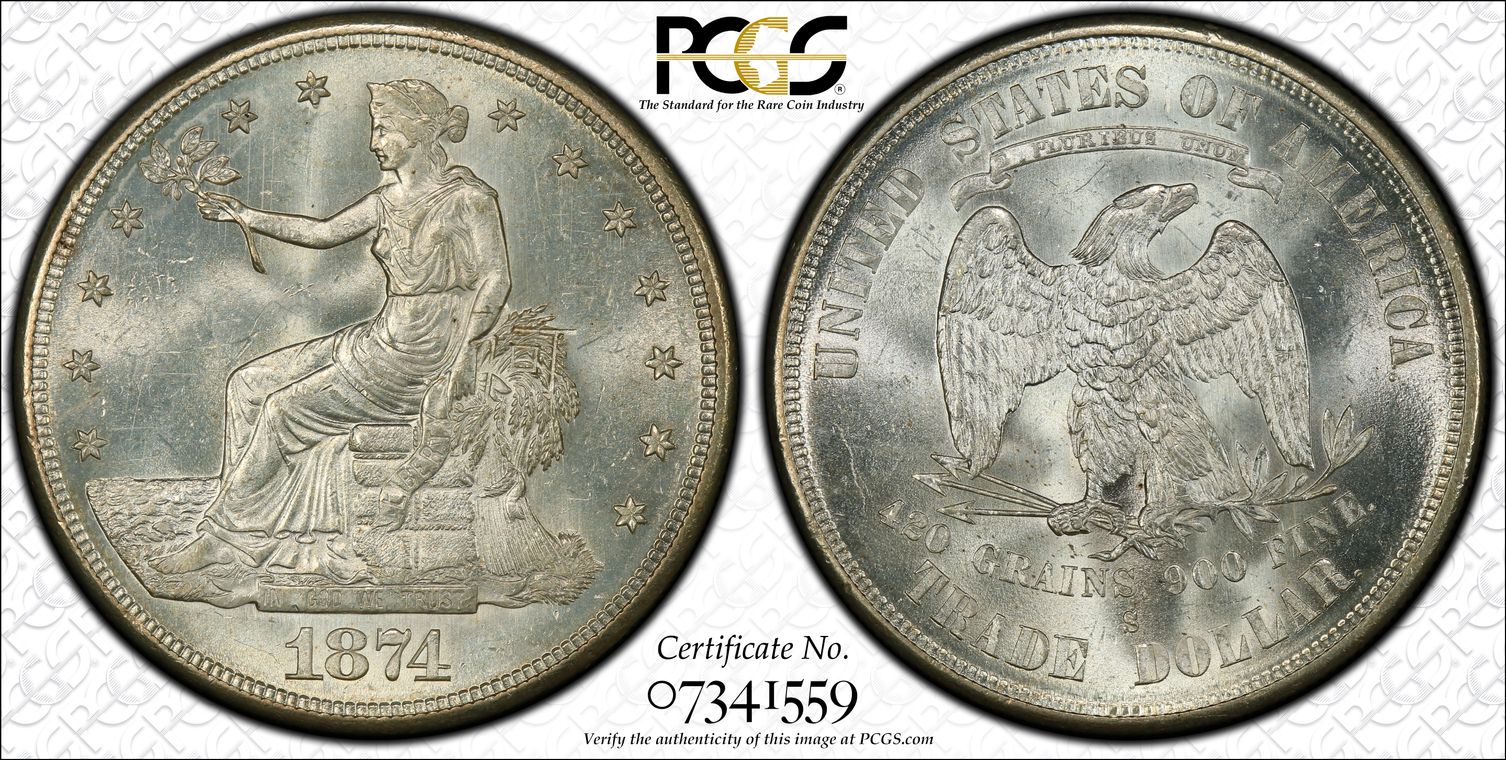
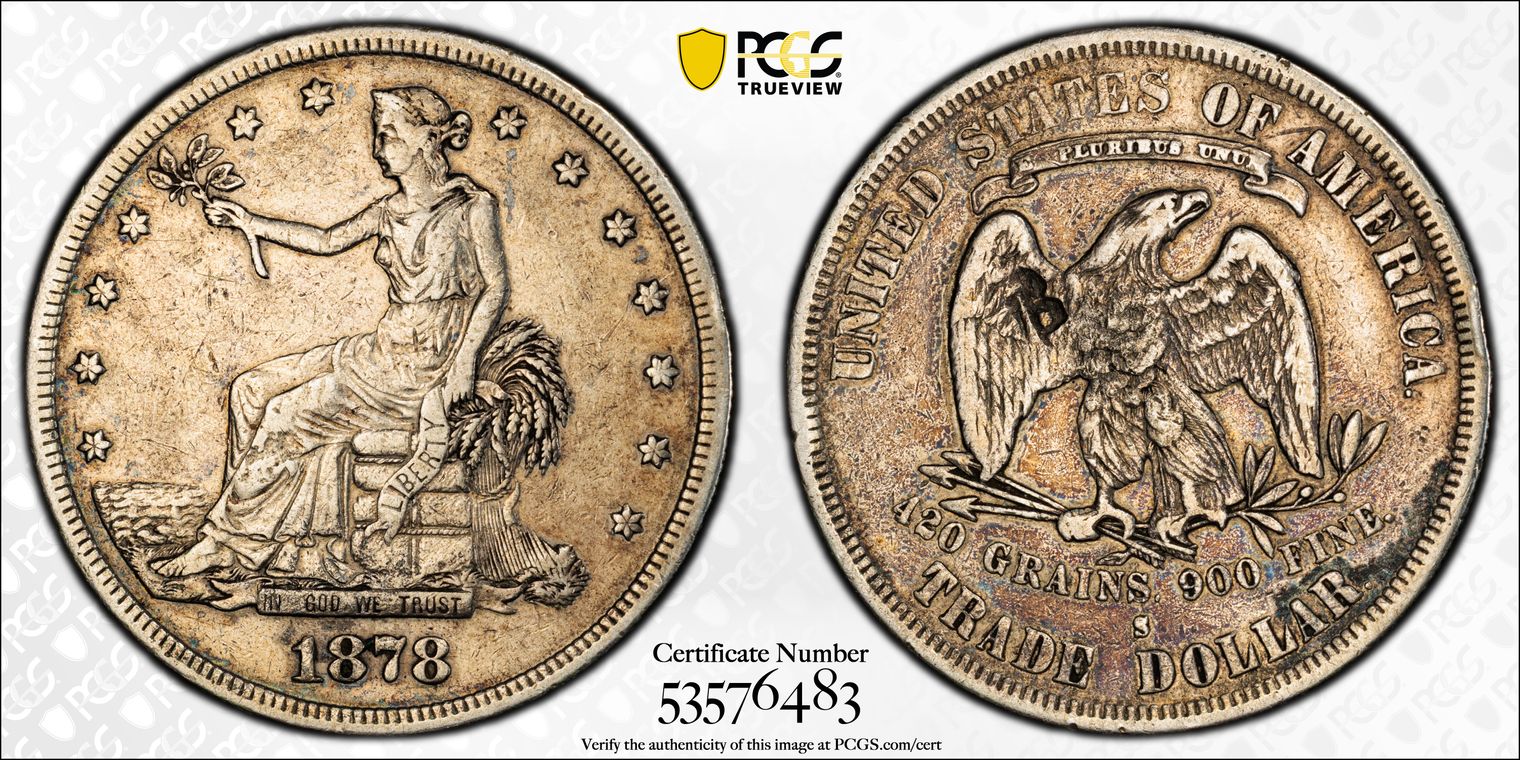
There is one hard-to-find chopmark on the obverse of this lusterous S-mint Trade Dollar. I am told that this coin was originally in a straight grade PCGS slab until someone noticed the chopmark.
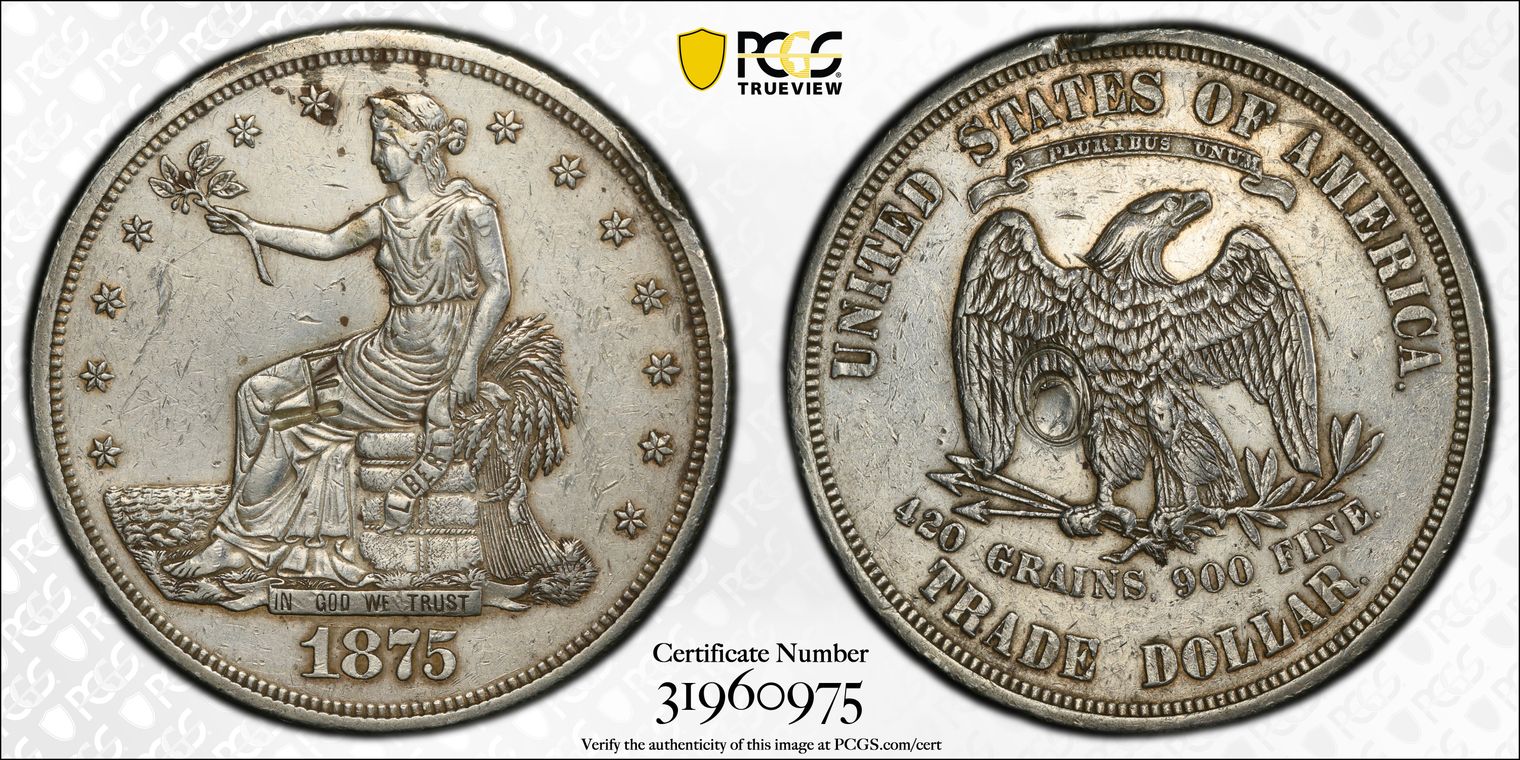
So rare, the 75-P is the "Holy Grail" of chopmarked Trade Dollars! There are maybe a half dozen in existence, if that many.

Extremely rare. Possibly less than a half-dozen known chopmarked. Type I obverse, type I reverse (I/I).
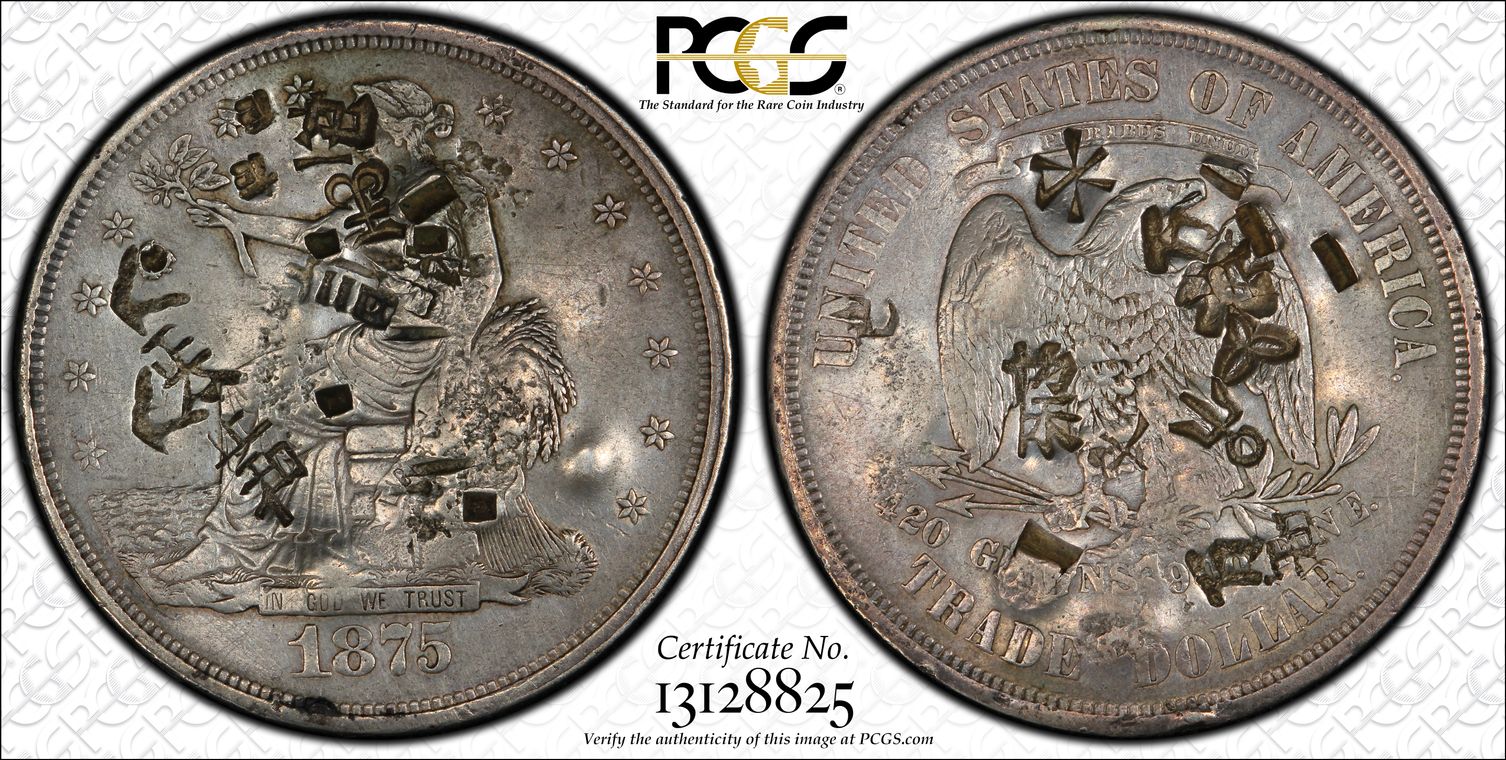
Ex-Rose. Rarest of all chopmarked Trade dollars, with perhaps a half-dozen known chopmarked. Frank Rose was the godfather of chopmark collecting and author of the reference book "Chopmarks". A Merchant Marine, Rose purchased this coin in the Orient in 1968. Type I/I.
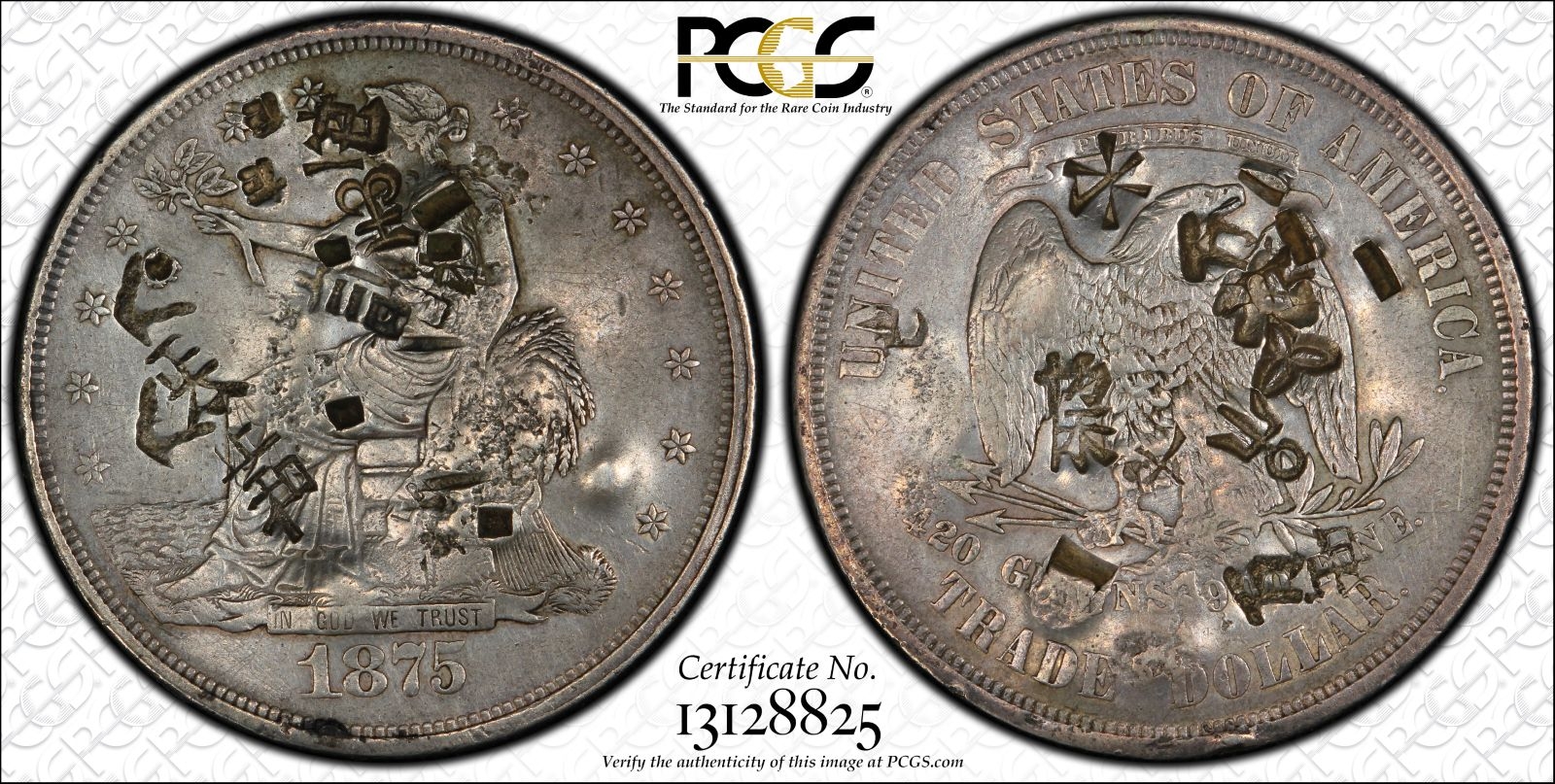
Ex-Rose. Rarest of all chopmarked Trade dollars, with perhaps a half-dozen known chopmarked. Frank Rose was the godfather of chopmark collecting and author of the reference book "Chopmarks". A Merchant Marine, Rose purchased this coin in the Orient in 1968. Type I/I.
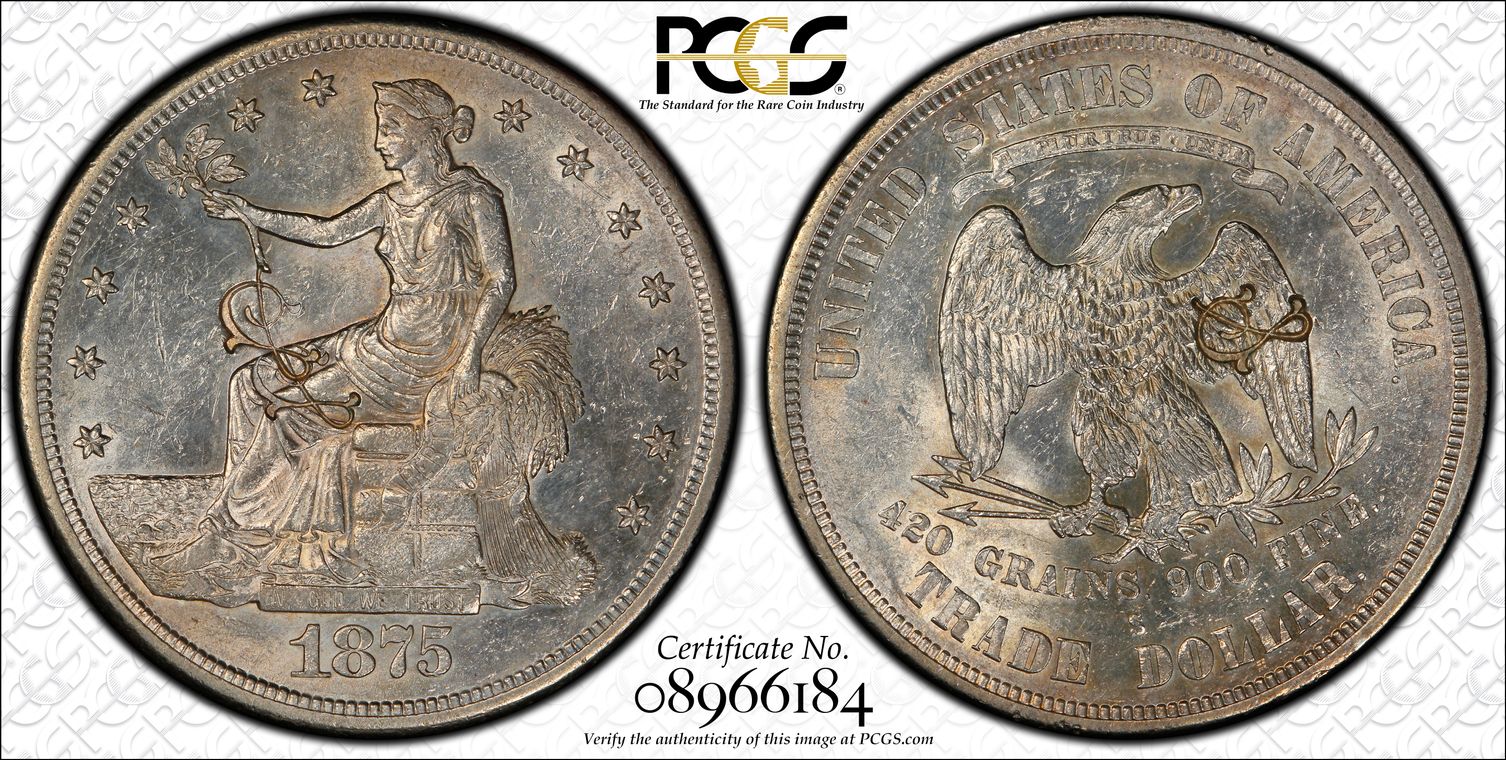
This coin is the very first chopmarked Trade dollar I ever purchased and got me started on this whole adventure. Type I/I.
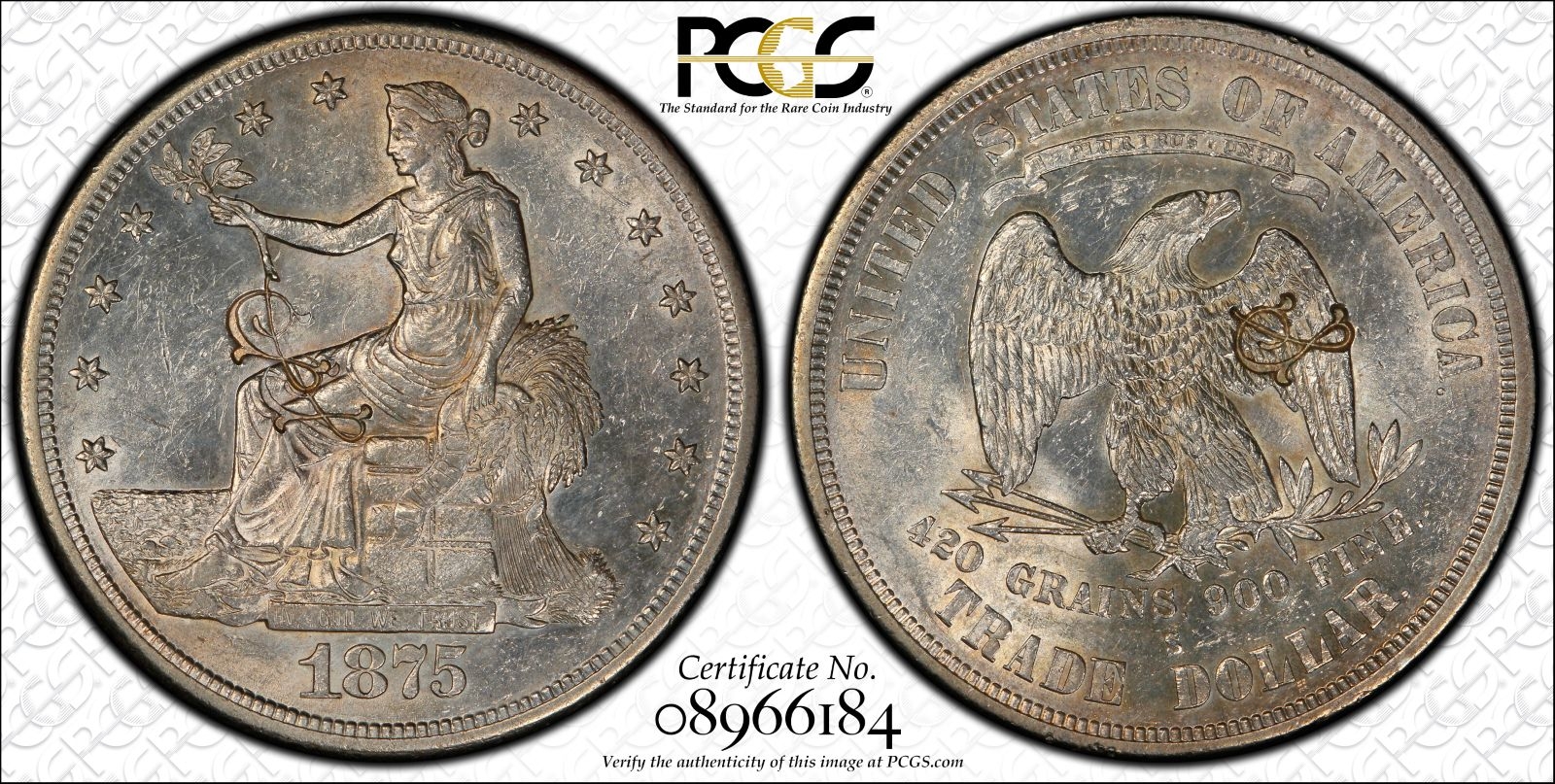
This coin is the very first chopmarked Trade dollar I ever purchased and got me started on this whole adventure. Type I/I.
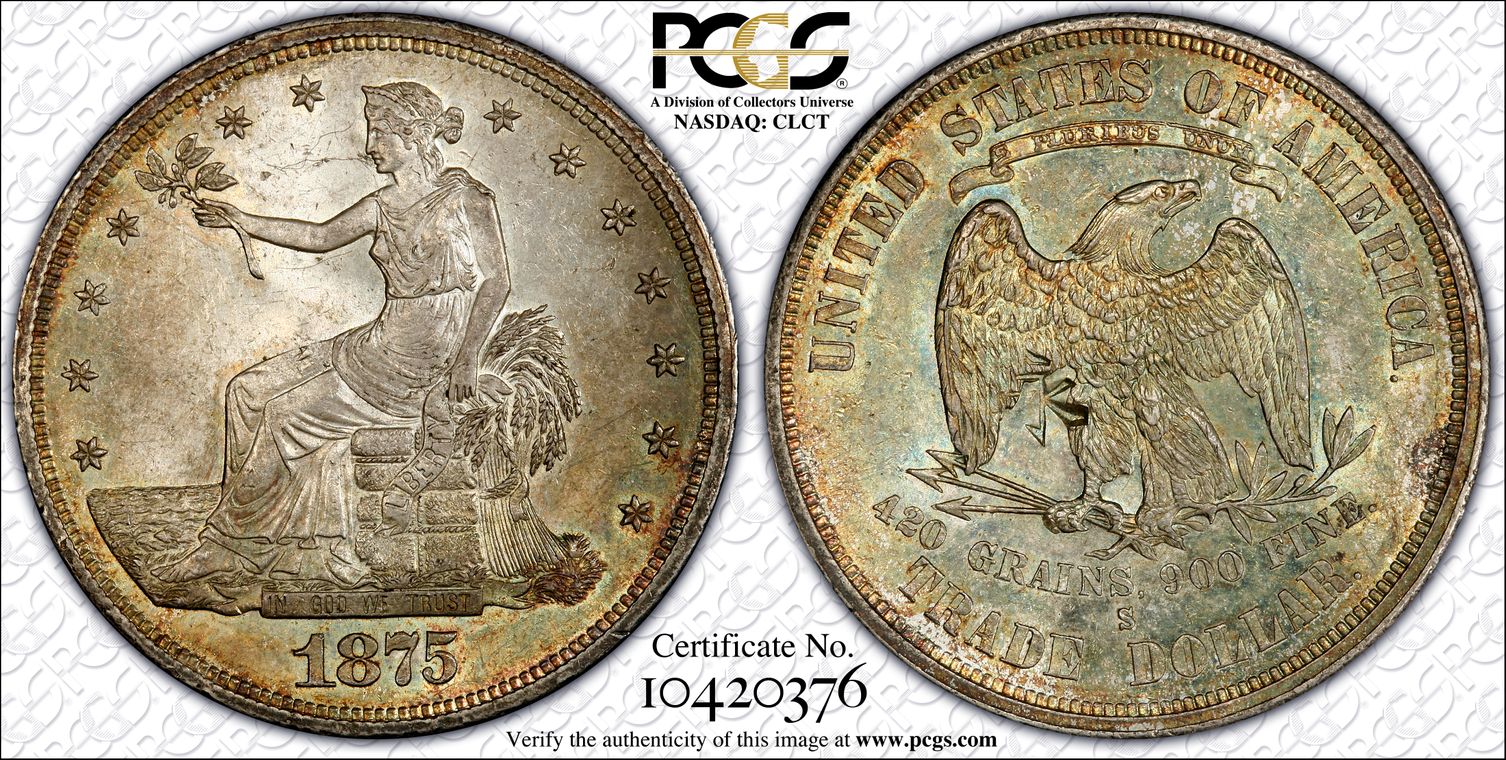
Type I obverse, Type I reverse, the most common obverse-reverse combination for the 75-S. However, it is certainly not common in this state of preservation. A very pretty coin to look at with blue, green and yellow toning.
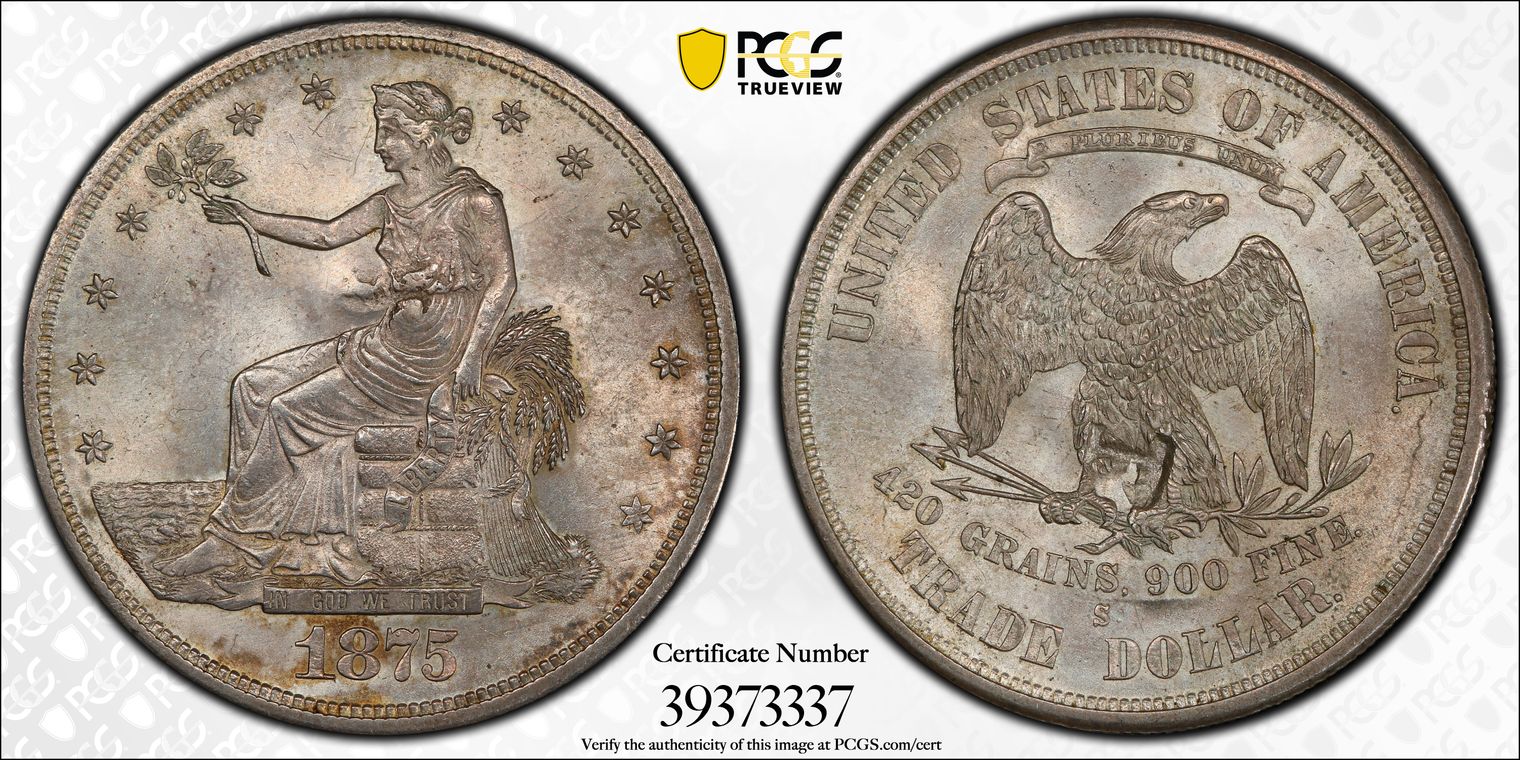
The sequence of events that created the S over CC variety has never clearly been explained. Regardless, the variety is scarce. Less evident in the picture, but in-hand the C to the right of the S really pops out.
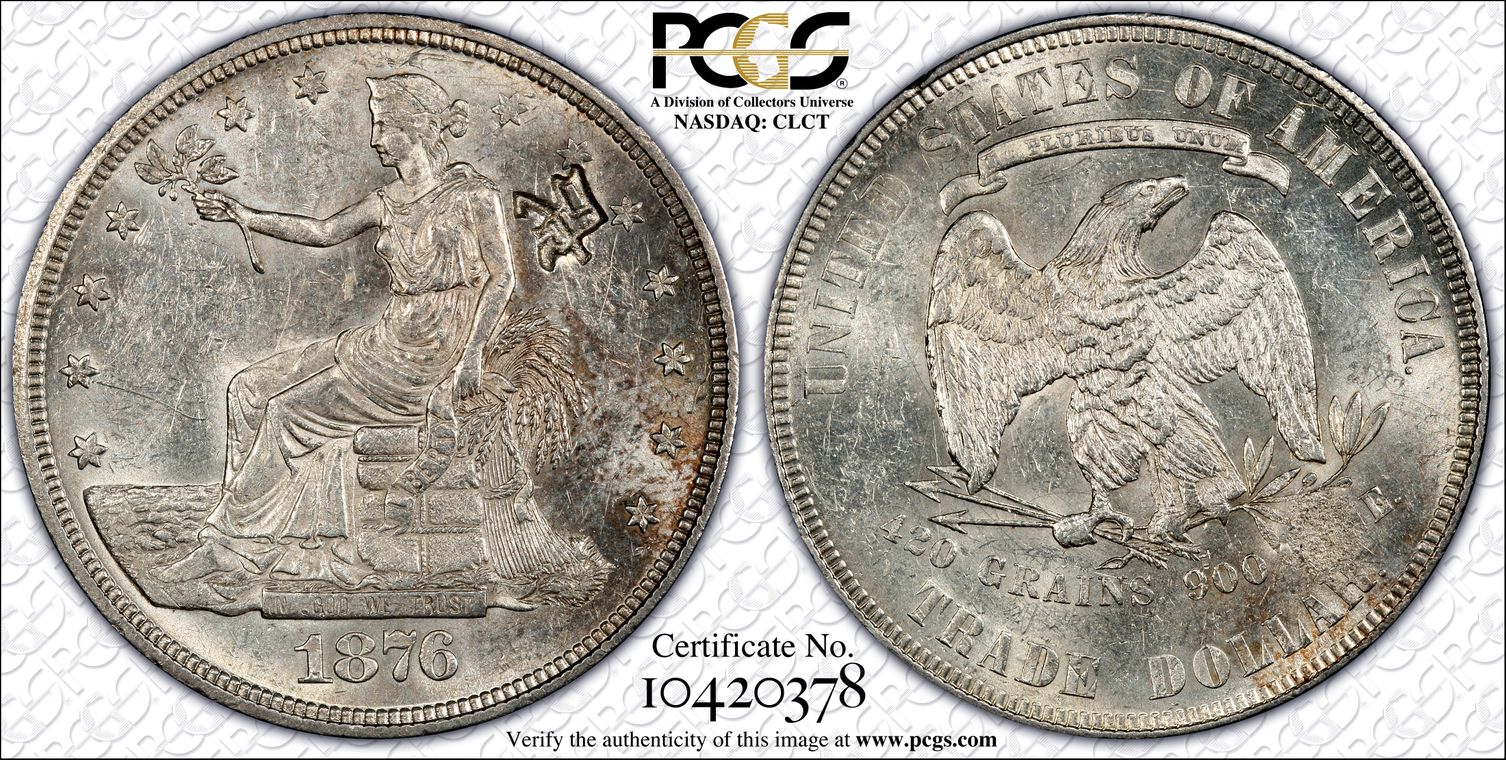
This coin has the very rare transitional obverse. Type I obverses have the end of the ribbon with LIBERTY on it pointing left; on Type II it points down. On Type I obverses Miss Liberty has three fingers on the olive branch; on Type II she has four. But on this example we have a Type I ribbon combined with a Type II hand. Only a few are known. And this is a beautiful coin to boot! In general, the 76-P is tough to find chopmarked, but not as difficult as the 73, 74 or 75.
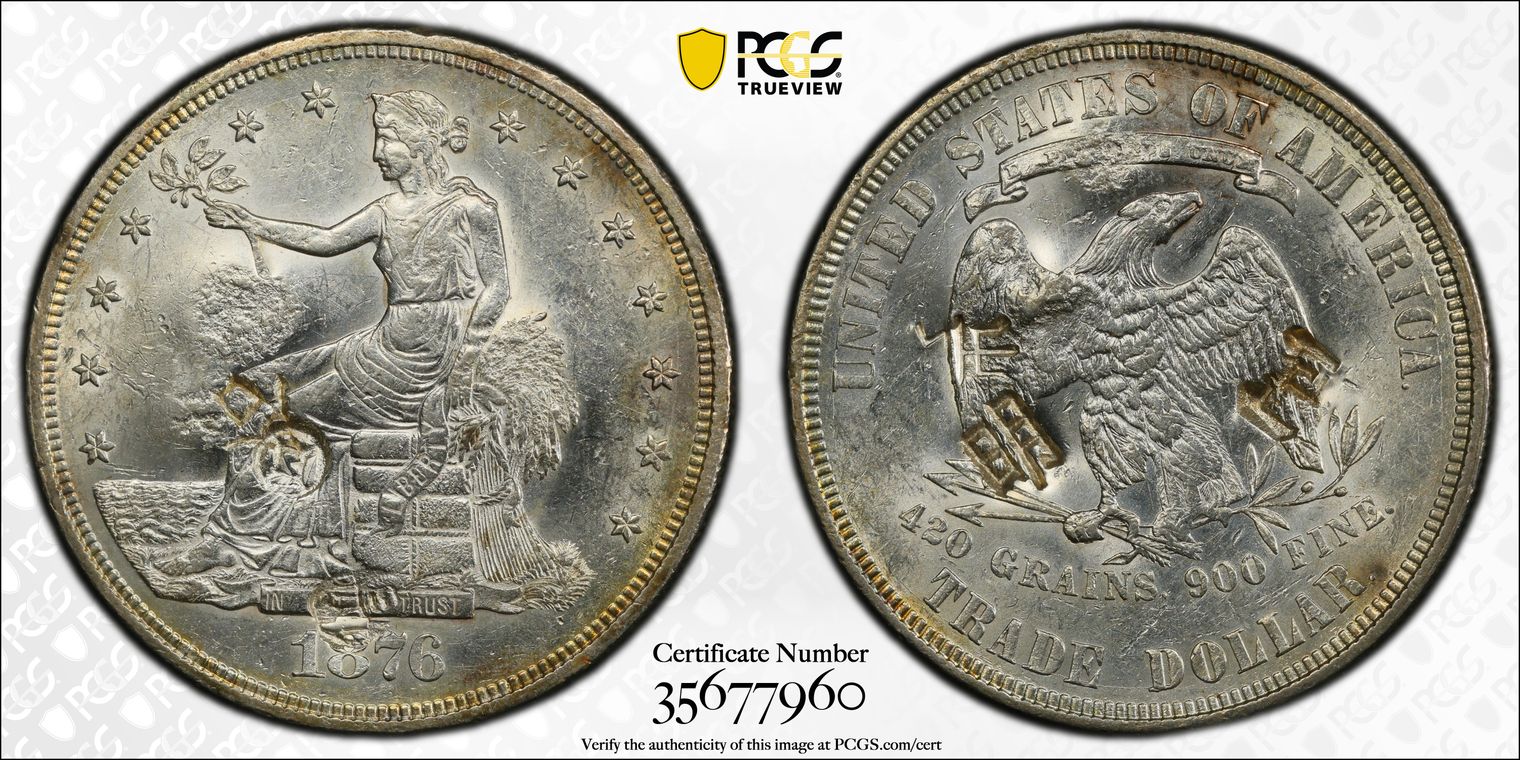
Another Philadelphia mint Trade Dollar that is difficult to find chopmarked, although not as difficult as the 73, 74 or 75.
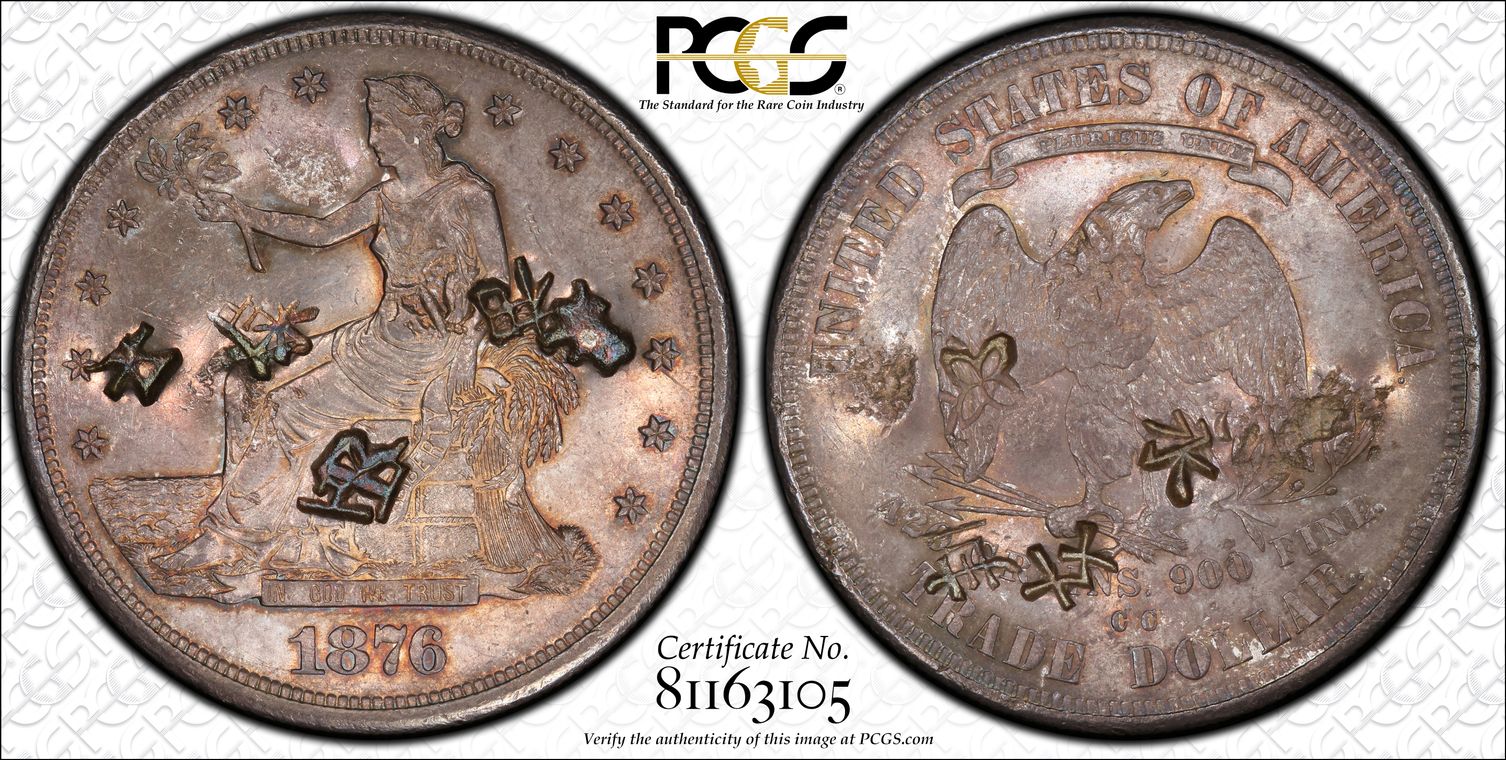
More scarce than the 74-CC or 75-CC due to a significantly smaller mintage, the 76-CC Trade Dollar has three distinct reverses: Type I; Type I DDR; and Type II. This coin, the highest graded 76-CC Chop Mark by PCGS, is the more common Type II.
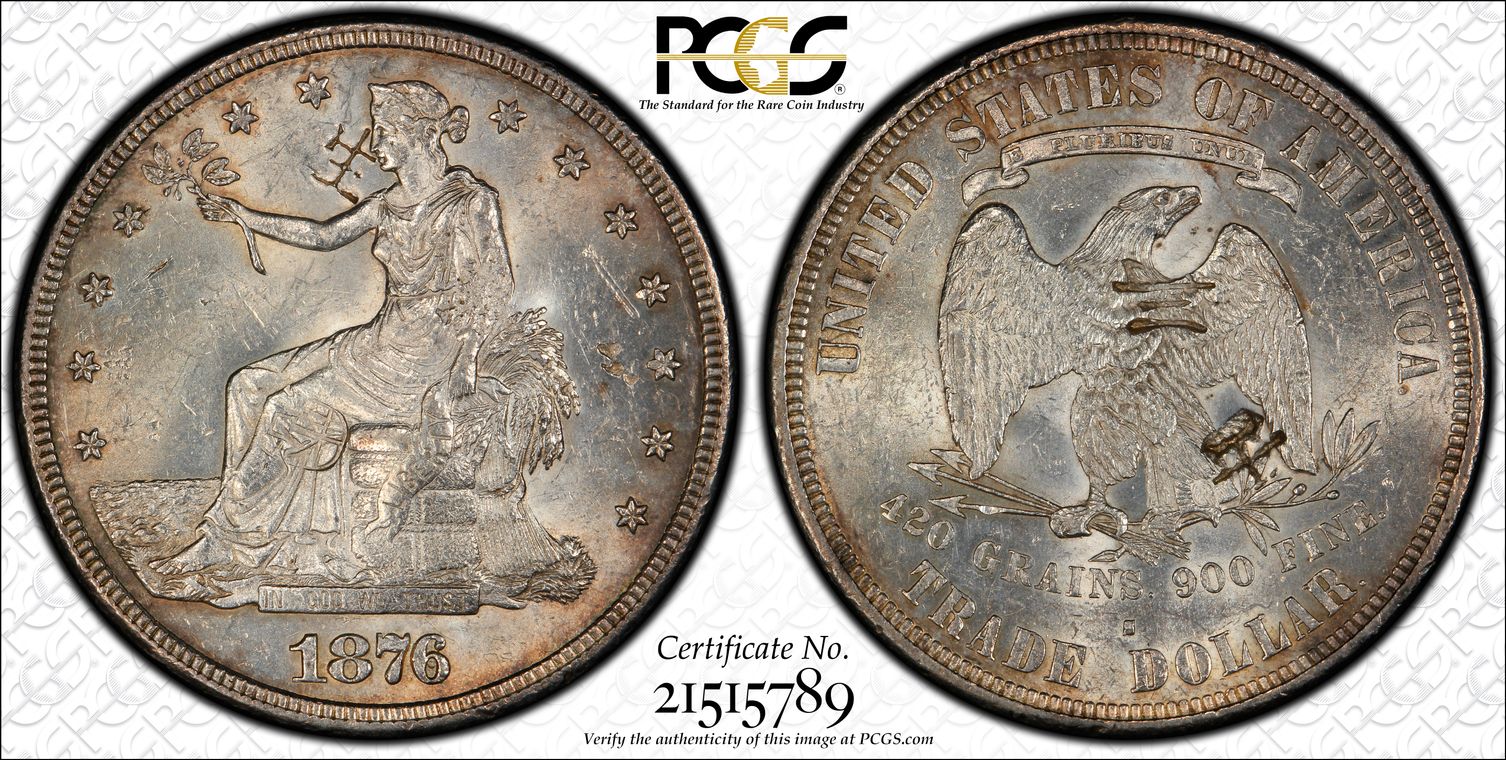
Like most of the S-mints, the 76-S is common, chopped and unchopped. This one, however, has the scarcer II/II combination.
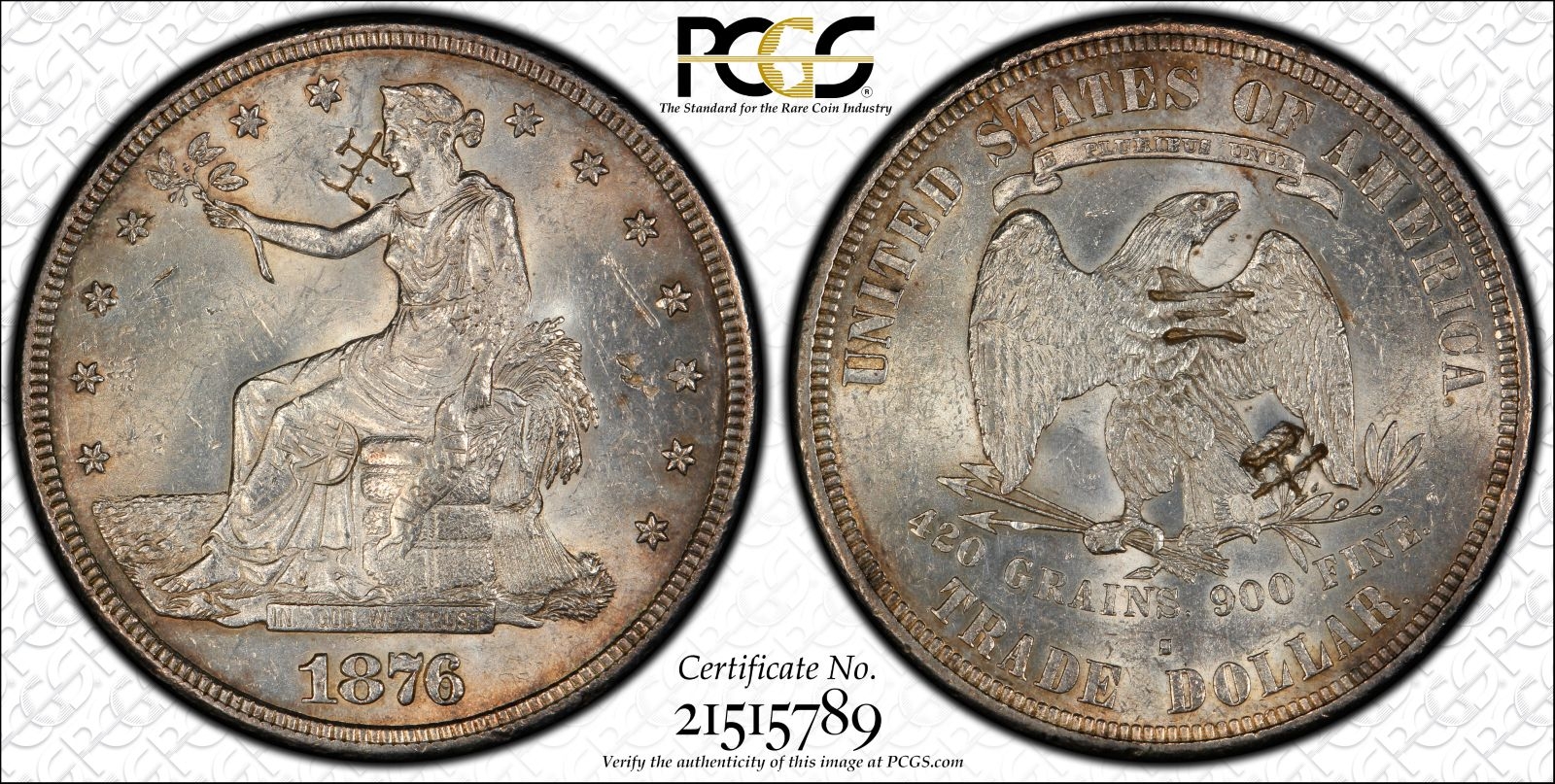
Like most of the S-mints, the 76-S is common, chopped and unchopped. This one, however, has the scarcer II/II combination.
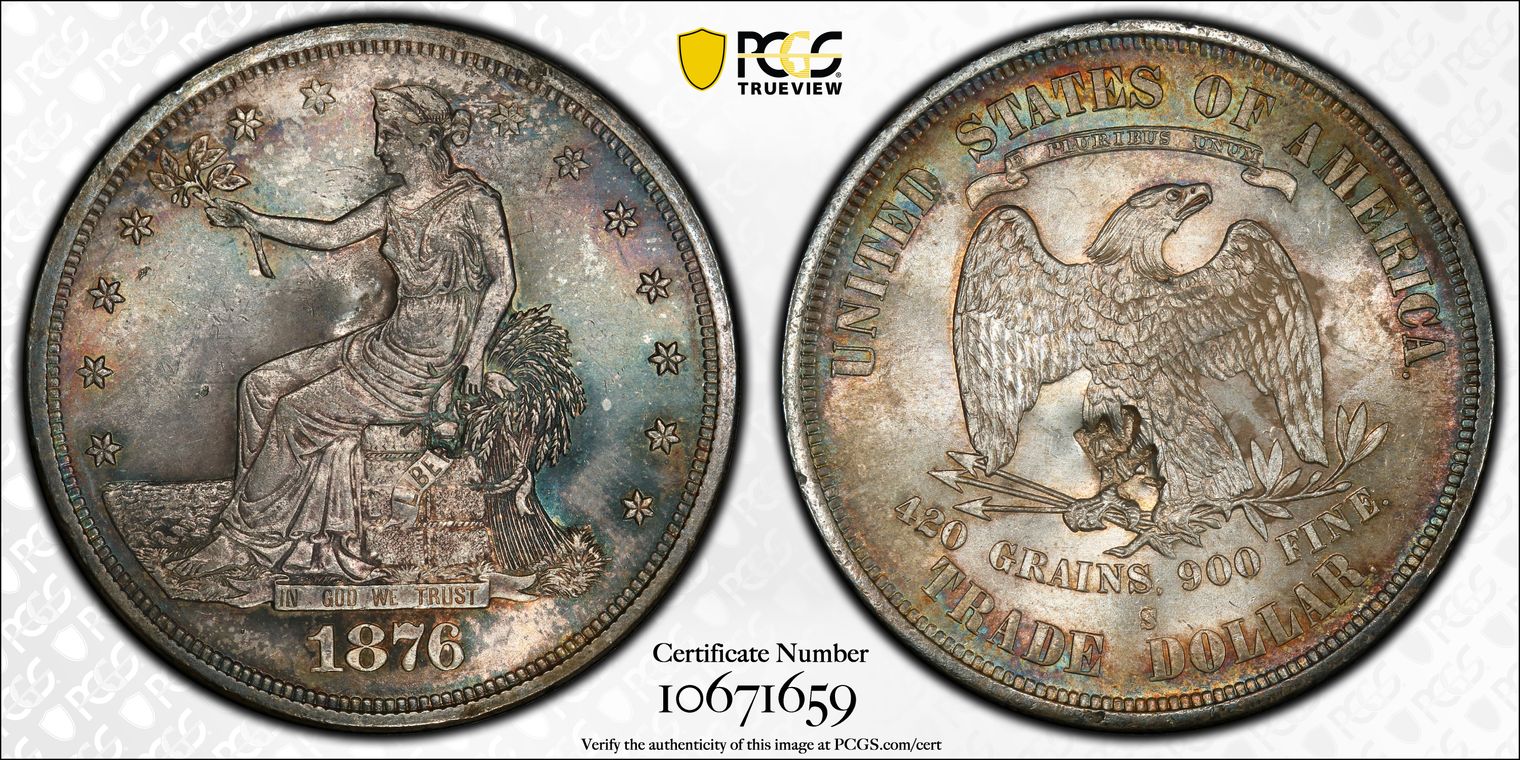
Most San Francisco-minted Trade Dollars ended up in the Orient, and this one is no exception. One could argue, though, that none made it back in this exceptional condition with this eye appeal and blue and violet toning. Type I obverse/Type I reverse, the most common combination for the 1876-S.
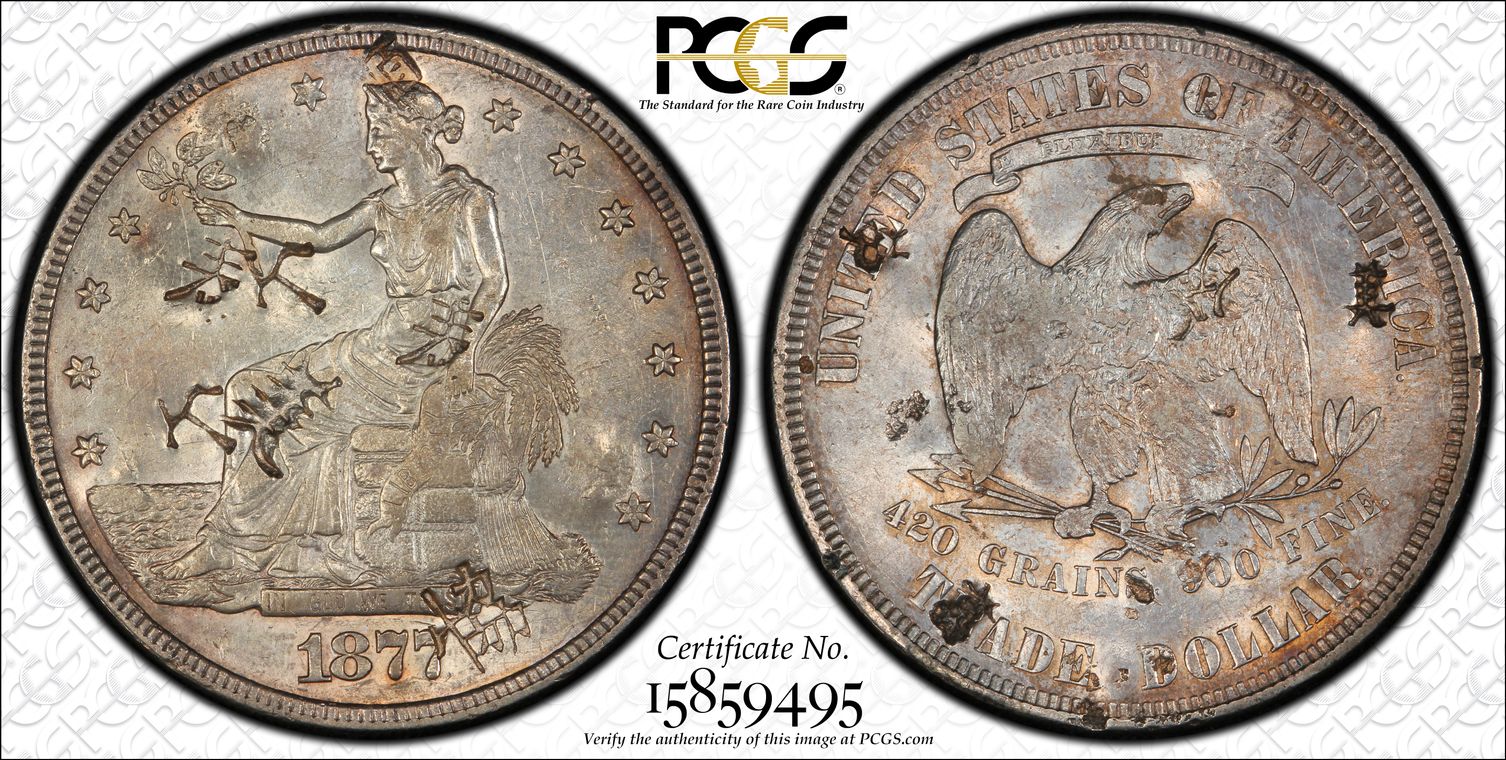
The 77-P had a relatively high mintage at over 3 million. However, most of that mintage apparently remained in the United States as it is not easy to find a chopmarked example. Despite that, it is probably the most common of all the chopmarked P-mint Trade dollars.
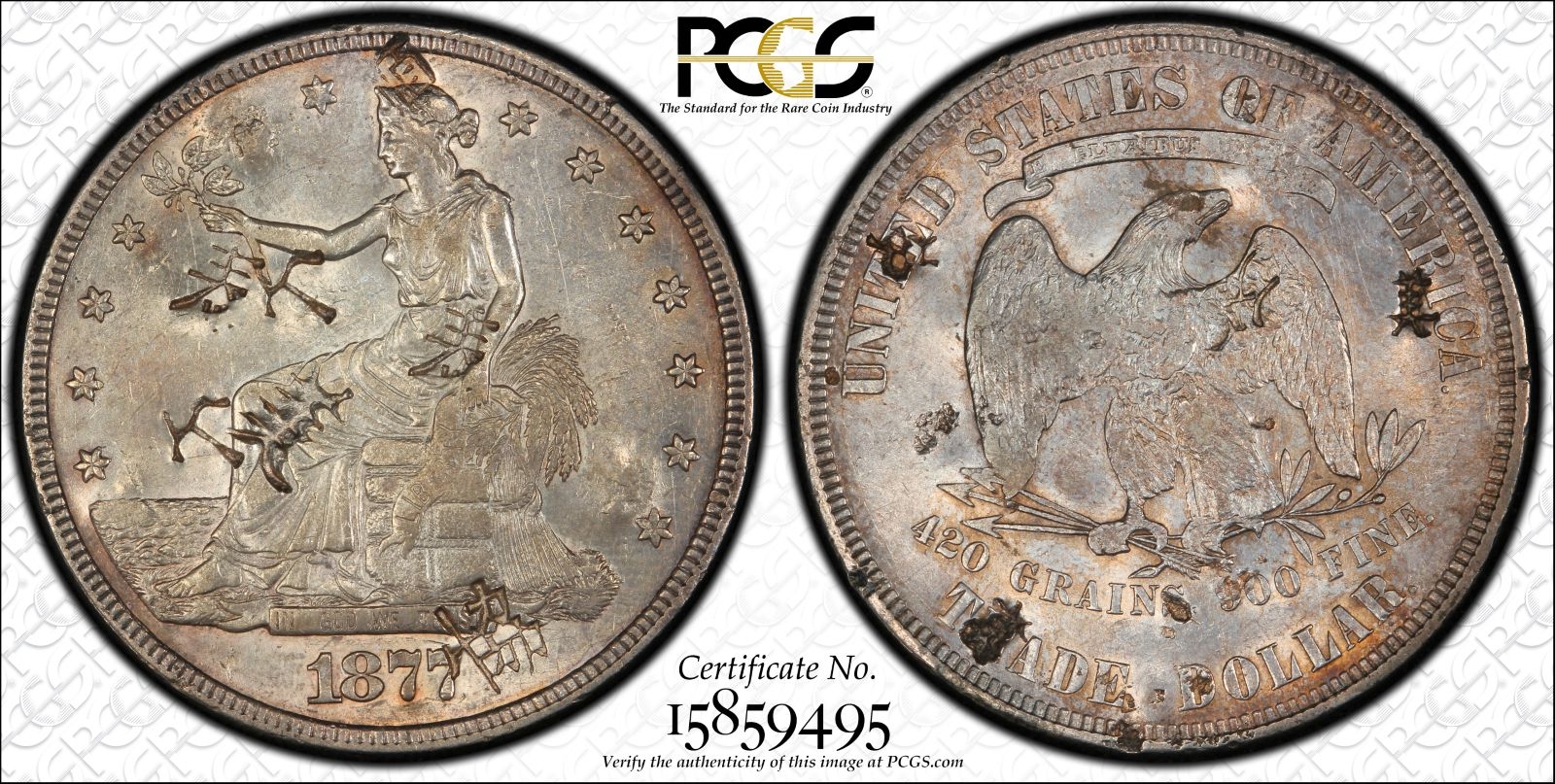
The 77-P had a relatively high mintage at over 3 million. However, most of that mintage apparently remained in the United States as it is not easy to find a chopmarked example. Despite that, it is probably the most common of all the chopmarked P-mint Trade dollars.
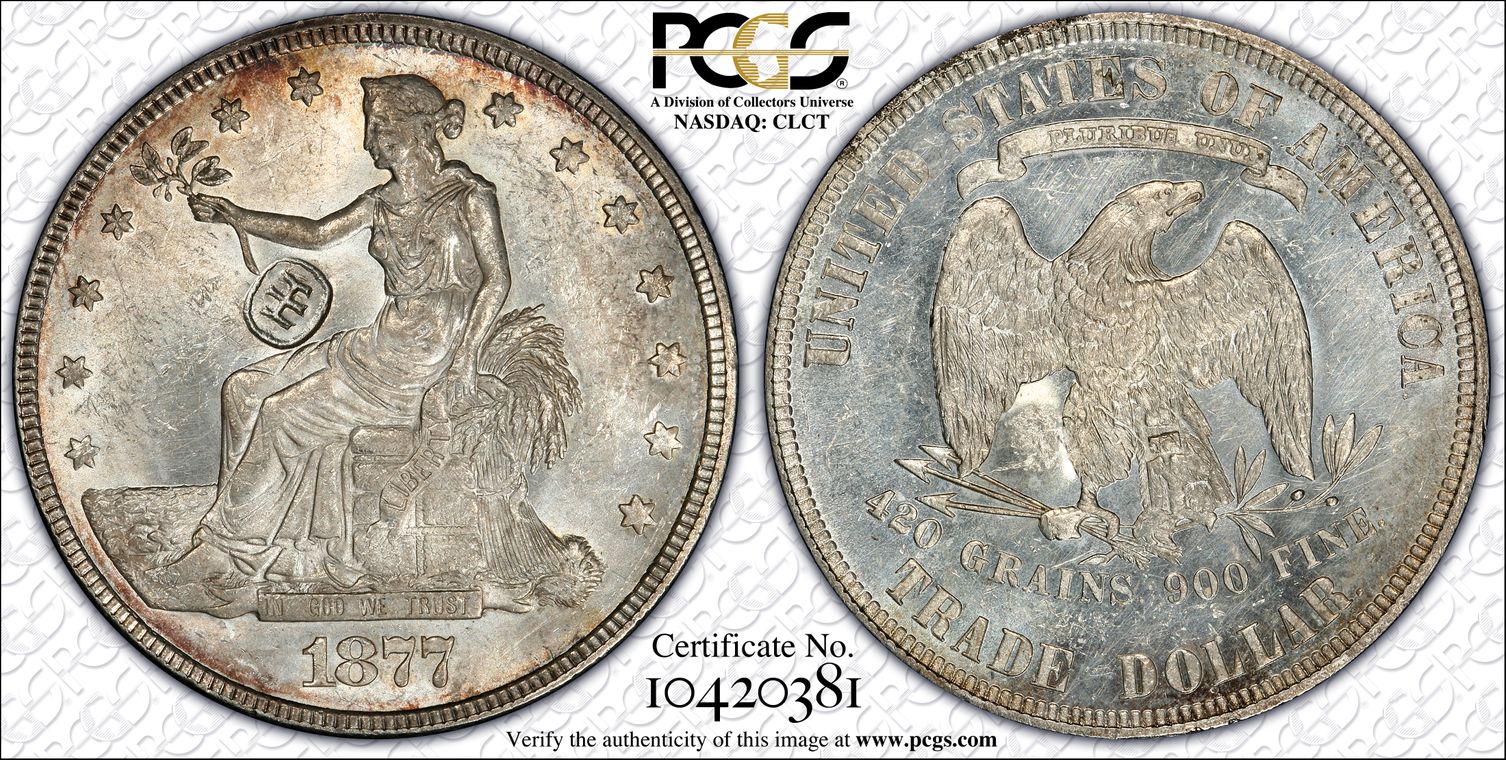
Still somewhat scarce chopmarked, compared to previous Philadelphia mint issues the 77 P is relatively obtainable chopmarked.
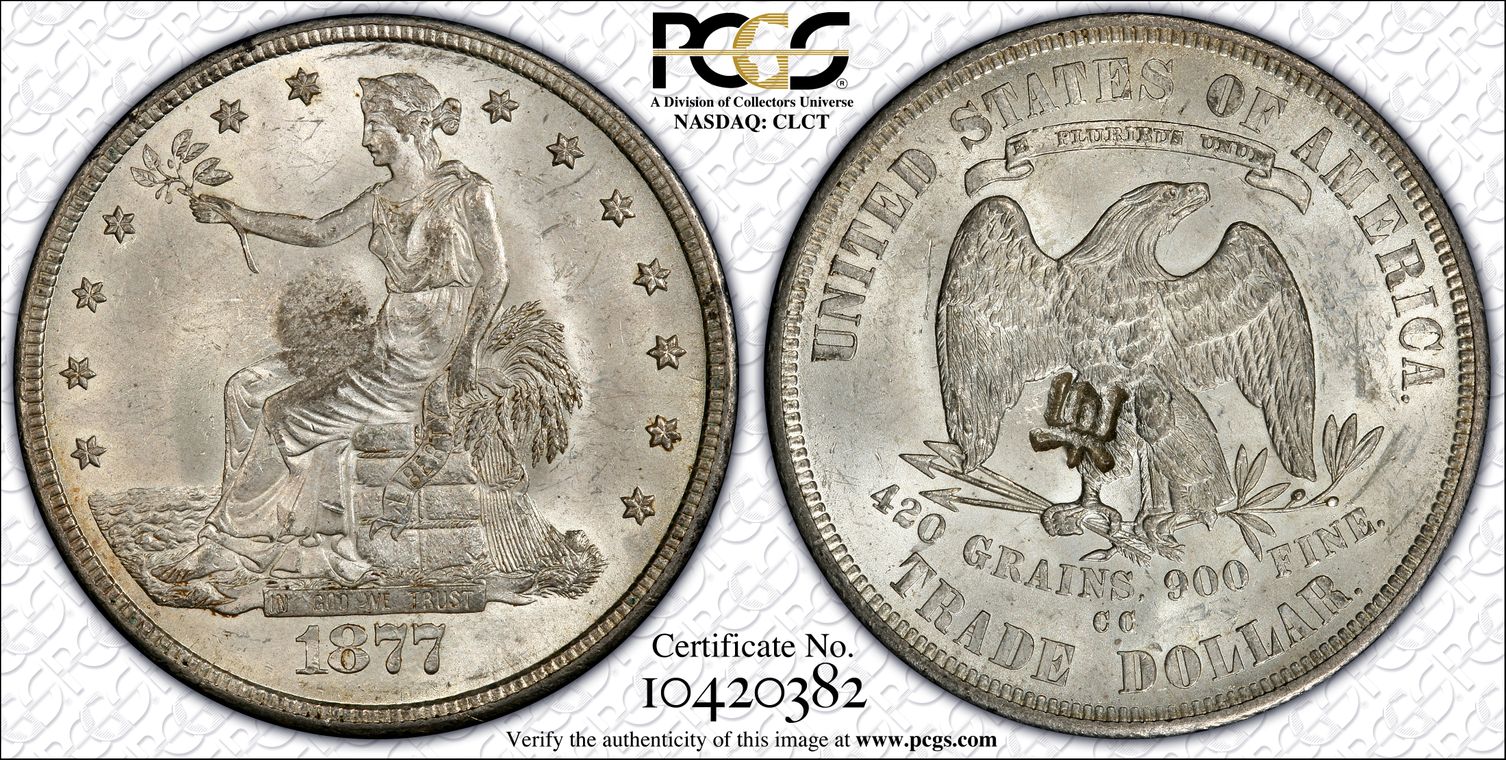
This Carson City dollar saw little use in the Orient and picked up one chopmark on the reverse.
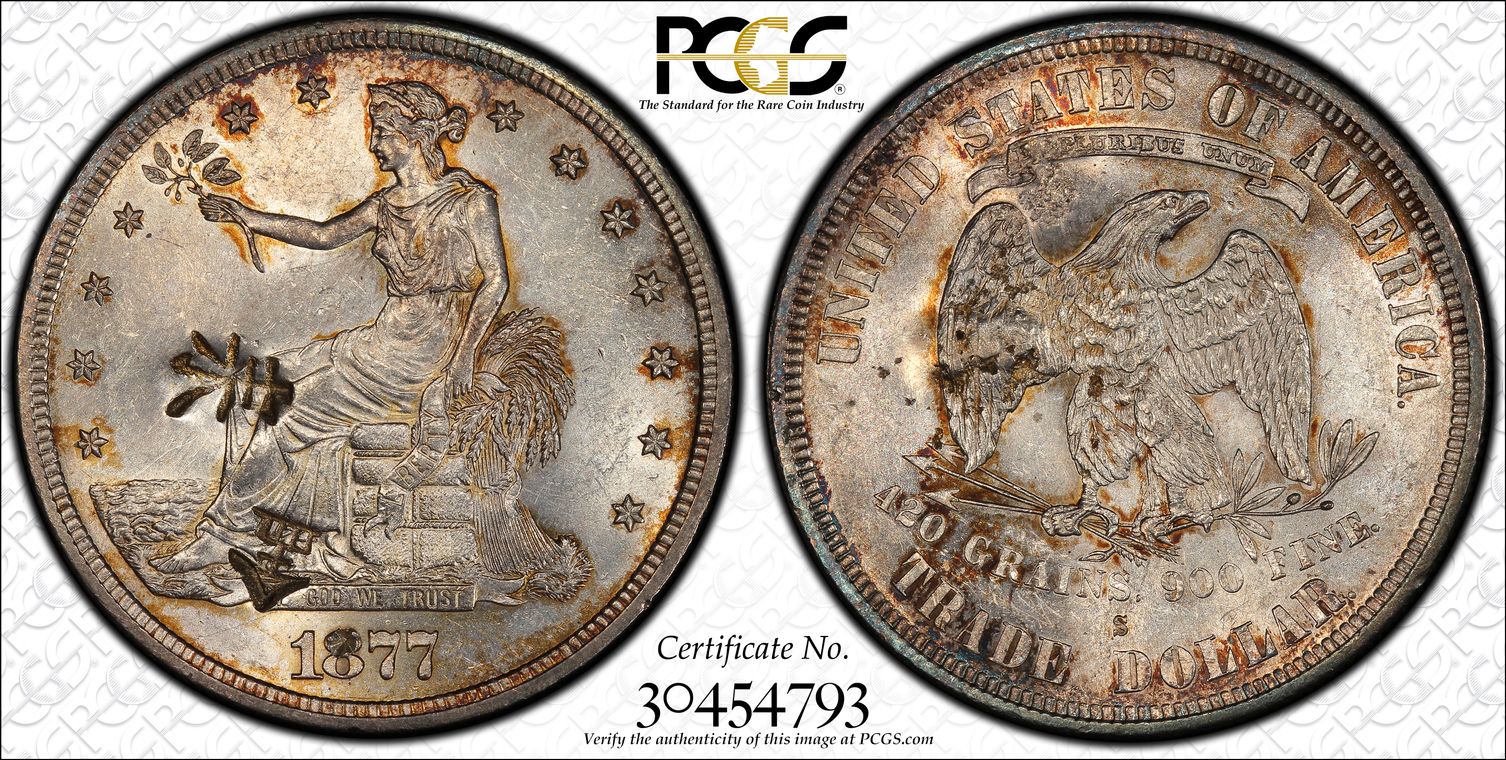
Absolutely gorgeous coin in hand. Purchased in an NGC UNC Details (Chopmarked) holder and submitted to PCGS.
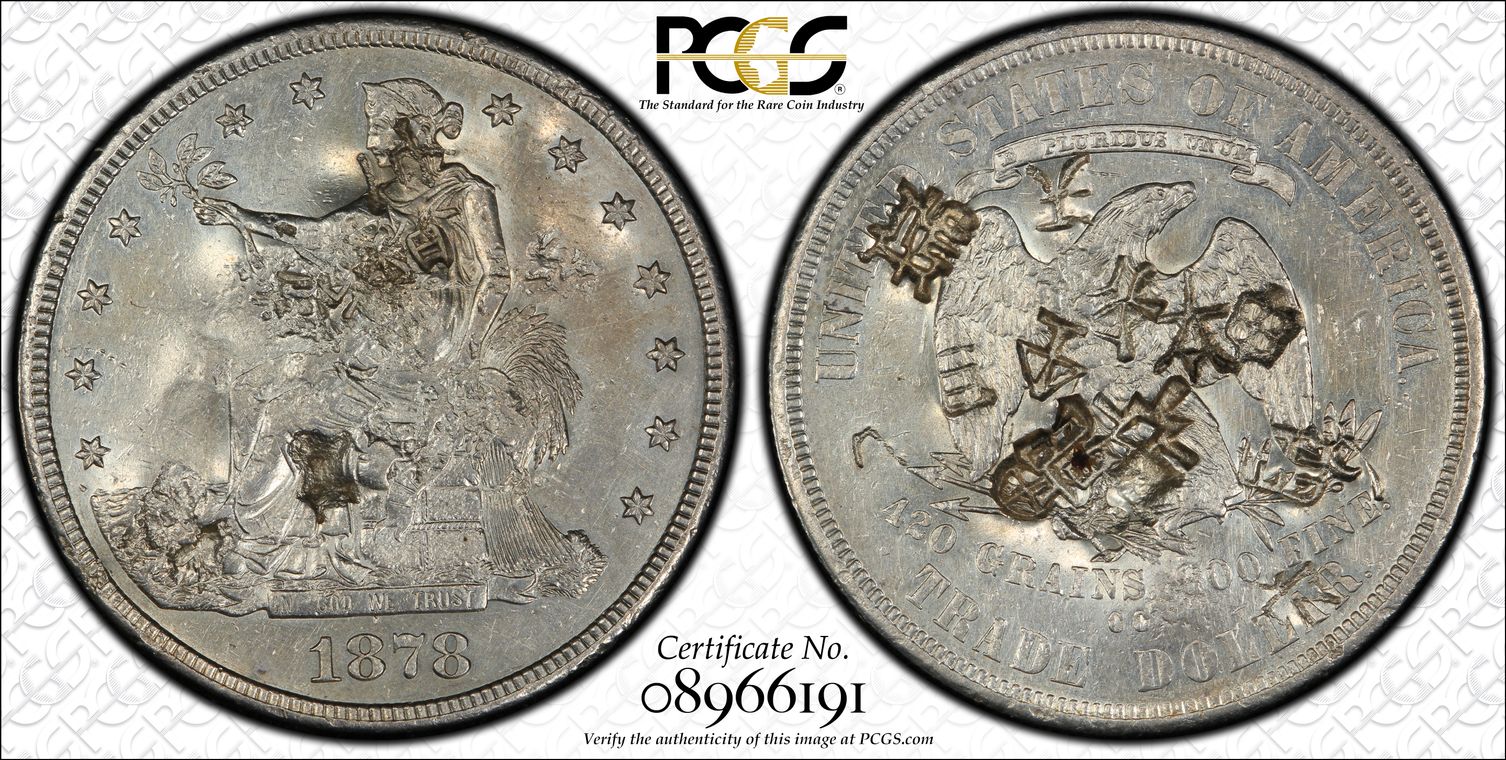
Extremely rare. Possibly less than 12 known chopmarked. I purchased this one in 2000 from a dealer in California who got it from a dealer in Japan who got it out of China. I believe this is the last 78-CC to come out directly out of China.
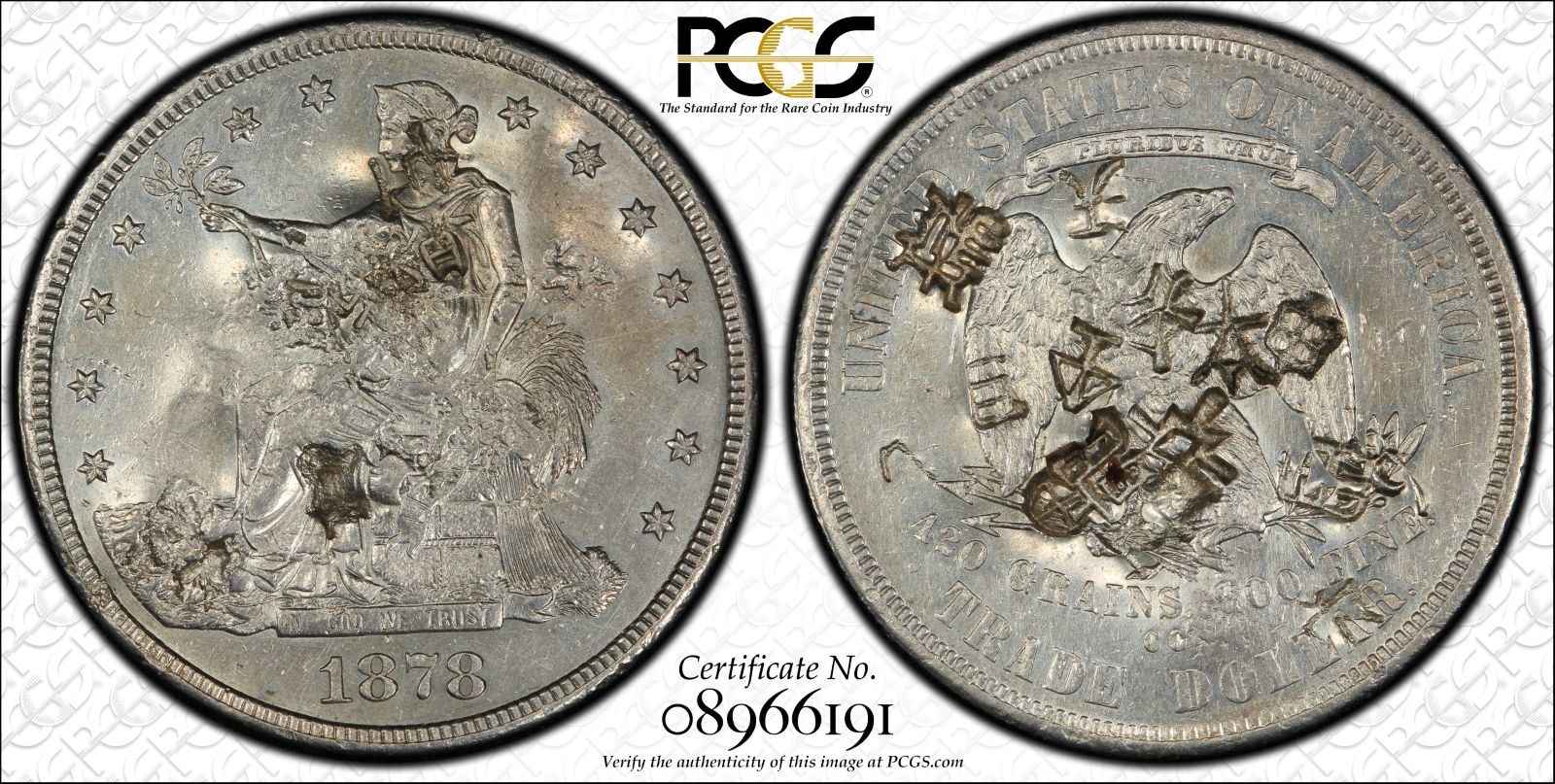
Extremely rare. Possibly less than 12 known chopmarked. I purchased this one in 2000 from a dealer in California who got it from a dealer in Japan who got it out of China. I believe this is the last 78-CC to come out directly out of China.
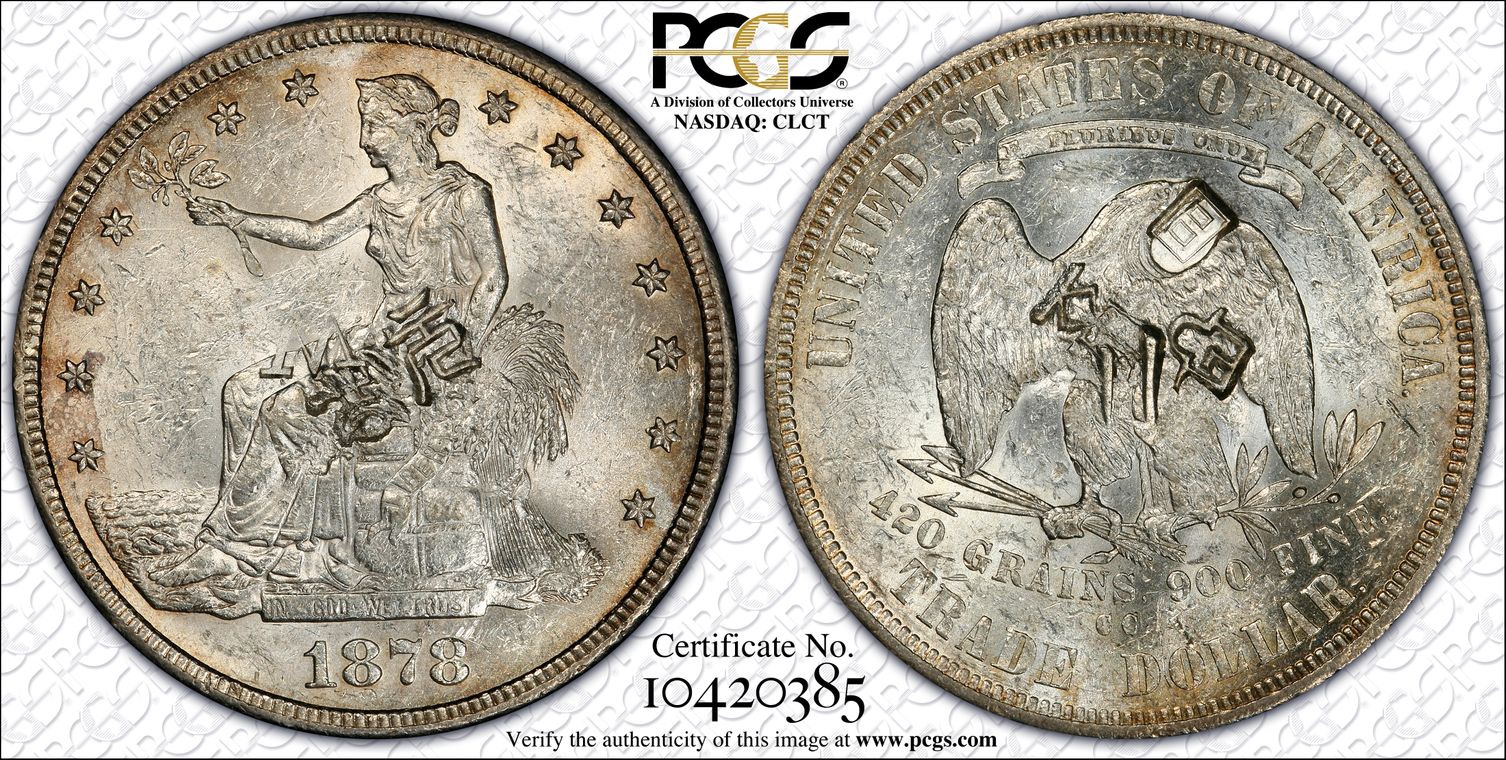
Extremely rare, probably less than a dozen survive. Only 97,000 were minted and over half of those were melted at the mint. Those that remained, amost all circulated locally. A small handful, including this one, did make it to China.

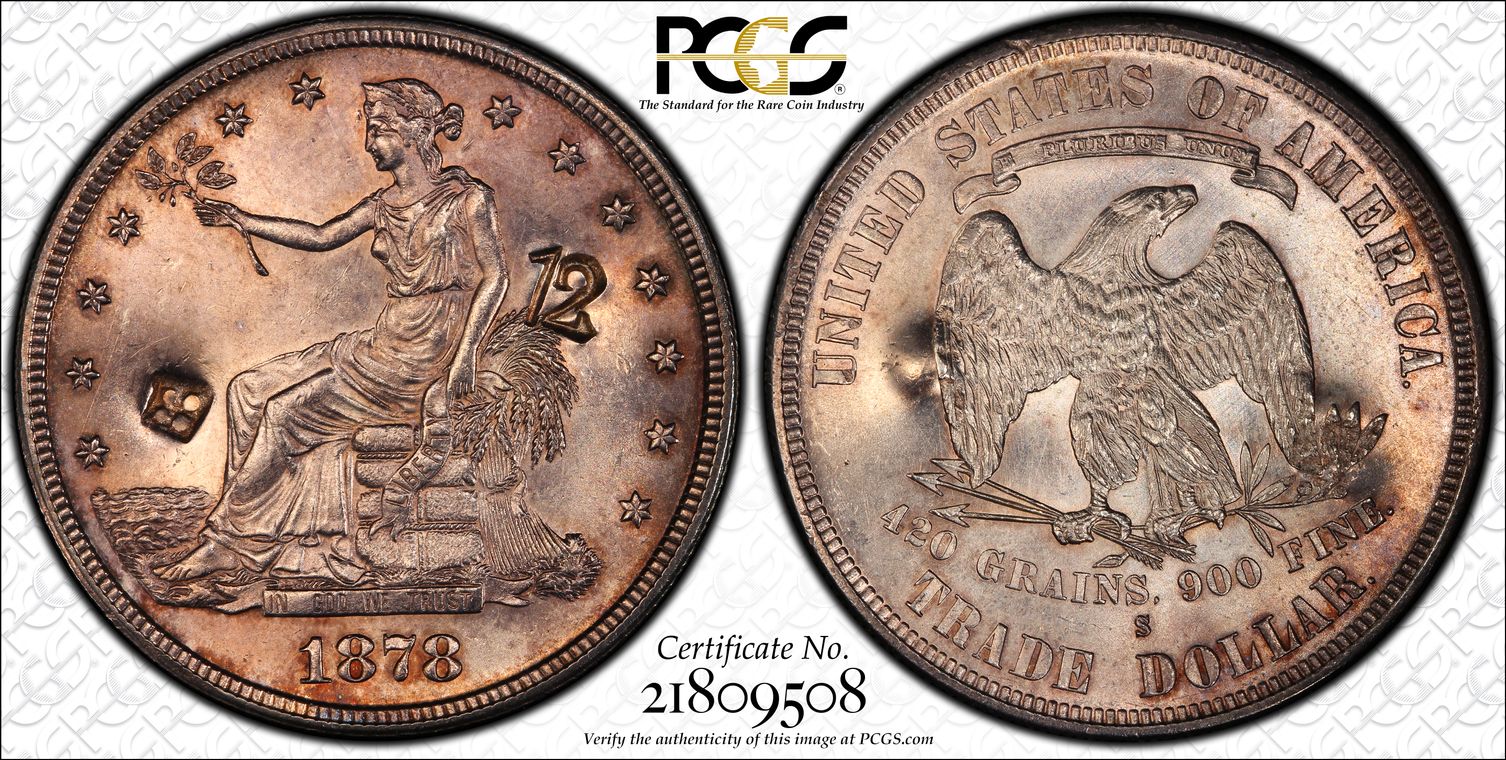
One of the most common Trade dollars with a relatively high mintage, the 78-S is somewhat difficult to find with chopmarks. Of all the S-mint Trade dollars, why was the 78-S less likely to be used in commerce with China? This one is beautifully toned, with an arabic numeral chopmark "12." Chinese merchants occasionally used arabic numerals for chopmarks.
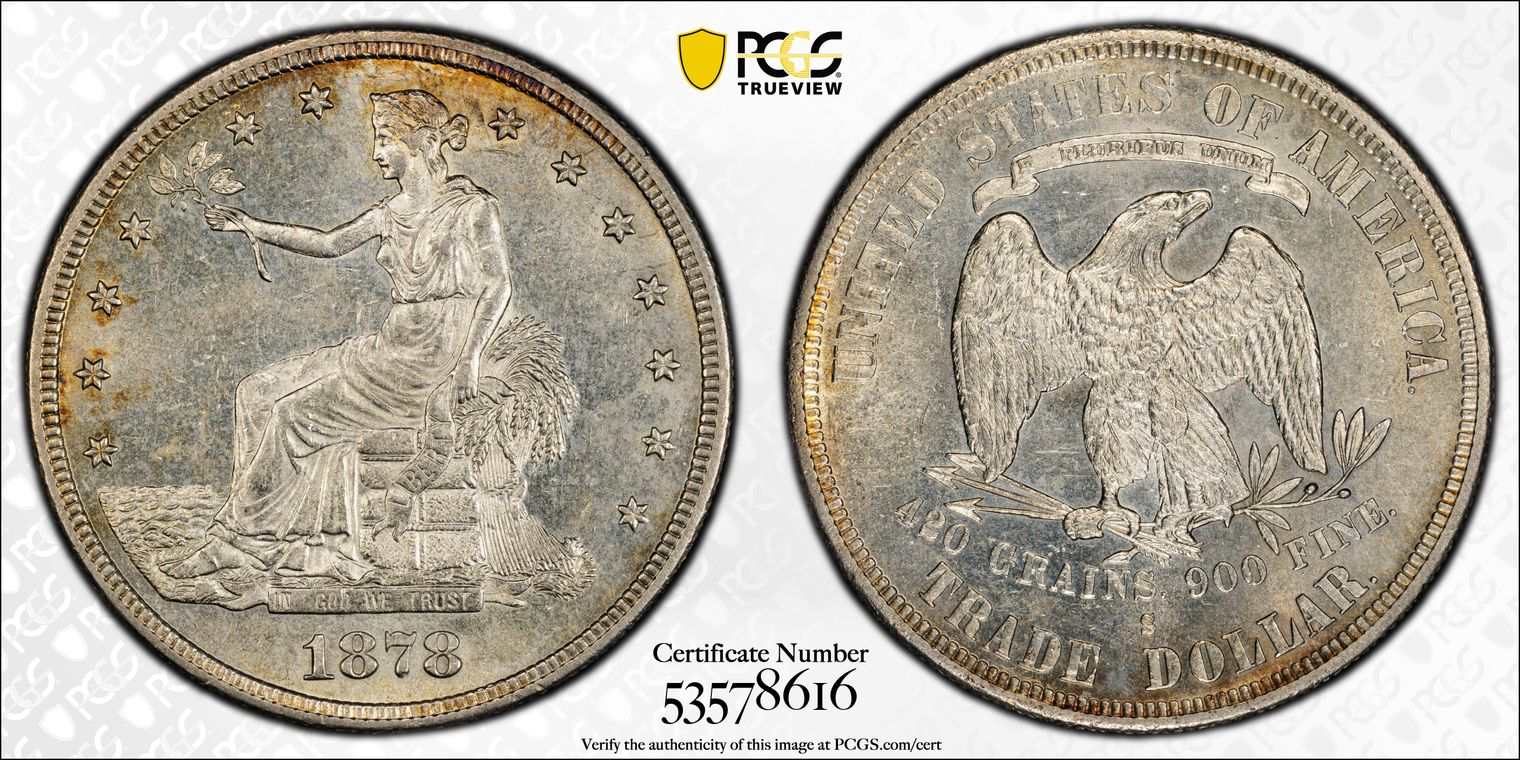
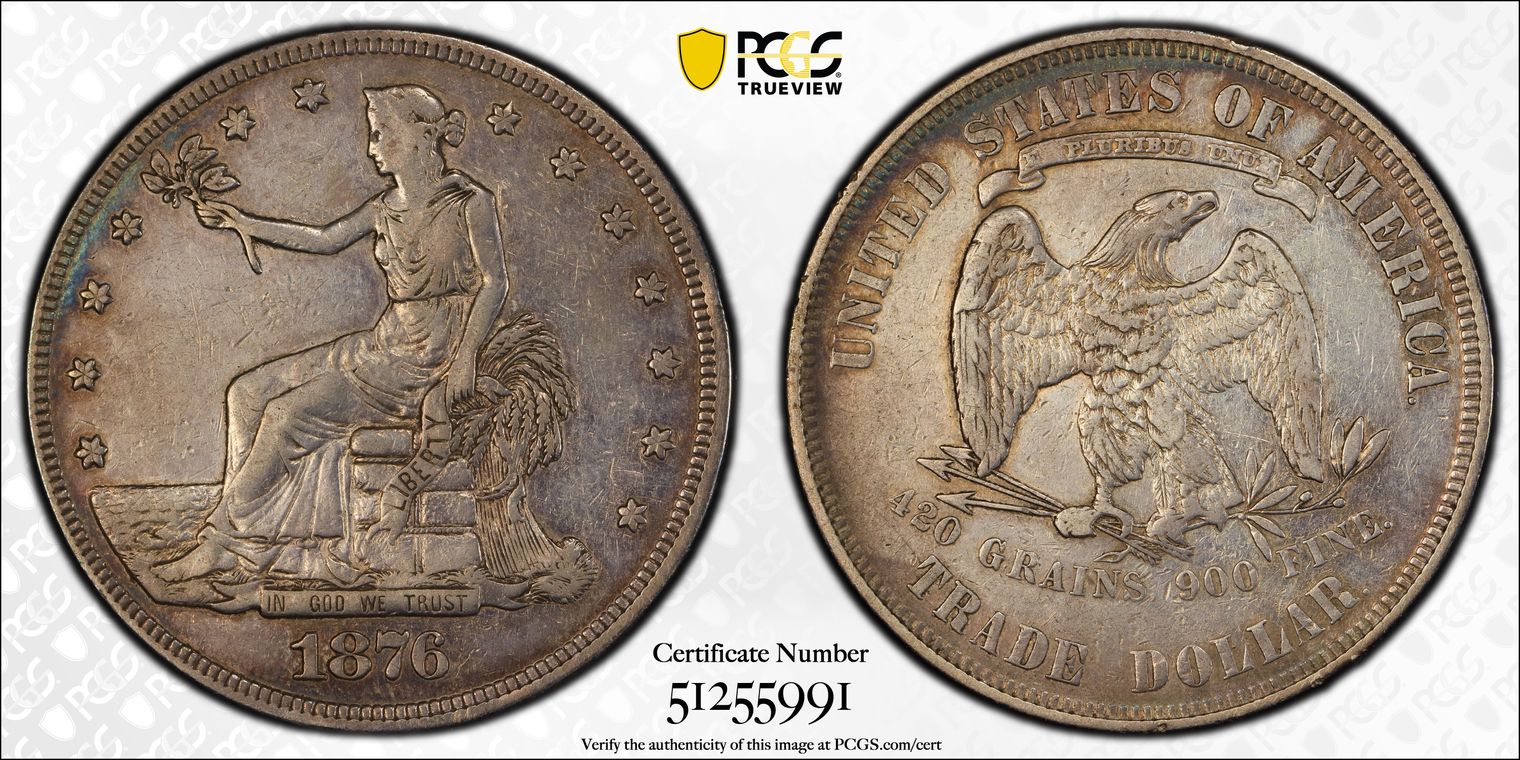
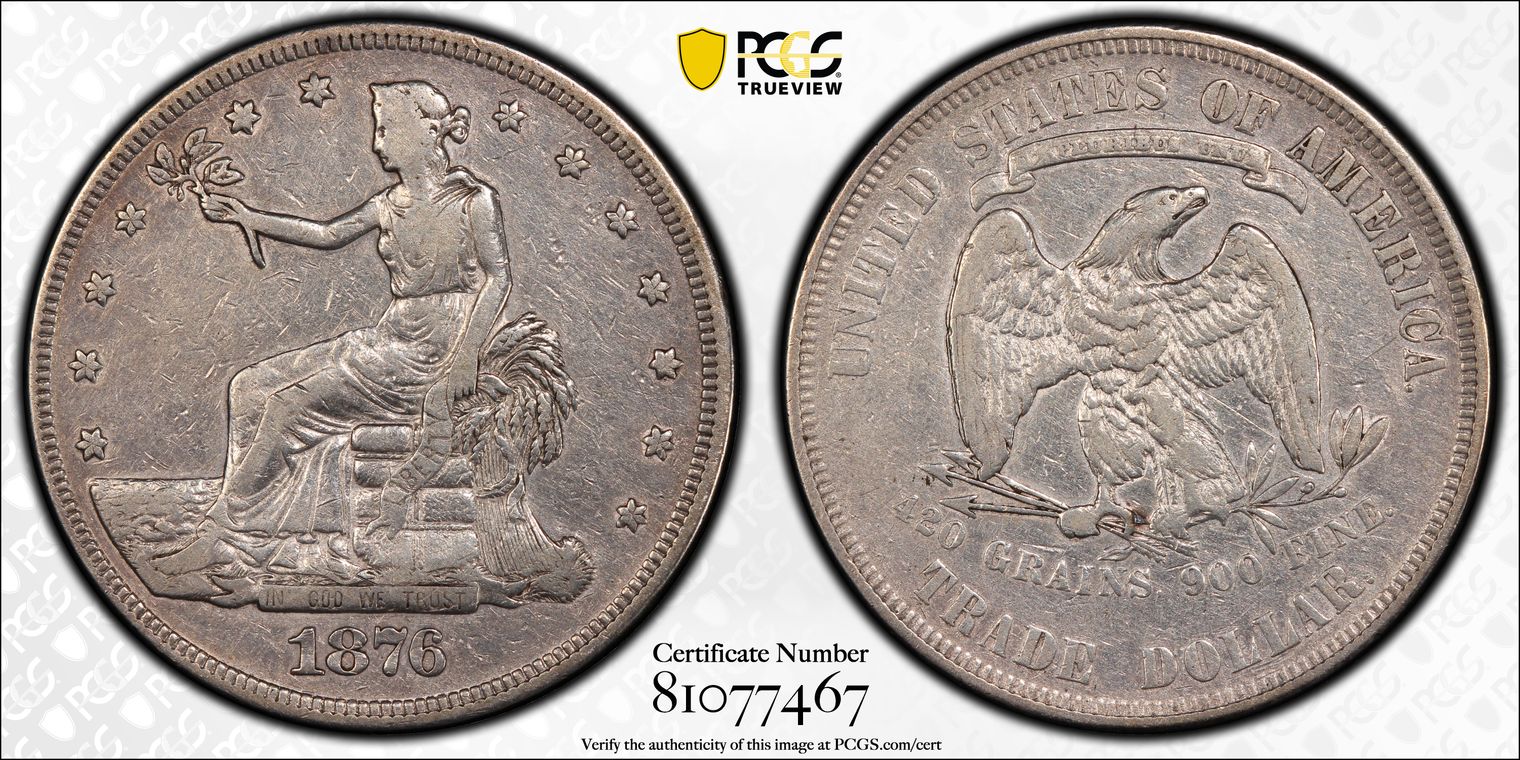
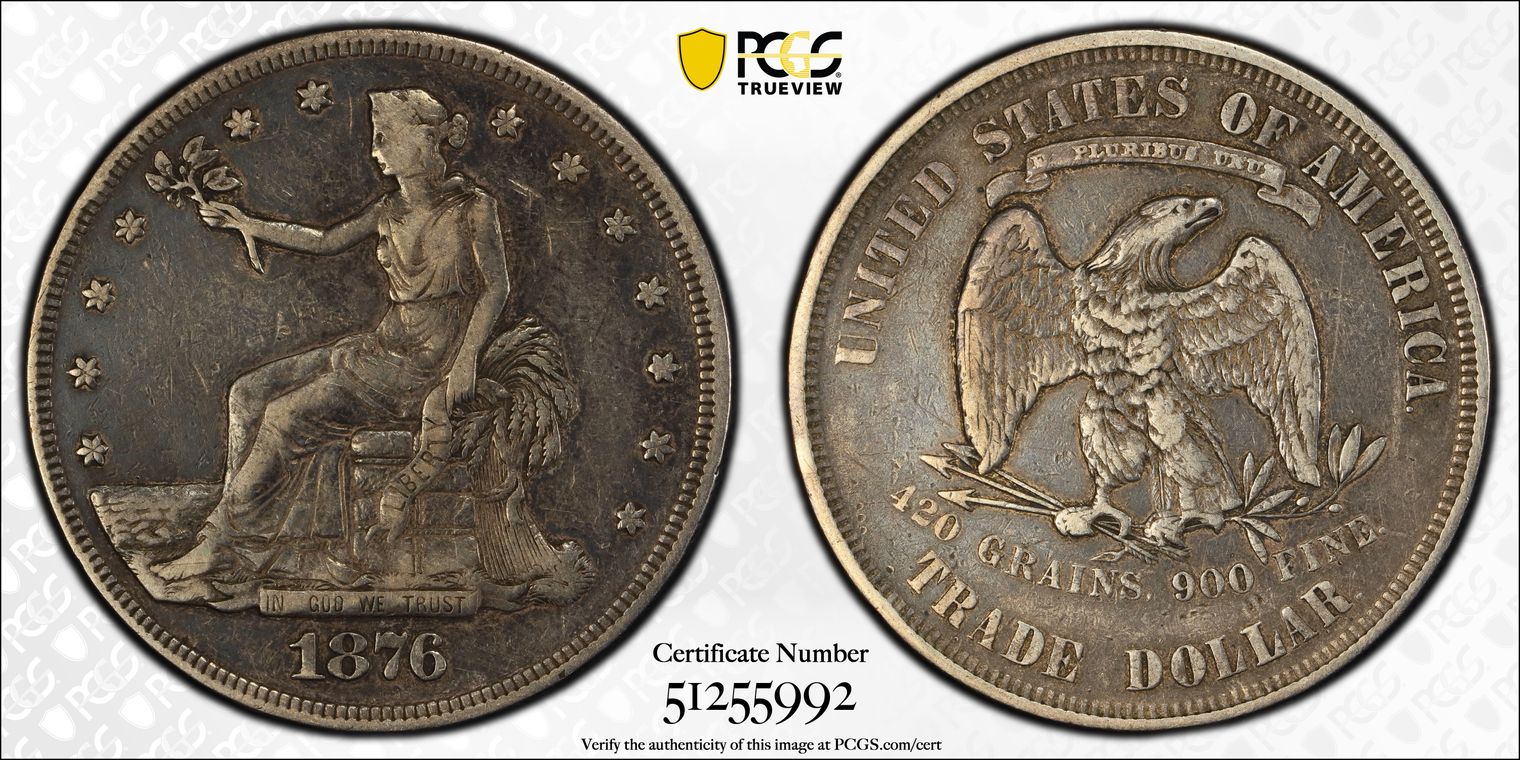
In some ways similar to the 75-P I/I, the 76-P II/II is extraordinarily difficult to fine.
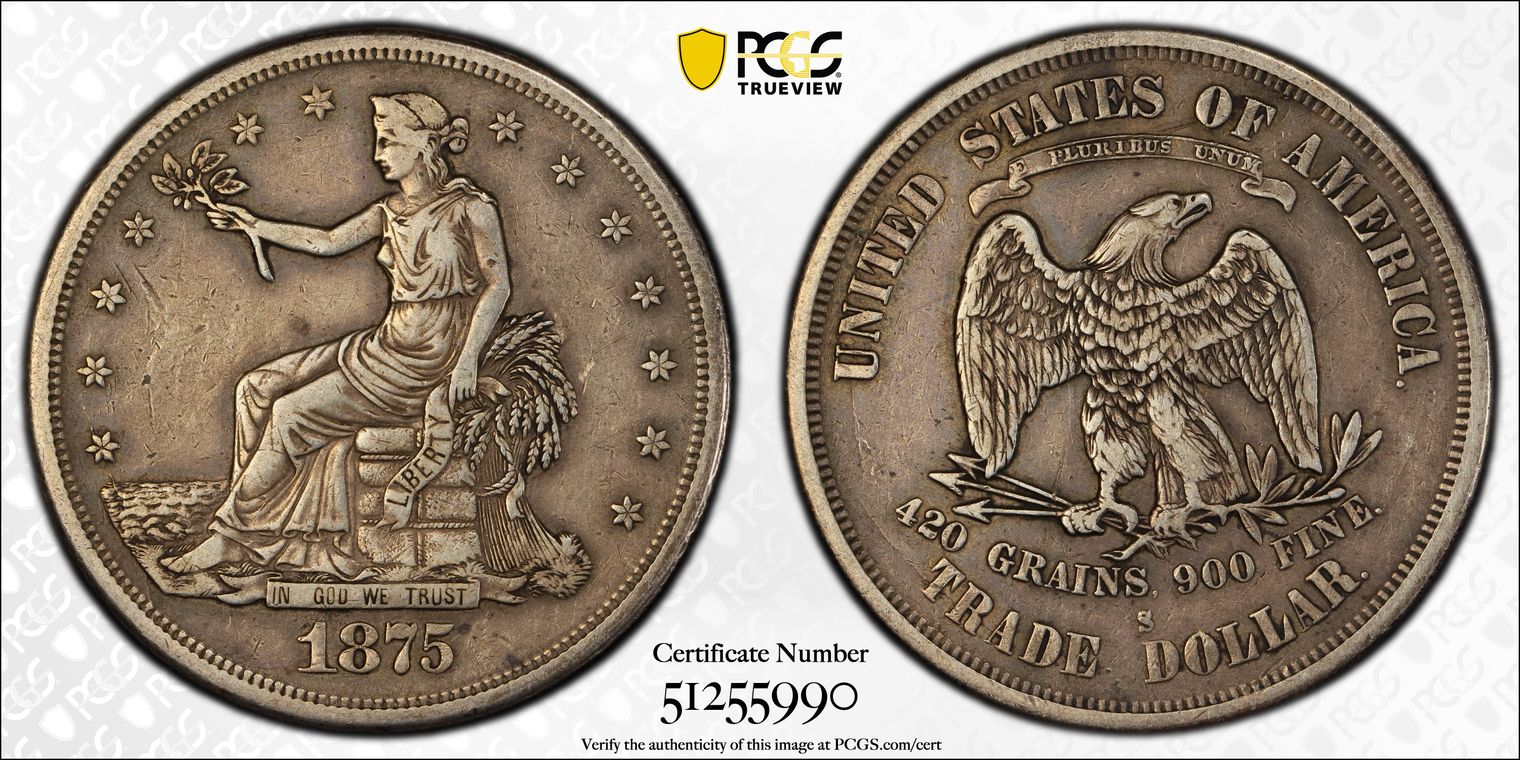
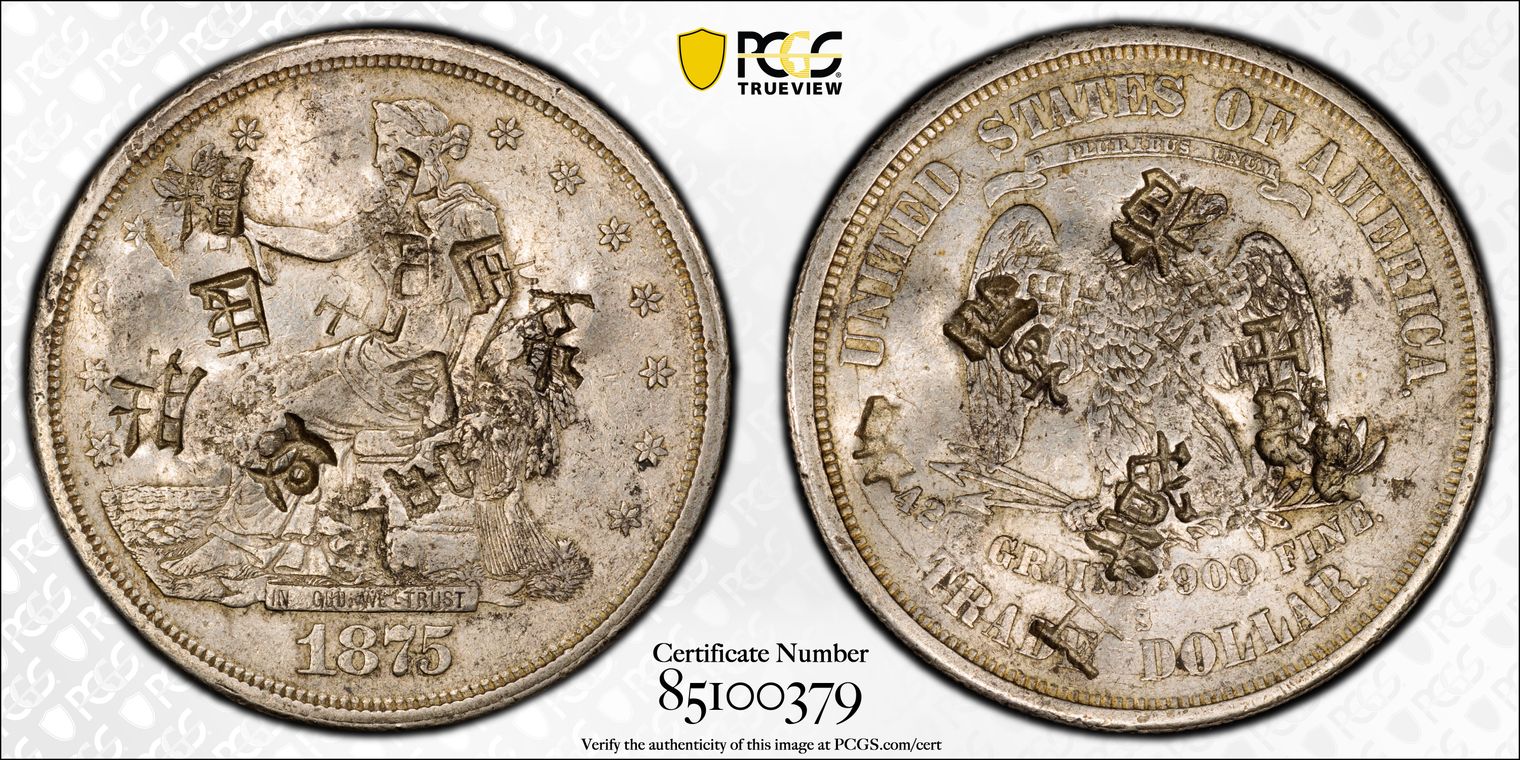
This one is actually a 75-S/CC, FS-502, the scarcer of the two S/CCs. (I need to get PCGS to fix this.)
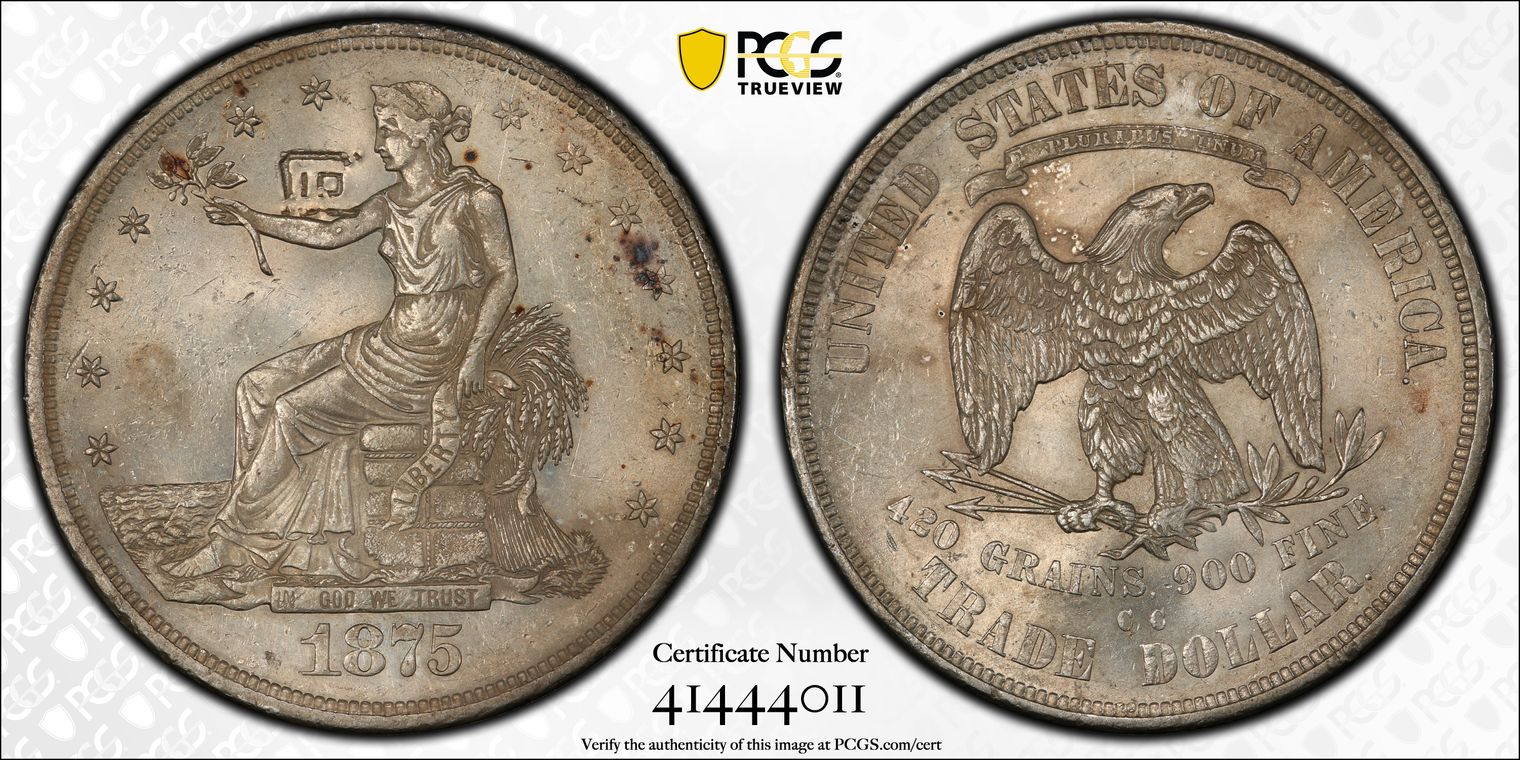
Like the 74-CC, the 75-CC is fairly common chop marked.
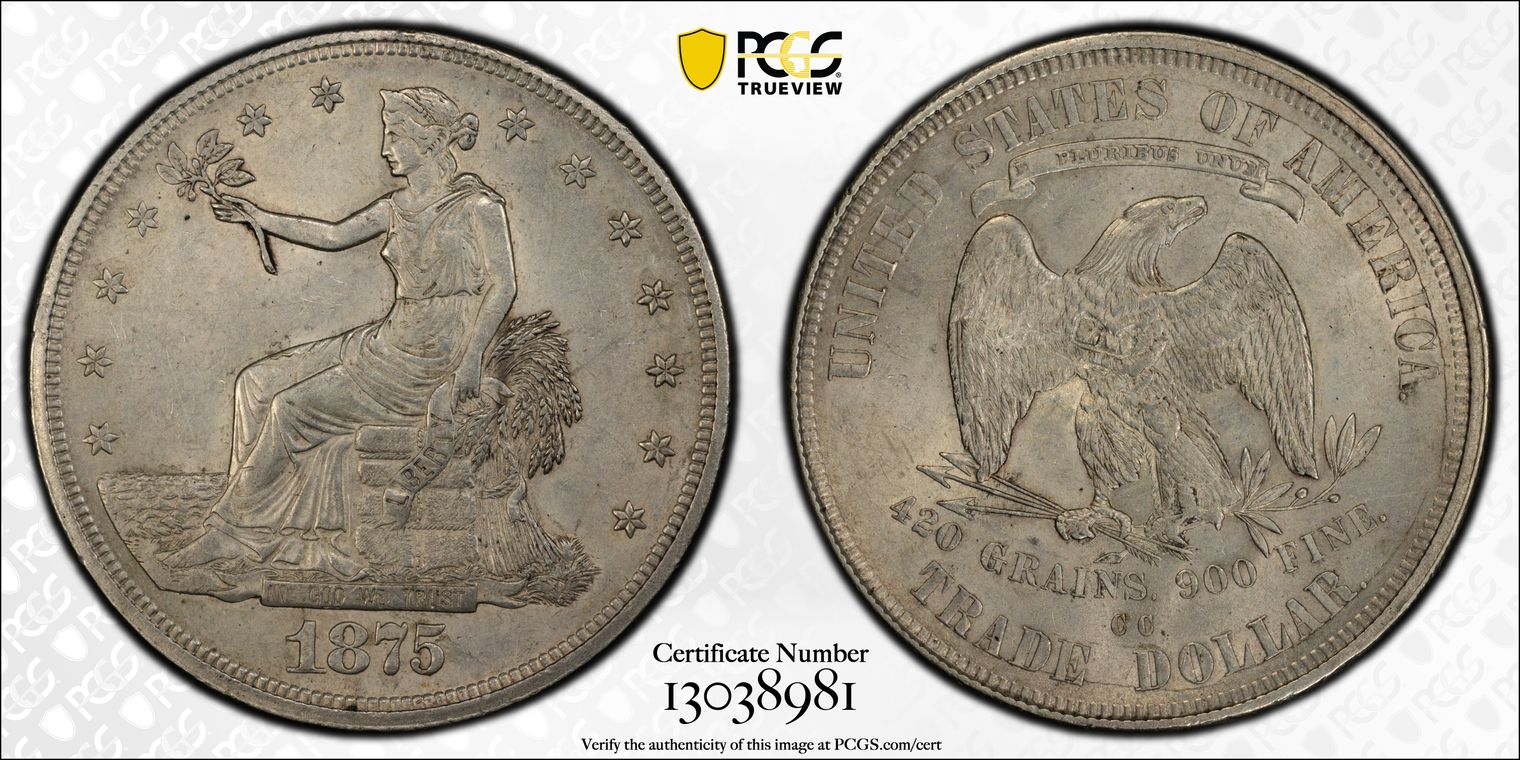
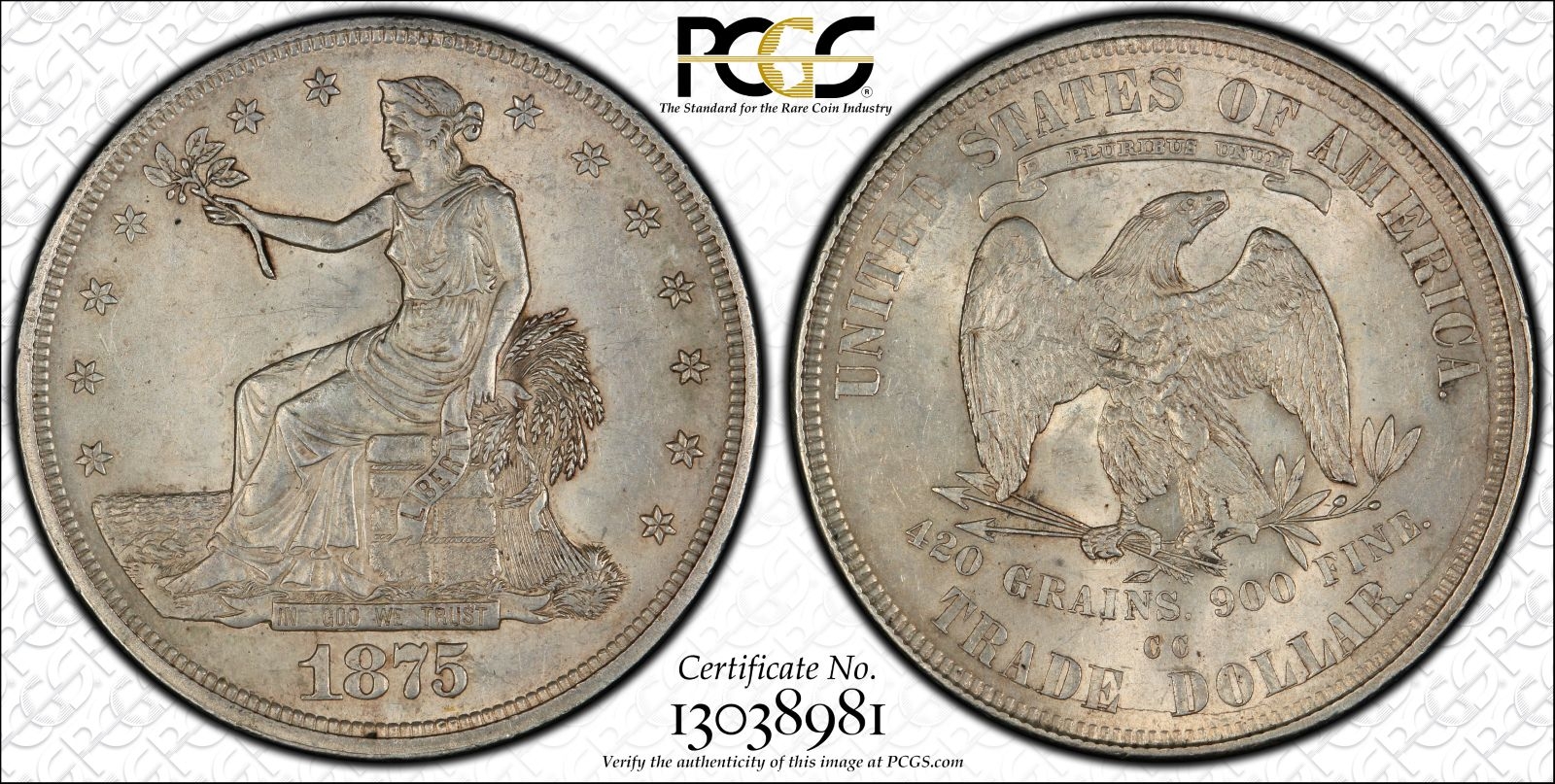
Another CC Trade dollar that is commonly found chopmarked. However, almost all have a Type I reverse. This one, with a faint chopmark on the eagle's breast, is one of the very few with a Type II reverse.
Another CC Trade dollar that is commonly found chopmarked. However, almost all have a Type I reverse. This one, with a faint chopmark on the eagle's breast, is one of the very few with a Type II reverse.
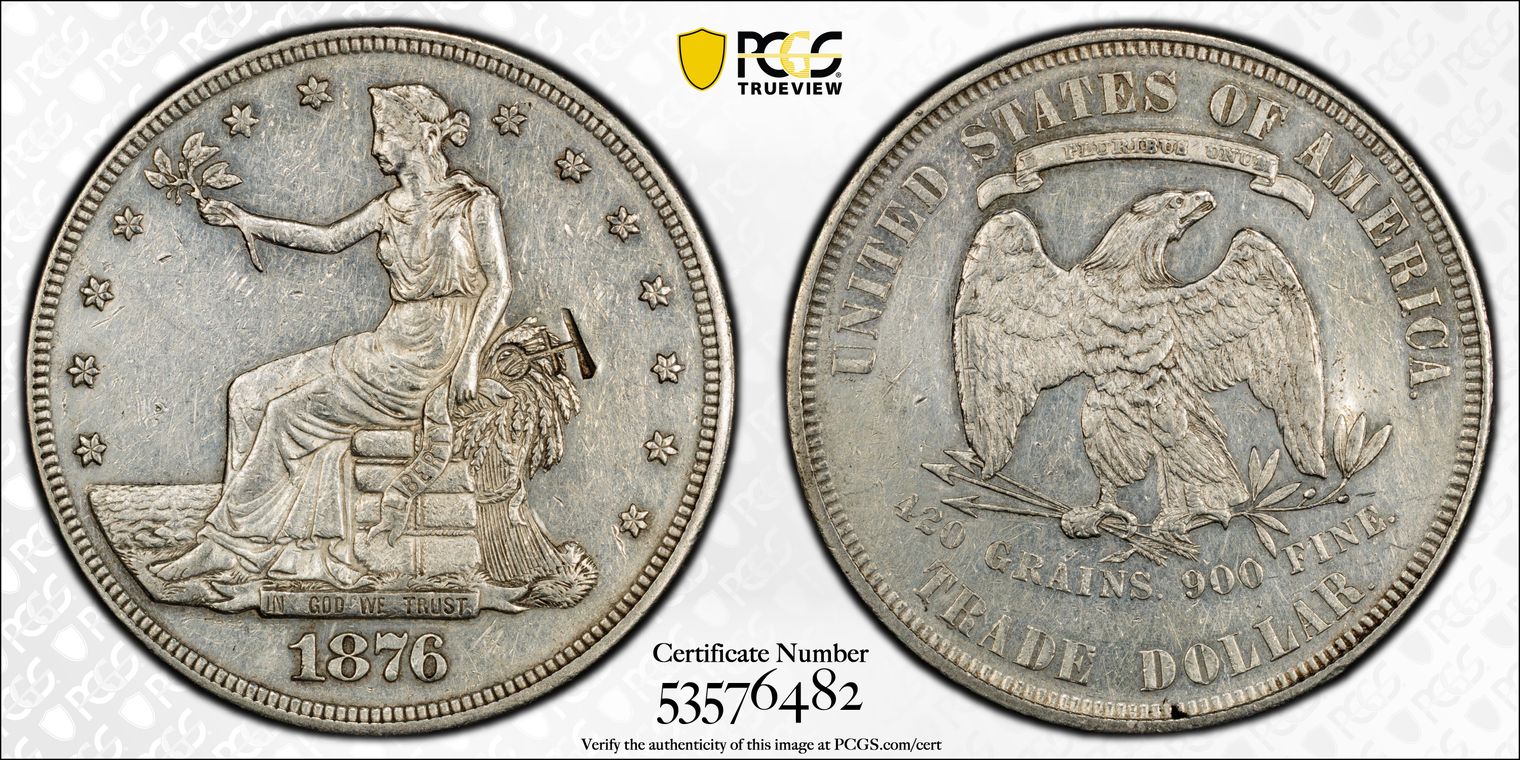
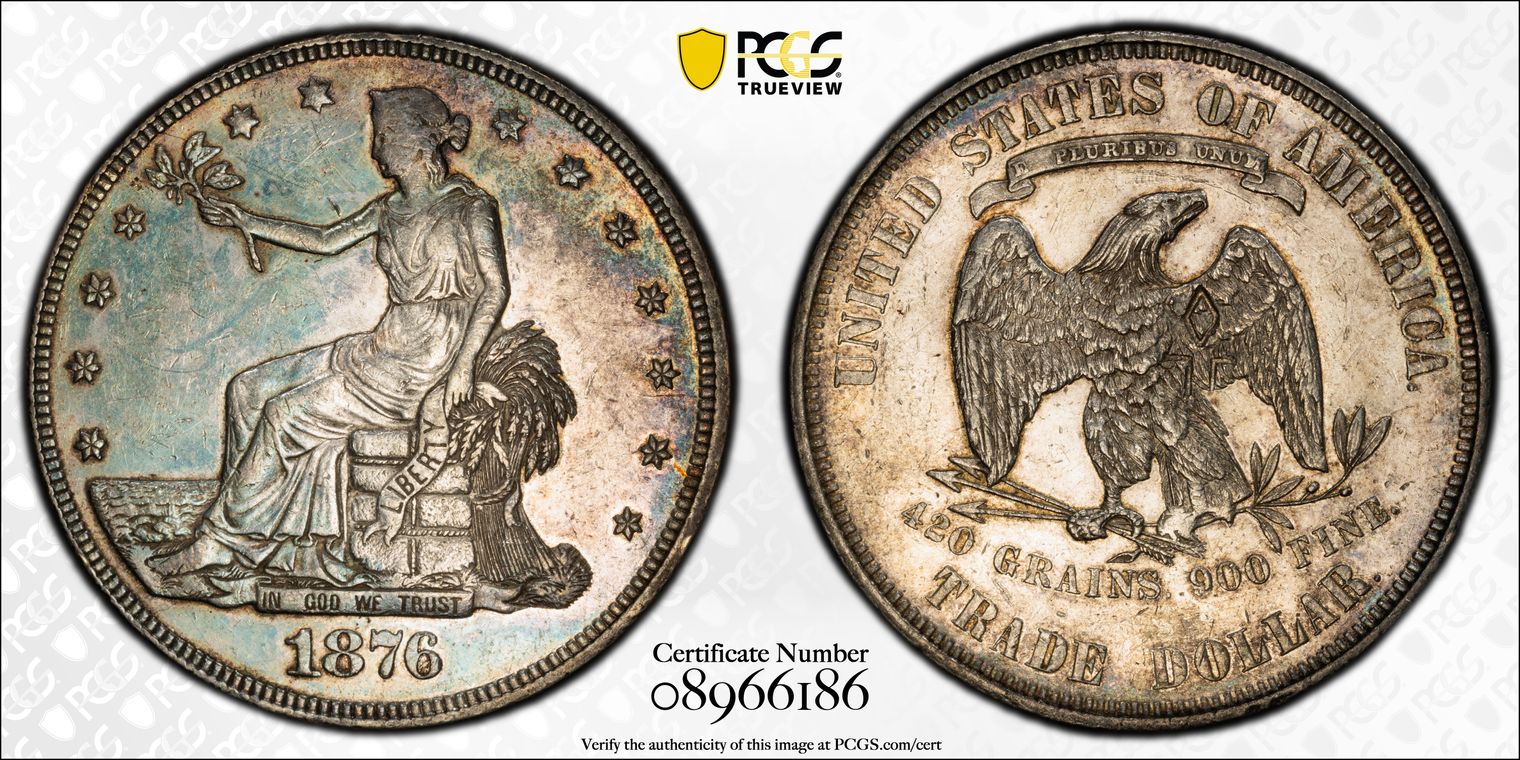

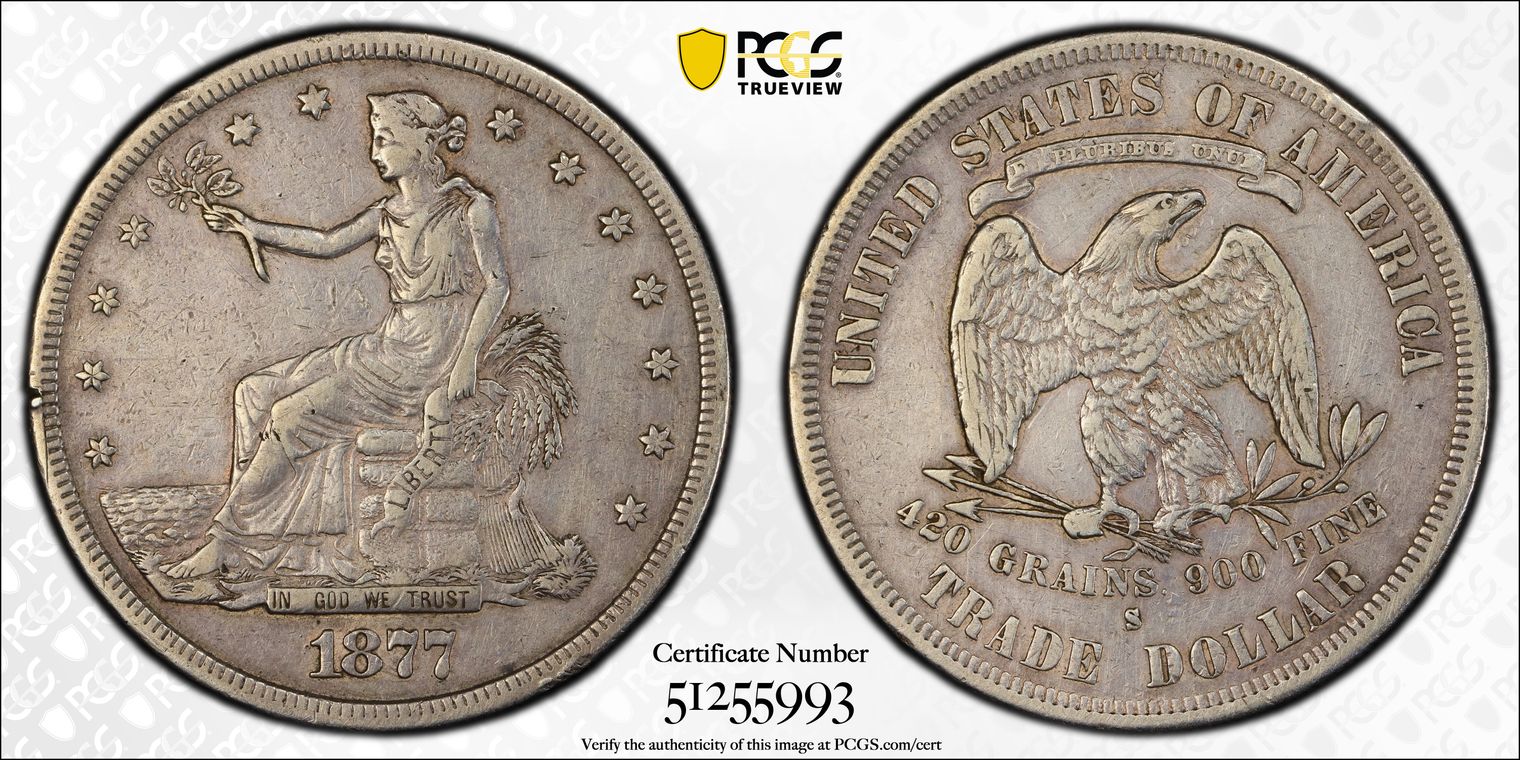
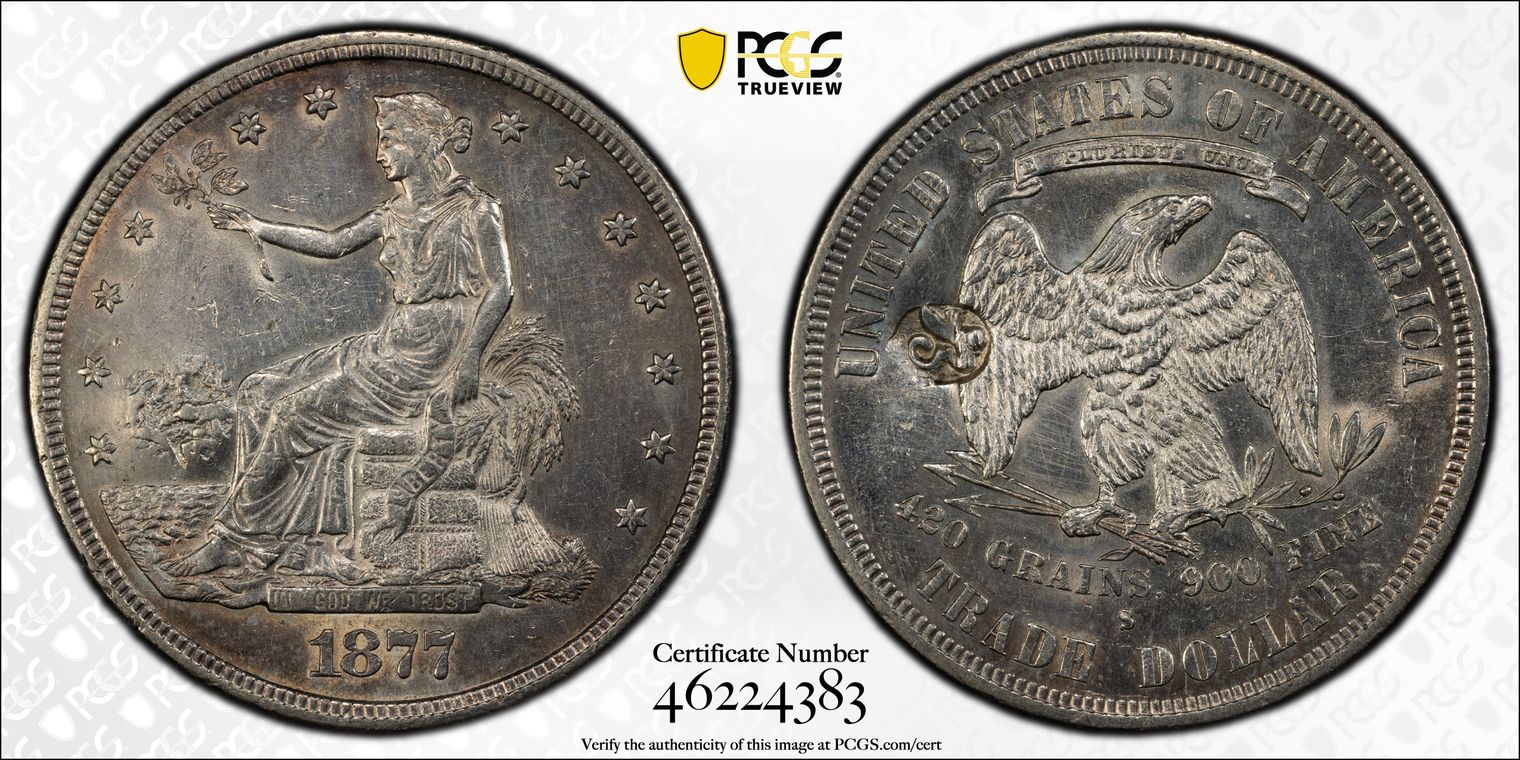
Interesting embossed chopmark on the eagle's wing.
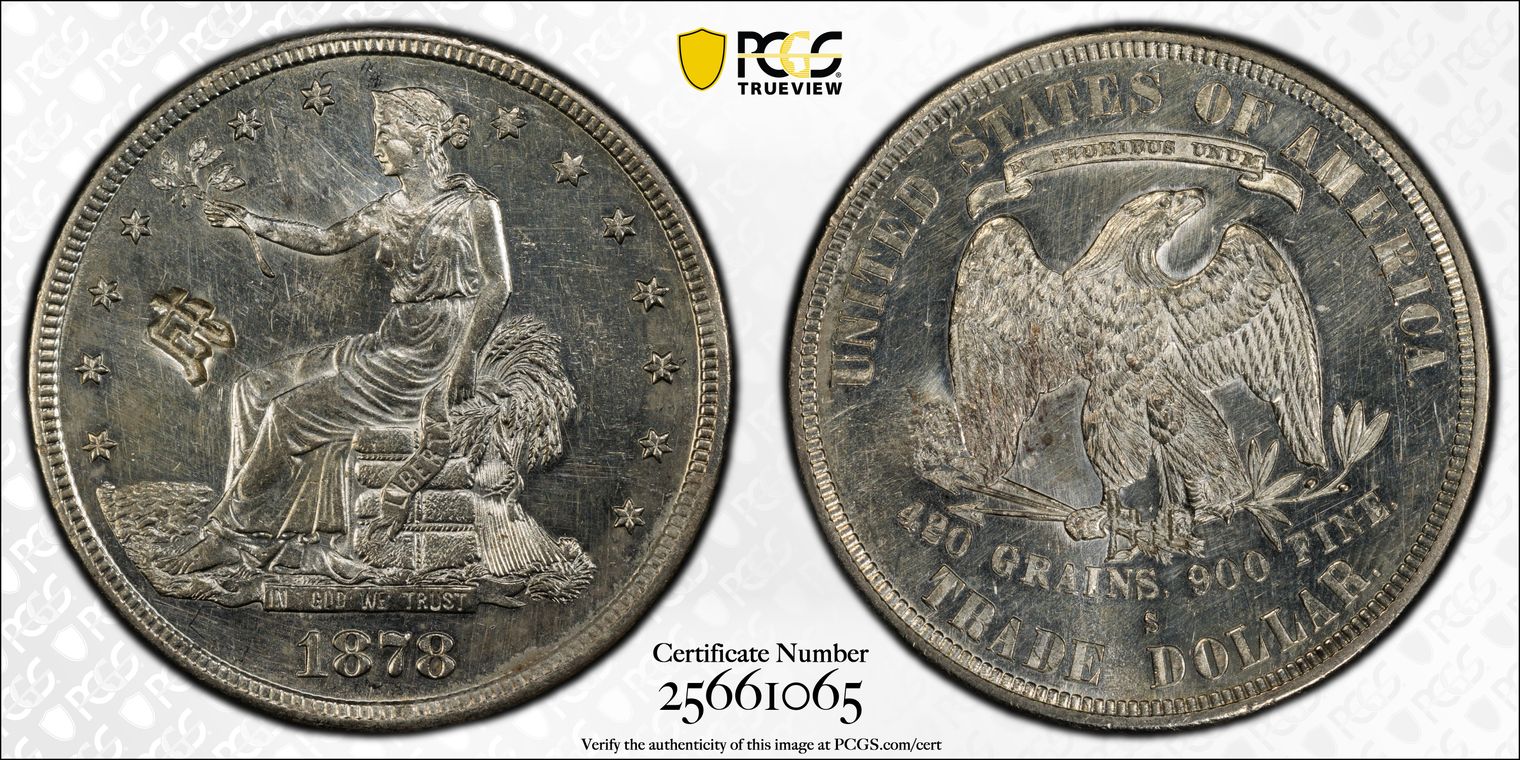
One chopmark hammered right above Miss Liberty's knee on the obverse.
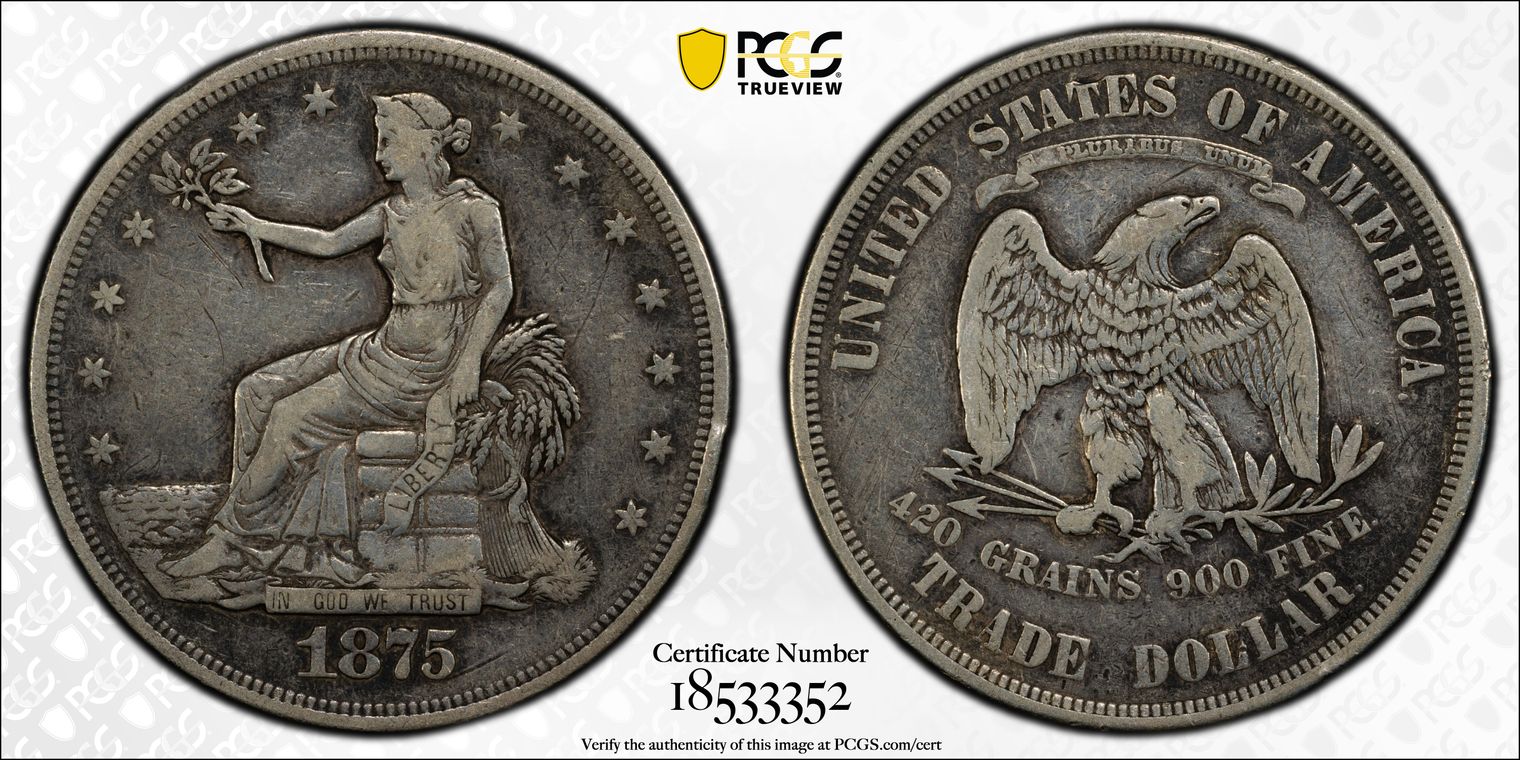
Very rare I/I combination. 750-1,500 of all types believed to have survived; only a very few are I/I.
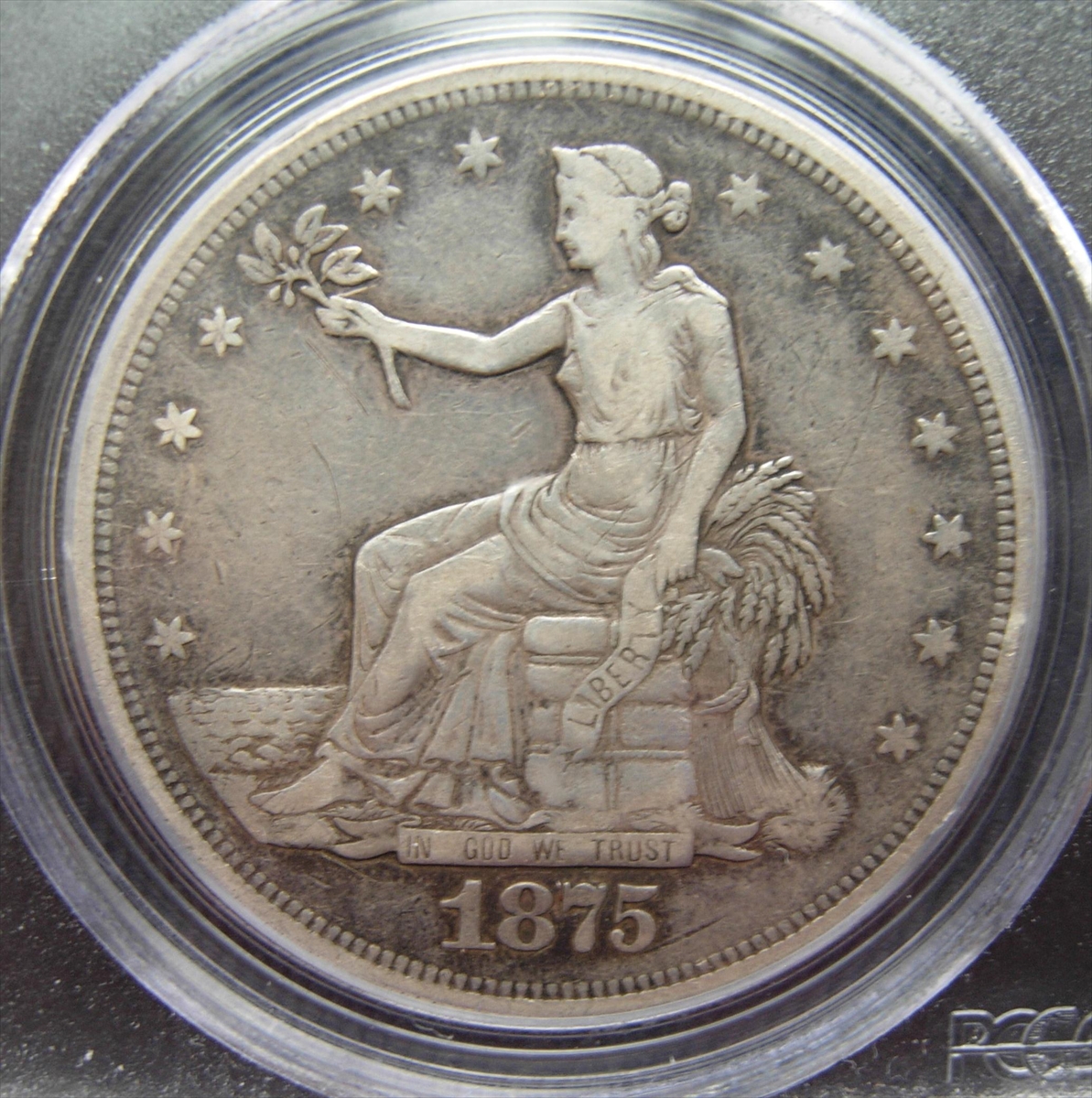
Very rare I/I combination. 750-1,500 of all types believed to have survived; only a very few are I/I.