



The Link Early American Silver Capped Dimes Date Set Coin Album
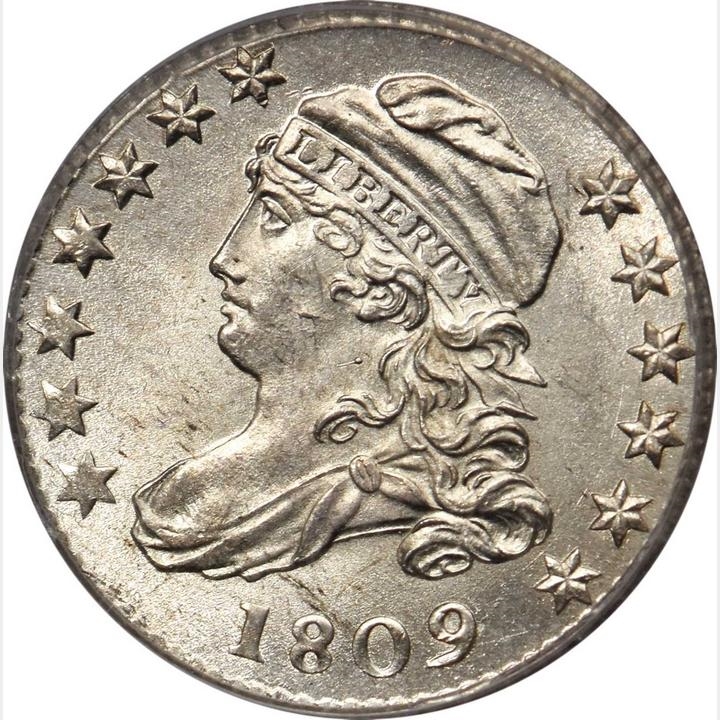
JR-1 R.3+. OGH. Larry Miller. Jason Carter at Stacks Bowers said it "the best I've ever seen". Per Stacks cataloger, "One of only two 1809 dimes to have received an MS-66 grade from the major third party certification services, with none finer, our offering of the Larry H. Miller specimen represents an exceedingly rare bidding opportunity for advanced collectors. This is a delightful premium Gem example, both sides brilliant with a bright satin texture. Softness to the first four stars is typical of the issue, the detail otherwise boldly to sharply rendered from a well centered strike. Virtually pristine, a faint planchet streak above the digit 8 in the date and a tiny reverse mark below the letter E in UNITED are the most useful identifiers for establishing the provenance of this important condition rarity. In 1808 no dimes were struck and when production resumed in 1809 the denomination featured the popular Capped Bust design by John Reich. The mintage is 51,065 pieces, all struck using a single pair of dies. These coins were delivered in five separate batches, three during 1809 and the final two on June 6 and December 17, 1810. No dimes were struck from 1810-dated dies. Two distinct die states are known for the 1809, the earlier (and rarer) state with both As in AMERICA open, and the later with the tops of both of those letters filled. On the present example the top of the first A is completely filled while the top of the second A is open. Unlike most other first year U.S. coins, the 1809 was not saved to an appreciable extent, which is not surprising since there were few numismatists active in the United States early in the 19th century. In fact, the 1809 is one of the scarcer issues in the Large Diameter portion of the Capped Bust dime series. Of the 200 to 300 coins believed extant in all grades, only 20 or so are Uncirculated (these estimates per Winston Zack, Louis Scuderi and Michael Sherrill in the 2015 reference Bust Dime Variety Identification Guide). The present example is tied for CC#1 with only one other grading event in PCGS MS-66, and it is making its first known auction appearance in the modern market. Provenance: Larry Miller Collection." PCGS pop 2 none finer. Obtained from Stacks Bowers Auction of the Larry Miller Collection Part 2 on December 17, 2020, Lot 1048.
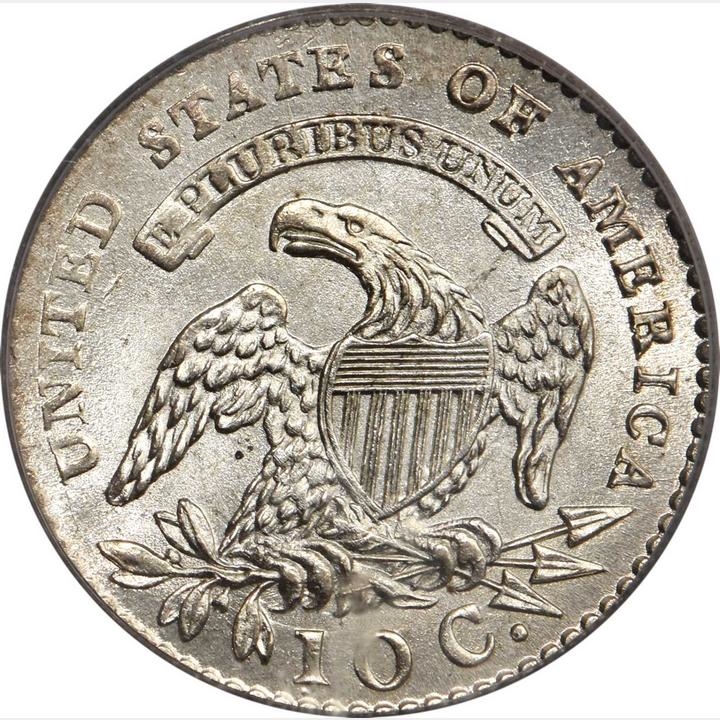
JR-1 R.3+. OGH. Larry Miller. Jason Carter at Stacks Bowers said it "the best I've ever seen". Per Stacks cataloger, "One of only two 1809 dimes to have received an MS-66 grade from the major third party certification services, with none finer, our offering of the Larry H. Miller specimen represents an exceedingly rare bidding opportunity for advanced collectors. This is a delightful premium Gem example, both sides brilliant with a bright satin texture. Softness to the first four stars is typical of the issue, the detail otherwise boldly to sharply rendered from a well centered strike. Virtually pristine, a faint planchet streak above the digit 8 in the date and a tiny reverse mark below the letter E in UNITED are the most useful identifiers for establishing the provenance of this important condition rarity. In 1808 no dimes were struck and when production resumed in 1809 the denomination featured the popular Capped Bust design by John Reich. The mintage is 51,065 pieces, all struck using a single pair of dies. These coins were delivered in five separate batches, three during 1809 and the final two on June 6 and December 17, 1810. No dimes were struck from 1810-dated dies. Two distinct die states are known for the 1809, the earlier (and rarer) state with both As in AMERICA open, and the later with the tops of both of those letters filled. On the present example the top of the first A is completely filled while the top of the second A is open. Unlike most other first year U.S. coins, the 1809 was not saved to an appreciable extent, which is not surprising since there were few numismatists active in the United States early in the 19th century. In fact, the 1809 is one of the scarcer issues in the Large Diameter portion of the Capped Bust dime series. Of the 200 to 300 coins believed extant in all grades, only 20 or so are Uncirculated (these estimates per Winston Zack, Louis Scuderi and Michael Sherrill in the 2015 reference Bust Dime Variety Identification Guide). The present example is tied for CC#1 with only one other grading event in PCGS MS-66, and it is making its first known auction appearance in the modern market. Provenance: Larry Miller Collection." PCGS pop 2 none finer. Obtained from Stacks Bowers Auction of the Larry Miller Collection Part 2 on December 17, 2020, Lot 1048.
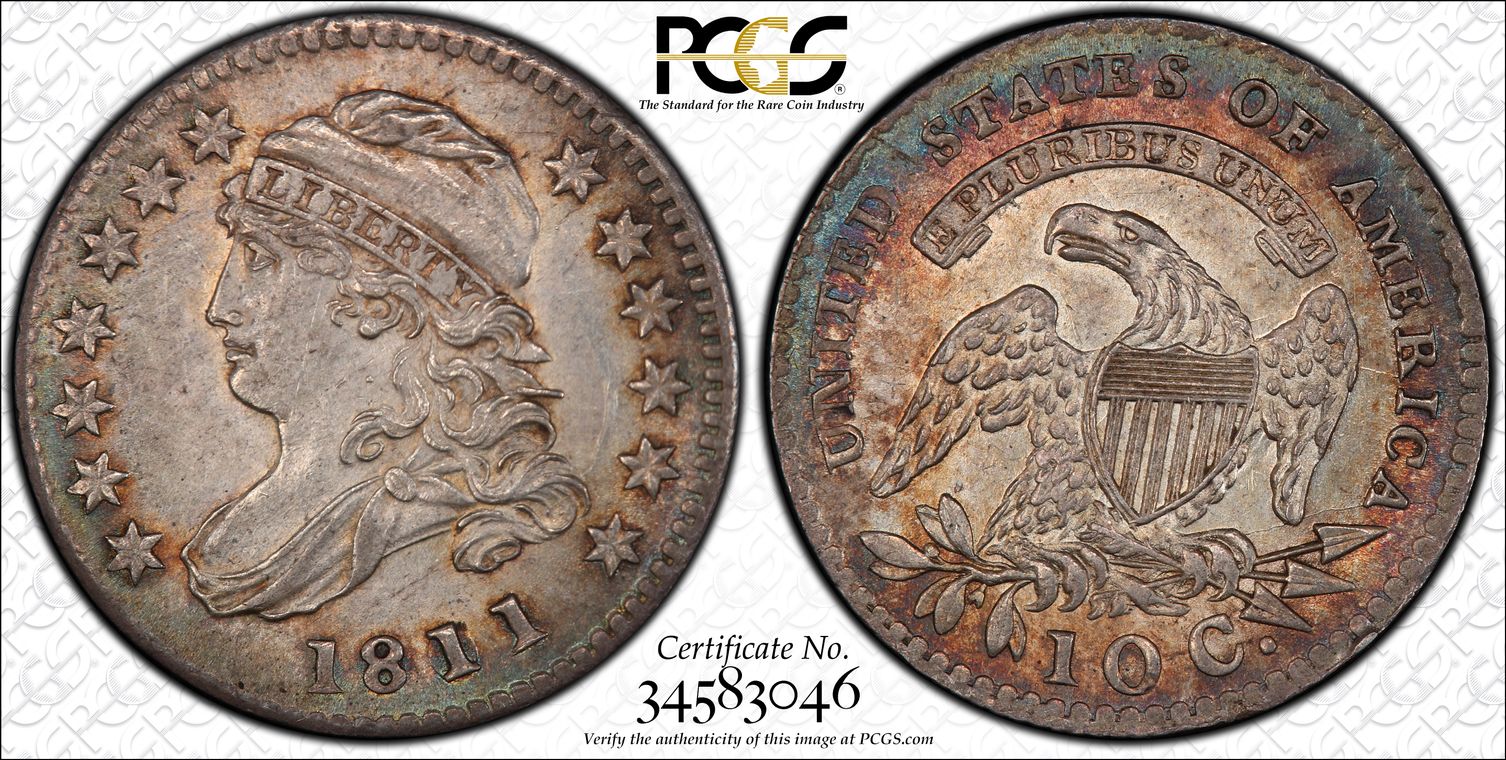
JR-1 R3. CAC. Attractive original surfaces surrounded by colorful album toning.
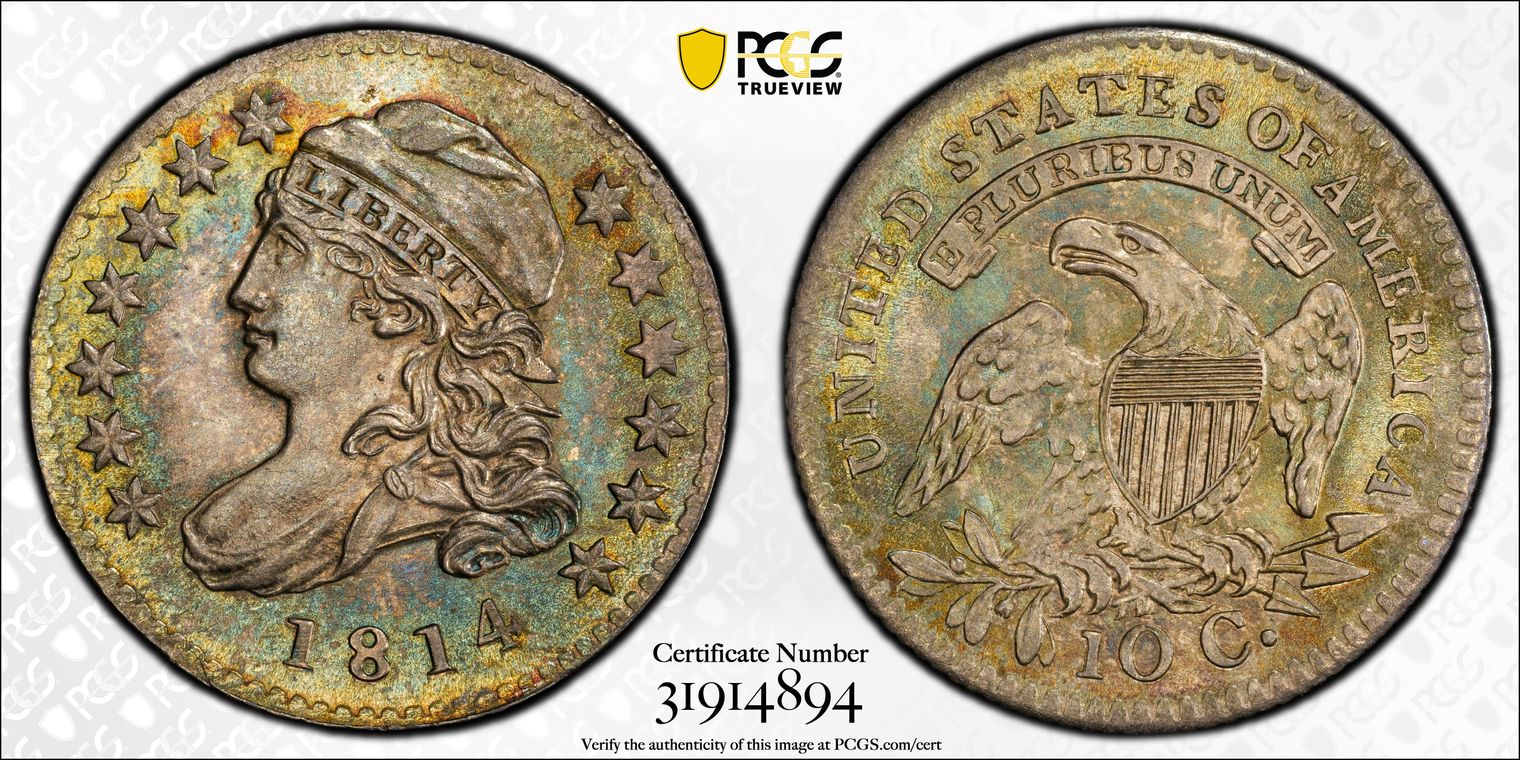
JR-1 R3. CAC. Pogue. Finest Known 1814 Small Date Dime. Striking visual eye appeal with original surfaces infused with color. Obtained from Stacks Bowers' Auction of the D. Brent Pogue Collection Part 3 on February 9, 2016.
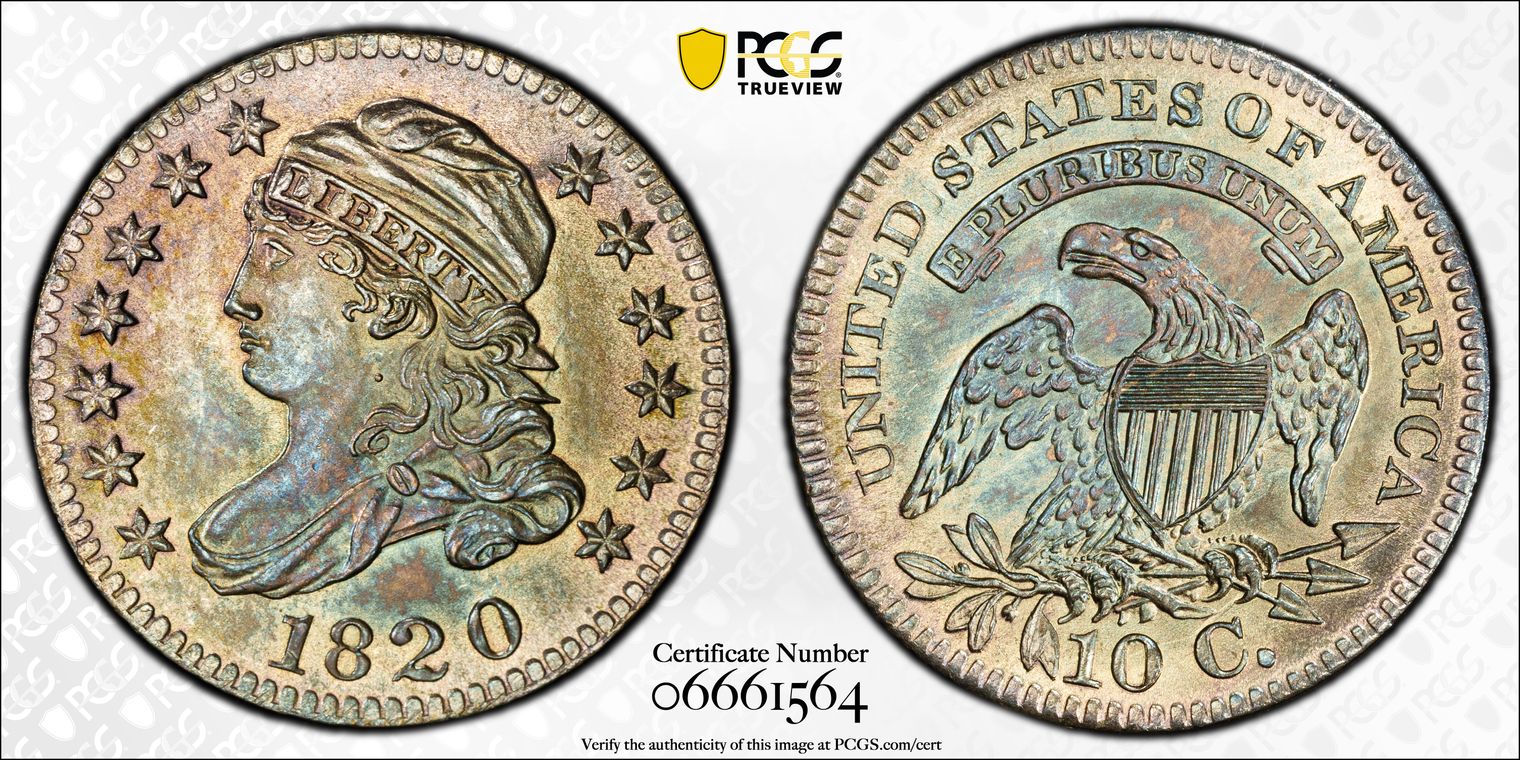
JR-2 R.3. CAC. Finest known. Secure. The famous Office Boy variety. Silky smooth nearly perfect original surfaces with a kaleidoscope of attractive color. One of the top two large sized capped Bust Dimes ever graded by PCGS. "Apple-green and rose-red adorn the obverse of this lustrous and immaculate Superb Gem. The reverse exhibits aquamarine, violet, and autumn-gold shades. The strike is intricate aside from occasional slight incompleteness on the dentils. Among the 13 1820 die marriages, only JR-2 and JR-3 have a small 0 in the date, as they were struck from the same obverse die. JR-2 is readily distinguished from JR-3 by its blundered UNITED STATES OF AMERICA. The first S in STATES is lightly but widely repunched. The O in OF is repunched south, and the M in AMERICA is repunched west. It appears that the second S in STATES was initially entered retrograde, since an errant serif is visible at the lower right corner. The obverse is better engraved despite minor repunching on the final star. The Dime Book calls JR-2 "very popular among collectors because of the spectacular "Office Boy" recuttings. Although such die worker errors likely embarrassed the Mint in 1820, today they are viewed favorably. The lettering mistakes add a rustic charm, and also simplify attribution. The present high grade example is from a late die state with a double set of clash marks near the beak and light clash marks beneath Liberty's ear and at the tip of her upper ribbon. JR-2 is a conditionally rare variety. A search of our auction archives locates no prior appearances finer than MS65. Among those certified as JR-2 by PCGS, the present piece is finest by three grades. At NGC, the single finest as JR-2 is graded MS66. Thus, this lot may be the highest graded example of the variety. Certainly, it is difficult to believe that another may be of equal quality. From The Collection of Oliver Jung," per Heritage cataloger. Obtained from Heritage's ANA US Coins Signature Auction - Chicago #1208 on August 7, 2014, Lot 5561.

JR-2 R.3. CAC. Finest known. Secure. The famous Office Boy variety. Silky smooth nearly perfect original surfaces with a kaleidoscope of attractive color. One of the top two large sized capped Bust Dimes ever graded by PCGS. "Apple-green and rose-red adorn the obverse of this lustrous and immaculate Superb Gem. The reverse exhibits aquamarine, violet, and autumn-gold shades. The strike is intricate aside from occasional slight incompleteness on the dentils. Among the 13 1820 die marriages, only JR-2 and JR-3 have a small 0 in the date, as they were struck from the same obverse die. JR-2 is readily distinguished from JR-3 by its blundered UNITED STATES OF AMERICA. The first S in STATES is lightly but widely repunched. The O in OF is repunched south, and the M in AMERICA is repunched west. It appears that the second S in STATES was initially entered retrograde, since an errant serif is visible at the lower right corner. The obverse is better engraved despite minor repunching on the final star. The Dime Book calls JR-2 "very popular among collectors because of the spectacular "Office Boy" recuttings. Although such die worker errors likely embarrassed the Mint in 1820, today they are viewed favorably. The lettering mistakes add a rustic charm, and also simplify attribution. The present high grade example is from a late die state with a double set of clash marks near the beak and light clash marks beneath Liberty's ear and at the tip of her upper ribbon. JR-2 is a conditionally rare variety. A search of our auction archives locates no prior appearances finer than MS65. Among those certified as JR-2 by PCGS, the present piece is finest by three grades. At NGC, the single finest as JR-2 is graded MS66. Thus, this lot may be the highest graded example of the variety. Certainly, it is difficult to believe that another may be of equal quality. From The Collection of Oliver Jung," per Heritage cataloger. Obtained from Heritage's ANA US Coins Signature Auction - Chicago #1208 on August 7, 2014, Lot 5561.

JR-2 R.3. CAC. Finest known. Secure. The famous Office Boy variety. Silky smooth nearly perfect original surfaces with a kaleidoscope of attractive color. One of the top two large sized capped Bust Dimes ever graded by PCGS. "Apple-green and rose-red adorn the obverse of this lustrous and immaculate Superb Gem. The reverse exhibits aquamarine, violet, and autumn-gold shades. The strike is intricate aside from occasional slight incompleteness on the dentils. Among the 13 1820 die marriages, only JR-2 and JR-3 have a small 0 in the date, as they were struck from the same obverse die. JR-2 is readily distinguished from JR-3 by its blundered UNITED STATES OF AMERICA. The first S in STATES is lightly but widely repunched. The O in OF is repunched south, and the M in AMERICA is repunched west. It appears that the second S in STATES was initially entered retrograde, since an errant serif is visible at the lower right corner. The obverse is better engraved despite minor repunching on the final star. The Dime Book calls JR-2 "very popular among collectors because of the spectacular "Office Boy" recuttings. Although such die worker errors likely embarrassed the Mint in 1820, today they are viewed favorably. The lettering mistakes add a rustic charm, and also simplify attribution. The present high grade example is from a late die state with a double set of clash marks near the beak and light clash marks beneath Liberty's ear and at the tip of her upper ribbon. JR-2 is a conditionally rare variety. A search of our auction archives locates no prior appearances finer than MS65. Among those certified as JR-2 by PCGS, the present piece is finest by three grades. At NGC, the single finest as JR-2 is graded MS66. Thus, this lot may be the highest graded example of the variety. Certainly, it is difficult to believe that another may be of equal quality. From The Collection of Oliver Jung," per Heritage cataloger. Obtained from Heritage's ANA US Coins Signature Auction - Chicago #1208 on August 7, 2014, Lot 5561.
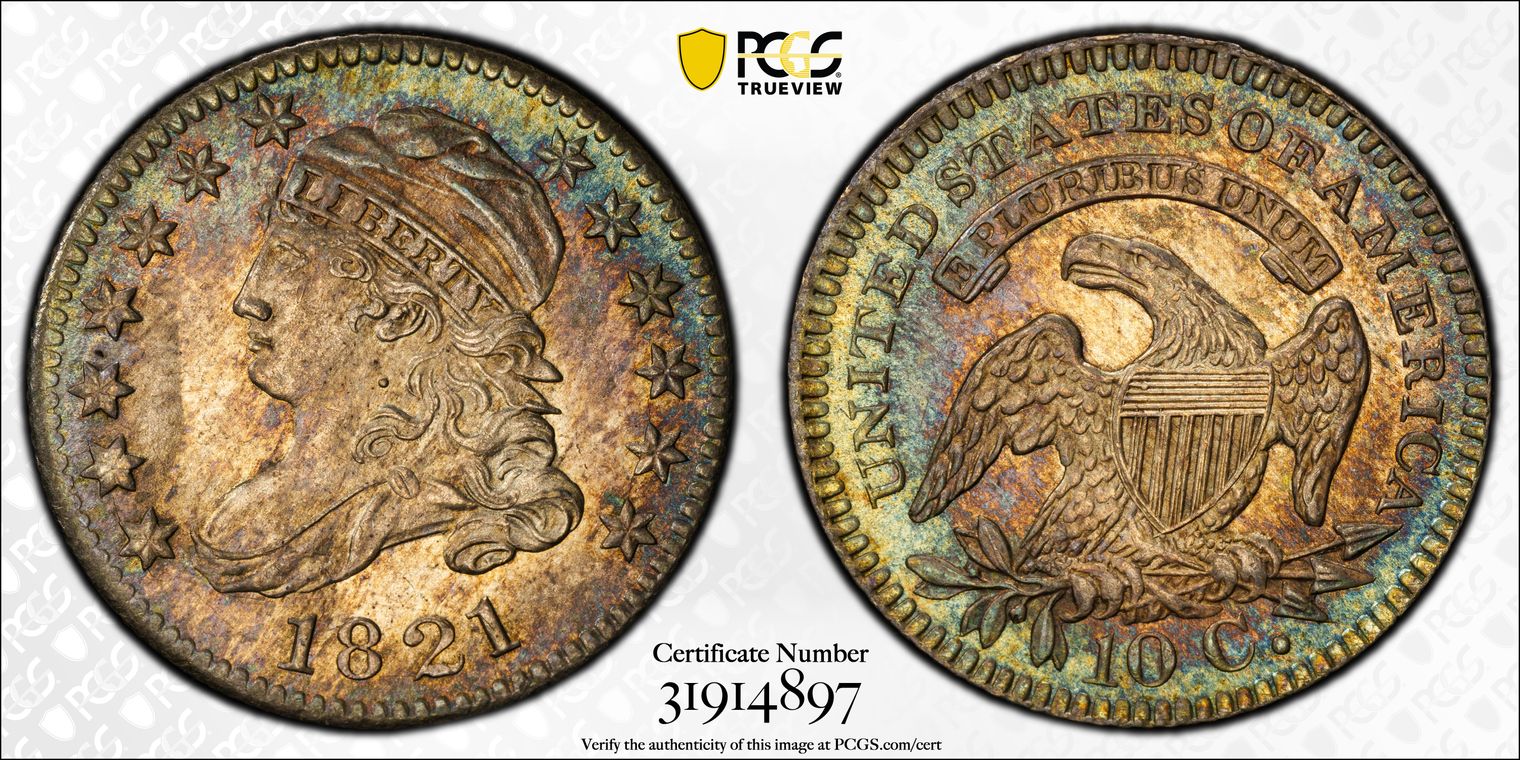
JR-2 R6+. CAC. Pogue and Quint. Extremely rare. Tied Finest Known 1821 Dime. Monumental die marriage rarity of the Capped Bust dime series. Fantastic originality, luster, color and eye appeal. Really surprising to find such a high quality coin example of one of the keys to the series. Beloved by its previous owner David Quint who assembled the finest die marriage set of Capped Bust Dimes ever.
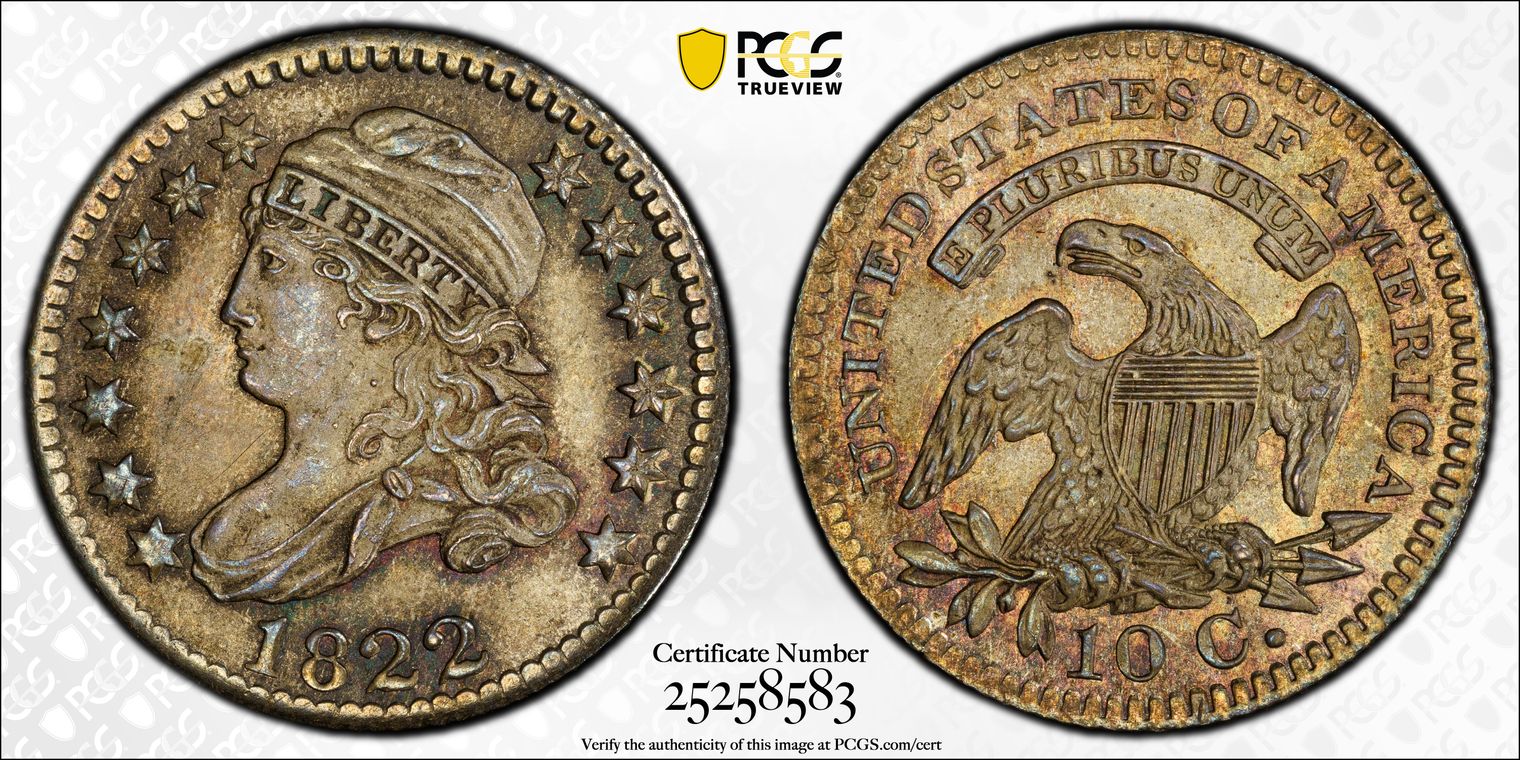
JR-1 R4. CAC. Wonderful original surfaces. Second finest known at PCGS behind a single MS66 at PCGS.
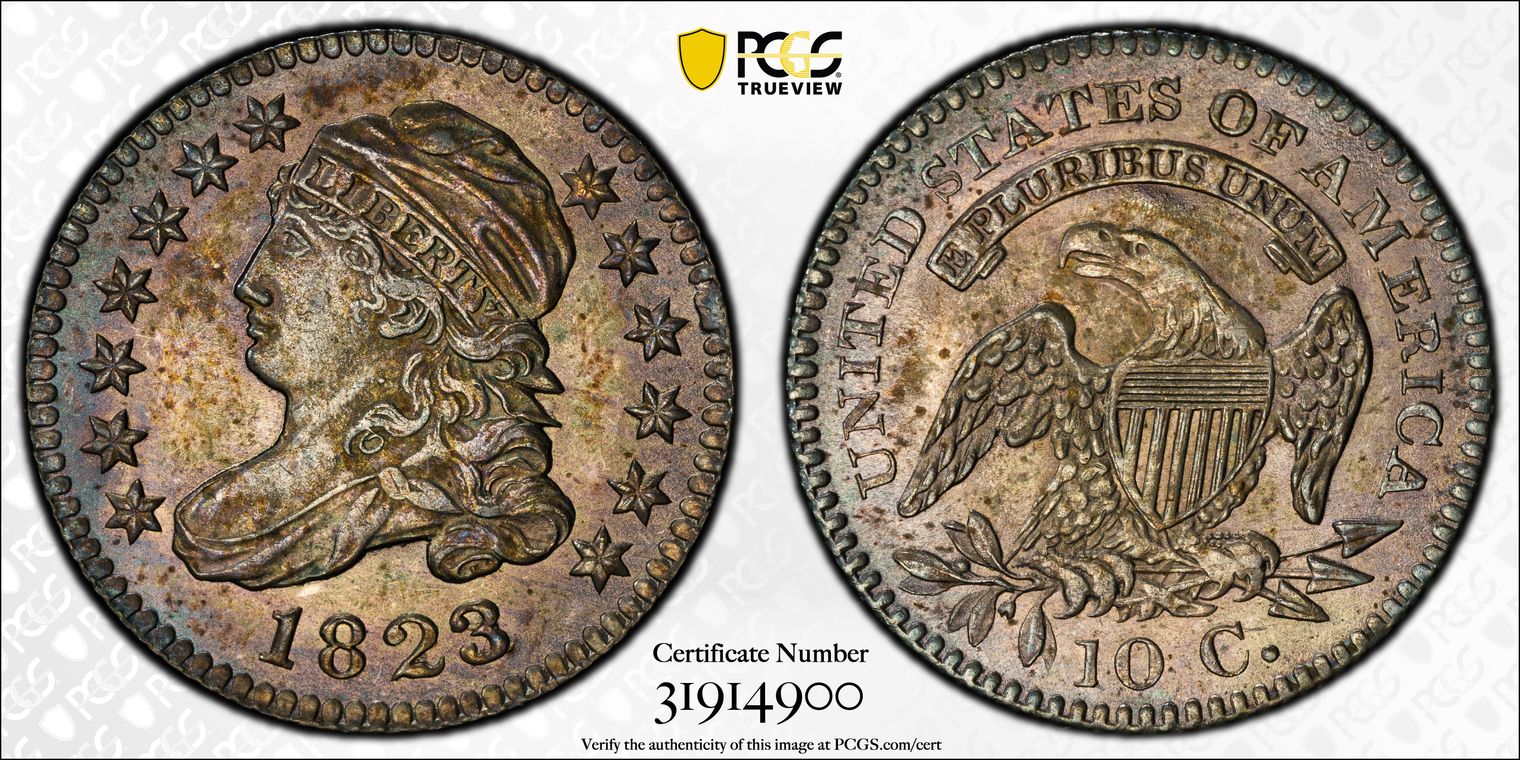
JR-1 R3. CAC. Pogue. Lovely original toning and cartwheel luster.
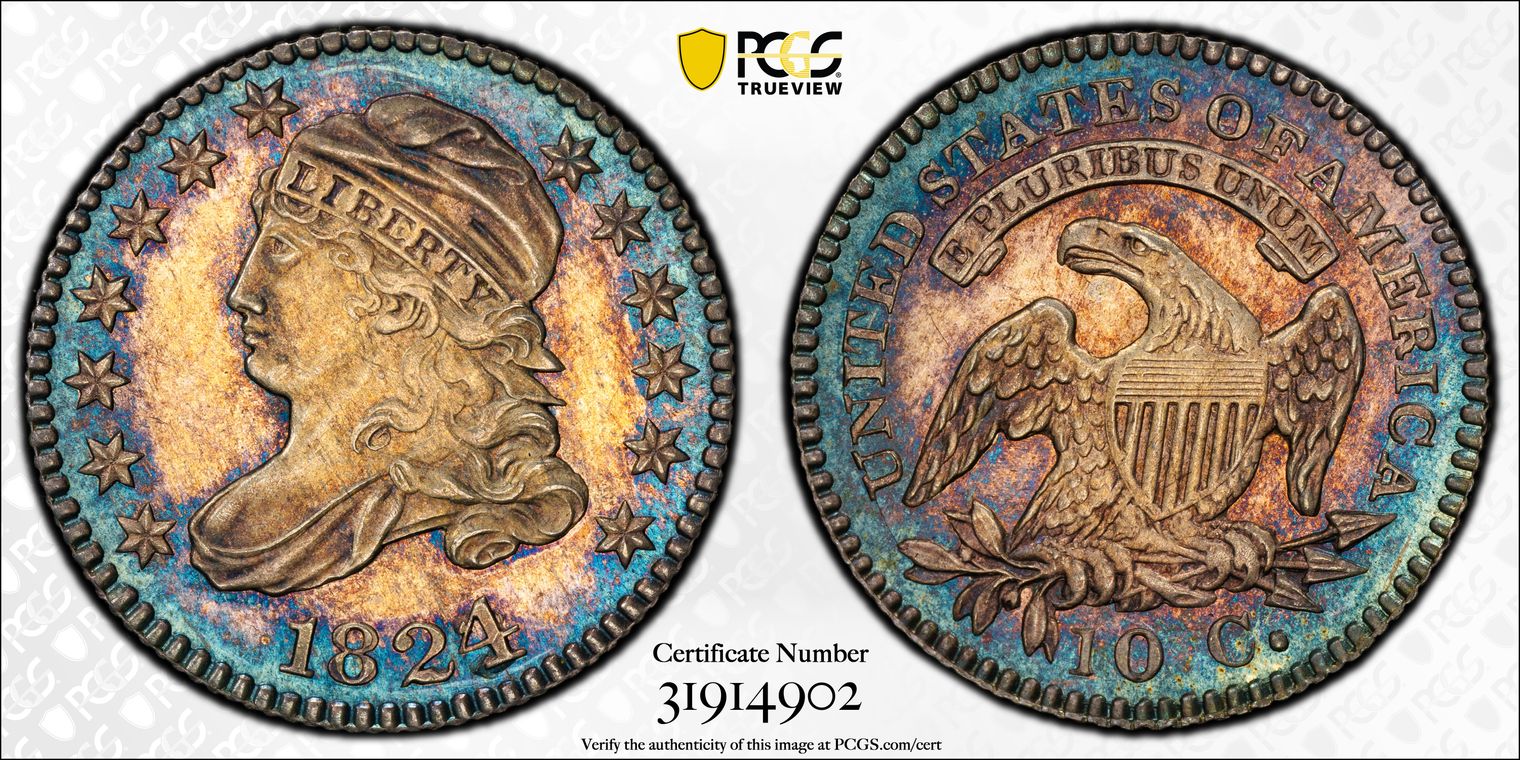
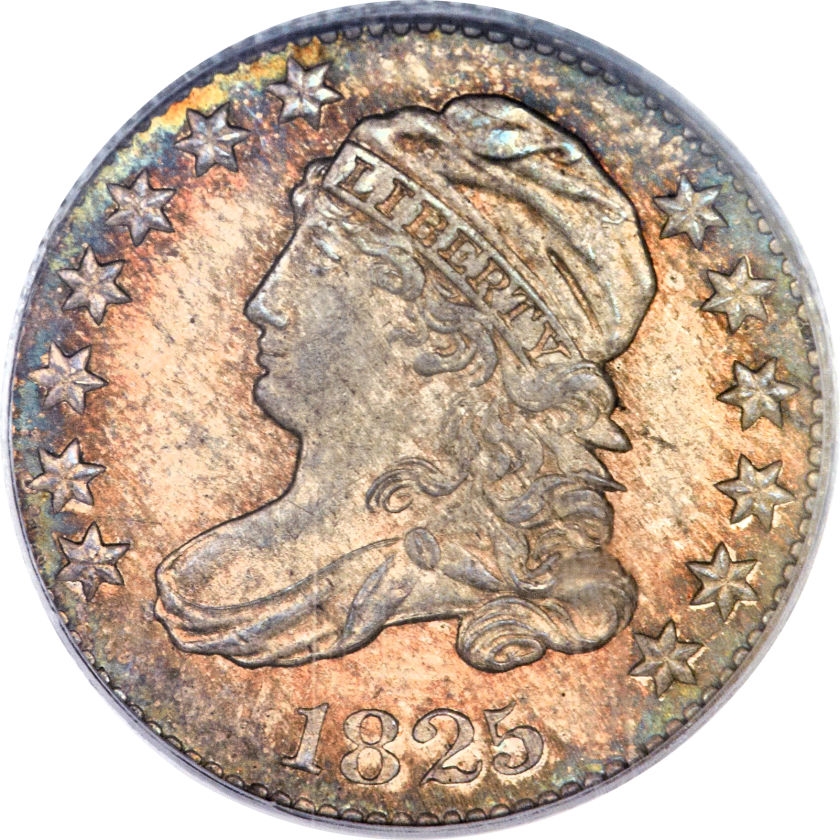
JR-2 R2. CAC. Eliasberg Gardner. Lot 98213. Per cataloger, "1825 Dime, JR-2, Pristine MS66. Ex: Eliasberg, Sole Finest at CAC. 1825 10C JR-2, R.2, MS66 PCGS. CAC. Ex: Eliasberg. This Premium Gem 1825 dime, certified in an old PCGS green-label holder with the CAC green bean and the Eliasberg pedigree, is a coin of marvelous quality. Pearl-gray central devices cede to rose-orange in the fields and finally to glints of amber, mint, and pale blue at the rims. As expected at this grade level, there are simply no distractions on the surfaces. This piece is tied for the 1825 date with three other submissions for the finest at PCGS -- but obviously the only one with the important Eliasberg pedigree, and described in that catalog as "probably the finest known." Variety: JR-2, R.2. The right side of the 2 in the date is under the lowest hair curl. The E in UNITED is above the T, and 10 C is high in the field. Population Data (3/15): As noted above, this piece is tied for the finest 1825 dime at PCGS with three others in MS66. The finest certified JR-2 at NGC is only MS62. NGC reports four MS66 1825 dimes as finest. This is the sole (and finest) MS66 1825 dime with the CAC green approval sticker. Heritage Commentary: Described in the Eliasberg catalog thusly: "Superb surfaces with satiny lustre and deep rose toning gradually giving way to blue and amber at the borders. Slight weakness among central details." The piece brought $12,100 in the Eliasberg sale -- what a bargain! Provenance: Louis E. Eliasberg, Sr.; Eliasberg Collection (Bowers and Merena, 5/1996), lot 1075; Goldbergs (6/2002), lot 2122." Obtained from Heritage Auction of the Eugene Gardner Collection on May 12, 2015, Lot 98213.
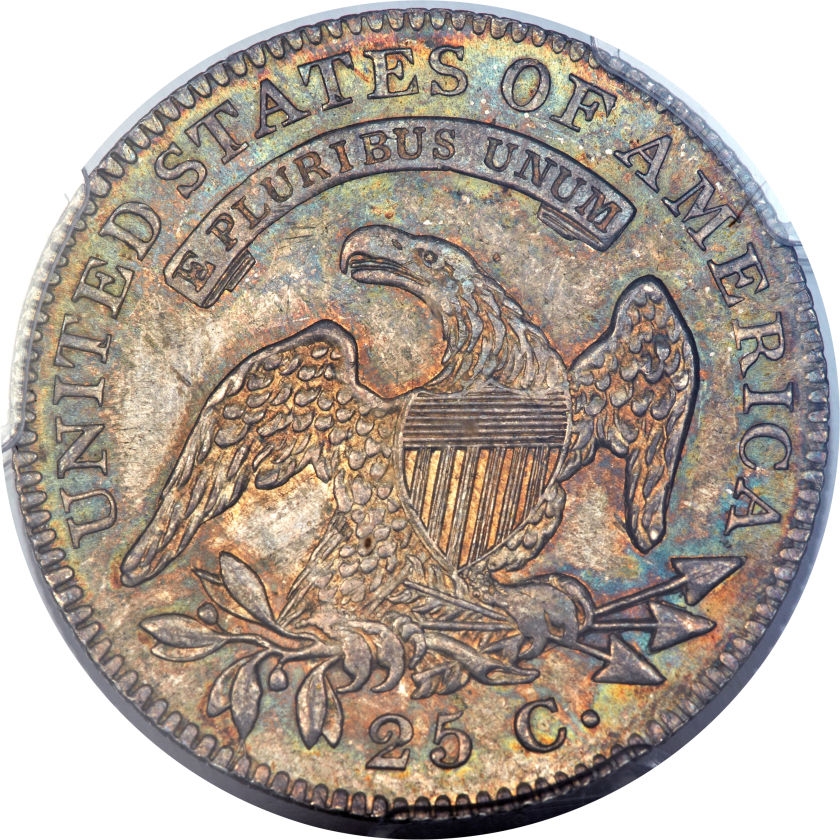
JR-2 R2. CAC. Eliasberg Gardner. Lot 98213. Per cataloger, "1825 Dime, JR-2, Pristine MS66. Ex: Eliasberg, Sole Finest at CAC. 1825 10C JR-2, R.2, MS66 PCGS. CAC. Ex: Eliasberg. This Premium Gem 1825 dime, certified in an old PCGS green-label holder with the CAC green bean and the Eliasberg pedigree, is a coin of marvelous quality. Pearl-gray central devices cede to rose-orange in the fields and finally to glints of amber, mint, and pale blue at the rims. As expected at this grade level, there are simply no distractions on the surfaces. This piece is tied for the 1825 date with three other submissions for the finest at PCGS -- but obviously the only one with the important Eliasberg pedigree, and described in that catalog as "probably the finest known." Variety: JR-2, R.2. The right side of the 2 in the date is under the lowest hair curl. The E in UNITED is above the T, and 10 C is high in the field. Population Data (3/15): As noted above, this piece is tied for the finest 1825 dime at PCGS with three others in MS66. The finest certified JR-2 at NGC is only MS62. NGC reports four MS66 1825 dimes as finest. This is the sole (and finest) MS66 1825 dime with the CAC green approval sticker. Heritage Commentary: Described in the Eliasberg catalog thusly: "Superb surfaces with satiny lustre and deep rose toning gradually giving way to blue and amber at the borders. Slight weakness among central details." The piece brought $12,100 in the Eliasberg sale -- what a bargain! Provenance: Louis E. Eliasberg, Sr.; Eliasberg Collection (Bowers and Merena, 5/1996), lot 1075; Goldbergs (6/2002), lot 2122." Obtained from Heritage Auction of the Eugene Gardner Collection on May 12, 2015, Lot 98213.
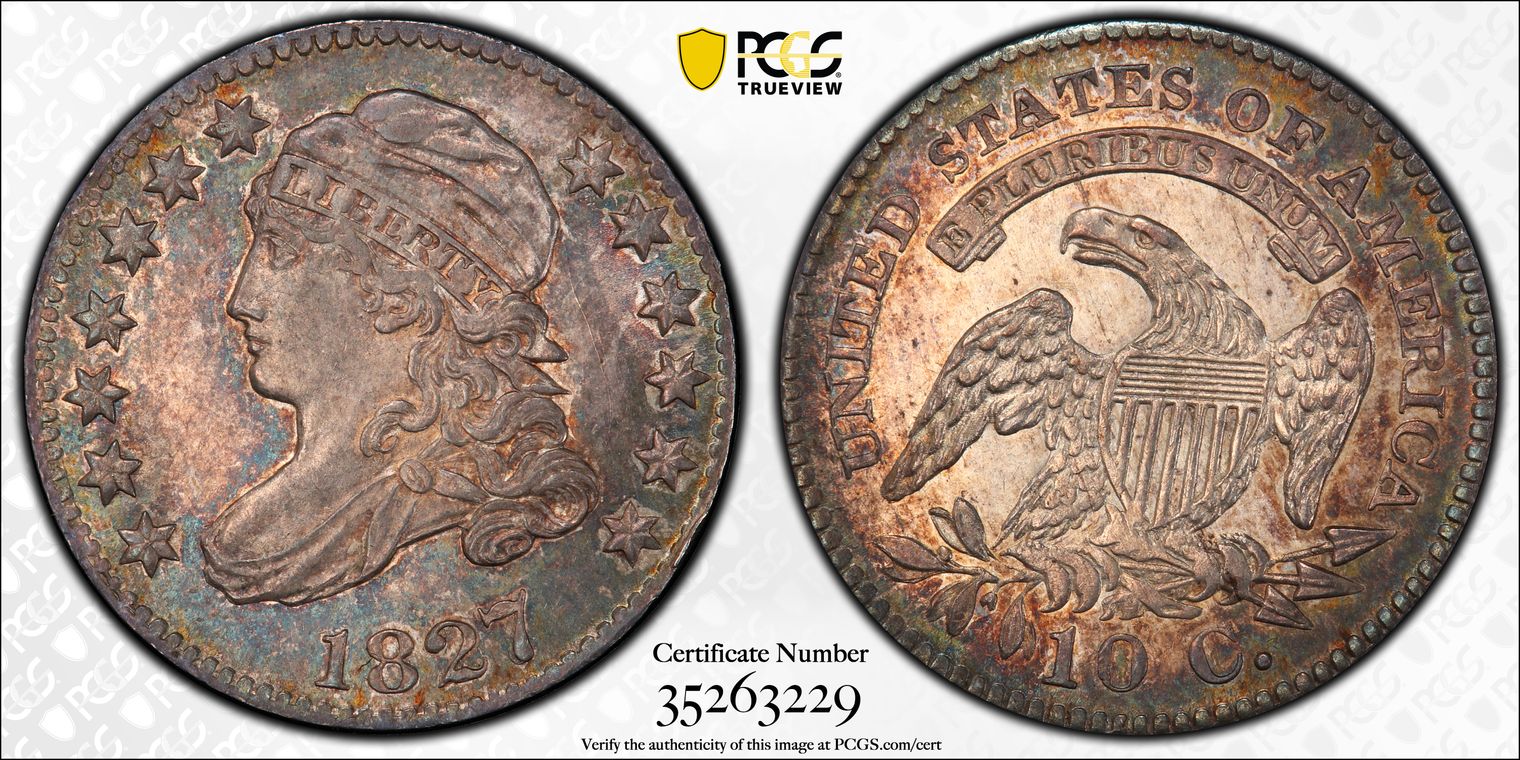
JR-1 1827/7 R2. Eliasberg, Gardner, Quint and DL Hansen pedigree. Tied Finest Known 1827 Dime. Far and away the highest graded 1827/7 dime. This is a very tough redbook variety in mint state. Original toning with moderate luster for grade. Obtained by trade with Del Roy Hansen on January 24, 2018.
JR-1 R2. CAC. Eliasberg and Gardner. Stunning original surfaces with cartwheel luster. Obtained from Heritage Auction #1214 of the Eugene Gardner Collection on October 27, 2014.
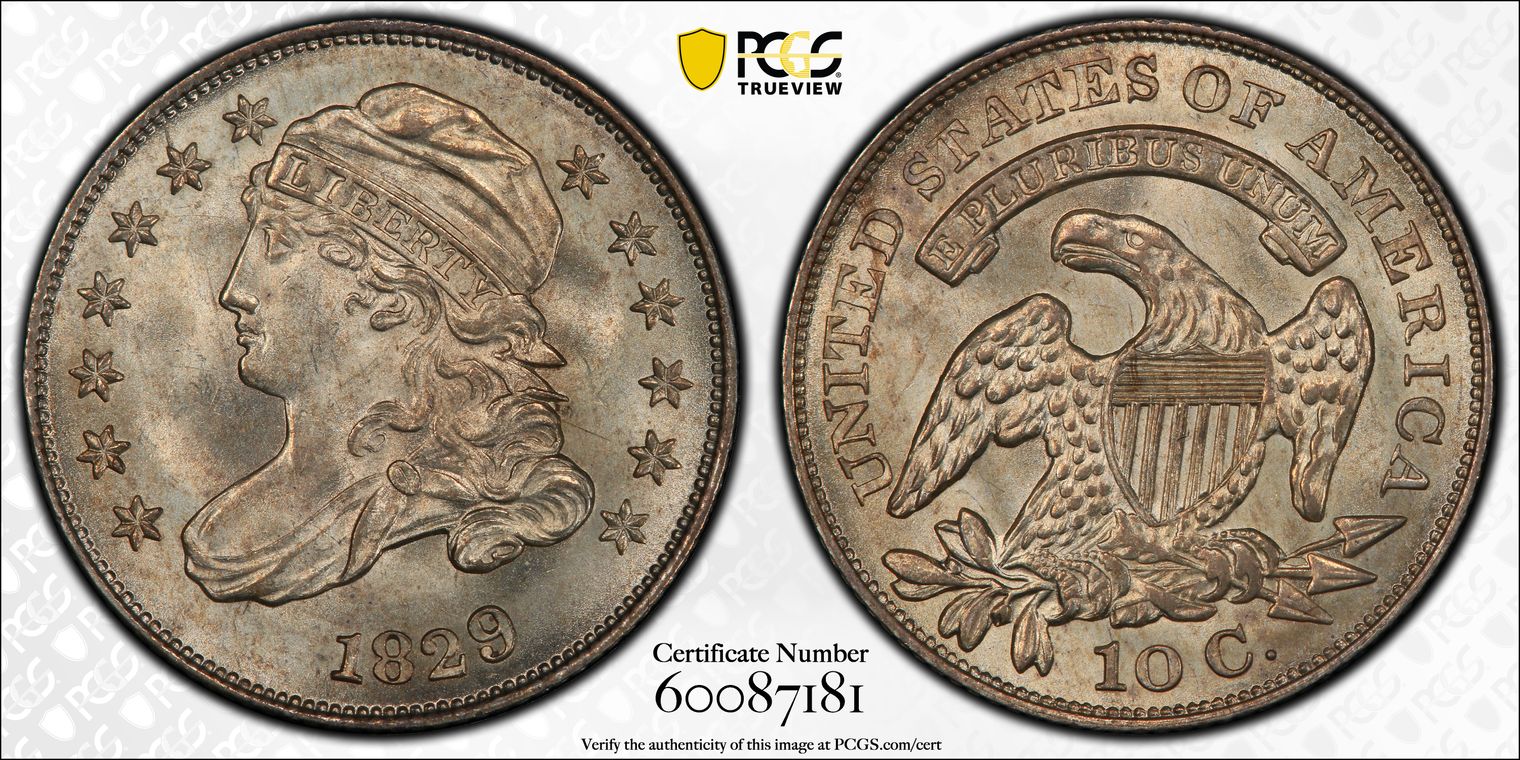
JR-7 R.1. CAC. Tied Finest Known 1829 Small 10C Dime. Ex: Oliver Jung "The Type Set". Coin has flashy blast white appearance with strong cartwheel luster. Nearly perfect undisturbed surfaces. Obtained by private treaty with Laura Sperber at Legend Numismatics on September 6, 2019.
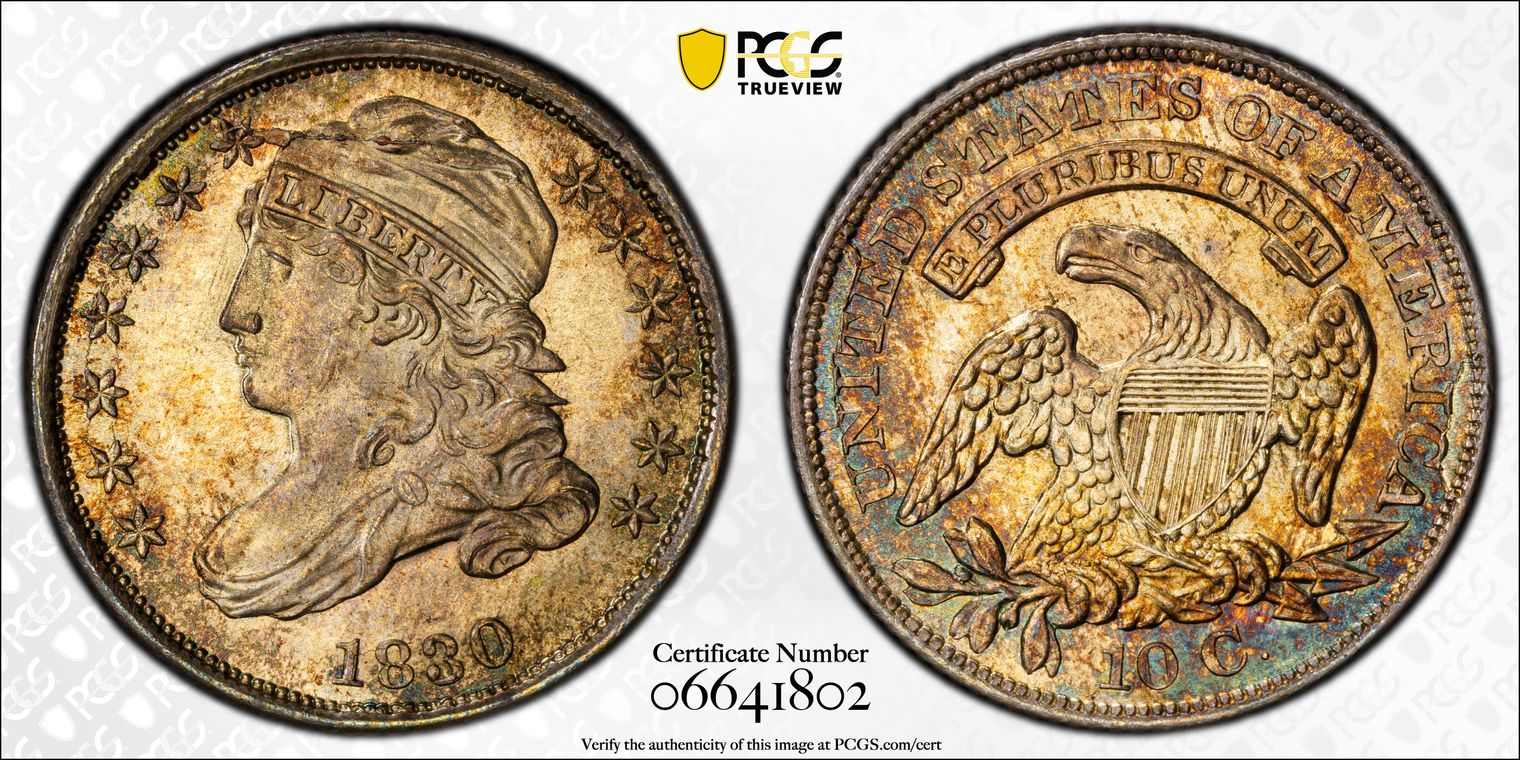
JR-3 R3. CAC. Bender Finest known 1830 Dime. Obtained from Heritage Auction of Tom Bender Collection Part 2 on January 12, 2023.
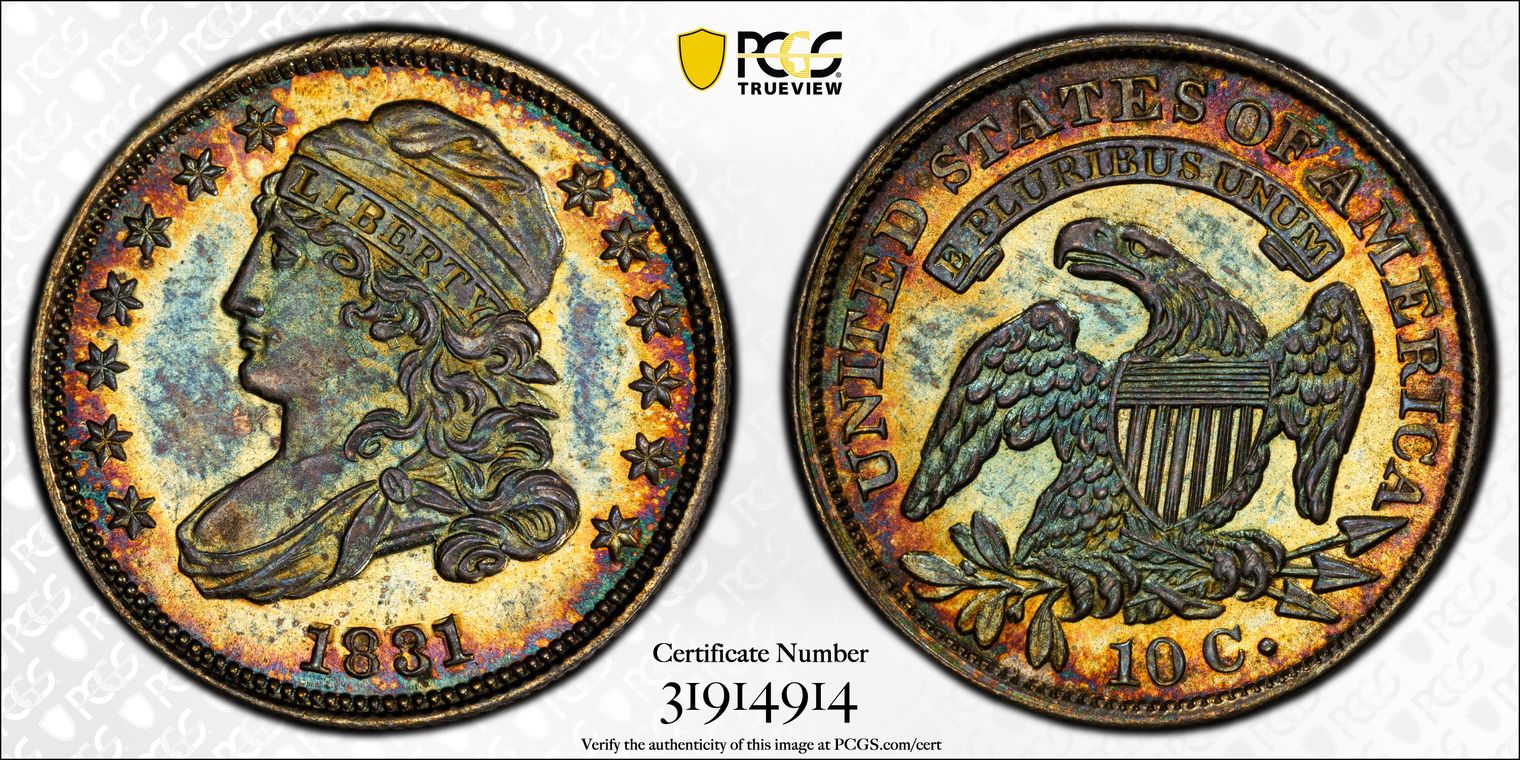
JR-5 R1. CAC. Pogue. Finest Known Small Size Capped Bust Dime. Finest Known 1831 Dime. How exactly does this coin exist one might ask? Breathtaking color, luster with essential perfect surfaces. Flashlight luster and wow!
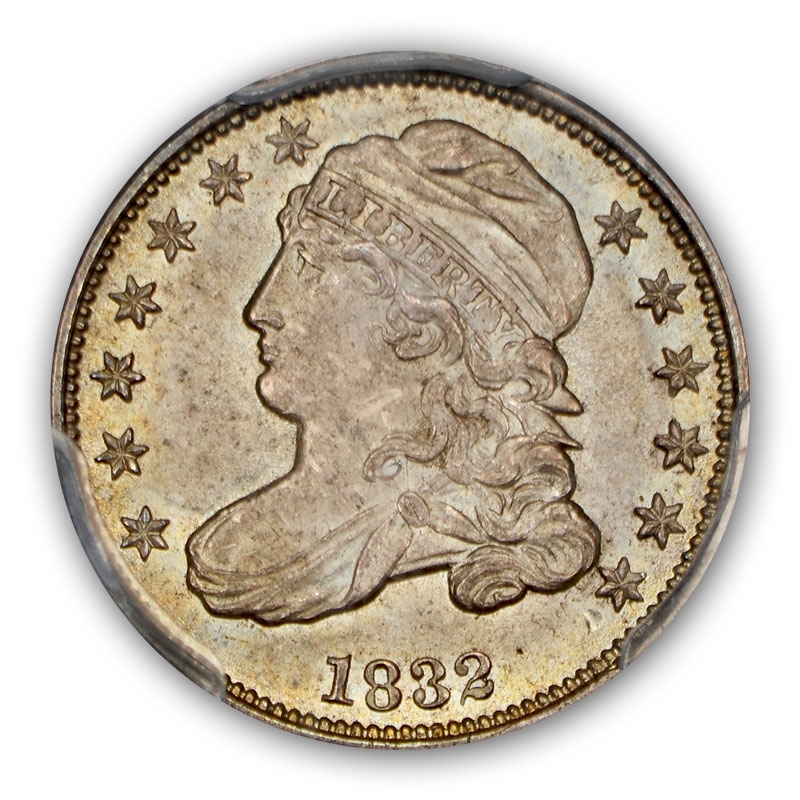
JR-1 R2. CAC. Light pewter toning with yellow-green highlights and solid luster. Obtained from Pinnacle Rarities on March 7, 2014
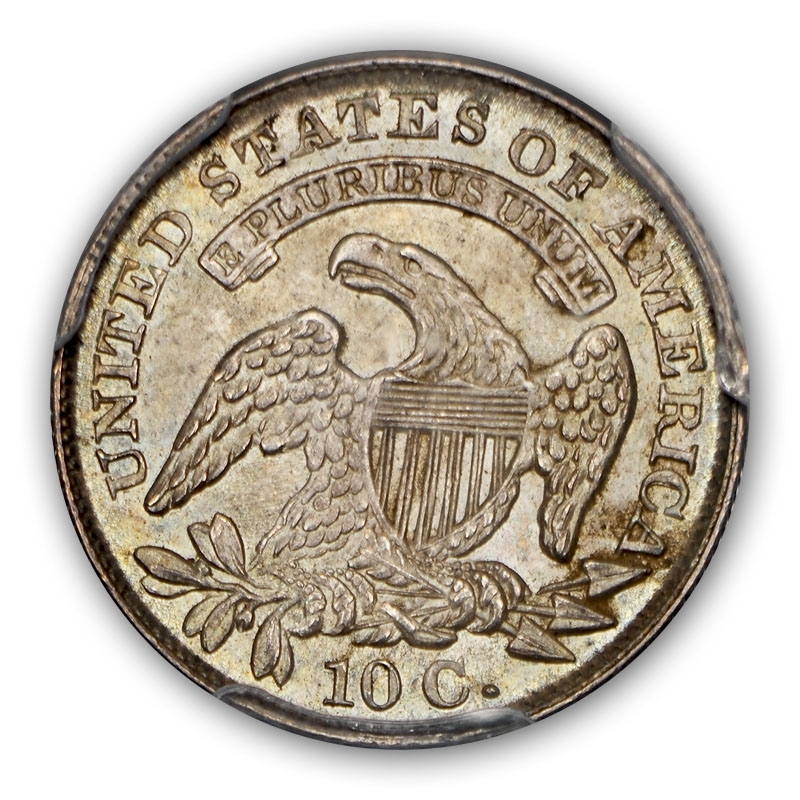
JR-1 R2. CAC. Light pewter toning with yellow-green highlights and solid luster. Obtained from Pinnacle Rarities on March 7, 2014
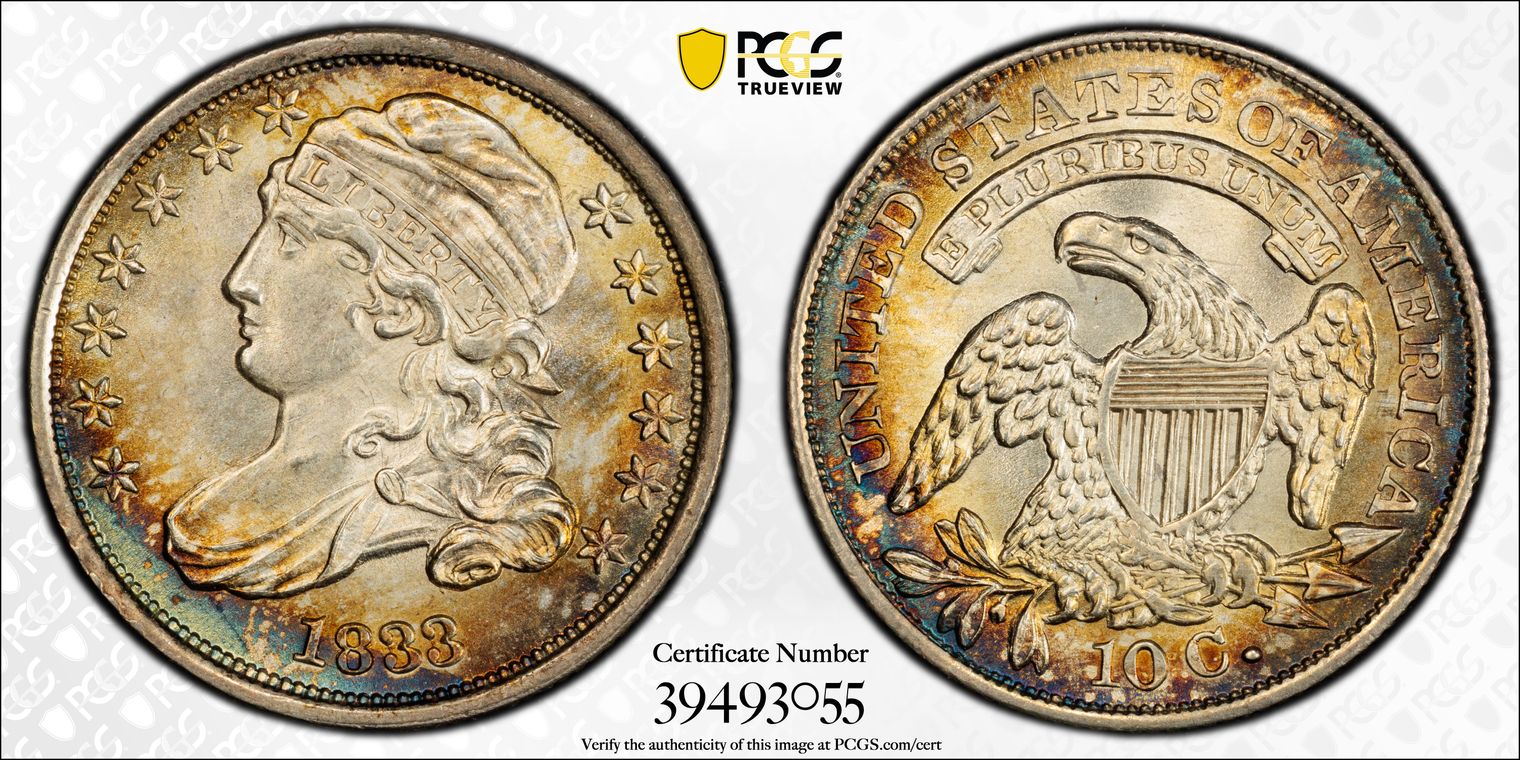
JR-10 R.3. CAC. Finest Known 1833 Dime. Cartwheel luster with pristine surfaces. Lovey visual appeal with peripheral color toning and central golden tan toning. Obtained by private treaty from Todd Imhoff of heritage Galleries on May 26, 2020.
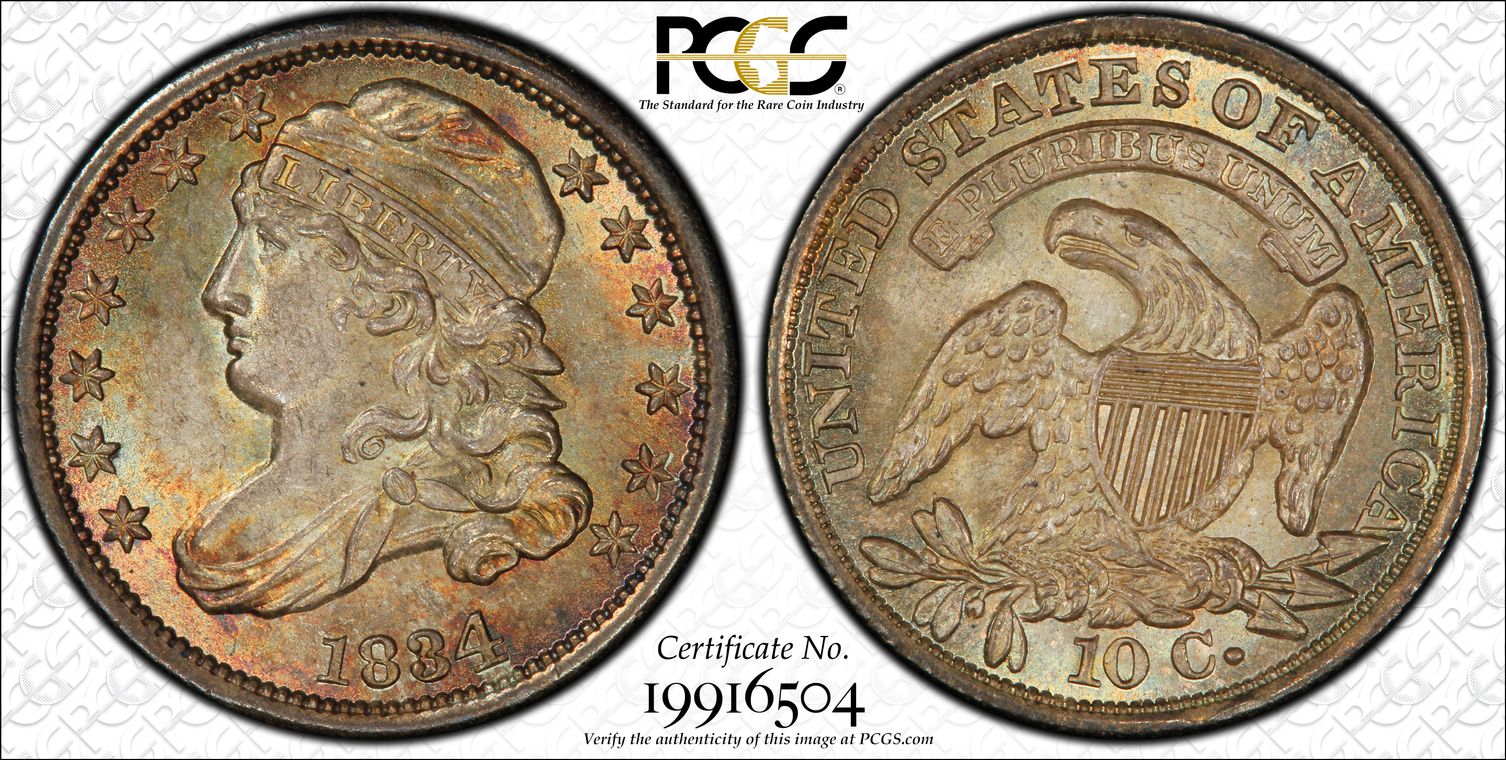
JR-1 R1. CAC. Gardner. Stunning coin with color, radiant luster, eye appeal and strong strike. Obtained from Heritage Auction #1214 on October 27, 2014, Lot 98235.
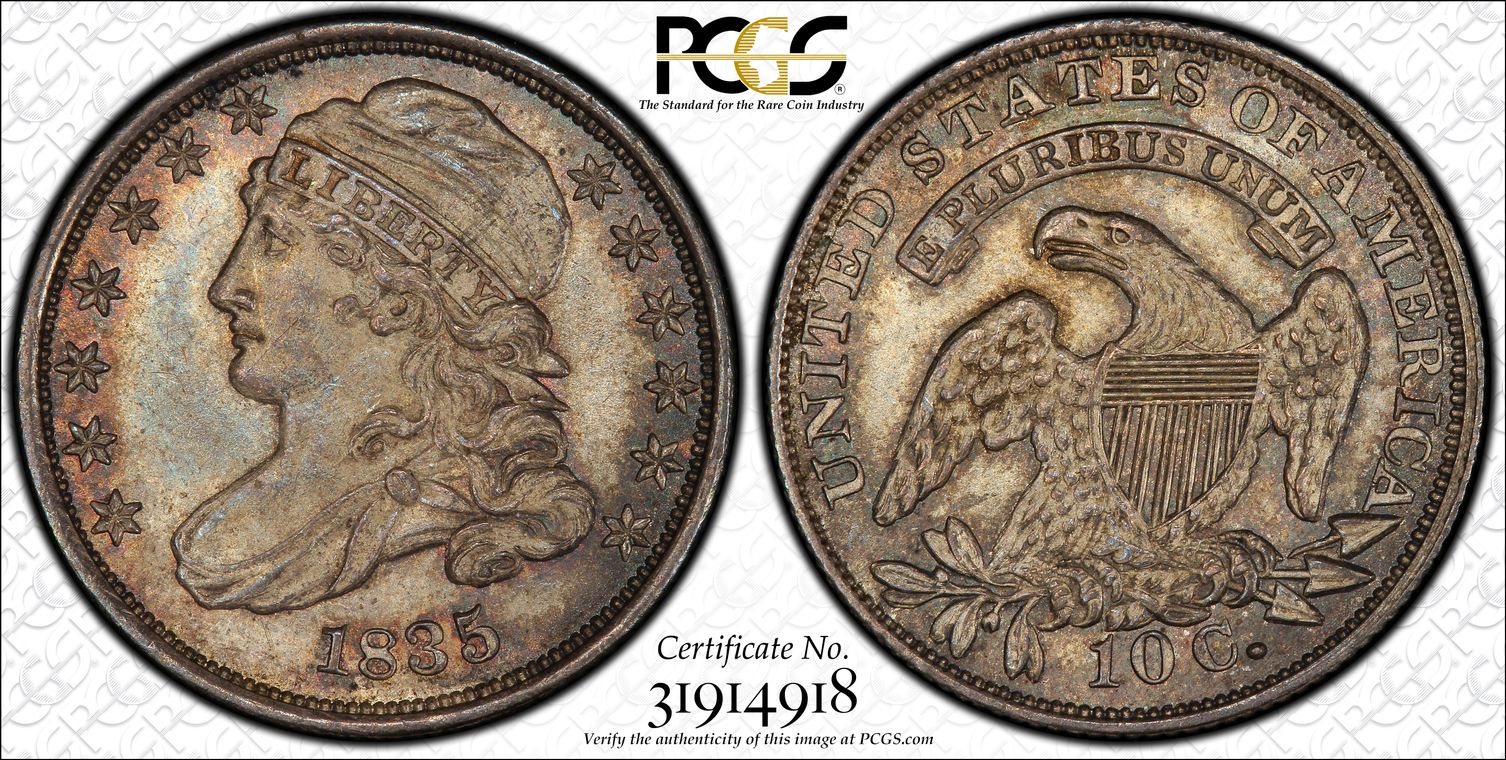
JR-1 R1. CAC. Pogue. Gem tan and burnt orange surfaces ooze originality.
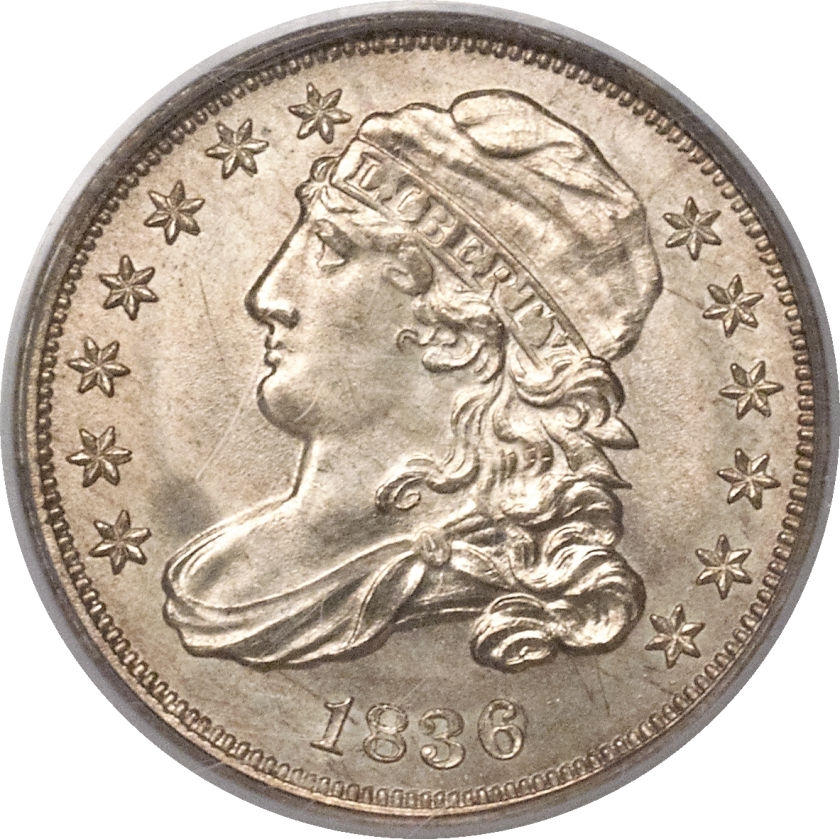
JR-2 R2. CAC. Tied Finest known 1836. "The Repunched Date is diagnostic for the JR-2 die marriage. A Fancy or Script 8 is punched over a Block 8. This example, as do most, shows a rim-to-rim bisecting die crack that passes through the T in LIBERTY and the hair curls to the top left of the 3. We have never before sold an 1836 dime finer than MS66 in any of our auctions. Only one other appearance 13 years ago remained unsold. This Superb Gem exhibits delicate gold toning with an olive tint, showing frosty silver luster and exceptional mint brilliance. Population: 2 in 67 (1 in 67+), 0 finer," per Heritage cataloger. Obtained from Heritage Galleries Auction #1192 on 12/5/2013, Lot 3559.
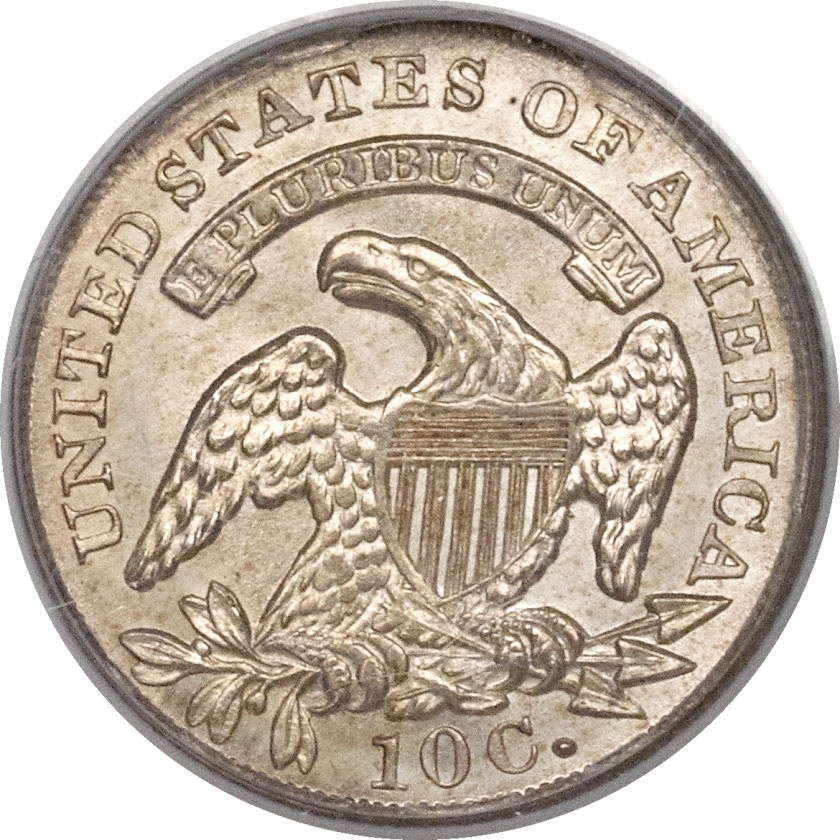
JR-2 R2. CAC. Tied Finest known 1836. "The Repunched Date is diagnostic for the JR-2 die marriage. A Fancy or Script 8 is punched over a Block 8. This example, as do most, shows a rim-to-rim bisecting die crack that passes through the T in LIBERTY and the hair curls to the top left of the 3. We have never before sold an 1836 dime finer than MS66 in any of our auctions. Only one other appearance 13 years ago remained unsold. This Superb Gem exhibits delicate gold toning with an olive tint, showing frosty silver luster and exceptional mint brilliance. Population: 2 in 67 (1 in 67+), 0 finer," per Heritage cataloger. Obtained from Heritage Galleries Auction #1192 on 12/5/2013, Lot 3559.

JR-3 R.2. CAC. Newman. Simpson. Finest Known 1837 Dime. Per cataloger, "Fantastic Color, Eye Appeal and Pedigree. None Finer. Ex: Newman-Simpson. This last-year Bust dime is a splendid Premium Gem, with superior eye appeal and an impeccable pedigree -- a coin that will definitely turn heads, appealing to type collectors and toning enthusiasts alike. The reverse is mostly silver and gold with light tinges of mint-green, while the obverse shows a fantastic, multihued patina of rich colors, from silver centers to pale pinkish-purple to splashes of mint, russet, and deep royal blue. Star 8 is distant from the cap and there is a Block 8 in the date, paired with a reverse that displays narrow rim breaks over D STA and the F in OF drifting low. This must have been an early strike from the JR-3 obverse die, because it lacks the oft-seen die crack running vertically through the upright of 7 in the date. Sharply struck throughout, this amazing 1837 Capped Bust dime is tied for finest certified regardless of variety, with many claims to finest of all. " Heritage Auction of the Bob Simpson Collection on September 17, 2020, Lot 10046.