



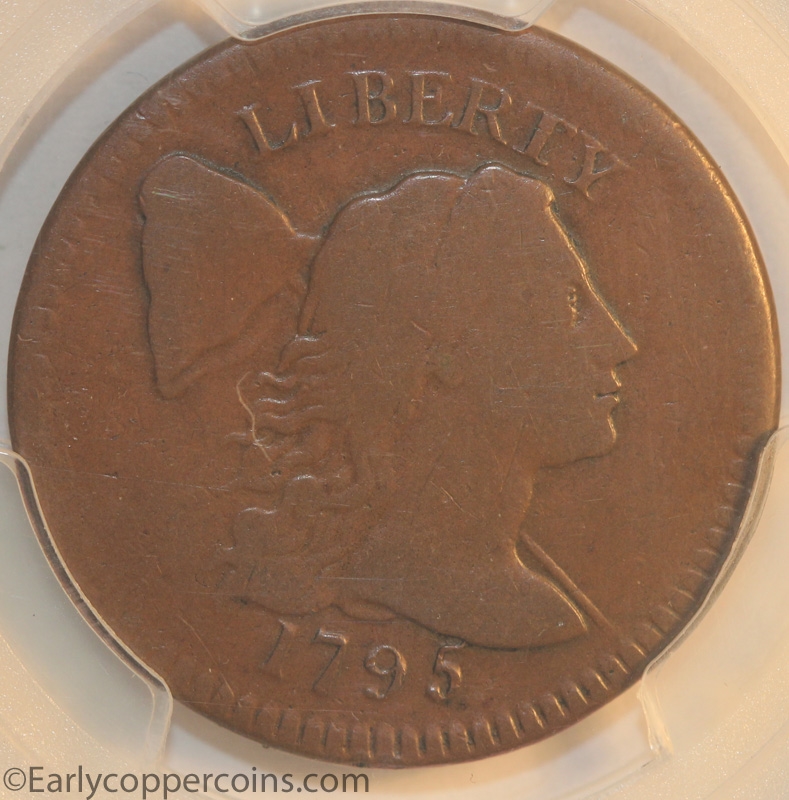
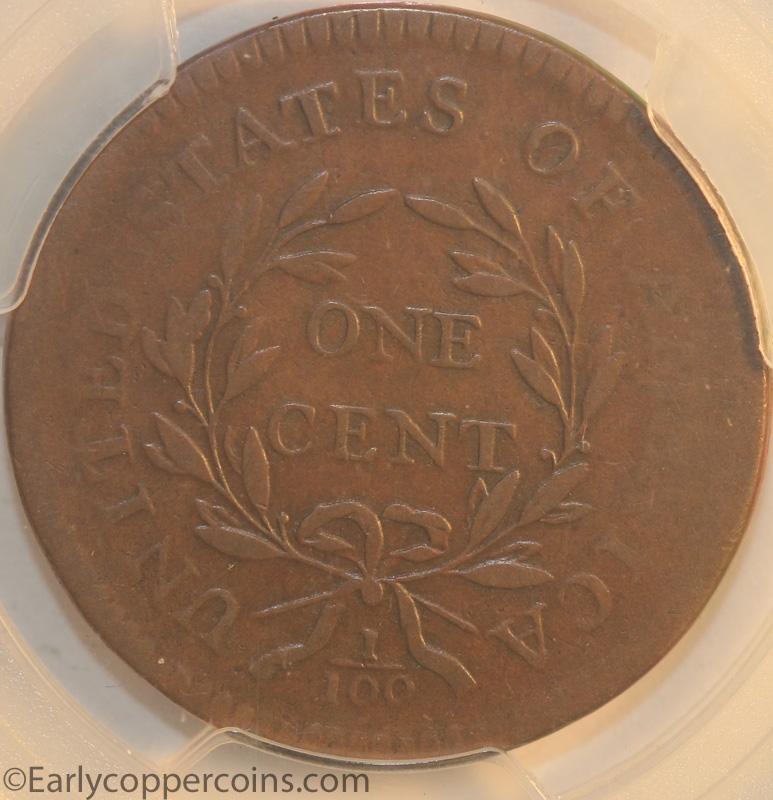
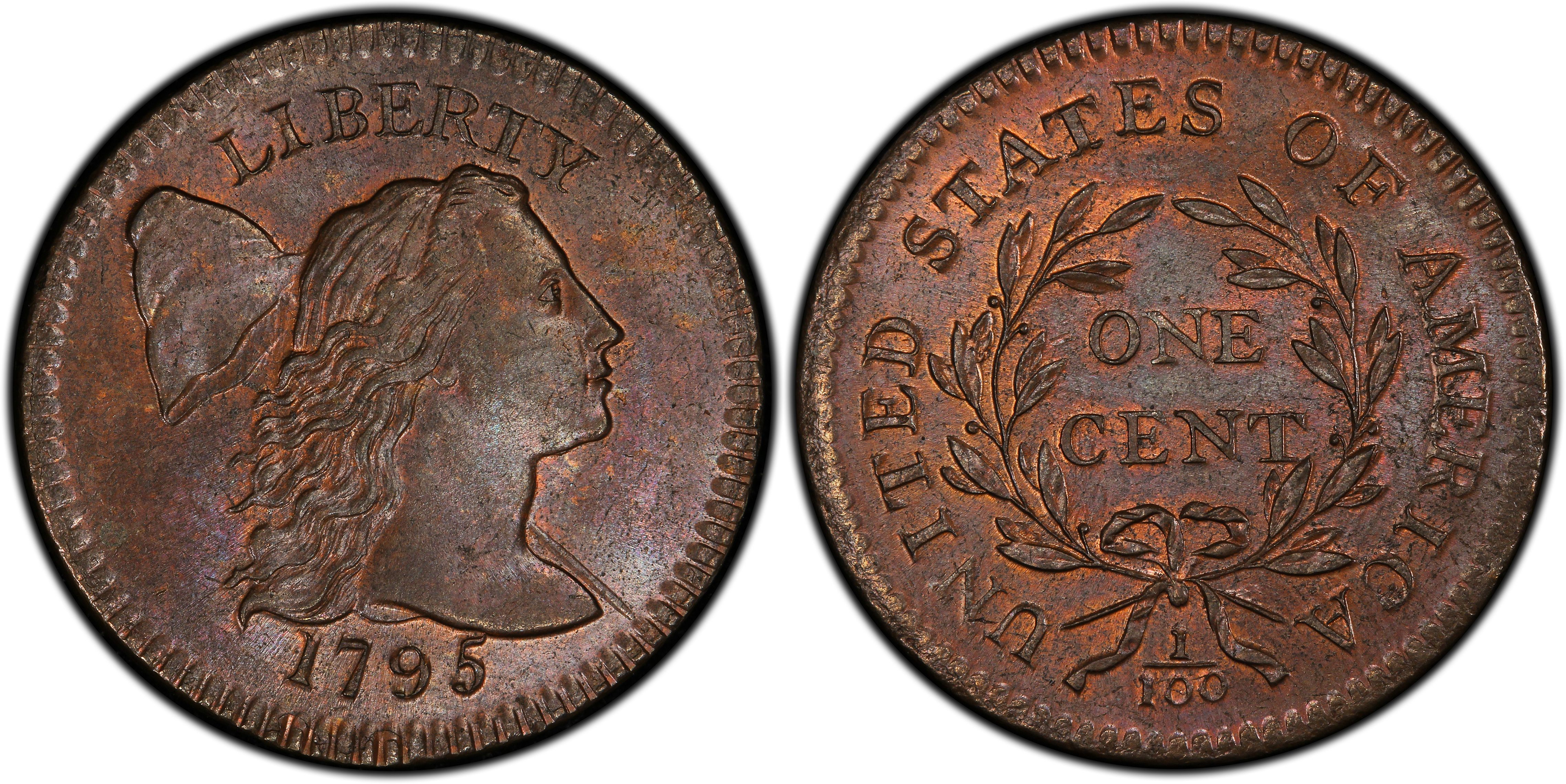
1795 1C Plain Edge, BN VG10BN Certification #84172321, PCGS #1380
Expert Comments
Charles Morgan
1795 Liberty Cap Cent, Plain Edge
By late 1795, rising copper prices and production costs severely threatened the financial viability of the United States Mint. Producing a dollar’s worth of Large Cents cost the Mint approximately $1.22, meaning every coining run ran at a direct loss.
To address the issue, Congress had previously passed a supplementary Mint Act on March 3, 1795, granting the President executive authority to reduce the weight of copper coinage whenever he deemed it necessary and beneficial to the nation. With raw material costs escalating, newly appointed Mint Director Elias Boudinot appealed for executive intervention.
On December 27, 1795, President George Washington gave direct verbal instructions to Boudinot to immediately lower the cent’s weight standard by 40 grains — from 208 grains (approx. 13.48 grams) down to 168 grains (approx. 10.89 grams). President Washington later formalized this change in an official presidential proclamation signed on January 26, 1796, backdating the legal weight reduction retroactively to December 27.
Because the planchet’s diameter remained unchanged, dropping the weight by nearly 20% resulted in a noticeably thinner coin. This structural modification had two immediate practical consequences:
- Edge Lettering Eliminated: The planchet edge was no longer thick enough to receive the incuse lettering used on earlier coppers (ONE HUNDRED FOR A DOLLAR).
- Streamlined Minting: Removing the edge-lettering process eliminated an entire, labor-intensive manufacturing step, significantly speeding up coining operations.
Unlike the public’s fierce rejection of lightweight counterfeit coppers a decade earlier, coin-starved citizens accepted these thinner official coppers without hesitation — a testament to growing faith in government-backed currency. The 168-grain weight standard established by Washington’s instruction proved so effective that it remained unchanged until Large Cents were discontinued in 1857.
Collectible Varieties
-
Sheldon-76b (#35723): The Sheldon-76 die marriage (combining Obverse 3 and Reverse C) produced both Lettered Edge (Sheldon-76a, #35720) and Plain Edge (Sheldon-76b) cents. While the lettered-edge variety is the scarcest among 1795 Lettered Edge issues, the plain-edge version.
- Obverse Diagnostics: The flag of the "5" is tucked directly into Liberty's bust truncation (a feature shared with Sheldon-73, BN #35711), alongside a shifted placement of LIBERTY above her head.
- Reverse Diagnostics: The primary giveaway is the high placement of ONE CENT. The word ONE is tucked high, just below the upper inner leaves, with the left serif of the "N" in CENT positioned near the center point.
-
Sheldon-77 (#35726): For Sheldon-77, the Mint retained the obverse die used on Sheldon-76a and 76b but mated it with a new "Style of 1796" reverse die.
- Obverse Diagnostics: Same as Sheldon 76.
- Reverse Diagnostics: The lower wreath consists of five leaf triplets on the left branch and four on the right. Key features include a low and slightly tilted "C" in CENT, the "ER" in AMERICA nearly touching the wreath, narrow denticles, and prominent die chips near the ribbon knot and fraction bar.
- Rarity: Sheldon-77 is the scarcest of the three collectible Plain Edge varieties, with no examples known in Mint State. The finest piece in private hands — graded PCGS AU55+ — boasts a pedigree tracing back through the notable collections of Peter Mougey, T. James Clark, and dealer-collector Thomas D. Reynolds.
-
Sheldon-78 (#35729): Sheldon-78 stands out because both its obverse and reverse dies are unique to this single die marriage.
- Obverse Diagnostics: No other 1795 variety features LIBERTY as tightly spaced as Sheldon-78. Less noticeable is the tight spacing between the "1" and "7" in the date, while the tip of the flag on the "5" barely touches the bust truncation. Two obverse center dots are visible — one in Liberty's hair to the left of her ear, and another at the edge of her neck to the lower left of her ear. Reverse Diagnostics: Displays a high "E" in STATES. Its wreath consists of leaf couplets, with the exception of a single triplet positioned below the "D" in UNITED.
Non-Collectible (NC) Varieties
-
1795 NC-2 (#35732): The 1795 NC-2 is an ultra-rare Non-Collectible variety with only two known examples, both surviving in heavily worn Fair-2 to About Good-3 condition.
- Diagnostics: The date is closely spaced, with the "5" overlapping the bust truncation. The reverse die is identical to the one used for Sheldon 76a and 76b.
- Walter Breen discovered the NC-2 in November 1968 while cataloging a date set consigned to Lester Merkin. Breen theorized that the die marriage was deployed in December 1795 on planchets cut from Talbot, Allum & Lee tokens, leading him to speculate that the coins were experimental trial pieces never intended for official release. The second specimen — known as the Burch coin—was discovered decades later after being purchased unattributed from a dealer.
-
1795 NC-3 (#35735): With only four cataloged examples, the 1795 NC-3 remains an enigma, leaving it uncertain whether these pieces served a specific function or were struck alongside NC-2 as test pieces.
- Diagnostics: NC-3 utilizes the same obverse die as Sheldon-76a, Sheldon-76b, and Sheldon-77, but in a heavily ground-down state. Its reverse is similar to the one used for Sheldon-78, with the key distinction being a pair of leaves extending directly above the center of the "C" in CENT.
- Dealer Jack Beymer discovered the variety within a lot acquired at the Metropolitan Washington Numismatic Association Convention in July 1979. Two additional specimens were identified in 1993, followed by a fourth in 1994.
* * *
Rarity and Survival Estimates Learn More
| 65 or Better | 1000 |
| All Grades | 25 |
| 60 or Better | 2 |
| 65 or Better | R-5.0 |
| All Grades | R-9.0 |
| 60 or Better | R-9.9 |
| 65 or Better | 8 / 11 TIE |
| All Grades | 6 / 11 |
| 60 or Better | 2 / 11 TIE |
| 65 or Better | 9 / 12 TIE |
| All Grades | 7 / 12 |
| 60 or Better | 2 / 12 TIE |
Condition Census Learn More
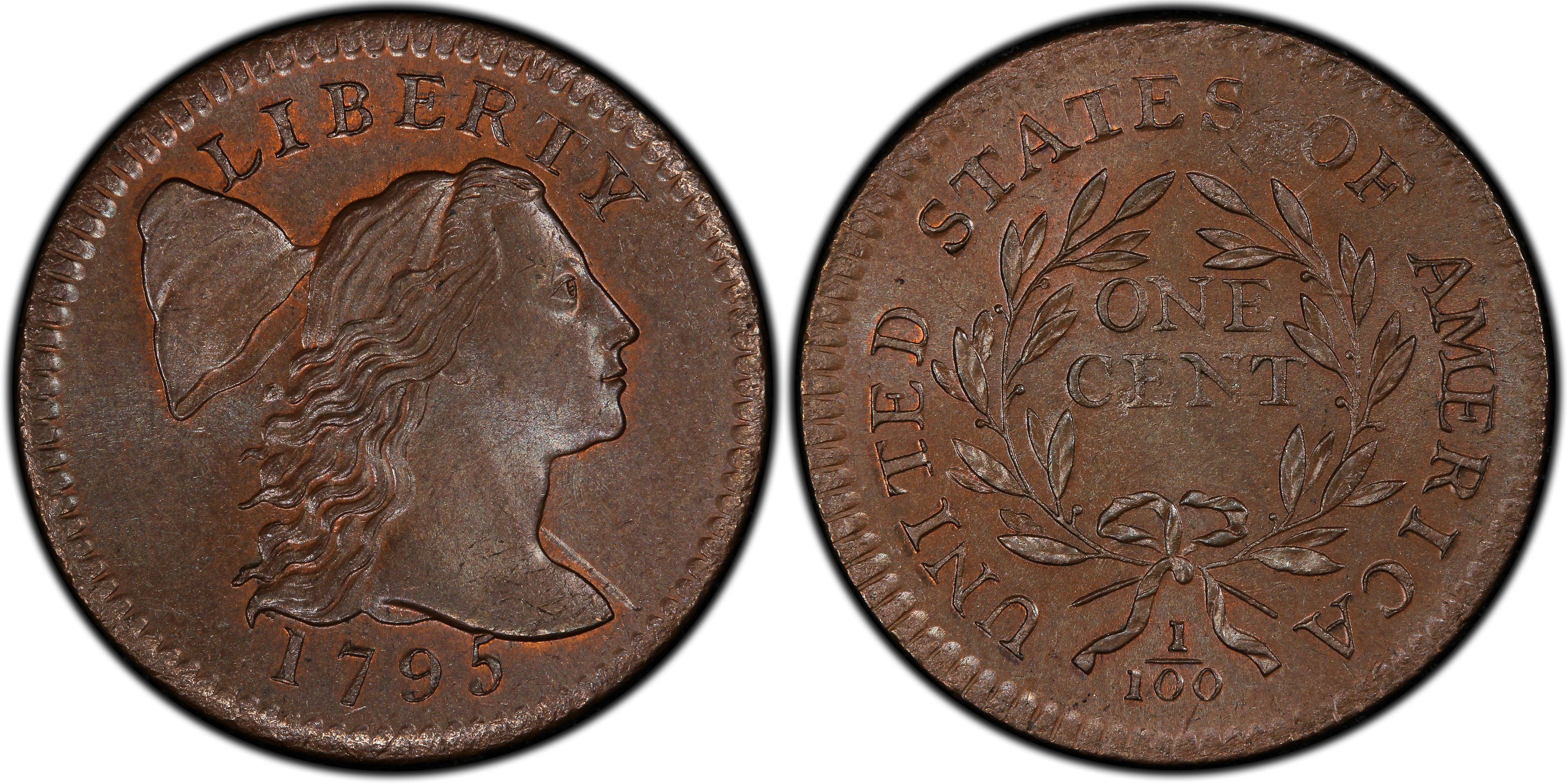 #1 PCGS MS66BN
Rodney T. Grove; Robert Nofal and Lewis Kling; “Auction '81,” Superior Galleries, July 1981, Lot 511; Heritage, June 1989, Lot 959;' Anthony Terranova; William Shamhart, sold privately in June 2005; "The Thomas D. Reynolds Collection," Goldberg Auctioneers, June 2016, Lot 55 - $79,312.50. S-76b. |
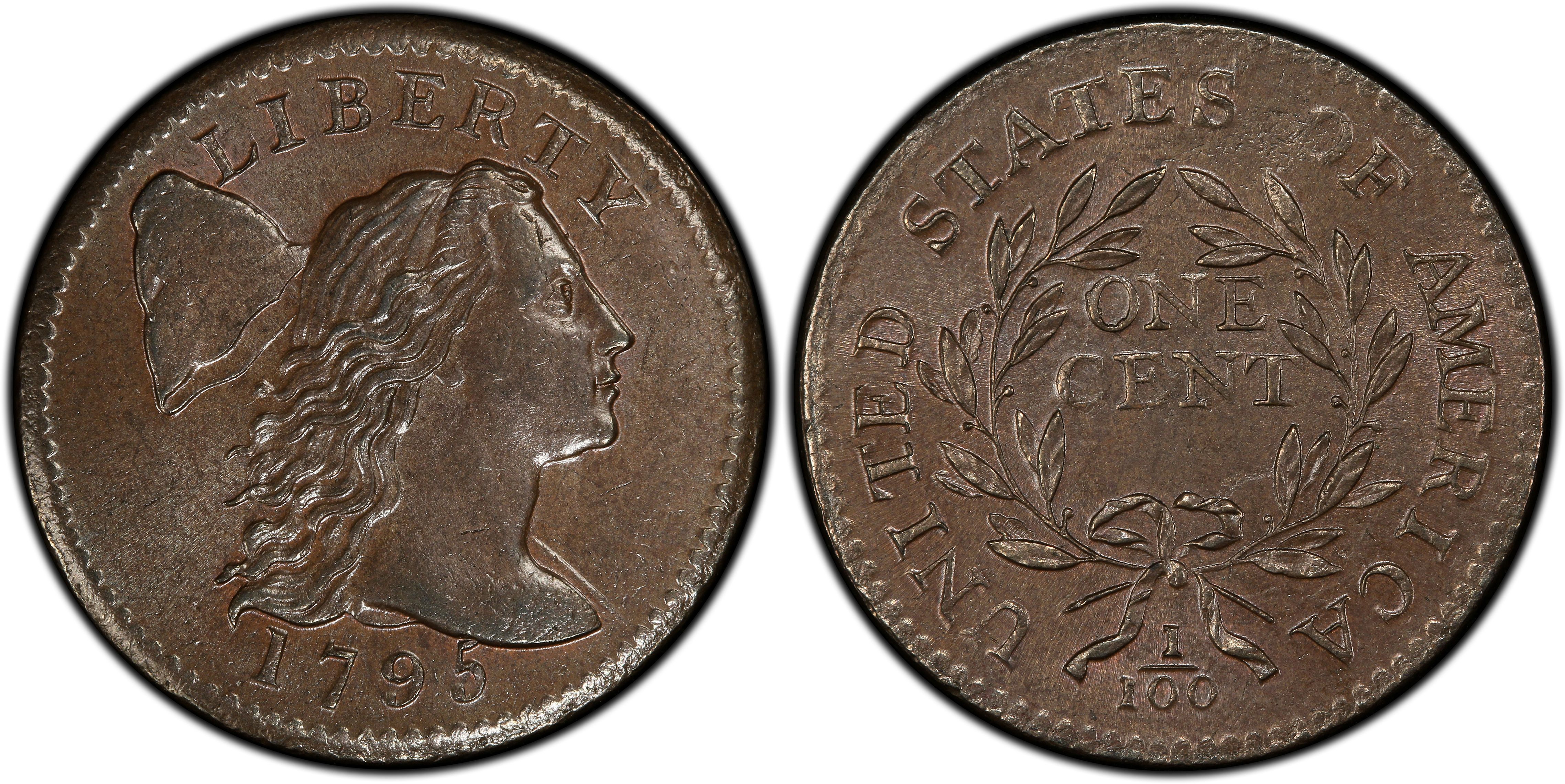 #2 PCGS MS65BN
Allison W. Jackman; Allison W. Jackman Estate, 1917; “The Allison W. Jackman Collection,” Henry Chapman, June 1918, Lot 703 – $29; Henry Chapman; Dr. George P. French; French Collection to B. Max Mehl, by sale en bloc, 1929; “The Dr. George P. French Collection,” B. Max Mehl, Fixed Price List, 1930, Lot 88 – $75; Henry A. Sternberg; J.C. Morgenthau & Company, April 1933, Lot 12 – $17; T. James Clarke; Dr. William H. Sheldon; R.E. “Ted” Naftzger, Jr.; The R.E. ‘Ted’ Naftzger, Jr. Collection, by sale en bloc, April 1972; Eric Streiner, by sale en bloc via Stack’s, February 1992; Jay Parrino; W.M. “Jack” Wadlington, April 1996; Richard Burdick, by sale, December 2008. As PCGS MS65BN #32189854. “The D. Brent Pogue Family Collection, Part V,” Stack’s Bowers / Sotheby’s March 31, 2017, Lot 5102 – $51,700. S-76b. |
|
#2 PCGS MS65BN
Dr. George P. French; B. Max Mehl, 1929 Fixed Price List, Lot 93 – $40; H.A. Sternberg; As "Uncirculated. Medium brown color." J.C. Morgenthau & Co., April 1933, Lot 14 - $16;. As "Medium Dark Olive. Unc." H.A. Sternberg; F.O. Brown; Barney Bluestone. May 25, 1935, Lot 500; H.A. Sternberg; B. Max Mehl, 1944; T. James Clarke, 1950; William H. Sheldon, April 19, 1972; R.E. “Ted” Naftzger, Jr., 1992; Bowers and Merena, August 1998, Lot 17; private collector; Joseph O’Connor. As PCGS MS65BN #5730964. “The Cardinal Collection Educational Foundation,” Stack’s Bowers, January 22, 2013, Lot 13006 – $44,062.50. S-78. Die State IV. |
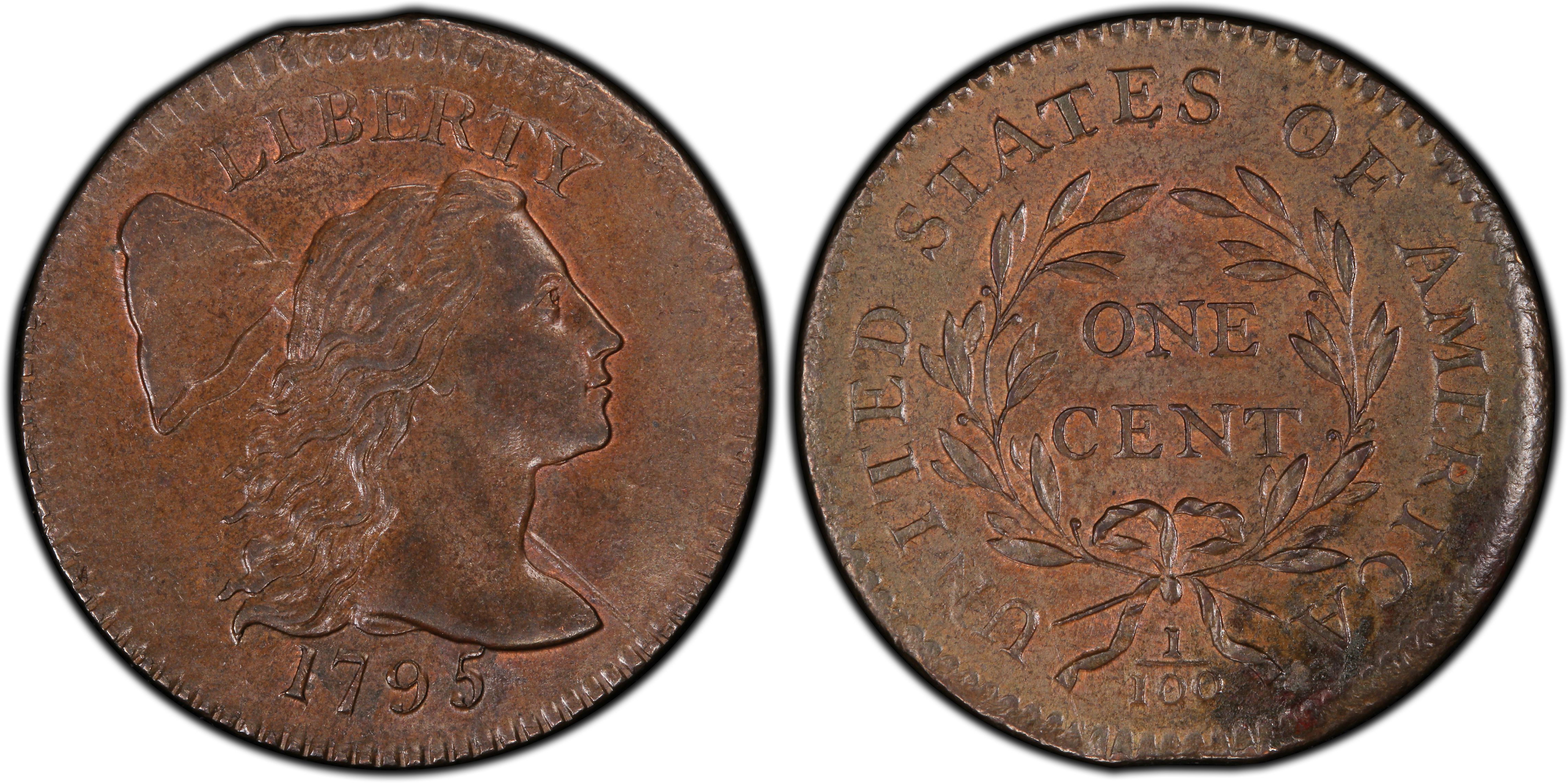 #4 PCGS MS64+BN
S-78. Unattributed on holder. |
 #4 PCGS MS64+BN
S-78. Unattributed on holder. |