



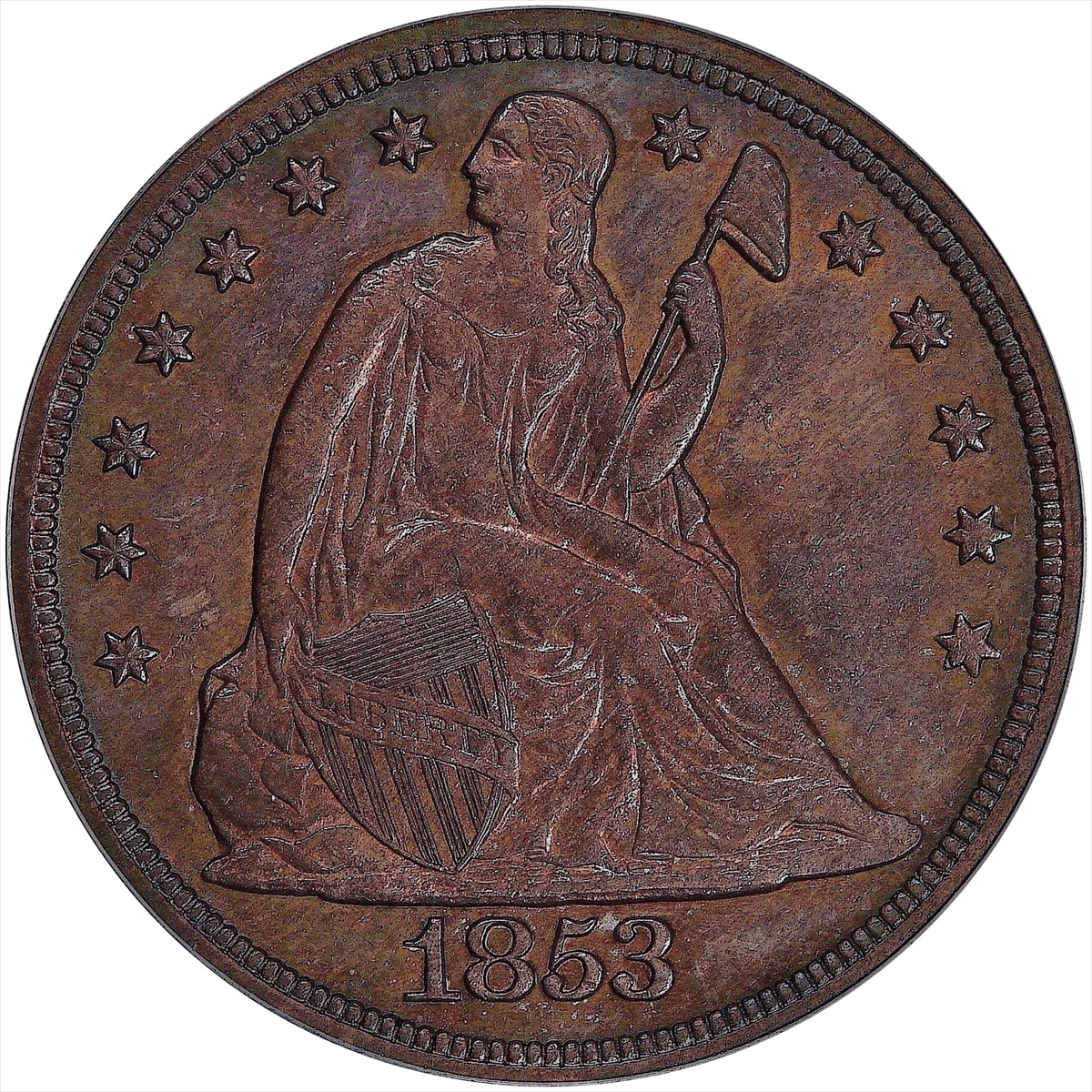
1853 $1 AU55 Certification #07440918, PCGS #6941
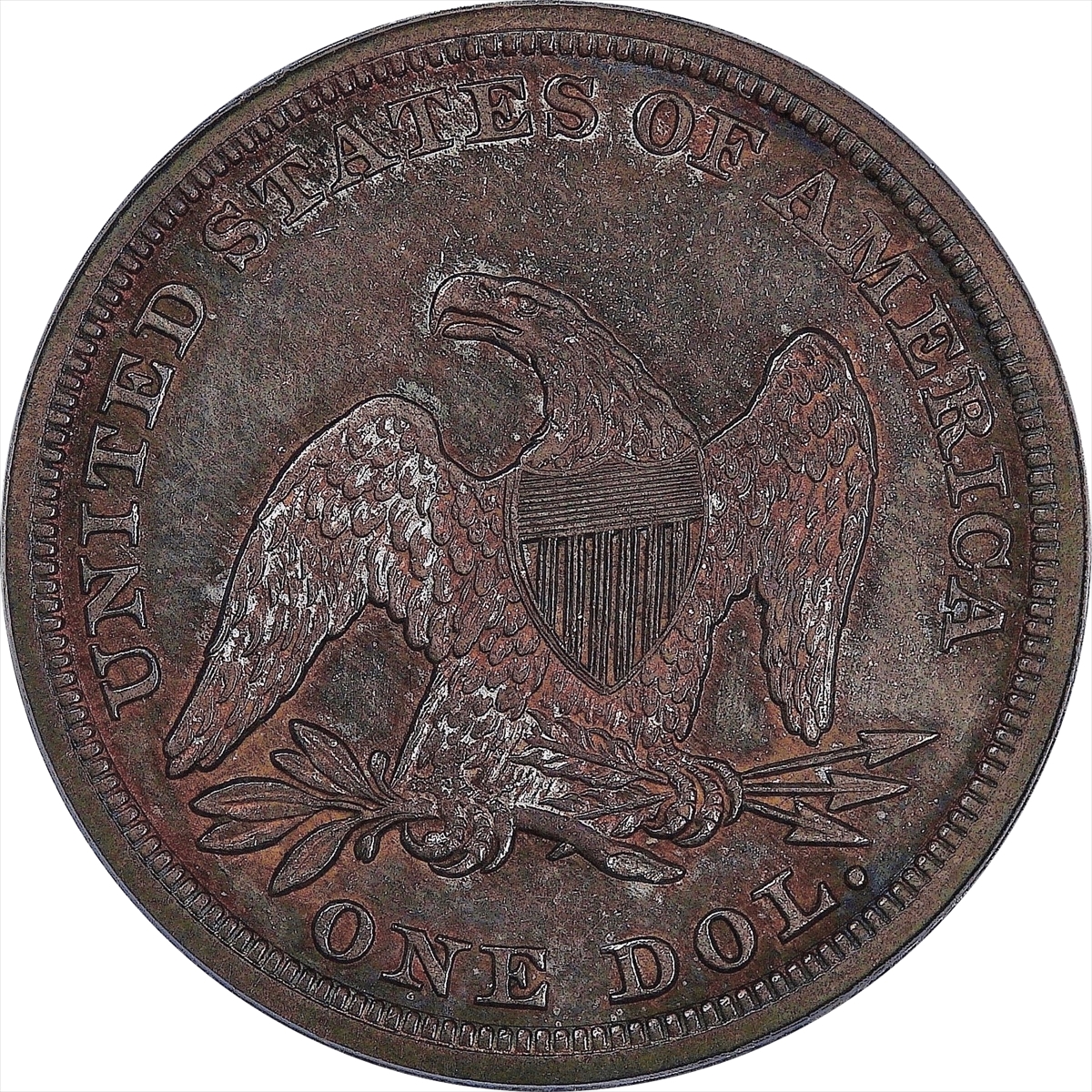
Owner's Comments
Expert Comments
Charles Morgan
The 1853 Liberty Seated Dollar
The Coinage Act of February 21, 1853, brought significant change to the American monetary system. Following the discovery of vast quantities of alluvial gold in the placer mines of newly acquired California, the tenuous balance between gold and silver collapsed. Silver’s value relative to gold climbed to the point where the continued minting of American silver coins served only to benefit speculators.
By passing the Act, Congress transformed the silver denominations—excluding the dollar—into subsidiary coinage. Coins produced under the new standard weighed slightly less, ensuring they were worth more by tale (face value) than by their intrinsic metal weight. Consequently, the older, heavier coins disappeared from commerce; many were melted down, often by the Mint itself, which used the reclaimed bullion to strike silver coins according to the new standard.
The Philadelphia Mint struck the entire 1853 Liberty Seated Dollar (#6941) business-strike mintage across just two Thursdays, eight months apart. The vast majority—39,000 coins—were produced on April 21, with the final 7,110 coins struck at the very end of the year, on December 29. By comparison, the Philadelphia Mint struck a record 4,076,051 Gold Dollars (#7521) the same year.
Unlike subsidiary silver coins, which underwent weight reductions in 1853 to curb speculation, the silver dollar remained at its original weight. Because it was not a regularly circulating denomination (at least not, domestically), Congress overlooked it when passing the Coinage Act of April 21, 1853. Since the denomination's reintroduction in 1840, these dollars primarily served as bullion for export to Asian and Latin American merchants or were hoarded by banks as speculative assets and reserves.
Die Varieties and Striking Characteristics
Although the Mint prepared two obverse dies for this issue, all known examples originate from a single die (OC-1) and the two emissions can't be told apart. This variety is easily identified by the "chin whiskers" detail on Liberty. Collectors should also note common striking weaknesses, particularly flatness on the right-side stars where definition is often lost around star 10.
Collecting the 1853 Liberty Seated Dollar
While the 1853 Liberty Seated Dollar survives in all circulated grades, it is most frequently encountered in PCGS holders in About Uncirculated (AU) condition; however, the majority of extant gradable examples likely fall within the Very Fine (VF) to Extremely Fine (XF) range. Mint State examples are uncommon up to PCGS MS64 and become prohibitively rare in higher grades.
A small hoard of uncirculated 1853 Liberty Seated Dollars, which reportedly surfaced in the late 1970s or early 1980s, perhaps contributed to the available number of Choice Mint State examples. This event may explain the cluster of similar specimens in today's market, which are often characterized by apricot-golden toning and muted eye appeal.
Of the known examples, the Bruce Morelan-Dell Loy Hansen example in PCGS MS66+ is the consensus finest known.
* * *
Rarity and Survival Estimates Learn More
| 65 or Better | 1700 |
| All Grades | 120 |
| 60 or Better | 2 |
| 65 or Better | R-4.7 |
| All Grades | R-7.8 |
| 60 or Better | R-9.9 |
| 65 or Better | 17 / 30 TIE |
| All Grades | 25 / 30 |
| 60 or Better | 7 / 30 TIE |
| 65 or Better | 27 / 45 TIE |
| All Grades | 35 / 45 |
| 60 or Better | 8 / 45 TIE |
Condition Census Learn More
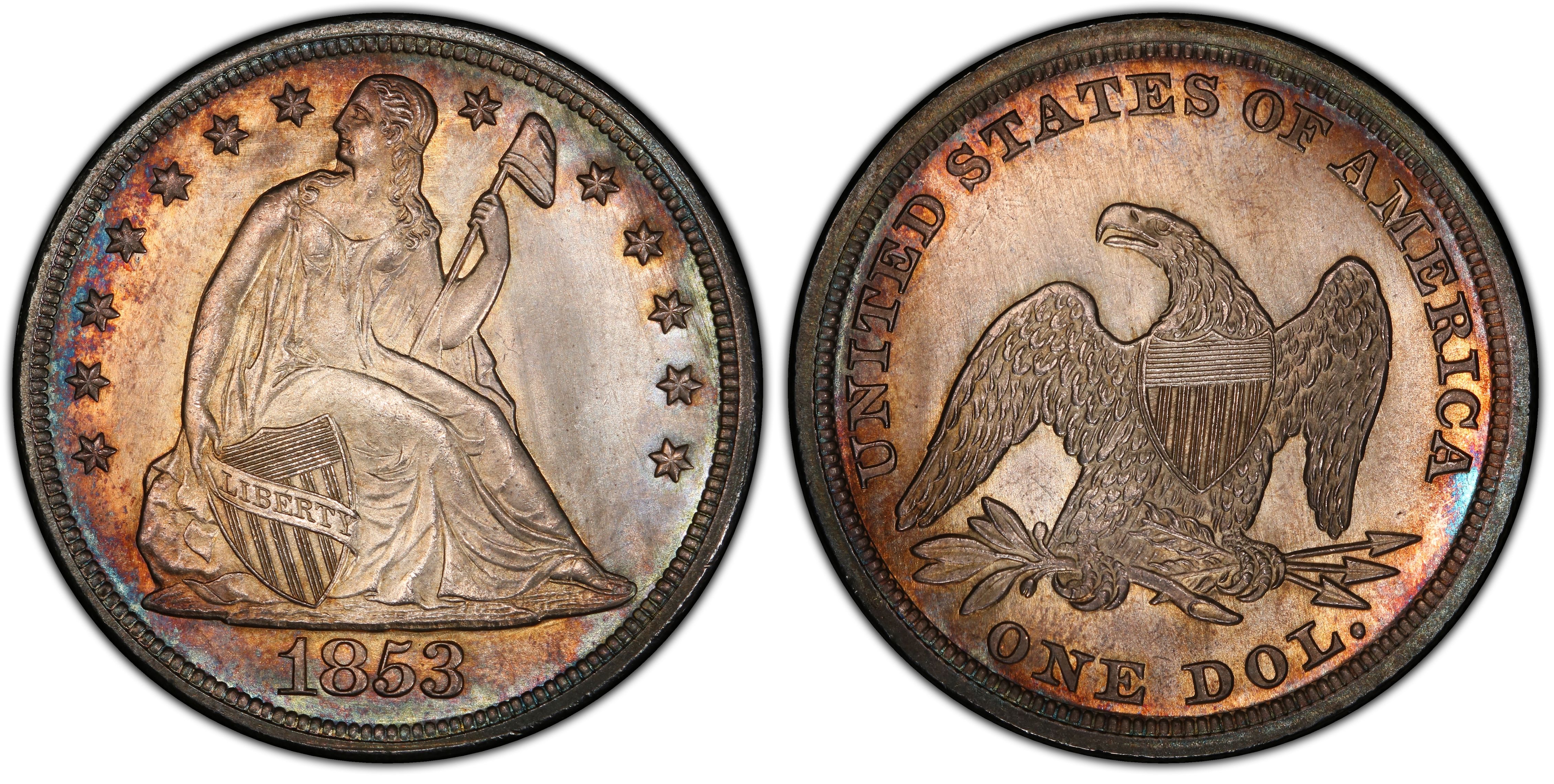 #1 PCGS MS66+
Legend-Morphy, February 2014, Lot 185 - $111,625; Bruce Morelan, to Dell Loy Hansen, Liberty Seated Dollar Set sold en bloc, July 2018; Dell Loy Hansen; "The D.L. Hansen Liberty Seated Complete Circulation Set" (PCGS Set Registry). |
|
#1 PCGS MS66
“Auction ‘79," Stack's, July 1979, Lot 656; “The 1853” Collection," Stack's Bowers, October 2014, Lot 10031 - $129,250. Old Green Holder. Peach centers with antique plum and russet toning along the periphery.
|
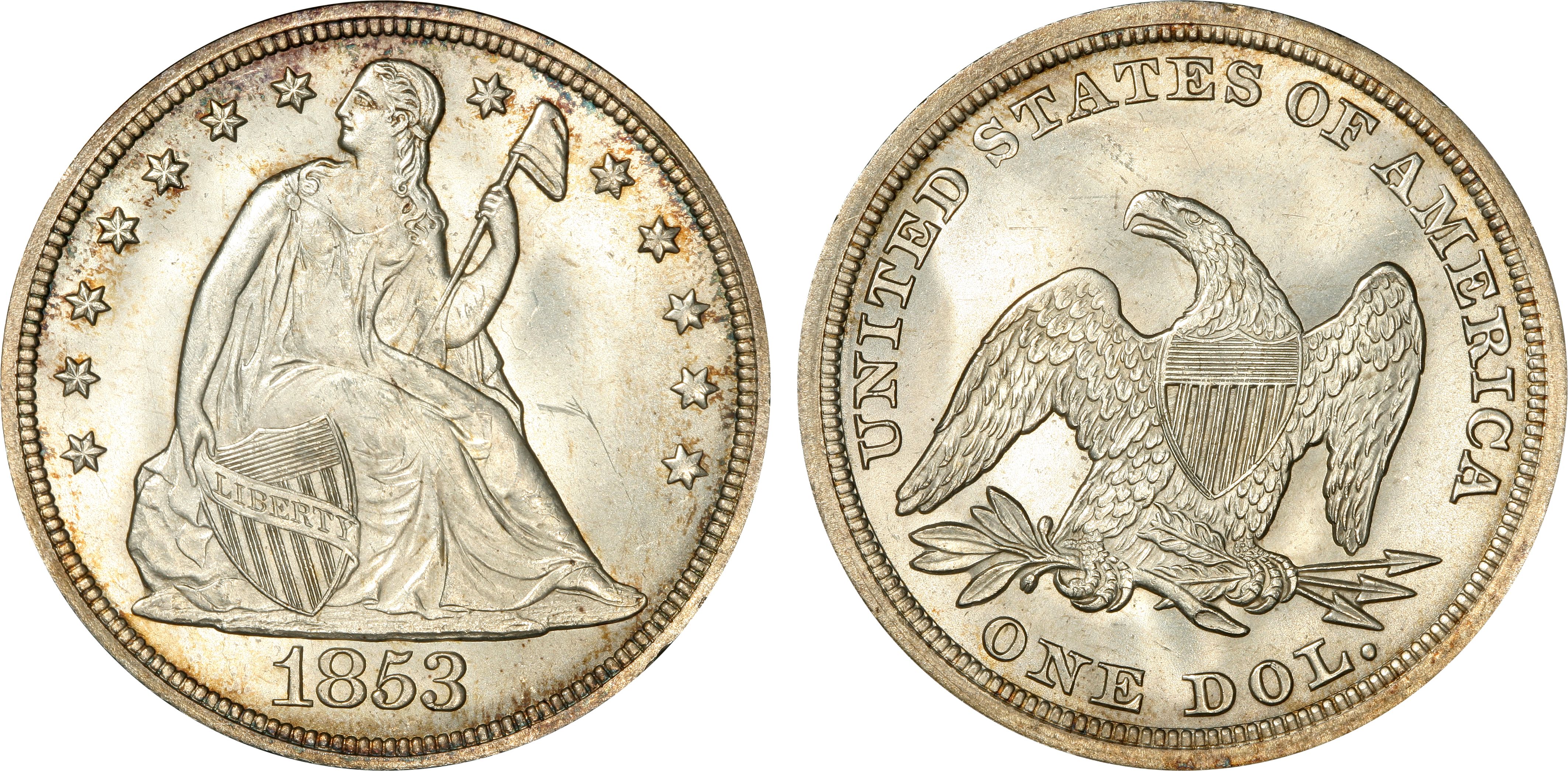 #3 PCGS MS65
Heritage Auctions, October 2001, Lot 7182 - $18,400; "The Rod Sweet & North Shore Coins Collection, Part IV," - Bowers & Merena July 2005, Lot 1050 - $85,100; "The American Girls 2 Collection" (PCGS Set Registry). |
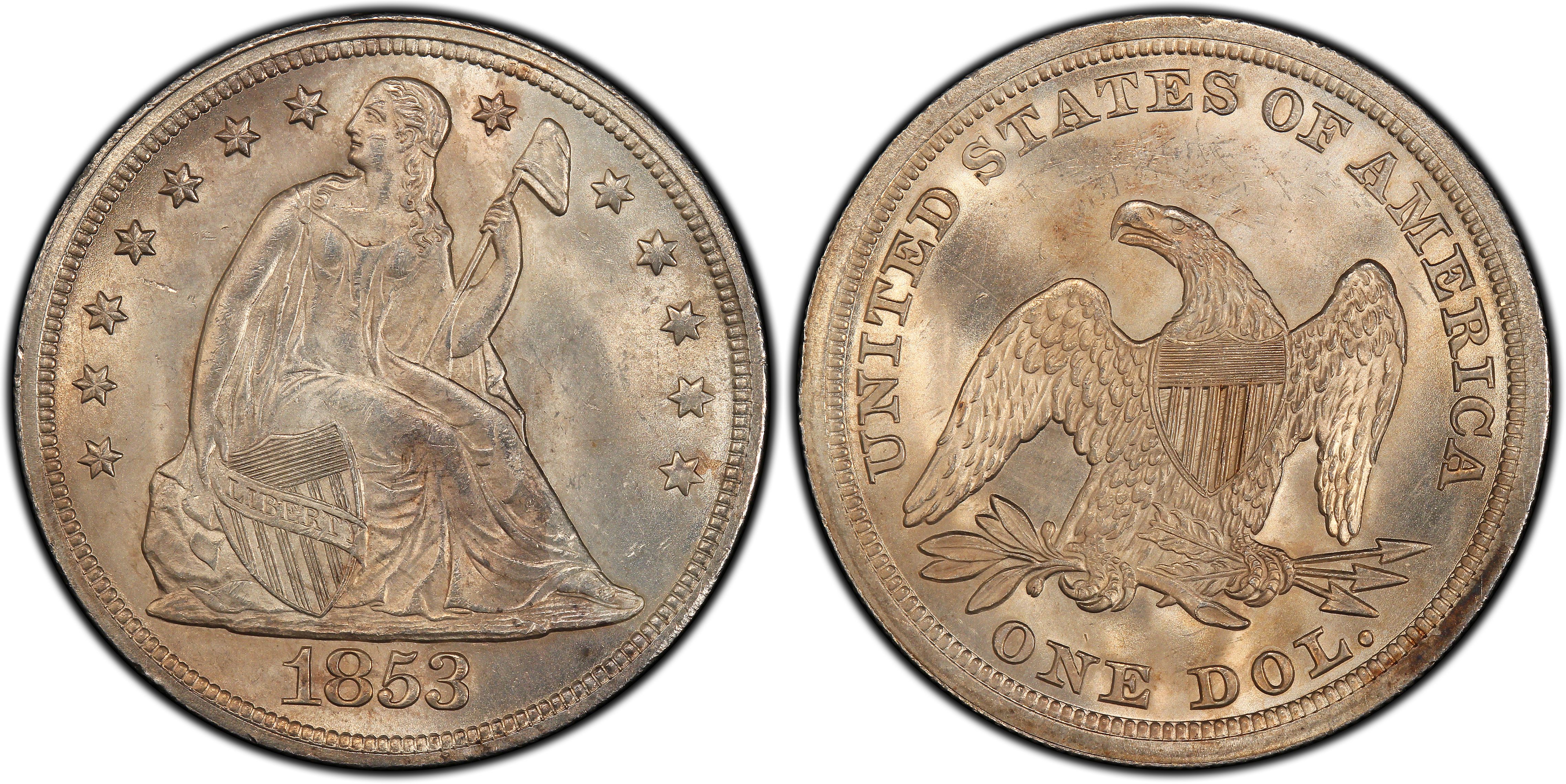 #3 PCGS MS65
Previously PCGS MS65 #25673569. Champagne toning. Rim contact mark in the left obverse field between Stars 3 and 4. |
| #5 PCGS MS64+ |