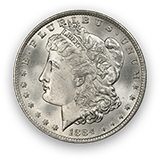




1892-O 50C MS66 Certification #19806488, PCGS #6462


Owner's Comments
Expert Comments
Ron Guth
The 1892-O Half Dollar is a popular coin because of its low mintage but, in reality, it is no more difficult to obtain than many other, more plentiful dates. In fact, the 1892-O Half Dollar has the second largest population of certified examples of any date up to 1912. David Akers noted that the 1892-O Half Dollar was rare in Gem condition but, again, the population reports say otherwise. Apparently, the 1892-O was saved in large quantities, as was the 1892-P, which means that collectors have ample opportunities to purchase a nice example. Like most Barber Half Dollars, the 1892-O is extremely rare in MS67, but this is one of the few dates in the series that is represented by a PCGS MS68 example (but only one!).
David Akers
Only 390,000 pieces were minted of this issue, the lowest mintage figure of any branch mint Barber Half Dollar, and the lowest mintage of the entire series prior to 1913. The 1892-O is not quite as rare as the low mintage would imply, however, and average to Choice Uncirculated examples are only scarce, not rare. In Gem condition, though, the 1892-O is definitely rare...Rarity and Survival Estimates Learn More
| 65 or Better | 1500 |
| All Grades | 250 |
| 60 or Better | 30 |
| 65 or Better | R-4.8 |
| All Grades | R-6.6 |
| 60 or Better | R-8.9 |
| 65 or Better | 11 / 74 TIE |
| All Grades | 28 / 74 TIE |
| 60 or Better | 9 / 74 TIE |
| 65 or Better | 11 / 74 TIE |
| All Grades | 28 / 74 TIE |
| 60 or Better | 9 / 74 TIE |
Condition Census Learn More
 #1 MS68 PCGS grade Dr. Thaine B. Price Collection - David Akers 5/1998:124, $28,600 - John C. Hugon Collection - Heritage 1/2005:4199, $103,500 - Bob R. Simpson Collection |
 #2 MS67 PCGS grade John C. Hugon Collection - Eugene H. Gardner Collection, Part II - Heritage 10/2014:98542, $18,800 - Heritage 4/2016:4669, $16,450 |
|
#3 MS67 estimated grade
Fred Porter Collection - Charles T. Steigerwalt, sold privately in 12/1893 - John M. Clapp Collection - John H. Clapp Collection, sold intact in 1942 - Louis E. Eliasberg, Sr. Collection - Bowers & Merena 4/1997:2064, $18,700 - American Numismatic Rarities 6/2005:78, $37,375 - Eugene H. Gardner Collection - Heritage 6/2014:30548, $64,625 - Heritage 8/2015:4069, $47,000 - Heritage 2/2016:3246, $39,950
|
 #4 MS66 PCGS grade David Akers 10/1994 - Dr. Steven Duckor - Heritage 8/2010:3173, $18,400 |
 #4 MS66 PCGS grade Stack's/Bowers 8/2014:13109, not sold - Heritage 10/2015:3273, $8,225 |