



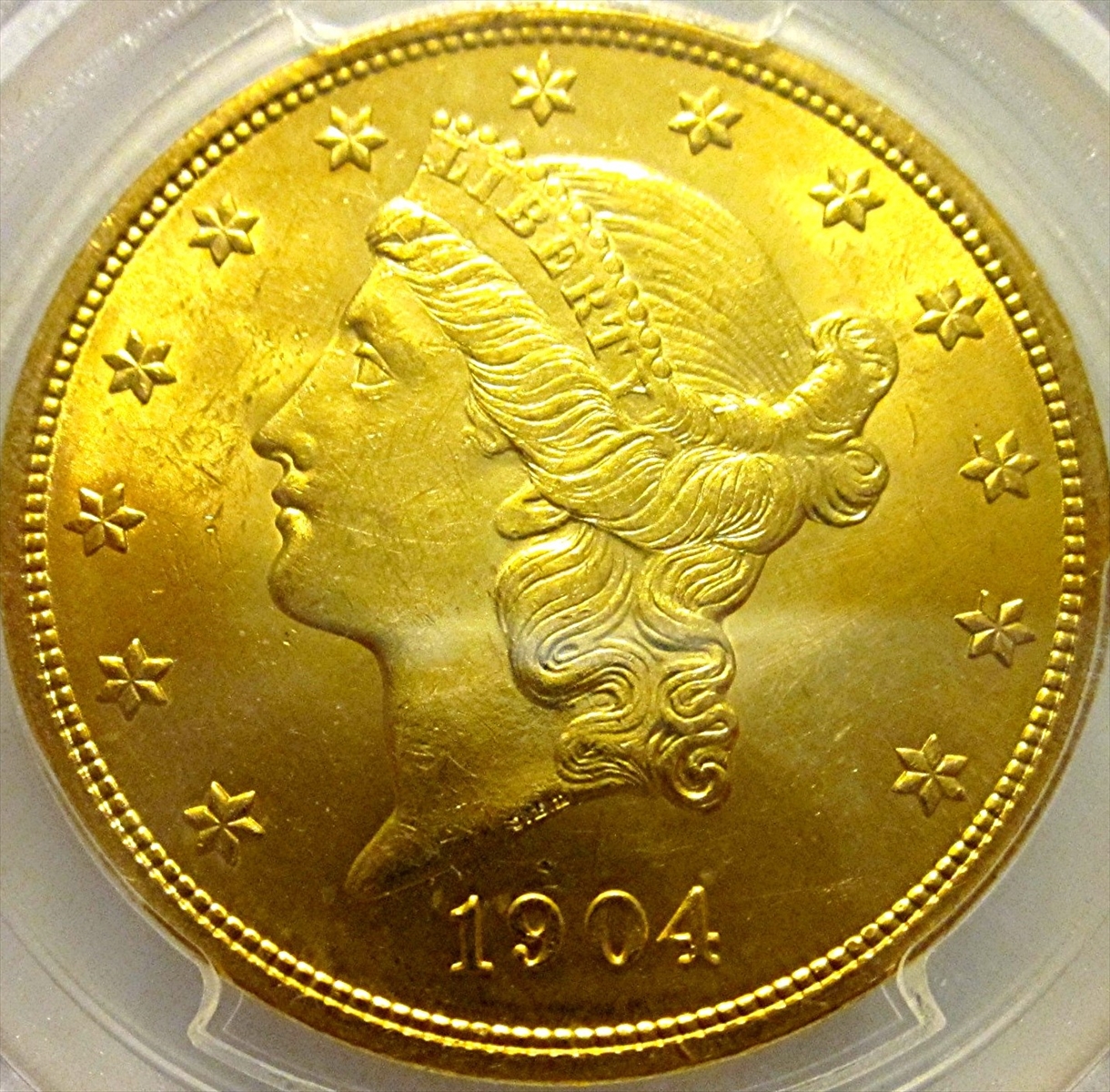
1904 $20 MS63 Certification #33796605, PCGS #9045
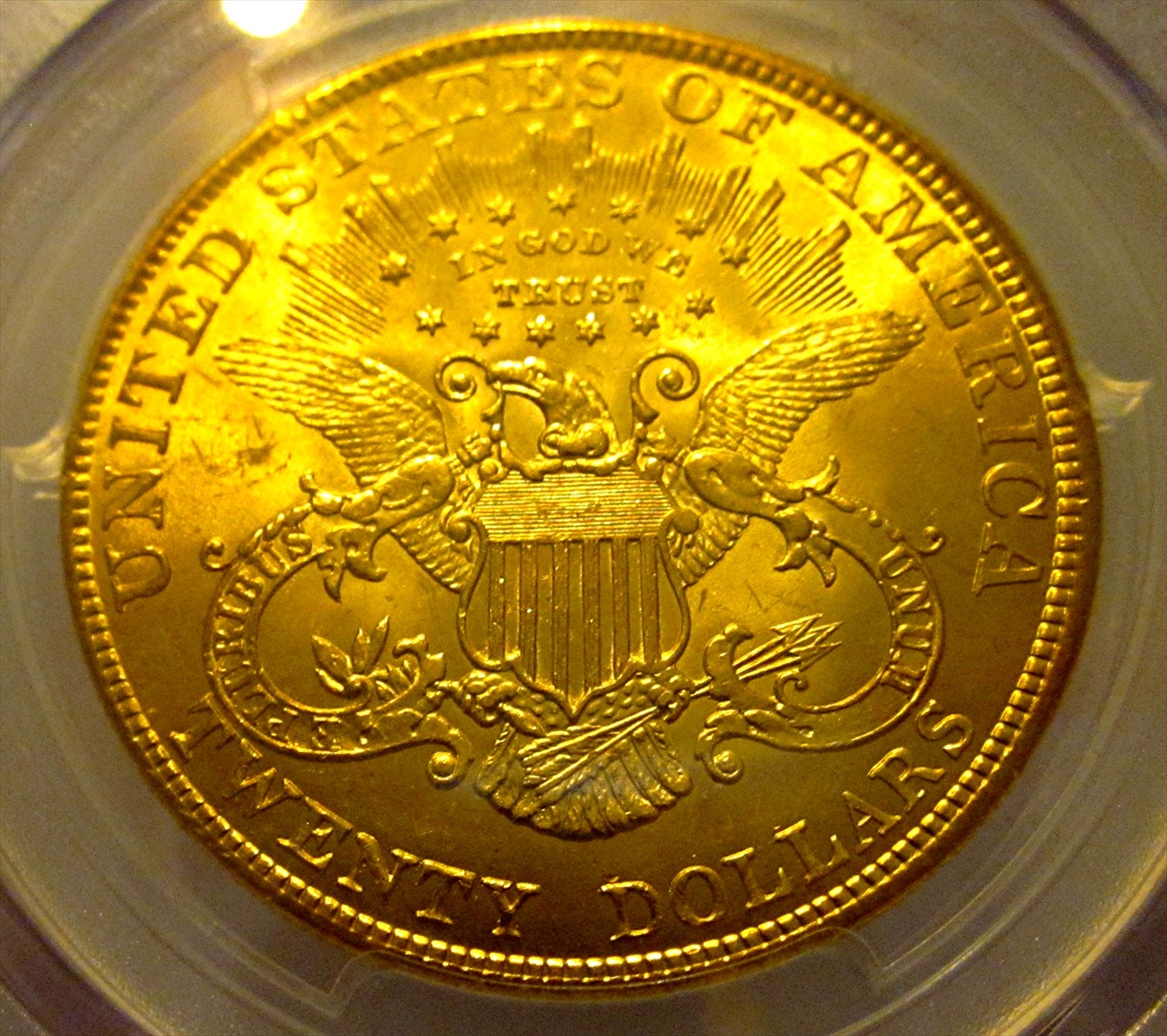
Expert Comments
Charles Morgan
1904 Liberty Head Double Eagle
Contrary to popular belief, the Double Eagle denomination did not circulate in the traditional sense. These coins were rarely used for everyday purchases like groceries or clothing; instead, their primary role was to anchor bank vaults. Under the gold standard, paper currency, specifically Gold Certificates, served as a more convenient, transferable receipt for physical gold. In this capacity, the Double Eagle backed the nation’s currency, allowing banks to settle balances with one another and ensure they could meet redemption demands.
As the American economy expanded, so did the necessity for these gold reserves. Consequently, in 1904, the United States Mint produced the largest issuance of Double Eagles in the series’ history. With a massive mintage of 6,256,699 pieces, the 1904 Liberty Head Double Eagle (#9045) remains highly accessible to collectors today.
To manage this surplus of gold, the U.S. began exporting vast quantities of coinage to Europe and South America around 1900. By World War I, millions of coins had been relocated to settle international business accounts. During the fiscal year ending June 1904, the U.S. exported $15,682,424 in gold coin: 49.85% to France, 28.66% to Canada, 19.44% to South America, and the remainder to the West Indies, Hong Kong, and Mexico. This trend accelerated in 1905, with exports surging to $54,409,014.
These Double Eagles were typically shipped in cloth Treasury bags containing 250 coins ($5,000 face value). This overseas relocation proved vital to the issue's survival; the majority of gold coinage remaining in the U.S. was melted down following President Franklin D. Roosevelt’s Executive Order 6102 in 1933. Had these coins remained stateside, the 1904 Double Eagle would be significantly rarer today.
Collecting the 1904 Liberty Head Double Eagle
Fortunately for collectors, the Philadelphia Mint maintained high production standards despite the immense volume; consequently, the 1904 issue is characterized by sharp strikes and well-defined details. This issuance was dramatically larger than that of the San Francisco facility—the first time Philadelphia’s output had exceeded San Francisco’s since 1894.
Today, the PCGS population is approaching 250,000 pieces. While PCGS MS63 is the most frequent grade—accounting for roughly one-third of the total—the population drops sharply in higher tiers. The coin remains relatively affordable in PCGS MS66, but is a significant condition rarity in finer grades.
* * *
Rarity and Survival Estimates Learn More
| 65 or Better | 1212500 |
| All Grades | 312500 |
| 60 or Better | 5500 |
| 65 or Better | R-1.0 |
| All Grades | R-1.7 |
| 60 or Better | R-3.9 |
| 65 or Better | 73 / 73 |
| All Grades | 73 / 73 |
| 60 or Better | 35 / 73 |
| 65 or Better | 148 / 148 |
| All Grades | 144 / 148 |
| 60 or Better | 48 / 148 |
Condition Census Learn More
|
#1 PCGS MS67
Stack’s Bowers, June 15, 2022, Lot 2227 – $138,000. Faint die cracks around the tops of the stars. Small toning spot below star 6 at Liberty's hair. Toning spot below the C in AMERICA. |
 #1 PCGS MS67
Legend Rare Coin Auctions, June 27, 2019, Lot 482 – $73,437.50. Two pin-sized toning spots between stars 12-13. Toning below the first S in STATES and to the right of S in DOLLARS. |
| #1 PCGS MS67 |