



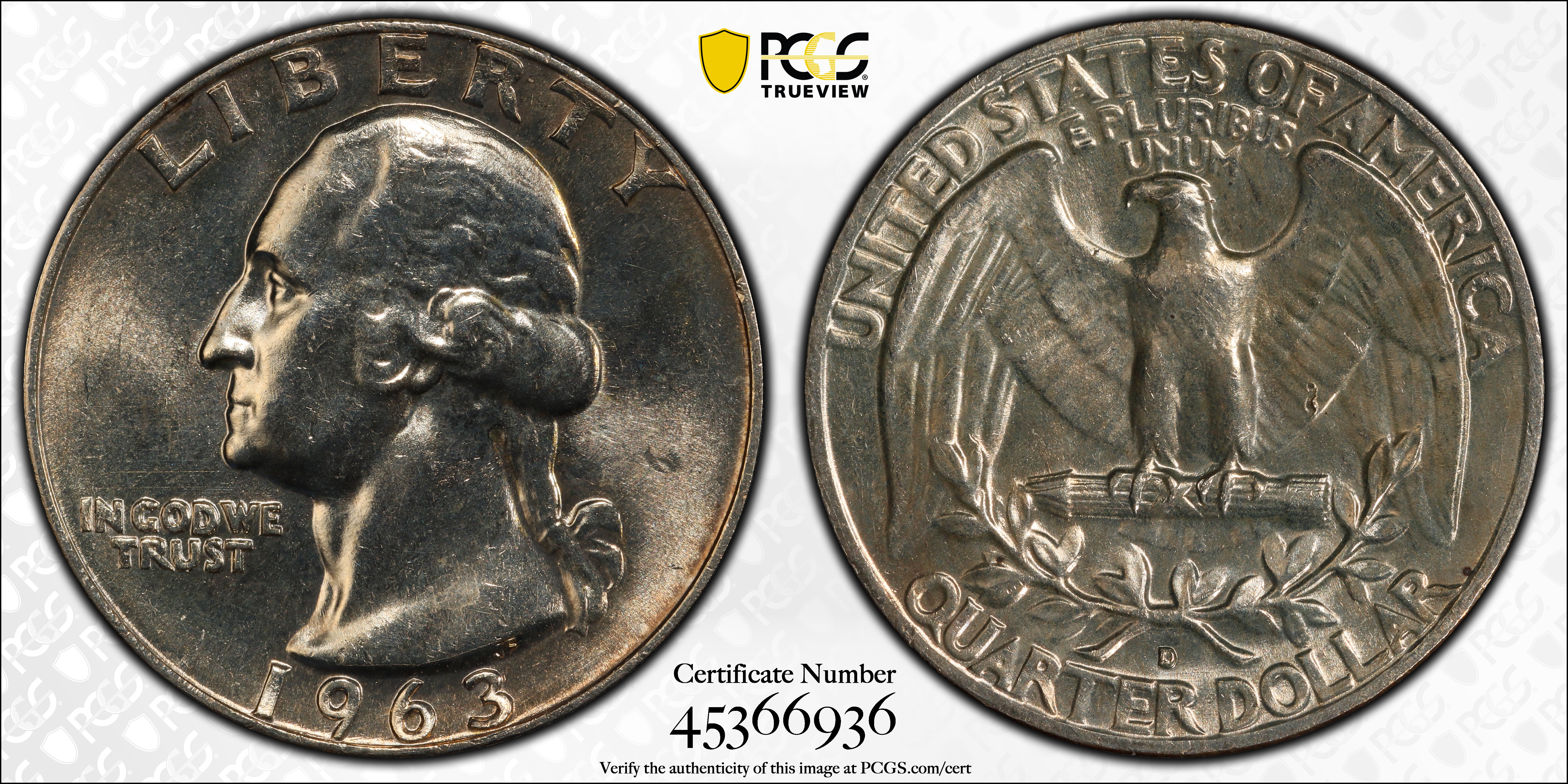
1963-D 25C MS64 Certification #45366936, PCGS #5875
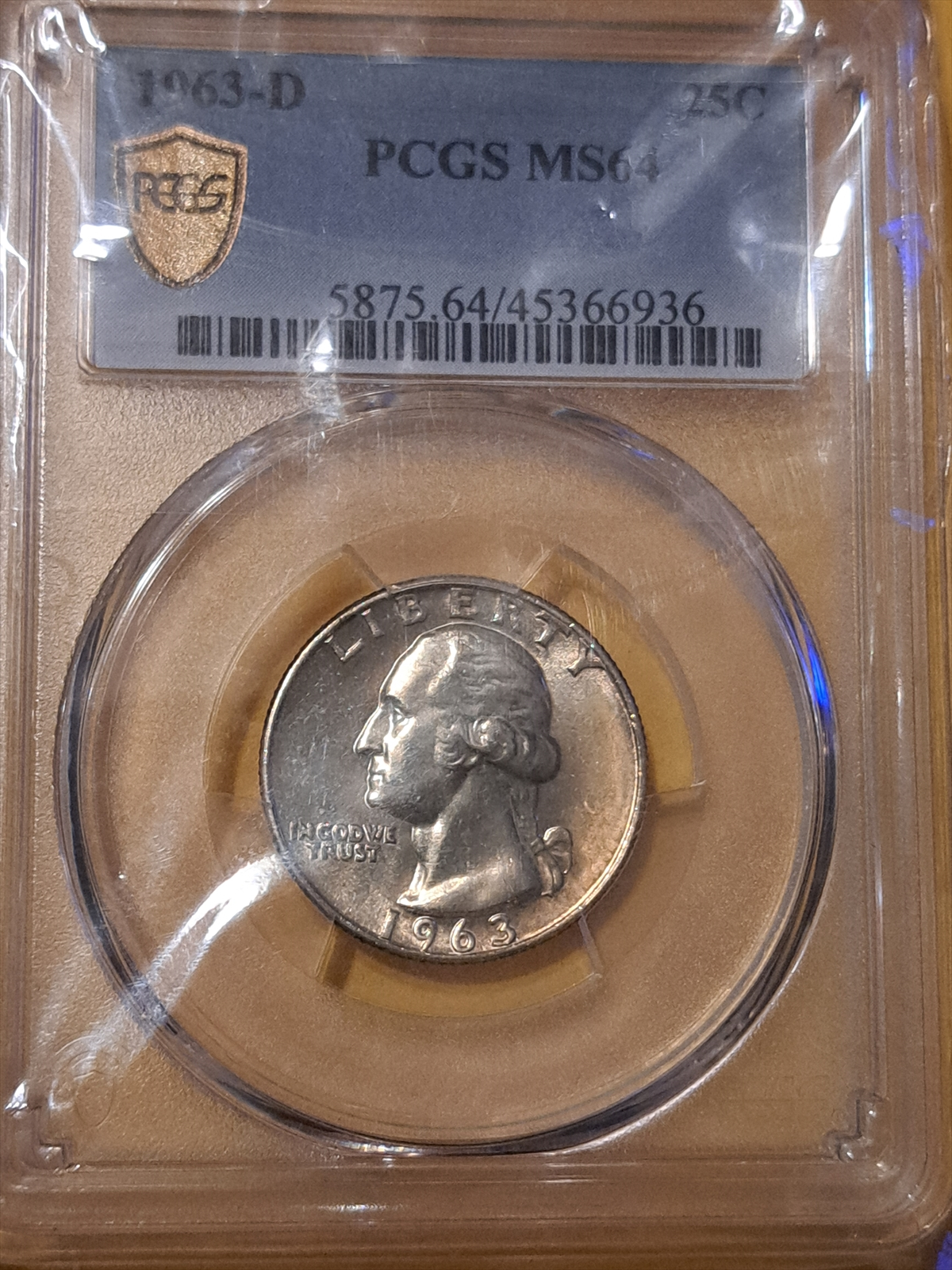
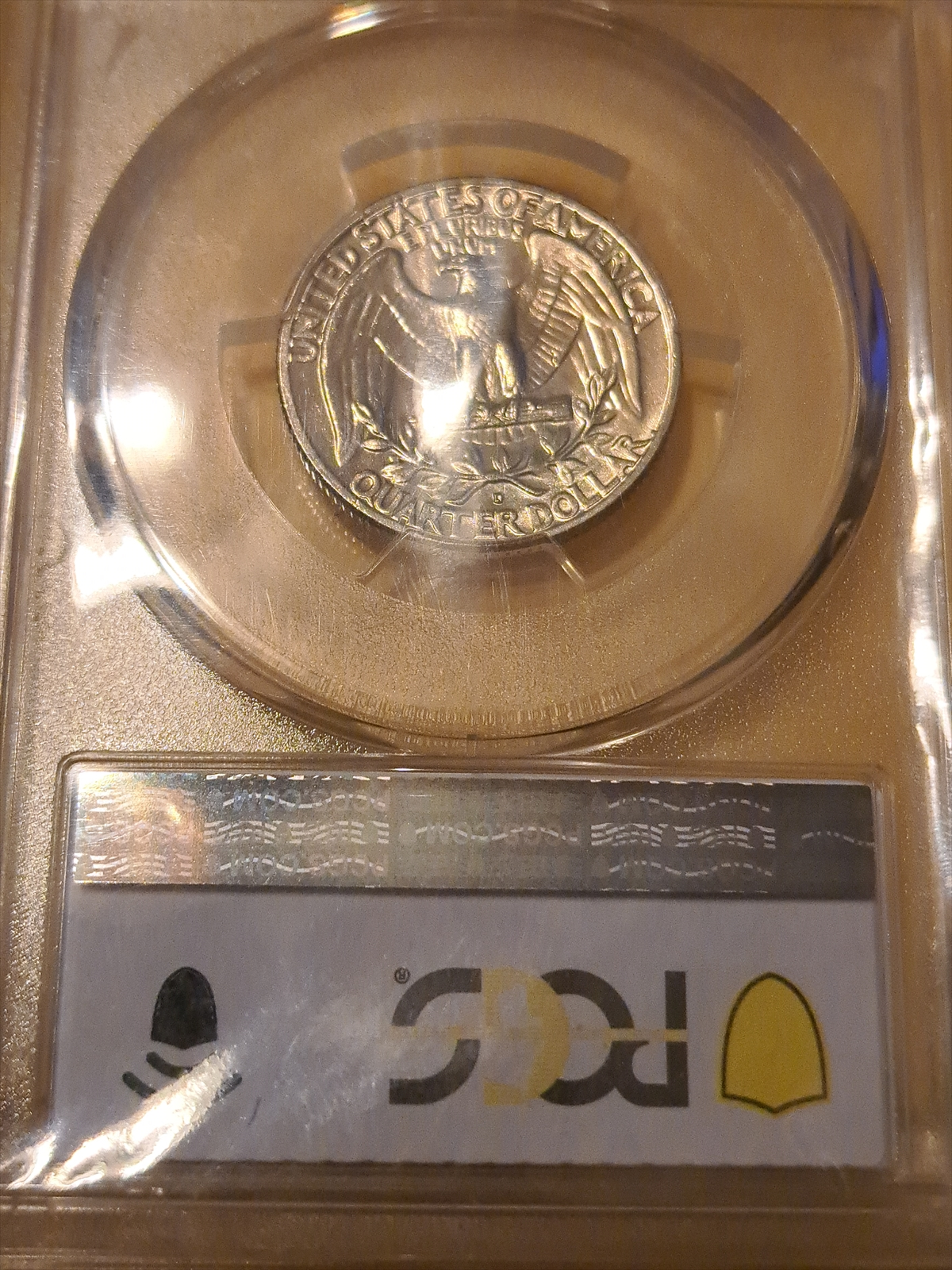
Owner's Comments
Expert Comments
Charles Morgan
The 1963-D Washington Quarter
The circulation of silver coinage in the United States neared its end in the mid-1960s, but not before the U.S. Mint set consecutive production records in a desperate bid to meet surging demand. This shortage was driven not only by the intrinsic value of silver in dimes, quarters, and half dollars but also by a revolution in automated commerce. Americans were increasingly using vending machines to purchase everything from cigarettes and coffee to sandwiches and soda. Simultaneously, pay telephones surged in popularity as sleek glass-and-aluminum booths replaced older wooden models, popping up along city roadsides and throughout the sprawling suburbs.
As millions of coins were fed into these machines, the circulation feedback loop strained under the pressure. No matter how many coins the Mint struck, supply could not keep pace with the needs of a vending-machine economy. Washington Quarter production reflected this crisis: in 1961, mintage surpassed 120 million for the first time; by 1963, it reached nearly 210 million. The Denver Mint bore the brunt of this labor, outproducing Philadelphia every year since 1956. The 1963-D Washington Quarter (#5875) alone saw a mintage of 135,288,184—though even this figure was a mere fraction of the massive 1964-D (#5877) output that would follow.
Historically, numismatic interest has centered on the 1930s issues and the Deep Cameo Proofs of the early 1950s. The 1932-D (#5791) remains the series key, followed closely by the 1932-S (#5792), which actually boasts a lower mintage despite its slightly higher availability. For post-1954 issues, Mint State availability was generally guaranteed by the large-scale production of Uncirculated Coin Sets and the widespread saving of "BU" (Brilliant Uncirculated) rolls.
However, the fabric of these later silver quarters changed due to shifts in Mint packaging. While the cardboard "Double Mint Sets" of the early 1950s often imbued coins with spectacular toning, the Mint switched to flat plastic paks in 1959. Unless these pouches were punctured, they rarely imparted attractive color, making PQ (Premium Quality) toning on 1960s-era quarters much less common.
PCGS certification has given the 1963-D Washington Quarter a market relevance it otherwise wouldn't possess. While a standard Mint State example is easily acquired for $15 to $20, the issue becomes genuinely scarce in PCGS MS67 and above. The typical grade-limiting factors are incidental contact marks; finding a specimen with good eye appeal, a clean obverse effigy, and a mark-free eagle on the reverse is a significant challenge.
* * *
David Hall
Though the third largest mintage of the Washington quarter series at 135 million coins, the 1963-D is not one of the more common issues in the series in Gem condition. It is rarer, for example, than the 1963. Call it a "mid-range" rarity in Gem condition. Like most D Mints of this era, marks and abraisions can be a problem with this issue.
Rarity and Survival Estimates Learn More
| 65 or Better | 13529000 |
| All Grades | 100000 |
| 60 or Better | 10000 |
| 65 or Better | R-1.0 |
| All Grades | R-2.0 |
| 60 or Better | R-3.0 |
| 65 or Better | 35 / 93 TIE |
| All Grades | 87 / 93 TIE |
| 60 or Better | 44 / 93 TIE |
| 65 or Better | 35 / 93 TIE |
| All Grades | 87 / 93 TIE |
| 60 or Better | 44 / 93 TIE |
Condition Census Learn More
 #1 PCGS MS68
As PCGS MS67+ #25380340. Heritage Auctions, November 1, 2013, Lot 3612 – $15,862.50. As PCGS MS68 #42756832. Stack's Bowers, August 31, 2022, Lot 7042 – $24,000; Dell Loy Hansen; "The D.L. Hansen U.S. Quarters Date Set (1796-Present)" (PCGS Set Registry). Vivid burnt-orange, red, and gold toning move inward from the borders, encroaching on the coin’s still-brilliant centers. |
 #2 PCGS MS67+
As PCGS MS67 #25341731. Heritage Auctions, August 5, 2014, Lot 3678 – $1,762.50. As NGC MS67+ #6332336-001. Stack’s Bowers, March 23, 2023, Lot 6327 – $1,560. As PCGS MS67+ #50399256. Stack's Bowers, August 23, 2024, Lot 5108 – $780; Stack's Bowers, August 13, 2025, Lot 97184 – $960. Blast white with isolated flecks of toning along the rim. |
 #2 PCGS MS67+
As PCGS MS67+ #35684576. GreatCollections, July 15, 2018, Lot 597140 - $9,421.88; As PCGS MS67+ #48983711. GreatCollections, March 3, 2024, Lot 1537635 - $3,712.50. As PCGS MS67+ #50834532. GreatCollections, March 2, 2025, Lot 1552826 - $2,766.38. The obverse is awash in gold, green, and magenta toning. A band of olive-gold toning covers the upper right portion of the reverse, leaving the remainder of the side blast white. |
 #2 PCGS MS67+
As NGC MS67* #3051483-015. "The Cherry Tree Collection of Washington Quarters (1932-1998)" GreatCollections, February 5, 2023, Lot 1266321 - $1,125. As PCGS MS67+ #47739246. Stack's Bowers, April 3, 2024, Lot 5381 - $3,120. Crescent rainbow toning that spans the right side of the obverse. Minor contact marks on Washington's bust truncation and on the eagle's right knee. |
 #2 PCGS MS67+
As PCGS MS67 #33107877. GreatCollections, March 4, 2018, Lot 555272 - $613,13. As PCGS MS67+ #42808712. Legend Rare Coin Auctions, December 16, 2021, Lot 105 - $5,757.50; GreatCollections, March 13, 2022, Lot 1125326 - $5,129.99; "The Charlie56 Collection" (PCGS Set Registry). Pearlescent peach patination on both sides. On the right obverse periphery is a band of blue, gold, and orange. |