



S Navaneethan Ramanujam's Coin Album
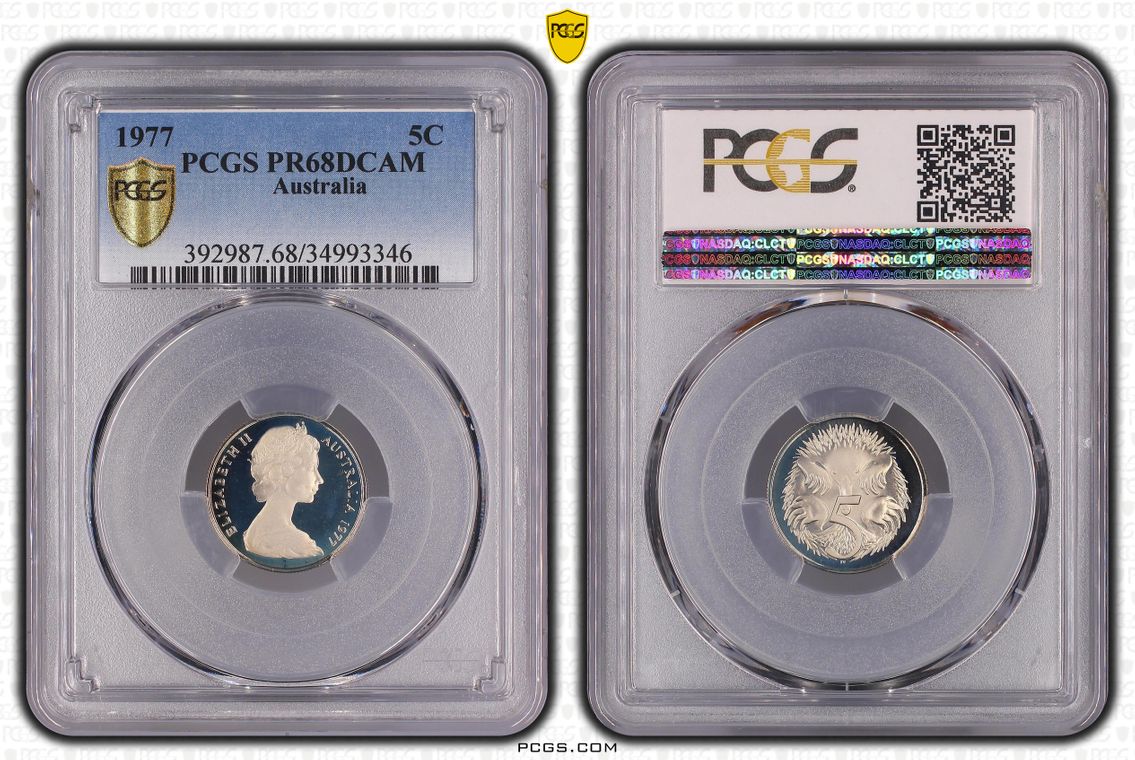
The 5 cent coin was first introduced in 1966 at the commencement of decimal currency in Australia, the five-cent coin was struck with copper-nickel weighting 2.83 grams and 19.41 mm in diameter. The obverse has the Arnold Machin's 2nd portrait of Queen Elizabeth II facing right wearing the Girls of Great Britain and Ireland Tiara. This coin with the portrait of the Queen was replaced in 1985 with Raphael D. Makleouf's 3rd portrait. The reverse has the Short-beaked Echidnas or Spiny Ant Eaters (Tachyglossus aculeatus) and denomination in cents; designer Stuart Devlin mark as "SD" below.
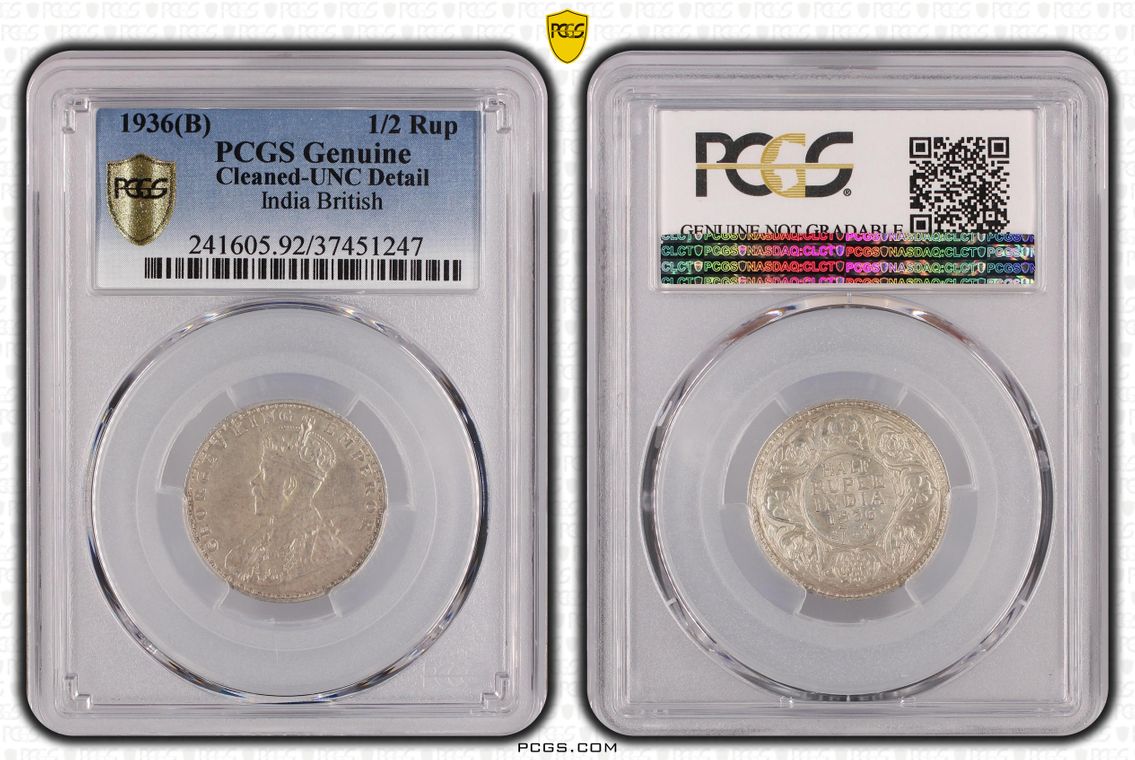
The 1936 Half Rupee coin featuring King George V was struck at the Bombay Mint in silver (.917 fine), weighing 5.83 grams with a diameter of 24 mm. It is catalogued as KM# 522 in the Standard Catalogue of World Coins by Krause Publications. The obverse depicts the crowned bust of King George V (Type II), facing left, with an elephant symbol on the King's robe. The reverse displays the denomination "HALF RUPEE" in English and "EIGHT ANNAS" in Urdu, along with the year of issue, all within a central circle. This circle is enclosed by a toothed border and a decorative wreath composed of roses, thistle, shamrock leaves, and lotus flowers. The Bombay mintmark appears just below the central flower at the bottom of the wreath.
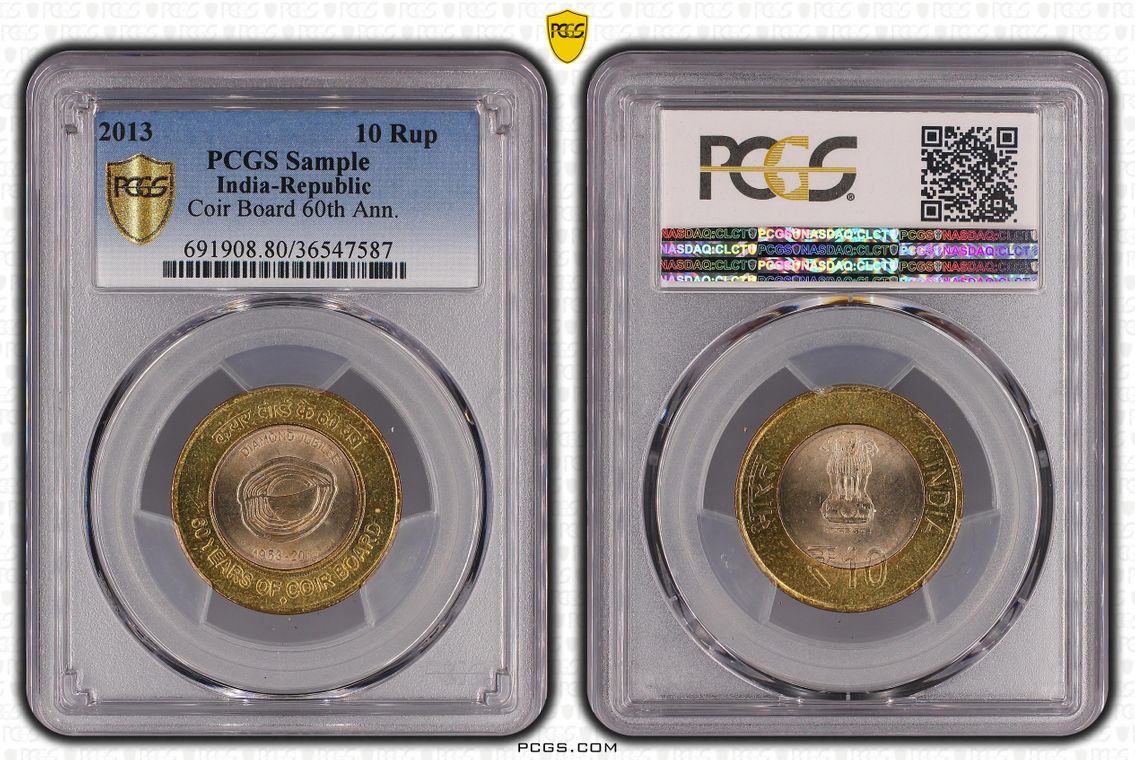
The 10 Rupees coin was released as commemorative issue in 2013 on occasion of Diamond Jubilee-60 Years of Coir Board. The coin is made of Bimetallic copper-nickel center in aluminum bronze ring weighing 7.71 grams with diameter 27 mm and 1.8 mm thickness. The obverse side of the coin has the Ashoka Pillar, and the denomination with the rupee symbol. The reverse side has the Coir Board Logo and the date as 1953-2013 at the center with the legend in Hindi and English. PCGS issued this as Sample Slab few years back at National Numismatics Exhibitions organized by Marudhar Arts.
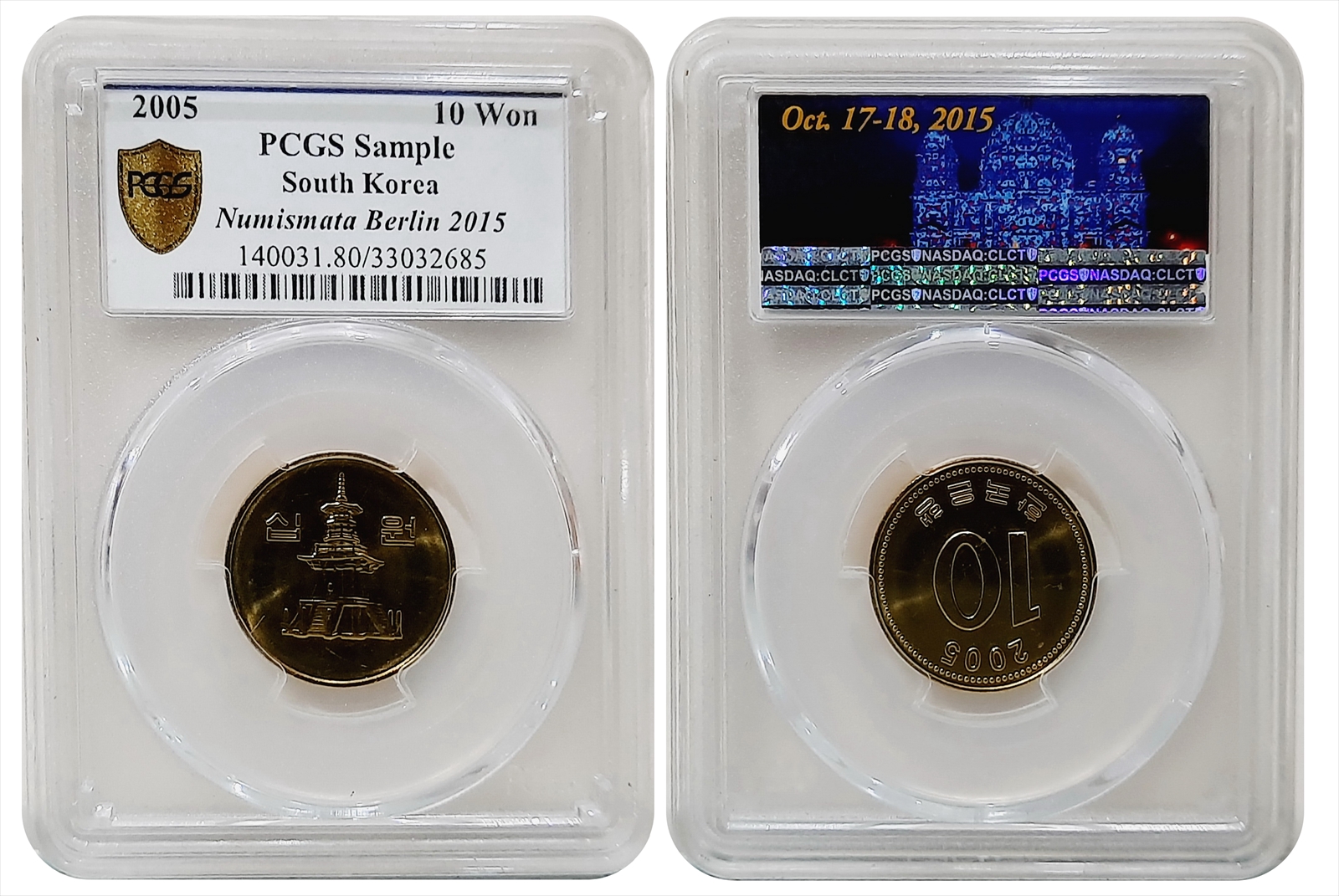
The 10 Won coin type made of Brass weighing 4.06 gms with 22.86 mm diameter was first issued in 1983 and minted till 2006. The obverse has the Dabotap Pagoda, located in Gyeongju, it is one of the national treasures dividing the value in Hangul on both sides. The value and "Bank of Korea" in Hangul at the reverse. The KM-33.2 has the thicker value digits compared to KM-33.1 though the DaeGwangSa catalog and most Korean numismatists don't distinguish a separate variety. PCGS issued this as Sample Slab at Numismata Berlin 2015, which was held on October 17th and 18th 2015. Needless to say, it's the delight to have them in collection.
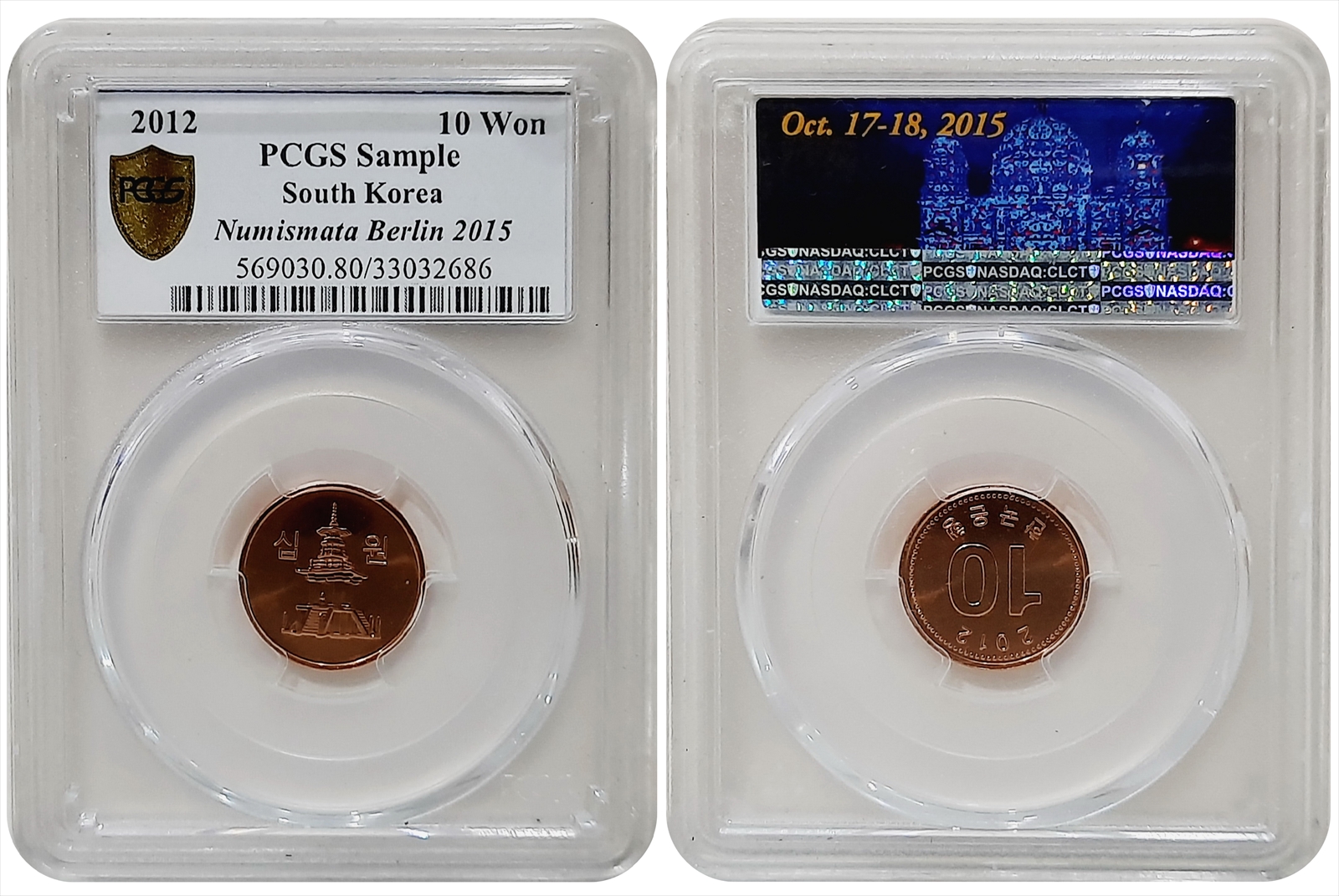
The 10 Won Copper clad Aluminum coin was issued from 2006 to date, weighting 1.22 gms with 18 mm diameter replacing the brass coins (KM-33). The obverse has the Dabotap Pagoda, located in Gyeongju, it is one of the national treasures dividing the value in Hangul on both sides. The value and "Bank of Korea" in Hangul at the reverse. PCGS issued this as Sample Slab at Numismata Berlin 2015, which was held on October 17th and 18th 2015.
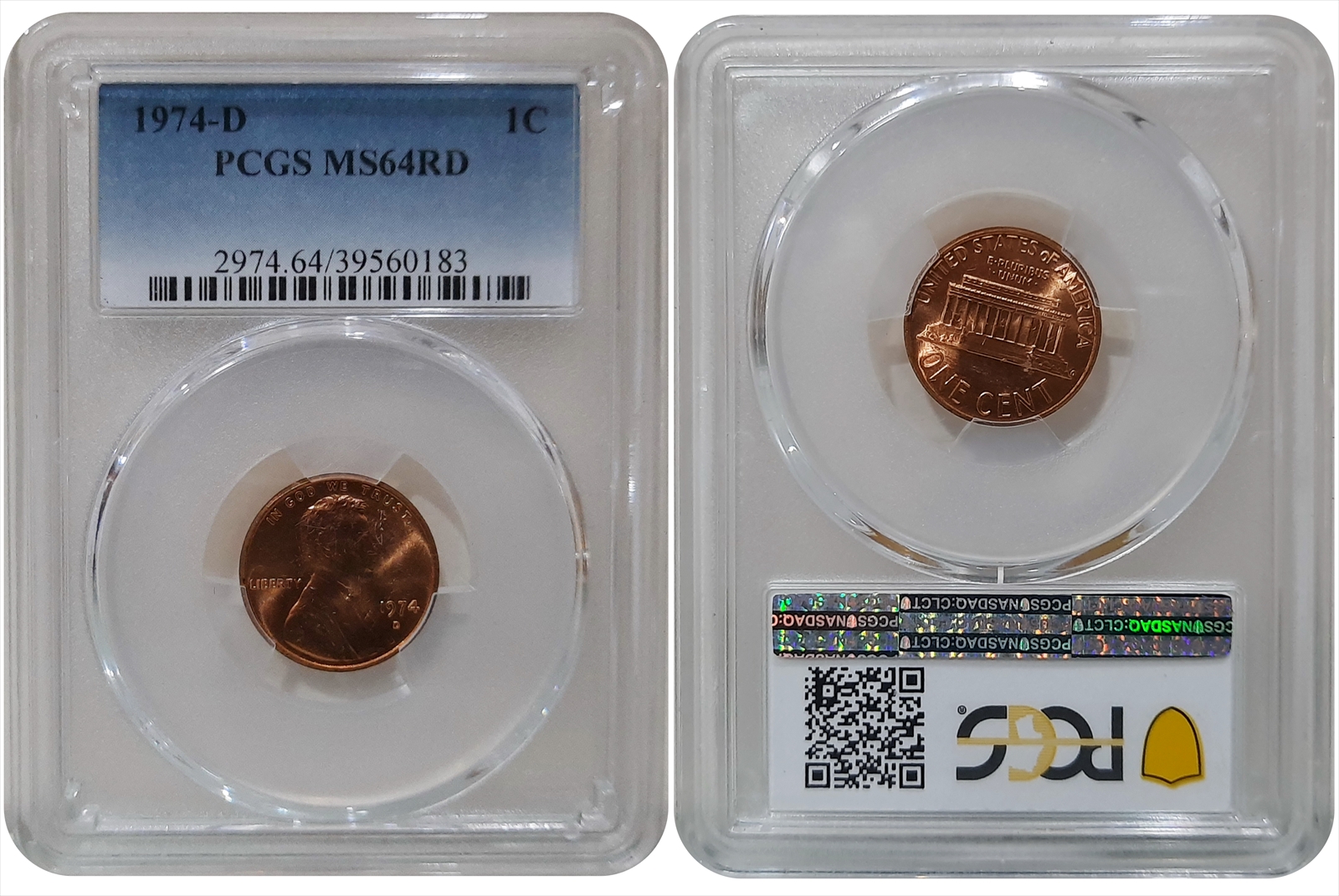
This 1974 Lincoln Memorial Cent is from Denver Mint, United States. The coins from 1959 to 1982 was struck with Bronze weighting 3.11 grams and 19 mm in diameter. The Lincoln Memorial reverse design was introduced in 1959 and continued till 2008.
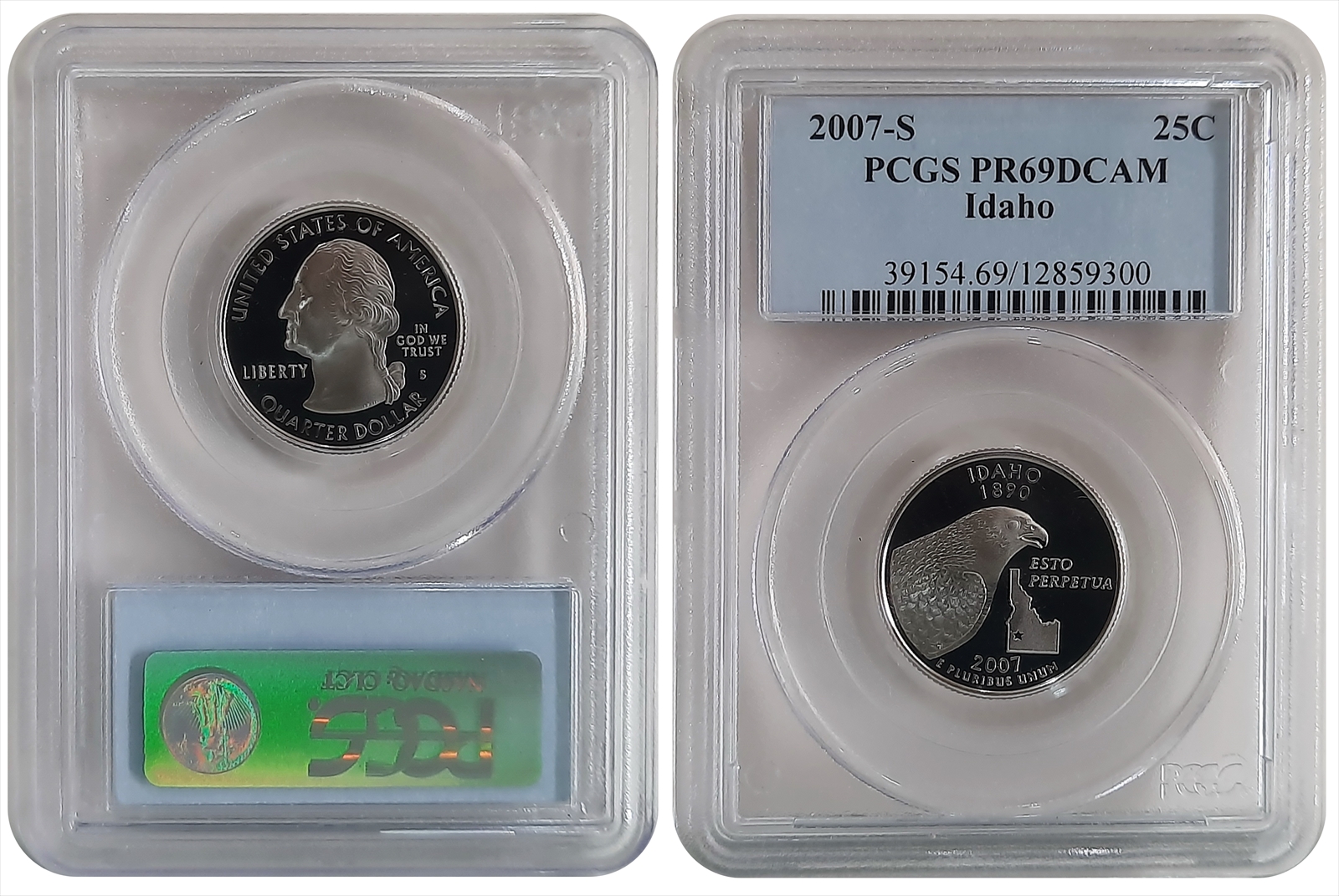
This Washington quarter coin is from 2007 featuring Idaho State at the reverse struck by San Francisco Mint, United States under 50 State Quarters Program. Launched in 1999, the United States Mint’s 50 State Quarters Program was a 10-year initiative that honored each of the nation’s states in the order that they ratified the Constitution or were admitted into the Union. Each quarter was produced for about 10 weeks and never got produced again. State designs are displayed on the reverse (tails) of the quarters, while the obverse design has the George Washington. But, to accommodate state designs on the reverse, the words “United States of America,” “Quarter Dollar,” “Liberty,” and “In God We Trust” were made to appear on the obverse.
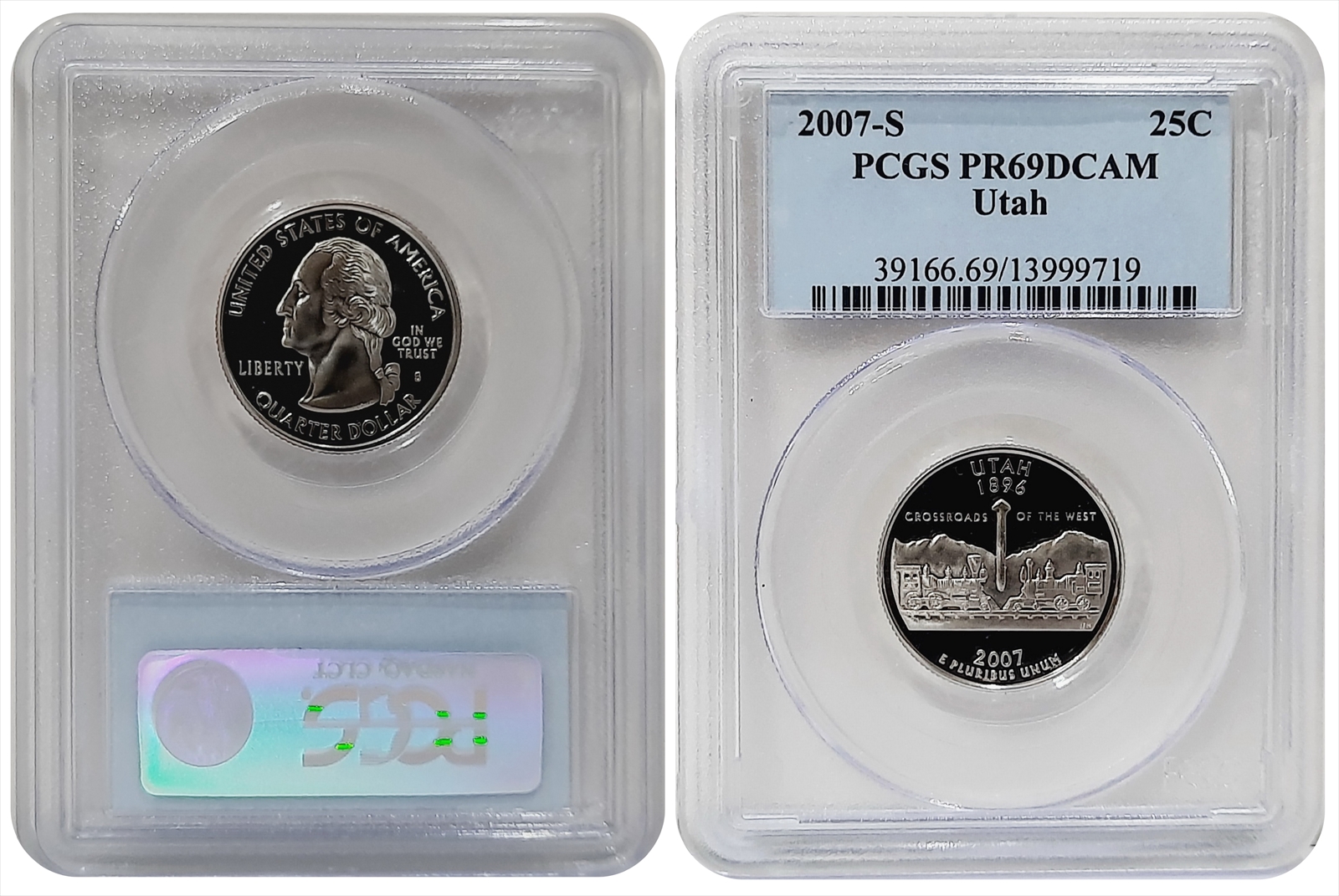
This Washington quarter coin is from 2007 featuring Utah State at the reverse struck by San Francisco Mint, United States under 50 State Quarters Program. Launched in 1999, the United States Mint’s 50 State Quarters Program was a 10-year initiative that honored each of the nation’s states in the order that they ratified the Constitution or were admitted into the Union. Each quarter was produced for about 10 weeks and never got produced again. State designs are displayed on the reverse (tails) of the quarters, while the obverse design has the George Washington. But, to accommodate state designs on the reverse, the words “United States of America,” “Quarter Dollar,” “Liberty,” and “In God We Trust” were made to appear on the obverse.
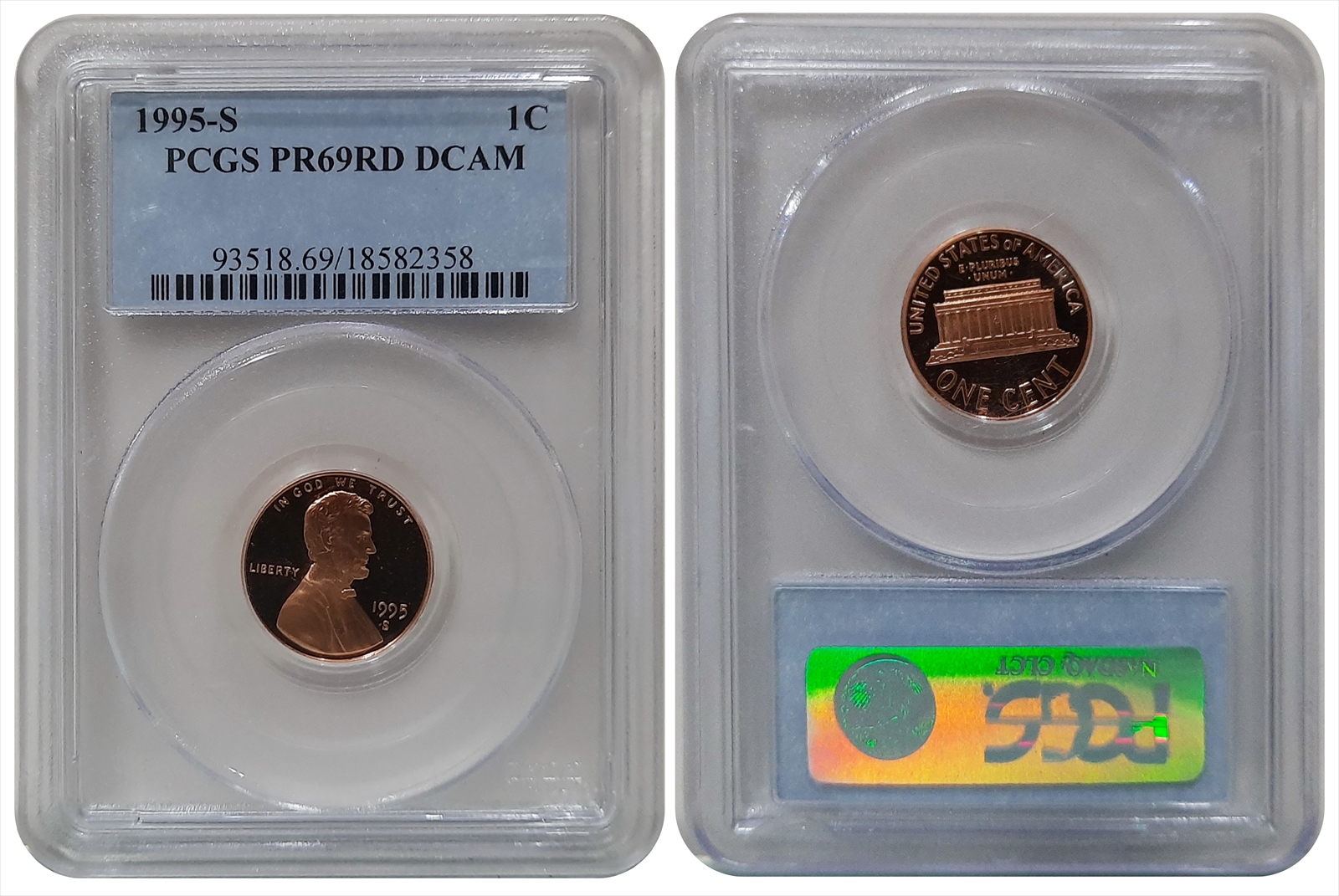
This 1995 Lincoln Memorial Cent from San Francisco Mint, United States. The coins was struck with Copper plated zinc weighting 2.5 grams and 19 mm in diameter compared to earlier ones weighting 3.11 grams. The Lincoln Memorial reverse design was introduced in 1959 and continued till 2008.
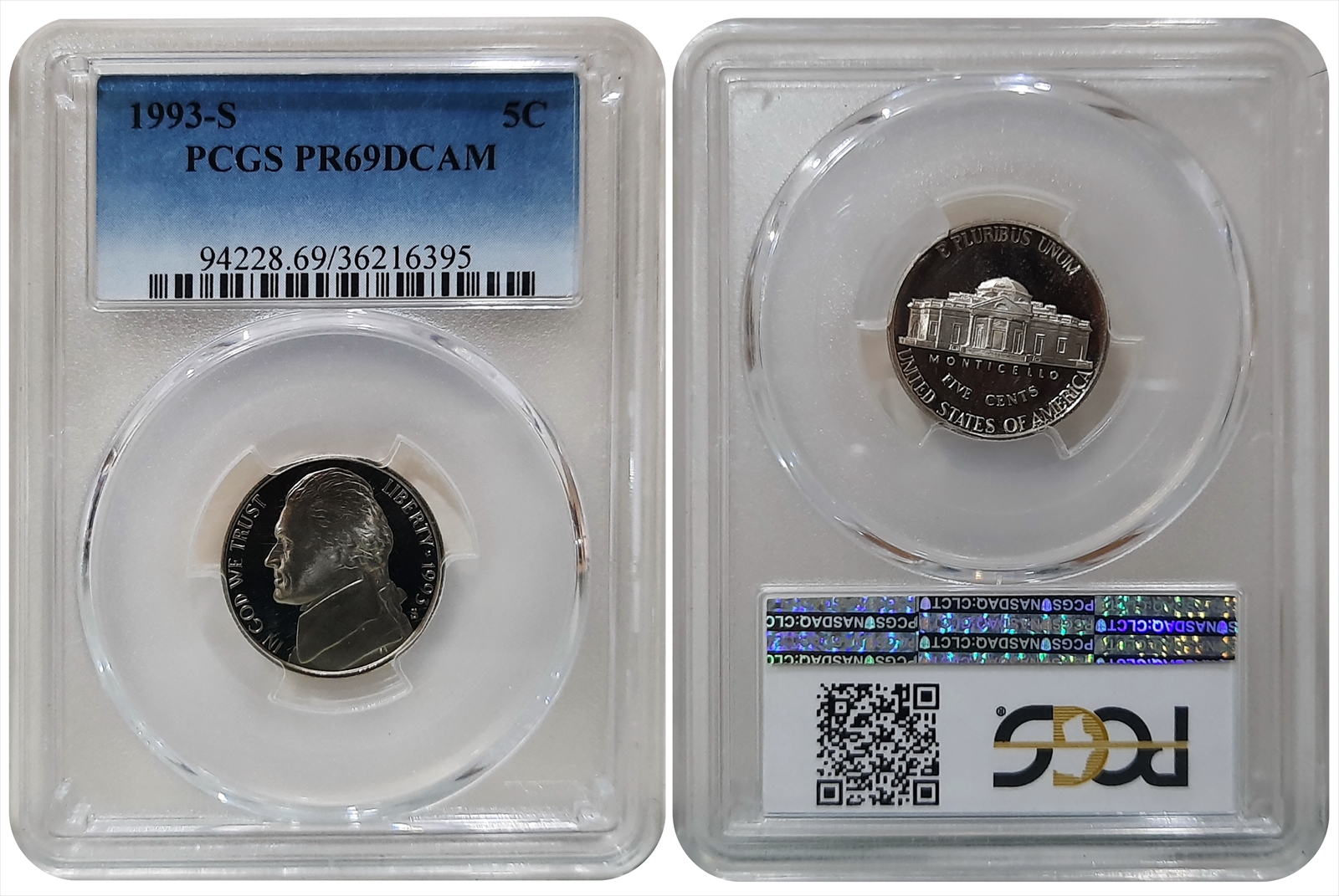
This Jefferson Nickel is from 1993 struck at San Francisco Mint, United States. The Jefferson nickel has been the five-cent coin struck by the United States Mint since 1938, when it replaced the Buffalo nickel. From 1938 until 2004, the copper-nickel coin's obverse featured 1st portrait of third U.S. President Thomas Jefferson by artist Felix Schlag.

This Jefferson Nickel is from 1993 struck at San Francisco Mint, United States. The Jefferson nickel has been the five-cent coin struck by the United States Mint since 1938, when it replaced the Buffalo nickel. From 1938 until 2004, the copper-nickel coin's obverse featured 1st portrait of third U.S. President Thomas Jefferson by artist Felix Schlag.
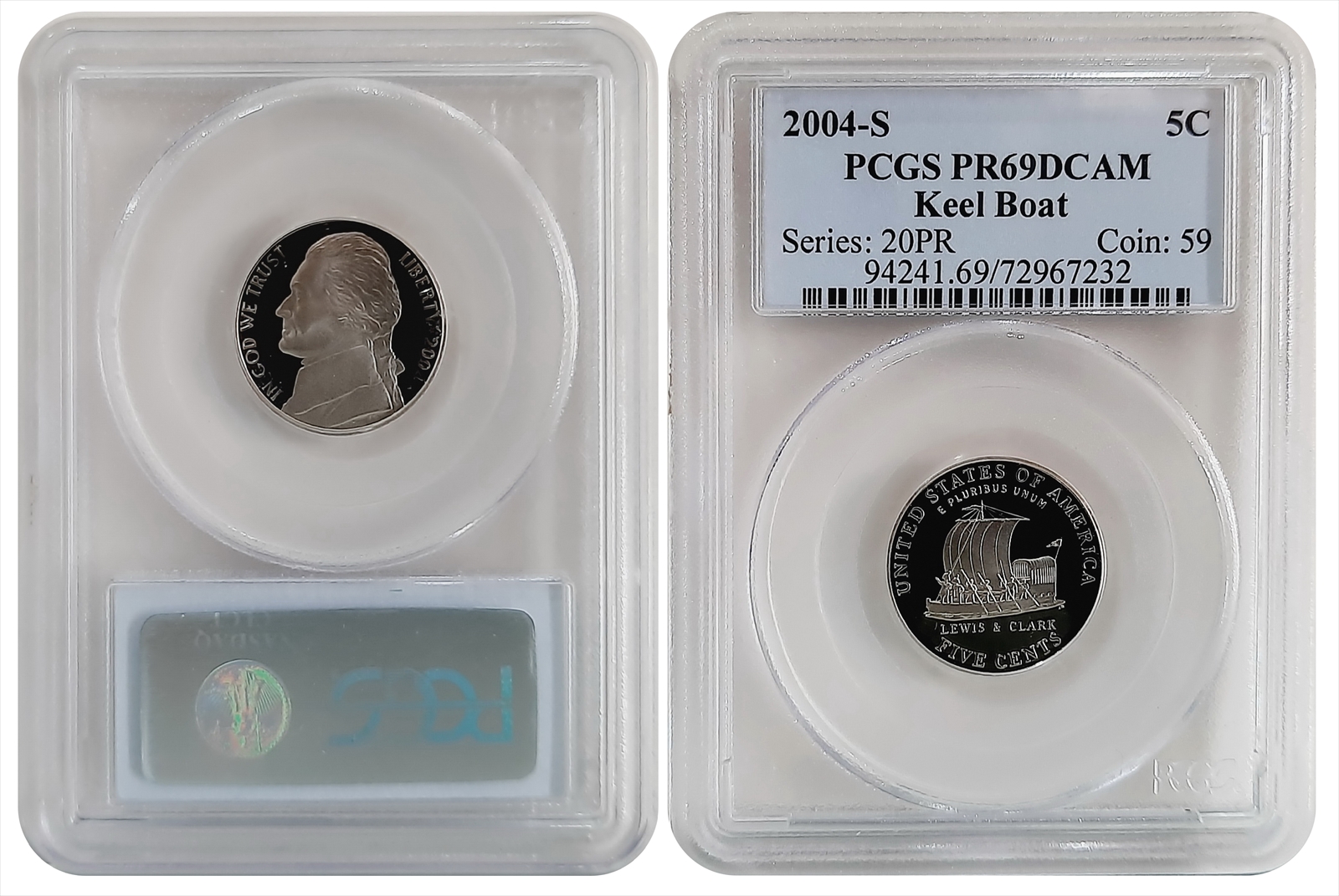
This Jefferson Nickel five-cent coin is from 2004 struck by San Francisco Mint, United States. In 2004 and 2005, the U.S. Mint commemorated the bicentennials of the Lewis and Clark expedition with the Westward Journey Nickel Series. The Keelboat Nickel is the second of four coins in the series.

The 2010-S Hot Springs National Park Quarter was the first release of 2010 and the inaugural issue in the America the Beautiful Quarters Program. The obverse features the classic portrait of George Washington, first introduced in 1932. The reverse depicts the historic façade of the Hot Springs National Park headquarters and administration building, with a thermal fountain in the foreground, representing the natural hot springs that have attracted visitors for centuries. The inscriptions include Hot Springs, Arkansas, 2010, and E Pluribus Unum.

The 2010-S Yellowstone National Park Quarter was the second release of 2010 and the second overall issue in the America the Beautiful Quarters Program. The obverse features the classic portrait of George Washington, first introduced in 1932. The reverse depicts the iconic Old Faithful geyser erupting in the foreground, with a mature American bison standing nearby, symbolizing the park's remarkable geothermal features and abundant wildlife. The inscriptions include Yellowstone, Wyoming, 2010, and E Pluribus Unum.

The 2010-S Yosemite National Park Quarter was the third release of 2010 and the third overall issue in the America the Beautiful Quarters Program. The obverse features the classic portrait of George Washington, first introduced in 1932. The reverse depicts the iconic granite monolith El Capitan, rising prominently above the Yosemite Valley floor, symbolizing the park's breathtaking natural beauty and its significance as one of America's most celebrated national parks. The inscriptions include Yosemite, California, 2010, and E Pluribus Unum.

The 2010-S Grand Canyon National Park Quarter was the fourth release of 2010 and the fourth overall issue in the America the Beautiful Quarters Program. The obverse features the classic portrait of George Washington, first introduced in 1932. The reverse depicts the iconic Granaries above the Nankoweap Delta on the North Rim of the Grand Canyon, overlooking the Colorado River below, symbolizing the park's dramatic landscapes and rich cultural heritage. The inscriptions include Grand Canyon, Arizona, 2010, and E Pluribus Unum.

The 2010-S Mount Hood National Forest Quarter was the fifth and final release of 2010 and the fifth overall issue in the America the Beautiful Quarters Program. The obverse features the classic portrait of George Washington, first introduced in 1932. The reverse depicts Mount Hood towering in the background, with Lost Lake in the foreground, reflecting the mountain's majestic peak and highlighting the scenic beauty of one of Oregon's most treasured natural landscapes. The inscriptions include Mount Hood, Oregon, 2010, and E Pluribus Unum.

The 2011-S Gettysburg National Military Park Quarter was the fifth release of 2011 and the 5th overall issue in the America the Beautiful Quarters Program. The obverse features the classic portrait of George Washington, first introduced in 1932. The reverse depicts the 72nd Pennsylvania Infantry Monument standing on the battlefield preserved at Gettysburg National Military Park, commemorating the soldiers who fought during the pivotal Battle of Gettysburg. The inscriptions include Gettysburg, Pennsylvania, 2011, and E Pluribus Unum.

The 2011-S Glacier National Park Quarter was the seventh release of 2011 and the 7th overall issue in the America the Beautiful Quarters Program. The obverse features the classic portrait of George Washington, first introduced in 1932. The reverse depicts a mountain goat standing on a rocky ledge with the scenic peaks of Glacier National Park in the background, representing the rugged wilderness and iconic wildlife of the park. The inscriptions include Glacier, Montana, 2011, and E Pluribus Unum.

The 2011-S Olympic National Park Quarter was the eighth release of 2011 and the 8th overall issue in the America the Beautiful Quarters Program. The obverse features the classic portrait of George Washington, first introduced in 1932. The reverse depicts a Roosevelt elk standing on the banks of the Hoh River with the towering peaks of Olympic National Park in the background, representing the rich wildlife and diverse landscapes of the park. The inscriptions include Olympic, Washington, 2011, and E Pluribus Unum.

The 2011-S Vicksburg National Military Park Quarter was the ninth release of 2011 and the 9th overall issue in the America the Beautiful Quarters Program. The obverse features the classic portrait of George Washington, first introduced in 1932. The reverse depicts the USS Cairo, a Union ironclad gunboat that played a significant role during the American Civil War, commemorating the history preserved at Vicksburg National Military Park. The inscriptions include Vicksburg, Mississippi, 2011, and E Pluribus Unum.

The 2011-S Chickasaw National Recreation Area Quarter was the sixth release of 2011 and the 6th overall issue in the America the Beautiful Quarters Program. The obverse features the classic portrait of George Washington, first introduced in 1932. The reverse depicts the Lincoln Bridge spanning Rock Creek within Chickasaw National Recreation Area, highlighting one of the historic and scenic features of the area. The inscriptions include Chickasaw, Oklahoma, 2011, and E Pluribus Unum.
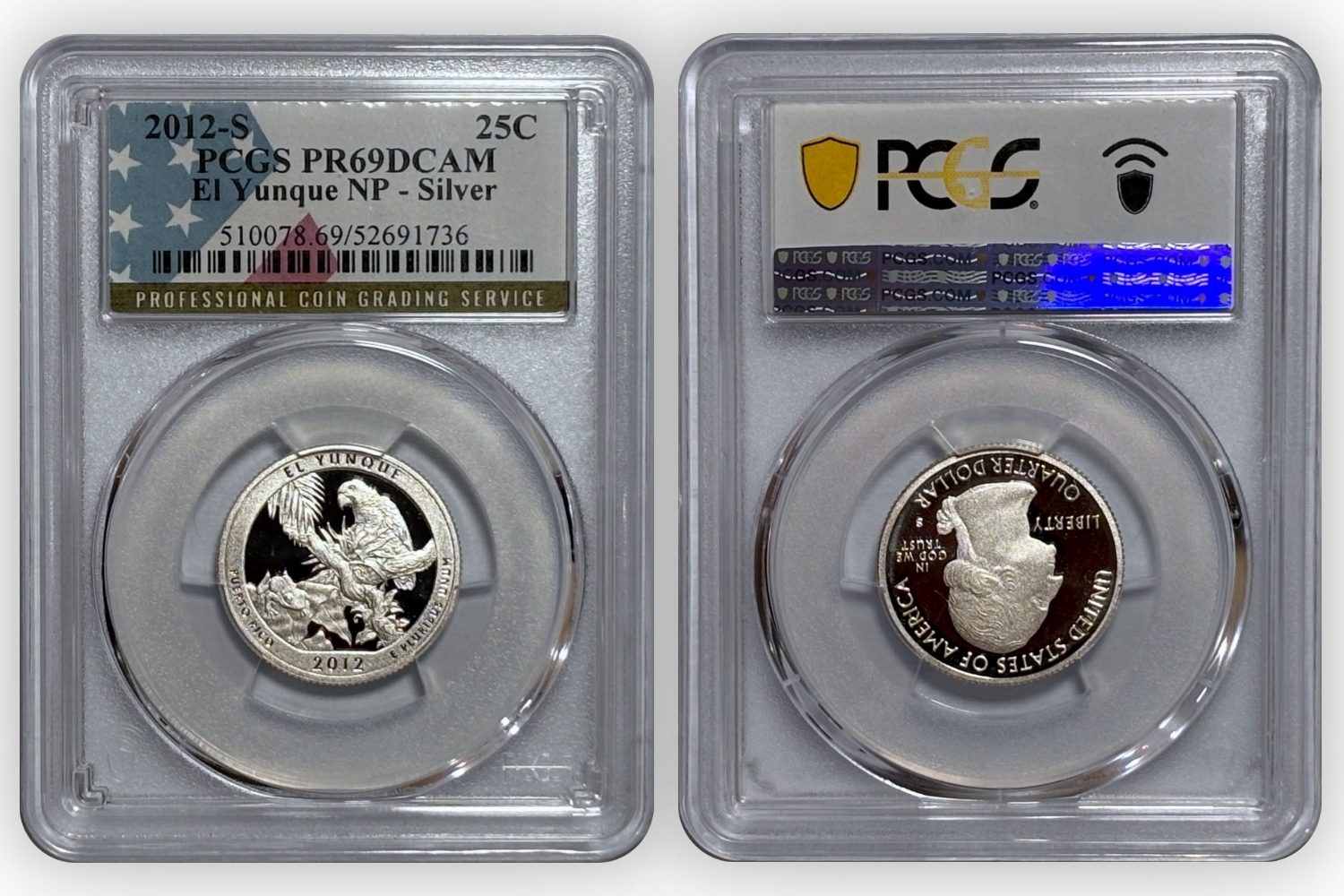
The 2012 El Yunque Quarter was the first release of 2012 and the 11th overall issue in the America the Beautiful Quarters Program. The obverse features the familiar bust of George Washington, originally introduced in 1932 and the reverse depicts a Puerto Rican Parrot and a Coqui tree frog, along with an epiphyte plant and lush tropical flora in the background. The inscriptions include El Yunque, Puerto Rico, 2012, and E Pluribus Unum.
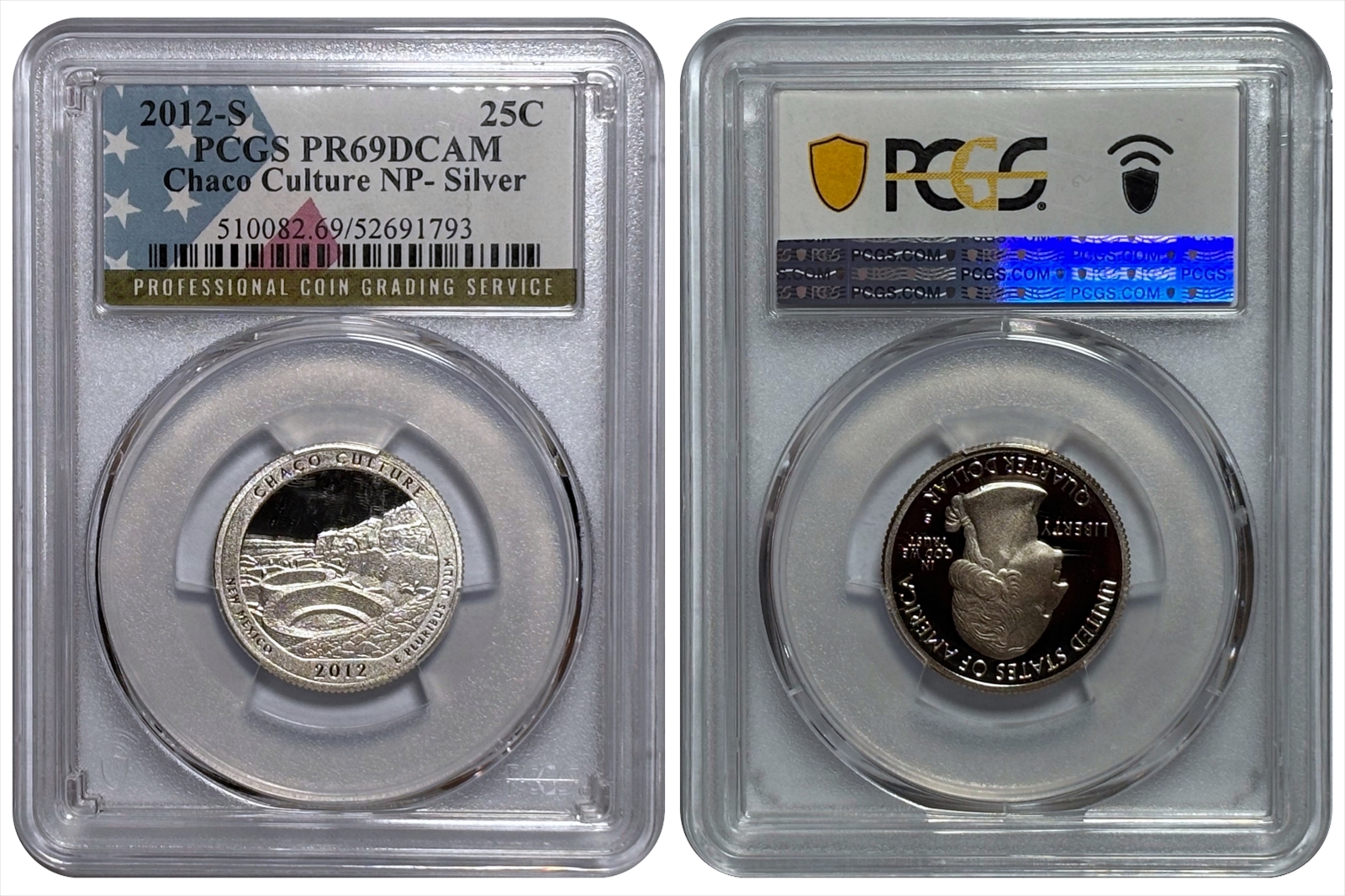
The 2012 Chaco Culture National Historical Park Quarter was the second release of 2012 and the 12th overall issue in the America the Beautiful Quarters Program. The obverse features the classic portrait of George Washington, first introduced in 1932. The reverse depicts the Great Kiva of Chetro Ketl, a large circular depression outlined by a stone wall, with a collection of rectangular stone foundations and smaller circles of stone. A great sandstone cliff towers in the background, and beneath the cliff are other stone foundations that are larger and higher. The inscriptions include Chaco Culture, New Mexico, 2012, and E Pluribus Unum.
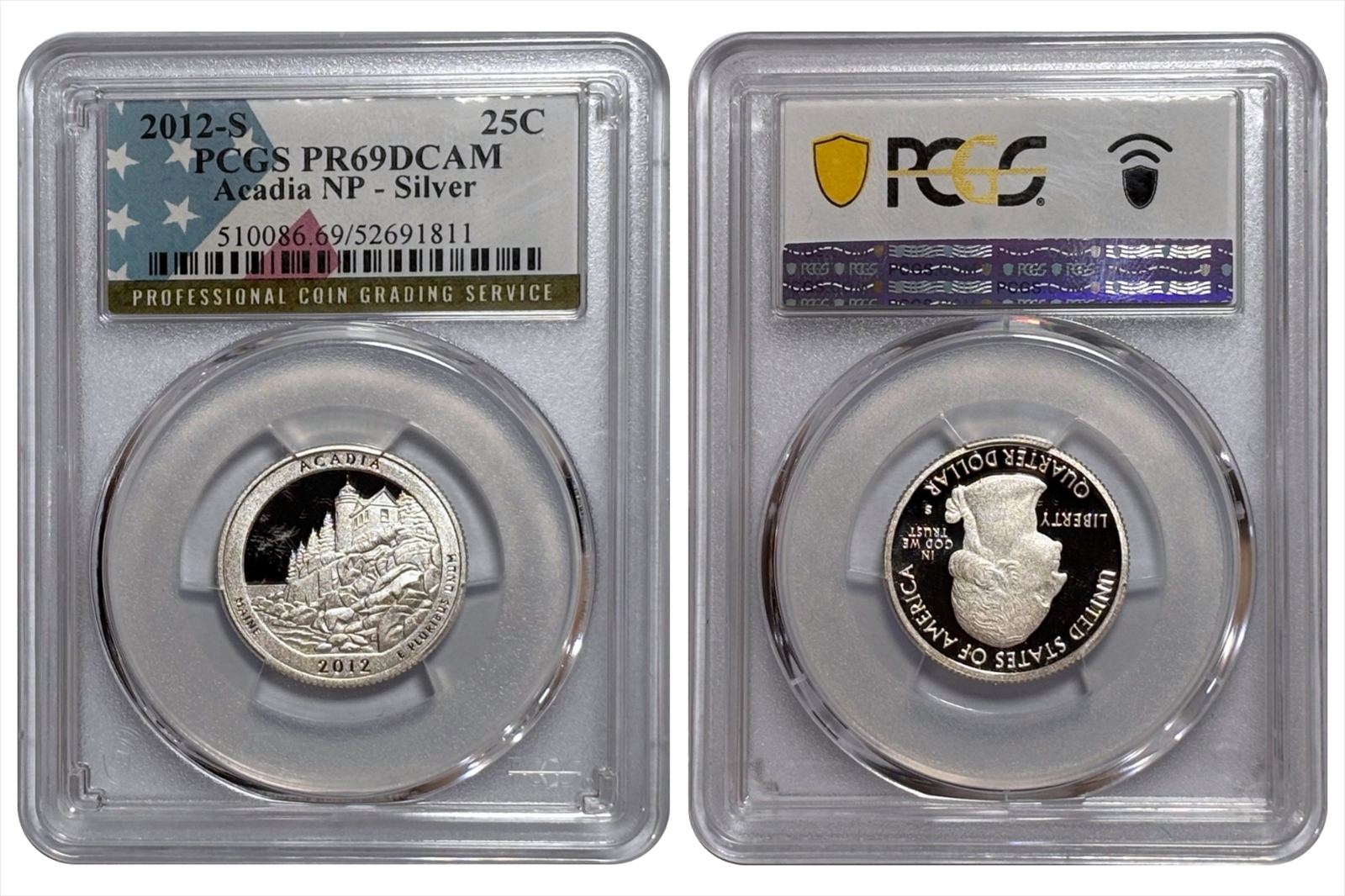
The 2012 Acadia Quarter was the second release of 2012 and the 12th overall issue in the America the Beautiful Quarters Program. The obverse features the classic portrait of George Washington, first introduced in 1932. The reverse showcases the Bass Harbor Head Lighthouse, with the rugged Maine coastline, pine trees, and the Atlantic Ocean in the background. The inscriptions include Acadia, Maine, 2012, and E Pluribus Unum.
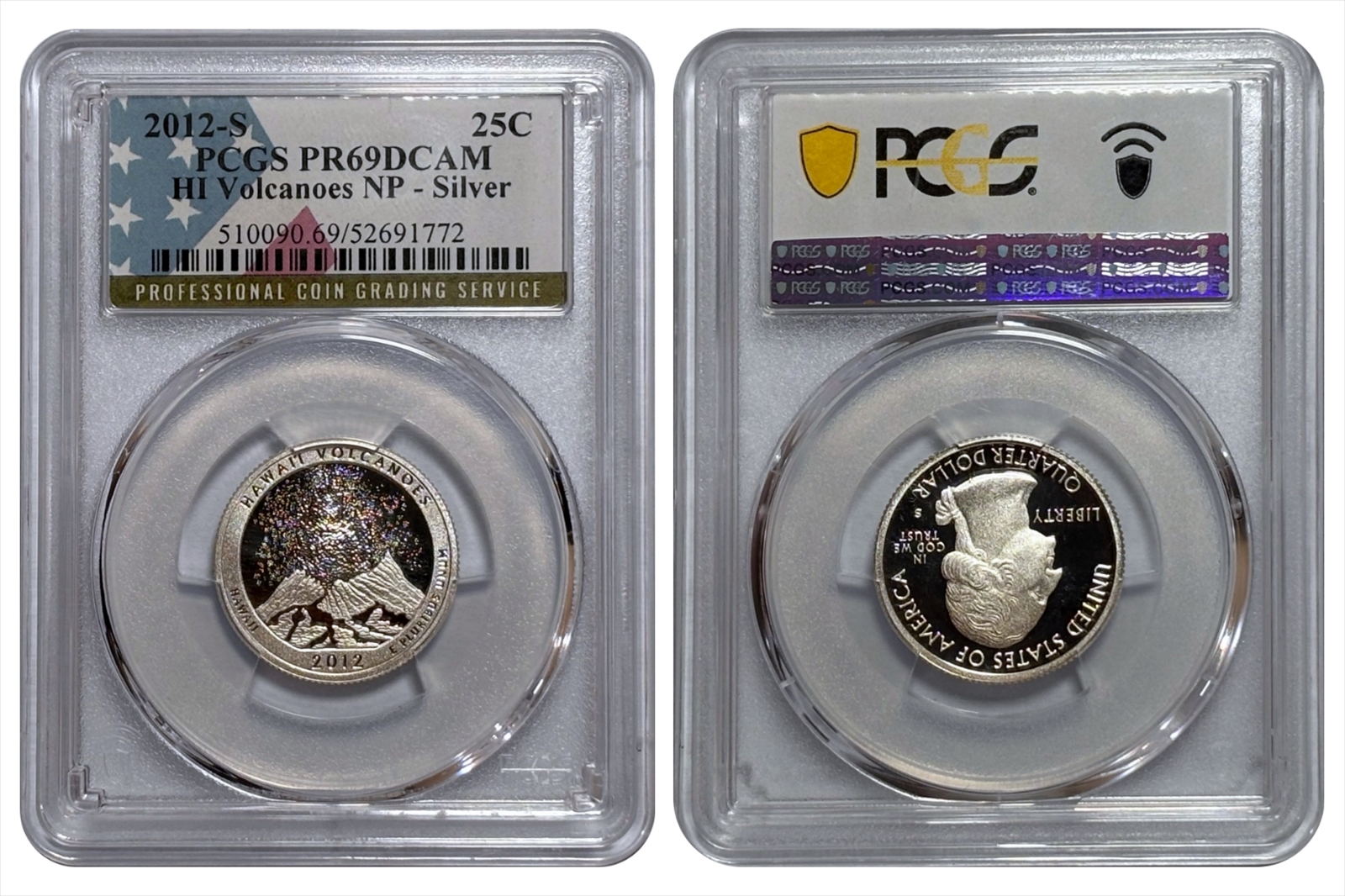
The 2012 Hawai‘i Volcanoes Quarter was the third release of 2012 and the 13th overall issue in the America the Beautiful Quarters Program. The obverse features the classic portrait of George Washington, first introduced in 1932. The reverse depicts an erupting Kilauea Volcano, with lava flowing dramatically from its crater. The inscriptions include Hawai‘i Volcanoes, Hawaii, 2012, and E Pluribus Unum.
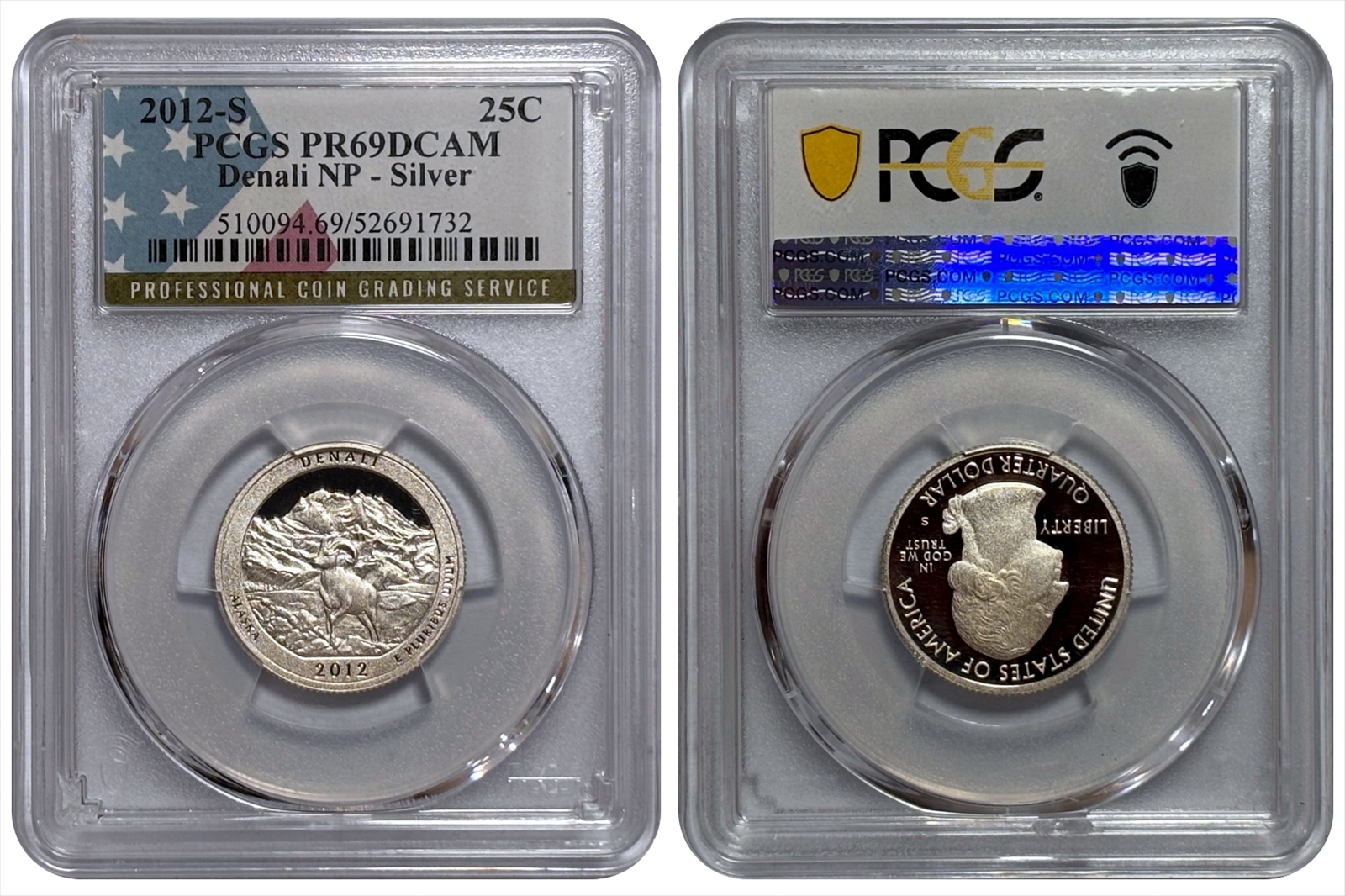
The 2012 Denali Quarter was the fifth release of 2012 and the 15th overall issue in the America the Beautiful Quarters Program. The obverse features the classic portrait of George Washington, first introduced in 1932. The reverse depicts a Dall sheep with Mount McKinley rising in the background. The inscriptions include Denali, Alaska, 2012, and E Pluribus Unum.

The 2013-S White Mountain National Forest Quarter was the first release of 2013 and the 16th overall issue in the America the Beautiful Quarters Program. The obverse features the classic portrait of George Washington, first introduced in 1932. The reverse depicts a hiker standing beside a stone wall along a forest trail, representing the scenic beauty and recreational opportunities of White Mountain National Forest. The inscriptions include White Mountain, New Hampshire, 2013, and E Pluribus Unum.

The 2013-S Perry’s Victory and International Peace Memorial Quarter was the third release of 2013 and the 18th overall issue in the America the Beautiful Quarters Program. The obverse features the classic portrait of George Washington, first introduced in 1932. The reverse depicts the towering Doric column of Perry's Victory and International Peace Memorial, commemorating Oliver Hazard Perry’s victory during the Battle of Lake Erie and honoring the lasting peace between the United States, Great Britain, and Canada. The inscriptions include Perry’s Victory, Ohio, 2013, and E Pluribus Unum.

The 2013-S Great Basin National Park Quarter was the fifth and final release of 2013 and the 20th overall issue in the America the Beautiful Quarters Program. The obverse features the classic portrait of George Washington, first introduced in 1932. The reverse depicts a lone bristlecone pine tree with the rugged peaks of Great Basin National Park in the background and a star-filled sky featuring the Milky Way, highlighting the park’s ancient trees and exceptionally dark night skies. The inscriptions include Great Basin, Nevada, 2013, and E Pluribus Unum.

The 2013-S Fort McHenry National Monument and Historic Shrine Quarter was the fourth release of 2013 and the 19th overall issue in the America the Beautiful Quarters Program. The obverse features the classic portrait of George Washington, first introduced in 1932. The reverse depicts Fort McHenry during the Battle of Baltimore, with the 15-star, 15-stripe Star-Spangled Banner flag flying prominently above the fort, symbolizing the defense that inspired Francis Scott Key to write what later became the United States national anthem. The inscriptions include Fort McHenry, Maryland, 2013, and E Pluribus Unum.

The 2013-S Mount Rushmore National Memorial Quarter was the second release of 2013 and the 17th overall issue in the America the Beautiful Quarters Program. The obverse features the classic portrait of George Washington, first introduced in 1932. The reverse depicts a worker sculpting the face of Thomas Jefferson at Mount Rushmore National Memorial, highlighting the craftsmanship involved in creating the monumental sculpture. The inscriptions include Mount Rushmore, South Dakota, 2013, and E Pluribus Unum.

The 2014-S Great Smoky Mountains National Park Quarter was the first release of 2014 and the 21st overall issue in the America the Beautiful Quarters Program. The obverse features the classic portrait of George Washington, first introduced in 1932. The reverse depicts a historic log cabin with a split-rail fence in the foreground and the forested mountains rising in the background, representing the natural beauty and cultural heritage preserved at Great Smoky Mountains National Park. The inscriptions include Great Smoky Mountains, Tennessee, 2014, and E Pluribus Unum.

The 2014-S Shenandoah National Park Quarter was the second release of 2014 and the 22nd overall issue in the America the Beautiful Quarters Program. The obverse features the classic portrait of George Washington, first introduced in 1932. The reverse depicts a hiker standing at Little Stony Man summit overlooking the scenic landscape of Shenandoah National Park, with birds soaring above the forested valleys and mountains. The inscriptions include Shenandoah, Virginia, 2014, and E Pluribus Unum.

The 2014-S Arches National Park Quarter was the third release of 2014 and the 23rd overall issue in the America the Beautiful Quarters Program. The obverse features the classic portrait of George Washington, first introduced in 1932. The reverse depicts the iconic Delicate Arch rising prominently against the rugged desert landscape of Arches National Park, symbolizing one of the most recognizable natural landmarks in the United States. The inscriptions include Arches, Utah, 2014, and E Pluribus Unum.

The 2014-S Great Sand Dunes National Park Quarter was the fourth release of 2014 and the 24th overall issue in the America the Beautiful Quarters Program. The obverse features the classic portrait of George Washington, first introduced in 1932. The reverse depicts a father and son playing in the sand beside Medano Creek, with the towering dunes and the Sangre de Cristo Mountains in the background, representing the distinctive landscape of Great Sand Dunes National Park and Preserve. The inscriptions include Great Sand Dunes, Colorado, 2014, and E Pluribus Unum.

The 2014-S Everglades National Park Quarter was the fifth and final release of 2014 and the 25th overall issue in the America the Beautiful Quarters Program. The obverse features the classic portrait of George Washington, first introduced in 1932. The reverse depicts an anhinga with outstretched wings perched on a willow tree, along with a roseate spoonbill in flight, representing the diverse birdlife of Everglades National Park. The inscriptions include Everglades, Florida, 2014, and E Pluribus Unum.

The 2017-S Effigy Mounds Quarter was the second release of 2017 and the 37th overall issue in the America the Beautiful Quarters Program. The obverse features the classic portrait of George Washington, first introduced in 1932. The reverse depicts an aerial view of a group of bear-shaped effigy mounds, representing the sacred earthworks preserved at Effigy Mounds National Monument. These prehistoric mounds, constructed by Native American cultures, reflect their spiritual connection with the natural world. The inscriptions include Effigy Mounds, Iowa, 2017, and E Pluribus Unum.

The 2017-S Frederick Douglass Quarter was the first release of 2017 and the 36th overall issue in the America the Beautiful Quarters Program. The obverse features the classic portrait of George Washington, first introduced in 1932. The reverse depicts Frederick Douglass seated at a writing desk in his home at Frederick Douglass National Historic Site, symbolizing his lifelong work as an author, abolitionist, and advocate for civil rights. The inscriptions include Frederick Douglass, District of Columbia, 2017, and E Pluribus Unum.

The 2017-S Ozark National Scenic Riverways Quarter was the third release of 2017 and the 38th overall issue in the America the Beautiful Quarters Program. The obverse features the classic portrait of George Washington, first introduced in 1932. The reverse depicts Alley Mill, a historic red mill situated along the spring-fed waters of Ozark National Scenic Riverways, with the surrounding natural landscape reflecting the region’s scenic beauty and heritage. The inscriptions include Ozark Riverways, Missouri, 2017, and E Pluribus Unum.

The 2017-S Ellis Island Quarter was the fourth release of 2017 and the 39th overall issue in the America the Beautiful Quarters Program. The obverse features the classic portrait of George Washington, first introduced in 1932. The reverse depicts an immigrant family approaching Ellis Island, with the Statue of Liberty visible in the background, symbolizing hope and opportunity for millions who arrived in the United States seeking a new life. The inscriptions include Ellis Island, New Jersey, 2017, and E Pluribus Unum.

The 2017-S George Rogers Clark Quarter was the fifth and final release of 2017 and the 40th overall issue in the America the Beautiful Quarters Program. The obverse features the classic portrait of George Washington, first introduced in 1932. The reverse depicts Lieutenant Colonel George Rogers Clark leading his troops through the flooded plains approaching Fort Sackville during the Revolutionary War campaign, commemorating the events preserved at George Rogers Clark National Historical Park. The inscriptions include George Rogers Clark, Indiana, 2017, and E Pluribus Unum.
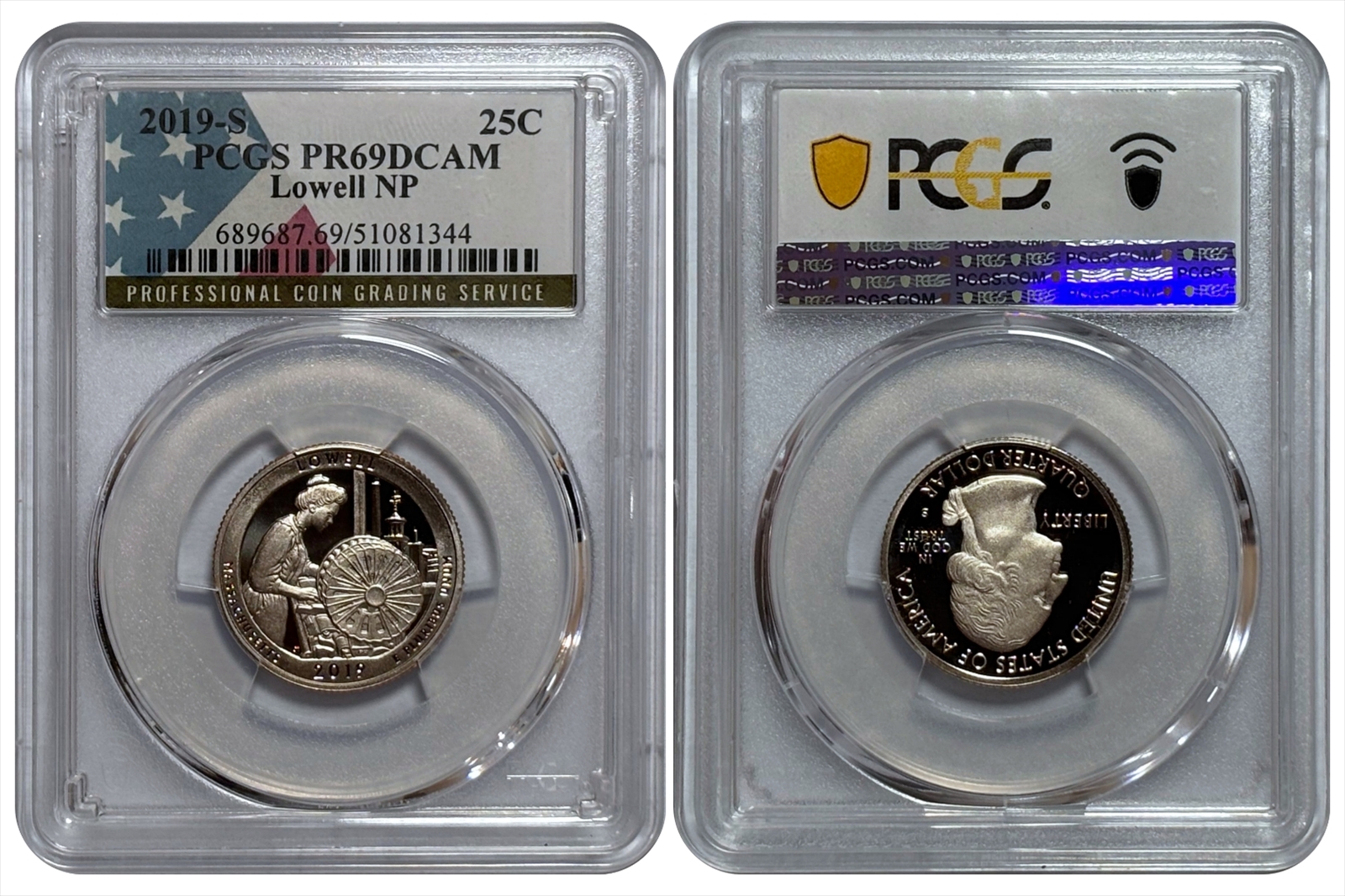
The 2019 Lowell National Historical Park Quarter was the first release of 2019 and the 46th overall issue in the America the Beautiful Quarters Program. The obverse features the classic portrait of George Washington, first introduced in 1932. The reverse depicts a mill girl working at a power loom, with a view of Lowell, including the Boott Mill clock tower, seen through the window. The inscriptions include Lowell, Massachusetts, 2019, and E Pluribus Unum.
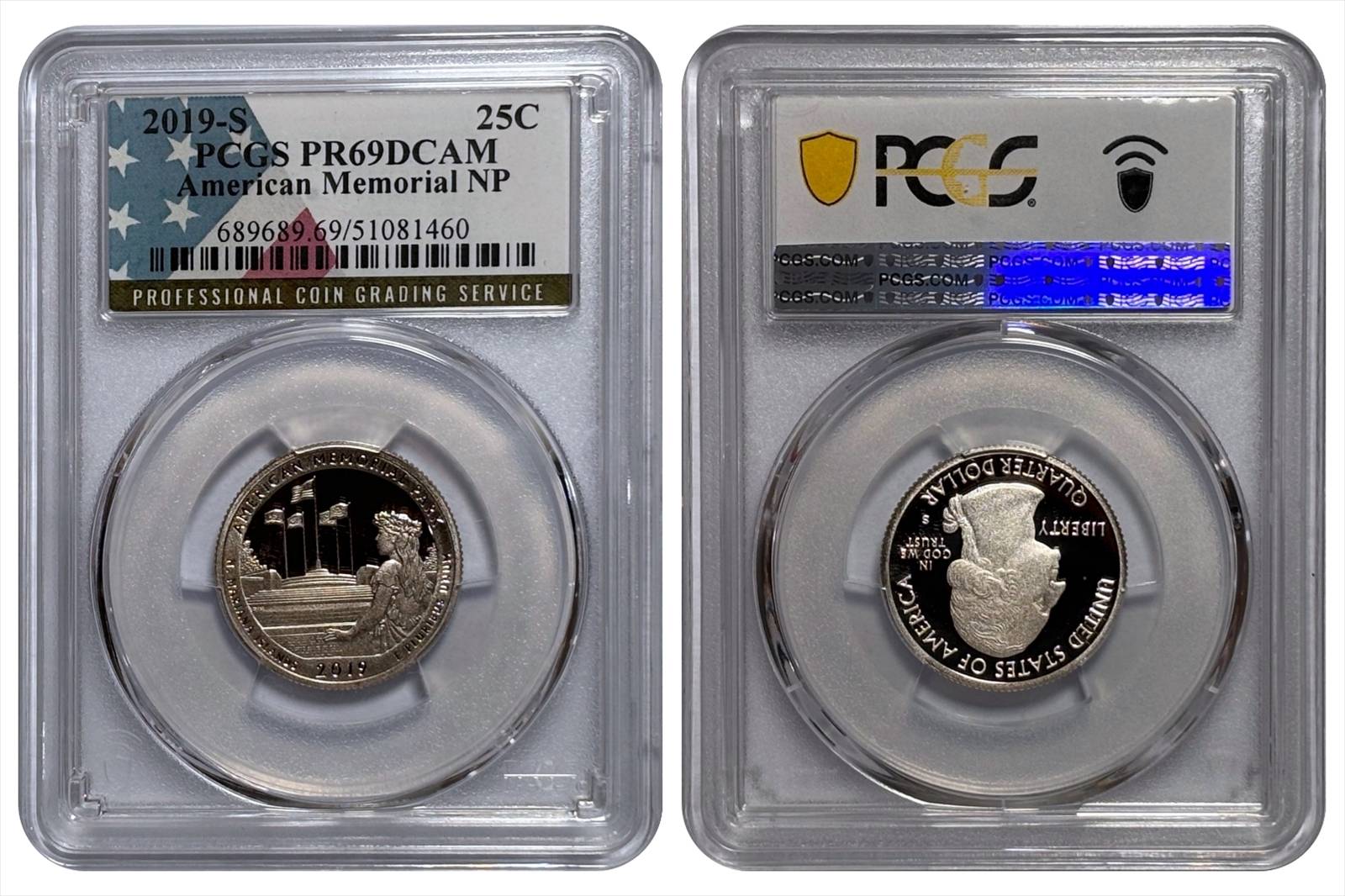
The 2019 American Memorial Park Quarter was the second release of 2019 and the 47th overall issue in the America the Beautiful Quarters Program. The obverse features the classic portrait of George Washington, first introduced in 1932. The reverse depicts a young woman in traditional attire at the front of the Flag Circle and Court of Honor, resting her hand on a plaque honoring those who died in the Marianas Campaign of World War II. The inscriptions include American Memorial Park, Northern Mariana Islands, 2019, and E Pluribus Unum.
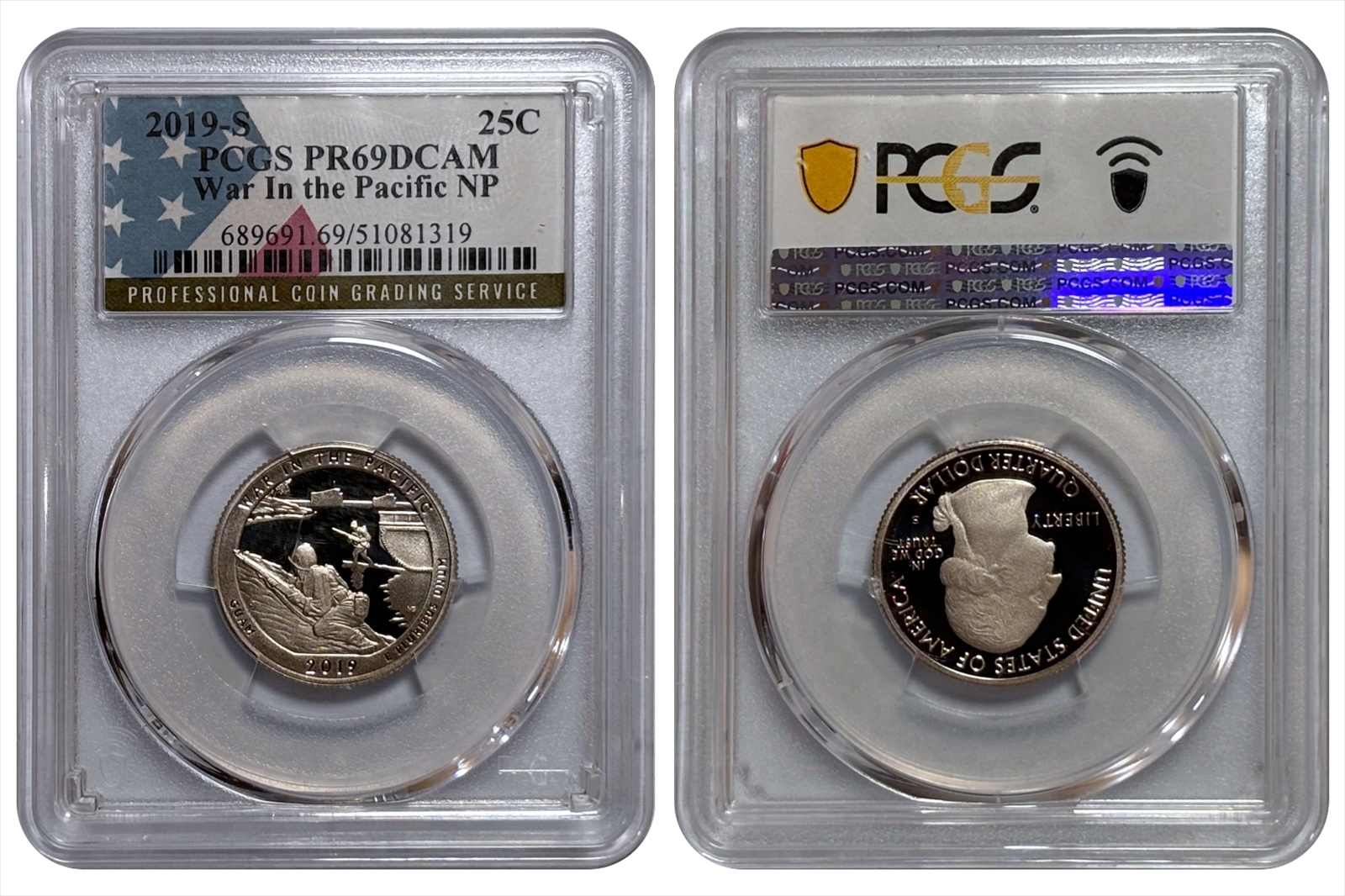
The 2019 War in the Pacific National Historical Park Quarter was the third release of 2019 and the 48th overall issue in the America the Beautiful Quarters Program. The obverse features the classic portrait of George Washington, first introduced in 1932. The reverse depicts American forces coming ashore at Asan Bay, strengthening the number of troops on the island in the fight for Guam and its eventual liberation. The inscriptions include War in the Pacific, Guam, 2019, and E Pluribus Unum.
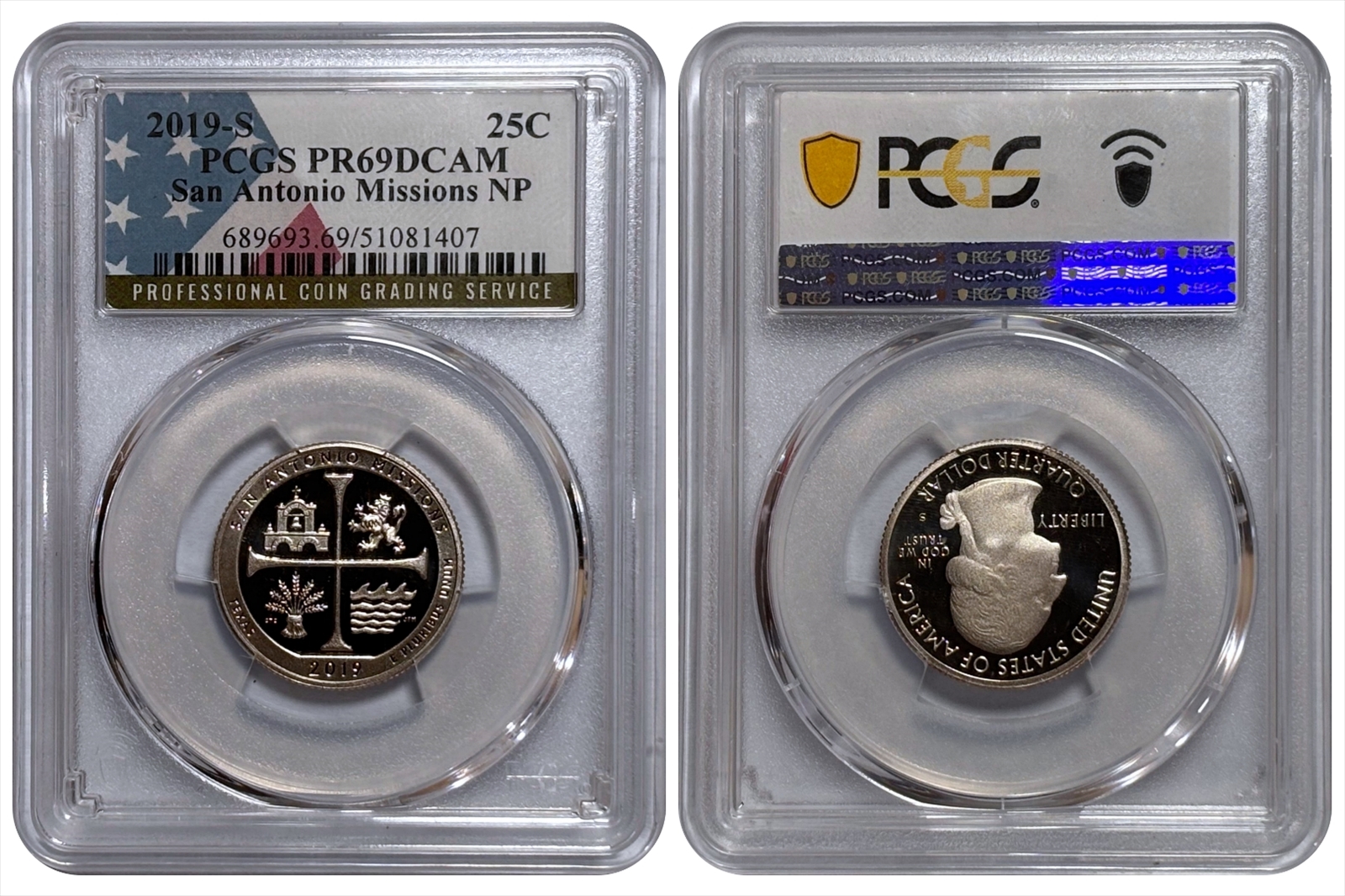
The 2019 San Antonio Missions National Historical Park Quarter was the fourth release of 2019 and the 49th overall issue in the America the Beautiful Quarters Program. The obverse features the classic portrait of George Washington, first introduced in 1932. The reverse depicts elements of the Spanish Colonial Real coin to pay tribute to the missions. Within the quadrants are symbols of the missions: wheat symbolizes farming; the arches and bell symbolize community; a lion represents Spanish cultural heritage; and a symbol of the San Antonio River represents irrigation methods and life-sustaining resources. The inscriptions include San Antonio Missions, Texas, 2019, and E Pluribus Unum.
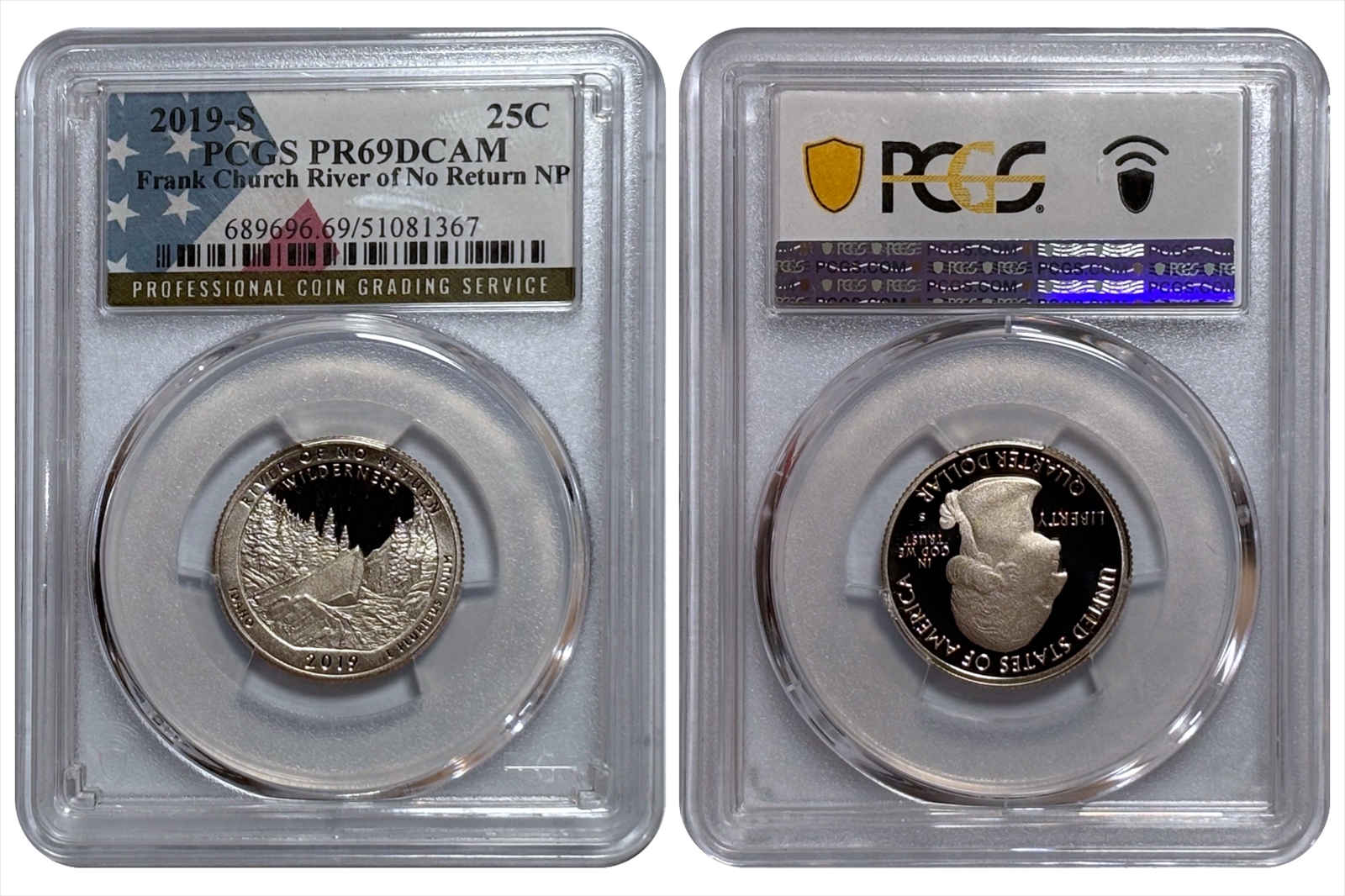
The 2019 Frank Church River of No Return Wilderness Quarter was the fifth and final release of 2019 and the 56th overall issue in the America the Beautiful Quarters Program. The obverse features the classic portrait of George Washington, first introduced in 1932. The reverse depicts a piloted drift boat navigating the rushing river, surrounded by trees and rock formations of the wilderness. The inscriptions include River of No Return, Wilderness, Idaho, 2019, and E Pluribus Unum.
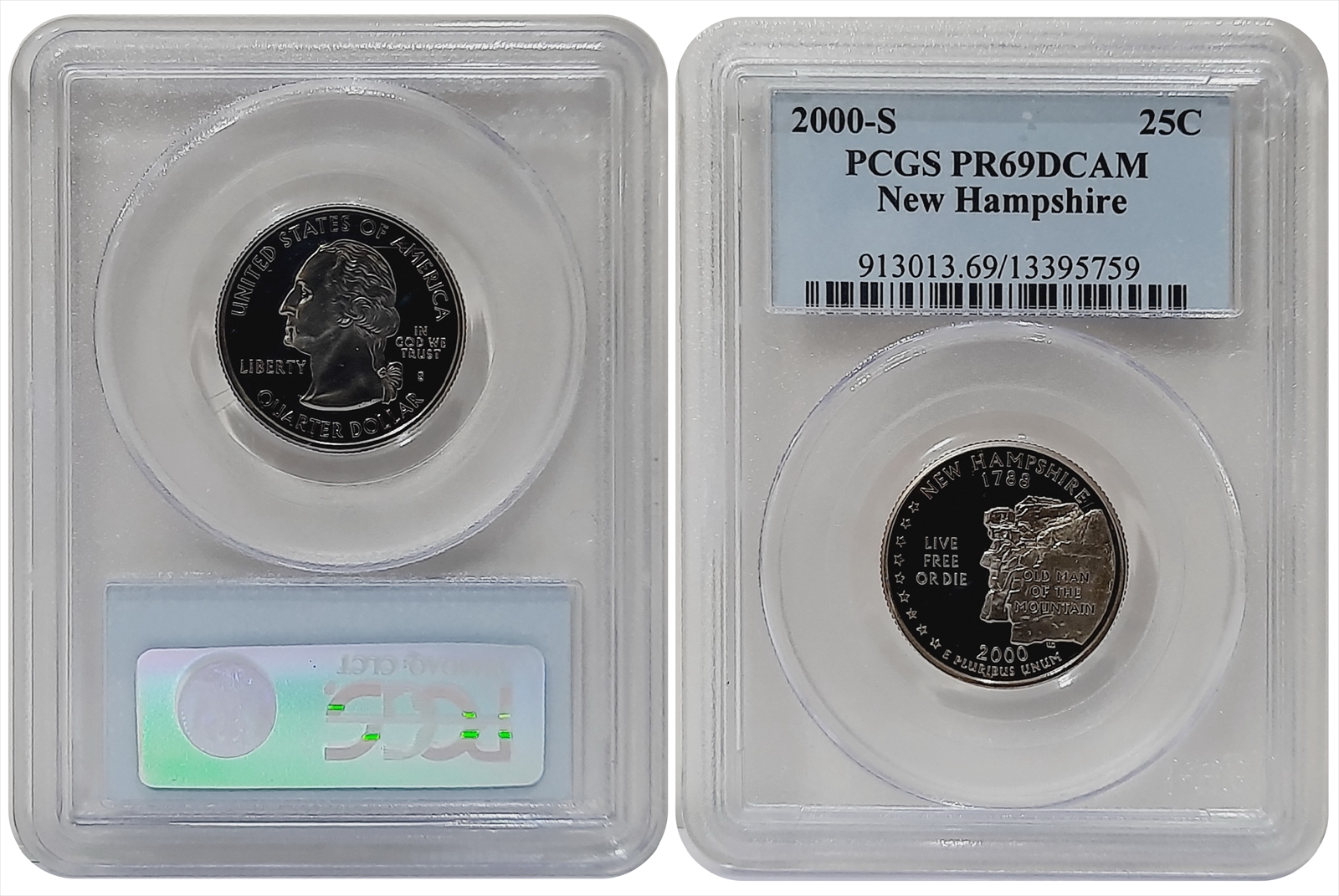
This Washington quarter coin is from 2000 featuring New Hampshire State at the reverse struck by San Francisco Mint, United States under 50 State Quarters Program. Launched in 1999, the United States Mint’s 50 State Quarters Program was a 10-year initiative that honored each of the nation’s states in the order that they ratified the Constitution or were admitted into the Union. Each quarter was produced for about 10 weeks and never got produced again. State designs are displayed on the reverse (tails) of the quarters, while the obverse design has the George Washington. But, to accommodate state designs on the reverse, the words “United States of America,” “Quarter Dollar,” “Liberty,” and “In God We Trust” were made to appear on the obverse.
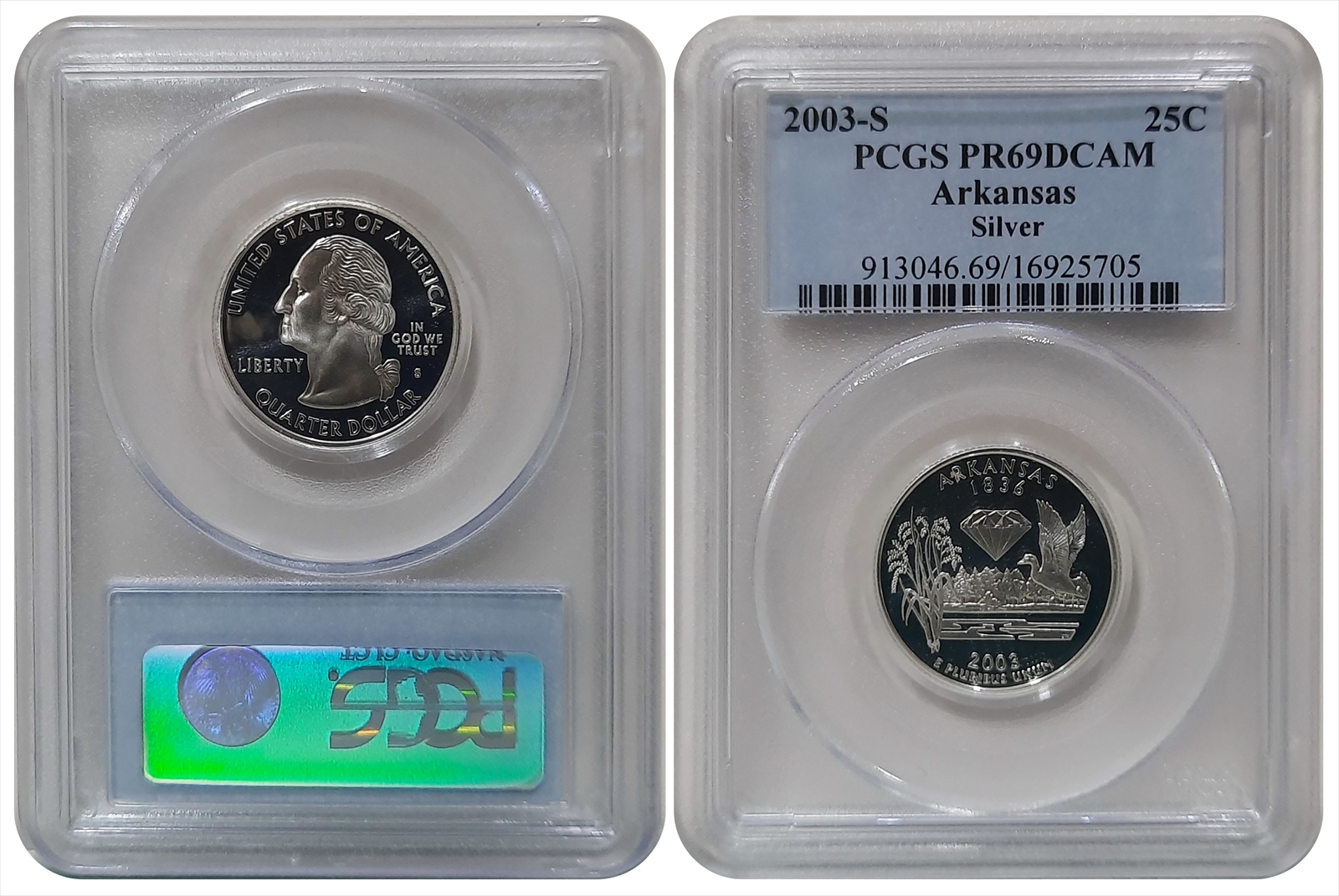
This Washington quarter coin is from 2003 featuring Arkansas State at the reverse struck by San Francisco Mint, United States under 50 State Quarters Program. Launched in 1999, the United States Mint’s 50 State Quarters Program was a 10-year initiative that honored each of the nation’s states in the order that they ratified the Constitution or were admitted into the Union. Each quarter was produced for about 10 weeks and never got produced again. State designs are displayed on the reverse (tails) of the quarters, while the obverse design has the George Washington. But, to accommodate state designs on the reverse, the words “United States of America,” “Quarter Dollar,” “Liberty,” and “In God We Trust” were made to appear on the obverse.
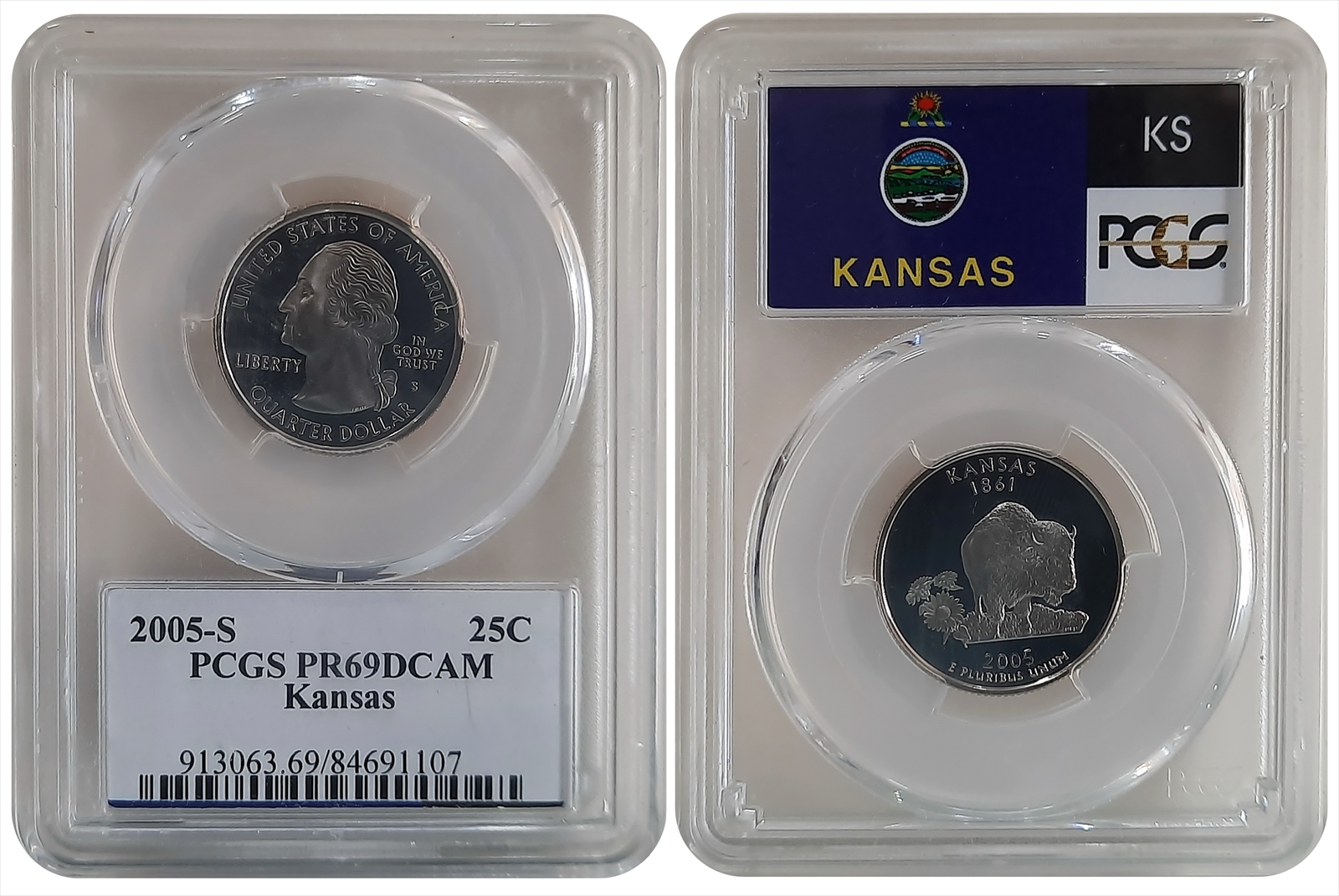
This Washington quarter coin is from 2005 featuring Kansas State at the reverse struck by San Francisco Mint, United States under 50 State Quarters Program. Launched in 1999, the United States Mint’s 50 State Quarters Program was a 10-year initiative that honored each of the nation’s states in the order that they ratified the Constitution or were admitted into the Union. Each quarter was produced for about 10 weeks and never got produced again. State designs are displayed on the reverse (tails) of the quarters, while the obverse design has the George Washington. But, to accommodate state designs on the reverse, the words “United States of America,” “Quarter Dollar,” “Liberty,” and “In God We Trust” were made to appear on the obverse.