



Top 20 By Value Showcase Image Gallery
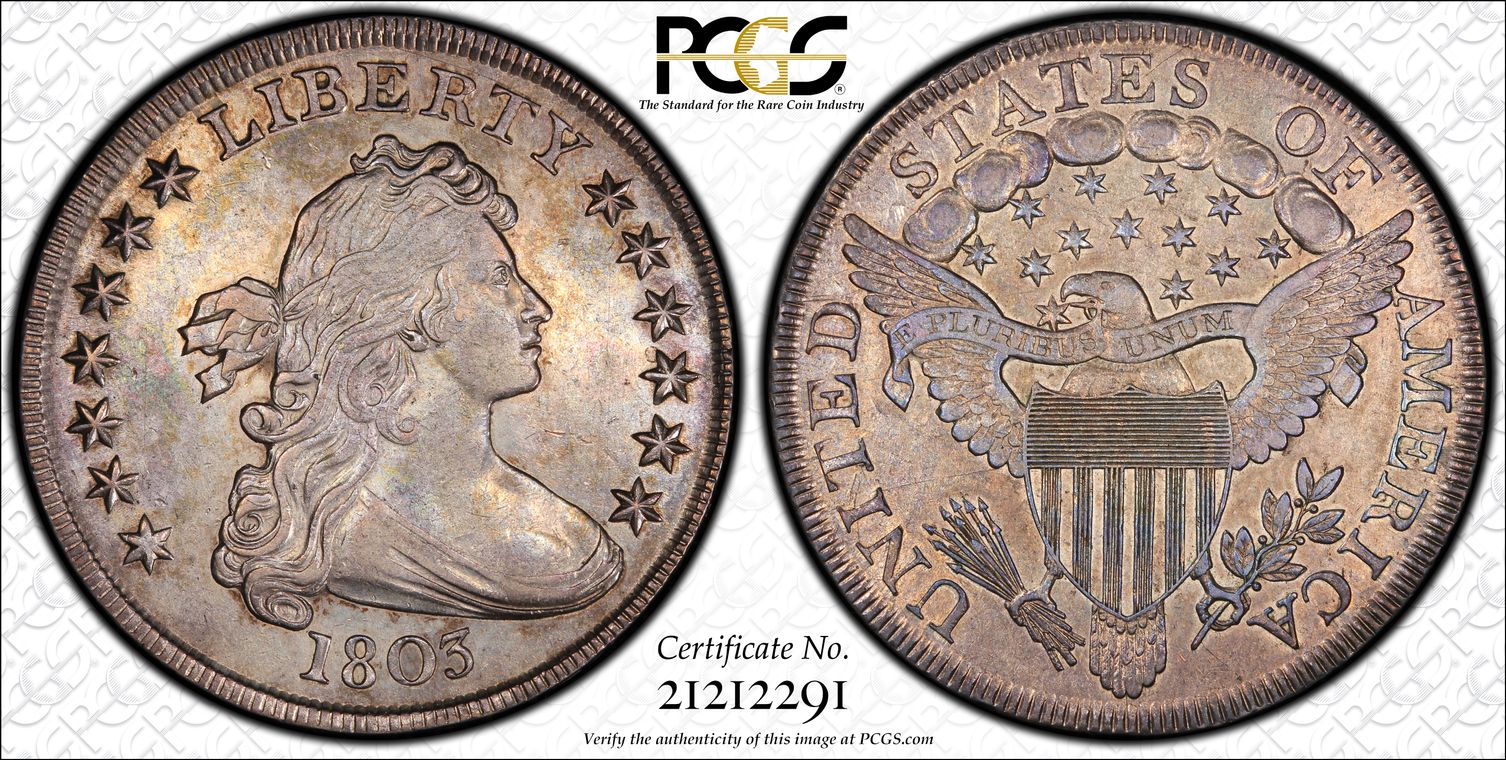
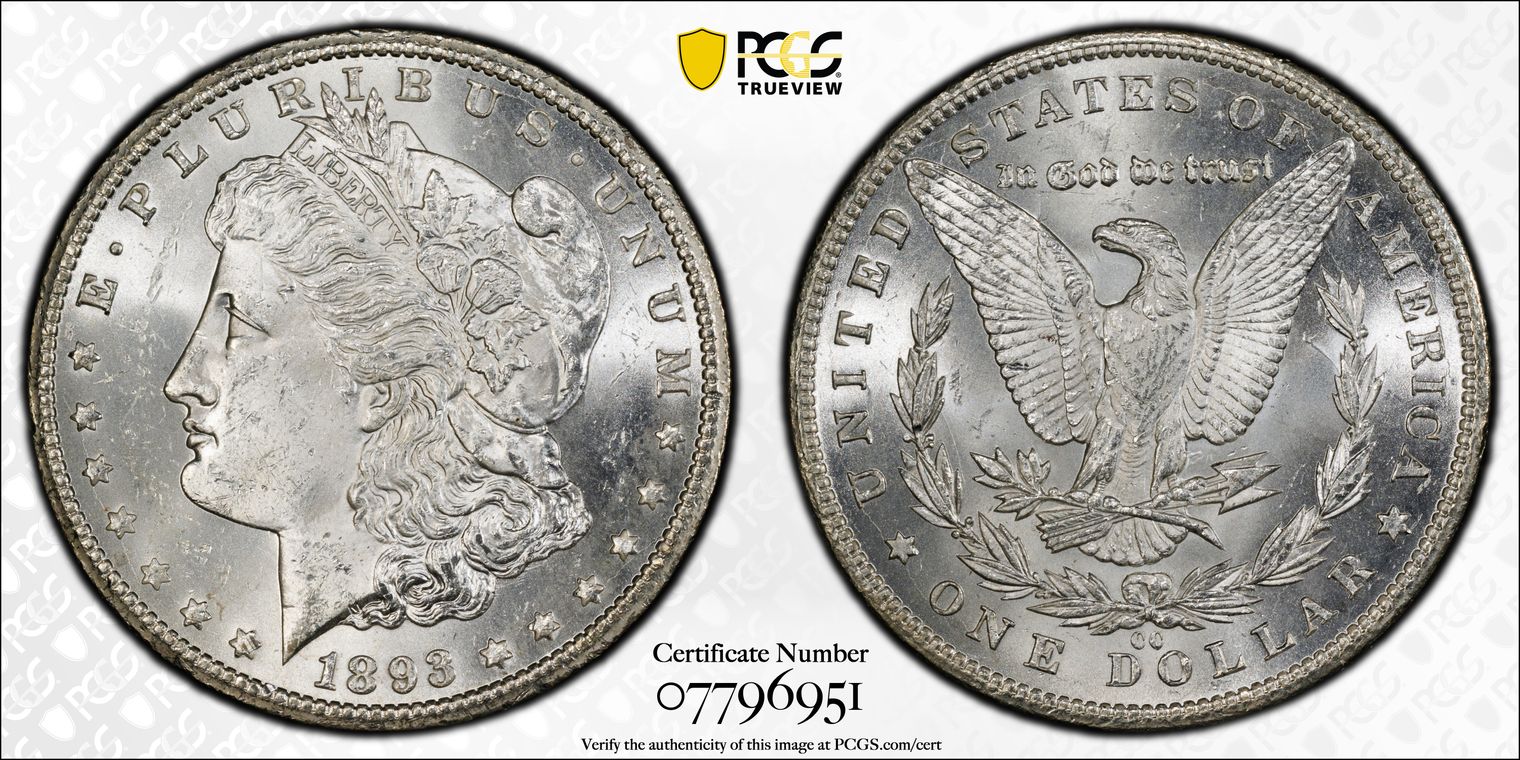
The 1893-CC $1 is an immensely popular coin because of its Mint of origin, the fact that it is the last of the CC Dollars, and because sufficient quantities remain to make it easy to obtain. The 1893-CC, along with the 1889-CC and the 1879-CC, is one of the three scarcest Morgan Dollars. Interestingly, the PCGS Population Report shows similar quantities of each, but breaking down the data shows dissimilar patterns. The 1889-CC is a great rarity in Mint State and is so valuable in all grades that thousands of circulated examples have been sent in for grading. The 1879-CC comes in two varieties (Clear and Capped Mintmarks) but, here again, a substantial percentage of submissions are of circulated examples. Not so with the 1893-CC, where the bulk of the population rests within the Mint State range. However, because of poor storage, the overall quality of the 1893-CC Dollars is lower than for both the 1879-CC and 1889-CC Dollars. The typical 1893-CC Dollar shows excessive bagmarks and sometimes comes weakly struck in the centers, as evidenced by flat hair over Liberty's ear and flat feathers on the eagle's breast. Gem 1893-CC Dollars are very rare, more so than the 1879-CC and 1889-CC, and the finest 1893-CC $1 is a single PCGS MS-66.
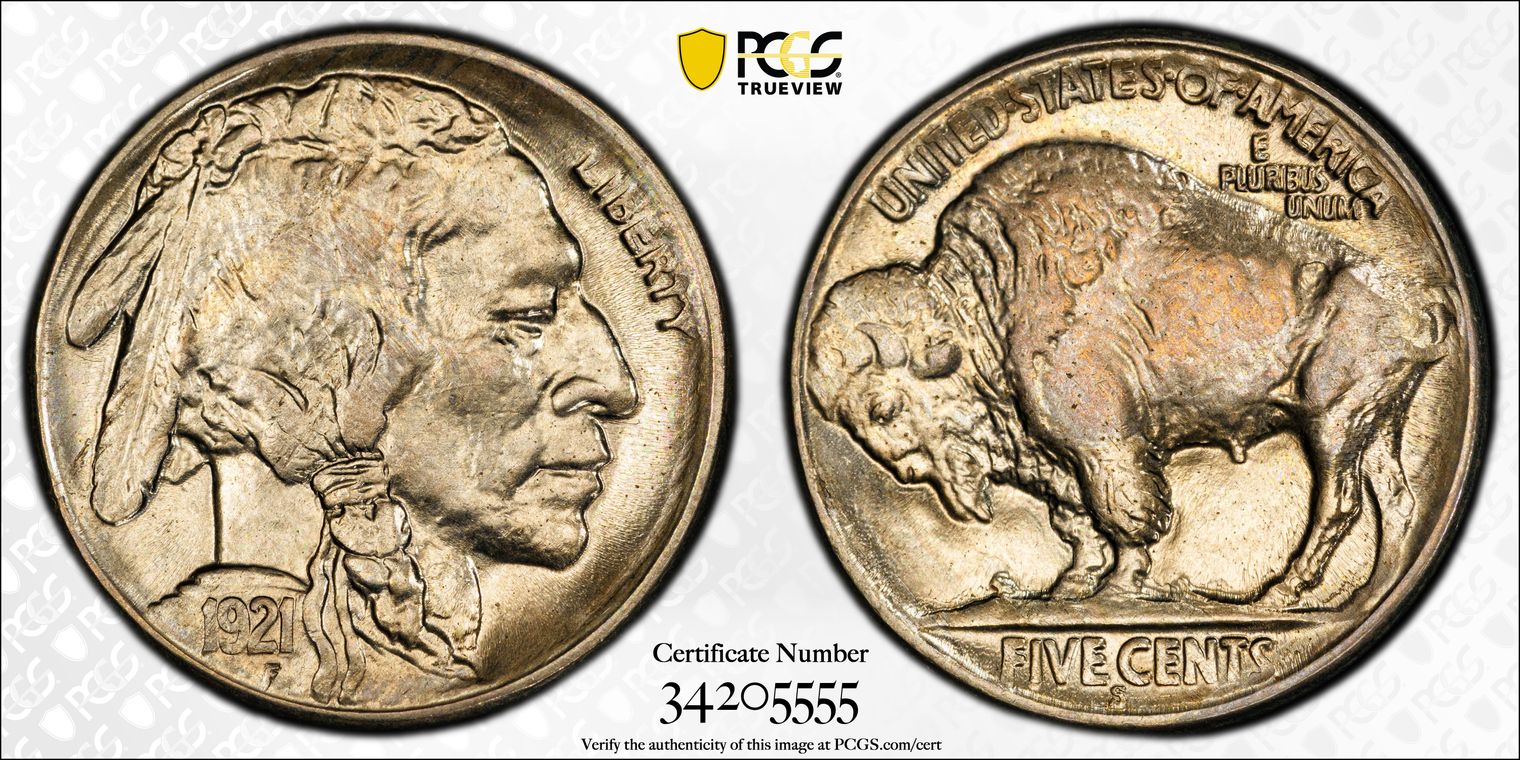
In circulated grades, the 1921-S is one of the rarest coins in the Buffalo nickel series. In Mint State and Gem uncirculated condition it is not quite as relatively rare, but is still very rare. In Gem condition, the rarest dates in the series are the 1918-S, 1919-S, 1920-S, 1923-S, 1924-S, 1925-S, 1926-S, and 1927-S. The 1921-S is the next rarity level as it is not quite as rare as those issues, but is very rare nonetheless. It is comparable in rarity in Gem condition to the 1919-D, 1920-D, 1925-D, 1927-D, and 1928-S. Strike is usually decent for a San Francisco Mint issue, though there are some survivors with weakly struck Buffalo's horn and tail. Luster is usually a subdued frosty look.
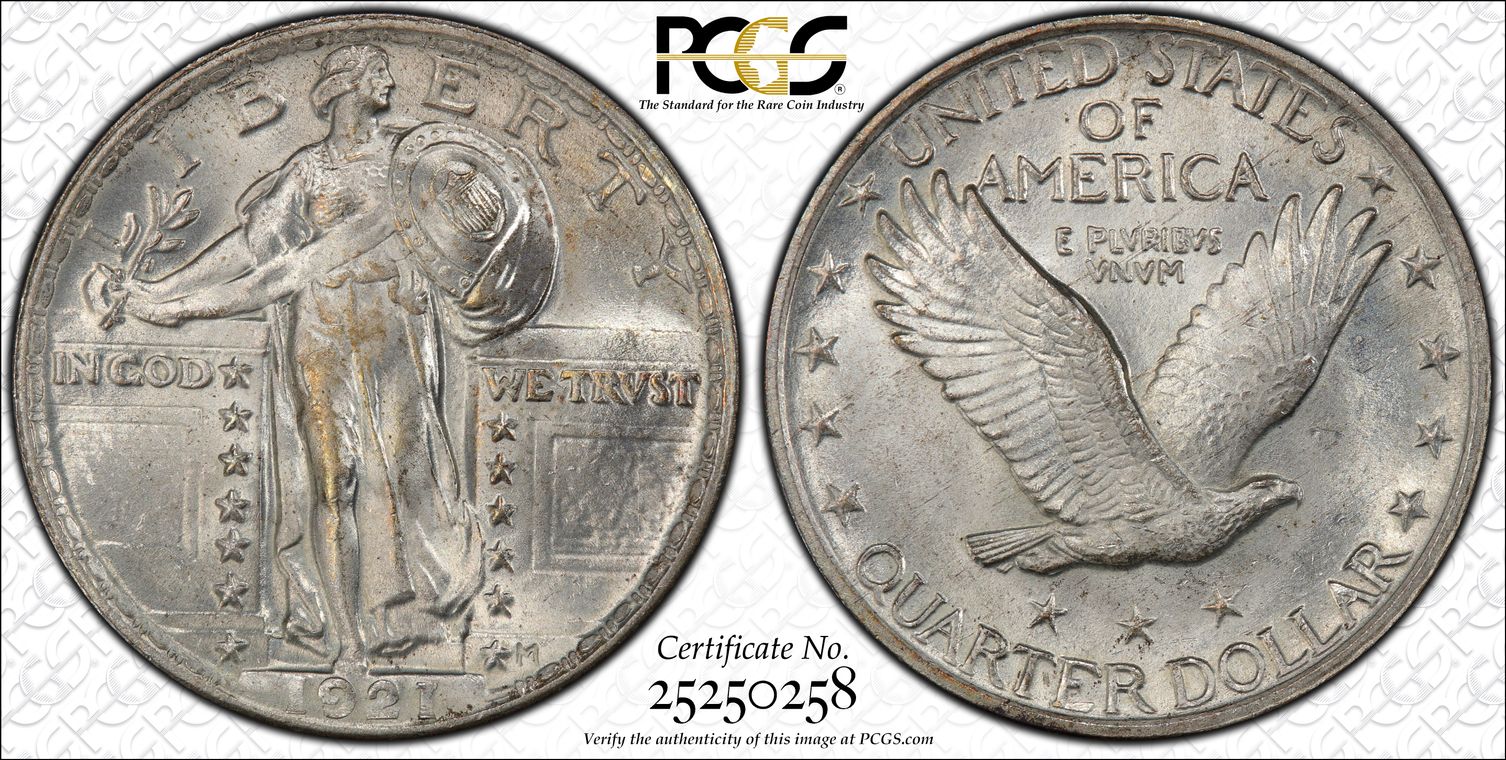
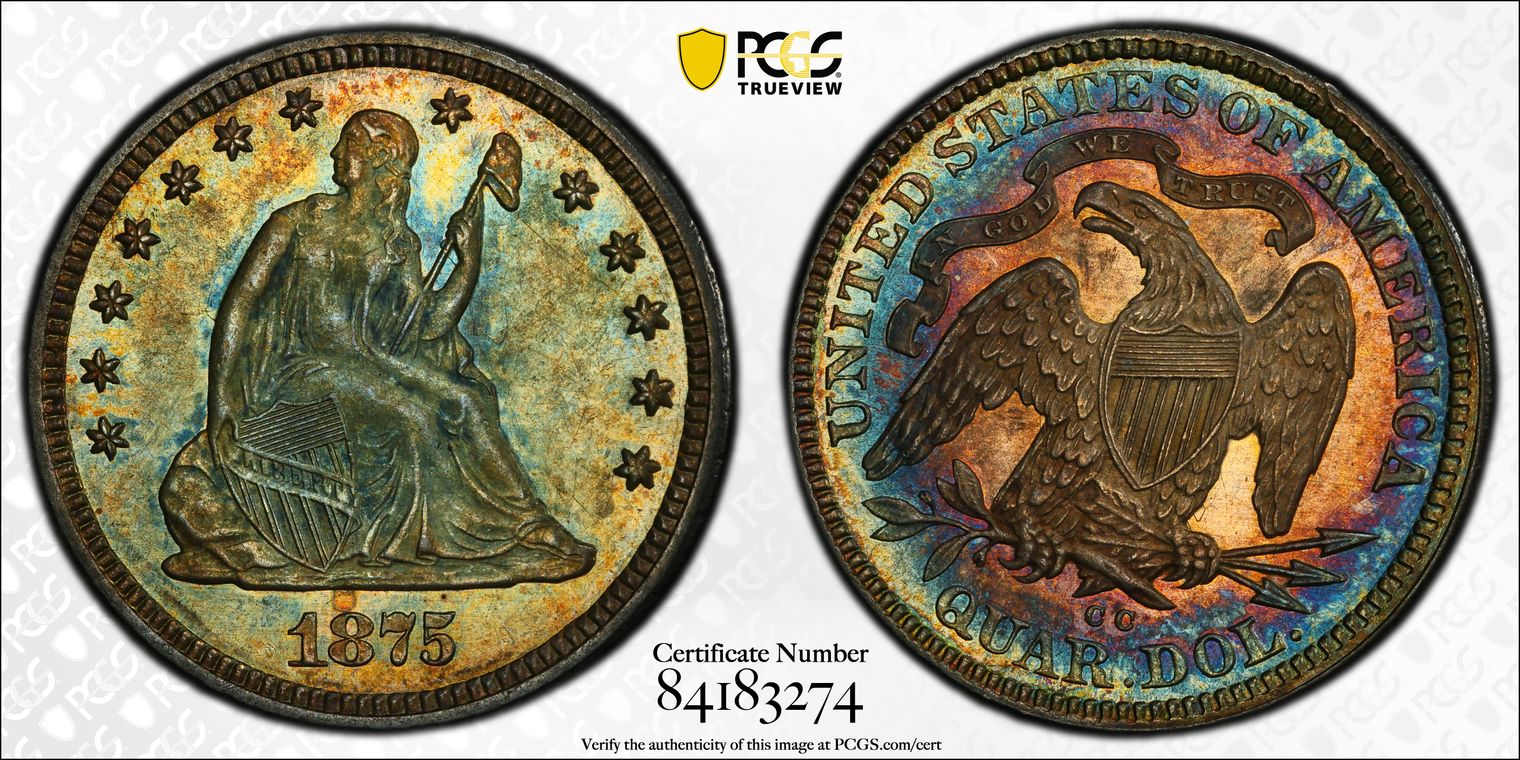
Production of Quarter Dollars at the Carson City Mint jumped up to 140,000 in 1875, a rather significant jump from previous years. Collector demand for this date is intense no matter what the grade, and competition for top condition pieces is intense. In Mint State, this date is very scarce and correspondingly expensive. A very small number of Gems sit atop the PCGS Condition Census, the finest being a single MS65+.
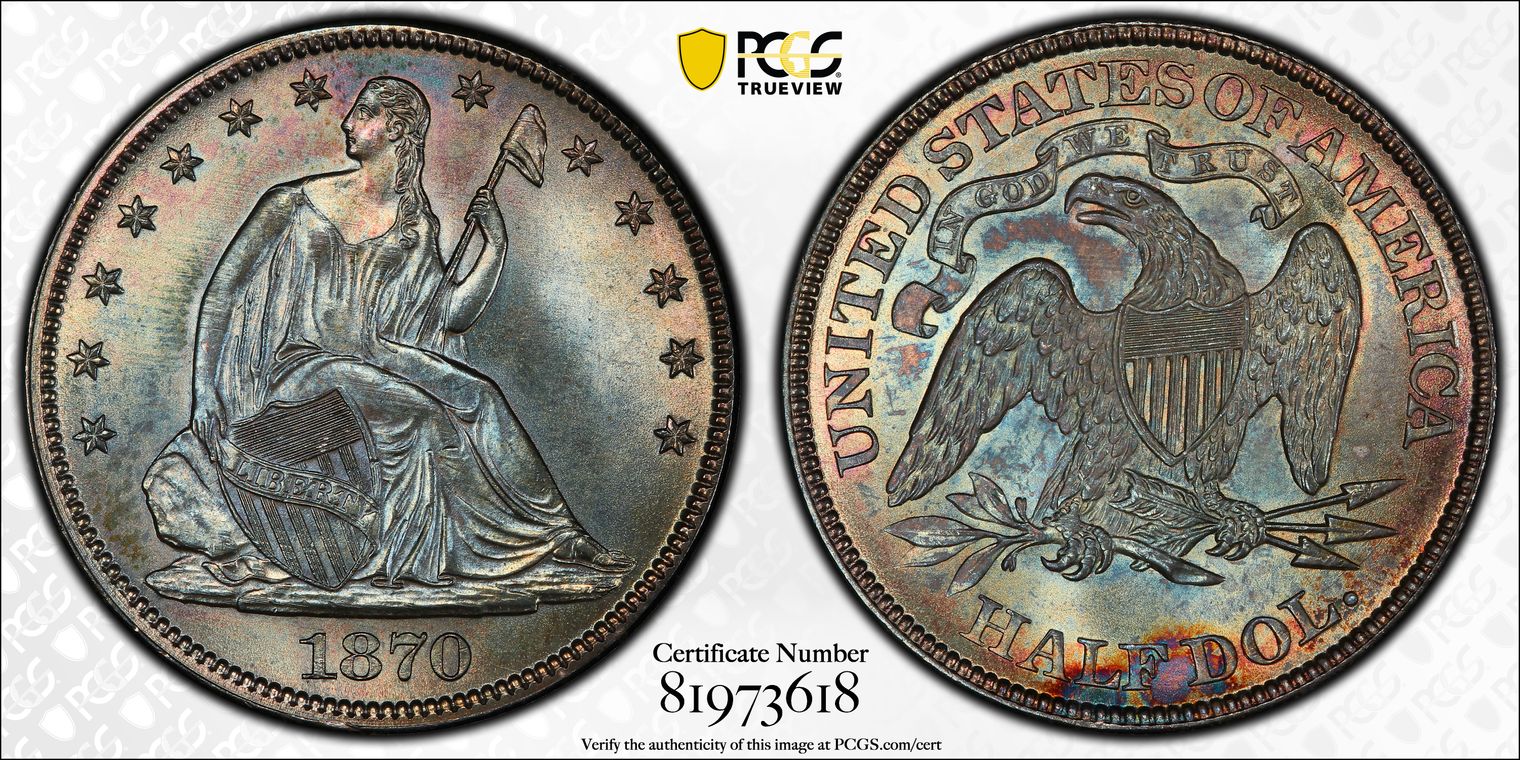
At 633,900 coins, the 1870 Half Dollar has just a slightly lower mintage than the 1869-S of the previous year. However, because it was from an Eastern Mint, the 1870 Half Dollar is much more common in most grades. In Mint State, the 1870 is slightly more common than the 1869-S but usually sells for much less, making it seem like an excellent value. The initial quality of the 1870 Half Dollars was good. The luster is usually frosty, bagmarks are minimal, and the strike is strong, if not full. All in all, this is a great representative of the With Motto type.
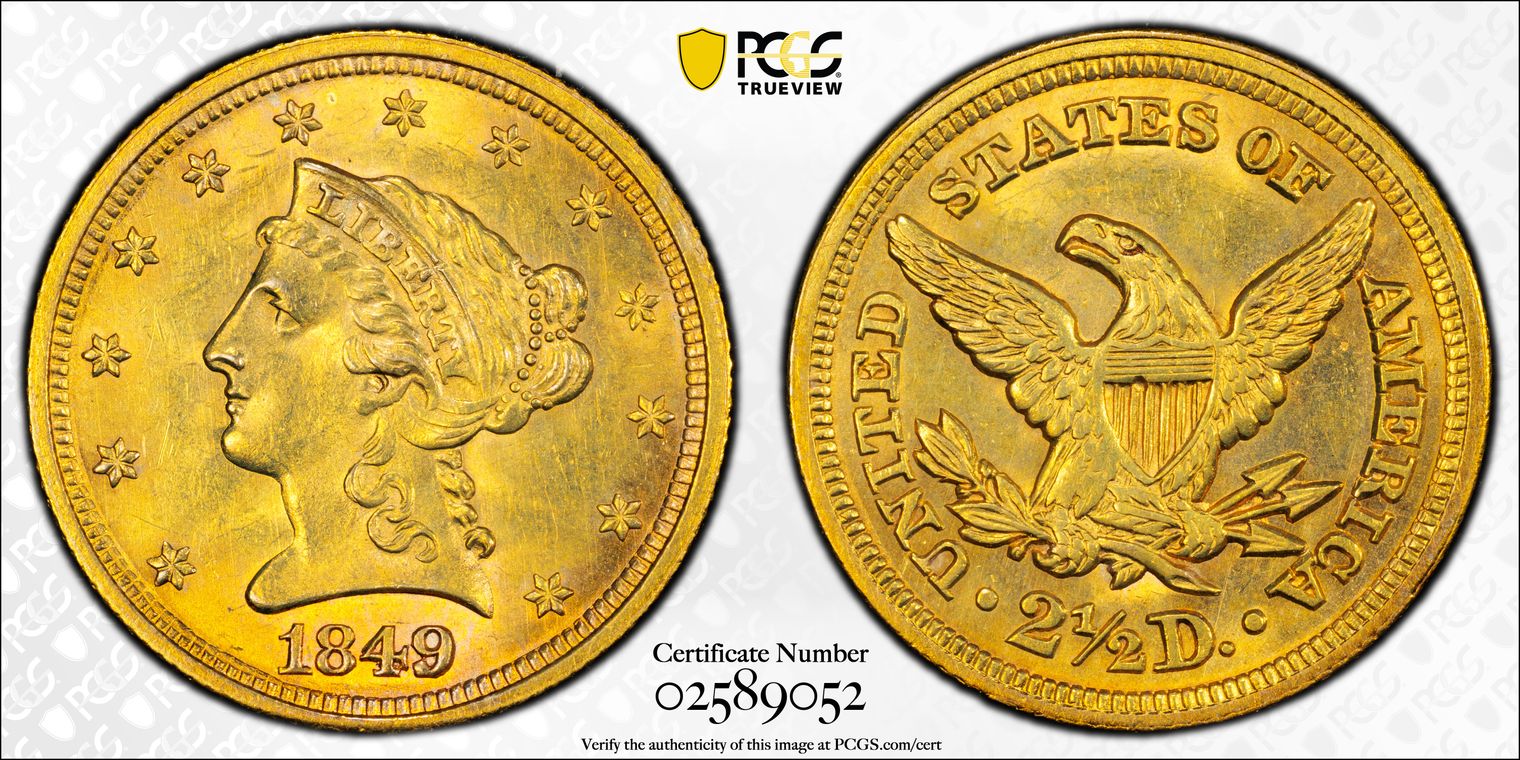
Like the 1847, this date is definitely uderrated and undervalued. Choice specimens are very rare, the only strictly uncirculated piece that I have seen being the one purchased by Harry Bass at the Scanlon Sale. Some examples of the 1849 are offered as "overdates" but every such specimen that I have seen merely showed recutting of the 9 rather than an 8 beneath it. The position of the date is distinctly different than it is on the 1848, and the date is also markedly smaller. Therefore, in my opinion, no such thing as an overdate exists.
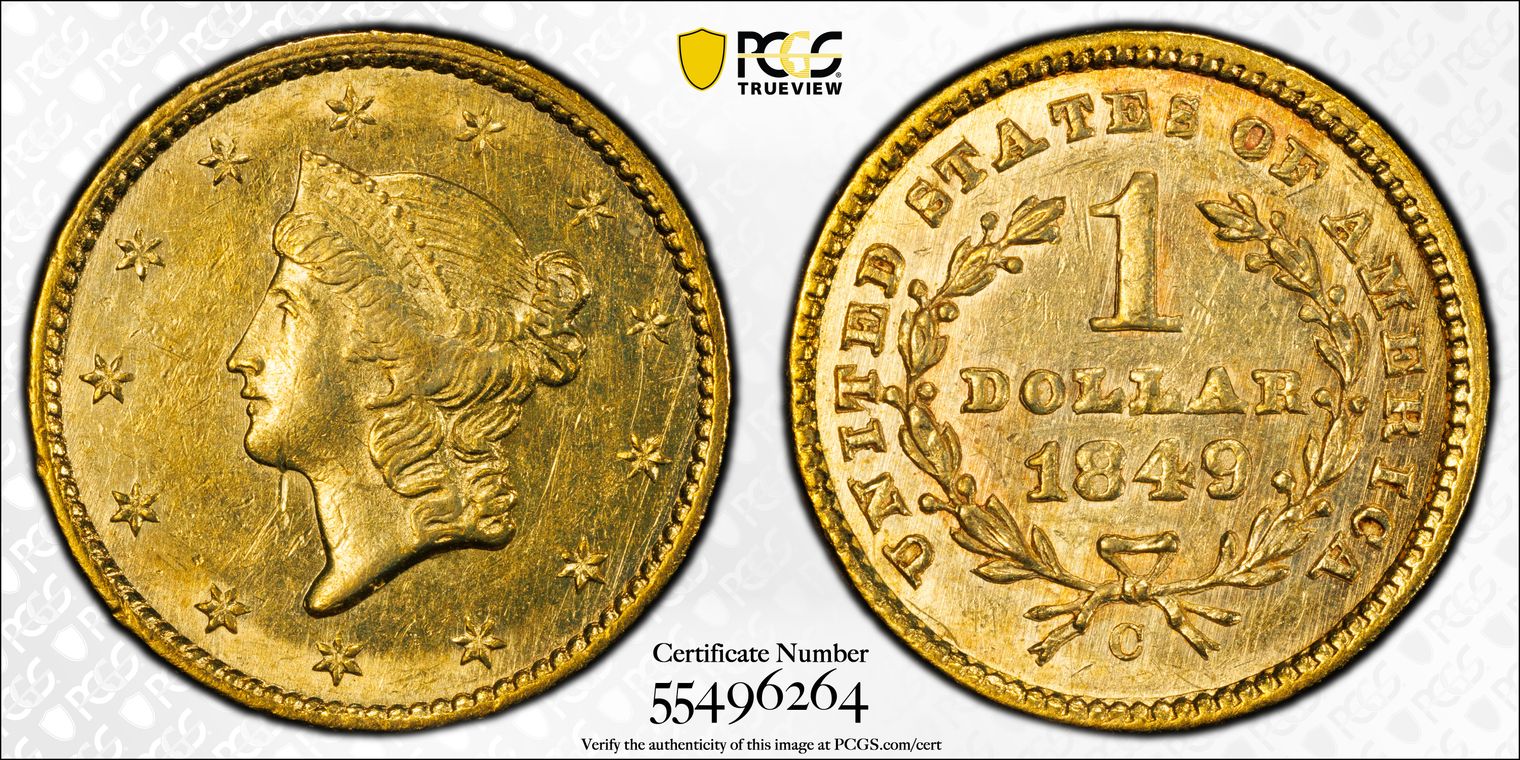
As far as most collectors are concerned, the 1849-C Closed wreath is the only variety of gold dollar from the Charlotte Mint dated 1849 that they can consider adding to their collection. While this is by far the more available of the two varieties, it is a scarce issue in its own right. The 1849-C Closed Wreath gold dollar is most often seen in Very Fine and Extremely fine grades. This variety is scarce in About Uncirculated grades with most of the pieces in this range grading no better than AU50. The 1849-C Closed Wreath is very rare in Uncirculated with probably no more than a dozen known. STRIKE: There are some reasonably well detailed examples but most show noticeable areas of weakness. The obverse is usually not fully defined on the hair below the coronet and around the ear. Much if this is due to the fact that the obverse fields appear to be very convex. This, in turn, not only tends to accentuate wear, but also makes them difficult to properly grade. I have seen 1849-C Closed Wreath gold dollars that looked as if they were considerably worn but that were, in fact, peculiarly struck. The reverse is always better struck than the obverse although most show weakness on the leaves at the left side of the wreath. The denticles from 5:00 to 8:00 are sometimes faint and may not be visible on some coins. SURFACES: The obverse nearly always shows prominent abrasions. These marks are accentuated by the convex shape of the fields. Many are hairlined from having been cleaned and others show small, mint-made imperfections. It is exceptionally hard to locate an 1849-C Closed Wreath gold dollar with Choice surfaces. LUSTER: The luster on most pieces is grainy and somewhat frosty in texture. There are a number that are either semi-prooflike or nearly fully prooflike on the obverse. The reverse is always more frosty and it lacks the depth of the reflectiveness seen on the obverse. The luster is often impaired due to repeated cleaning or dippings and any example with above-average luster is scarce and desirable. COLORATION: Original, uncleaned pieces show very attractive deep yellow-gold or greenish-gold coloration. I have also seen a small number which have unusual coppery-gold hues. High grade coins with original color are among the most attractive gold dollars from the Charlotte Mint. EYE APPEAL: Because of the unusual strike characteristics, the 1849-C Closed Wreath gold dollar has very distinctive eye appeal. There are a number of higher grade pieces known that have superb color and good luster and some of these are quite well struck. More often than not, this date is found with poor definition at the central obverse. I have seen some on which the obverse appeared to be totally unmatched with the reverse due to the convex appearance of the former side. DIE CHARACTERISTICS: There are often raised die polish lines at the throat of Liberty.
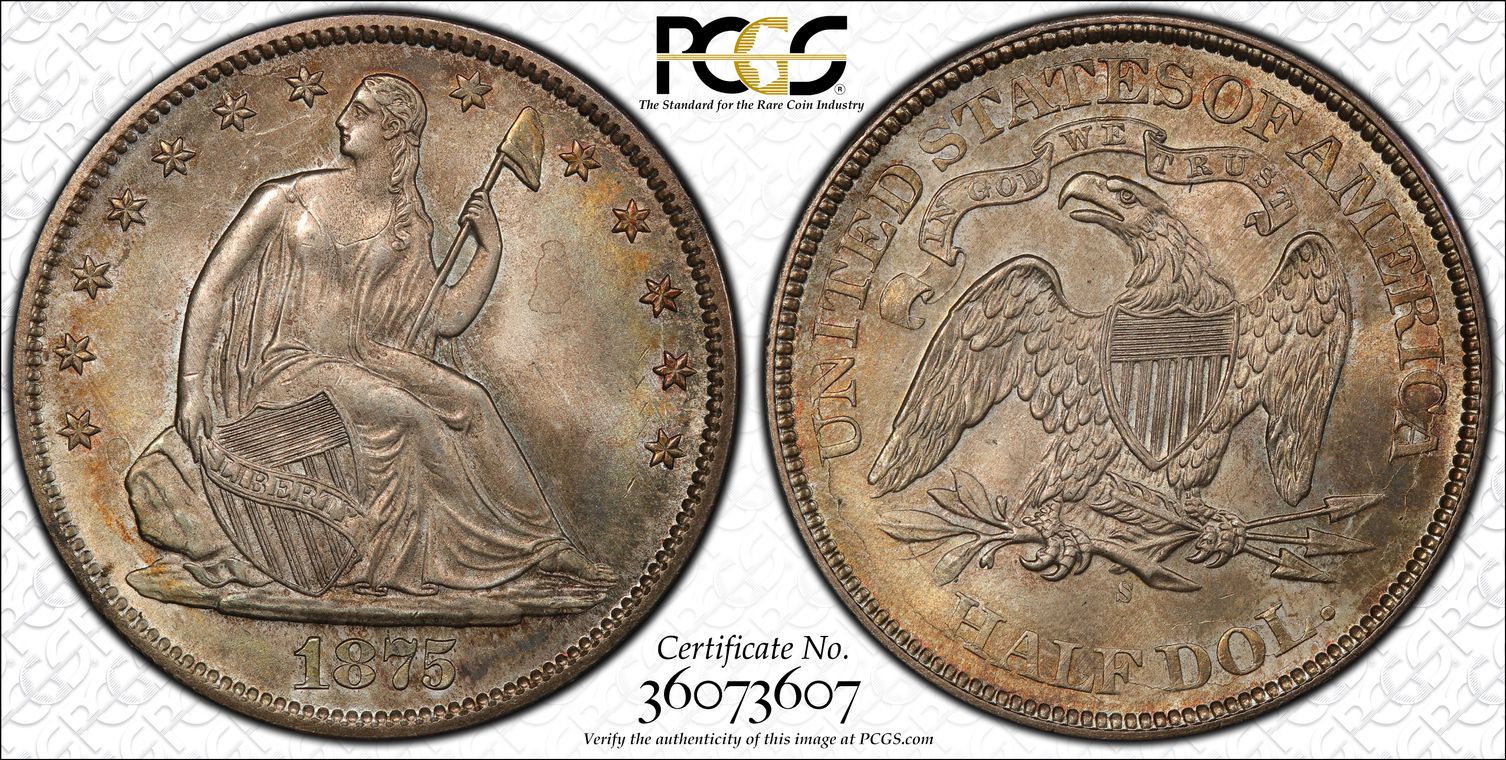
In 1875, the San Francisco Mint made twice as many Half Dollars as the Carson City Mint, but just over half as many as the Philadelphia Mint. With a mintage of 3,200,000 coins, the 1875-S Half Dollar is valued as a regular example of the type, with no premiums for most grades. Mint State examples are plentiful in all grades from MS62 to MS66, above which this date becomes an extreme, condition-rarity. The strike quality on 1875-S Half Dollars varies from soft to strong on the stars. Thus, if given the opportunity, and all else is equal, choose the coin that is better-struck.
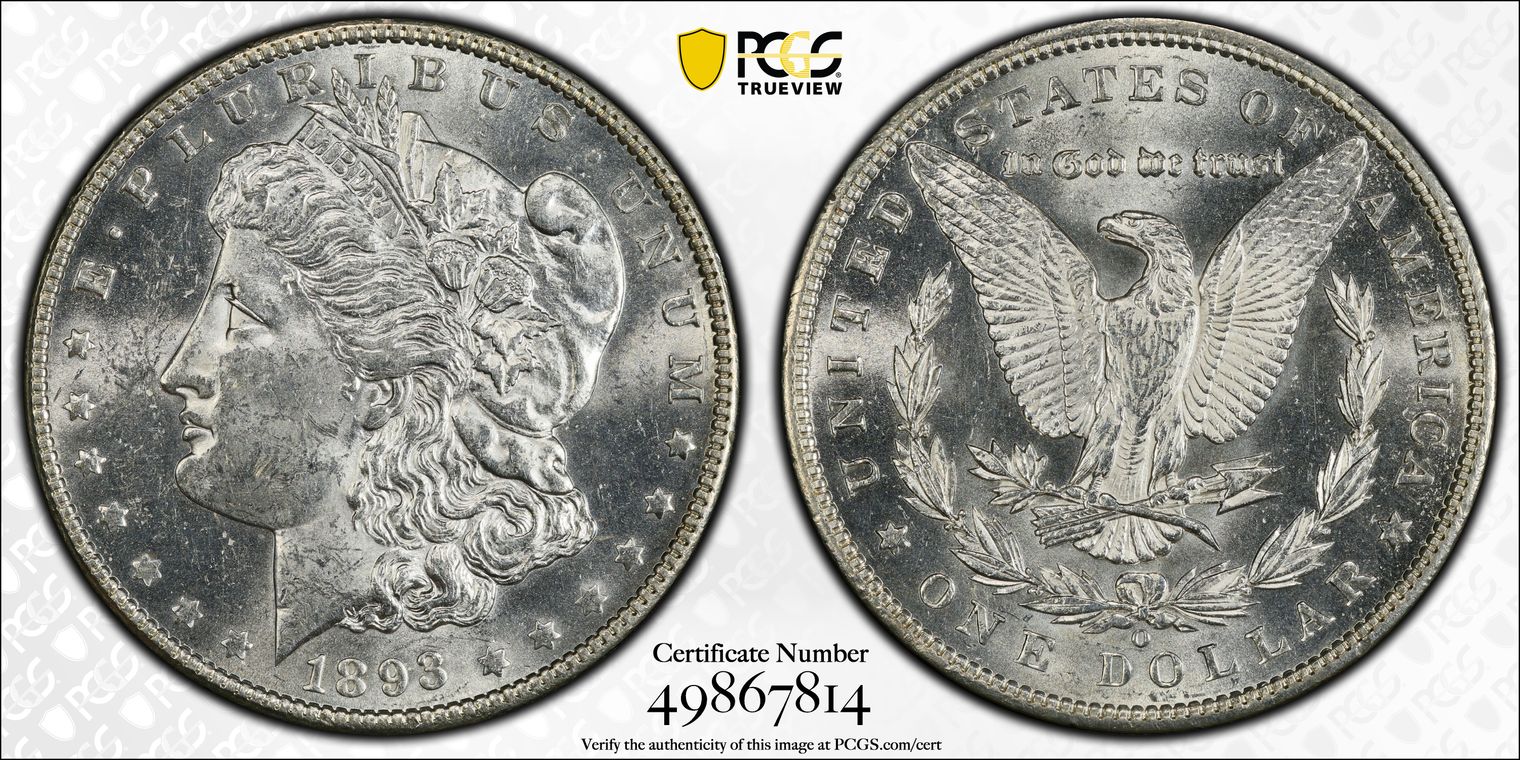
The 1893-O dollar posted the lowest mintage figure for any New Orleans Mint silver dollar of the Morgan design. A few bags of 1893-O dollars were paid out at face value from the Cash Room of the Treasury Building from about 1948 to 1955. These may have been released a few coins at a time, rather than in intact 1,000-coin bags. These furnished the source for dealers' stocks. Single-coin prices went as low as $5.50 to $7.50 during the 1950s, until about 1958-1959, when it was realized that even rolls were scarce. I have no record of bags of 1893-O being included in the 1962-1964 Treasury releases. In worn grades the 1893-O is fairly scarce, due to its low mintage. The 1893-O dollar is scarce in all Mint State grades and is rare in higher levels. Probably 1,500 to 3,000 MS-60 to 62 coins remain; about 600 to 1,200 MS-63 pieces; only 200 to 300 MS-64s; and a paltry 10 to 20 MS-65 or better examples. Most 1893-O dollars are lightly struck and have fair to average lustre. Some coins are lightly struck on the obverse center but are sharp on the reverse. Many are heavily bagmarked, especially on the obverse. Sharply struck coins exist and are rare in higher grades. Sharply struck MS-65 coins are among the rarest of all Morgan dollars. Once again, the connoisseur is advised to cherrypick for quality. "Investors should avoid this date," wrote Wayne Miller in 1982, apparently referring to the difficulty of finding quality pieces. Semiproof-like 1893-O Morgan dollars are sometimes sold as proof-likes and, according to Wayne Miller, are often more attractive than full proof-likes. Proof-like coins are sometimes one-sided and have a mirror surface on the reverse only. Full prooflike coins are extremely rare. DMPL coins seem to be about two or three times rarer than PL, per the certification services. The "Proofs" in the Nygren and Andrus sales (1914, 1915), considering the prices ($1.90, $3.10) were probably DMPLs. That in the "Anderson Dupont" sale (1954), at $26, exceeded the price of most Philadelphia Proofs in that auction; was it something better? The coin is not now traced.
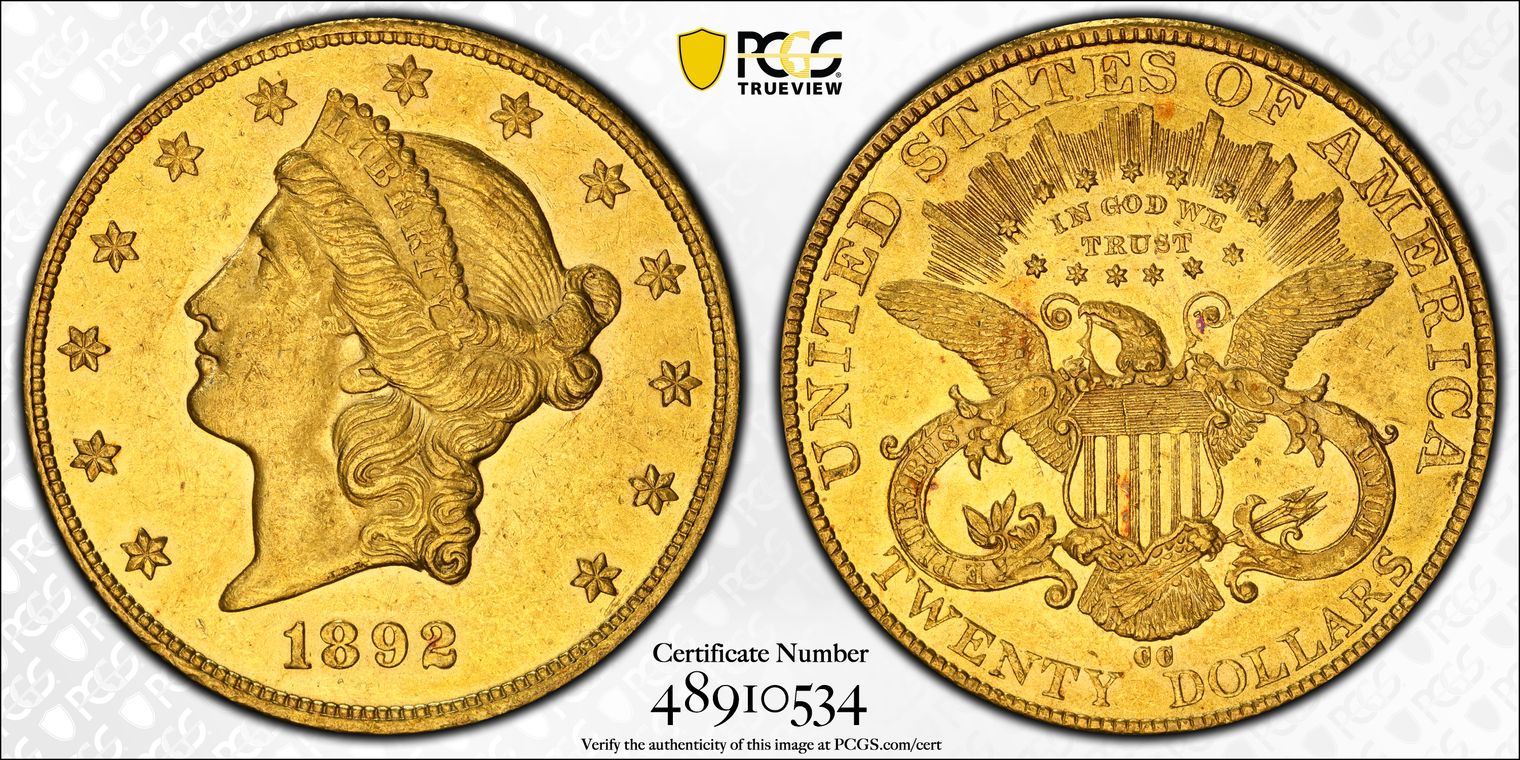
The 1892-CC is a scarce but not rare coin. It is a little more rare than the lower mintage 1893-CC in terms of population rarity and it is considerably more rare than the 1893-CC in Unc. The 1892-CC is usually seen in EF or AU condition although there are numerous VF examples around as well. Average uncirculated (MS-60) specimens are scarce but can be located without a great deal of difficulty. Choice quality uncs are very scarce and true gems are rare. This is another date that was considered quite rare in Unc. until the 1960's when many turned up in Europe.
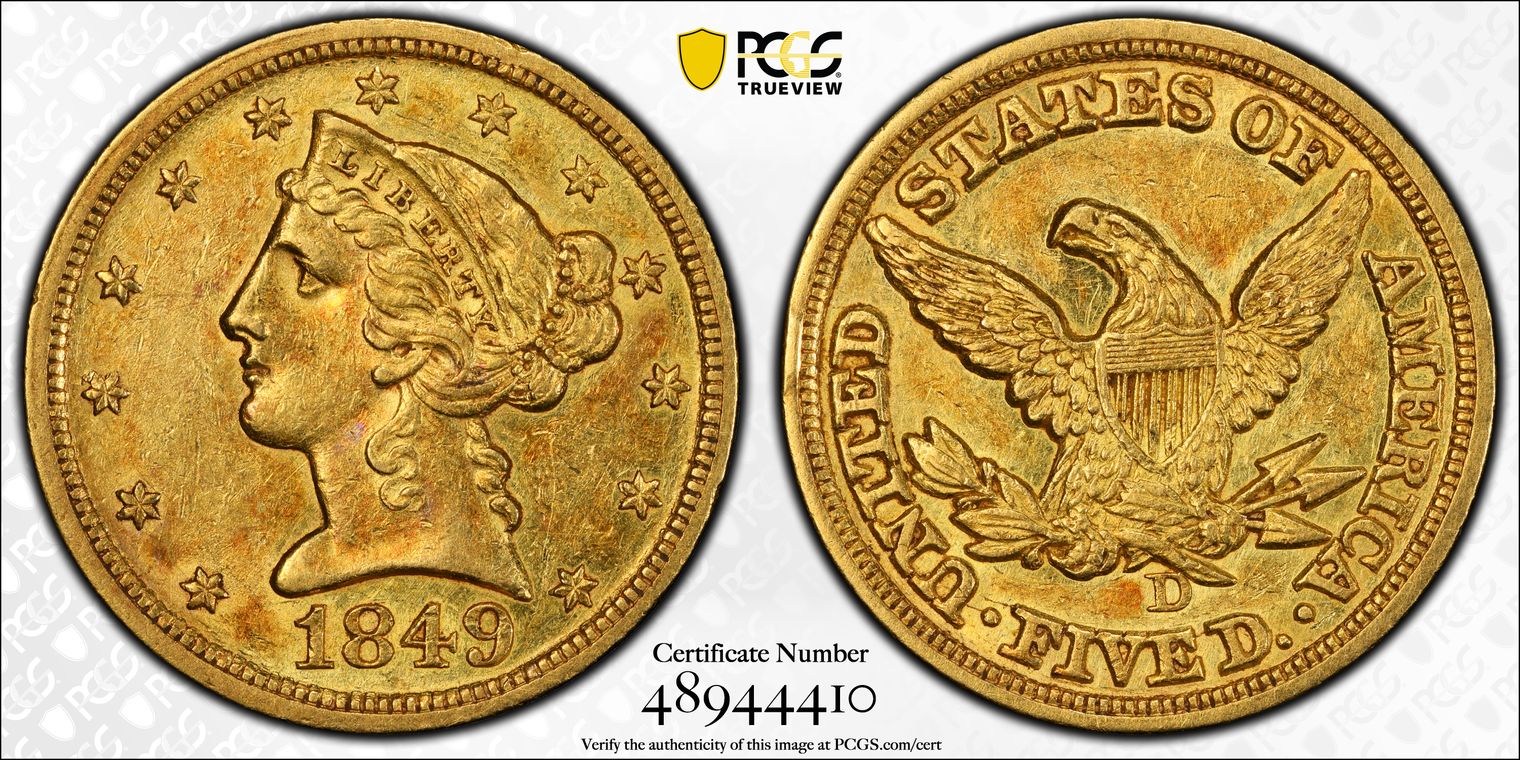
This is a very rare date in all grades, more so than the D Mint coins from 1843 to 1847 and roughly comparable to the 1848-D and 1850-D. It is much more rare as a date than the 1851-D, 1852-D, 1853-D and 1854-D and it has actually had fewer auction appearances than some of the lower mintage D Mint Half Eagles from 1855 to 1860. Almost uncirculated pieces are extremely rare and I have never personally seen a strictly uncirculated example. Once again, VF or EF is the quality one should expect. The 1849-D half eagle is very similar in rarity to the 1848-D. Like the 1848-D, it is a coin whose true rarity (especially in high grades) has not yet been fully acknowledged. The 1849-D half eagle is usually found in Very Fine to Extremely Fine grades. It is sometimes seen in About Uncirculated-50 but it is quite rare in any About Uncirculated grade above this. In full Mint State, the 1849-D is an extremely rare coin. The 1849-D is one of the last half eagles from this mint which can be consistently found with an acceptable strike. Most have better overall definition on the obverse than on the reverse. The area on the obverse which is most likely to show weakness is the curls below IBER in LIBERTY. The rest of the detail is usually sharp, including the stars and denticles. The reverse is often somewhat weak on the tips of the wing, the lower part of the neck and the right leg and claw. A number are known which show mint-made areas of granularity. Most are heavily marked but it is possible to locate an 1849-D half eagles which is not covered with detracting abrasions. The luster tends to be frosty in texture. A few are known which are slightly reflective in the fields. Original, uncleaned pieces show coloration which ranges from medium green-gold to deep orange-gold. Most have been cleaned or dipped and no longer show original coloration. Compared to some of the other Dahlonega half eagles of the 1840’s, the 1849-D shows above average eye appeal. There are a number of well struck, attractive examples in existence.
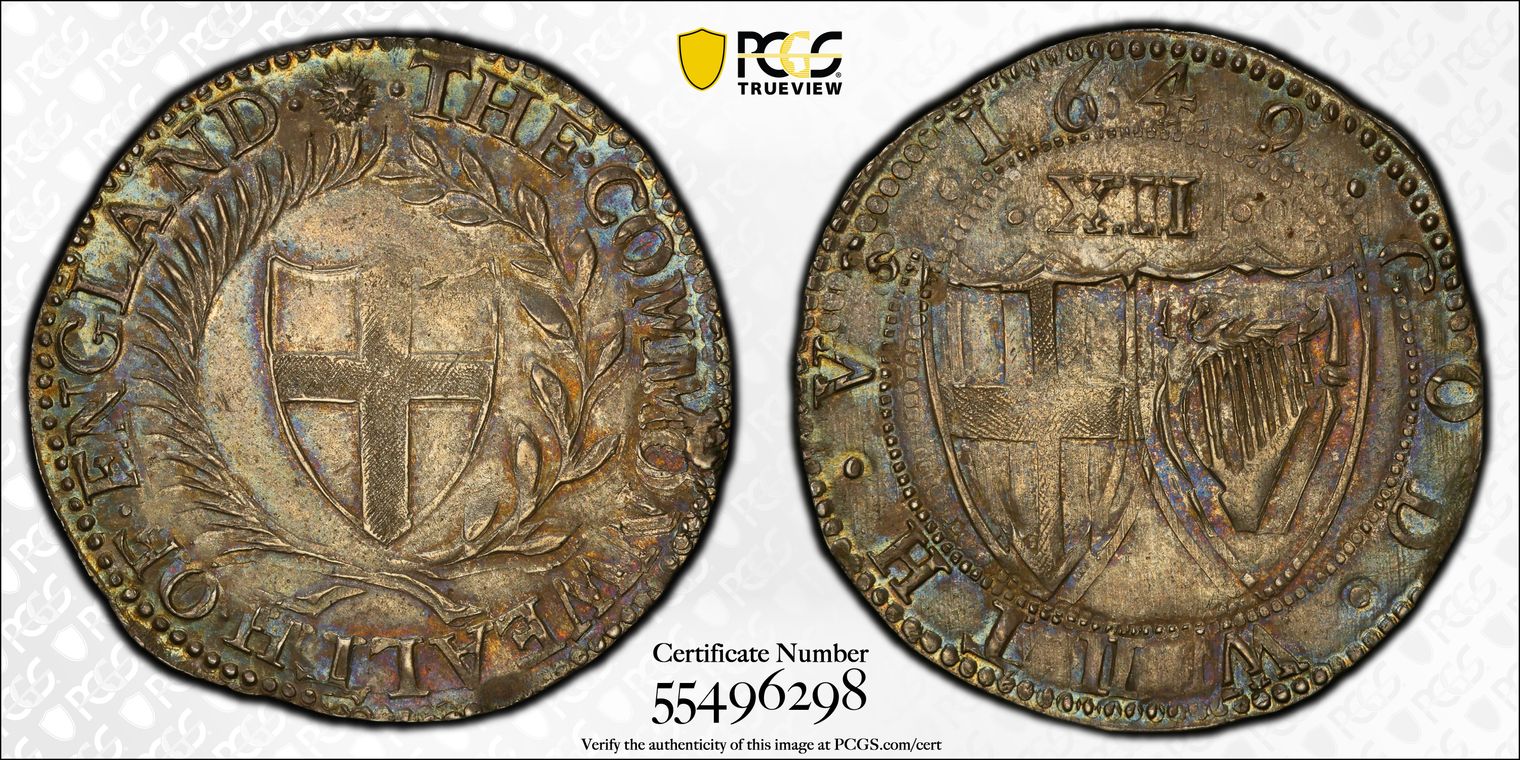
Elizabeth One (1649-?): Born Carisbrooke, Isle of Wight, Hampshire, England. Ex. S. Birchall of Leeds Graded MS63 by NGC #5953815-001
Marie Ann Purdue (1702-?): Christened 25 October St. Thomas, Winchester, Hampshire, England; married William Olding (1700-?) 14 November St. Lawrence, Hampshire, England. Maritje De Groot (1702-1763): Christened 18 January Brooklyn, Kings, New York Colony, British Colonial America; died after 10 August. John Mordecai Balderson (1702-1778): Born 22 September Norwich, Norfolk, England; married Hannah Cooper (1719-1792) 21 October 1737 Bucks, Pennsylvania, British Colonial America, died 9 July Solebury Township, Bucks, Pennsylvania, British Colonial America. Mary Davis (1702-1768): Born 9 January Davidsonville, Anne Arundel, Maryland, British Colonial America; married John Riggs (1687-1762) 16 January 1721 Anne Arundel, Maryland, British Colonial America; died 13 December Anne Arundel, Maryland, BCA.
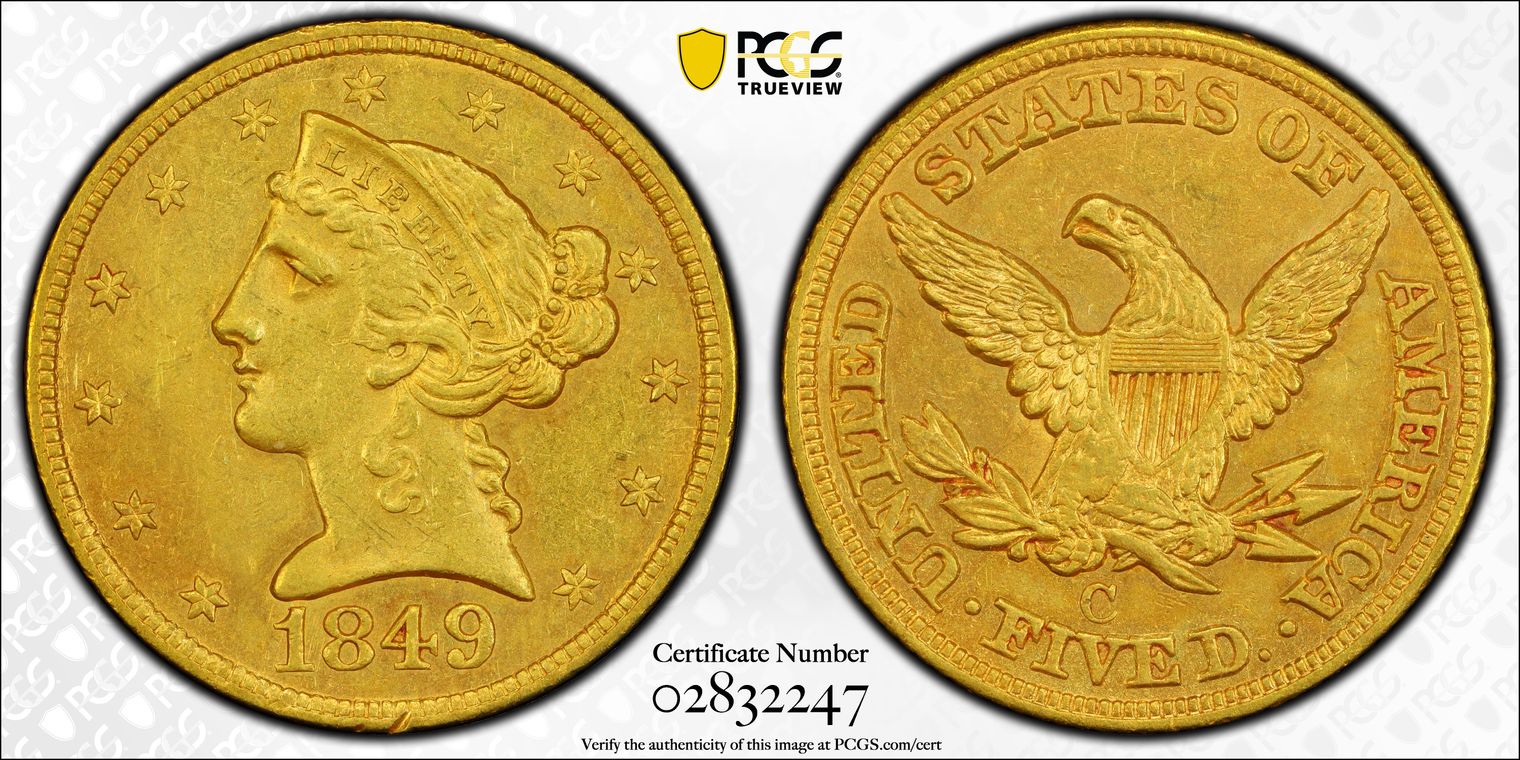
The 1849-C is the most available Charlotte half eagle produced prior to 1850. It is often compared to the 1848-C due to similar mintage but the 1849-C is more readily available, especially in higher grades. The 1849-C is among the more common half eagles from this mint. It is relatively easy to locate in Very Fine ad Extremely Fine grades and can be found in the lower About Uncirculated grades without a huge effort. It is scarce in the higher AU grades and rare in Uncirculated... This is among the best struck half eagles from this mint. As a result, the 1849-C is very popular with type collectors who are seeking a single, well-produced example of this denomination. The detail on the obverse is actually comparable to that seen on Philadelphia half eagles of this era. The hair detail is typically sharp with the exception of the curls below LIB in LIBERTY which range from soft to very soft. On most examples, the stars have full radial lines and the denticles are individually defined. The reverse is well detailed as well. The legs and claws of the eagle are usually full and the neck feather and shield are sharp. The only area that sometimes shows weakness is the tip of the eagle’s right wing. Most 1849-C half eagles show moderate to heavy abrasions in the fields. These are compounded by hairlines from past cleanings as well as mint-made striations in the fields. There are some examples with comparably clean surfaces, but these are the exception to the rule. The luster is often above average. Most show a slight frosty texture with a bit of graininess in the fields. There are a few 1849-C half eagles that have superb luster. These are extremely frosty and have an appearance that is not seen on many other dates from this mint. The color most often seen is a distinctive green-gold, sometimes with light orange-gold overtones. Some have a medium to deep yellow-gold color that can be very attractive. As recently as a decade ago, the 1849-C was among the easier Charlotte half eagles to locate with original color. Since then, many examples have been dipped or processed. Today, coins exhibiting original color are quite rare. The eye appeal for this date tends to be better than on most other Charlotte half eagles. That said, it has become difficult to find a piece that is free of surface marks and has original color and luster. Certain 1849-C half eagles have an unfinished patch on the reverse below the eagle’s left wing... There are currently two varieties known. Given the large mintage figure, I believe it is possible that others may be discovered as collecting Charlotte half eagles by variety becomes more widespread. The 1849-C is one of the most common C Mint Half Eagles and it appeared at auction more times in my survey than any other Half Eagle from this Mint. That does not mean that it is not rare, however, because it is, especially in strictly uncirculated condition.
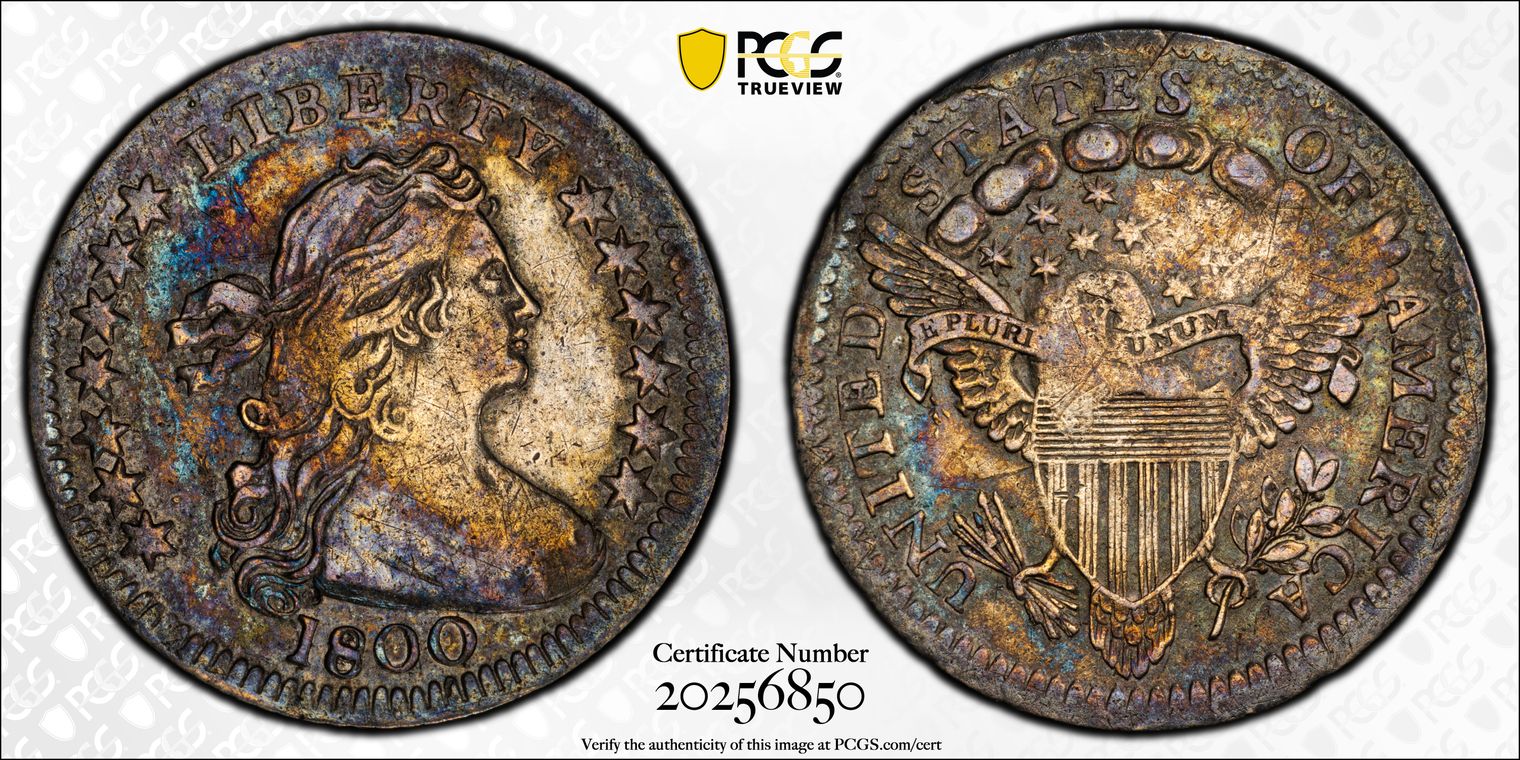
The 1800 LIBEKTY Half Dime was created when a defective punch was used for the R of LIBERTY. This was most likely an exercise in frugality, as the Mint in 1800 was underfunded, over budget, and they used their dies and punches until they became completely unusable. A similar situation occurred in 1796, when a defective B resulted in the LIKERTY variety. 40,000 Half Dimes were struck in 1800. Of those, 16,000 have been attributed to the LIBEKTY variety and 24,000 to the "normal" date. If this ratio were correct, one would expect the "normal" date to be 1.5 times as common as the LIBEKTY variety. However, this is not the case, at least not according to the PCGS Population Report. As of June 2011, PCGS reports having certified 256 of the "normal" date variety and only 50 of the LIBEKTY variety, thus making the LIBEKTY variety more than five times as rare as the "normal" date. This is a fairly big difference that implies a flaw in the estimated mintage figures. Current price guides value the two varieties almost exactly the same. Mint State examples are very rare, with the highest population at the MS-64 level. The finest example certified by PCGS is a single MS-66.
Sitie Probasco (1787-1868): Born 2 August New Brunswick, Middlesex, New Jersey, USA; died same.