



aj5831 Coin Album
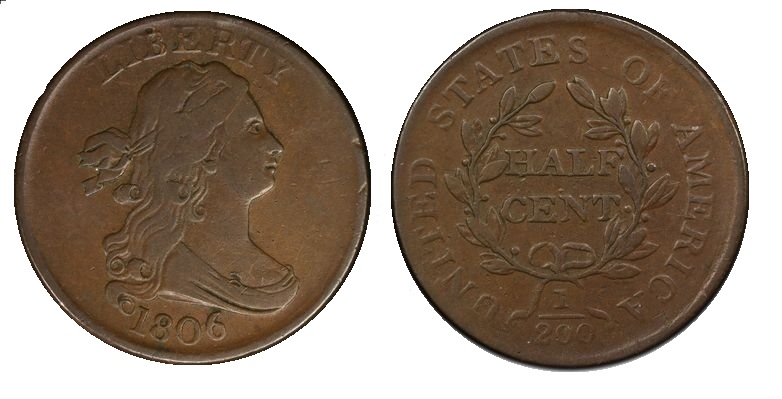
The number "6" in the date is completely separated from Liberty's bust (unlike the Large 6 variety, where the 6 is embedded in the drapery. The reverse laurel wreath entirely lacks stems extending below the ribbon bow.

A most impressive example of the type as well as the issue! This superb CAC gem is tied with 7 others as the finest known BN example at PCGS and is a prized addition to this early copper series. Smooth, satiny surfaces are aglow with dynamic mint luster and a beautiful blend of original mahogany tones. Sharply struck throughout, the quality of this piece cannot be overstated!
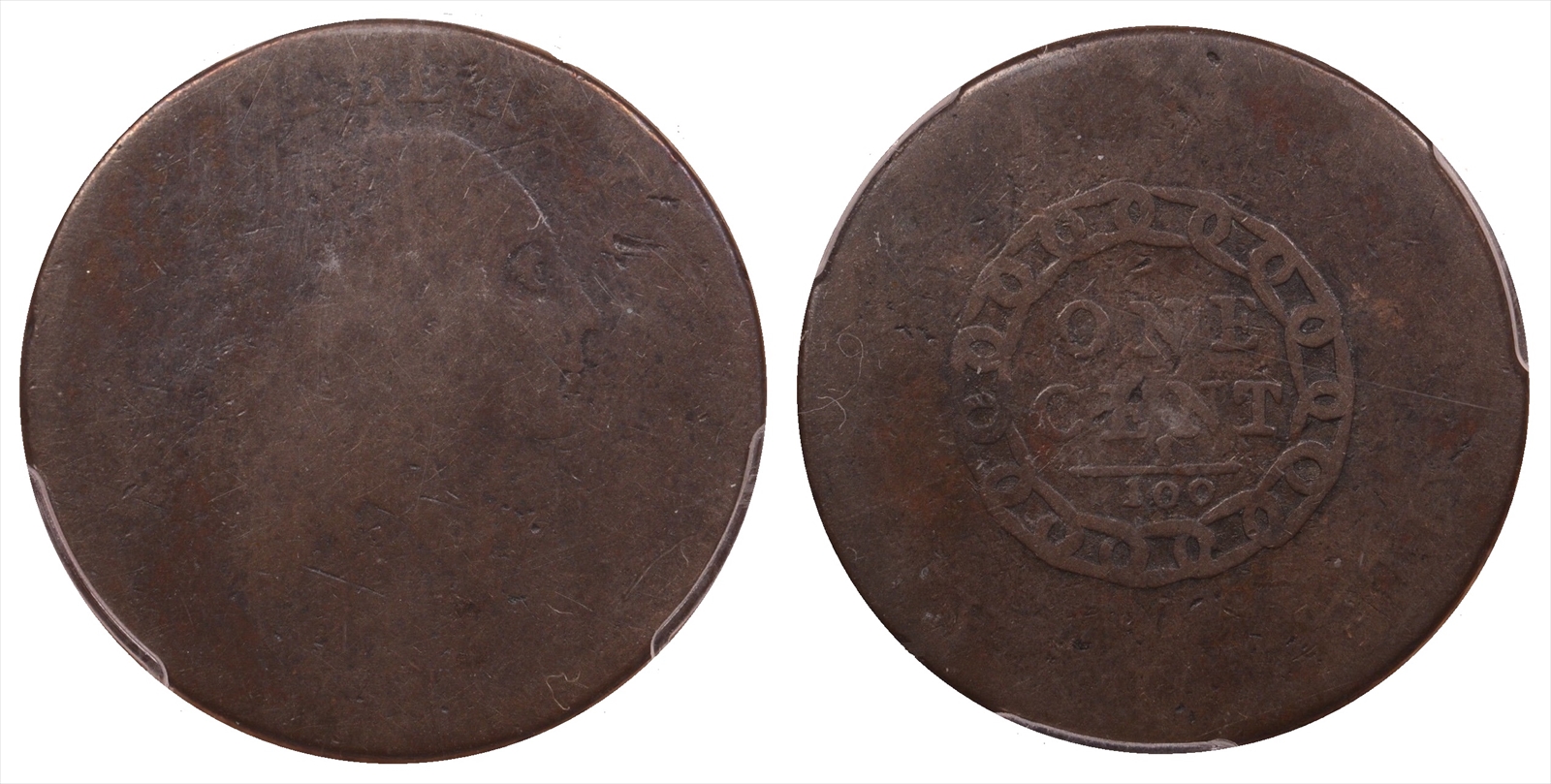
The 1793 Chain Cent in AG3 is far more interesting than its low grade suggests. In fact, AG3 is one of the most revealing and historically rich grades for this coin, because the wear exposes the raw, primitive character of the earliest U.S. Mint work. 1. It is the first regular‑issue U.S. coin ever struck for circulation: The Chain Cent was part of the March 1, 1793 delivery, the first day the U.S. Mint issued coins for public use. It was “the first regular‑issue one‑cent coin produced by the United States Mint” and “the first federal coin struck for circulation”. 2. The design was controversial — and AG3 shows the controversy clearly. The reverse chain was meant to symbolize unity, but the public hated it. Contemporary quotes were critical: The chain was seen as “a bad omen for liberty”. Liberty was described as “in a fright”. In AG3, the chain links are often still visible even when Liberty is heavily worn, making the symbolism easy to appreciate. 3. The coin was made with hand‑cut dies, and AG3 preserves the “primitive” look. Early Mint engravers cut dies by hand, leading to quirky, irregular features. Wide or close date spacing depending on variety. The LIBERTY letters are misaligned (especially the leaning R on S‑3). Staggered date numerals are punched at uneven heights. Even in AG3, these handmade characteristics often remain visible, and collectors love them. 4. The mintage was tiny — only 36,103 coins. Exact daily deliveries total only 36,103 pieces. For comparison, modern cents are minted by the billions (at least through 2025, but that's another story). An AG3 Chain Cent is rare simply because so few were made and even fewer survived heavy circulation. 5. The coin’s wear tells a story. AG3 means the coin circulated hard — likely for decades. This is historically meaningful because: - Chain Cents were used during the Washington administration; - They passed through the hands of early Americans when the nation was brand new; - Many were lost, damaged, or destroyed, making survivors special regardless of grade; - A well‑worn Chain Cent is a physical artifact of everyday life in the 1790s. 6. The S-2 variety is the scarcest of the four main varieties (excluding the ultra-rare NC-1). It features the wide date and the first use of the fully-spelled "AMERICA" reverse. Even in AG3, variety matters, and this is a desirable variety. 7. AG3 is an affordable entry into a coin that becomes extremely expensive in higher grades. Looking at the "sweet spot": - AG3: ~$5250 (recent auction) - VF25: $36,000 - XF45: $66,000 - $87,000 - MS65: $950,000+ AG3 is the "sweet spot" where collectors can own this historic coin without six-figure cost. Staggered date numerals punched at uneven heights Even in AG3, these handmade characteristics often remain visible — and collectors love them. Even in AG3, you are holding the earliest chapter of U.S. coinage history.

S-9, Pop 3/61. Both sides have smooth surfaces and pleasing mahogany-brown color. Good facial detail remains.

1793 S-13, PCGS Genuine. Ron Guth: "The 1793 Liberty Cap is one of the most desired types among early U.S. Large Cents. The typical example is low-grade, usually with one or more problems (corrosion, surface damage, cleaning, heavy marks, poor strike, etc.), so nice, problem-free examples command a significant premium. PCGS has identified only two examples with legitimate claims to the Mint State grade. No Red-Brown or Red examples exist. The finest example has a long pedigree going back to the late 1800's and includes names such as Thomas Cleaney, William H. Woodin, and Louis Eliasberg. It's current grade is PCGS MS64BN and it is part of the incredible High Desert Collection in the PCGS Set Registry."

1797 1C Reverse of 1797, Stems, S-135, B-5, R.3, MS66 Brown PCGS. Breen Die State IV or later. Small die chips are present above the C in AMERICA and light clash marks are noted above the top leaves of the wreath. Breen's Die State IV requires single clash marks below ES OF and his State V calls for double clash marks at the same location. This example is one of just six 1797 cents of any variety that PCGS has certified as MS66. Those grading events include two examples certified as MS66 Brown and four examples graded MS66 Red and Brown. The three Nichols Find varieties, including 1796 S-119 and 1797 S-123, are each more easily located in Mint State grades than in worn condition. The obverse is sharply detailed, and areas of blunt striking are evident on the lower leaves of the reverse, typical of the variety. Both sides have satin luster with traces of mint red on pleasing chestnut-brown surfaces. A tiny spot beneath the hair ribbons identifies the provenance of this piece that is remarkably free of abrasions. The eye appeal is remarkable for an eighteenth century large cent and would be a highlight of an early type set from the first Philadelphia Mint. Ex: T. James Clarke (1954); R.E. Naftzger, Jr. (2/23/1992); Eric J. Streiner; Superior (9/1997), lot 47; Superior (6/1999), lot 1471; Dallas Signature (Heritage, 11/2005), lot 2008; Stack's (1/2007), lot 26; Stack's (9/2007), lot 3077.

1812 S-289 Large Cent, MS64 Brown, Large Date, Beautiful Toning, B-4, R.1, MS64 Brown PCGS. Ex: Joshua and Ally Walsh. Breen Die State II, with multiple sets of clash marks visible in the reverse field. Deep golden-brown in color, the obverse in addition features hints of gunmetal-blue toning. Sharply struck on the major devices, the stars are also crisp although the fields are flowlined near the rims, due to the die state. The reverse is gorgeously undisturbed. The obverse is also extremely clean, with only two faint slide marks near the nose and a couple of minute flecks of aqua verdigris on the neck, though this has improved significantly since its 1993 appearance. Just one finer Large Date certification exists at PCGS, Bland provided an EAC grade of AU55 in 2000, tying it for CC #3, and Noyes assigned AU50 (AU50) Average in 2015, tying it for CC #6. PCGS Population (all Large Date varieties): 7 in 64, 1 finer (5/26). Ex: Public Auction Sale (Stack's, 1/1993), lot 1169; Lee J. Bellisario; potential unknown intermediaries; May 29, 30, 1995 Auction (Superior, 5/1995), lot 2031 (as MS64 NGC); The Greenwald and Jackson Collections sale (Bowers and Merena, 9/1995), lot 1139; unknown intermediaries; The Joshua and Ally Walsh Collection of United States Cents / FUN Signature (Heritage, 1/2006), lot 3031; Continuous Internet Auction (Heritage, 2/2006), lot 23007, $24,150; The ESM Collection (Stack's Bowers, 8/2020), lot 1063, $14,400; Long Beach Signature (Heritage, 2/2023), lot 3692, $15,000.. From The Fairfax Type Set of U.S. Coins.

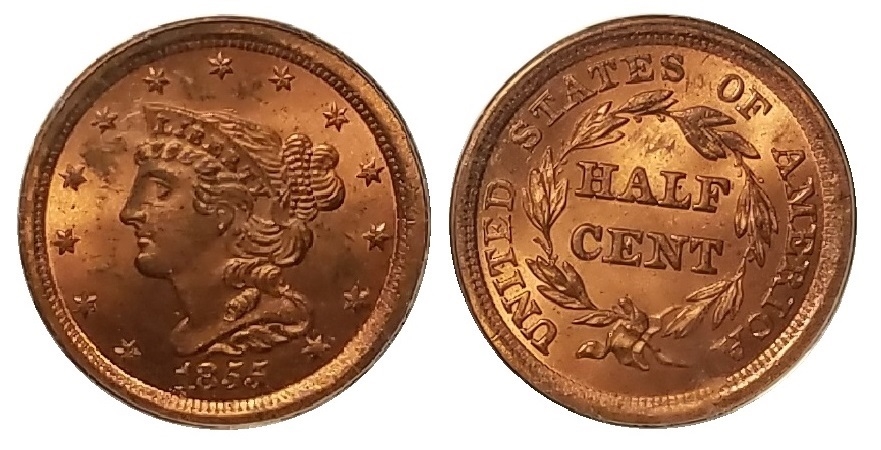
Newcomb 13 in MS65RB is a scarce and highly sought die variety of the Coronet cent. The N-13 variety features medium letters and the Head of 1936, which distinguishes it from other 1837 large cent varieties.

1853 1C N-25, R.1, MS65 Red PCGS. Die State b, typical of high-end Red hoard coins. Newcomb-25 is identified in part by the re-punching visible at the base and peak of the 1 in 1853. Attractive, brilliant copper luster adorns this example, and only a handful of non-detrimental marks are present, with carbon faint. The strike is sharp along Liberty and the wreath, though the stars appear flat which is expected of the issue. Amongst all varieties, the issue is scarcely seen finer in Red with just 20 seen by PCGS (7/26). Ex: Regency Auction XXI (Legends, 5/2017), lot 100; August Premier (Legends, 8/2017), lot 7; November Premier (Legends, 11/2017), lot 2. Coin Index Numbers: (NGC ID# 226K, Variety PCGS# 403925, Base PCGS# 1903, GSID# 241227) Metal: 100% Copper Weight: 13.48 grams Weight: 0.47549oz Mintage: 6,641,131
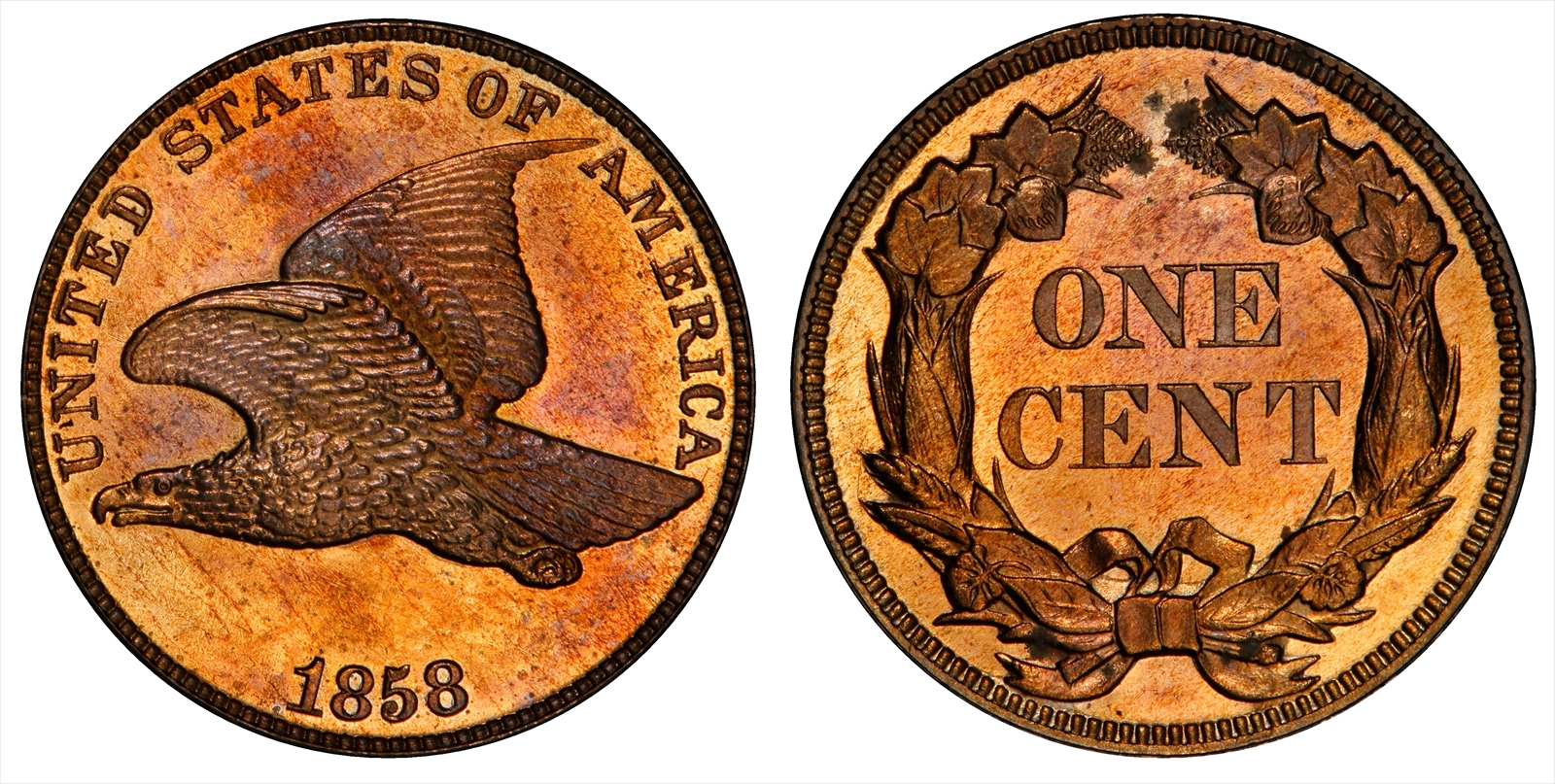
HA #1341 Orlando (1/22), ex-Palm Beach Collection; ex-Bob R. Simpson Collection. 1858 Flying Eagle Cent, PR65+ Cameo Snow-PR1, Large Letters. A single die pair is known for the 1858 proof Flying Eagle cent. This issue is scarce in all grades and seldom seen as a Cameo in Gem condition. In The Flying Eagle & Indian Cent Attribution Guide, third edition, Rick Snow writes: “The estimated mintage of 100 is derived from the 80 silver sets reportedly sold plus a small mintage of pattern sets, no more than 20. The number of survivors seems to fit these figures and serve as a reasonable starting point. I would estimate that about 50 examples exist today.” The Simpson coin is a Plus-graded Gem with attractive field device contrast. Razor-sharp definition complements reflective fields and rich copper-orange and violet toning. No distracting contact marks are seen, and there are just a few minor flecks beneath a loupe. Population: 7 in 65 (3 in 65+) Cameo, 2 finer (11/21). NGC ID# 227C, PCGS# 82042
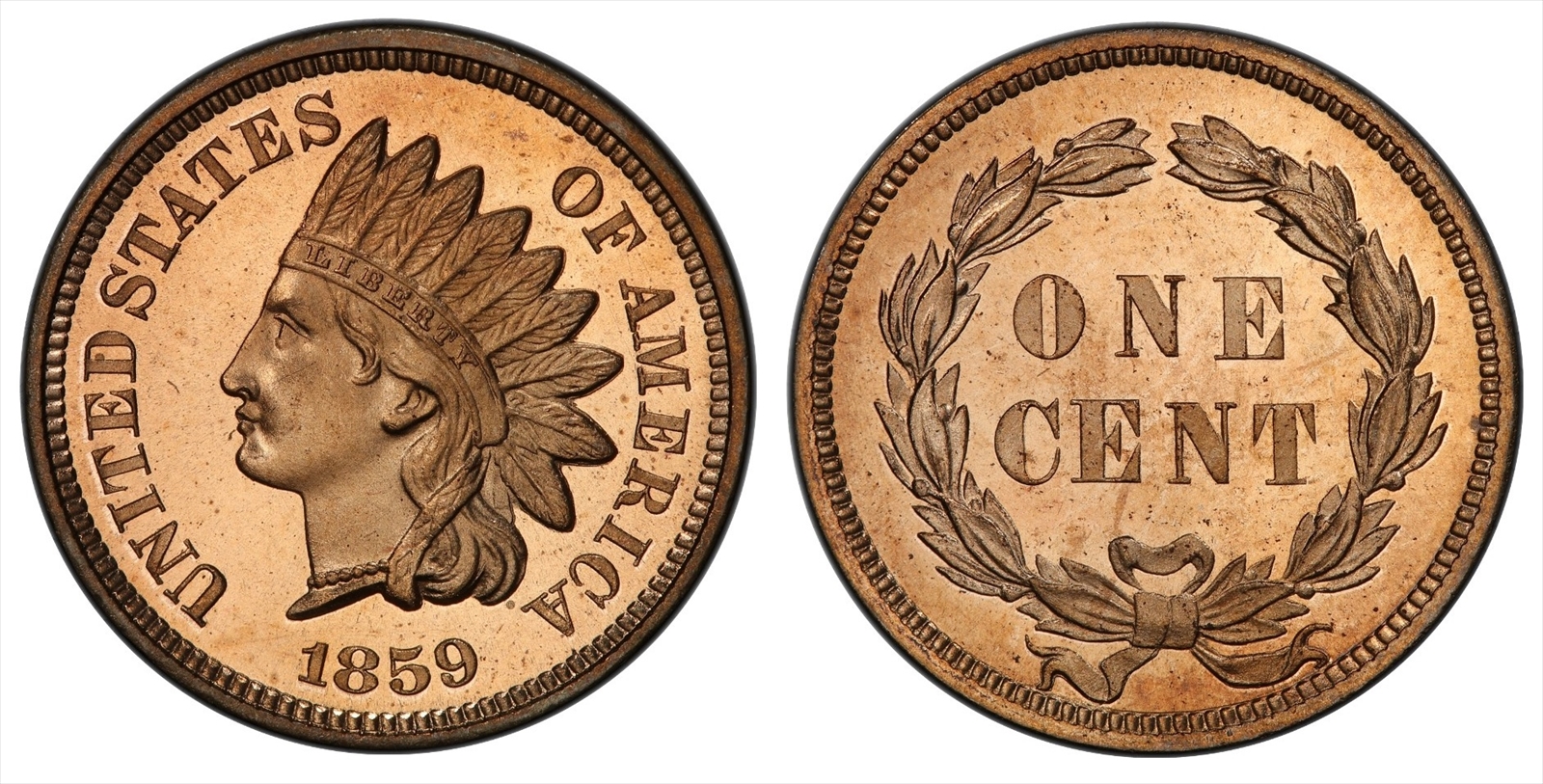
Thank you to Rick and EERC (1/19). Rick listed this lovely one-year type on his site just before the Whitman/Baltimore show, I saw it and knew it could be gone before I could react, so I purchased it early that morning before departing, and chatted with him about the coin the next day at the show. He wouldn't say much beyond that the seller was moving in a new direction. Rick asked if I had seen the (only) PR67 -- I had not -- and related that it lacked eye appeal and that this coin was much more appealing.
_original.jpg)
Thank you to Steven Contursi and RCW (3/19). Previously changed hands at Heritage Orlando FUN $5980 (1/03), but very likely there were other owners in between.
_original.jpg)
Top Pop/CAC. LRCA (1/20). Thank you to Greg/LRCA for recognizing the upgrade potential to CAM from PR67+RD. An EXTRAORDINARY wonder coin! From the catalog: "This stunning SUPERB GEM is the FINEST KNOWN for the date at PCGS and quite possible for the DATE. The quality is unbelievable! Bottomless mirrors are clean, clear and deep and reflect back incredibly rich, golden fiery orange and electrifying pink hues! Thick frost graces the needle sharp design elements which contrast boldly against the amazing mirrored fields. The eye appeal is simply STUNNING in every way! PCGS 1, NGC 1, CAC 1. There are NO auction records for a PR67 or 67+ graded coin. This piece is the pioneer! To put things in perspective, we sold a PCGS PR66 RD CAMEO in our Regency Auction 34 for the staggering sum of $23,500! Dare we suggest that if you bill yourself a PERFECTIONIST you will be kicking yourself for life if you let this incredible coin get away. Don’t put the bidding paddle down until you own it! We anticipate this coin will set a record price! Cert. Number 38305005 PCGS # 82392.00PCGS # 82392.00."

There are only 3 coins graded PR69DCAM over the entire wheat cent series, with none graded higher; this is one of the three.

There are only 3 coins graded PR69DCAM over the entire wheat cent series, with none graded higher; this is one of the three.
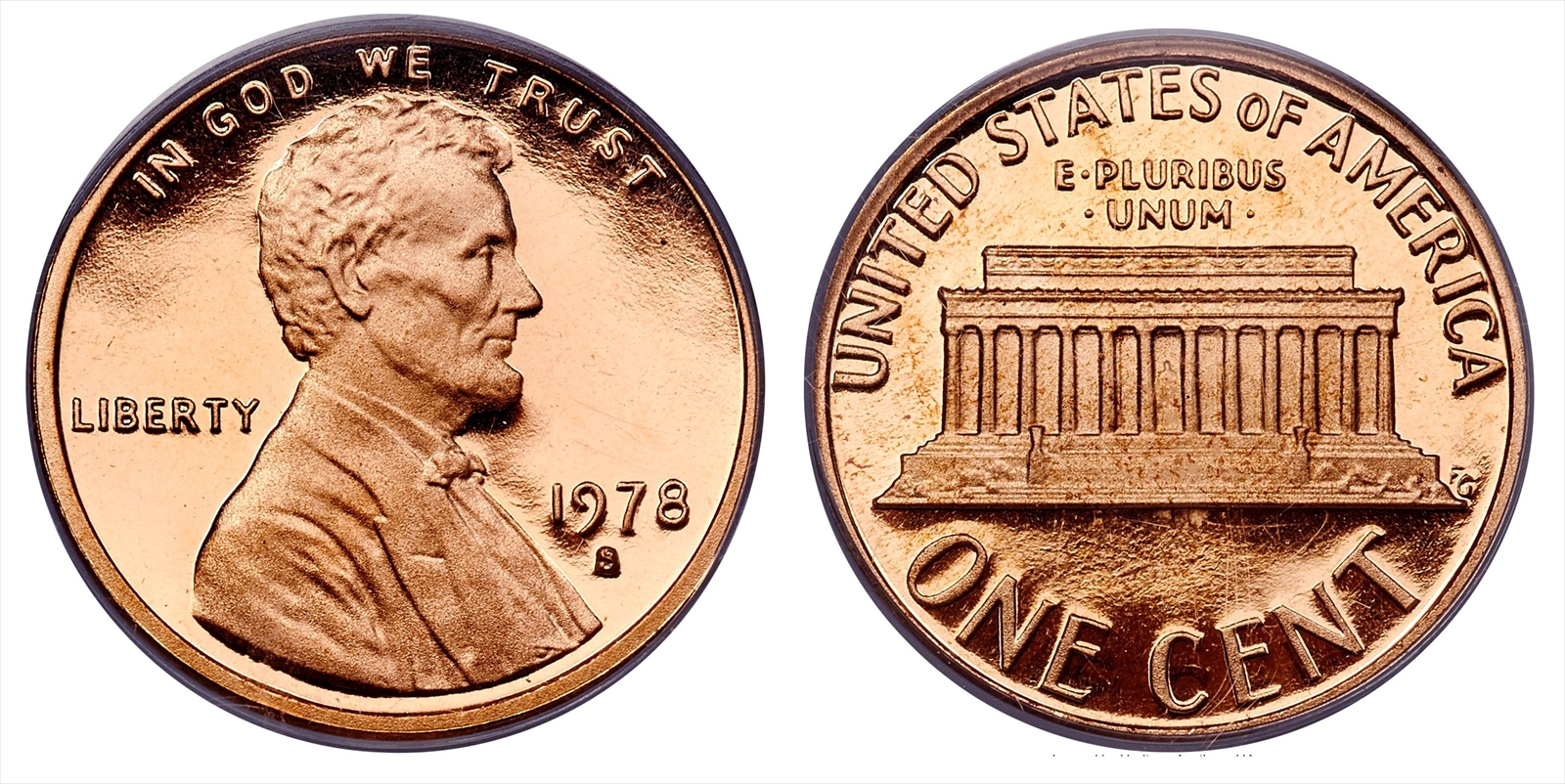
Ex-Newman, part of his 1978 date set, Heritage (1/18). Pristine and starkly contrasted with original copper,red color. Under a loupe, a dusting of microscopic cherry-red flecks are visible on the reverse. The cent is rare in this grade at PCGS (only 13 so,graded at that service). (11/17)

A perfect modern strike with no imperfections even at 5x magnification. Valued for its pristine aesthetic and long-term liquidity.

A perfect modern strike with no imperfections even at 5x magnification. Valued for its pristine aesthetic and long-term liquidity.

A perfect modern strike with no imperfections even at 5x magnification. Valued for its pristine aesthetic and long-term liquidity.

A perfect modern strike with no imperfections even at 5x magnification. Valued for its pristine aesthetic and long-term liquidity.