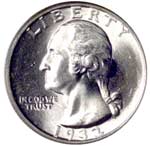
Reprinted with permission from David Hall's Inside View.
Rare coins are wonderful. They can offer you tremendous long-term enjoyment and financial rewards. In this issue of the INSIDE VIEW, we're going to present the best strategy for maximizing your fun and long-term profits in the rare coin market.
I've been watching people buy coins for 41 years and I've been a major player in the coin market for 28 years. I've seen billions of dollars worth of rare coins trade hands and have watched tens of thousands of people buy and sell coins. To a person, the buyers who had the most fun and made the most money did three things. They bought great coins, they took a long-term view, and they built sets.
BUY GREAT COINS
If you want to have fun with your coins, buy great coins. If you want to have maximum long-term profit potential, buy great coins. It's that simple. In all collectibles markets, it is the best items that cause the most excitement with buyers. It is the top-of-the-line items that are the best long-term price performers.
It's human nature to want the best. For rare coins (and all other collectibles), the desire to own the best is one of the major demand drivers for the market. In general, we recommend coins that grade MS/PR65 or better, the coins that are referred to as Gem quality. But even if you can only afford to buy the more expensive dates in a set in VF30 condition, buy the best VF30 example you can find. Nobody likes low-end or mediocre coins. If you want to have fun and make money long-term, buy great coins!
THE LONG-TERM APPROACH
Rare coins are about history. Rare coins are about the aesthetic beauty of the coining art. Rare coins are about having fun. And finally, rare coins are about building long-term value. Rare coins are not about short-term trading profits.
With few exceptions, the coin buyers I've seen reap the most fun and profit from their adventures in rare coins are those who took a long-term approach. If you want to maximize your enjoyment and long-term financial potential with rare coins, you have to take a Warren Buffett approach. You have to have patience and think long-term value.
THE SET BUILDING STRATEGY
The real "secret" to having fun and building long-term value with rare coins is set building. With few exceptions, the people I've seen have the most fun and make the most money with coins are those who put together complete sets of coins.
Putting together a complete set of a certain type of coin is fun. First of all, you'll learn all about the coins in the set... which ones are the rarest... the differences in appearance of each of the issues... the history behind each issue. Second, there's a tremendous sense of accomplishment that comes from completing a set. It takes time and effort. Some sets can be completed in 6 to 24 months. Some sets take 3 to 5 years. A few sets take longer. But when you are done, you'll really have something special.
The long-term financial benefits of set building are tremendous. The fact is that complete sets are worth more than individual coins. When it's time to sell, the total set is worth more than the sum of its parts. The "set premium" depends on the importance of the set and the quality of the coins in the set. Sometimes the set premium is small, but sometimes it is huge... up to double the value of the individual coins. Sometimes it is so significant that coins from the famous sets continue to carry a premium long after the set has been broken up, examples being coins from the Louis Eliasberg complete collection of U.S. coins, the Harry Bass gold coin collection, and the Jack Lee silver dollar collection.
The financial benefit of set building is a straight bottom line phenomenon. Here's how it works. If a complete set has a set premium of only 10%, the day you put the last coin in the set you add 10% to the value of every other coin on the set. It's like free money! But, of course, it's not really "free" because it takes time, patience and money to build a complete set.
PICKING YOUR SET
Using set building as your coin market focus obviously offers the most enjoyment and financial potential. But what are the best sets for you to build? This INSIDE VIEW will help you decide.
The number one consideration in your set building choices should be your personal preference. You should always buy the coins YOU like... and you should build a set(s) of YOUR favorite coins.
With that said, we're prepared to offer you a little guidance by presenting a list of OUR favorite sets. We've chosen our favorite ten sets, and these top ten choices were a collective enterprise. I sat in the office with Van Simmons and John Rothans of the DHRC staff and we bounced the numbers around for hours. What sets offer great value and potential, are popular, are reasonably affordable, are fun, are challenging, are beautiful and still not impossible to locate? We finally whittled the list down to the best ten, with some add-ons at the end that we think are worthy of consideration as well.
In addition to listing the sets that offer what is in my opinion the best values, I've also listed the rarity (the maximum number it would be possible to build if the coins magically became available) and a difficulty rating. This rating ranges from one to ten, with "one" being the easiest, such as building a set of statehood quarters from circulation. I've also included an estimate of the time involved to "finish" a set.
I've listed prices for each set. The prices listed are the single coin prices for a set that is composed of coins in one grade. In other words, the prices I've listed are the prices for the set if every coin magically appeared today at the single coin price. Note that most people build sets of mixed grades, buying the best grade within their set budget for each coin in the set. You can build a set in one single grade or in mixed grades. Either way is fine as both approaches garner all of the set building benefits.
THE TOP TEN SETS
1. Proof Mercury Dimes (1936-1942) $2,000-$20,000. This set is beautiful. This set is completeable. This set is affordable. This set is a ghost (a whisper, a particle) of its former self pricewise, yet it offers everything that collectors of proof coins usually want. There are only seven coins in the entire set, but it still offers enough of a challenge to make it fun. There are no cameo coins in the set, although occasionally you'll find a touch of contrast between the fields and devices. Sets are collected in full brilliance, mixed brilliant and toned, and toned. If you want to spend years on the set (some collectors do) you can put the set together with matching rainbow toning (at a huge price premium).
Difficulty rating: 4, with six to twelve months to build.
Possible sets PR65OB*: 499
Price in Proof 65: $2,075Possible sets PR66OB: 190
Price in Proof 66: $3,200Possible sets PR67OB: 25
Price in Proof 67: $7,500Possible sets PR68OB: one!
Price in Proof 68: $20,000-25,000* OB means "or better."
2. Proof Walking Liberty Half Dollars (1936-1942) $6,500-$85,000. Is there a silver coin struck in proof that can touch this design for overall appeal? Perhaps the Gobrecht dollar. Possibly some of the Longacre patterns. Whatever coins can mount a challenge will make for a short list. That is for certain.
The proof Walking Liberty half dollar was issued for only seven years. They were first issued in 1936 with a tiny mintage of 3,901 coins. The 1936 date is the key to the series, but all of the coins in the set are available for a price, and that price is an absolute bargain.
As is true with the proof Mercury dime set discussed earlier, the proof Walking Liberty half dollar set covers only seven years (1936-42). When you show off the completed set be ready for the inevitable question: "Will you sell it to me? Please?"
Difficulty rating: with 4 to 5, 6 to 24 months to build.
Possible sets PR65 or better: 444
Price in PR65: $6,500Possible sets PR66 or better: 130
Price in PR66: $8,300Possible sets PR67 or better: 8
Price in PR67: $23,000-$25,000Possible sets PR68 or better: one!
Price in PR68: $75,000-$85,000
3. Mint State Washington Quarters (1932-1964) $20,000-$75,000. This set is a challenge for an unusual reason: the common dates are really tough! That sounds like an oxymoron, but the fact is that many of the "common" issues are so inexpensive that not many have been submitted for grading over the years. For instance, the 1948-D (not a rarity by any stretch of the imagination) has roughly the same population in MS65/better as the always-elusive 1934-D.
This set is collected many ways, with the three most frequently assembled sets being a complete one (1932-current), a silver set (1932-64) and a clad set (copper-nickel over a copper core) from 1965 to date. The one we recommend is the set of silver coins.
The popularity of this set has exploded with the introduction of the statehood issues. This growth is certain to continue, and it's definitely time to get involved with this long and historic series.
Difficulty rating: 7, with one to two years to build.
Possible sets MS65OB: 30
Price in MS65: $21,000-$22,000Possible sets MS66OB: one!
Price in MS66: $50,000-$55,000(Note: these numbers exclude die varieties)
4. Proof Barber Coinage (1892-1915) $37,500-$450,000. Barber proof coins were issued from 1892 through 1915. There were circulation strikes issued in 1916 for the dime and quarter denominations, but no proofs. So, for each set, we're talking about 24 coins for completion, or 72 coins for each date and denomination in the mega-set.
Proof Barber coins are beautiful and extremely popular. None of the sets has a major "stopper," a coin that is so expensive or elusive that it will keep you from the goal of completion. There are numerous tough coins in these sets, though, that will make the challenge a lot of fun.
There are two things about building these sets that comprise wonderful news. One, every coin in the three sets sells at or near "type coin money." This means that the most common coin and the rarest coin in each set have similar (but not exactly the same) prices. Two, the prices are near historic lows since PCGS certification began in 1986.
Barber dimes: Difficulty rating: 7, 1 to 2 years.
Possible sets PR65 or better: 22
Price in PR65: $37,500-$42,500Possible sets PR66 or better: 11
Price in PR66: $60,000-$65,000Possible sets PR67 or better: 7
Price in PR67: $100,000-$110,000Barber quarters: Difficulty rating :7, with 1 to 2 years to build.
Possible sets PR65OB: 22
Price in PR65: $40,000-$45,000Possible sets in PR66OB: 11
Price in PR66: $72,500-80,000Possible sets in PR67OB: 5
Price in PR67: $125,000-$135,000Barber halves: Difficulty rating : 7 to 8, with 1 to 2 years to build.
Possible sets PR65OB: 20
Price in PR65: $90,000-$100,000Possible sets PR66OB: 10
Price in PR66: $120,000-$130,000Possible sets PR67OB: 2
Price in PR67: $ 220,000-$250,000Complete set of Barber dimes, quarters, and halves:
Possible sets PR65OB: 20
Price in PR65: $175,000-$190,000Possible sets PR66OB: 10
Price in PR66: $260,000-275,000Possible sets PR67OB:2
Price in PR67: $ 450,000-$500,000
5. Silver Commemoratives (1892-1954) $47,000-$200,000. The "golden years" of silver commemoratives were from 1892 (the first issue) through 1954. During this period there were 50 design types issued, comprising 48 half dollars, the Isabella quarter and the Lafayette dollar. There are 144 pieces in a date set that includes all years and mintmarks. Most commemoratives were a single issue (such as the Elgin or Delaware), some included a variety (such as the Missouri or Grant) and some became sets of their own, such as the Texas (with 13 different date and mintmark combinations).
The greatest news is the current price level, which is so attractive that you can now build three sets for what one used to cost and still have money left over for a trip to Hawaii. The second-best news is the price compression in the marketplace that allows you to buy many of the dates in MS66 for a small premium over MS65 prices. The third-best news is that this series is becoming highly popular once again due to the bargain price levels and the broadening interest from the statehood quarter program.
This series is filled with coins that have tiny mintages. It is true that most of the issues didn't circulate (so there's an extremely high survival rate in comparison to circulation issues from the same eras, such as Barber half dollars), but there are still some scarce coins to try and locate, especially in MS66 and better condition. Fun. Attractive. Historical. Great value. Highly educational. It's time to get started on a set for yourself!
Difficulty rating: 5 (for the 50-piece set) and 7 (for the 144-piece set), with 6 to 18 months to build.
Possible 50-piece sets MS65OB: 124
Price in MS65: $47,500-$50,000Possible 50-piece sets MS66OB: 7
Price in MS66: $100,000-$125,000Possible 50-piece sets MS67OB: zero!
Possible 144-piece sets MS65OB: 84
Price in MS65: $100,000-$125,000Possible 144-piece sets MS66OB: zero!
6. Peace Dollars (1921-1935) $100,000 plus. Wow, does this series make a great set! It is a wild mixture of common and rare. You can get started for about $100 per coin (1922, 1923, 1924, 1925), cruise for awhile through the sub-$1,000 coins, and then hit some magnificent rarities at the end with prices in excess of $20,000 each in MS65 (1925-S, 1928-S). Many collectors opt for placing flashy MS64 coins in the key date slots and still end up with a wonderful collection.
There are only 24 coins in the set, recalling post-World War I America of the Roaring '20s (1921-28) and then skipping forward to two years of the Great Depression (1934-35). The design of this coin exhibits broad expanses of plain fields that are accented by a rousing central motif.
Difficulty rating: 8
Possible sets MS65 or better: 24
Price in MS65: $100,000-$105,000Possible sets MS66 or better: zero!
7. $2½ Indian Gold. (1908-1929) $100,000 and up. This is the only set of circulation strike gold coins that can be assembled in MS65 for less than a zillion dollars. Okay, that's a mild exaggeration (or ambiguity). The 11-piece commemorative gold type set can be completed, but those coins (as great as they are) weren't issued for circulation, although many of them eventually did reach the world of commerce at face value.
This splendid set includes 15 coins, one major key (1911-D) and several semi-key issues. The "common dates" are currently in the $2,000 range in MS65, which is an all-time low in the certified era. The semi-key dates cost about a third of their previous highs (1914) to about half of their previous highs (1914-D). A popular series that is an attainable goal and an excellent value.
Difficulty rating: 8, with 2 to 3 years to build.
Possible sets MS65 or better: 12
Price in MS65: $100,000-$120,000Possible sets MS66 or better: zero!
8. Proof Morgan Dollars (1878-1921) 180,000-$500,000. This is an amazingly popular set, especially when you consider the expense. Even though the purchase of a single coin in Proof 65 condition involves an outlay of $5,700 (Coin Universe Daily Price Guide, December 2000) and a complete set covers two decades and parts of two (or three) others, dedicated collectors forge ahead. Why? They're Morgan dollars!
This set is collected with a couple of minor options. Some collectors ignore the 1921 Zerbe and Chapman proofs because there is no official Mint record of their strikings and the coins were made differently, with sub-par results. Many collectors also feel that their set is complete without the 1878 7TF (7 Tail Feathers) Round Breast (Reverse of 1879) variety. This coin is unknown in Proof 65 or better condition, the mintage figure (50) is an estimate, and some feel that the coin is technically a die trial pattern. What's important is how YOU feel about it.
Most of the coins in this set trade at "type coin prices," a term that was explained above. The famous 1895 is also an important part of this great set. The 1895 is not any rarer than any other date in the series per se, but there are no circulation strikes known to exist, so every Morgan dollar set that is built, whether proofs or circulation strikes, needs this coin. The tremendous demand for the 1895 in any condition has made it a numismatic treasure for many decades.
Some of the dates of the series are found with heavy cameo devices. This highly desirable characteristic is most frequently found on the 1880, 1882, 1896 and 1898 dates, but it is found at times on almost all dates. Cameo devices are extremely rare on the 20th century dates of the series, especially 1902, 1903 and 1904.
Difficulty rating: 8 to 9 (excluding 1878 7TF Round Breast and 1921 issues), with 2 to 4 years to build.
Possible sets PR65OB: 8
Price in PR65: $180,000-$190,000Possible sets PR66OB: 4
Price in PR66: $250,000-$275,000 Possible setsPR67OB: zero!
9. Mint State Walking Liberty Half Dollars (1916-1947) $375,000-$750,000. The 1921-S! The 1919-D! The 1917-S Obverse! For as long as I've been going to coin shows and talking to collectors these have been magic coins in Gem quality. Today they are as exciting as they ever were, with their combination of extreme rarity and ethereal beauty. Not only is this a great set, but the prices are the most opportunistic in years. The INSIDE VIEW took an in-depth look at this series several months back and I'm still as enthusiastic about these coins now as I was then.
Difficulty rating: 8, with two-three years to build.
Possible sets MS65 or better: 7
Price in MS65: $375,000-$400,000Possible sets MS66 or better: one!
Price in MS66: $575,000-$625,000
10. Type Coin Sets (1792 to date). What is a type coin? It is a coin that is representative of a specific coin design. A type coin is usually one of the most inexpensive coins of a particular series. If you have a 1942 Walking Liberty half dollar in MS67 (for instance) you might hear someone say: "That's not a rare date but it's a magnificent type coin!"
Collecting by type has become one of the most popular collecting options because it maximizes diversity of the collection while keeping costs under control. There are hundreds of different ways to collect type coins, and here are the most popular.
Copper (1793 to date) - A complete collection of copper type coins will begin with the half cents, of which there are six types. In the Large cents category there are three major type coins in the first year of issue alone.
Then come the Small cents including the Flying Eagle cent (1856-58), the 1859 Indian with the one-year reverse, one of the copper-nickel Indians of 1860-64, one of the bronze Indian cents with the "L" added to the ribbon (1864-1909). The Lincoln cents include the basic "wheat-back" reverse of 1909-58, the steel cent of 1943 (collected as a copper type coin). Then there's the Lincoln Memorial reverse that begins in 1959 and so forth. Even then you're not through, as it's time to look at the two cent pieces of 1864-73.
Difficulty rating: 8, with 2 to 4 years to build.
Possible sets MS65OB (with rarities in MS63BN): 3 to 5
Price in MS63/65: $500,000-$1,000,000
Nickel (1865 to date) - The nickel type coins begin in 1865. The three cent nickel (1865-89) has only one type, but the five cent nickel is filled with different designs and modifications from 1866 to the present time.
Difficulty rating: 4, with 6 to 12 months to build.
Possible sets MS65OB: 60
Price in MS65: $4,750-$5,250
Silver (1792-1964) - A type set of half dimes could include the romantic and historic 1792 half disme or begin with the first Philadelphia Mint issue design of 1794-95. The dimes and quarters begin in 1796, while the half dollars and dollars were first issued in 1794. The twenty cent piece was added to the U.S. series much later, being issued for the first time in 1875. The options for a silver type set are endless. Should you use one silver dollar to represent the series, or a vast array of Flowing Hair, Bust, Liberty Seated, Trade, Morgan and Peace examples of the highest quality?
Difficulty rating: 8, with 2 to 4 years to build.
Possible sets MS65OB (with rarities in MS63): 1 to 3
Price in MS65: $1,100,000-$1,500,000
Gold (1795-1933) - Many new collectors are first introduced to the joys of coin collecting and set building through the 8-piece gold type set. This famed set is composed of the $2½ Liberty and Indian, the $5 Liberty and Indian, the $10 Liberty and Indian, and the $20 Liberty and St. Gaudens. From there, the set is expanded to 12 pieces with the addition of the $3 gold piece and the three different gold dollar types. The "type two" gold dollar is the major key of the 12-piece set, with the $3 gold piece not far behind.
A truly complete set of U.S. gold coins includes many more types. "I love the $5 gold pieces," said a collector, "but I could never complete a set in the quality I demand even if could afford it." There's a solution to that problem, and that solution is collecting one of each type.
Difficulty rating: 8, with 2 to 4 years to build.
Possible sets in MS65OB (with rarities in MS63):1 to 3
Price in MS63/65: $1,000,000-$1,500,00
OTHER GREAT SETS
We've listed our favorite ten sets but there are dozens of other fabulous sets you could build. Here are a few of the great sets you may want to consider:
Indian Cents, Mint State, (1859-1909)
Indian Cents, Proof, (1859-1909)
Lincoln Cents, Mint State, (1909-1959)
Two Cents, Mint State, (1864-1872)
Two Cents, Proof, (1864-1873)
Three Cent Nickels, Mint State, (1865-1889)
Three Cent Nickels, Proof, (1865-1889)
Three Cent Silvers, Mint State, (1851-1872)
Shield Nickels, Mint State, (1866-1883)
Shield Nickels, Proof, (1866-1883)
Liberty Nickels, Mint State, (1883-1912)
Liberty Nickels, Proof, (1883-1913) Buffalo Nickels, Mint State, (1913-1938)
Buffalo Nickels, Proof, (1913-1937)
Bust Half Dimes, Mint State (1829-1837)
Barber Dimes, Mint State, (1892-1915)
Mercury Dimes, Mint State, (1916-1945)
Barber Quarters, Mint State, (1892-1916)
Standing Liberty Quarters, Mint State, (1917-1930)
Washington Quarters, Proof, (1936-1964)
Franklin Halves, Mint State, (1948-1963)
Seated Dollars, Mint State or Proof, (1836-1873)
Trade Dollars, Mint State or Proof, (1873-1885)
And if you're a real big boy, any of the numerous gold coin sets. The modern sets are also fun, and they're relatively inexpensive. If you have children, you can teach them the value of money and the joys of coin collecting by building sets of States Quarters, Modern Commemoratives, Roosevelt Dimes, or other modern denominations.
THE "BIG BOY" SETS
Some sets are out of the financial reach of most collectors. Notice that I said "most." For a fortunate few it's not a matter of price, but a matter of "What do I collect that will be fun and meaningful and challenging? What is rare and numismatically significant and promising for the future and offers value? What is the best deal regardless of the price?" Here are three suggestions:
1. Morgan dollars (1878-1921). The Jack Lee set of Morgan dollars sold for over $8,000,000 a couple of years ago and he kept four of the most significant coins in the set for himself! The Wayne Miller set was broken up in early 1986, the Bodway collection was sold in the early 1990s, and the famed "NFL set" was just auctioned. This makes NOW the opportunity time, because a few coins that you almost never see at ANY price are momentarily available.
People LOVE Morgan dollars, and much of the market is moved by popularity, even to the exclusion of rarity. Putting together a gem quality set is an awesome challenge, but it will make you numismatically immortal and the envy of at least half of the coin collecting world. The other half will be equally envious, but they just won't admit it!
The 1884-S, 1889-CC, 1893-O, 1894-O, 1895-O, 1896-O, 1892-S, 1893-S, 1901 and on and on. The series is filled with legendary rarities. What a set!
Difficulty rating: 8, with 2 to 3 years to build.
Possible sets MS65OB, (with rarities in MS63): 5 to 8
Price in MS63/65: $500,000-$1,000,00
2. Mint State Barber Half Dollars (1892-1915). Did you ever see a complete gem set of Barber half dollars? Me neither! The late James B. Pryor made serious inroads towards completing one and so have several other legendary numismatists over the years, but I'm talking about a wall-to-wall set of GEM quality pieces in MS65 or better. For years it wasn't even possible to do until Pryor's 1893-S was auctioned and certified by PCGS.
Today it is possible to put together three sets in MS65 or better (not counting varieties) and one set even if you include the 1892-O Micro "O." It's a long set of 73 different dates and mintmarks, but it would be one of the truly great complete sets ever assembled.
Difficulty rating: 9+, with 3 to 6 years to complete.
Possible sets MS65OB: 1
Price in MS65: $450,000-$500,000
3. Matte Proof Gold (1908-1915). A complete set of Matte Proof gold includes the Roman Finish gold coins of 1909-10. In other words, the Indian proof gold of Bela Lyon Pratt ($2½ and $5 proofs of 1908-15) and the Indian $10 and $20 designs of Augustus St. Gaudens (1908-15), comprising a total of 32 different coins, make up the sum total of a Matte Proof gold collection.
These are the ultimate examples of the gold coins of the 20th century. Every coin is a rarity of the first order, but not quite in the "impossible" category. You'll be buying coins with mintages of 50, 58, 67 and similar incredibly low numbers. You'll be buying coins with such low survival rates in gem quality that a population of seven pieces might be referred to as "one of the less challenging dates." Upon completion, you'll own a set of coins that our descendants will still be talking about 1,000 years from now.
Difficulty rating: 7, with 18 to 36 months to complete (with one or two coins in PR64).
Possible sets PR65: 1
Price in PR65: $1,100,000-$1,250,000
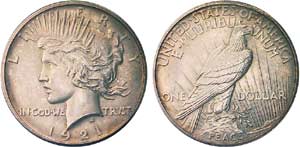
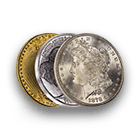
The 24 coins in the Peace Dollar set run the gamut from common to magnificently rare.
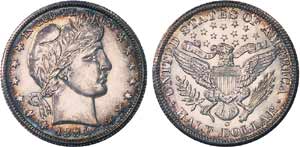
The 24 coins in the Peace Dollar set run the gamut from common to magnificently rare.


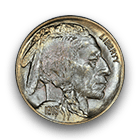 Copper & Nickel
 Silver Coins
 Gold Coins
 Commemoratives
 Others
 Bullion
 World
World
 Coin Market
 Auctions
 Coin Collecting
 PCGS News