Have you noticed how hot the rare coin market has become?
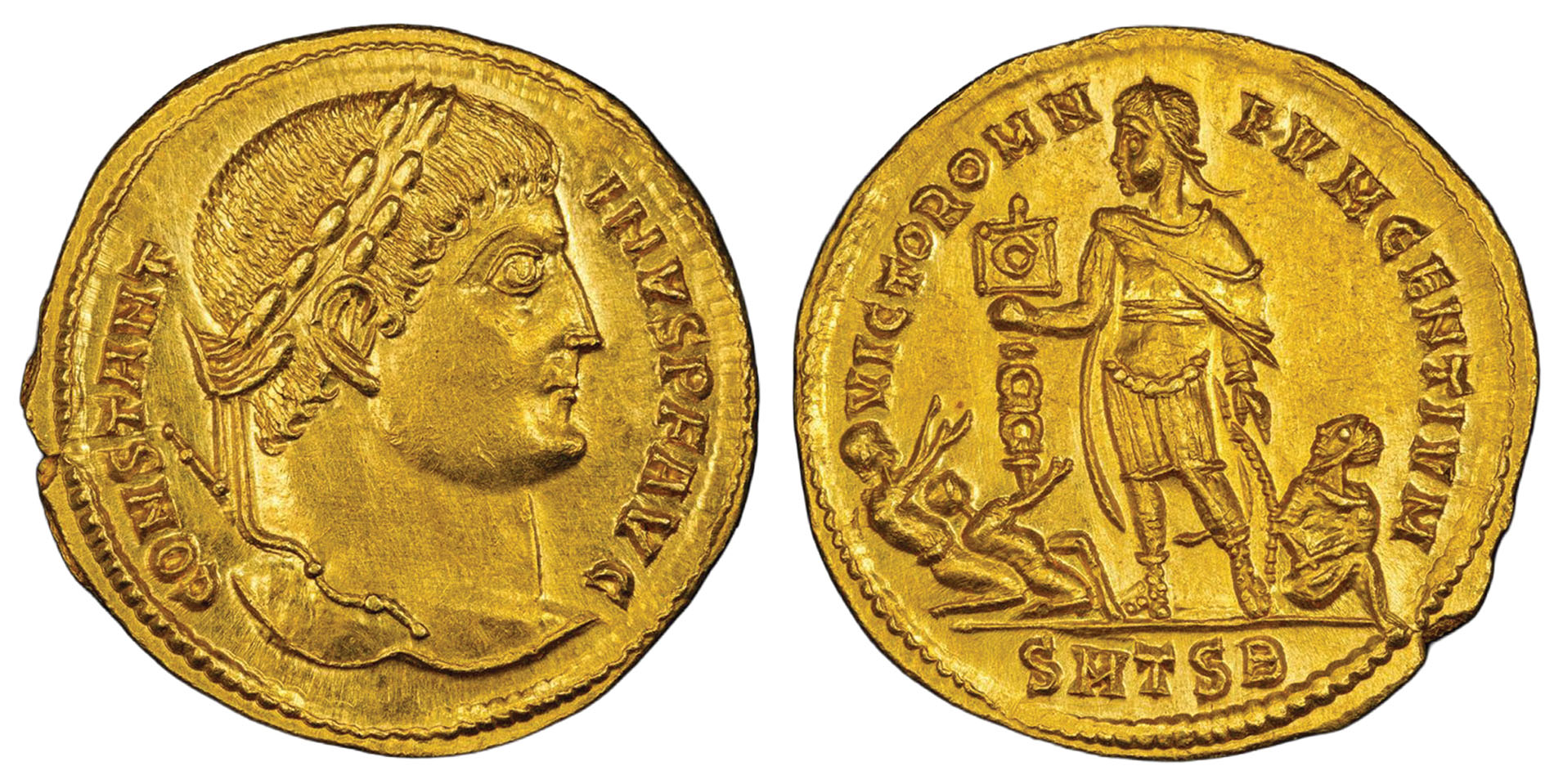
Prices keep advancing and new levels are set each month. At the Florida United Numismatists convention in January 2005, Heritage Numismatic Auctions sold an unprecedented $61+ million worth of coins. For many years, we waited breathlessly for a coin to break the million dollar barrier. Now, fifteen coins have sold at auction anywhere from $1,006,250 to $7,590,020 - four of them selling in the last month!
Price increases have affected all levels of the coin market, not just the high end. Semi-key and key coins seem to be going through the roof. Have you seen the latest prices on Good Barber Half Dollars? The price of a generic Draped Bust Dime in Fine condition? A 1999-S Silver Proof Set?
Everyone's asking: What's going on, how long can it last, and how high can it go? These are legitimate questions because the market has cycled up and down in the past. So, the obvious question is "When will this market end," because none of us wants to be left without a seat when this game of "musical chairs" ends. The main assumption underlying this question is that the current market is like preceding ones and that it will behave in the same way. But, is that assumption correct?
The last bull market in the coin business peaked in March 1999 (according to the Coin Universe 3000 Index). By February 2002, the market fell back approximately 10%, then began an upward trend that continues unabated today. As of this writing, the CU3000 Index stood at 64,262, a near 20% increase over the February 2002 low of 53,250. That's a pretty hefty two-year increase.
So, what is going on? Why is the market so strong?
First of all, this market, like none of its predecessors, appears very broad-based. Thanks to venues like eBay and other Internet sites, it is easier for collectors and dealers to buy and sell coins. People who have little or no access to coin shops and shows find it very easy to indulge their collecting habits online. Higher participation translates to greater competition, which drives demand and prices upward. Years ago, the market never could have absorbed $61 million dollars worth of coins - all the money would have been sucked out of the market. However, today, the coin market can absorb $100 million at one time with barely a hitch, indicating the market's depth and breadth.
Part of the success of today's coin market is the lack of attractive alternatives. The stock market has been lackluster, especially so far this year. Real estate, which has posted record gains over the past several years, appears to be peaking. Coins, on the other hand, appear to have plenty of steam left. I can say this because coins, with all the strength they've shown over the past two years, are still way off the peak they reached in May 1989.
How long can the market last? The longest bull market in the coin business ran from mid-to-late 1982 to May 1989, a period of more than six-and-a-half years. Certainly, market conditions are different (better) today, but if the precedent repeats, we're only a third of the way into this bull market.
How high can it go? Once again, statistics come to our rescue. The CU3000 Index shows a huge spike in coin prices in May 1989, when they reached a zenith of 181,088, marking the end of the afore-mentioned bull market. As high as prices seem to be today, they are still about a mere third of the previous record. So, it doesn't appear that the music is going to stop anytime soon.
One more comment - when we reach the peak of this market, I doubt if prices will drop off as steeply as they did in 1989. There simply seems to be too much support to allow this to happen. I suspect that any adjustments will be muted, occur over a longer period of time, and will give all of us a chance to find a chair.



 Copper & Nickel
 Silver Coins
 Gold Coins
 Commemoratives
 Others
 Bullion
 World
World
 Coin Market
 Auctions
 Coin Collecting
 PCGS News