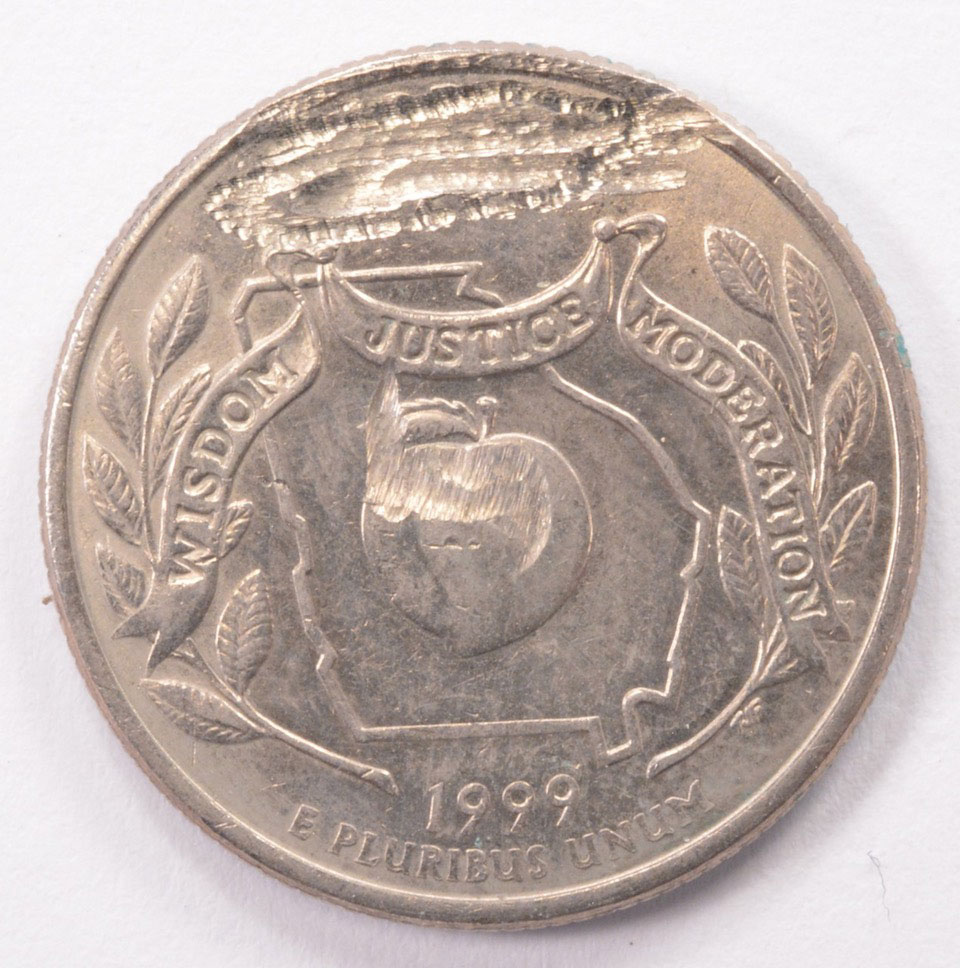
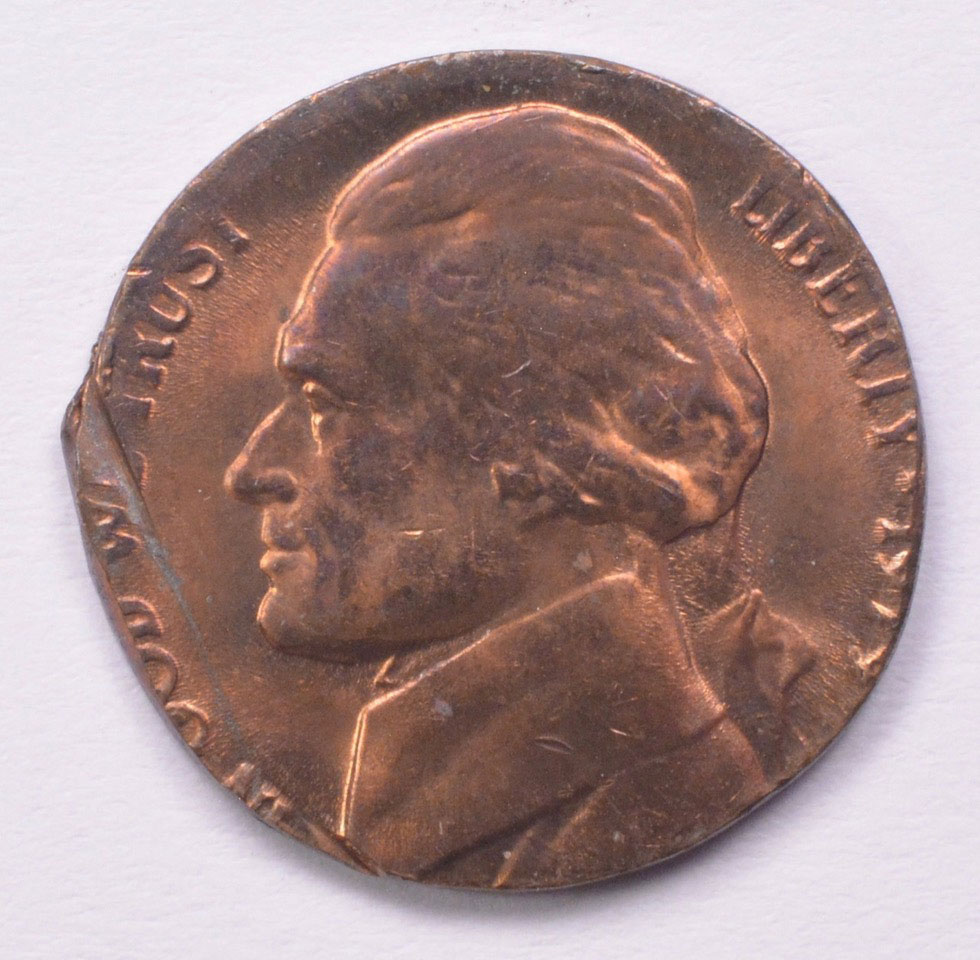
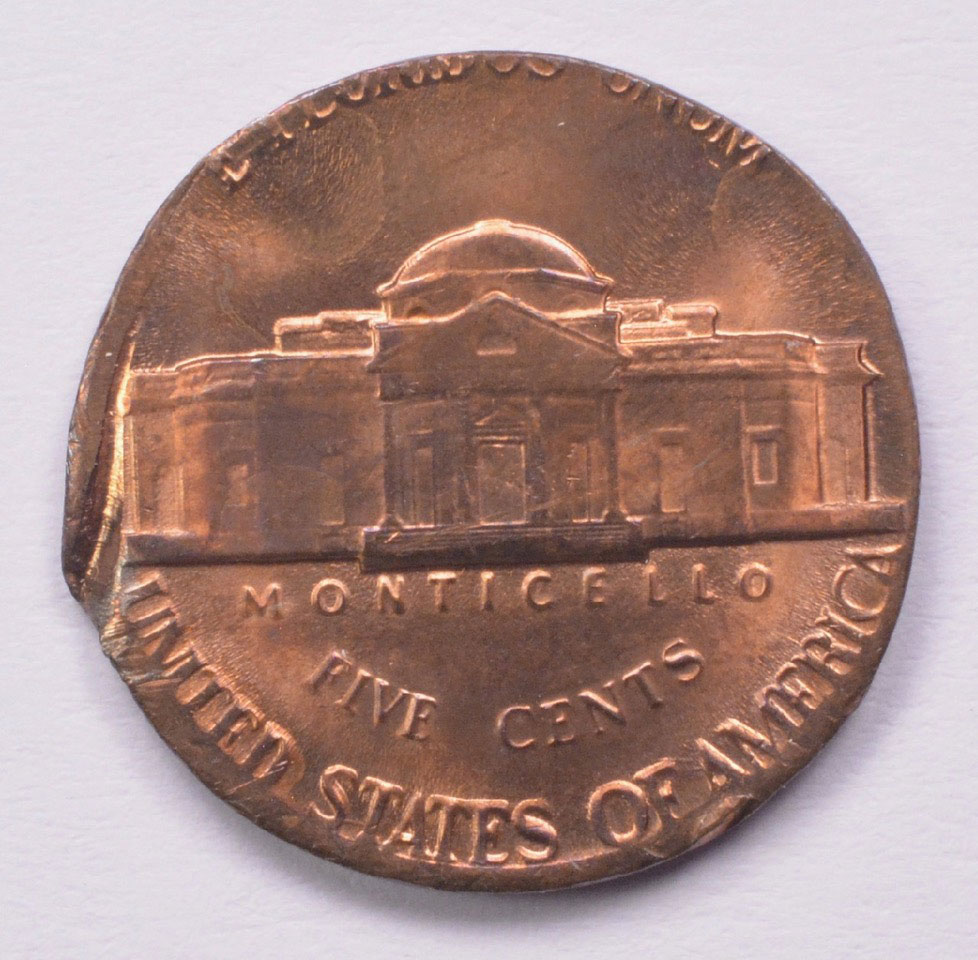
Inside the walls of a mint facility, both mint errors and post-mint damage (PMD) can occur. The question that often follows is, “but if it happened at the mint, it's an error, right?” The answer is “sometimes.” The difference between an error and PMD is found in when the “damage” occurred.
A mint error is defined as a coin made incorrectly at the mint and encompasses anything that happens to the coin up until the final strike of the dies. As soon as the last strike occurs on a coin, anything after that is defined as PMD. This can occur in many ways within the mint's facility. While the struck coin is making its way through riddlers, the counting machine, or other processes at the mint, it could be gouged, scraped, stamped by automated machinery (many robots are now used in the mints), or could be scraped or otherwise mutilated. Any of these things, if they occur after the last strike of the dies to the coin, are considered PMD.
Some are confused by this, since they might find a coin in the original mint packaging with a number of gouges or other forms of damage on it, and so they logically assume it occurred at the mint – and, yes, it did! But the difference is found in if the defect on the coin occurred before the final strike of the dies or after. This is a critical thing to determine in order to know if a coin is a mint error or simply PMD.
The only way to be able to tell the difference between PMD and a mint error is to understand the minting process and, particularly, to understand what occurs to a coin when it is struck. The strike will impart many diagnostics and characteristics upon a coin's surfaces, which will effectively prove the defect on a coin to be pre-strike (and so a mint error) or post-strike (simply damage.)
Take the time to learn the minting process and then study the surfaces of coins under a magnifier. Get a good feel for how the metal flows across a coin's surfaces and look at the even and relatively “flat” nature of the fields. PMD imparts interruptions to flow lines and will cause the fields to be uneven or distorted. Look at as many coins as you are able, and it will become easier and easier to tell a genuine mint error from PMD.


 Copper & Nickel
 Silver Coins
 Gold Coins
 Commemoratives
 Others
 Bullion
 World
World
 Coin Market
 Auctions
 Coin Collecting
 PCGS News