This will be the final installment in the "No Grade" coins discussion. We’ll conclude by having a look at four more of the sub-categories in the large category of "Damage."
98 – Damage.
Damage is a very broad group encompassing a wide variety of ills. Generally it describes any form of metal movement, either intentional or accidental. Damage may include excessive or heavy rim dings and bruises, deliberate surface damage such as graffiti, attempts to remove spots, etc. The severity and extent of the damage affects whether it will get a "No Grade" decision.
Here is a look at the last of the most commonly encountered Damage categories.
- Rim Damage – most commonly seen as a rim gouge, bezel damage or a deliberate test cut.

This coin has several rim issues – a few heavy bumps around 7 o’clock on the obverse and some new "reeding" on the reverse, evidently made deliberately by someone with nothing better to do. - Surface damage – typically a large gouge or scrape, drill or chop mark. This is very much a grey area, because some surface issues can be graded if they are not severe. It’s up to the graders at PCGS to determine when the line is crossed, and if the surface scrapes or gouges become distracting enough to disqualify a coin from being graded.

This one is just "over the line." A bit fewer of the obverse gouges, and it might pass, since it’s an early type coin and some of this type of damage is acceptable.

This one is not as close. It was evidently dropped in the street or a sidewalk, and either stepped on a few times or run over. It’s a shame too... Check the date and lack of wear. - Mount removed – This is closely related to "Rim Damage" discussed above. Many smaller gold coins were worn as jewelry over the years, and a mount was often soldered to the coin to attach it to a chain or bracelet. Also, exposure to oil coming from the skin over many years can also take a toll on the surfaces of coins, even gold ones.

This Quarter Eagle has had a mount removed. Check the top of the obverse and bottom of the reverse.
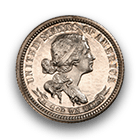
This little Half Dime may have seen service as a button at some time in the past. - Holed, or Plugged – While this may seem like a slam dunk problem to detect, some of the repair work has gotten pretty good, and is possible to miss if you’re in a hurry. Everyone knows what a hole looks like, so no need to illustrate that. But take a peek at some repair jobs. Some not so good, but some surprisingly good.

While the plugged hole on this rare Gobrecht Dollar is fairly easy to spot...
the repair on this rare Quarter Eagle is a bit tougher to see.
The repair on this Dollar might even be missed if one was in a hurry.


This wraps up our look at "No Grade" coins. Next week, we’ll tackle an entirely new topic.
Series Links:
http://www.pcgs.com/news/no-grade-coins-pt1
http://www.pcgs.com/news/no-grade-coins-pt2
http://www.pcgs.com/News/no-grade-coins-pt3
http://www.pcgs.com/news/no-grade-coins-pt4
http://www.pcgs.com/news/no-grade-coins-pt5
http://www.pcgs.com/news/no-grade-coins-pt6


 Copper & Nickel
 Silver Coins
 Gold Coins
 Commemoratives
 Others
 Bullion
 World
World
 Coin Market
 Auctions
 Coin Collecting
 PCGS News