
Editor's Note: read PCGS Interview with Bruce Morelan, Part I: Uncovering the 1794 Specimen Dollar.
PCGS sat down with prominent collector Bruce Morelan to discuss his famed 1794 Specimen Dollar as well as his entire Early Dollars Collection, to which the Specimen Dollar belongs. In the second part of the interview, Morelan switched gears from the 1794 Dollar and discussed the remainder of coins in the collection, starting with the 1795 Flowing Hair Dollar, graded MS64+.
PCGS: Let's talk about the other coins in your Early Dollar set. Tell us your impressions on each.
Let's start with the 1795 Flowing Hair Dollar MS64+.
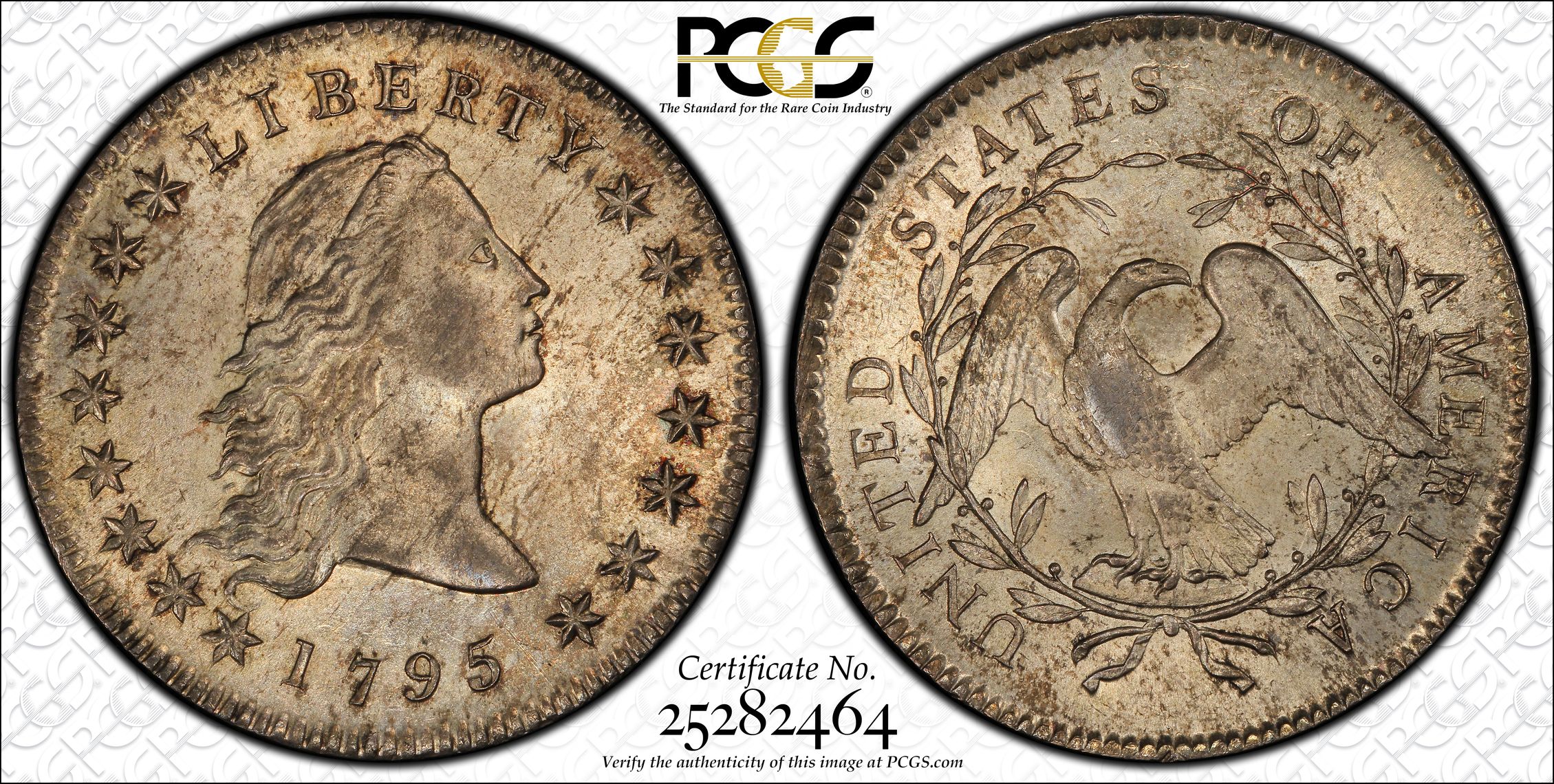
BM: I saw this coin at one of the ANA shows in the mid-2000s. Chris Napolitano showed it to Laura [Sperber] and I in a higher graded holder at the time. It just displayed such beautiful luster, full cartwheel, original golden toning. Everything about the coin I absolutely loved. And once I started building this set, it was the coin that kept popping into my mind as the representative that I wanted of this date, in my set. And I was looking for it, trying to find it, for sale in its previous holder, and eventually it walked up to Legend's table in the new holder, the 64+ holder, and I couldn't buy it fast enough.
1795 Draped Bust
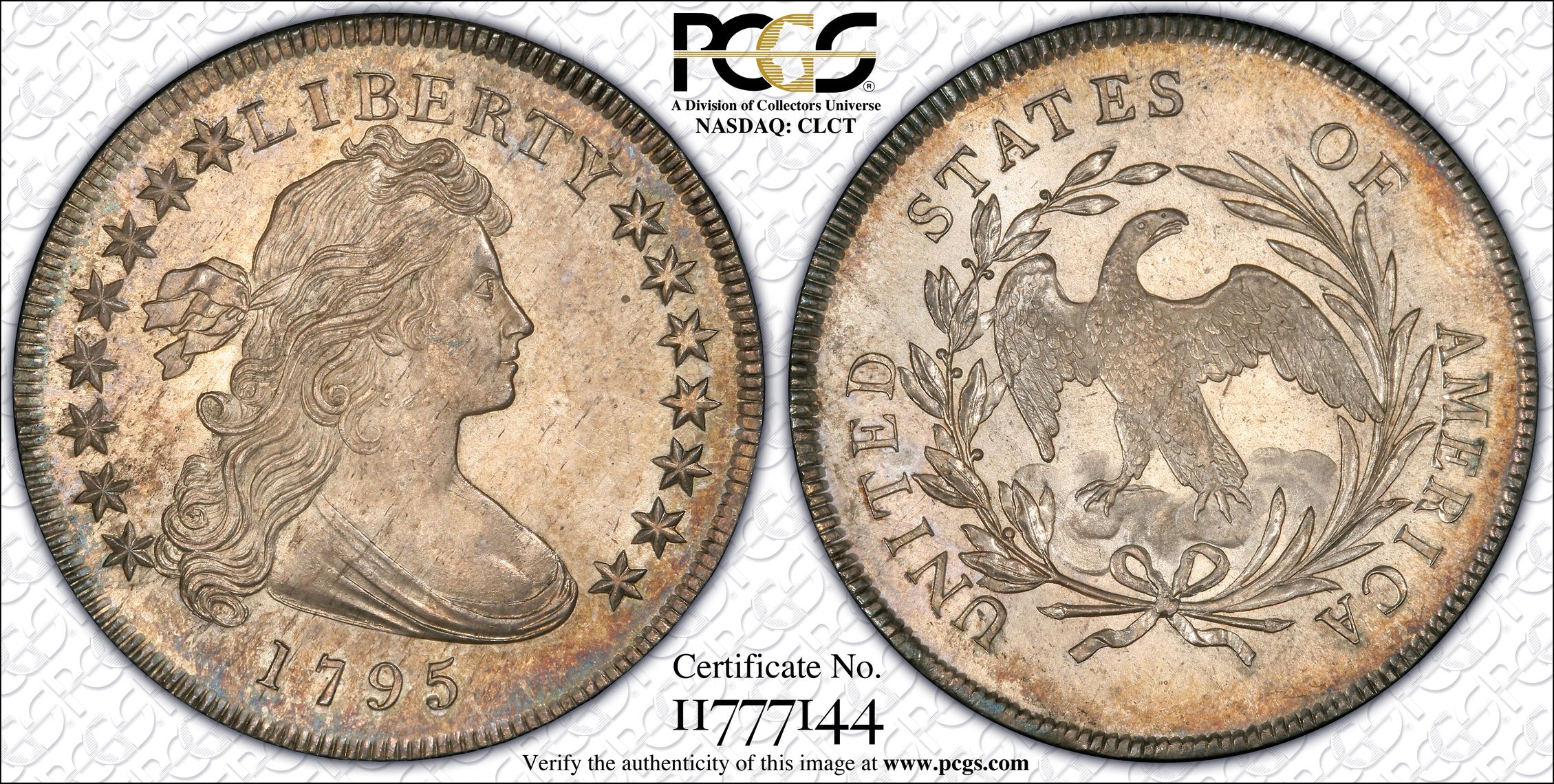
BM: The 1795 Draped Bust is my newest acquisition. I actually had a great a coin; I had a coin from the Knoxville Collection, where the 1794 resided for many years, a beautifully colored Draped Bust Dollar. And I had determined I was not going to bid on the Eliasberg coin in the Pogue sale because I was happy with my coin — until I saw it at the ANA show in Los Angeles this last year, and immediately fell in love with the coin. I've never seen a Bust Dollar with such originality and full flowing cartwheel and light toning. A lot of time when they're original, they're dark, but this one had the lightest, crispest, most luminous toning that I could ever imagine. I was immediately smitten and made the deal to purchase it.
1796 $1

BM: The 1796 is just an amazing, original coin. Never seen anything like it. Most of the 1796s are drab; they have been impaired, lightly cleaned. This coin displayed original envelope toning. I flew to Chicago to buy this coin. My wife and I were at the Bulls playoff game, and I'm standing in the stairwell, yelling bids to Laura as this coin's going off. It sold for well over $1 million — at the time, a world record for a Bust Dollar, let alone a 1796.
1797 $1

BM: The 1797 is from the Newman Collection. When the Newman Collection was for sale, Laura and I personally examined each one of the coins. We identified five of his coins that we thought were the best examples that we'd seen for the date. The 1797 was extremely well struck, great luster. A beautiful coin and the finest that I've seen for the date.
1798 Small Eagle

BM: The 1798 Small Eagle is again, another Newman coin. The thing that makes this coin unique is that it is the only 1798 Small Eagle that I've seen that actually has luster. Most of the graded MS61 and 62s, they're technically uncirculated, but you would kick them out of bed for eating crackers. This coin was called a gem when it was sold at auction in the 1890s. It's not a gem. It does have bag marks; it has been handled with other coins. But it has full, flowing luster and it's a unique 1798 Small Eagle for that attribute.
1798 Large Eagle (Heraldic Eagle)
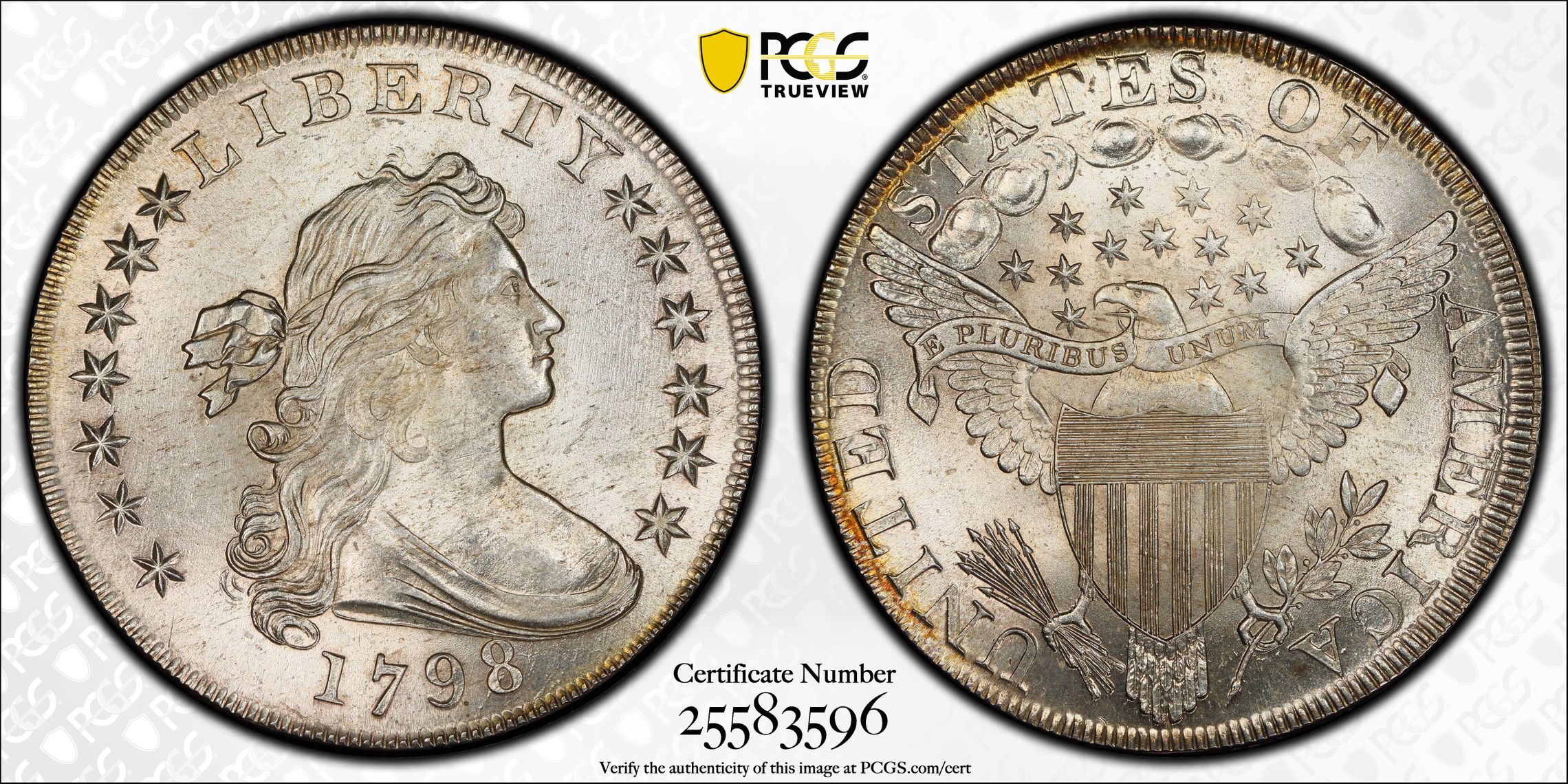
BM: The 1798 Large Eagle, or Heraldic Eagle, is from the Stellar Collection. That coin is probably as responsible for me building this set as any other coin, including the 1794. It's a full luster coin, beautiful, uncirculated specimen, and I didn't know it at the time, but it's a rather rare coin in that condition. And so I didn't appreciate the opportunity as much when I actually acquired it as I do now, knowing how hard it would have been to acquire that date.
1799

BM: The 1799 is a somewhat controversial coin that I absolutely love. It's alternately known as the Boston Dollar or the Finger Print Dollar, depending on who's talking about the coin. What you have here is a coin that was held for a century within a family in Boston. Jack Lee called this coin the only truly uncirculated early dollar that he'd ever seen. It has fully flowing luster, vibrant, original surfaces. However, somebody stuck their thumb in front of Miss Liberty.
If you value the coin for what it is — which is a truly gem, full cartwheel, beautiful, original toned dollar — then you love the coin. If you can't get past the fingerprint, then you probably hate the coin. But personally, every time I pull the coin out and look at it, it fills me with a warm feeling, so I love the coin.
1800
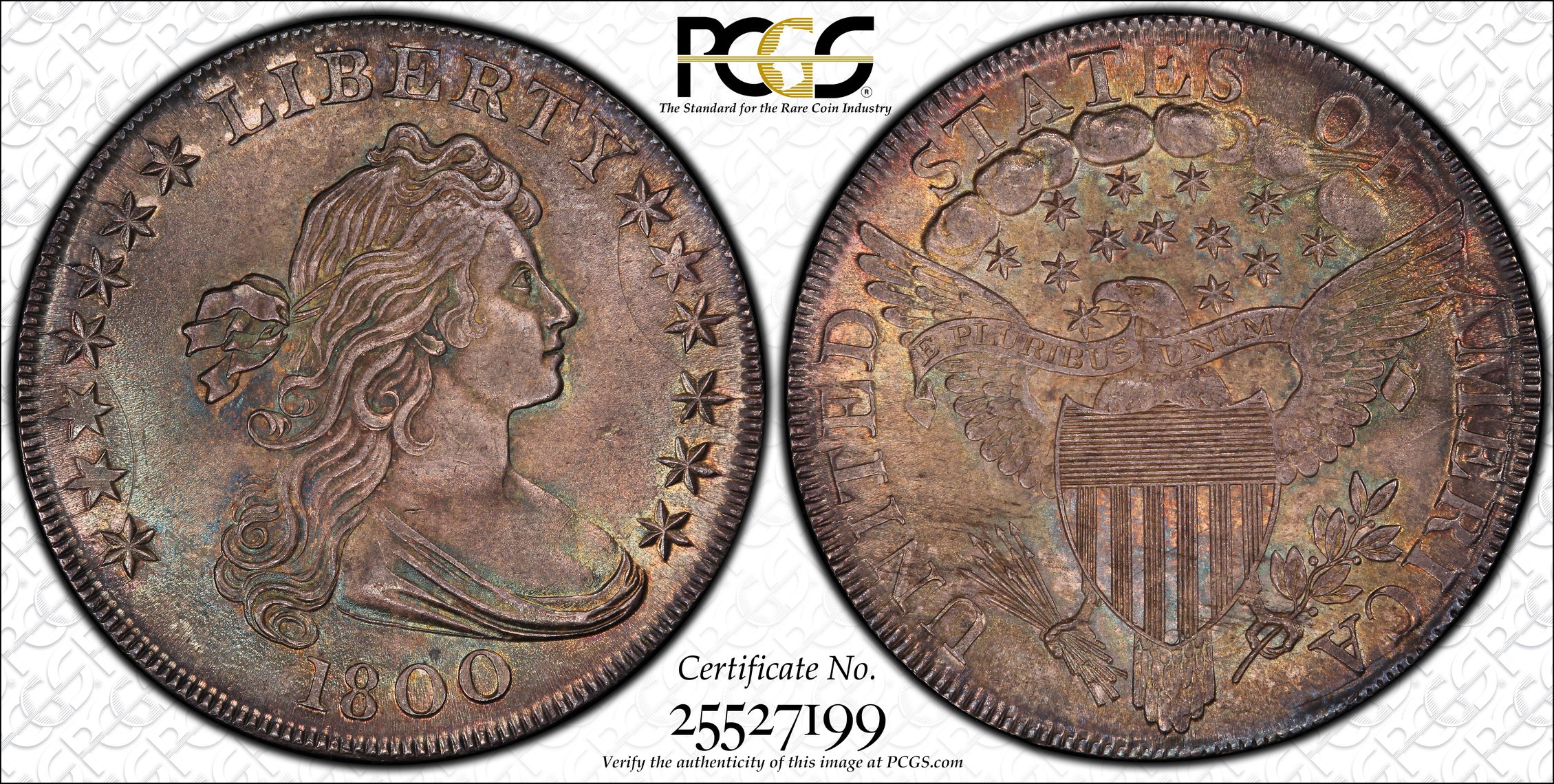
BM: The 1800 is actually one of the coins that I struggle with in the set. It's that old time collecting look that is not my favorite. It has luster, it has perfect cheek, it has no discoloration, it has no friction, but it's like one of those old time Bust Halves that has a dead center and beautiful peripheral luster and toning. Yes, it's a great gem, but it's not my favorite coin.
1801
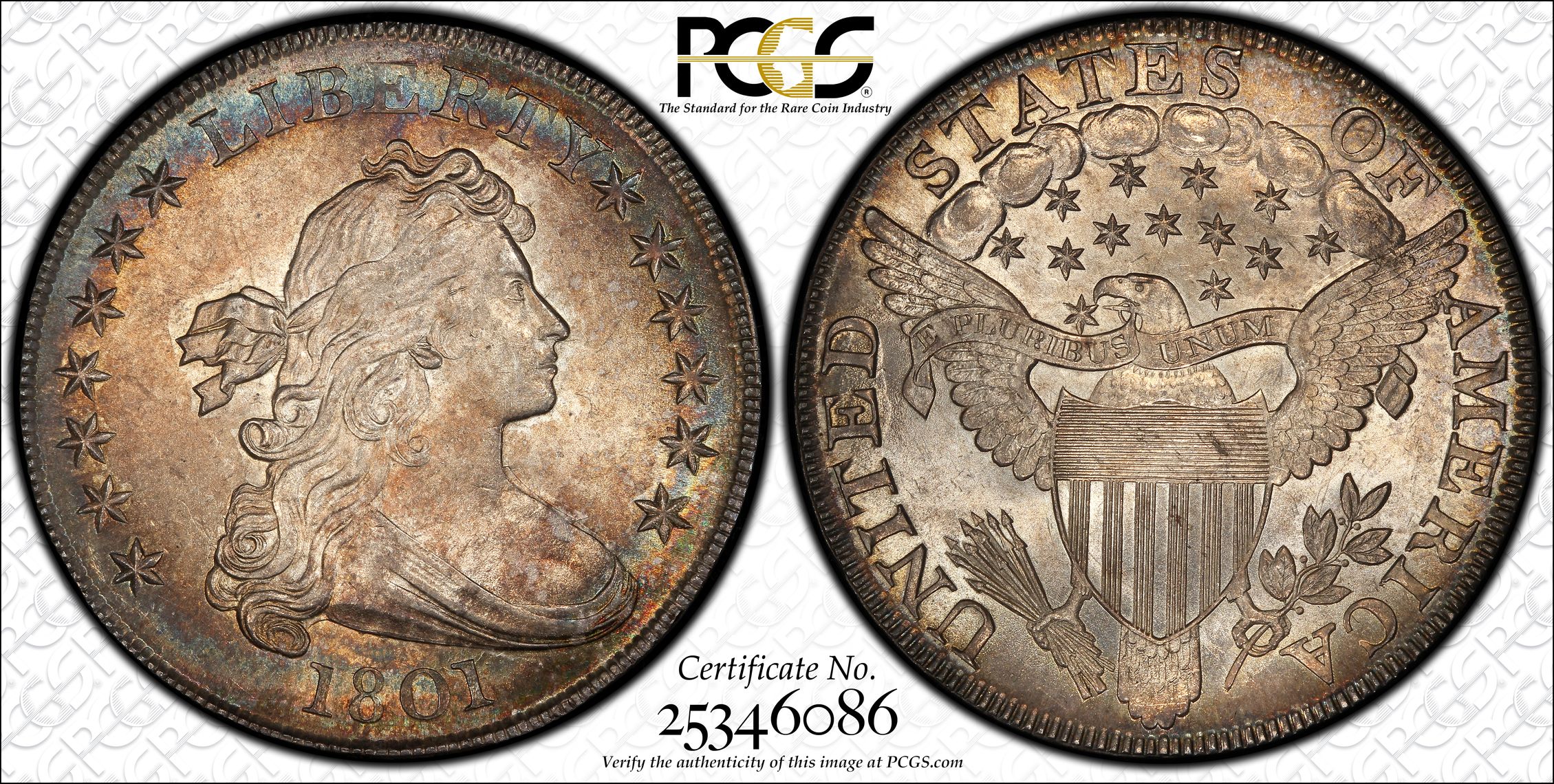
BM: The 1801 is a coin that has great attributes to it. It has full flowing luster, beautiful toning, again, it's from the Newman Collection. The only drawback to the coin is that it does have some album sliding friction on the cheek. So it has a few hairlines on the cheek, but the balance of the coin definitely overcomes the slight drawbacks to the coin. If you were going to look at the coin from arm's length, you'd likely say, “Oh, oh my god, this coin's fantastic,” so I definitely enjoy the coin.
1802/1

BM: The 1802, it's actually 1802-over-1, is also from the Newman Collection. And it is Don Willis' favorite coin in the set. When I submitted the Newman coins to PCGS, he said, “This one is my favorite,” and he was pointing to the 1802/1. Again, the nicest attribute about that coin is that it is semi-proof-like. It has great luster, great color, great toning. When you first look at this coin, you see this coin is a gem and it's just held back by a small scratch.
1803

BM: 1803 is probably my favorite coin of the Draped Bust dollars and the reason for that is not even apparent at first glance. If, same as the 1794, if you have that coin out of the holder and you turn the light, you see the absolute virgin surfaces on Miss Liberty's cheek and breast and neck. It's one of the things that really attracts me to spectacular, early gems, when they have that glow, that patina that you know that coin's never been cleaned. That vibrancy is spectacular and that coin has it.
PCGS: You took a break from numismatics. What brought you back into numismatics and what's kept you in the hobby?
BM: Coin collecting has always been very special and important to me. Again, I started when I was six years old. In high school, I wanted to be a coin dealer. I won coin club grading contests, but life intervened and I went into the Navy. When I got out of the Navy, I bought my own business. And when I got my business paid off, I said, “Ok, now I can get back into coins,” because it's always been in the back of my mind, even when I wasn't active in it. It's still something I wanted to do. I think it gets into your blood, when you can appreciate the history of the coin, the beauty of the coin, and the value of the coins. I could collect Beanie Babies, but they don't necessarily stand up as a long-term investment. Whereas, I can have all this enjoyment and camaraderie in coin collecting, and it stands up as a long-term investment. So, you get the best of both worlds.
PCGS: What advice would you give to someone who's new to the hobby about collecting?
Buy and sell. Don't just buy. Because if you don't sell, you won't get first hand feedback for how you did when you bought. That's very important. Pay attention to quality. There are nuances in coins where quality's concerned that overwhelm everything else. And until you understand those nuances, you won't truly know how you did when you were buying.
PCGS: Describe the arc of collecting the entire Early Dollar set, from highs to the lows.
BM: I started and stopped trying to build this set. Like I said, I bought the 1798 from the Stellar Collection, and I bought the Finger Print Dollar at auction, and I actually sold the Finger Print Dollar for a profit a year later because I decided there just weren't enough nice early dollars to do a nice set.
It wasn't until later when I bought the 1794 that I said, “Oh yeah, I have got to build this set.” The 1794 is a great coin, but it's even greater if it's the cornerstone to a great collection.
And so I had the opportunity to buy the Finger Print Dollar back at auction again, fortunately for less than I sold it for. But yes, I have bought dollars, started doing the set, decided that it couldn't be done right, sold it off. And then I bought the 1794 and started the set again, and then had the great fortune of some nice collections coming on the market — like the Newman Collection came on the market, and we ended up buying a third of the set.
Now eventually, one or two of those may be replaced as other great coins come along; we may not even know about them at this time. That's another great thing about numismatics: a fantastic coin can pop on the market that you've never heard of before, like the 1796 Dollar that was in somebody's collection and stored in an envelope for many, many, many years, and they didn't know that it was the nicest 1796 Dollar in existence until it went to auction.
PCGS: Any final message to collectors?
Again, I was really pleased when PCGS agreed to display the set and coins of this value are not normally displayed. It's expensive for insurance, it's expensive for shipping, and so, for PCGS to go out of the way to put this display on is very important.
I've built greats sets. I've built the Trade Dollar set. I've built the Seated Dollar set. I've built the Gobrecht set. I've built this [Early Dollars] set.
This set is special. It is anchored by the one of the great coins in all of numismatics; the only coin so far to break $10 million at auction.
The beauty of the early design, the history of the early design, just jumps out and says, “come see me,” so I want people to come see this set.
- - END - -
Don't miss the chance to see the 1794 Specimen Dollar, along with the entire 12-coin PCGS Set Registry® collection of Early Dollars at the Long Beach Expo Coin Show, Thursday through Saturday afternoon, February 16-18, 2017.
Can't make it to Long Beach? View a digital version of the set on the Set Registry, here: http://www.pcgs.com/setregistry/album.aspx?setid=87430.


 Copper & Nickel
 Silver Coins
 Gold Coins
 Commemoratives
 Others
 Bullion
 World
World
 Coin Market
 Auctions
 Coin Collecting
 PCGS News