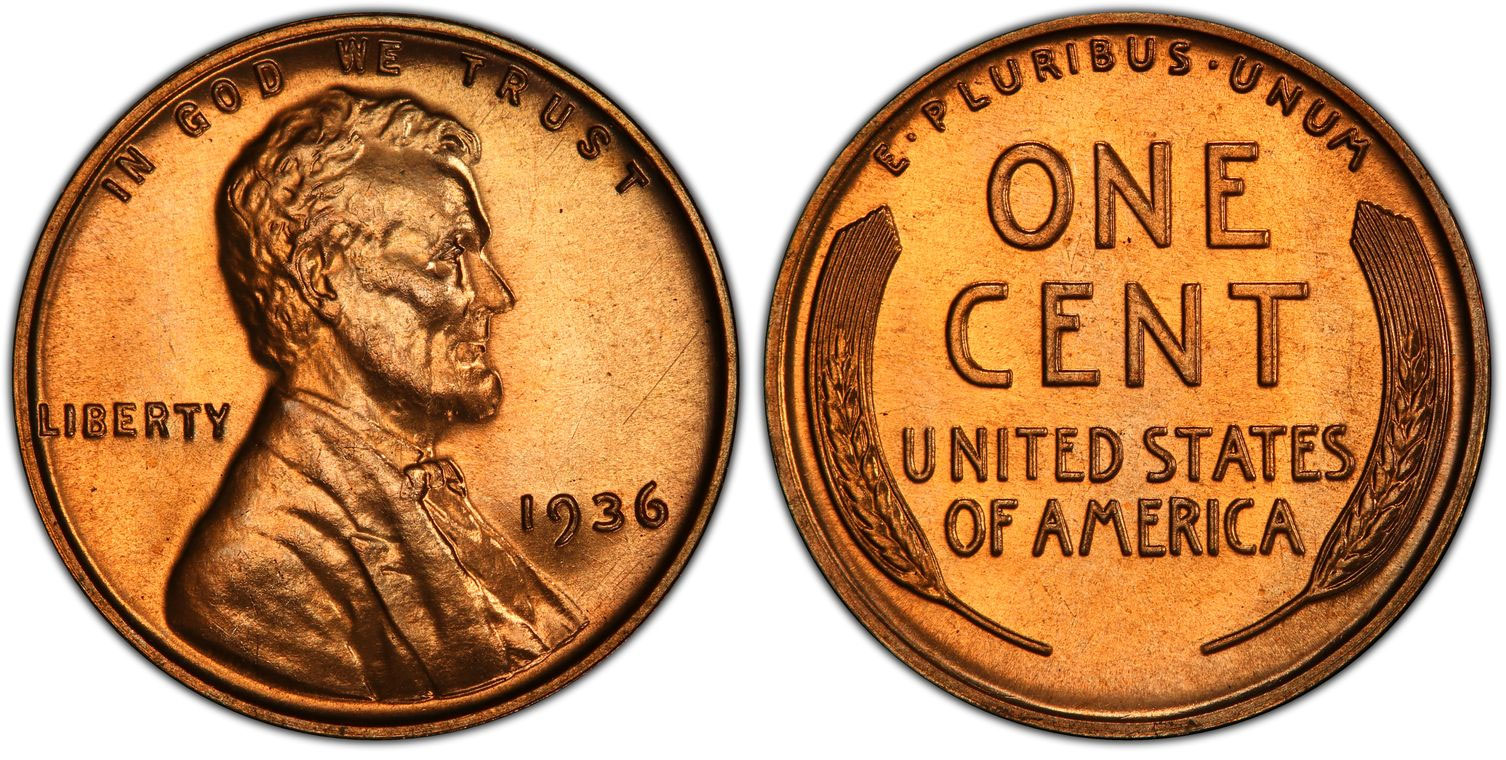
1936 Satin Proof Lincoln Cent Click image to enlarge.

1936 Brilliant Proof Lincoln Cent Click image to enlarge.

1936 Satin Proof Buffalo Nickel Click image to enlarge.

1936 Brilliant Proof Buffalo Nickel Click image to enlarge.
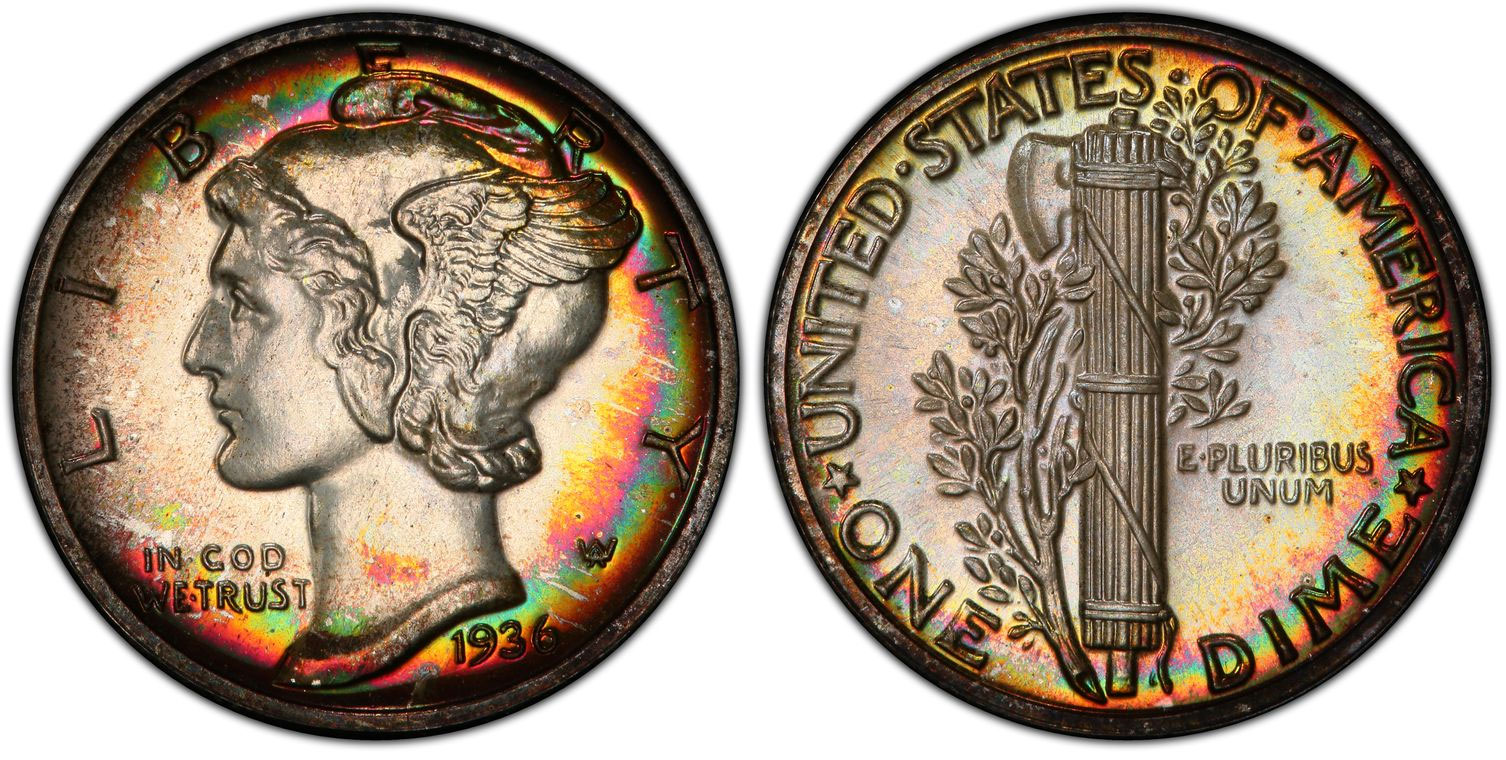
1936 Proof Mercury Dime Click image to enlarge.
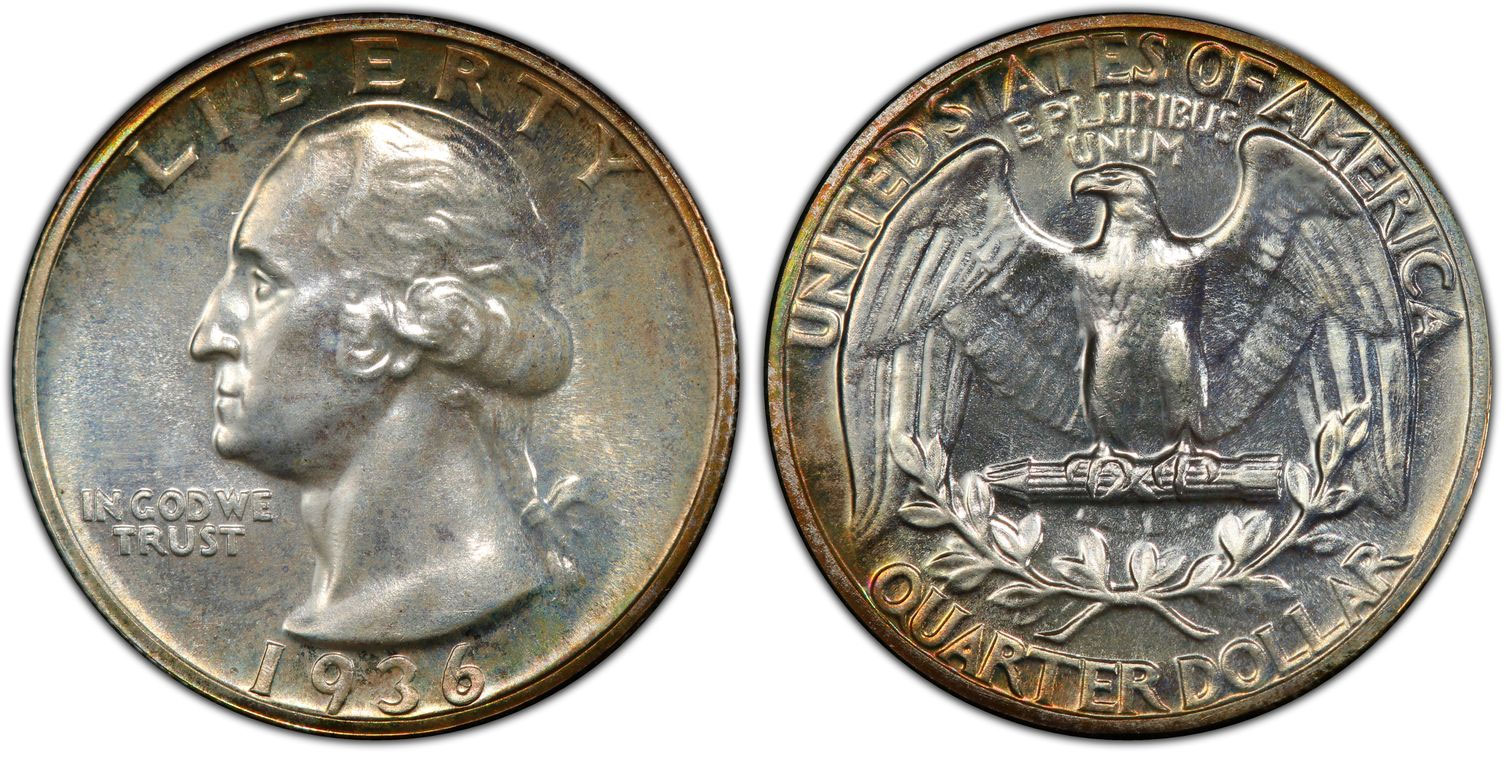
1936 Proof Washington Quarter Click image to enlarge.

1936 Proof Walking Liberty Half Dollar Click image to enlarge.
There are few annual United States Mint products as popular as the proof set. These coins, each carefully struck by specially prepared dies and made with polished planchets, have been a mainstay of United States coin collectors for generations. The earliest-known United States proof coins were made in 1817. However, these early proofs were most often produced in very small numbers for the purposes of checking dies and for historical archiving of particular issues – less so with the intent of creating collectible coins for numismatists.
The United States Mint began striking proofs on a more consistent basis by the end of the 1830s and had finally begun issuing regular proof sets for coin collectors in 1858. Over the next 58 years, the U.S. Mint sold proof coins both individually and as sets representing every regular-issue denomination ranging from the one-cent coin through $20 gold double eagle. While some branch mints very sporadically struck small numbers of proof coinage for presentation purposes or other special reasons, proof coins made from the 19th century through mid 20th century were almost exclusively struck at the Philadelphia Mint.
These vintage proof coins were struck twice to help bring up the minutest of details. Therefore, these pieces typically exhibit outstanding strike quality, with squared rims and excellent presentation of even minor design features, such as hairlines and eagle feathers. For most of the period spanning from 1858 through 1916, the United States Mint produced proofs with brilliantly mirrored devices and fields, and some rare early proof strikes from this era exhibit varying degrees of cameo contrast.
In 1908, the United States Mint adopted a matte proof finish that was popularized at the Paris Mint and incorporates a sandblasted, granular finish. While these matte proofs may have represented the very latest in technological and artistic advances in minting coins, collectors preferred brilliant proofs. Lincoln Cents, Liberty Head and Buffalo Nickels, Liberty Head (“Barber”) coinage, and the various gold denominations were all struck with matte finishes, which proved none too popular with the United States collector of the time. Sales of proofs steadily declined.
Ostensibly, the United States Mint discontinued the proof coin program in 1916 due to concerns that the United States would engage in World War I and therefore needed to focus minting efforts on the production of essential business-strike coinage and military medals. However, the United States did not officially become involved in World War I until the following year, in 1917.
Whether concerns over the international conflict reaching American shores or declining proof coin sales prompted the pause in proof coinage is unknown. But the last regular-issue proof coins struck for numismatic sale rolled off the presses of the Philadelphia Mint in 1916. Save for a few rare proofs struck for presentation purposes and other special commissions, the United States Mint did not issue another proof coin until two decades later, in 1936.
While the numismatic climate of the 1930s was perhaps friendlier for proof sets, with more people collecting contemporary United States coinage at that time than in previous decades, collectors weren’t all too quick to begin buying proof sets again after a 20-year hiatus. Many older collectors had recalled the matte proofs from two decades earlier, and they were none too impressed with the Satin Proof 1936 Lincoln Cents and Buffalo Nickels. Many collectors thought the satin proofs appeared no different than ordinary uncirculated versions of those same coins.
In short order, the United States Mint began producing a second type of 1936 Proof Lincoln Cent and Buffalo Nickel with reflective, brilliant surfaces akin to those seen on all 1936 Proof Mercury Dimes, Washington Quarters, and Walking Liberty Half Dollars. Collectors generally classify the 1936 Satin Proof Lincoln Cents and Buffalo Nickels as “Type 1” coins, while the brilliant examples are regarded as “Type 2.” The changes were noticed by collectors of the mid 1930s, and all told the United States Mint sold many more proofs in 1936 than they had in previous years of proof coinage going back to the 1850s. It should be noted that there is some numismatic irony in the situation involving the satin proofs, which were a decidedly tough sell to collectors; today, the 1936 Type 1 Lincoln Cents and Buffalo Nickels are much scarcer than their brilliantly mirrored Type 2 counterparts.
Collectors in 1936 could buy proof coins either individually or as sets. The 1936 Proof Lincoln Cent cost 16 cents, while the Buffalo Nickel and Mercury Dime were 20 cents each, the Washington Quarter was issued for 50 cents, and the Walking Liberty Half Dollar set collectors back 75 cents. The five-coin 1936 proof set could be purchased for $1.89. The individual proof coins were sold in small cellophane envelopes, with the complete five-coin sets being sold to the collector as a bundle of five small cellophane envelopes stapled together at their tops.
The option for buying the proof coins individually explains why mintage figures for 1936 proof coins aren’t uniform across all five denominations. Broken down, the mintage figures for the Lincoln Cent are a combined 5,569 proofs struck across both the satin and brilliant finishes. The satin and brilliant Proof Buffalo Nickels saw a cumulative 4,420 examples struck, while 4,130 Proof Mercury Dimes rolled off the presses in 1936. The higher-denomination proofs saw slightly lower mintages, with the 1936 Proof Washington Quarter being struck to the tune of 3,837 pieces and the Proof Walking Liberty Half Dollar inspiring the sale of 3,901 examples. Taking math into account, the lowest-mintage coin dictates the total number of possible complete five-coin 1936 proof sets that can ever be assembled, with 3,837 – corresponding to the total number of 1936 Proof Washington Quarters – being the hypothetical number of complete 1936 proof sets possible.
In reality, far fewer 1936 proof sets could be assembled today, as many of these coins have been lost to damage, fire, theft, and some use of these coins in circulation. This is particularly true of the 1936 Satin Proof Lincoln Cents and Buffalo Nickels, which saw relatively little popularity with collectors at the time. The situation is different today, when all 1936 proof coins are valued by collectors and in high demand. This is especially true of Gem-quality examples with clean surfaces and little to no surface haze.
The vast majority of 1936 proof sets have been removed from their original cellophane envelopes and assembled in secondary-market display cases. Most 1936 proof sets encountered today are housed in snap-together or sandwich-style five-coin holders measuring approximately two inches by six inches in diameter. Meanwhile, many of the 1936 proof singles have been graded by PCGS and are bought and sold for inclusion in Registry Sets of the five individual series represented by the 1936 proof coins.
While a collector can assemble a handsome five-piece set of PCGS-graded 1936 proof coins for between $5,000 and $8,500, depending on the quality of the individual coins purchased, a five-piece set consisting of top-end specimens in the PR66 grade range or higher costs much more. Collector demand is particularly strong today for proofs grading PR67 or better, with the few 1936 cameo proof specimens especially rare and in high demand by Set Registry members. Consider the tiny populations of the cameos known today, with just nine PCGS-graded examples of all 1936 Type 2 Lincoln Proofs (there are no Type 1 cameos).
PCGS-graded PR65CAM and PR66CAM Lincoln Cents from 1936 have recently traded at auction for between $7,600 and $8,350 apiece. Meanwhile, the top-graded Cameo Proof Lincoln Cent, graded PCGS PR67CAM, has just one known specimen estimated to be worth $35,000. There are presently no other PCGS-graded 1936 cameo proofs from any of the other four series struck that year. Surely, if any cameos from the other series are eventually discovered, these would see outstanding demand from collectors and certainly Registry Set members vying to build the highest-quality sets they can assemble. In the meantime, collectors have plenty of outstanding 1936 non-cameo proofs to pursue, with the Satin Proof Lincoln Cent known in grades ranging up to PR67RD and the Satin Proof Buffalo Nickel grading as high PCGS PR69; values for those pieces are $20,000 and $41,500, respectively.
Brilliant-finish 1936 proof coinage is also challenging in the better Gem grades, with top-grade PR67RD Lincoln Cents listed in the PCGS Price Guide for $23,500 and PR69 Buffalo Nickels priced at $50,000. A 1936 Mercury Dime in PR68 most recently sold in June 2016 for $23,500, while 1936 Washington Quarters in PR67 have taken around $6,000 in recent auctions. Finally, the 1936 Walking Liberty Half Dollar in PR68 represents the highest-known grade among PCGS examples, with one example taking as much as $80,500 in 2005.
High prices and low mintages for 1936 proof coinage mean relatively few collectors can ever hope to include these special coins in their collections. However, United States collectors are essentially unanimous in agreement that the return of proof sets in 1936 represents an important numismatic milestone. Collectors have since dubbed 1936 as the start of the so-called “modern proof set” era, and with the exceptions of short production hiatuses from 1943 through 1949 and 1965 through 1967, proof sets have been offered for sale by the United States Mint every year since. Meanwhile, the 1936 proof set and its various contingent coins are regarded by many numismatists as must-have additions for any comprehensive collection of modern United States coinage.
 Copper & Nickel
 Silver Coins
 Gold Coins
 Commemoratives
 Others
 Bullion
 World
World
 Coin Market
 Auctions
 Coin Collecting
 PCGS News