For many of us Baby Boomers, the memory of our first color TV is pretty poignant. Everything we had been viewing in shades of white, black, and gray was now… Like, WOW! It was as though someone had suddenly turned the lights on!
Color had come to motion pictures in the late ‘30s, but for the most part (until the late ‘60s) most households were still viewing TV coverage in black and white. Sure, TV had really caught on, but movies (because of the color and big screen) were still the big ticket in town! Today we can view virtually anything on our phones.
Movies, too, had gone through the color revolution. Although The Wizard of Oz from 1939 is often credited with being one of the first color motion pictures, it by no means pioneered it. For many from the period, the history of filmmaking was changed the moment when Dorothy, played by Judy Garland, opens the door to the amazing world of Technicolor after a tornado launches her house into the magical land of Oz.
The story of a quest appeals to all of us! Dorothy just wanted to go home, but her cohorts all had worthy quests of their own. Wouldn’t all of us like to have a little bit more heart (compassion), a bigger brain (intelligence), and more courage (bravery)? Of course this quest follows the Yellow Brick Road on their journey to the Emerald City to see the Wizard. That their stories — Dorothy finding her way home, the Tinman getting a brain, the Scarecrow a heart, and the Lion courage — were screened in Technicolor only heightened the lure.
Colorful Memories
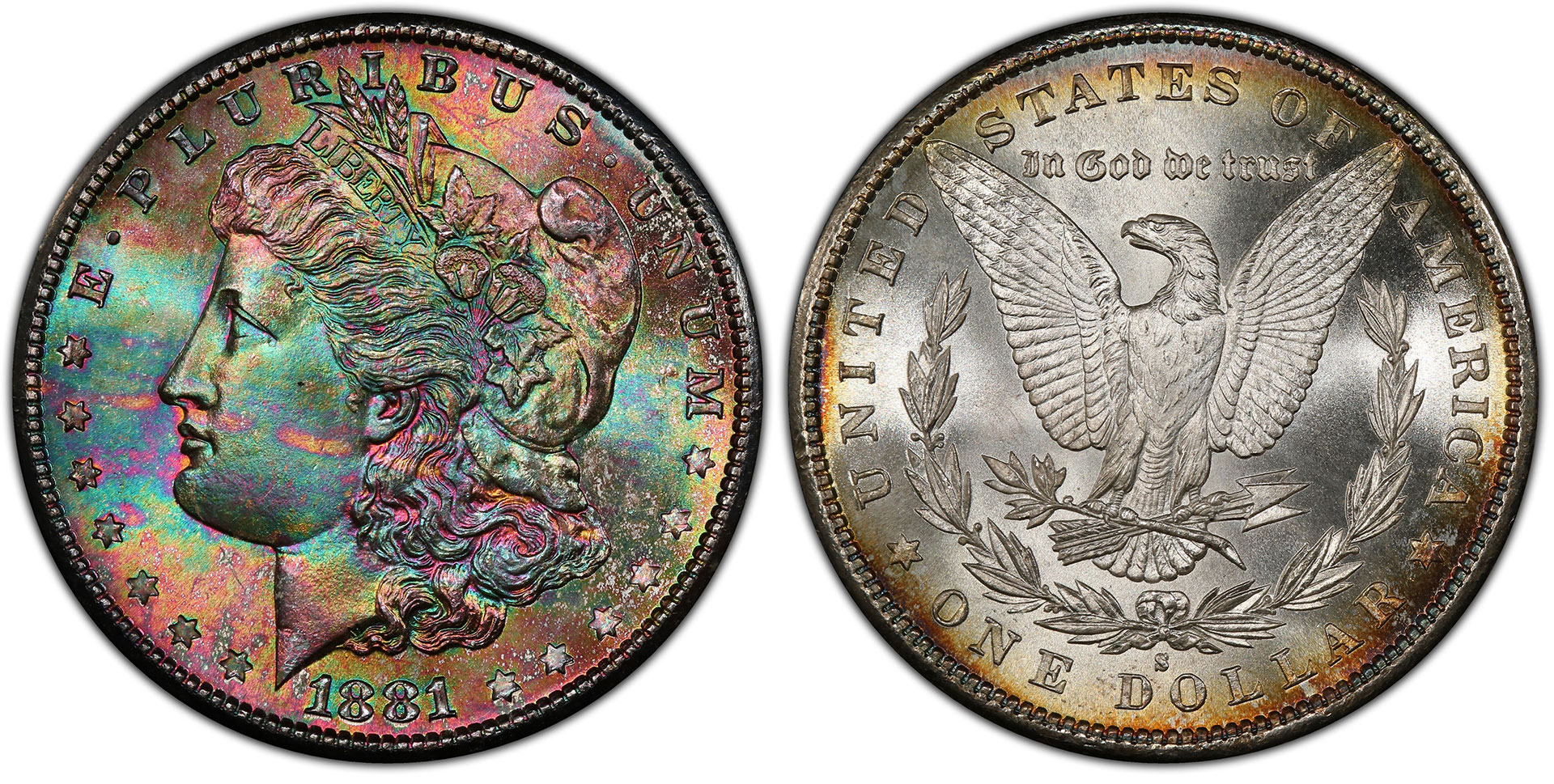
What draws our eye to vibrant color? There’s no question color is one of the most important aspects of art itself, right? Yet, the appeal of color (or lack thereof) is ultimately in the eye of the beholder. Let’s first look at what most generally don’t like. Darkly toned, black or brown coins do not sell well. Darkly toned coins, while sometimes completely original, don’t have eye appeal.
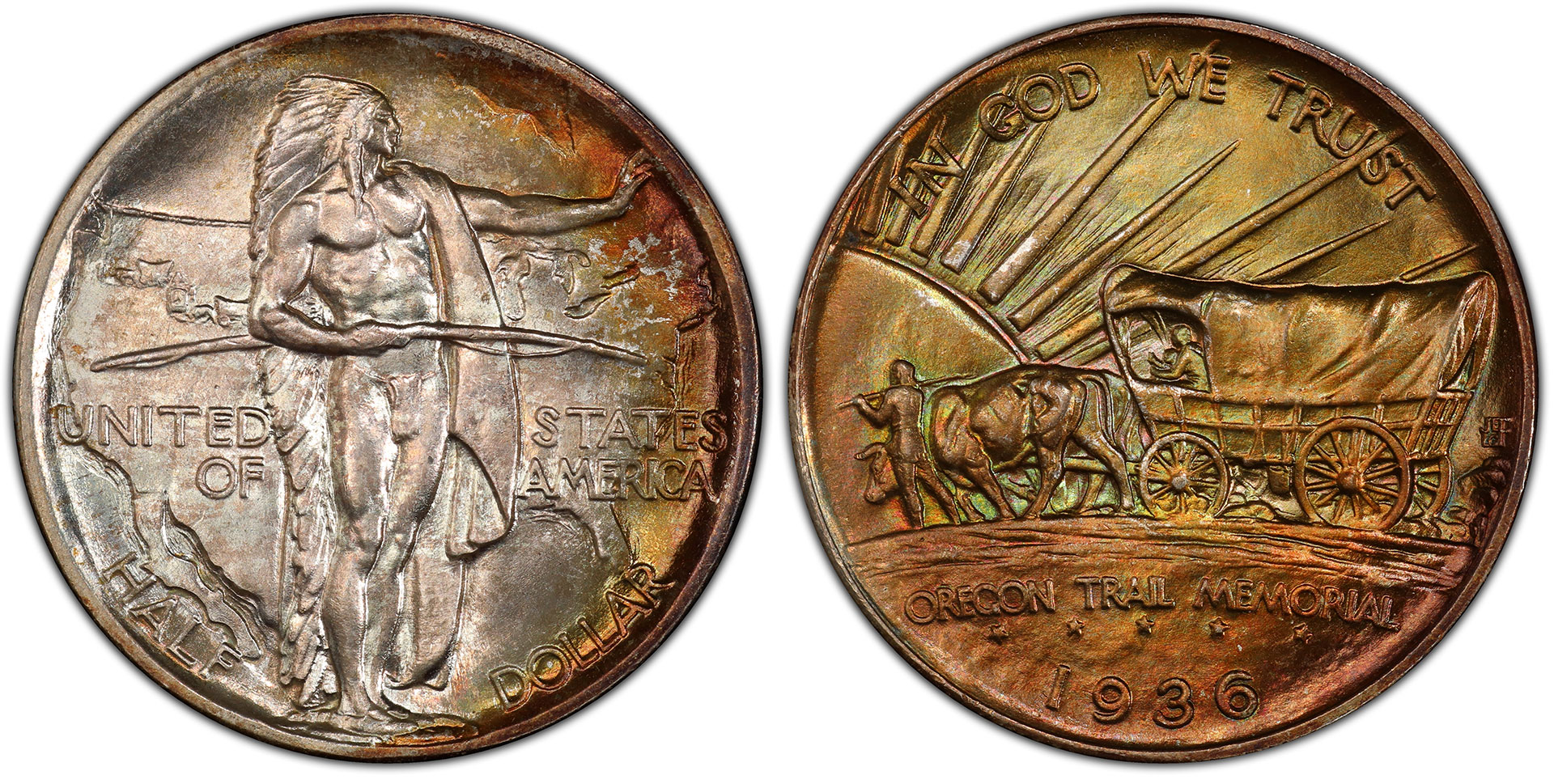
What do you like? Personally, I like some red, green, and pink in addition to the blues, golds, and orange hues we most often see on toned rare coins. Does the color jump out at you? Does it enhance the appearance of the coin? Does it please one to look at the coin?
For a young numismatist in the ‘70s, circulated coins were the norm. While I didn’t get to see a lot of coins with attractive toning, I quickly noticed that these pretty coins went away first — even when priced at a premium over coins of the same date and grade. If I hesitated, they most often had been sold when I came back later. Even in my early teens, I learned to “just buy it” when a coin with particularly nice color and eye appeal was available.
I remember agonizing in my motel one Saturday night during a coin show over the premium I had paid on a couple of commemoratives with gorgeous bullseye tab toning. I had paid double the dealer wholesale bid that afternoon for the two coins. Yes, they were pretty but… Several collectors and a couple of dealers had asked to see the two coins in my showcase after my purchase. When pushed to price the coins, I had added 50% because I really really didn’t want to sell them! No one had pulled the trigger.
As the show was closing for the evening Saturday night a fellow dealer had offered me a 10% profit on the two coins. I had politely declined, but asked if I could think about it overnight. I decided I was only going to sell him the coins depending on the strength of my other sales. If my sales were weak, I would probably take his offer. Have you ever heard the old saying, “you’ll never go broke taking a profit”?
Imagine my surprise the next morning when not one but two customers were waiting at my table to buy the coins. When I had priced the coins the afternoon before, I had every intention of keeping them for myself. My thought at the time was no one in their right mind would pay a 200% premium over dealer wholesale bid for these coins and I can keep them for my collection. Wrong, two guys were willing and able! I sold the coins. The deal was convoluted as they often are, but each of the collectors left with one of the coins. I made 50% on the deal but have never forgotten how pretty those two coins were!
I left the show that afternoon having learned an important lesson. Frankly it has little to do with the actual numbers themselves. Ultimately a fabulous coin will bring what the market says it is worth! A fabulous color coin sells itself!
That’s A Coin Of A Different Color…
In a practical sense, during three-plus decades on the bourse floor buying rare U.S. coins, regardless of the premium I paid for a fabulous toned and colorful coin, I nearly always profited! After seeing thousands of specimens, I had learned (with great success) to just “stock it” when a pretty toned coin was priced to me at anywhere near current price levels.
Of course, color is almost always a personal choice, but vibrant multicolored toning over lustrous surfaces, backlighting and highlighting the toning itself, are the pinnacles I strive for. Dark doesn’t work. Medium toning, if original, is tolerable depending on the issue itself, but dark doesn’t sell. Luster behind the color is often the key between a “blah” color coin and a kaleidoscope effect from a vibrantly toned coin with luster too.
Do I find many? No! That’s part of the difficulty. Once you locate a color coin worthy of a premium, how do you determine the value? Despite decades of experience, I find it difficult to determine how much of a premium is appropriate.
How much is too much? Remember my comments about a fabulous coin “bringing what the market says it is worth”? Nowhere are these market forces more evident than in the rare coin market when a coin with fabulous color is offered for sale or at auction.
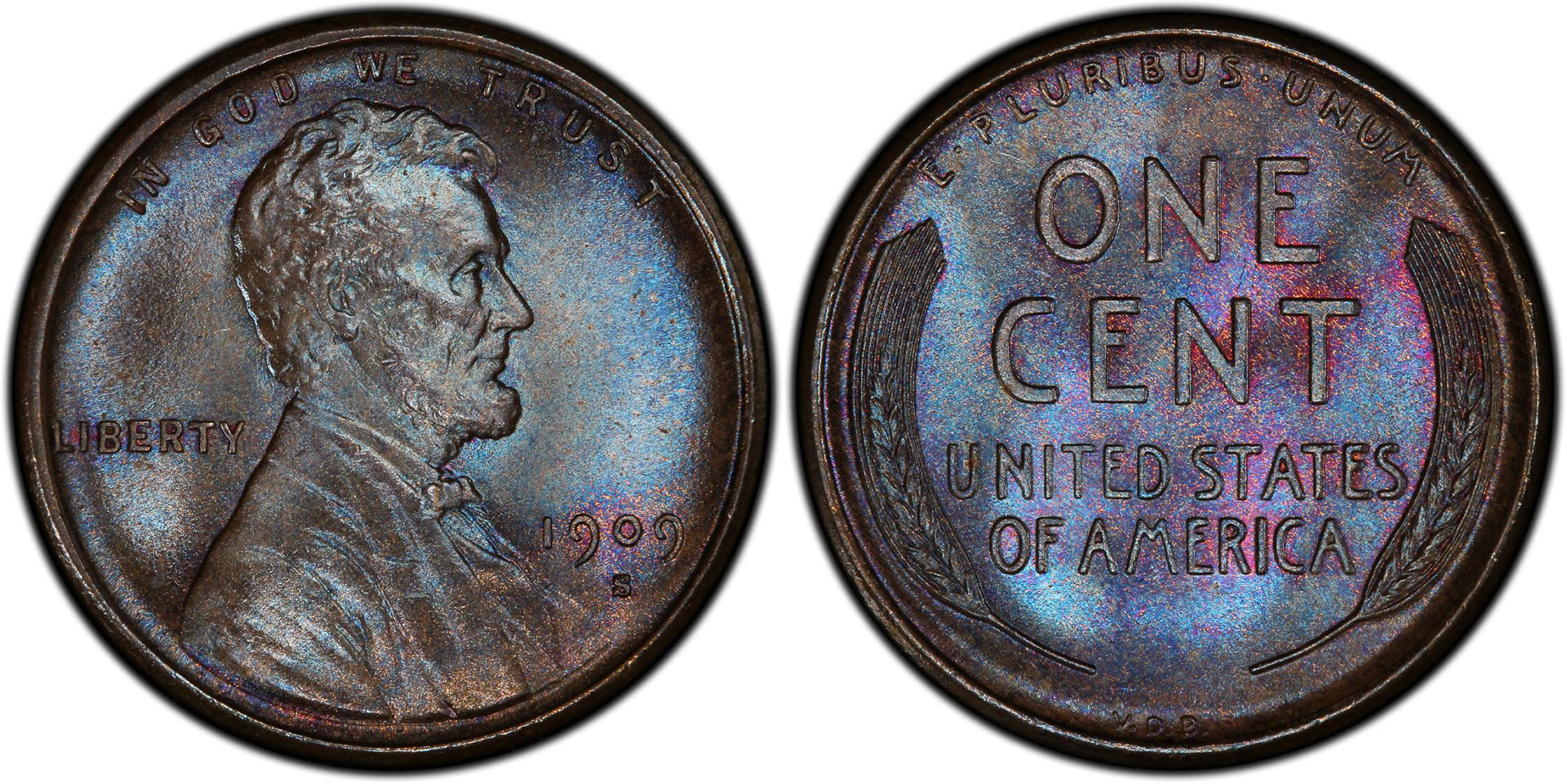
Recently, fabulously colored BN (brown color) copper coins have caught fire. Many times these often iridescent and glossy blue/brown coins have the luster, eye appeal, and color that have garnered record prices. Indeed, many of these BN coins bring more than their RB (red brown) and even RD (red) copper coins of the same date and grade! Once again, these coins are bringing prices determined by what the market says they are worth.
When It Comes To Color, It’s Not All Black & White
Depending on the metal of composition, the reactivity of the metal(s) determines how much oxidation will occur. The process of oxidation of the coin surface sometimes produces attractive colored toning. Sometimes the oxidation process does not enhance the appearance of a coin.
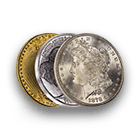
Colorfully toned Classic Commemoratives and Morgan Dollars are two of the most actively sought U.S. coin types. Indeed, both of these series have pretty toned coins that resulted from contact with paper/cardboard holders or albums in the last couple of centuries. Paper products from decades past often included sulfur in their manufacture.
Depending on the exposure and the elements, the incidence of toning on Morgan Dollars and most Classic U.S. Commems is arguably some of the most prevalent in all U.S. coin series. Depending on their storage means and exposure to elements some of the most spectacular toning known is the result of the actual original commemorative holders the coins were sold in originally.
Beautiful multicolored toning because of the fabulous eye appeal is quite often responsible for the record prices on many U.S. coins. When doing price research and updating the PCGS Price Guide, we often encounter a record price for a coin (with amazing toning) that has sold recently.
While the record price for the marvelously toned coin is certainly relevant to the market itself, pricing individual dates and issues using the prices realized for a fabulous toned coin complicates price guide accuracy.
These coins are almost always at the top of the market because of their superior eye appeal, but they are not often available. The price guide reflects the value for a problem-free (not darkly toned or spotted) PCGS-graded coin of that date and type.
When gauging how much a coin with gorgeous toning will bring, there are very few parameters. After all, gorgeous toned coins aren’t available often. When they do become available, they’re not only going to bring strong prices, but most certainly they will bring what the market says!
Coins with pretty toning bring more!
Opinions are of the author only and do not necessarily reflect the viewpoints of PCGS.com or its affiliates.


 Copper & Nickel
 Silver Coins
 Gold Coins
 Commemoratives
 Others
 Bullion
 World
World
 Coin Market
 Auctions
 Coin Collecting
 PCGS News