
As PCGS marks its 35th anniversary in 2021, we look back on many decades of grading more than 45 million coins, banknotes, medals, and tokens. PCGS was the first company to embark on the authentication, grading, and encapsulation of numismatic collectibles at scale, and as a pioneer in our hobby we have created a fair share of headlines. When we were founded in 1986, our goal was to become the trusted provider of coin authentication and grading services while educating collectors and non-collectors about the numismatic hobby and the fundamentals of the coin marketplace.
Building A Legacy
We kicked off our journey as the leading third-party coin grading service by reaching collectors and investors wherever they were to be found – attending coin shows, visiting coin shops, and reading hobby publications, to be sure. In the late 1980s, the numismatic market was humming with a new kind of buyer – Wall Street investors. The advent of third-party grading in 1986 with the founding of PCGS kicked off the era of sight-unseen trading, which meant that a collector, dealer, or investor could buy, say, a PCGS MS65 1886 Morgan Dollar, and know what to expect.
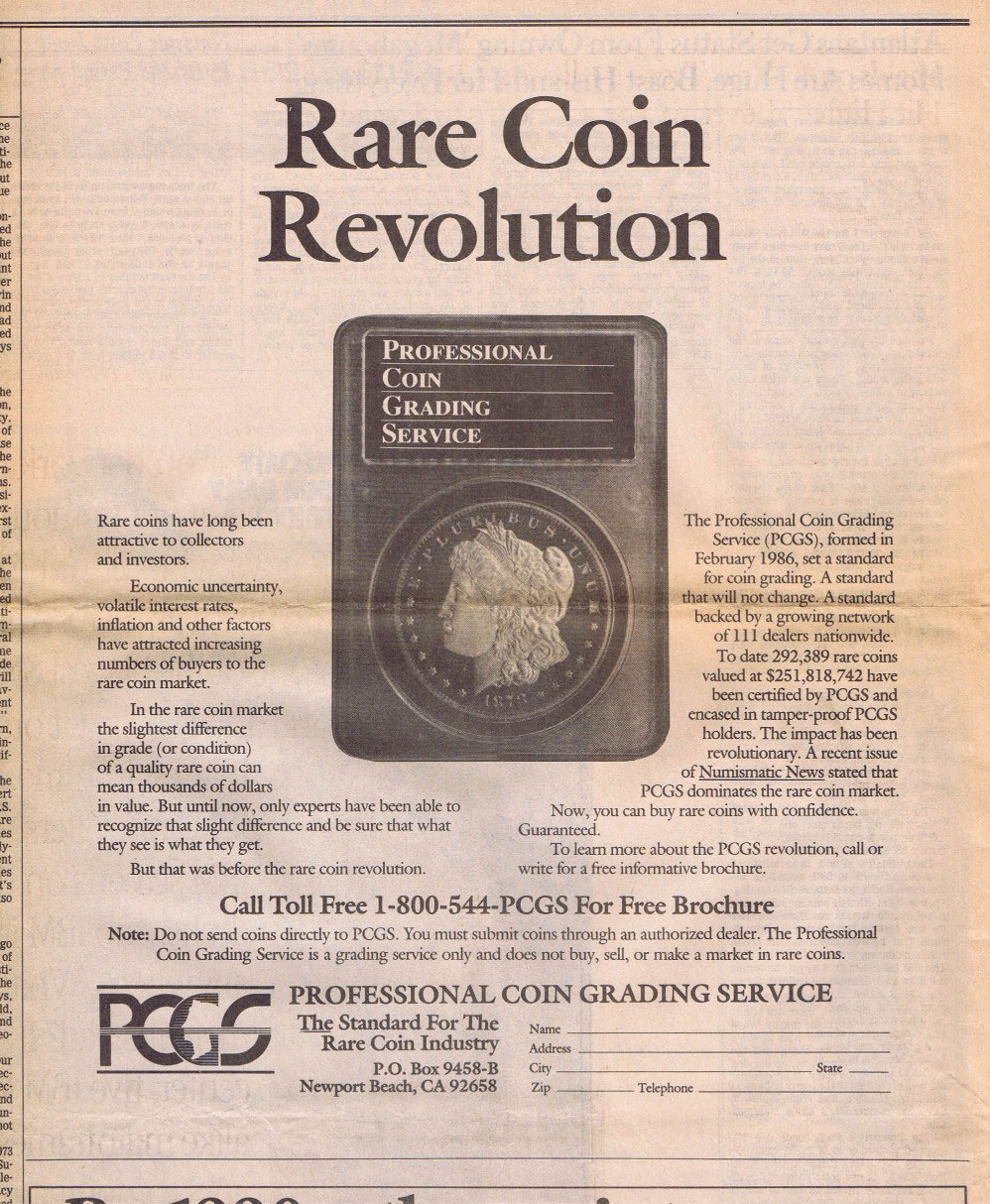
The tamper-evident holder provided buyers with a sense of security and the skilled, consistent grading by our experts instilled confidence that one may not have had buying a similarly billed – but “raw” (unholdered) – MS65 Morgan Dollar from a random coin dealer. No longer would someone interested in buying rare coins need to worry that the pieces they were buying might be counterfeit, altered, overgraded, or otherwise subpar. While such marketplace versatility by way of third-party grading certainly found its early embracers in the numismatic community, it also enjoyed a large and ready market among Wall Street players, who were accustomed to buying and selling stocks on a whim – without ever having to hold a physical stock certificate to complete a trade.
In 1987, our name began appearing in advertisements and news articles in The Wall Street Journal and other financial publications touting the merits of the rare coin market. The numismatic arena enjoyed a huge influx of ex-stock traders who bailed on paper assets when the Dow Jones Industrial crashed in October 1987, sending shaken investors to alternative markets, including cars, art, and coins.
It’s No Mayberry Anymore
The numismatic scene was once a relatively quiet landscape filled with children and adults fastidiously collecting coins from circulation and placing them in albums and folders; sure, they frequented their favorite coin dealers, they dutifully bought their Proof Sets and Uncirculated Sets each year from the United States Mint, and a few notable collectors laid out big money for significant rarities. But collectors of yesteryear who, under a proverbial rock for 40 years, didn’t witness the organic evolution of the hobby would probably not recognize the faster-paced, high-technology world of coin collecting today. It’s a shift in large part created by the rise of third-party coin grading and a need for greater security against a rising tide of counterfeits in an ever-digitizing universe.
One may wonder what the residents of fictional 1960s community Mayberry would think about the world today. The small North Carolina town was the setting of the popular television sitcom known as The Andy Griffith Show, starring the eponymous comedy actor Andy Griffith as the affable sheriff Andy Taylor. And it’s not hard to imagine that 1960s Mayberry was probably also home to many coin collectors. Even Andy’s son Opie (played by a young Ron Howard) is seen throughout the series handling a coin or two. Fast-forward two decades into the faster-paced 1980s, and Griffith resumes a television role in law enforcement, this time playing criminal defense attorney Ben Matlock as the title role of the drama Matlock. During the nine-year run of Matlock from 1986 through 1995, the Atlanta lawyer saw many cases and at least a few slabs – coin “slabs,” that is.
On the two-part episode known as “The Thief,” first airing March 28, 1989, Matlock defends a coin dealer who is charged in the murder of an employee accused of stealing coins. Making cameo appearances in this episode are real PCGS-encapsulated coins, including an MS63 1924 Saint-Gaudens Double Eagle and MS65 1881-S Morgan Dollar. It is among the very first appearances of third-party coin holders on a scripted network television program – and it wouldn’t be the last.


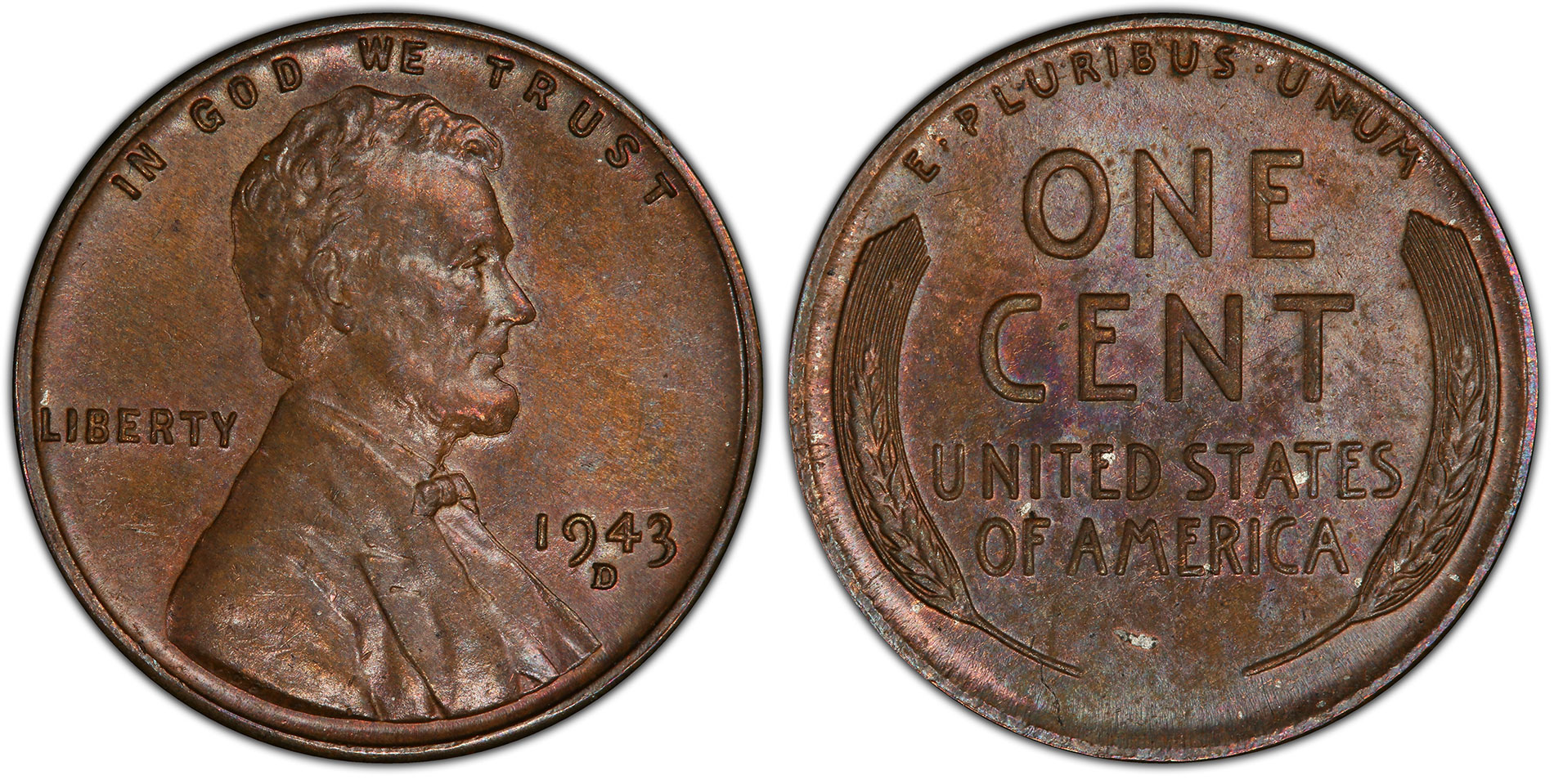
The critically acclaimed crime thriller The Blacklist also incorporated mentions of PCGS in Season Five, Episode 11 “Abraham Stern,” a reference to Abraham Lincoln on the 1943-D Bronze Lincoln Cent that becomes an object of theft in the plot. While the coin is supposedly auctioned off in the 2018 episode for some $3 million, the 1943-D Bronze Lincoln Cent – a unique coin graded by PCGS as MS64BN – snagged $1.7 million in a 2010 sale.
Rated PCGS
Those who were tweenagers (or raised one) in the 1990s may very well recall PCGS playing a starring role in the 1994 movie Getting Even with Dad. The film stars Ted Danson fresh off his 11-year run on the NBC hit sitcom Cheers and 1990s child star Macauley Culkin, who rose to fame warding off bad guys in the first two installments of the Home Alone movie franchise. In this film, Danson’s ex-con widower persona Ray wasn’t serving up drinks in a Boston basement bar, and Culkin’s Timmy didn’t go solo defending his home from crooks while his family enjoys a Christmas vacation thousands of miles away. However, there were a bunch of bad guys… The ones portrayed breaking into PCGS!
In Getting Even with Dad, Ray is at home organizing a break-in at PCGS with two accomplices when his estranged son, Timmy, suddenly enters the house – a surprise to the three men, given that the adolescent boy has been living with Ray’s sister. The trio of miscreants pull off the heist, but they don’t get too far with the rare coins. Timmy swipes them from his criminal dad and hides them from him until the two embark on a number of father-son outings together. Ray eventually bonds with his son, who agrees to move in with his father only if he returns the stolen coins.
PCGS Co-Founder Gordon Wrubel fondly recalls what led to the company being featured in Getting Even with Dad and how our role with the movie unfolded before we hit the silver screen.
In the late '80s we hired a bright young lady, Patti Minassian, to handle the media outreach of our burgeoning company. We were hoping to increase our recognition and footprint in the marketplace and to the general public. Patti was aggressive and, apparently, well connected. I'm not sure how she got her foot in the door, but one day she told me that she was working on a deal that would feature PCGS in a full-length movie. We were ecstatic. It was just the type of exposure that we sought.
Apparently one of the producers was fascinated with coins, one of which was the rare 1920-S Saint-Gaudens Double Eagle. So, one day the producers, and others on the project, came out to PCGS to find out how we did what we do. They asked us to come up with the coin to be featured. So, we decided we would take a high-grade 1920-P $20 and affix an “S” mint mark. We canvassed our Authorized Dealers for an MS64 (65s were almost non-existent at the time), but we could not locate one. The film was on a tight shooting schedule, up in its San Francisco location, and couldn't wait. So, a poor, gold-painted mockup was produced, and that is shown in the opening of the movie. I didn't like this, as we were all about vintage, genuine coins, but the show must go on!

What about our PCGS office “in San Francisco”?
Patti went up to San Francisco to consult and help choose locations for "PCGS." So, our company sign was posted on an old bank building. The “graders,” as I recall, were older gentlemen with large magnifying glasses.
How did Ray and his associates get by security so easily?
Since the movie was a farcical comedy, the security featured was unbelievably lax in order for the culprits to pull off their heist. Nothing like our tight security protocols we have with armed off-duty or retired Long Beach policemen; this includes "man traps," live monitored video of every area of the building and parking lot, electronic security badges for employees to gain entrance, wand checking of trash, as well as people leaving the facility. In real life, it’s similar to, if not better, than airport security.
Did you get to meet the stars?
Danson and Culkin themselves did not come to our facility. So, I guess Patti is the only one who had any contact with them.
Were any coins harmed in the filming of the movie?
I doubt any coins we harmed in the filming. Remember they were encapsulated in our secure, tamper-evident plastic holders!
PCGS in the News
PCGS regularly breaks into national and international headlines when price records are smashed upon the sale of this coin or that. Why, in 2020 alone PCGS graded 23 of the 25 most expensive coins sold during that year. But we have also entered the news cycle for reasons well beyond the records that PCGS-graded coins and banknotes break on the auction block. Gordon Wrubel shares one particularly special memory…
I had been attending the annual Hong Kong Coin Show since the early to mid '80s. In 1987 or ‘88, another PCGS grader and I were sent there to represent [the company]. I had recently set up the standards, along with three other consulting experts, to grade Canadian coins. Our plan was to move into Great Britain next, then all of Europe, and eventually Asian coinage. So, this was a perfect venue to expose people from many nations to PCGS – this was a big annual show that had been going on for many years. One day, I was approached by a cameraman and an interviewer and asked about PCGS, so I got to tell a short version of our story. I didn't realize the extent of the coverage until my wife, back in California, got a phone call from my brother-in-law in Ann Arbor, Michigan. "Hey, I just saw Gordon interviewed on the national news, from Hong Kong!”


 Copper & Nickel
 Silver Coins
 Gold Coins
 Commemoratives
 Others
 Bullion
 World
World
 Coin Market
 Auctions
 Coin Collecting
 PCGS News