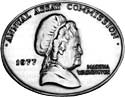
NOTE: Recently, a proposal was made to revive the U.S. Assay Commission, a now-eliminated longstanding committee of American citizens which met each year to examine random samples of United States coinage for conformity to standards.
Collectors Universe presents an article arguing for bringing back the Commission. For the the other side of this issue, click here to read “POINT: The Assay Commission Has Outlived Its Usefulness"" by Richard Giedroyc.
Twenty years have passed since the U.S. Assay Commission met for the final time to count, weigh and assay random samples of Uncle Sam's coins from the previous year. Much has happened since then with the nation's coinage: Gold and silver commemorative coins have reappeared on the scene ... American Eagle bullion coins have debuted in three metals -- gold, silver and platinum -- and carved out a major share of the global market … and proof silver versions of the half dollar, quarter and dime have joined the U.S. Mint's growing line of products for collectors.
All of these developments buttress advocates' case for bringing the Assay Commission back to life. It was, after all, the absence of precious metal in any U.S. coins that helped grease the skids for the panel two decades ago. Critics questioned the need for an annual inspection of base-metal coinage, since any deviation from the statutory norm would have minimal implication for the government's profit-and-loss sheet. That argument played a role in burying the commission in 1981, so the flip side -- the return of high intrinsic value -- should carry equal weight as an argument in favor of giving it new life as we start the 21st century.
Having said all this, however, I suggest the biggest reason for reviving the commission has little to do with profit or loss, or even with the need to double-check the government's quality control. It has to do with something more precious than gold and silver. In a word, the real issue is tradition. Prior to being scrapped, the Assay Commission had held its one-day annual meetings since the start of U.S. coinage in 1792; it was, in fact, the oldest continuously functioning agency of the federal government. And though the practical need for this regular yearly checkup had long since receded by the late 1970s, it provided a tangible link with our nation's formative years. It was, as journalist Neil MacNeil observed, a "grace note in government operations."
Beyond re-establishing this long-standing tie with the Founding Fathers, reviving the commission would help reinforce the bridges recently built between the U.S. Mint and the general public -- not unlike the role the statehood quarters are playing in making many Americans more aware of both their coinage and their heritage.
"The real value of an assay commission, it seems to me, is twofold," says David L. Ganz, a past president of the American Numismatic Association who served on the commission a quarter of a century ago. "First, it encourages citizen involvement in governmental oversight. Second, it creates 25 good-will ambassadors every year who, in essence, verbally sell the Mint."
Ganz worked closely with his congressman, Rep. Steve Rothman of New Jersey, in drafting a bill that would restore the Assay Commission and provide for the appointment of 25 public members every year. The bill -- H.R. 3866 -- was introduced March 8 in the House of Representatives, and Ganz is urging those who support the measure to contact their senators and congressmen at The Capitol, Washington, D.C. (House: 20515; Senate: 20510).
Are there more efficient, more streamlined ways to verify the quality of our coinage? Undoubtedly so. And no doubt the U.S. Mint is even now using the most modern and sophisticated tools at its disposal.
But the U.S. Assay Commission was more than just a tool: It was an American tradition. And like the Liberty Bell, another Philadelphia institution, we should cherish it and place it on a pedestal, not in a Dumpster.
So, readers, what do you think? Should the U.S. Assay Commission be revived or not? Click here to read the other side of the story if you haven't already done so. Then send us your thoughts at [email protected] by March 30. We'll publish the results of our poll in a future article.
Ed Reiter is senior editor of COINage and author of the award-winning column "My Two Cents' Worth," which appears in the magazine each month. He wrote the weekly Numismatics column in the Sunday New York Times for nearly a decade, and also is former editor of Numismatic News.
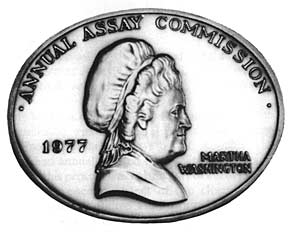
Above and below: a closer look at the 1977 Assay Commission medal
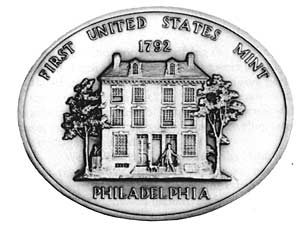
Above and below: a closer look at the 1977 Assay Commission medal




 Copper & Nickel
 Silver Coins
 Gold Coins
 Commemoratives
 Others
 Bullion
 World
World
 Coin Market
 Auctions
 Coin Collecting
 PCGS News