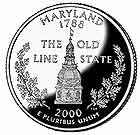
It's really amazing examining all the many coin boards and other holders now being made for the Statehood quarter dollar coins.
You can purchase a map board, a holder displaying flags of the states or just a plain vanilla, generic coin board with dates and Mint marks in which you can plug the coins.
Some of these many coin boards have spaces for each of the coin reverse types, as well as the Philadelphia and Denver Mint marks associated with each circulation strike. Some of the coin boards are strictly made to hold one of each state represented, ignoring the Mint marks.
This brings up an interesting question regarding what constitutes a complete set of these Statehood quarters. Should a complete set simply be one of each of the 50 coins dated between 1999 and 2008, should it be one of each from Philadelphia and from Denver (a total of 100 coins), or should all the Proofs also be included?
You'd be surprised how many people will answer this question based on the holes in the coin board they are filling.
Stamp collectors seem to be obsessed with having every stamp for each space that has been provided for in their albums. Coin collectors tend to go the same route with their coin boards. Has it ever occurred to collectors some hobby supply manufacturer (rather than the Mint, the Bureau of Engraving and Printing or other collectors) is dictating to you what constitutes a set?
US coins in some respects appear to be cut and dry. Morgan silver dollars were struck between 1878 and 1921. Most collectors of Morgan dollars typically attempt to obtain a specimen of each date and Mint mark in the highest grade possible (and affordable). More specialized silver dollar collectors may seek die varieties, overdates, errors or Proofs. By the time you have advanced to that level, you aren't using a coin board anymore.
Collectors of the world unite! Coin boards are great, but at some point you have to decide what you want to make up your collection, not what somebody else tells you completes a set. When you go to sell a set of coins plugged into a coin board the person buying the "set" is really only interested in the key dates or very high grade pieces anyway.
Enjoy your collecting and choose what you want.
This isn't to suggest you should have a hodgepodge of a coin collection. You should have some direction to what you collect. It also isn't to suggest tossing all those coin boards and only collecting coins without them either. It is meant to suggest you think for yourself. Collecting is a lot more fun this way.
The problem faced by many collectors looking to make this break is how to house your coins. One nice solution is to simply buy nothing but coins encapsulated by Professional Coin Grading Service (PCGS).
There are many other ways to uniformly store or display your coins. These include 2-by-2 inch vinyl flips, cardboard holders, coin cabinets and just about anything imaginable. For years, the American Numismatic Society used to place each coin in a uniform small box with room for descriptive material accompanying the coin.
Just make sure whatever you use does not contain elements harmful to coins, such as sulfur and polyvinyl chloride.
It takes imagination to design a coin. Collecting coins should also involve imagination. There are too many different coins out there to choose to ignore most of them, simply because somebody else decided "this" is what should comprise a set.
Don't put all your eggs in one basket, or better still, don't put all your coin collection in coin boards exclusively.
Richard Giedroyc is a numismatic writer, researcher, auction cataloger and coin dealer. He has been in the hobby and business most of his life, now having more than three decades’ experience in this fascinating hobby field. During this time Giedroyc has been the owner of Paris Bergman Galleries, owner of Classical Coin Newsletter, international editor of Coin World and owner of Giedroyc-Anderson Interesting World Coins. He is currently a numismatic consultant. He has written more than 2,000 byline numismatic stories and contributed to several coin catalogs.
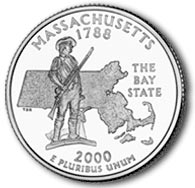
New collectors may start their collections with the statehood quarters
and coin maps. Some may expand their focus to other coins.
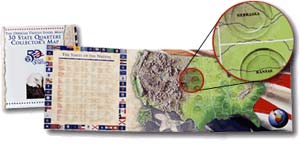
New collectors may start their collections with the statehood quarters
and coin maps. Some may expand their focus to other coins.


 Copper & Nickel
 Silver Coins
 Gold Coins
 Commemoratives
 Others
 Bullion
 World
World
 Coin Market
 Auctions
 Coin Collecting
 PCGS News