With outstretched arms and flying pigtails, the little skater finishes an arabesque, leans in on the edge of her blade, and slowly circles across the ice. Her instructor, dressed all in black, stands motionless and utters something short, but the sounds of shoppers and music in the Wanxiang mall in Shenyang City, Liaoning Province, China, drown out the words for me. This section of the rink is cordoned off by bright orange pylons — the coach’s domain. The pupil, who might be six or seven years old, glides past the stern figure. At the wall she leans heavily onto the wood rail to catch her breath, but after only a few seconds, then up she pops and skates back out.
They always say the first step is the toughest. “I found it hard to learn [ice] skating. Despite falls and injuries, I kept practicing and gradually felt empowered as I have conquered many fears and challenges,” confessed Zhang Beibe, another skater. By age 13, Zhang was a multiple gold medal winner at an Asian figure skating championship and she continues to dazzle audiences with her skill on ice.
There may be 300 million people in the People’s Republic of China who ice skate. The government has built rinks around the country and, nowadays, there are even vibrant skating communities in the torrid south. That’s new in China, but the sport isn’t. A thousand years ago it was already popular, but only affordable for the very rich. After the 1911 Xinhai Revolution, interest broadened as renting skates became a business. In recent years television and the internet created new fans and an interest in winter sports — just as it did for collecting Chinese coins. Many people can afford to buy their own skates now, too.
Beginning in 1979, the China Mint (which evolved into China Gold Coin Incorporation) began to strike coins for export in close cooperation with foreign distributors. The set of coins commemorating the 1980 Lake Placid Winter Olympic Games was one of the early projects and includes two skating designs. International Coins & Currency, Inc., of Montpelier, Vermont, sponsored and distributed these.
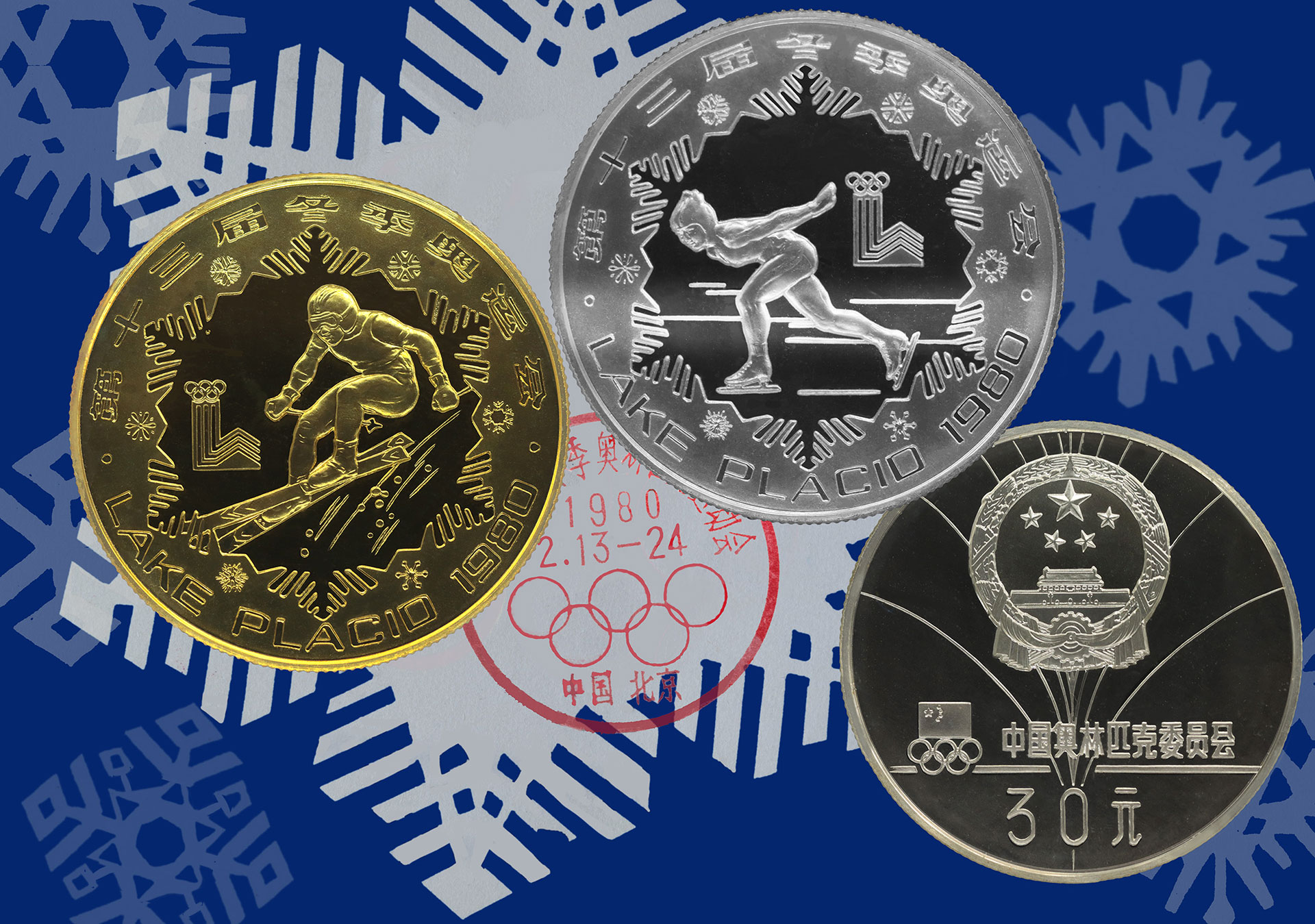
One unusual feature of the 1980 set is their use of "Chinese Olympic Committee" instead of the country name on the reverse side. Another is that the coins were struck in two thicknesses: normal and piedfort. Only 500 double-thick piedforts of each coin were actually minted, and these are highly prized by collectors. That compares to a mintage of 70,000 for the regular-thickness brass sets. The downhill skier coin exists in three metals: gold, silver, and brass. The three other winter designs were minted in silver and brass only. Fittingly, all were designed and struck at the Shenyang Mint in chilly northern China.
For years, no information about these export coins reached collectors in China. Sometime in 1986 or 1987, Mr. A., a foreign coin dealer, visited the mainland. He recalls, “At the time, there was only a single coin shop in Shanghai, and the man who ran it was probably the most knowledgeable coin guy in the city. He sold everything from modern Chinese coins to vintage coins. By this time there was already pandemonium overseas, just crazy demand for Panda coins like at the Long Beach Expo, or the San Francisco Expo.”
“The 1980 Olympic coins were common in the states; in the mid-1980s, there were tons of them available. I had a handful in my bag, so I pulled them out and put them on the counter. I said to the dealer, ‘These are Chinese coins. Are you interested in them?’ and I sort of slid them across the table in front of him.”
“Well, he looked at them and slid them back toward me, ‘No, no, no,’ he said, ‘These are not Chinese coins.’”
“Then I took my hand and slid them back to him, ‘Yes, yes, yes, these are Chinese coins. Look at it,’ and I read the Chinese characters out loud, ‘Zhong Guo’ (China) and ‘One Yuan.’”
“Now the dealer looked more carefully and his eyes got wide as he realized what they were. ‘Really?’ he exclaimed. ‘Where did you get these?’”
“Oh, in the U.S. there are a lot of these,” I replied. “In fact, there are a lot of modern Chinese coins there.”
“Really?” he repeated.
“Yeah, they are only issued for sale in the U.S., Germany, and Japan.”
“Can you get some more?”
“I’ll try,” was my response.
“Things grew from there,” Mr. A concludes.
China’s next Winter Olympics coin was a 10 Yuan that contains a half ounce of .925 sterling silver. It was struck for the 1984 Sarajevo Olympics with speed skating as the subject. It is 36 millimeters in diameter and with a mintage of only 6,000 is not seen nearly as often as the 1980 issues.
Speed skating is again the subject on a 1990 50 Yuan issue. It features a trio of women speed skaters and, at 70 millimeters in diameter and with five ounces of .999 silver, was the largest sports coin China had minted up until then. The 1990 coin not only has energy and style, but a bit of celebrity status; Sun Qiling, who did the Temple of Heaven on the 1982 Panda coin, designed and engraved it. This focus on speed skating coincides, perhaps not by accident, with the development of an outstanding women’s speed skating program spearheaded by Ye Qiaobo. Miss Ye would win two silver medals in Albertville, the first-ever medals for the People’s Republic of China in Winter Olympics competition. That event is etched in many people’s memory — even people born after 1990 know her name.
One of those who watched Ye Qiaobo ascend the medal stand in Albertville was a 14-year old girl with her own dreams. Yang Yang, born in the far north of China near the Russian border, began to seriously skate at age seven. By the Albertville Games she had reached the International Skating Union finals. While the path forward would include some crushing setbacks, Yang never gave up and in 1997 ascended to world champion. Then, at the 2002 Winter Games in Salt Lake City, she achieved her dreams by winning two gold medals. These were her country’s first Winter Olympics gold victories.
China minted Winter Olympics coins for the Calgary games in 1988, the 1992 Albertville Games, and the 1994 Lillehammer Olympiad. The 1991 Albertville set includes a 100 Yuan one-third-ounce gold coin with a pair of figure skaters on it. Some 5,000 were minted. This coin is notable as it was designed by Mr. Luo Yonghui, a prolific and much revered coin artist for the People’s Republic of China. Among his other work is the 1989 Panda coin.
The next set, for the Lillehammer Games, was the end of the line for Chinese Winter Games commemoratives until recently. Most Chinese Olympics coins up until 1994 were shipped to a German company for sale in Europe. When this arrangement ended, so did China’s Winter Olympics coins program — until 2020.
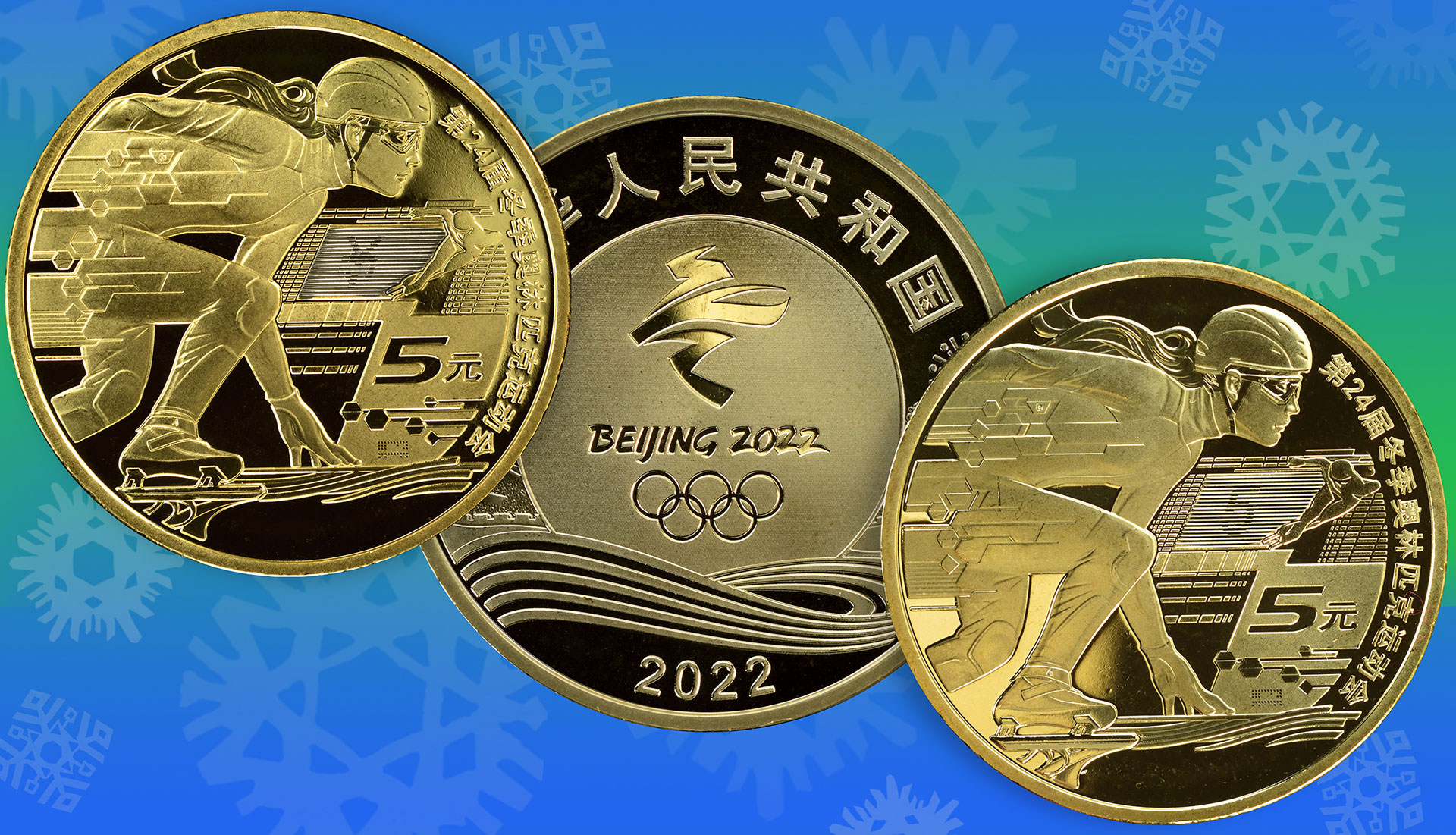
To celebrate the 2022 Winter Games in Beijing, The People’s Republic of China issued commemorative coins in 2020, 2021, and 2022. These include a 10,000 Yuan 1 kilogram gold coin, one each of gold and silver 150-gram coins, and a dozen smaller 5 Yuan 15-gram silver pieces. There is also a bimetallic coin that contains 30 grams of gold and 12 grams of silver. The two large gold coins showcase the Games’ cute Panda mascot while the 5 Yuan coins all display electric images of winter sports like figure skating and, you guessed it, speed skating.
As athletes and their teams from around the world travel to China, officials and celebrities are ready to welcome them. Among them is Yang Yang. In a television interview she offered her perspective on the 2022 Beijing Games and even provided a little bit of advice. “We have the opportunity for the Chinese team to have a good result, but most important, the athletes have to enjoy the Games. Now it’s your stage, it’s your time to show the world the best of your ability. Don’t worry about winning, or losing because there’s nothing you can do about the result. All you can do is enjoy the details, every process. That’s something really about life. Later on, that’s something you can remember. I want to say to the young athletes, enjoy the process and know that the result will be there.”
Halfway around the world, at least one young athlete is already a believer. Nineteen-year-old skater Audrey Lu of Dallas, Texas, has qualified to travel to Beijing as a member of the U.S.A. Olympics team. Like the young girl I watched in Shenyang, Audrey began to figure skate as a child at an ice rink in a shopping mall. Her idol was Michelle Kwan. Audrey, also known as Lu Yao, switched from individual to pairs skating in 2016.
Lu's mother told Xinhua News that, “Audrey has been dreaming to compete in an Olympic Games since she was a little girl. She decorated a wall of her room with the Olympic rings with ropes she made and wrote under it – ‘Chase your dream.’”
Audrey added, “We work hard every day and set goals for ourselves […] and we just show what we can do… Obviously, it's the Olympic season, but we treat it like every other season.” Lu and her skating partner placed fourth at the U.S.A. Nationals – good enough to earn a spot on the Olympics team.
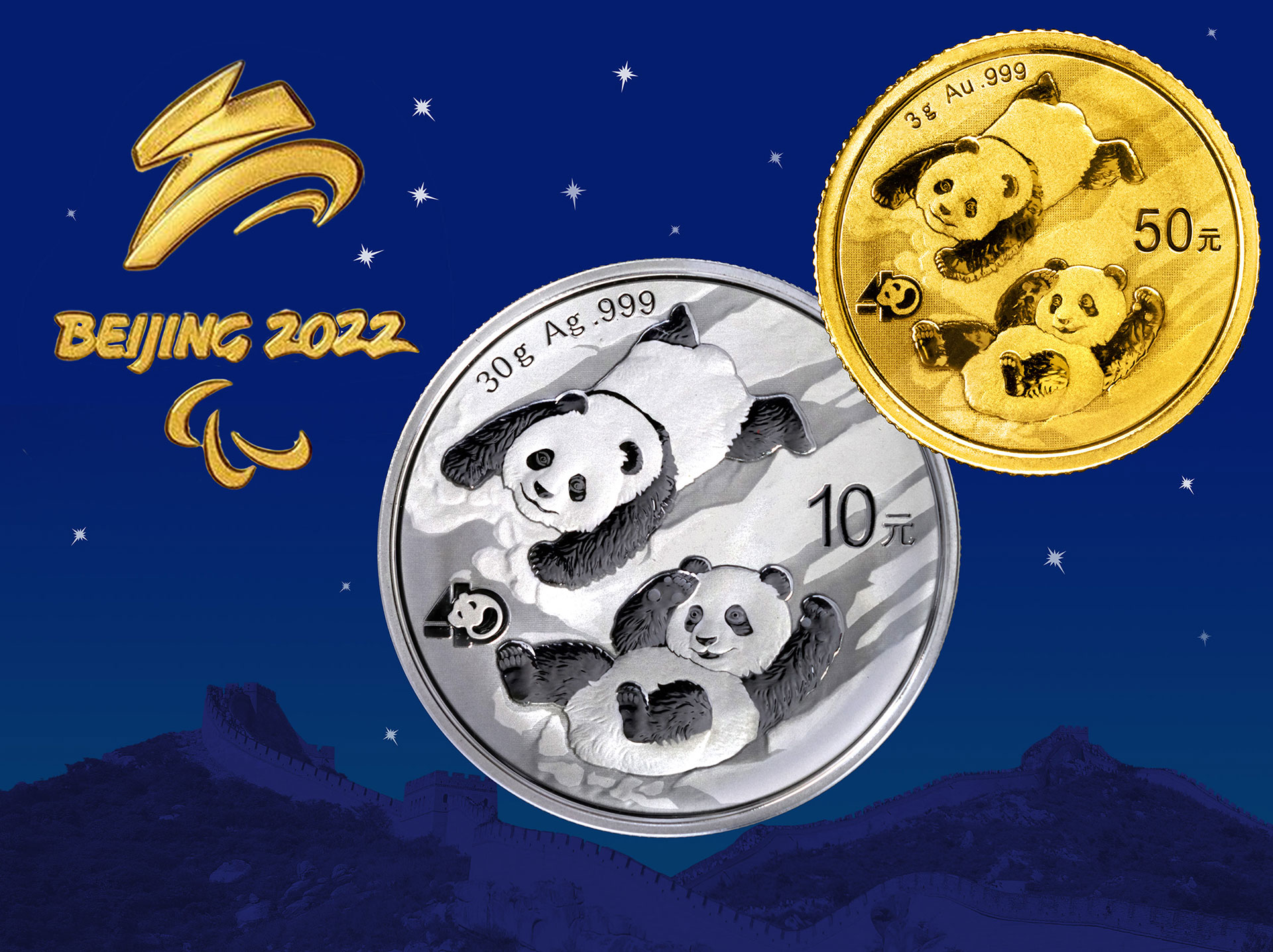
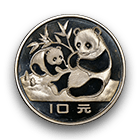
There is another pair that contends for attention: the frolicking bears on the 2022 Panda coins. Two cubs happily slip and slide their way down a snowy hill on these gold, silver and platinum gems. The design is the work of the young Chengdu Mint designer Huang Qin. It’s her first Panda coin design and she shared her thoughts on it, “The 2022 version of the panda gold coin pattern is based on the theme of the upcoming Winter Olympics in my country. This is the first Winter Olympics to be held in China. This design reflects the responsibility and goal of Chinese coins to share Chinese stories and Chinese culture with our friends in other lands and cultures.”
To share stories and culture with friends in other lands is one of the great rewards in both numismatics and sports. As I waited for the competitors to arrive in Beijing and show the world their best, it reminded me of a stadium in Shenyang early one morning. There are no pylons here, no coaches, no officials, and the few people present get off the ice as a skater clad in black from head to toe steps onto it.
After warm-ups, he marks off a spot for his jump then repeatedly starts, but breaks off his approach. I can see him adjust details like his shoulder angle. It is very precise and impressive. Finally, he’s ready. The steel blades chop into the ice as he accelerates; in the stillness it sounds like a locomotive. TV gives you no feeling for speed. Faster and faster the skater streaks until near the end of the rink there is a swerve, a leap, and, in a blur, one twirl, and then another through the air. Arms spread wide, he lands smoothly. And that is it – perfection. It’s a 6.0, or maybe a 70, if you prefer from the numismatic perspective. Everybody at the rink applauds. Liaoning Province has developed several national level skaters and time, practice, and effort may make this one another.
That’s the key – whether it’s sports or numismatics, you have to enjoy the details, the process, and know that the result will be there. So, happy collecting. The 2022 Beijing Winter Games may have begun on February 4, but the Olympics gold and silver coins await you!


 Copper & Nickel
 Silver Coins
 Gold Coins
 Commemoratives
 Others
 Bullion
 World
 Coin Market
 Auctions
 Coin Collecting
 PCGS News