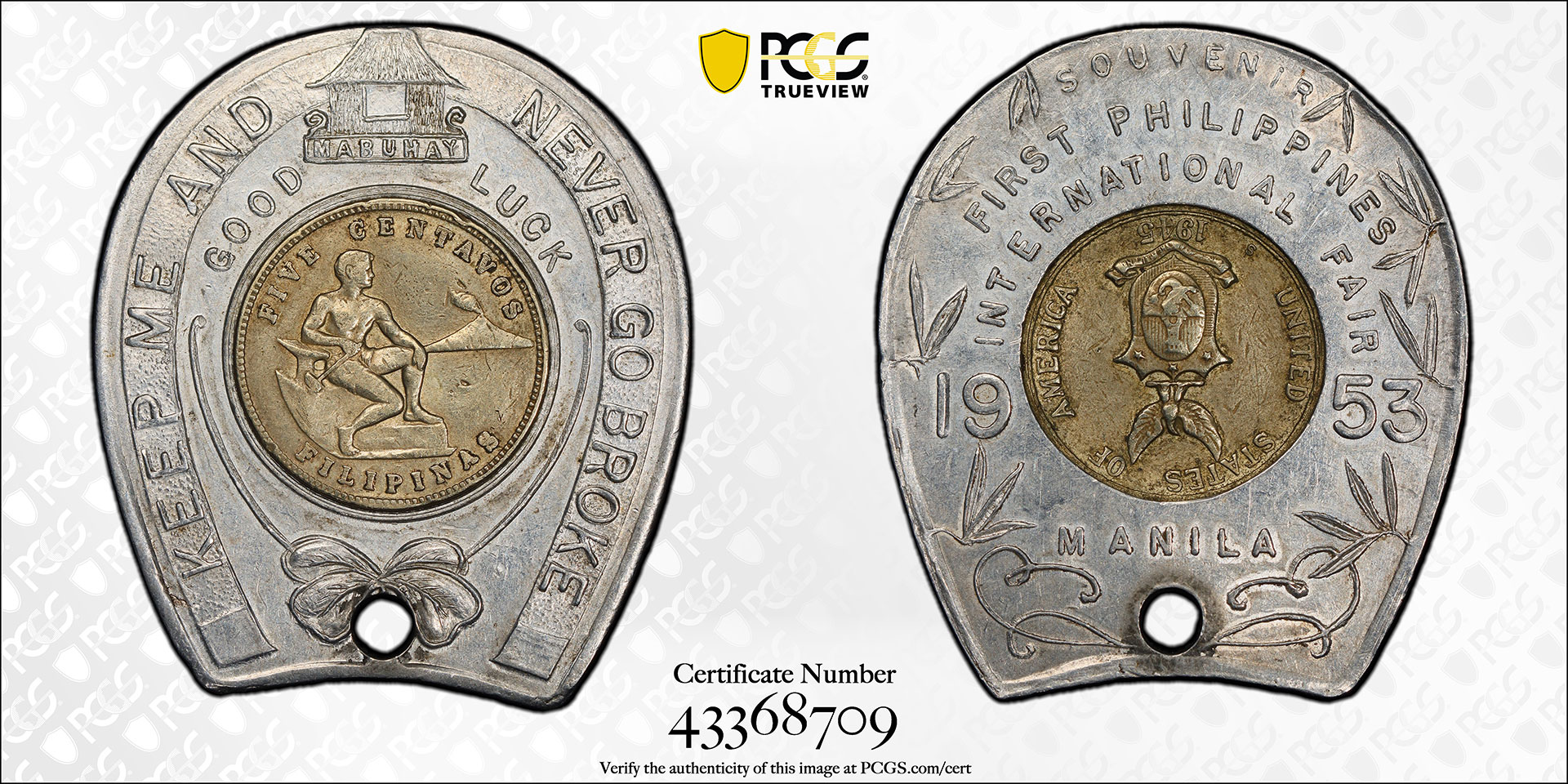
A recent question asked to PCGS online was, “Does PCGS grade encased coins?”
An “encased coin” is a token that is created from a coin later inserted into a washer. These washers are typically round and made of aluminum. They can range in designs and metals. These washers also contain advertisements, souvenirs, and / or luck-themed words and designs struck into the metal or printed onto the encasement. The coins inside these encasements are pressed into the metal washers warping the rims of the coins creating damage to the coin if it is removed. The first encased coins appeared at the 1901 Pan-American Exposition as souvenir pieces for the expo. More encased coins would be made for the 1904 St. Louis World’s Fair and encased coins continue to be made even today.

With most examples of encased coins selling for just a few dollars, very few have been submitted to PCGS for certification. Encased coins would fall under the guidelines of the PCGS medals and tokens service. Under these guidelines, select pieces are eligible for certification if the encasement is original. These pieces include but are not limited to examples listed in references in the PCGS token and medal library, which would include Pan-American Expo pieces listed in Lavin, Louisiana Purchase Expo pieces listed in Hendershott, Hawaiian pieces listed in Medcalf & Russell, and others documented in available PCGS library sources. In the future we hope a standard reference would be written and published on encased coins that would open up for more examples to be accommodated.
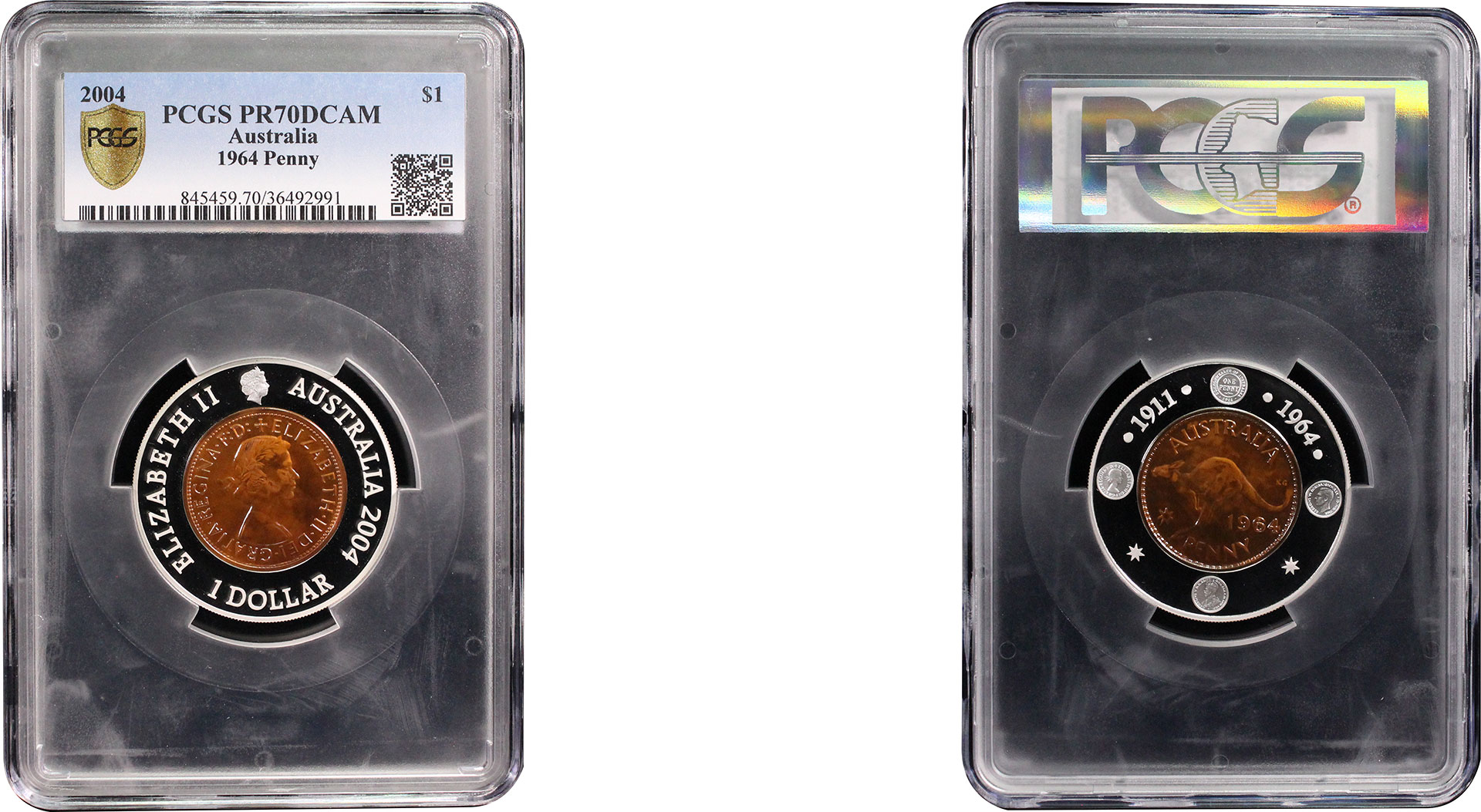
If an encased coin was made by a government mint, such as the Australia 2004 one-dollar commemorative for the 40th anniversary of the last Australian penny, the coin will always be eligible for certification by PCGS.


 Copper & Nickel
 Silver Coins
 Gold Coins
 Commemoratives
 Others
 Bullion
 World
World
 Coin Market
 Auctions
 Coin Collecting
 PCGS News