Numismatics is the study or collection of coins, paper money, and medals – something nearly everyone reading this will likely already know. Yet, the study of etymology, or the study of the origin of words and the way their meaning has changed can also pertain to numismatics and open up new knowledge for those who seek it out.
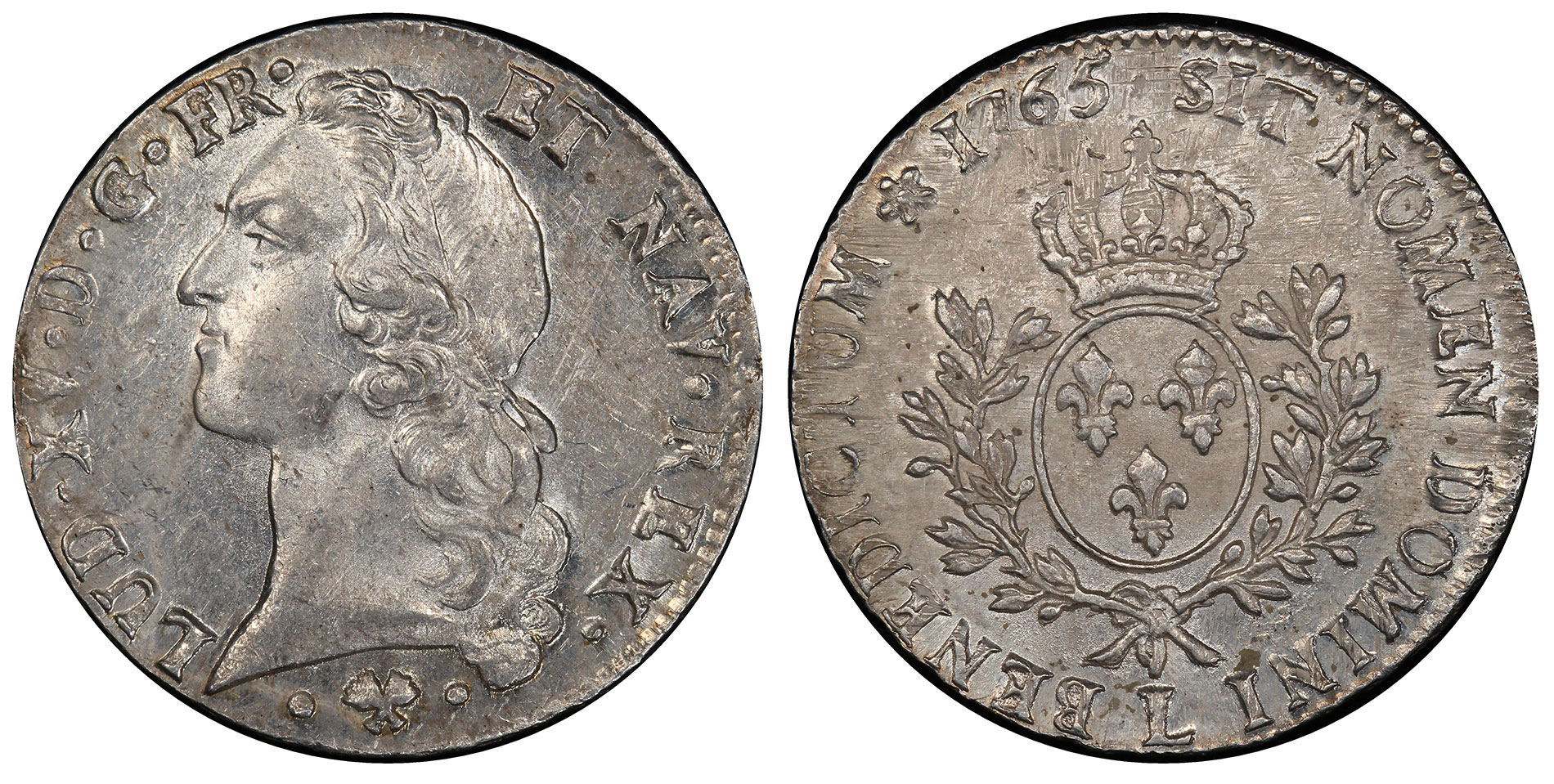
France 1765-L Ecu, PCGS AU55. Click image to enlarge.

Greek Italy, Calabria, Taras, AR Nomos (272-250 BCE). Image Courtesy of Stack’s Bowers Galleries – Coin Galleries July 2011 sale lot 923. Click image to enlarge.

Roman Empire – Diocletian (284-305 AD) (294 AD) Heraclea Bi follis or nummus. Image Courtesy of Heritage Auction CICF Signature Sale 3032 lot 30682. Click image to enlarge.
The term numismatics was coined in 1829 from the term numismatic, meaning pertaining to historical coins and coinage which was coined in 1765 from the French word numismatique, which had its unknown origins in the late 1500s. Numismatist, a student of coins and coinage, was coined in 1788 from the French word numismatiste. All of these words stem from the root word in Proto-Indo European (a theorized common ancestor Indo-European language from 4500-2500 BCE) nem, which means to assign, take, or allotment. From nem came the words numisma, a Greek word, or nomisma, the Latin version of the word for current money or coin (ie, what has been sanctioned by custom or use). These words would develop into nummus, which was a denomination of ancient coinage.

France 1555 Gold Piefort of 8 Henri d’Or Paris Mint, PCGS Genuine VF Details. Click image to enlarge.
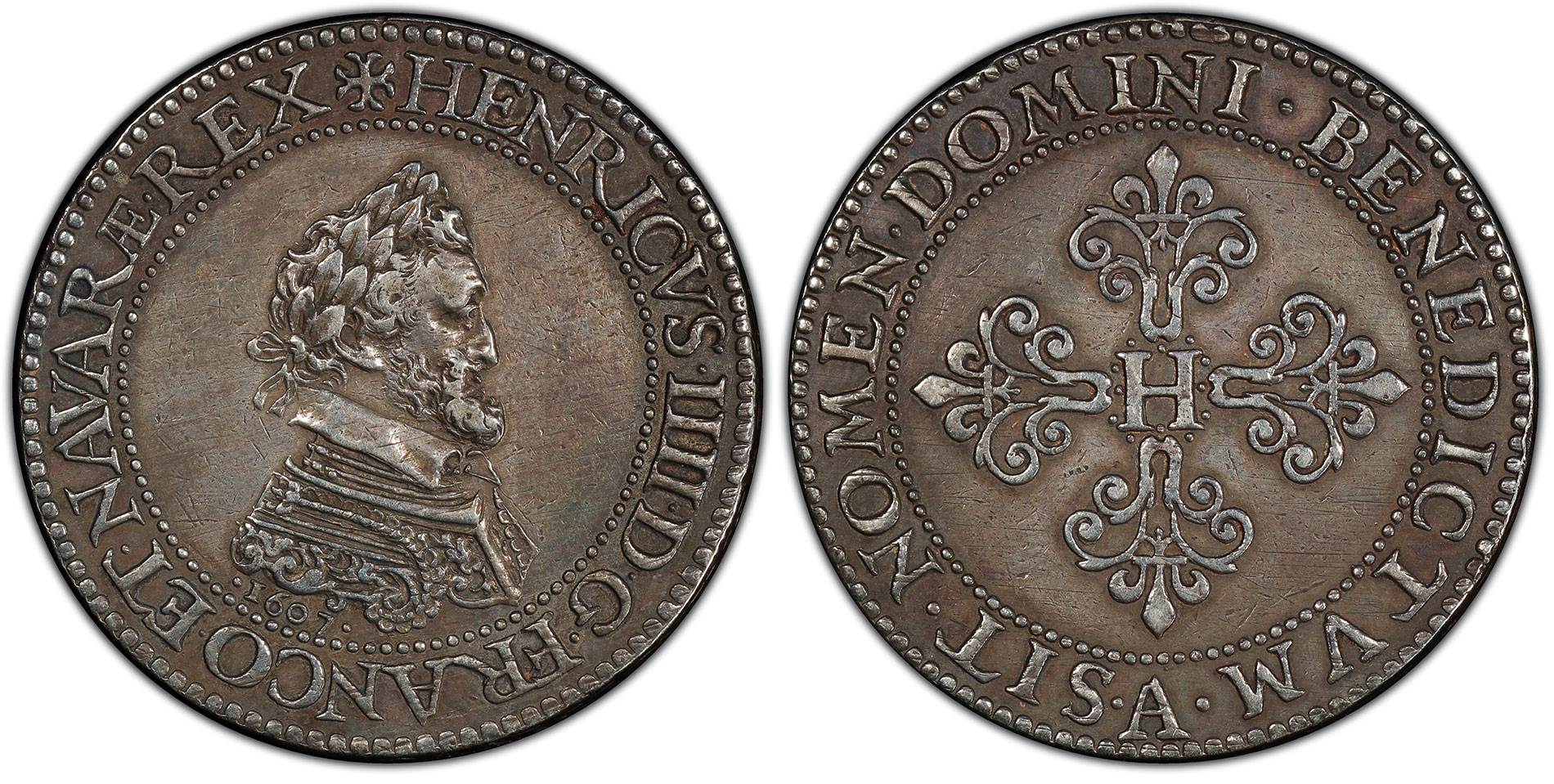
France 1607-A Franc Double Piefort Ciani-1533, PCGS SP40. Click image to enlarge.
Using etymology within numismatics we can understand origins of numismatic words and terms that are commonly used today. Take the word piedfort or piéfort, which means a coin exactly twice the normal weight and thickness of other coins of the same diameter. These coins had their origin in the Middle Ages in France and Great Britain. It is theorized that they were made patterns for administrative or royal approval, to show engravers what the dies approved design should look like, and/or potentially for mint officials to use as a counter or jeton for production counting. As coin collecting took off later, these coins became popular with kings and nobility and would be made as VIP gifts. Eventually these coins were made as collector issues, as most are known as today. The term piedfort first appears in 1774 from a joining of two French words, pied meaning foot and fort meaning strong, great, or heavy making piedfort mean “heavy foot,” when it actually was supposed to be “heavy weight.” The first use of piedfort in English is from an 1802 Sotheby’s auction catalog but was already a common numismatic term by that point. The word piefort comes from a misspelling of the word piedfort in English in the 1893 book The Coinage of European Continent: With an Introduction and Catalogues of Mints Denominations and Rules, Volume 1, by William Carew Hazlitt. It is unknown if this misspelling is credited to him or was in common use; however, it would become part of the numismatic dictionary. With the publications of Chester Krause and Clifford Mishler’s Standard Catalog of World Coins, both piedfort and piefort are used interchangeably, and since the book’s inception piefort became the more accepted spelling. With the common use of piefort, piéfort is now commonly used in French numismatics as well.
There is a whole world of study outside and inside of numismatics that can open one up to the layered histories and tremendous studies that have been done. Understanding origins can allow someone a greater understanding and enjoyment of not only the hobby but the study itself.
Sources
- Etymonline.com
- numisma Wikipedia.org
- Proto-Indo-European language Wikipedia.org
- Piedfort Wikipedia.org


 Copper & Nickel
 Silver Coins
 Gold Coins
 Commemoratives
 Others
 Bullion
 World
 Coin Market
 Auctions
 Coin Collecting
 PCGS News