The previous installment of this column reviewed some notable characteristics of the surfaces and appearance of genuine coins. In this edition, we will consider one of the most common methods used by PCGS authentication experts to identify counterfeits: repeating surface aberrations.
As with diagnostic markers on genuine dies, these repeating defects are present on the striking die itself and are therefore stamped onto all coins the die emits. Thus, once such a marker has been determined to be the characteristic of a counterfeit, it serves as a useful tool for quick identification of the fakes that specific die produced. While the diagnostic attributes used to classify genuine coins are most often incuse or sunken on the die (thus raised on the coin), being the result of damage or wear, those on counterfeits are frequently raised or elevated aberrations on the die surface (lending to depressions on the coin) resulting from imperfections in the die’s illicit and often highly economical creation.
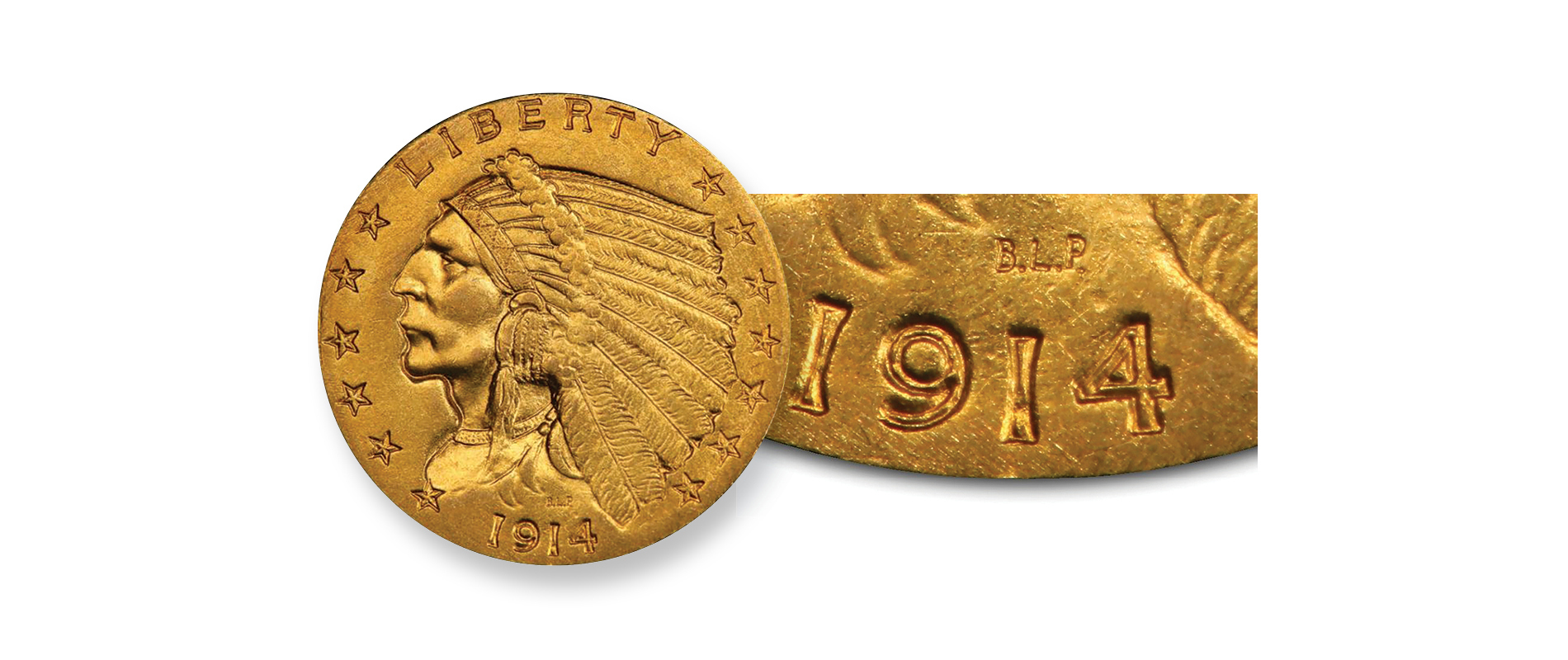
The small gold denominations are some of the most frequently counterfeited, and the incuse design of the Indian Quarter Eagle and Half Eagle series can add an element of unfamiliarity to the authentication process. Aiding in detection, however, is the frequent use of the same counterfeit dies across several date and mintmark combinations. The 1914 obverse die images here show a repeating depression to the northwest of the “4” in the date, which is seen on both Philadelphia and Denver fakes of this year. Similarly, the undated reverse dies for this series are often encountered paired with obverses of multiple different dates.
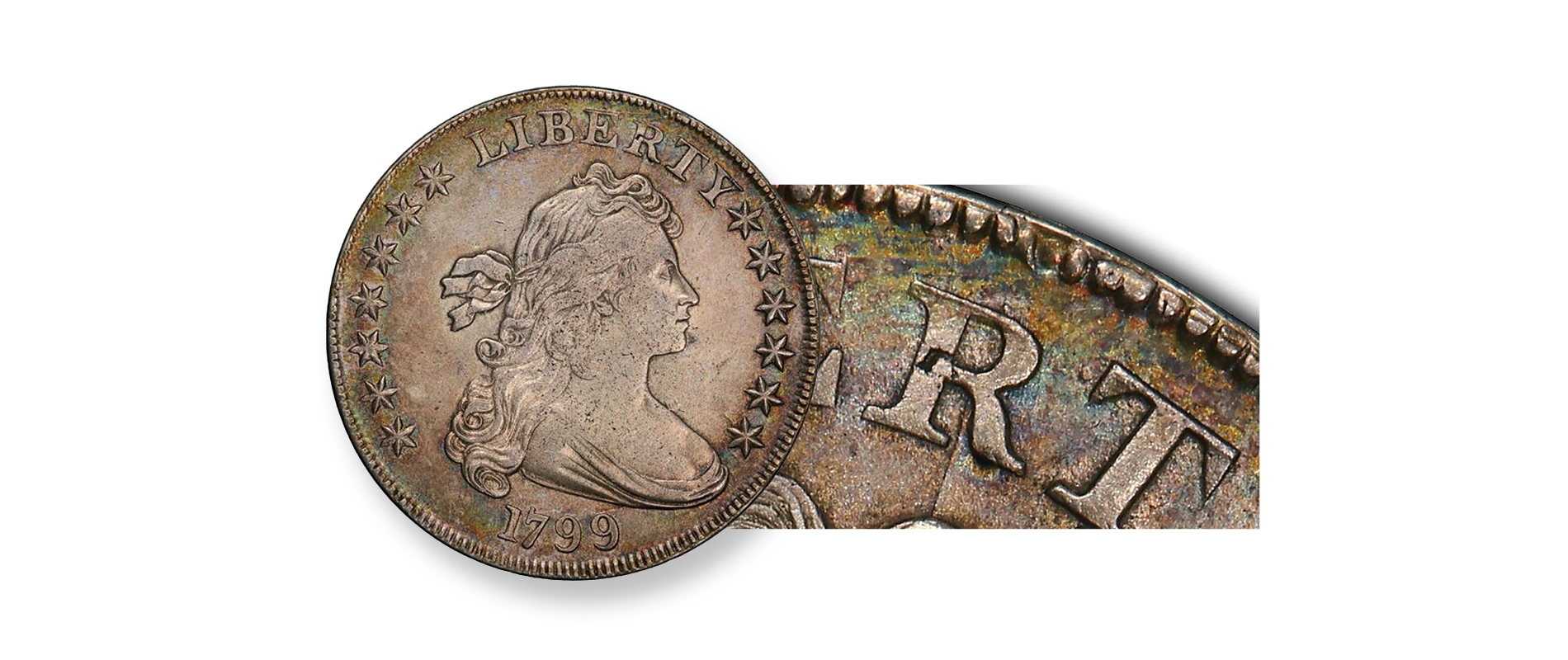
Open fields are not the only areas in which such important diagnostic information can be gleaned; the lettering and devices must be inspected as well! First appearing in the early 1980s, the “Broken R” counterfeit 1799 Draped Bust Dollar can be quite deceptive to the uninitiated. The detail is strong and crisp enough to simulate a genuine product, and the often-impaired surface condition of coins of this age can serve to disguise the luster improprieties associated with die-struck fakes. However, a strong depression within the left upright “R” of “LIBERTY” makes these easy to identify even at arm’s length.

These techniques of forgery and their detection are not new to our generation. Known as early as the 1960s, this frequently encountered counterfeit 1811 Capped Bust Half Eagle evidences porous surfaces, a “collapsing” date (in which the borders of the numerals are higher than the central portions, as in a warm chocolate souffle), and a slightly incorrect color. It can most readily be identified via a small depression just below the star immediately to the right of the date. As with the 1914 Indian Quarter Eagle, this would be a raised aberration on the die’s surface – likely from a corresponding surface abrasion on the (genuine) host coin the false die was created from.

The 1877 Indian Cent, key to the series, is an oft-counterfeited piece. While many forgeries are altered dates in lower grades, struck pieces exist as well, such as the example imaged here. Sharp-eyed readers may note the “Strong-N” reverse is incorrect for the business-strike examples of this date (see Richard Snow’s die study of the series), but genuine Strong-N pieces do exist in the form of proofs. This example, appearing to be a high-grade business strike, has a repeating raised defect above the “E” in “ONE” on the reverse, the result of a tooling mark or damage in the surface of the forged die.
Familiarity with repeating surface aberrations is just one of many tools used by PCGS authentication experts to keep collectors and the market safe from the ever-present threat of numismatic forgery. The experience of the grading team, combined with the unparalleled depth of our image database, means such repeating defects are quickly identified, even if originating from different parts of the globe over long periods of time. As new counterfeits will never cease to emerge, this area – as with all aspects of authentication – requires constant vigilance and continuing education.


 Copper & Nickel
 Silver Coins
 Gold Coins
 Commemoratives
 Others
 Bullion
 World
World
 Coin Market
 Auctions
 Coin Collecting
 PCGS News