For most intermediate and advanced collectors, the term “cherrypicking” is as commonplace as “uncirculated” and “Carson City.” But, to the novice, this word may not have quite the same familiarity. In this article, I will strive to shed some light on what cherrypicking is as well as highlight some terrific opportunities to pick up some varieties for yourself!
The Thrill of the Search
The idea of cherrypicking is quite simple; it is searching for and acquiring a coin variety that was otherwise not attributed to that specimen. Coins can be cherrypicked in just about any situation, as I have seen great varieties found from dealer junk bins, eBay sales, and even premier auction houses. Some of these picks have ranged from trivial (a $10 coin became a $20 coin), to extreme finds that skyrocketed the value of the coin by thousands of dollars more!
When starting your cherrypicking ventures, my suggestion is always to buy the book before you watch the YouTube video. The Cherrypickers’ Guide, written by Bill Fivaz and J.T. Stanton, is the “gold standard,” so to speak, for the specialty. This reference is ever-changing, with discoveries being found and published on a constant basis. The book is also full of valuable information, including photographs, descriptions, and often a general value for specific pieces. I have watched my fair share of online videos that spread half-truths and even full lies in respect to varieties. I can’t count the number of videos I have seen that claim to be featuring a doubled die Lincoln Cent that in reality exhibits no hub doubling whatsoever.
One great “starter” variety to look for was featured in an article published on March 20, 2020, by Joshua McMorrow-Hernandez. He was able to accurately and intelligently describe the difference between 1979-S Type 1 and Type 2 Susan B. Anthony Dollars.
Notice that the common Type 1 has a mintmark that is blobby and filled in. It almost looks like a rectangle with a squiggle in the middle. The Type 2 has a more traditional “Clear S” and is significantly more valuable. The Type 2 is a variety that can easily be seen with the aid of slight magnification.
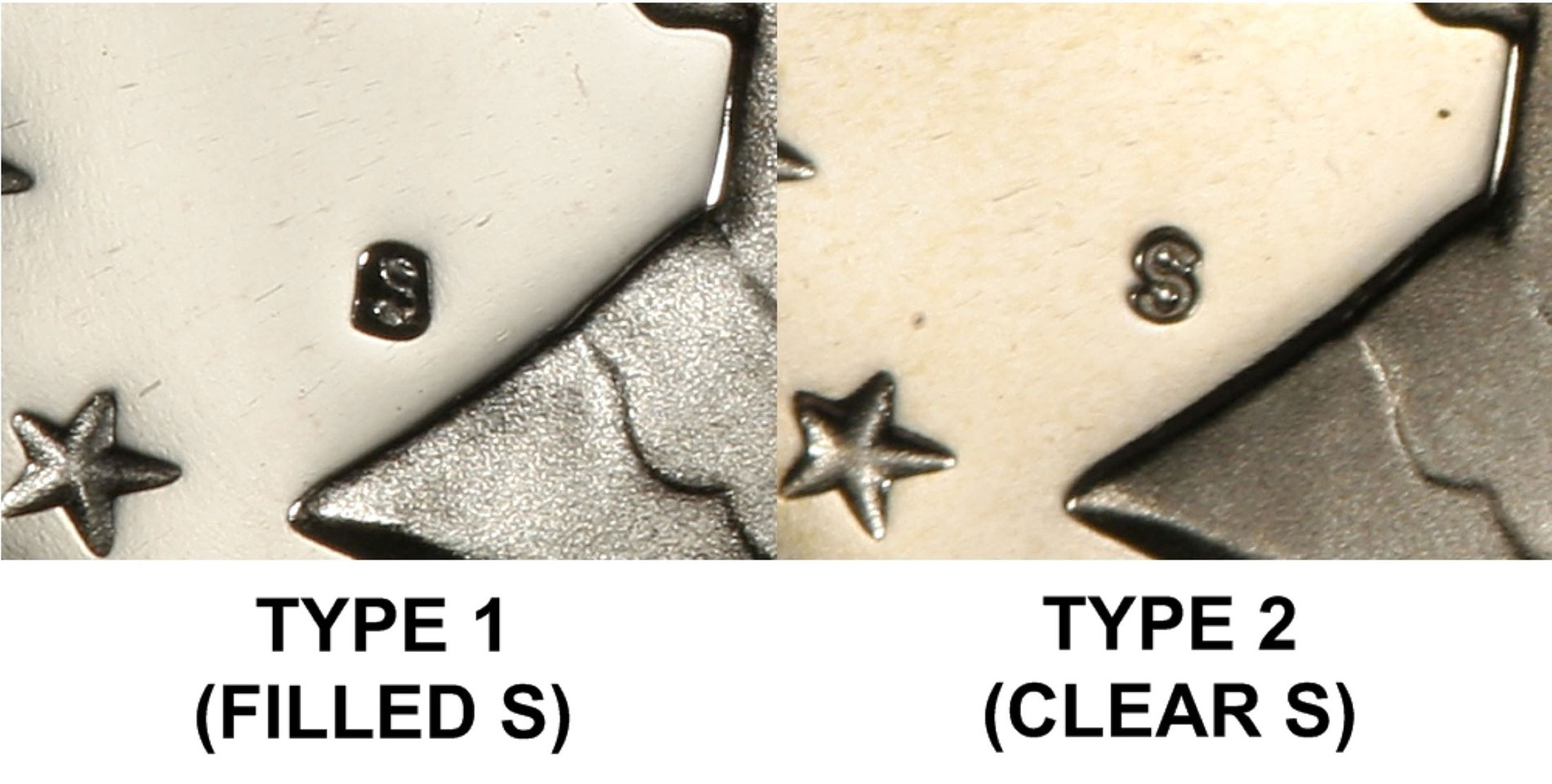
Close up of the ‘S’ mintmark for Type 1 and Type 2 1979-S SBA Dollars. Image courtesy of PCGS CoinFacts®. Click image to enlarge.
A more intermediate, tougher-to-find variety could be something like the 1939 Jefferson Nickel known by its common nickname “Doubled Monticello.” This is cataloged in The Cherrypickers’ Guide as FS-801 and is quite a scarce coin to find. In uncirculated condition, with Full Steps designation, these coins are worth over $1,000 to start! Very distinct doubling can be found in both “MONTICELLO” and also in “IN GOD WE TRUST.”
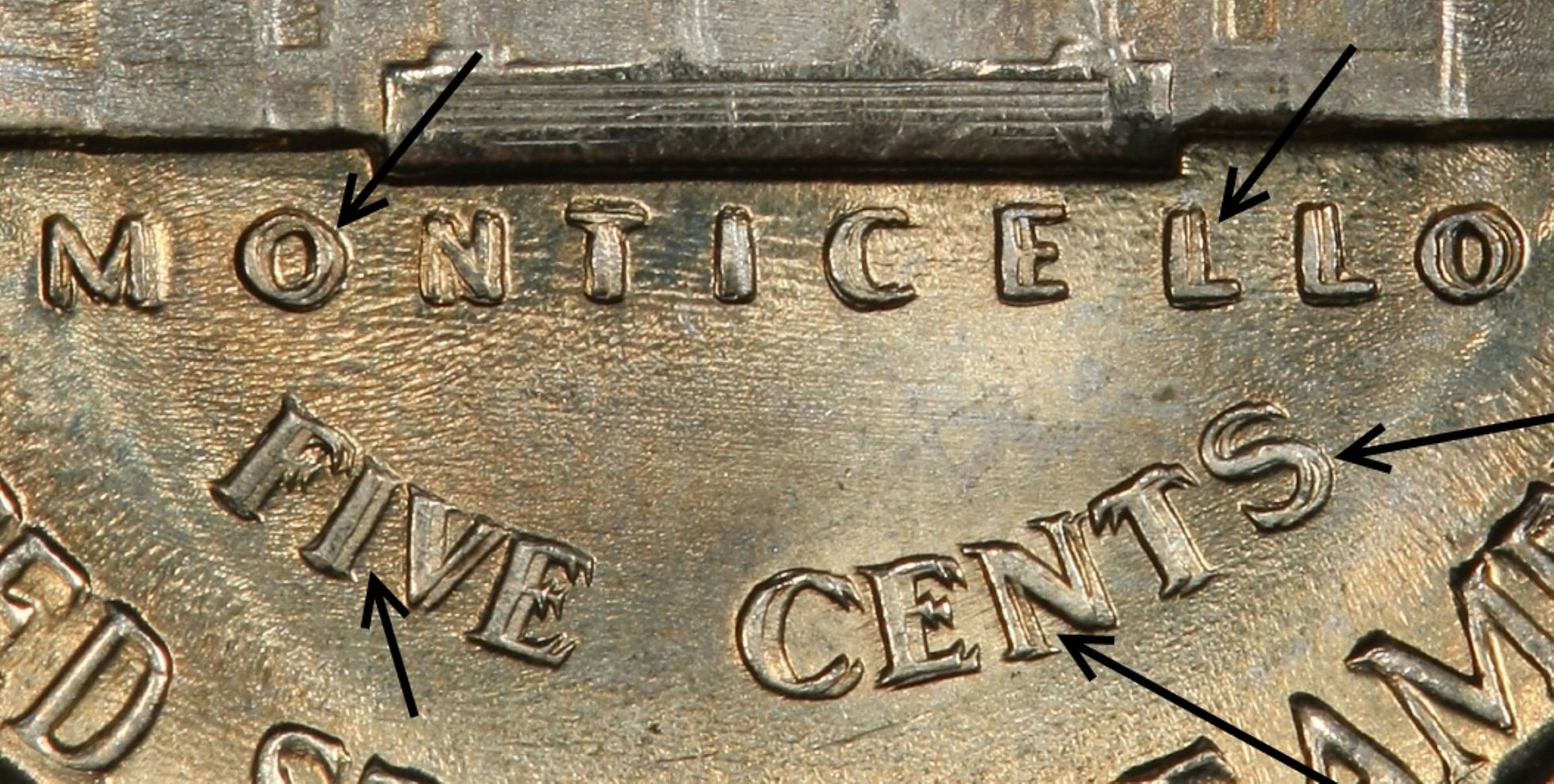
Reverse of ‘Doubled Monticello’ variety on early Jefferson nickel. Image courtesy of PCGS CoinFacts®. Click image to enlarge.
A more advanced, much-harder-to-find variety could be the 1794 Liberty Cap Large Cent with “Starred Reverse.” Nobody knows why a small star was placed between the dentils on the reverse die used to strike copper cents, but we’re sure glad they did! Several years ago, a collector purchased a large group of slick, damaged, or otherwise unattractive large cents. When this person returned home, he began to catalog them according to variety. On one particular coin, the date had been completely worn off. However, when he flipped the coin around, there was a small area of the reverse that was still distinguishable. To his delight, there were about a dozen dentils that were not completely worn, and between those dentils, small dots were discovered that were the remnants of stars! Although this coin was nearly worn smooth, it was confirmed to be a genuine 1794 Starred Reverse Cent worth thousands of dollars!
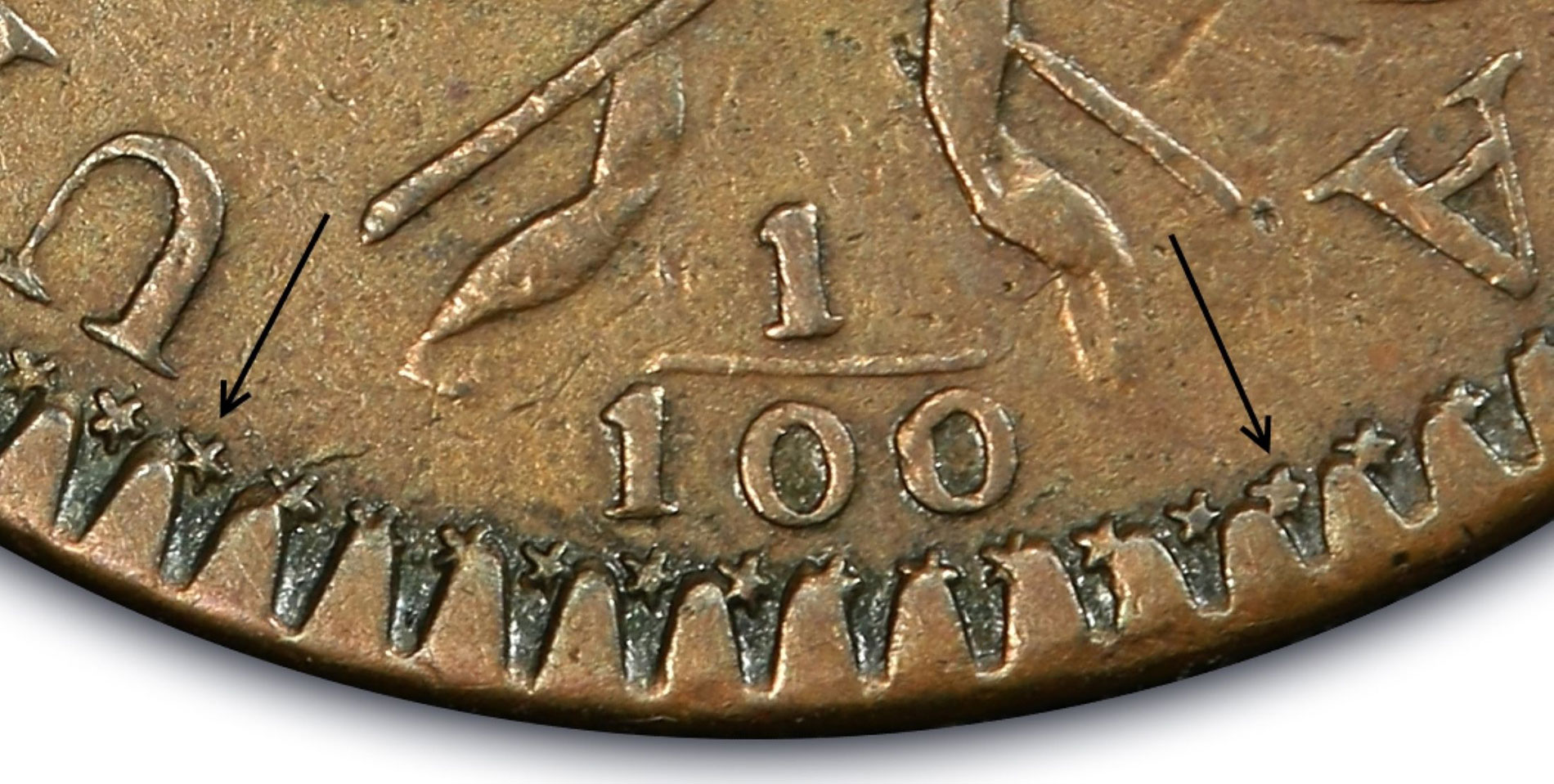
Closeup of reverse showing ‘starred reverse’ variety detail. Image courtesy of PCGS CoinFacts®. Click image to enlarge.
As I have stated in several past articles, there are MANY numismatic treasures out there waiting to be discovered. They can be in junk bins, in 2x2 flips in dealers’ showcases, in grandma’s pouch of treasures, or in any other number of places. Sometimes all it takes is an educated eye to realize the added value they possess.


 Copper & Nickel
 Silver Coins
 Gold Coins
 Commemoratives
 Others
 Bullion
 World
World
 Coin Market
 Auctions
 Coin Collecting
 PCGS News