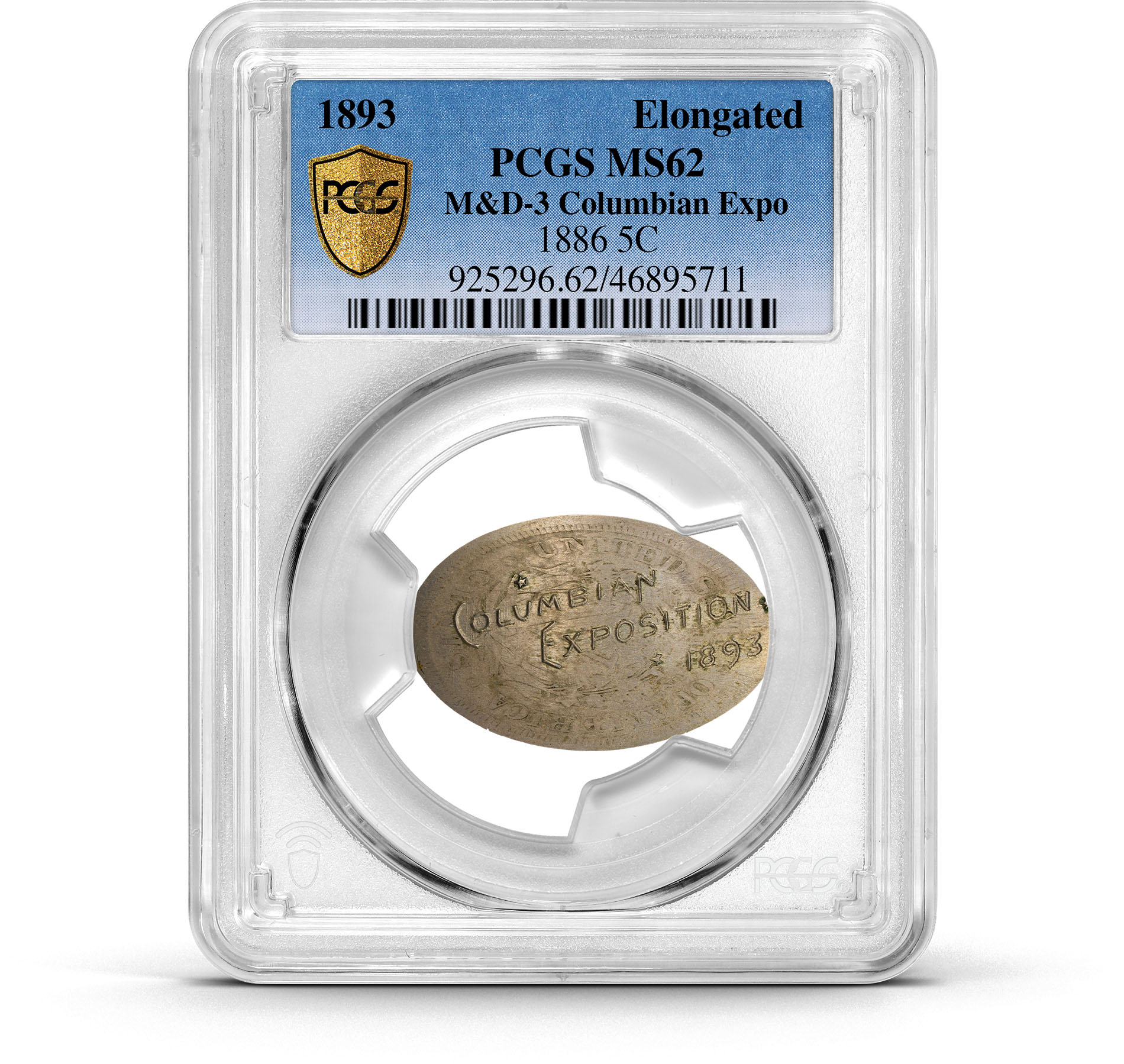
It was not a new technology but a new concept that was employed at the 1893 World’s Columbian Exposition. To take metal and press it between two dies which both flatten and imprint a design as it elongates the disk leaving a newly minted item known as an elongated coin. Roller dies had been used in production of circulating coinage producing mostly round coins and this had been done in mass production in Europe in the 1600s. Yet the concept of producing a medallic issue an individual could produce themselves as a souvenir, collectible or memento was a new concept.
With the popularity of elongates produced at the 1893 exposition, many new machines, dies, and designs soon followed to capitalize on success. Soon people could get a cent elongated with the Lord's Prayer on it to keep on their person or elongate a coin as a souvenir on their stop at an attraction. From these, collectors started to develop to collect these pieces from their own elongated production pieces to acquiring pieces of historical and locational influences.
Today there are countless examples of elongated coinage. Yesterday’s Elongateds by Lee Martin and Dottie Dow, first written in 1981 and reprinted several times with the third edition from 2008, breaks down some of the history of the elongated coinage and catalogs a fraction of the many examples of elongated coins produced. PCGS has now expanded the elongated coinage it grades and certifies with the inclusion of pieces cataloged in the Yesterday’s Elongateds book. This expands the pieces PCGS previously certified in listings such as those listed in Eglit and Hendershott.
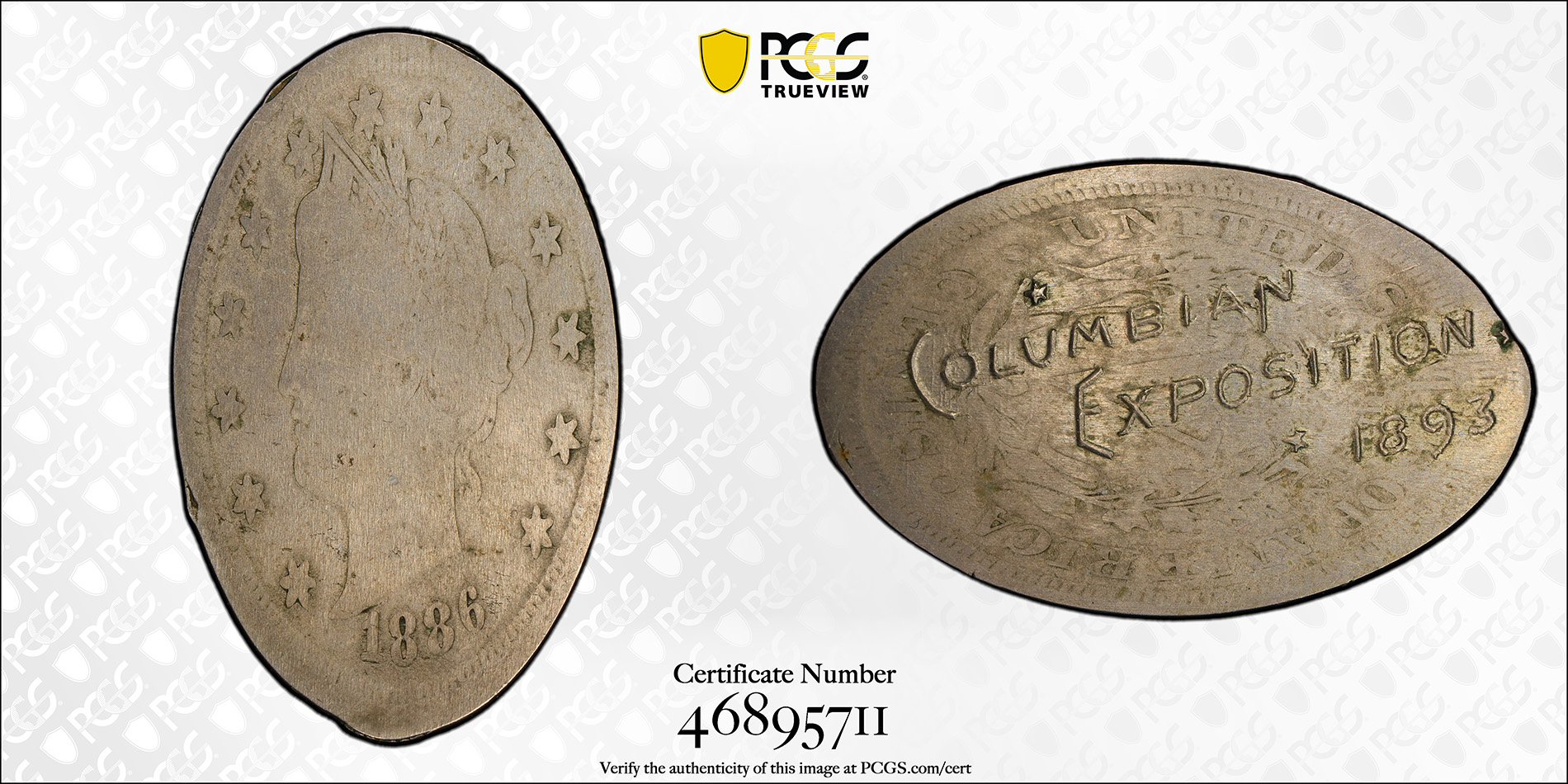
With these pieces now becoming eligible for certification with PCGS, collectors will be able to take advantage of PCGS grading, protection, and storage of the PCGS holder and TrueView photos of their elongated coins.


 Copper & Nickel
 Silver Coins
 Gold Coins
 Commemoratives
 Others
 Bullion
 World
 Coin Market
 Auctions
 Coin Collecting
 PCGS News