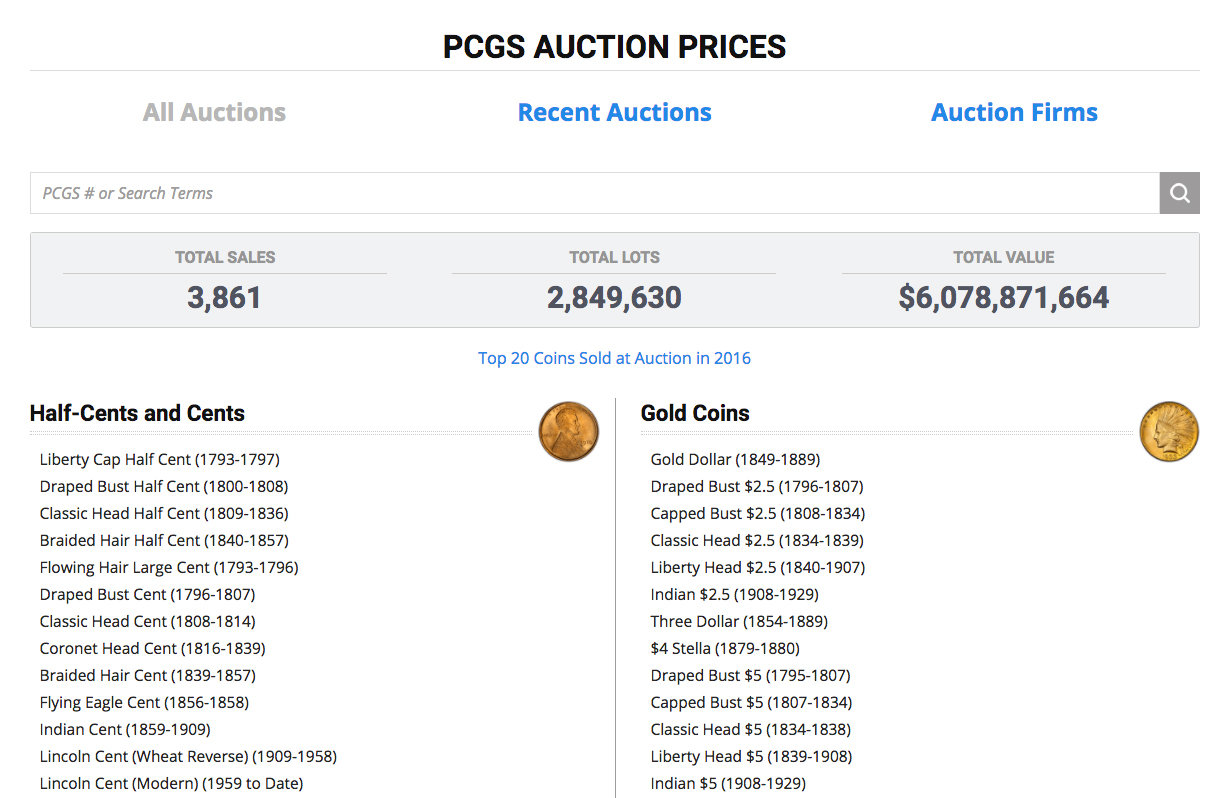
In this digital age, with copious amounts of information almost instantly available at our fingertips, we can sometimes be faced with overload. In numismatics, the widespread availability of auction prices realized (APR) has been a tremendous boon for collectors, particularly at the higher end of the spectrum where the coins often trade infrequently at best.
When researching a Bust Quarter in MS66, for example, almost every public sale for the past two decades is now accessible with only a few mouse clicks – an impossible task only a dozen or so years ago. With this powerful new research tool though, comes the need for some knowledge of how some of this information may distort the true market value of a coin you may be considering for purchase. With that said, here are a few tips for interpreting the APR data found on our site and some of the factors to watch out for when researching a particular coin’s value today.
- Auction results do not typically list the buyer. If two determined collectors vie for a particular lot, it may realize a very high price. If no collectors are after the lot at the present time, it may sell "wholesale" to a dealer at a rather low price. Auctions are singular events in history, and dependent on who wants what, when.
- While the grading services make every effort to maintain consistent standards, it is no secret that coins graded 25 or 30 years ago sometimes have an allure for certain buyers and may bring a higher price than one graded recently. If you see an abnormally high price for a coin and discover it was in an old rattler, or green-label holder, take it with a grain of salt.
- In contrast, check carefully any abnormally low price. Our APR listings include all coins, including some "details" coins that, while not having an official PCGS grade, are included in the 40 columns if they were judged to have "XF details". The coin may have been cleaned or have some other problem that precluded a regular grade.
- We have attempted to note certain "CAC certified" coins, but this is an ongoing process and quite a few remain unmarked. So if it is a rare or expensive coin, go to the actual auction site, if possible, to investigate further. CAC coins typically bring a premium.
- While we list eBay sales, understand that the reliability of these sales is probably lower than for established numismatic auctioneers. While eBay has rules against shilling, enforcing them is difficult at best.
- Often some aspect of the coin not directly reflected in the grade can cause an abnormally high price. In particular, spectacularly toned coins often elicit huge bids from those who collect such pieces. So if you encounter an MS66 Morgan Dollar that brought triple what it should have, try going to the auctioneer’s site for a photograph. Chances are it is rather colorful.
While APR remains a valuable tool, take a moment (especially on a rare or expensive piece) and investigate it a bit further. Most major auction houses now have their prior auctions online and can provide important details not available strictly using the APR listings. Happy researching!


 Copper & Nickel
 Silver Coins
 Gold Coins
 Commemoratives
 Others
 Bullion
 World
World
 Coin Market
 Auctions
 Coin Collecting
 PCGS News