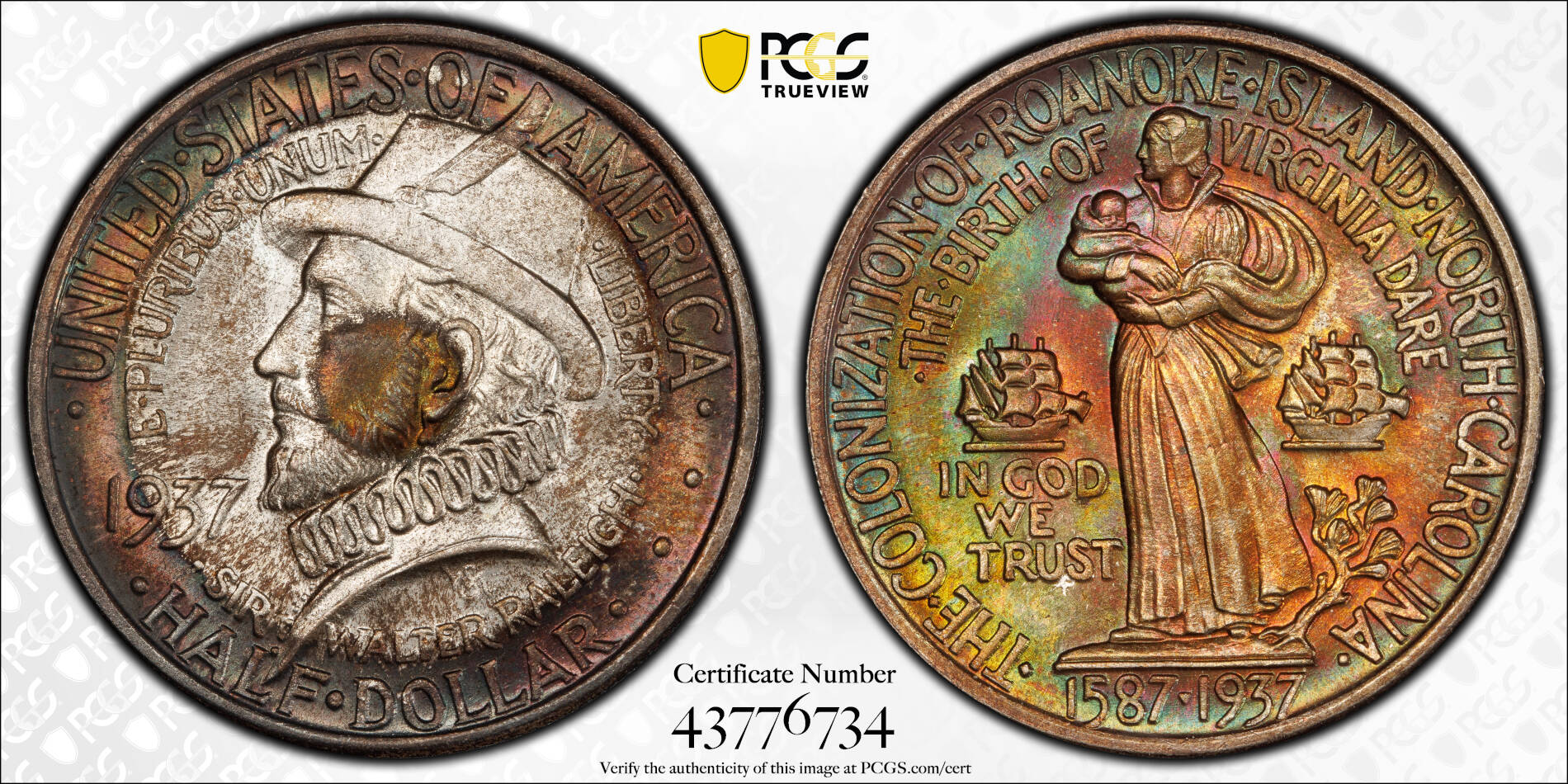
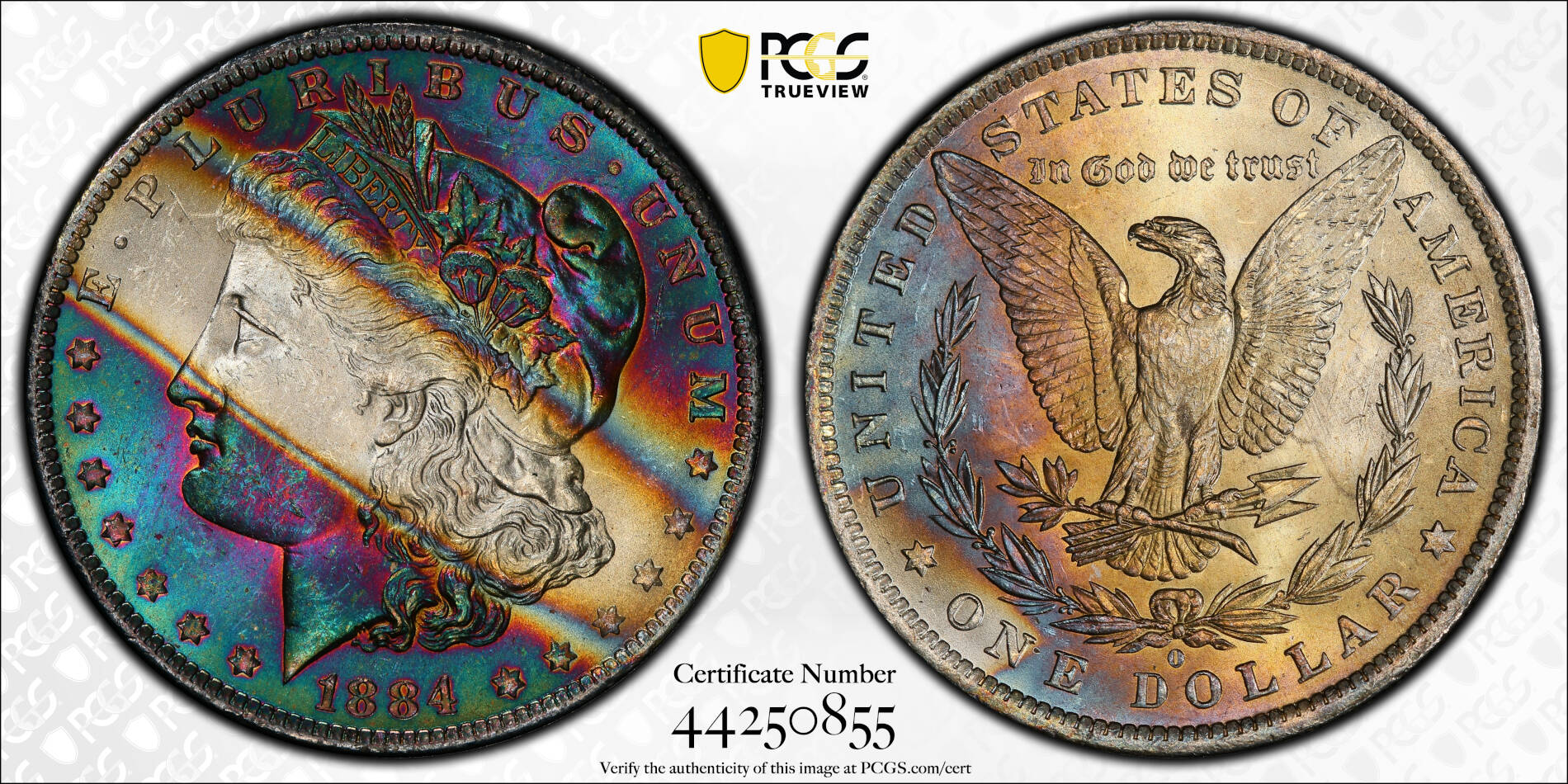
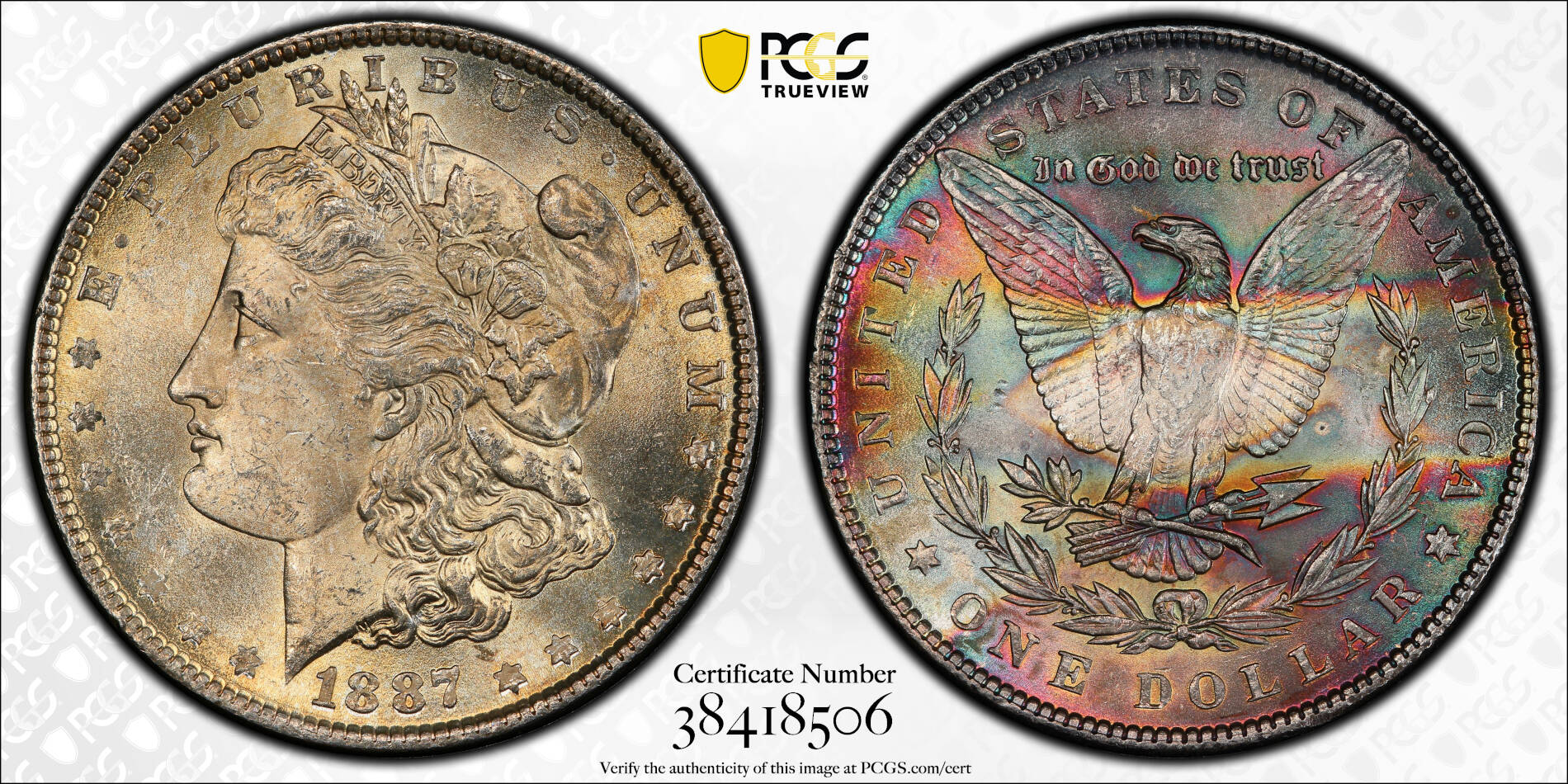
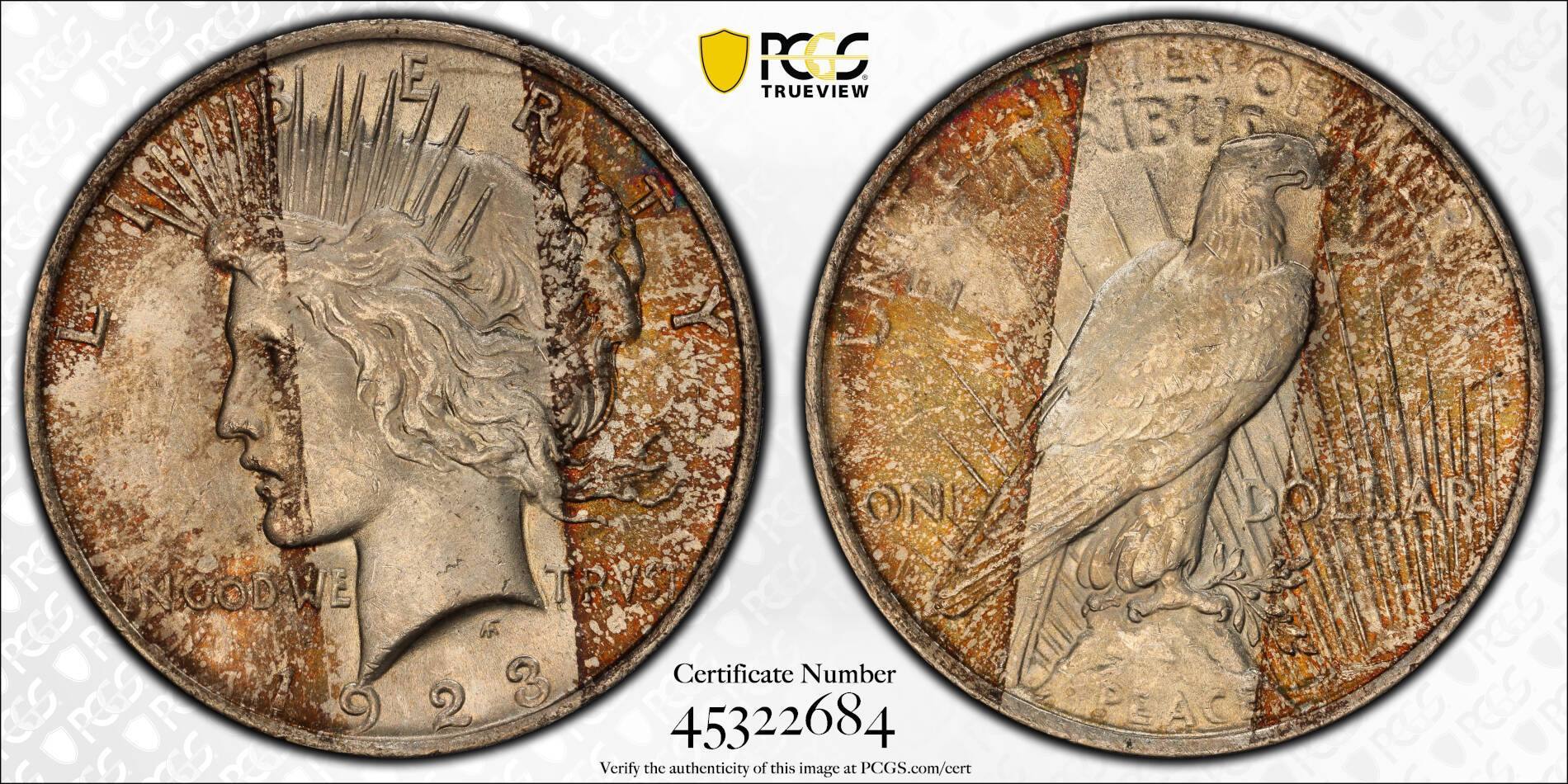
In recent years, tab-toned coins with positive eye appeal have become increasingly popular. However, many of them are surrounded by mystery. Where do they come from, and how do they acquire their distinct appearance? Many have a similar look or cause regarding how their attractive toned patterns originated. The answer revolves around where and how they were stored. Not all these coins bear positive eye appeal. In fact, I would say most do not.
Toned coins stored in original double mint sets, old-school albums, manila envelopes, tissue paper, or canvas bank bags (the list goes on) all contain trace amounts of sulfur. Each of these different storage methods tone coins in their own unique way. Sulfur is the element responsible for tarnishing or toning silver, which exhibits silver sulfide. The way coins tone also hinges on the environment they have been stored in. For instance, a coin held in a damp atmosphere will yield vastly different results than the same coin stored in an area with a dry atmosphere. What was the average temperature? Was the coin ever moved or relocated? There are so many variables to consider, that it is relatively impossible to determine the toning process. Whether or not they display positive eye appeal is a gamble. Coins are like snowflakes – they each have unique appearances. However, we can accurately determine what a coin has been stored within.
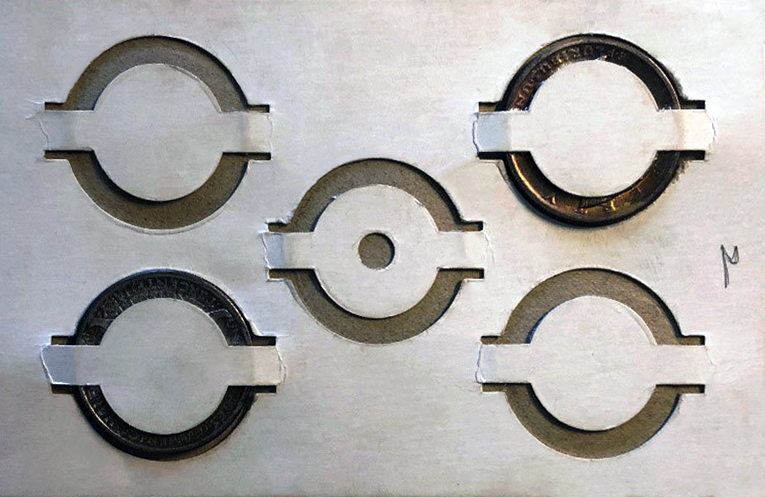
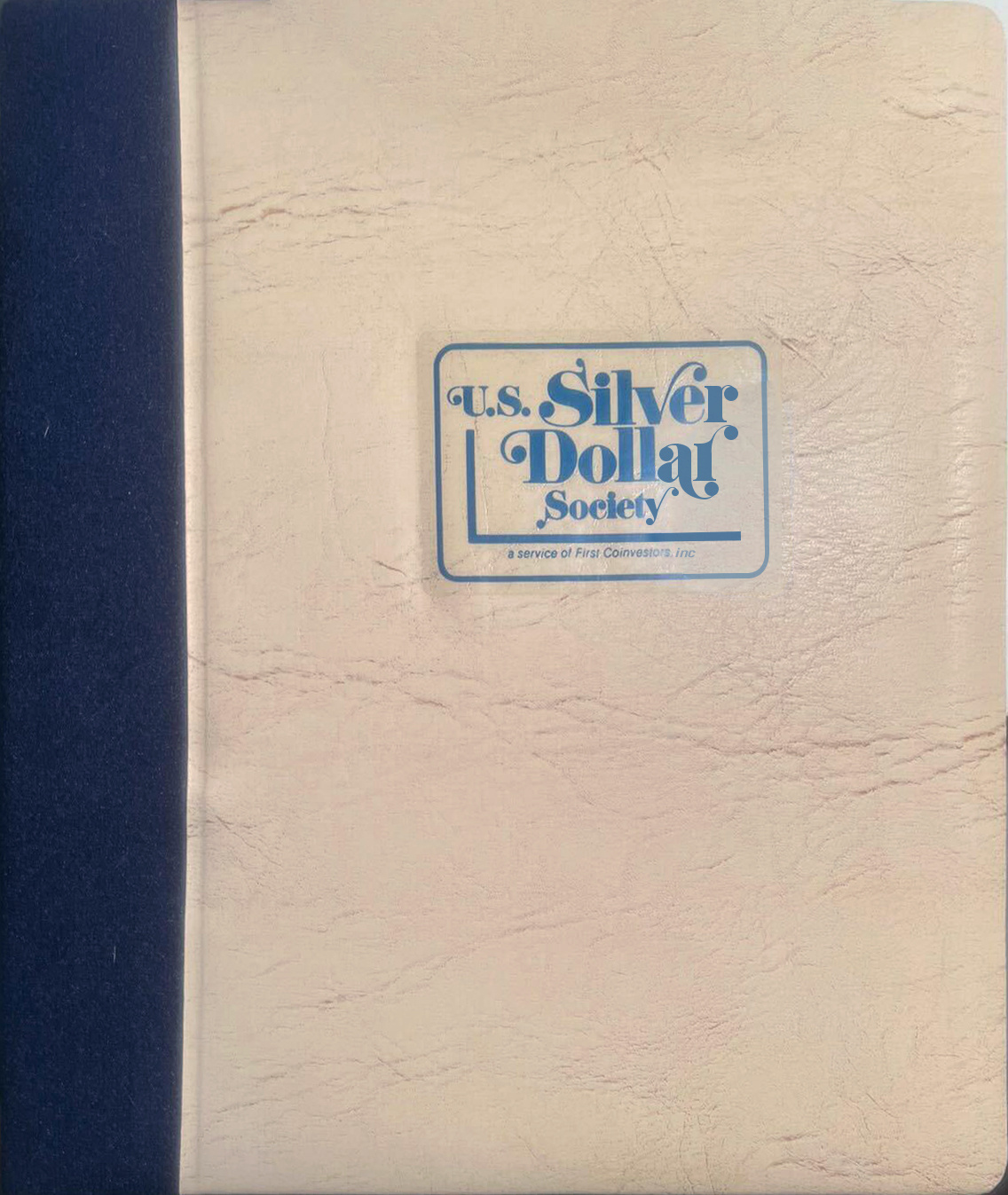

Tab-toners originate from albums, cases, or holders that house coins underneath a plastic or cardboard tab, most famously, the hard-to-find U.S. Silver Dollar Society albums and original card inserts for commemorative half dollars. Other coins have tape adhered to their surfaces for some reason or another. When these coins tone before the tape becomes removed, they can look strikingly similar to a proper tab-toned coin despite only sometimes having a positive eye appeal. As a result, the terms "tab-toned" and "tape-toned" are widely interpreted to be almost synonymous throughout the coin community. Tape-toned coins tend to have a few differences, however. A lot of the time, the band is not centered, the toning may have a sharp cutoff, or the pattern may be present on both the obverse and reverse. Maybe there were multiple pieces of tape covering the surface, making the pattern different from just one band across the face of the coin.
There are many stories about why some coins had tape placed on them. My favorite is advertising. It was not uncommon for merchants to put stickers on coins that advertised their business. Nowadays, this is illegal, but in the early 1900s, people were still trying to make it big out West.


 Copper & Nickel
 Silver Coins
 Gold Coins
 Commemoratives
 Others
 Bullion
 World
World
 Coin Market
 Auctions
 Coin Collecting
 PCGS News