field, most noticeably above the eagle's head.
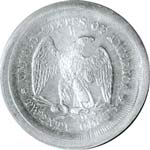
The PCGS Mint Error program has uncovered a new area in the world of counterfeits as it explores this exciting aspect of numismatics. Mint error counterfeits are nothing new, of course, as there are lots of fake 1943 copper cents and counterfeit die varieties of the 1942/1 dime, to name but a few. This error, though, would seldom arouse suspicion. After all, who would make a spurious broadstruck 1875 twenty cent piece? Well, someone did!
This is a spark erosion counterfeit. It was made from a genuine mint error by suspending the authentic model coin and creating a fake die through electrical discharge.
Here are the ways to tell that this coin is counterfeit.
On the obverse the fields are highly prooflike while the devices have a "marbled" texture. This is a giveaway because the devices could not be polished without losing detail, which would give the coin even more of a fake appearance. Why polish them at all? To get rid of the lumps that are the telltale diagnostics of spark erosion counterfeits in the first place.
On the reverse there are still some lumps in the field that were too deep to polish out. The counterfeiter was left with a dilemma. Over-polish the dies and lose more detail, or leave the dies alone and retain the lumps? Either way, he's going to get caught in the PCGS grading room.
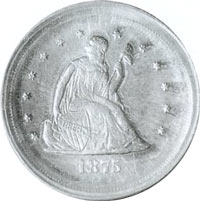
Out of Collar broadstruck errors are
spectacular, but this is counterfeit.
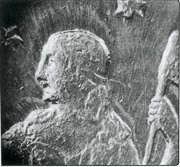
Out of Collar broadstruck errors are
spectacular, but this is counterfeit.


 Copper & Nickel
 Silver Coins
 Gold Coins
 Commemoratives
 Others
 Bullion
 World
World
 Coin Market
 Auctions
 Coin Collecting
 PCGS News