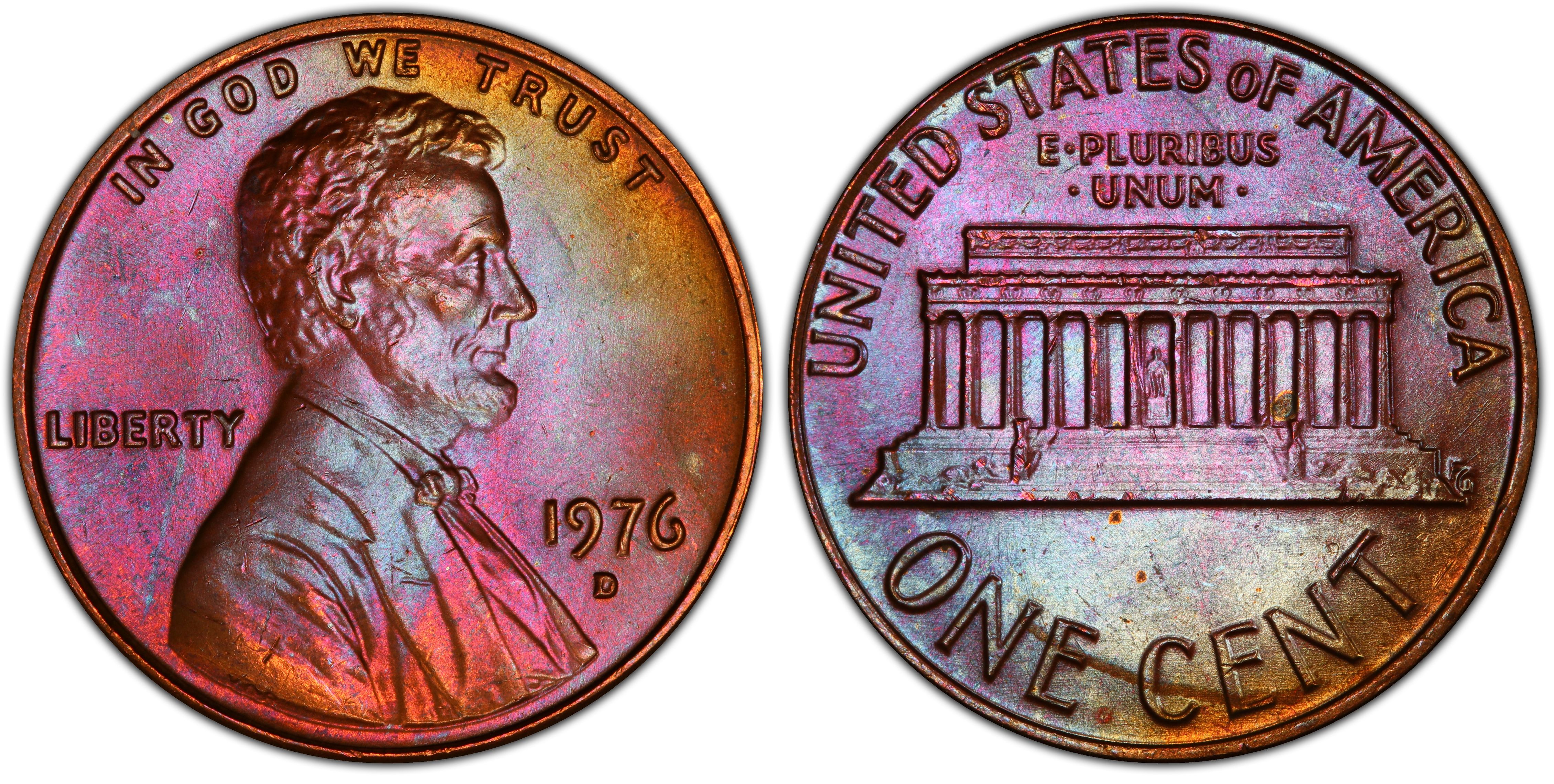
PCGS MS66BN
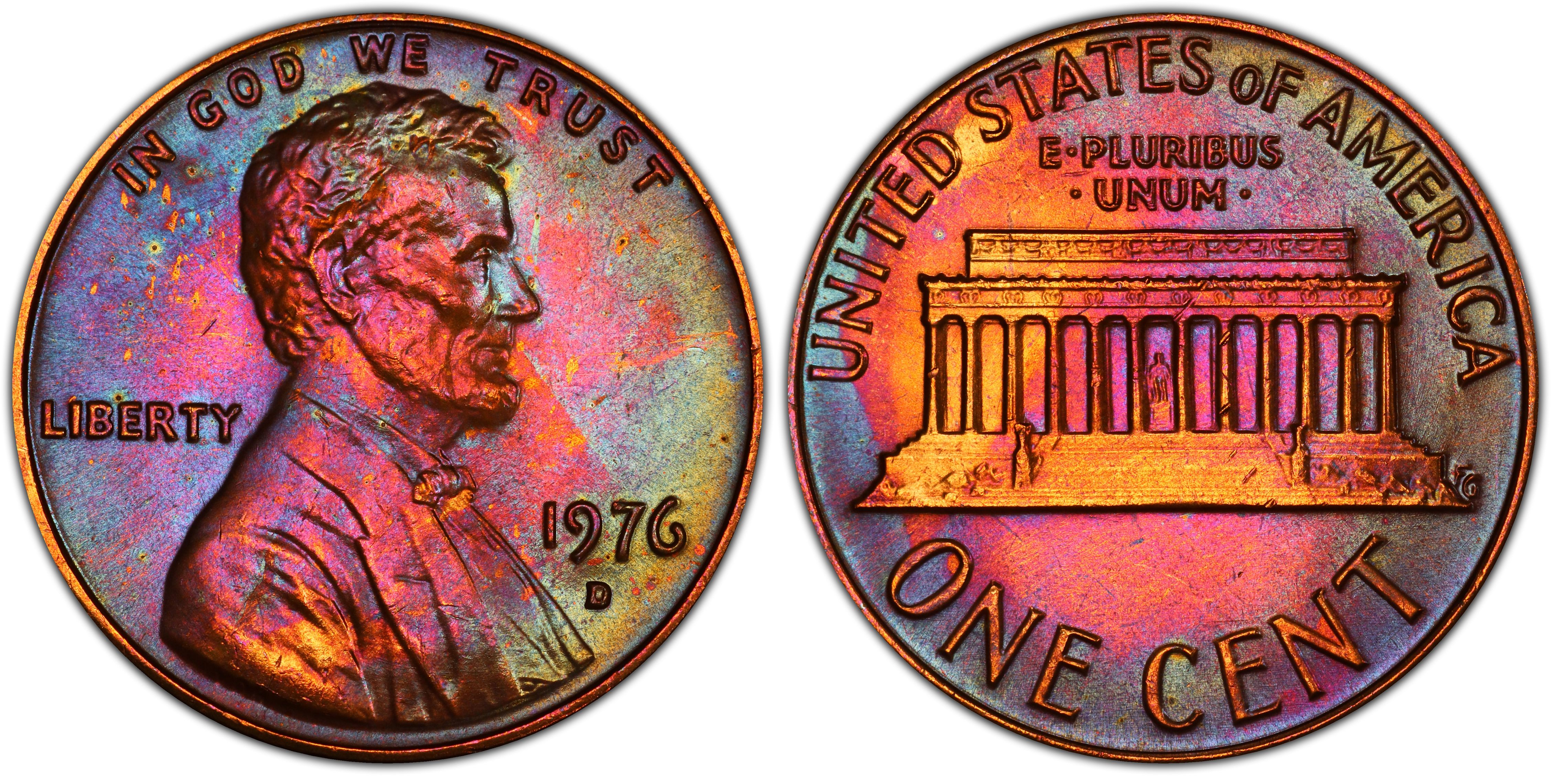
PCGS MS66BN
- PCGS #:
- 2983
- Designer:
- Victor David Brenner/Frank Gasparro
- Edge:
- Plain
- Diameter:
- 19.00 millimeters
- Weight:
- 3.11 grams
- Mintage:
- 4,221,592,455
- Mint:
- Denver
- Metal:
- 95% Copper, 5% Zinc
- Auction Record:
- $1,265 • MS60 • 03-01-2007 • Stack's
Condition Census What Is This?
|
#1 PCGS MS66BN
|
|
#1 PCGS MS66BN
|
 #1 PCGS MS66BN
|
The 1976-D Lincoln Memorial Cent
The year 1976 stands as a landmark in American numismatics. While the nation celebrated its Bicentennial with special quarters, half dollars, and dollars—featuring the iconic designs of Jack Ahr, Seth Huntington, and Dennis Williams—the United States Mint and the Bureau of Engraving and Printing (BEP) were also busy with other historical updates. The BEP reintroduced the $2 bill with its new "Signing of the Declaration of Independence" reverse, and the Mint produced various commemorative medals to mark the 200th birthday of the United States.
Improvements in Cent Production Lead to Mintage Increases
As the 1970s progressed, mintages for Philadelphia and Denver business strike Lincoln cents surged. Frank Gasparro’s Lincoln Memorial reverse, which debuted in 1959, saw production jump from hundreds of millions to billions by the mid-’70s. This explosion was driven by both public demand and a heavy investment in minting technology.
These advancements didn't just increase speed; they improved consistency. Cents from the 1970s generally boast better strikes than their predecessors. Specifically, a new master reduction deployed in 1976 gave the 1976-D Lincoln Cent (#2985) a high level of technical quality.
1976 was also a year of transition for the Denver Mint. The facility discontinued in-house coinage strip production, repurposing that space to install 24 new four-strike coining presses, six 100-ton blanking presses, and a new annealing line. By shifting to carbide blanking die sets, the Mint allowed Philadelphia and Denver to use interchangeable coinage strip for all denominations, further maximizing productivity and blank yield—a final industrial push that helped define the high technical quality of 1976 coinage.
Collecting the 1976-D Lincoln Memorial Cent.
Uncirculated examples of the 1976-D Lincoln Memorial Cent with full "Red" (RD) color remain widely available. Driven by excitement over the nation's Bicentennial, both collectors and the general public hoarded untold numbers of original rolls. Another primary source for these coins is the 1976 United States Mint Uncirculated Coin Set, which saw sales of nearly 1.9 million units.
Uncertified examples typically trade for approximately $3 each. This price floor has risen recently due to a surge in public interest following the Treasury’s 2025 announcement that it would cease cent production, citing high manufacturing costs and diminishing purchasing power.
Without PCGS certification, buyers generally lack a definitive way to determine the technical grade of a raw specimen. Most "fresh" coins with minimal abrasions typically fall within the PCGS MS63RD to PCGS MS65RD range; however, the difficulty of sourcing coins in higher Mint State grades increases significantly beyond that threshold.
* * *