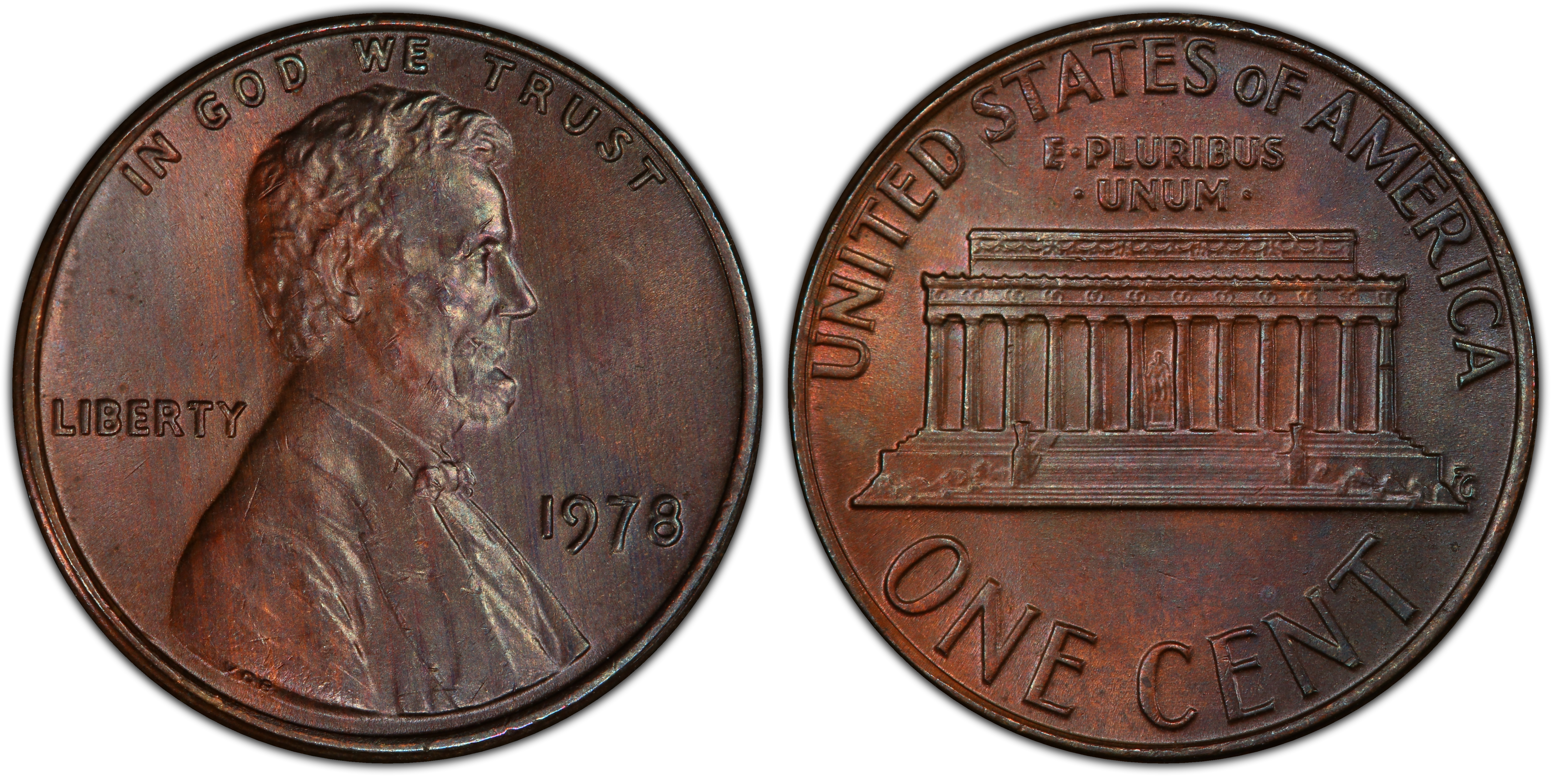

PCGS MS63BN

PCGS MS63BN
- PCGS #:
- 2990
- Designer:
- Victor David Brenner/Frank Gasparro
- Edge:
- Plain
- Diameter:
- 19.00 millimeters
- Weight:
- 3.11 grams
- Mintage:
- 5,558,605,000
- Mint:
- Philadelphia
- Metal:
- 95% Copper, 5% Zinc
- Auction Record:
- $661 • MS62 • 05-05-2004 • Heritage Auctions
The 1978 Lincoln Memorial Cent
The Philadelphia Mint struck over 5.5 billion Lincoln Cents in 1978, a massive production run that consumed more than 37 million of pounds of copper. It is important to note that the West Point facility contributed roughly 1.5 billion of these coins; however, because they lack a mint mark, they are indistinguishable from Philadelphia strikes. Together, these facilities accounted for approximately 58% of the year's total Lincoln cent production, with the Denver Mint supplying the remainder. Despite an increase of over 1.1 billion coins from 1977, this output was considered only a slightly above-average mintage for the Philadelphia branch.
Coins from this year generally display sharp details, due in part to the Mint’s transition to a new reverse hub in 1978. This updated design provided greater clarity to the Memorial's pillars and attic.
While just years earlier, rising copper prices threatened the composition of the Cent and led the Treasury Department to experiment with a new aluminum composition and to ban the melting or export of cents, on June 7, 1978, the U.S. Treasury Department revoked the 1974 prohibition.
Collecting the 1978 Cent
Although nearly 50 years old, 1978 Lincoln Cents can still be found in circulation, though their numbers are dwindling as the denomination is phased out. From a numismatic standpoint, circulated Memorial cents, unless they are "lowball" condition rarities, offer little appeal. Instead, collectors should focus on mark-free, Mint State examples. One of the most reliable sources for high-grade 1978 cents remains the government-issued 1978 Uncirculated Coin Set. Originally sold for $7.00 ($31.80 adjusted for inflation), the Mint produced 2,162,609 sets that year. These sets remain affordable today, typically trading for $12 to $15, and serve as the primary hunting ground for "Red" (RD) Gems.
The PCGS Population Report provides a narrow window into any Memorial issue. Due to the economics of certification, most submitters seek coins that will achieve a minimum grade of PCGS MS65RD, with hopes for PCGS MS66RD or finer. Incidental contact marks, often invisible without proper lighting, frequently prevent a coin from reaching Gem status, while the mellowing of original luster may disqualify a specimen from the RD designation.
Some collectors prize copper coins with attractive toning. As copper reacts to its environment, it can develop vibrant, iridescent coloration. This is not typical. Depending on the remaining original color, these specimens fall into the Red-Brown (RB) or Brown (BN) categories. There is a growing market for these "monsters," even when they don’t fit neatly into the traditional RD-RB-BN paradigm.
* * *