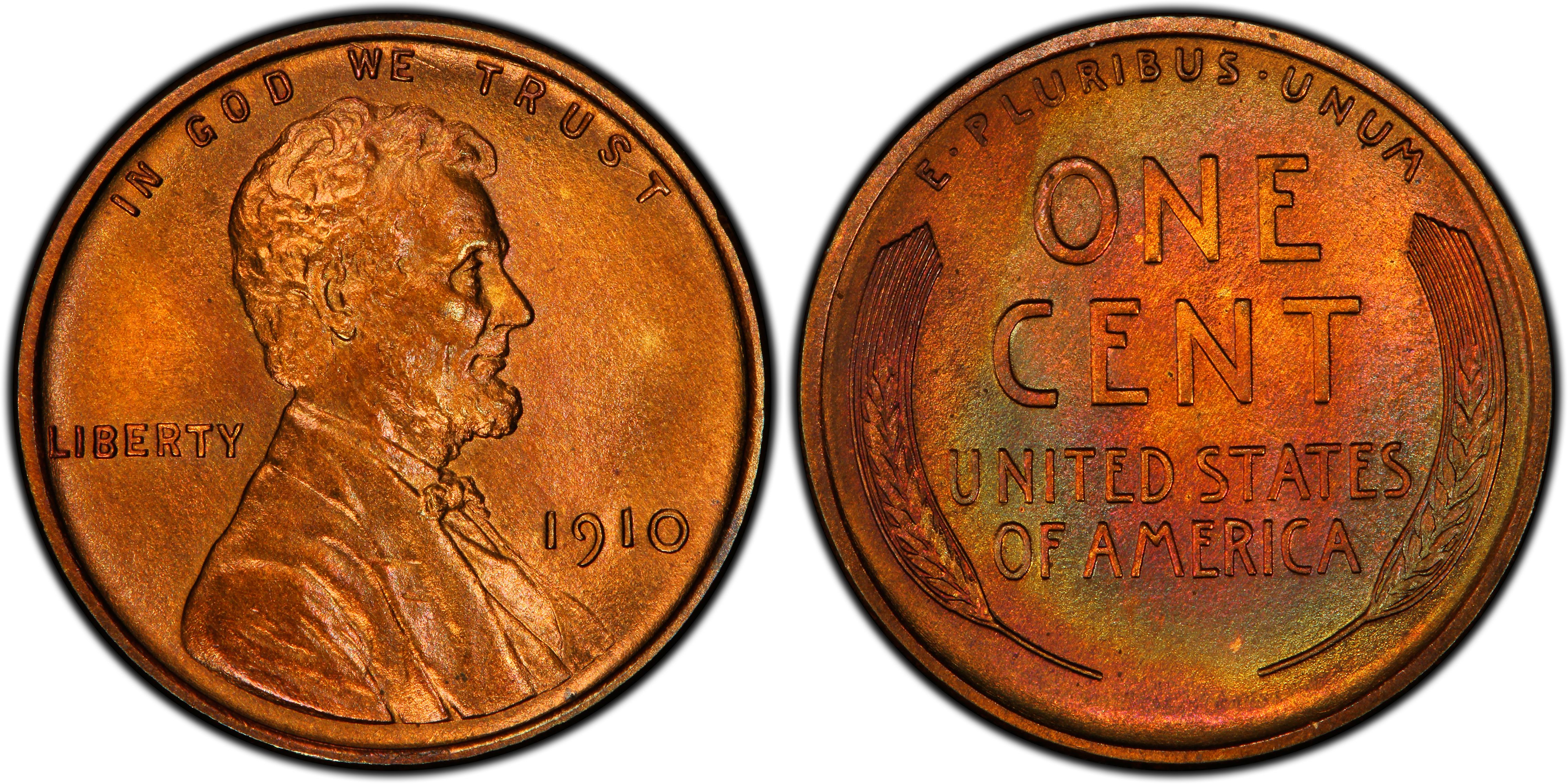
PCGS PR67RB
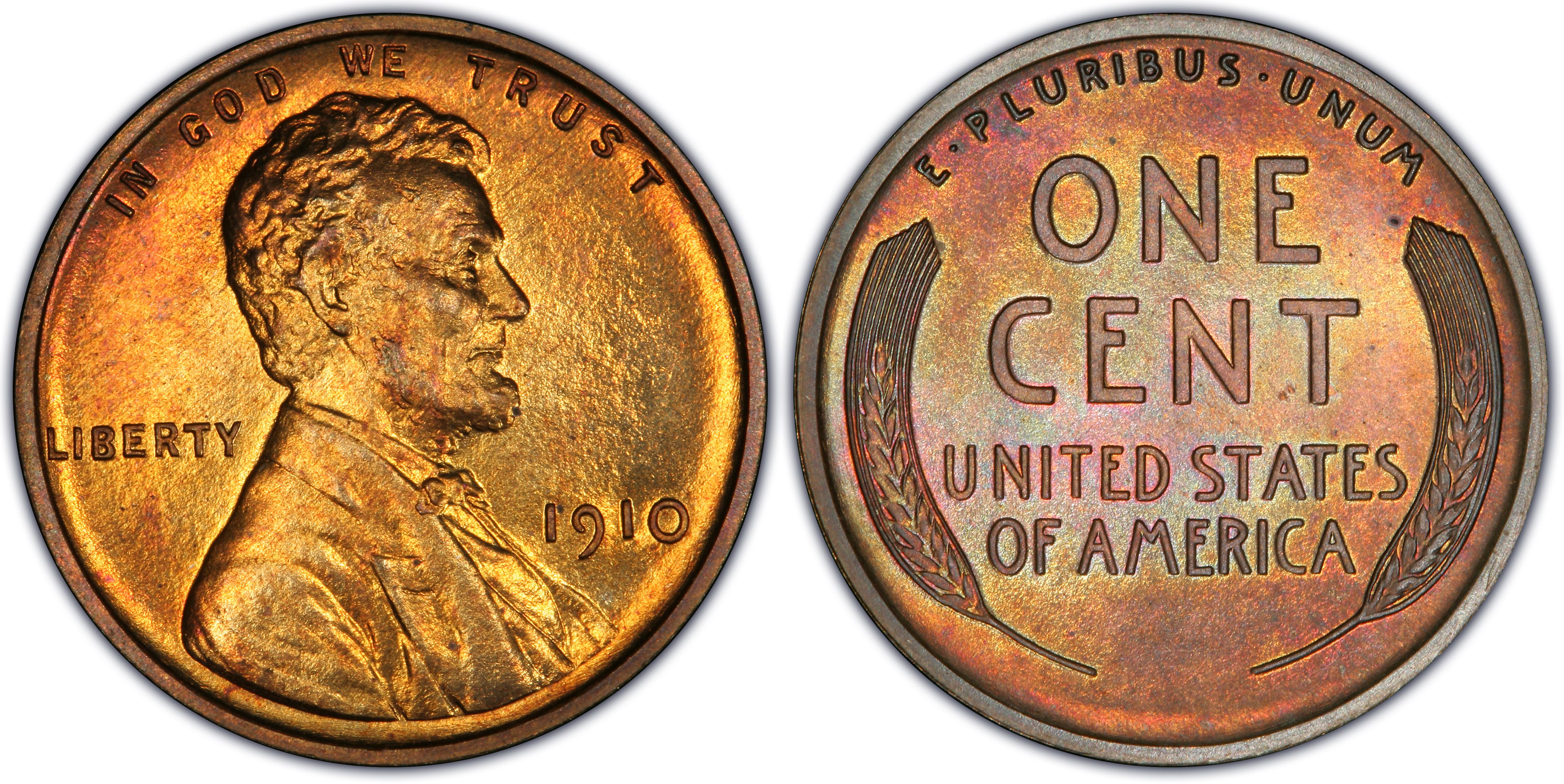
PCGS PR67RB
- PCGS #:
- 3307
- Designer:
- Victor David Brenner
- Edge:
- Plain
- Diameter:
- 19.00 millimeters
- Weight:
- 3.11 grams
- Mintage:
- 2,405
- Mint:
- Philadelphia
- Metal:
- 95% Copper, 5% Tin and Zinc
- Auction Record:
- $7,638 • PR67 • 08-05-2014 • Heritage Auctions
Rarity and Survival Estimates Learn More
| Survival Estimate | |
|---|---|
| All Grades | 400 |
| 60 or Better | 400 |
| 65 or Better | 150 |
| Numismatic Rarity | |
|---|---|
| All Grades | R-6.2 |
| 60 or Better | R-6.2 |
| 65 or Better | R-7.5 |
| Relative Rarity By Type All Specs in this Type | |
|---|---|
| All Grades | 5 / 19 TIE |
| 60 or Better | 5 / 19 TIE |
| 65 or Better | 6 / 19 TIE |
| Relative Rarity By Series All Specs in this Series | |
|---|---|
| All Grades | 5 / 19 TIE |
| 60 or Better | 5 / 19 TIE |
| 65 or Better | 6 / 19 TIE |
Condition Census What Is This?
| #1 PCGS PR67RB |
|
#1 PCGS PR67RB
"The J&J and R&R Gobrecht's Raisinet Collection," Heritage Auctions, January 14, 2024, Lot 3188 - $7,200; "The Matt's Mattes" (PCGS Set Registry). |
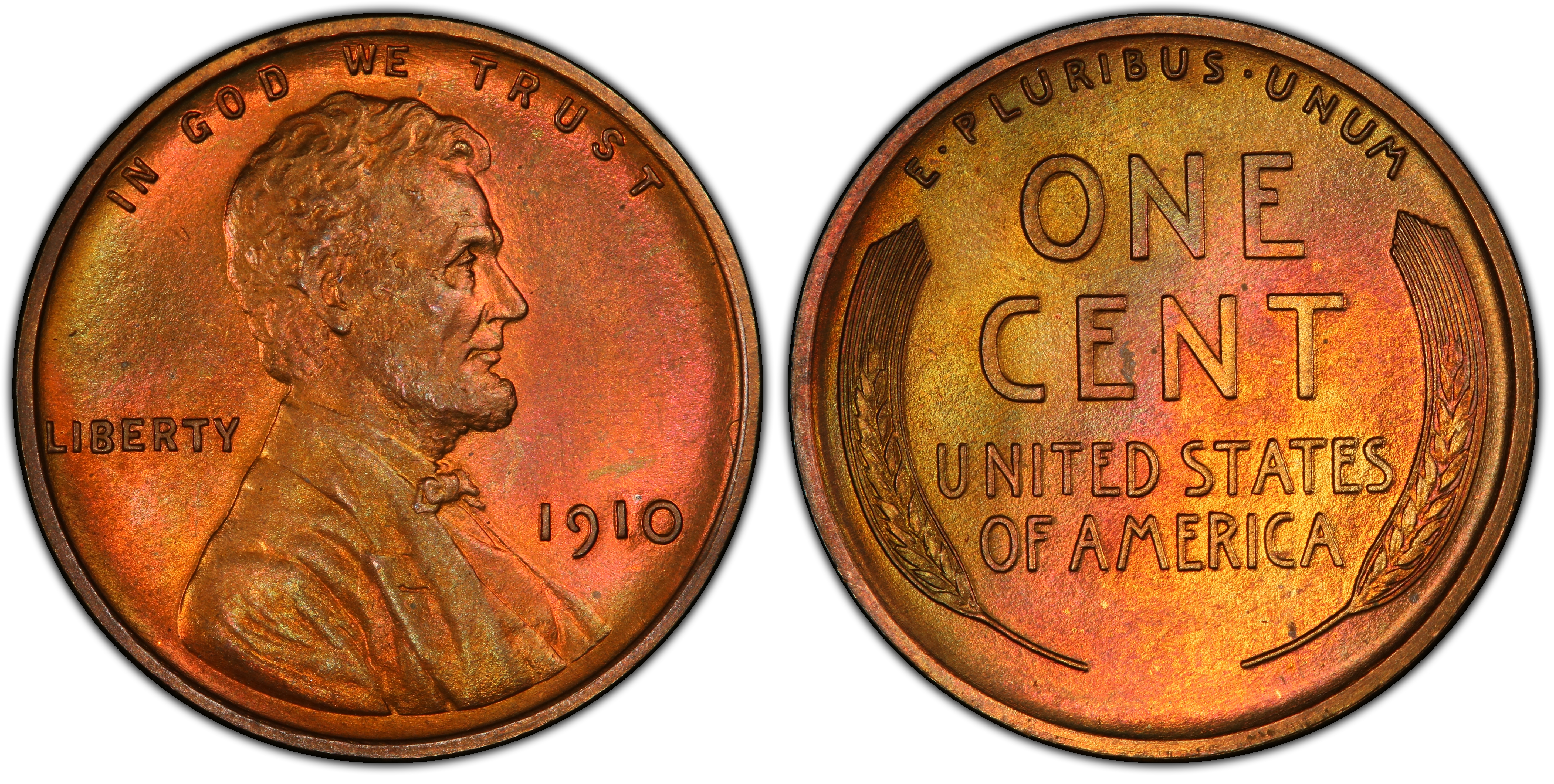 #1 PCGS PR67RB
"The Angels' Assemblage Collection" (PCGS Set Registry). |
|
#1 PCGS PR67RB
"The Withers Collection" (PCGS Set Registry). |
| #1 PCGS PR67RB |
| #6 PCGS PR66+RB |
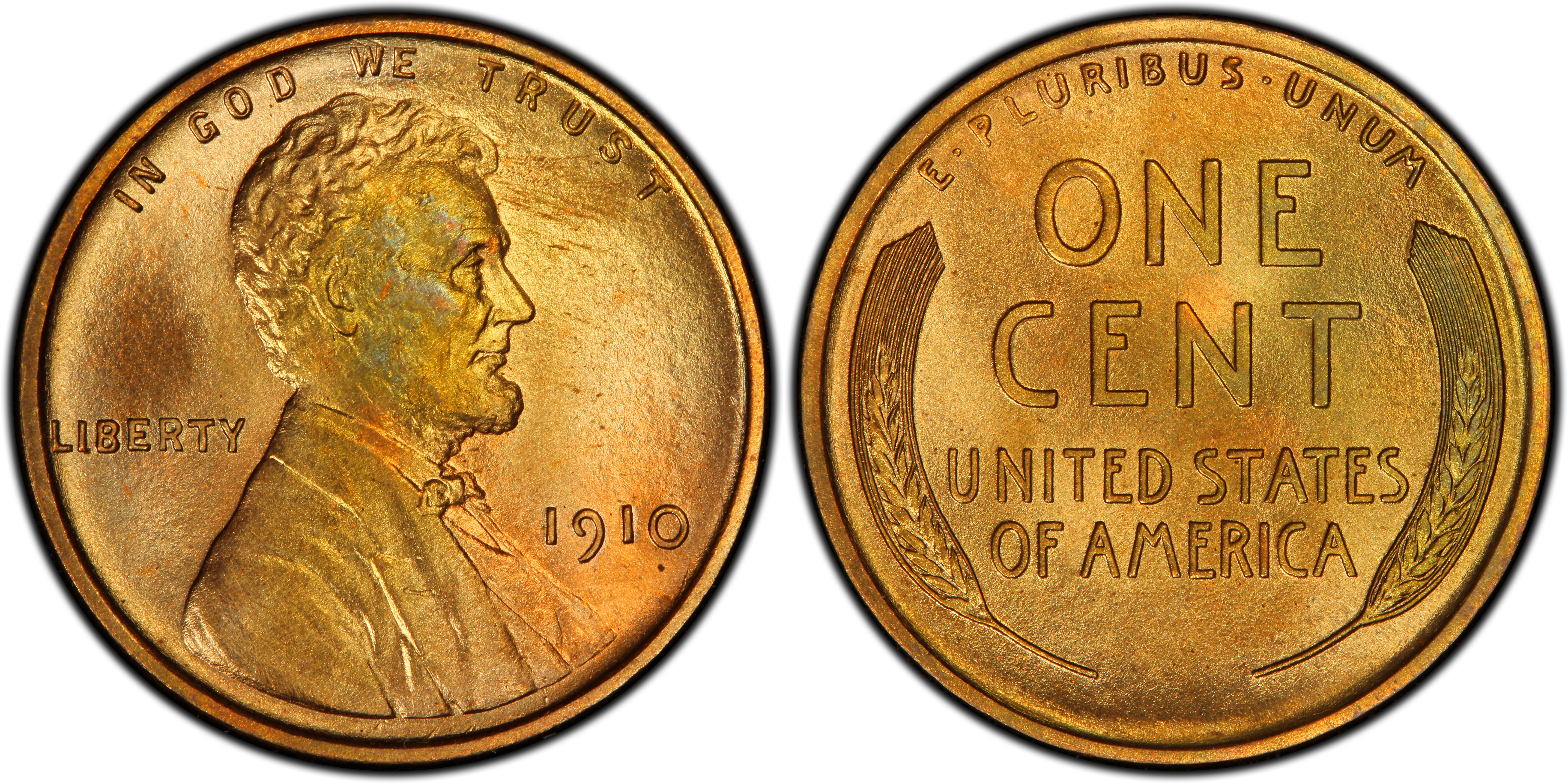 #6 PCGS PR66+RB
"Robec's "Lincolns of Color" Matte Proof Lincolns" (PCGS Set Registry). |
 #6 PCGS PR66+RB
"The Jeh Collection" (PCGS Set Registry). |
 #6 PCGS PR66+RB
|
 #6 PCGS PR66+RB
|
The 1910 Lincoln Cent Matte Proof
Of the Matte Proof Lincoln Cents struck between 1909 and 1916, the 1910 Lincoln Cent Matte Proof (RD #3308) boasts the largest mintage but, surprisingly, is not the most commonly certified date in the series. That honor belongs to the 1913 (RD #3317), followed by the 1909 Plain (RD #3305). Oftentimes, rarer coins see higher population totals because there is more incentive to submit them than there is for common dates. While this might seem to explain the 1910, it is unlikely. Even in a PCGS PR63BN grade, the coin's market value far exceeds the cost of submission. It is much more probable that a larger-than-normal portion of this mintage entered circulation and was lost to attrition.
To arrive at the total number of pieces struck, one must parse two conflicting data sets from the Mint's Medal and Proof Books (Book 1 and Book 2). The first book contains greater specificity regarding the total number of coins struck and accepted, but it includes four entries where multiple denominations are combined in the tally. The second book includes a column titled "Number No Good," but it appears incomplete. Furthermore, the delivery dates in the two books do not align in most cases; there appears to be a latency between the two volumes of a few days up to a week or so. I postulate that the date sequence in Book 1 is the most accurate depiction of events, while the latency in Book 2 reflects the subsequent accounting of those events. Either way, the accepted mintage of 4,083 coins can be derived by merging these two data sets.
|
1910 Lincoln Cent Matte Proof Deliveries |
|||
| Date | Struck | Accepted | % Accepted |
| January 7 | 498 | 483 | 96.9% |
| January 21 | 500 | 485 | 97% |
| February 14 | 501 | 499 | 99.6% |
| March 29 | 498 | 498 | 100% |
| May 19 | 500 | 500 | 100% |
| May 28 | 500 | 500 | 100% |
| August 1 | 200 | 200 | 100% |
| September 1 | 301 | 298 | 99% |
| November 7 | 300 | 293 | 97.3% |
| December 2 | 300 | 277 | 92.3% |
| December 28 | 25 | 25 | 100% |
| December 29 | 25 | 25 | 100% |
| Total | 4,148 | 4,083 | 98.4% |
Interestingly, this exceptionally high accepted rate is not reflectected in other years.
Collecting the 1910 Lincoln Cent Matte Proof
The quality of the 1910 Lincoln Cent Matte Proof varies. Due to the quantity struck, the sandblasted surface of the dies wore down, leaving some coins to be struck with a satin finish as opposed to the more detailed matte surfaces. The surfaces of the coin are also susceptable to environmental damage due to the reactive nature of the copper alloy and the Mint's use of yellow tissue paper in its packaging. Red coins are the minority, but many coins survive with some hint of red remaining and are typically found with some degree of toning. This toning can be quite attractive, but it can also negatively impact eye appeal. Some copper purists prefer original Red copper coins, while a growing segment of collectors have grown to appreciate coins in the RB and BN colorways.
All Proof Lincoln Cents struck between 1910 and 1914 share a thin diagonal die scratch at the bottom of the M in UNUM. This scratch appears on the Master Die. For the 1910, specialists have identified two obverse and two reverse dies, each with two die states. A second die pair was identified in April 2010 by coin dealers Charmy Harker and Brian Wagner.
Die Pair 1:
The first die pair is characterized by two distinct obverse die states and a reverse that exhibits localized diagnostic scratches.
- Obverse 1: In Die State 1, a tight web of scratches through WE. By Die State 2, the die has been repaired, resulting in dditional scratches and gouges throughout the design, most notably trailing through TRUST.
- Reverse 1: Displays the primary master die scratch found across the issue. It is uniquely identified by an additional diagonal scratch located inside the letter C in CENT. Also visible are two slightly diagonal scartches running parallel between the tops of IB.
Die Pair 2:
The second die pair shows a much busier field environment, featuring extensive die scratches across both the obverse and reverse, along with a notable repunching error.
- Obverse 2: Like the first pair, this obverse progresses through two distinct phases. Die State I: Baseline production state with small die scratches around OD of GOD, through WE, and from U to Lincoln's forehead. In Die State II, an additional scratch at the top of U is present.
- Reverse 2: Shares the same primary master die scratch as Reverse 1, but is easily differentiated by a suite of distinct diagnostics. A die scratch runs from the M in UNUM leftward into the field above the E in ONE. A horizontal scratch is visible in the field to the right of the C in CENT, while another scratch connects the center of the E to the N in CENT. Additionally, a scratch runs from the left inside-middle of the left leg of the N in ONE, extending southward.
Vintage Market Snippets
Stewart Blay’s historic collection of Matte Proof Lincoln Cents reached completion in 2005 with his acquisition of a Superb Gem Proof 1910. Blay had pursued this elusive coin for 16 years, ever since he first laid eyes on it thanks to Rusty Goe in 1989. Although it was already promised to another collector at the time, Blay spent the next decade and a half making repeated attempts to buy it. The breakthrough came in 2005 when Todd Imhof alerted Blay that the coin was finally available for $35,000. Blay jumped at the chance, and Scott Schechter famously braved a New York snowstorm to hand-deliver the final piece of the historic set. The Blay coin, now graded PCGS PR68RD is the sole finest known and last sold in June 2025 for $118,125.
* * *