
PCGS PR67+BN

PCGS PR67BN
- PCGS #:
- 3321
- Designer:
- Victor David Brenner
- Edge:
- Plain
- Diameter:
- 19.00 millimeters
- Weight:
- 3.11 grams
- Mintage:
- 1,150
- Mint:
- Philadelphia
- Metal:
- 95% Copper, 5% Tin and Zinc
- Auction Record:
- $11,400 • PR67BN • 01-14-2024 • Heritage Auctions
Rarity and Survival Estimates Learn More
| Survival Estimate | |
|---|---|
| All Grades | 250 |
| 60 or Better | 250 |
| 65 or Better | 100 |
| Numismatic Rarity | |
|---|---|
| All Grades | R-6.6 |
| 60 or Better | R-6.6 |
| 65 or Better | R-8.0 |
| Relative Rarity By Type All Specs in this Type | |
|---|---|
| All Grades | 4 / 18 |
| 60 or Better | 4 / 18 |
| 65 or Better | 5 / 18 TIE |
| Relative Rarity By Series All Specs in this Series | |
|---|---|
| All Grades | 4 / 18 |
| 60 or Better | 4 / 18 |
| 65 or Better | 5 / 18 TIE |
Condition Census What Is This?
 #1 PCGS PR67+BN
"The Cherry Bomb Collection" (PCGS Set Registry). |
|
#1 PCGS PR67+BN
|
 #3 PCGS PR67BN
|
|
#3 PCGS PR67BN
"The J&J and R&R Gobrecht's Raisinet Collection," Heritage Auctions, January 14, 2024, Lot 3199 - $11,400. Old Green Holder. |
|
#3 PCGS PR67BN
As PCGS PR67BN #10908286. "The J&J and R&R Gobrecht's Raisinet Collection," Heritage Auctions, January 10, 2024, Lot 3198 - $4,320. As PCGS PR67BN #61808821. |
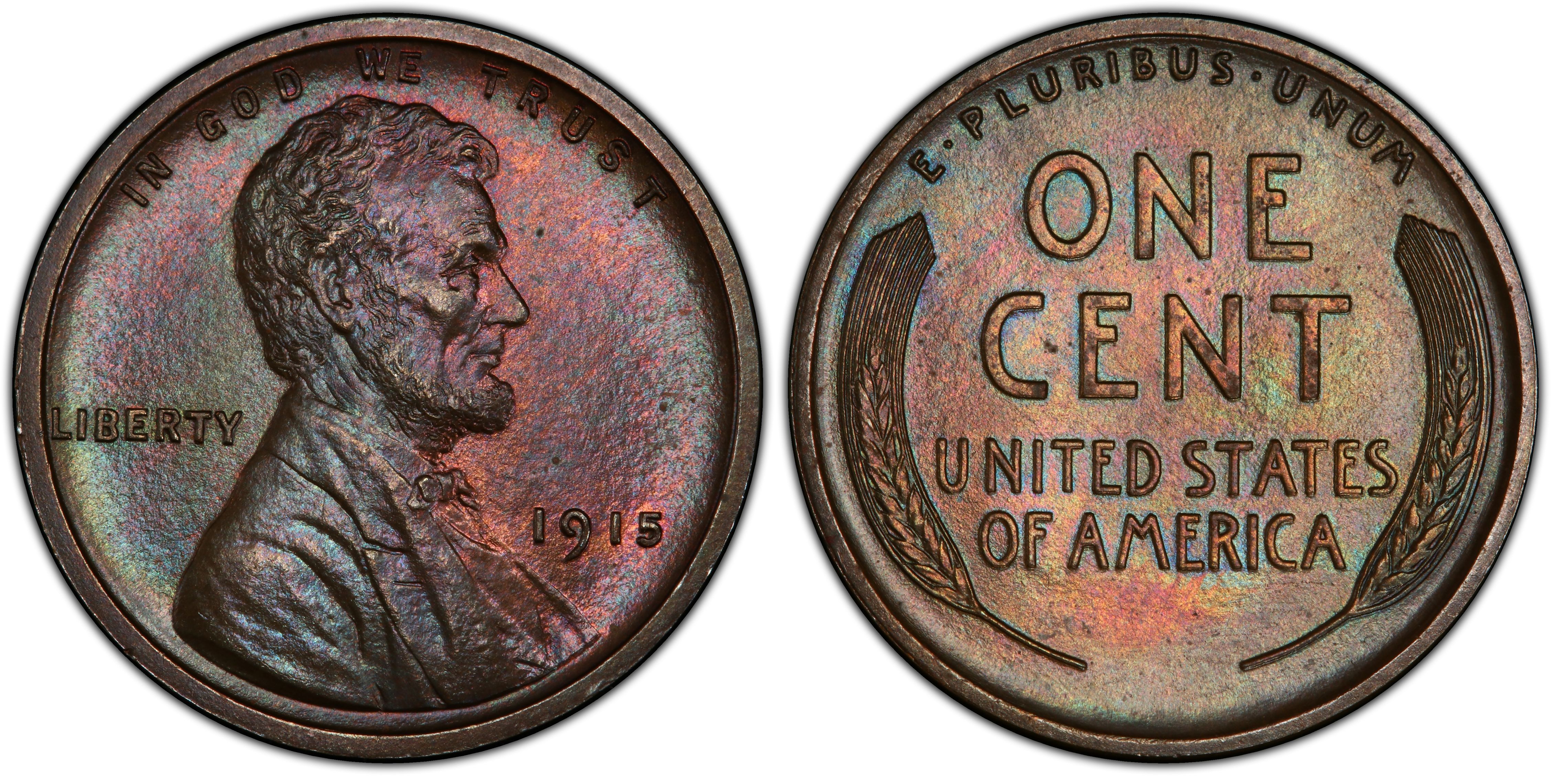 #3 PCGS PR67BN
Stack's Bowers, November 18, 2020, Lot 5046 - $6,600. |
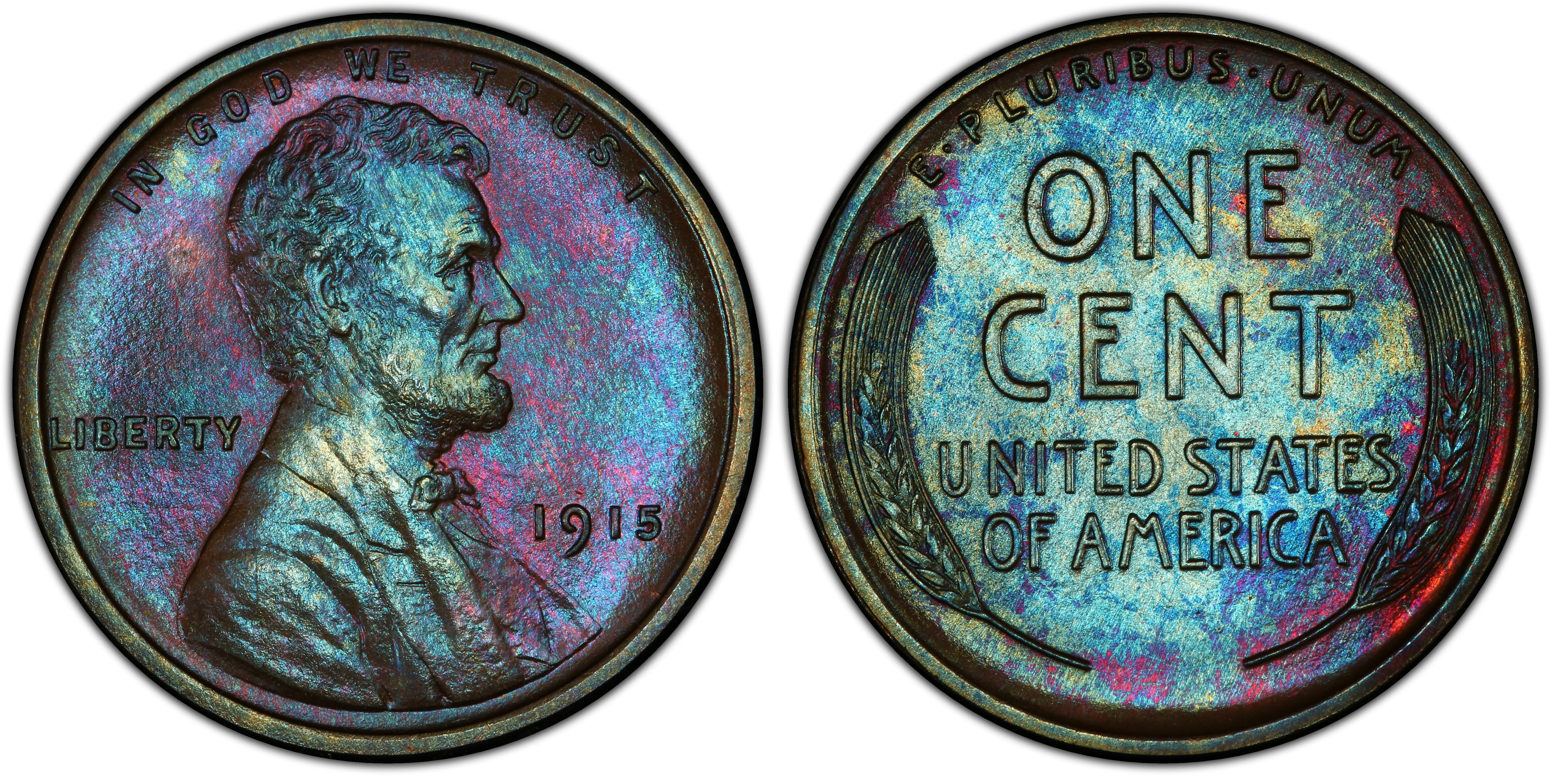 #3 PCGS PR67BN
As PCGS PR67BN #34104986. Heritage Auctions, January 4, 2018, Lot 4177 - $5,520. As PCGS PR67BN #35111540. |
 #3 PCGS PR67BN
Legend Rare Coin Auctions, May 18, 2017, Lot 130 - $8,812.50. |
 #3 PCGS PR67BN
Heritage Auctions, April 23, 2014, Lot 3199 - $10,575; "The SnLCollection" (PCGS Set Registry). |
 #3 PCGS PR67BN
|
 #3 PCGS PR67BN
|
The 1915 Lincoln Matte Proof Cent
During the "Renaissance of American Coinage," the United States Mint experimented with various Proof finishes for its new designs. This gave the gold issues, Victor David Brenner’s Lincoln Cent, and James Earle Fraser’s Buffalo Nickel a distinct appearance in Proof compared to the Barber silver issues—which, alongside the then-dormant Morgan Dollar, were the final 19th-century designs still in production.
The Mint sold Proofs both as individual coins and in sets. Collectors could choose between "Minor" sets (Cent and Nickel), "Silver" sets (Dime, Quarter, and Half Dollar), or "Gold" sets (denominations from $2.50 to $20). Because the gold sets were economically out of reach for the average collector, mintages were frequently fewer than 100 pieces per denomination. This rarity explains why they are among the most prized U.S. coins of the 20th century.
It is often claimed that the contemporary public disliked Matte Proofs because they looked too similar to business strikes. While a novice collector might have struggled to see the difference, a side-by-side comparison reveals this criticism to be somewhat unfair. The surfaces of a Matte Proof possess a granular, "satiny" texture and sharp edges that are unmistakable once understood.
Regarding the Lincoln series, the 1915 Matte Proof Cent (BN #3321) is the eighth of nine issues and the third scarcest by mintage. While the typical example has lost its original "red" luster, well-preserved specimens often exhibit stunning iridescent toning in olive green, magenta, blue, or peach. From a peak of 4,118 pieces in 1910, the 1915 mintage dropped to just 1,150 pieces. By mintage, it is the third scarcest of the Matte Proofs. The 1915 issue features exceptionally bold details due to enhancements made to the obverse master hub. These resulting coins display significantly sharper definition in Lincoln’s hair, beard, and jacket than previous years.
* * *