
PCGS MS66+RB
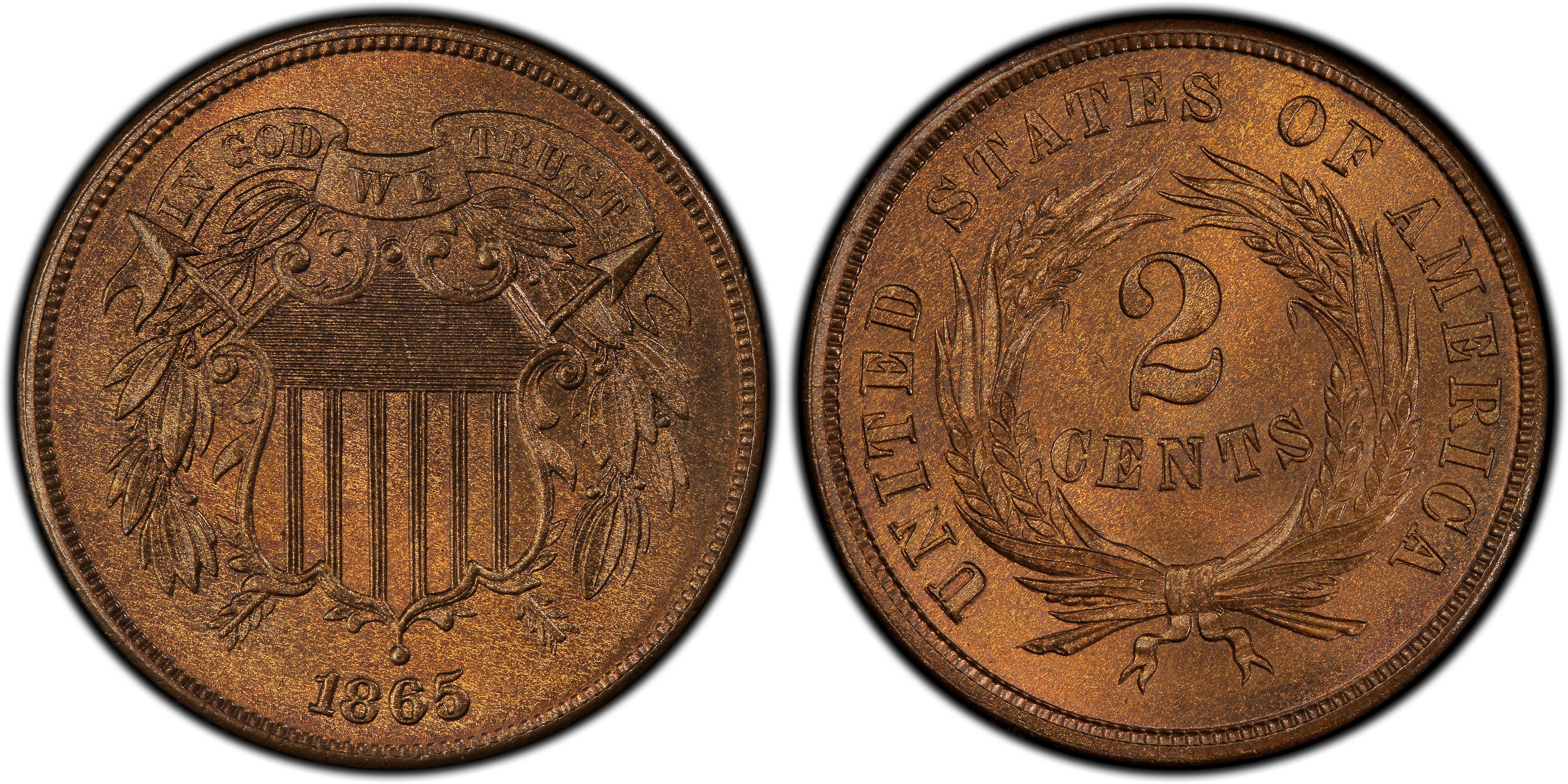
PCGS MS66+RB
- PCGS #:
- 3583
- Designer:
- James Barton Longacre
- Edge:
- Plain
- Diameter:
- 23.00 millimeters
- Weight:
- 6.22 grams
- Mintage:
- 13,640,000
- Mint:
- Philadelphia
- Metal:
- Bronze
- Auction Record:
- $6,600 • MS67RB • 04-29-2018 • Heritage Auctions
Major Varieties
Rarity and Survival Estimates Learn More
| Survival Estimate | |
|---|---|
| All Grades | 5,000 |
| 60 or Better | 5,000 |
| 65 or Better | 1,500 |
| Numismatic Rarity | |
|---|---|
| All Grades | R-4.0 |
| 60 or Better | R-4.0 |
| 65 or Better | R-4.8 |
| Relative Rarity By Type All Specs in this Type | |
|---|---|
| All Grades | 10 / 11 TIE |
| 60 or Better | 10 / 11 TIE |
| 65 or Better | 11 / 11 |
| Relative Rarity By Series All Specs in this Series | |
|---|---|
| All Grades | 10 / 11 TIE |
| 60 or Better | 10 / 11 TIE |
| 65 or Better | 11 / 11 |
Condition Census What Is This?
 #1 PCGS MS67RB
|
 #2 PCGS MS66+RB
Plain 5. Golden red color. High points of the relief exhibit chocolate brown color. Toning spot below "8". |
| #2 PCGS MS66+RB |
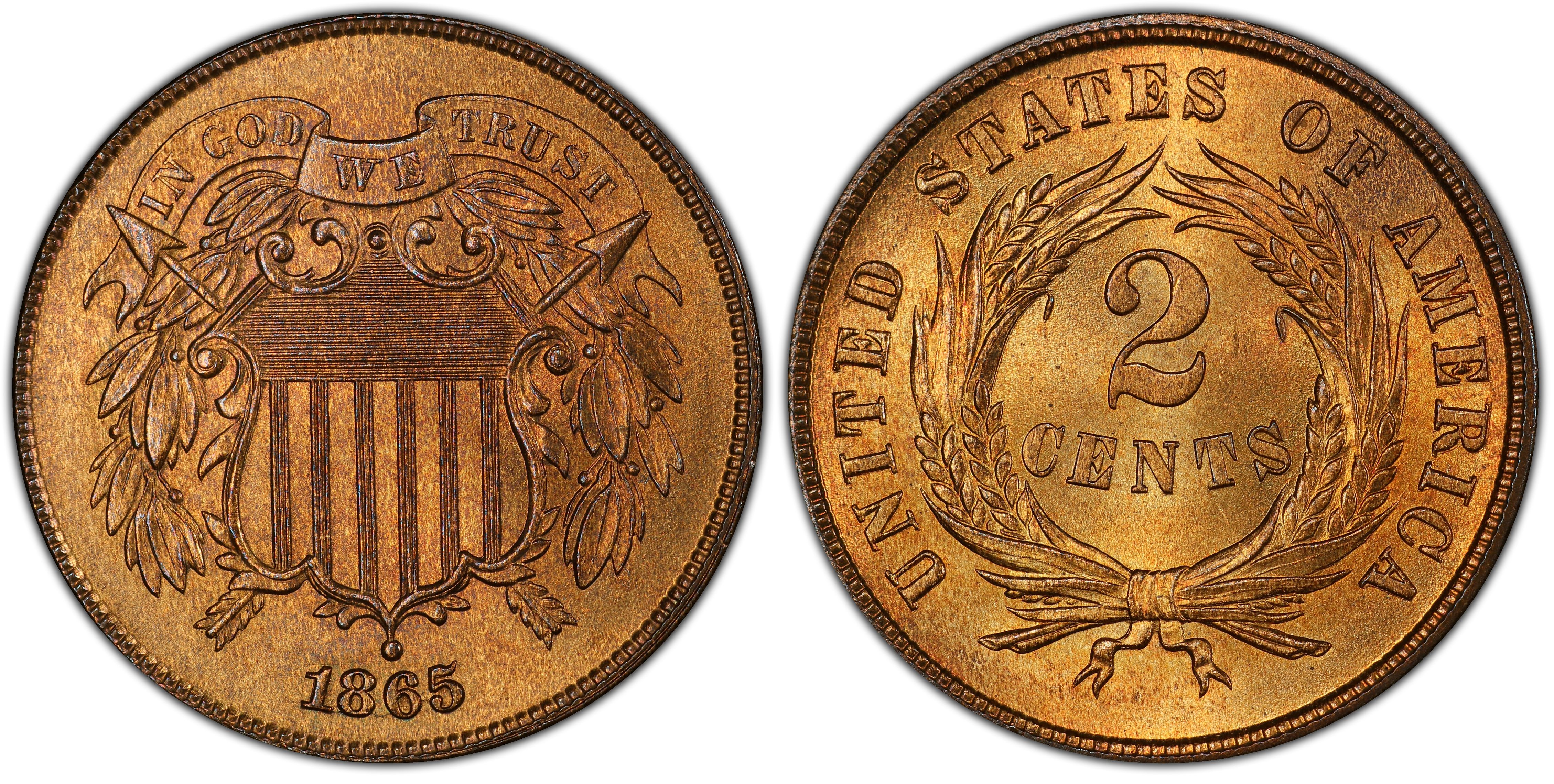 #2 PCGS MS66+RB
Fancy 5. |
| #5 PCGS MS66RB |
 #5 PCGS MS66RB
Plain 5. Predominantly red. Diagonal die crack from denticles to the right of the 5. From the denticles to the ribbon above G, along the top of the ribbon the arrow. Toning spot above "T" of UNITED. |
 #5 PCGS MS66RB
Plain 5. The central letters of "IN GOD WE TRUST" are softly impressed. There is minor spotting across the surfaces. A long die crack originates from the denticles at 5 o'clock, passes through the ball of the shield, and terminates above the "1." Another die crack is visible from the denticles at 7:30. "Longacre" doubling is present on "UNITE." On the reverse, a die crack starts at the denticles to the right of 6 o'clock and continues through the bottom of the wreath. Vibrant blue and magenta toning surrounds "2 CENTS." |
 #5 PCGS MS66RB
Plaint 5. Surfaces display a red and orange, with the points of highest relief showing vivid blue-magenta coloration. A small contact mark is visible near the rim at 3 o'clock. A die crack runs from the top of the "1" to the ball of the shield. On the reverse, a diagonal die crack starts over the "D" of UNITED, continues to the top of the "E", and terminates at the top of the "T". Additionally, a small die crack extends from the denticles to the second "A" of AMERICA. |
 #5 PCGS MS66RB
Plain 5. diagonal die crack extending from the denticles to the right of the digit. On the reverse, a crack runs from the denticles to the ribbon above the G, continuing along the top of the ribbon toward the arrow. Additionally, a die crack extends from the denticles to the top of the second A in AMERICA, while another originates at the denticles and meets the top of the E; this crack splits to run along the top of ITED and extends further into the wreath. |
 #5 PCGS MS66RB
Plain 5. Golden color. Toning spot bordering denticles above "R" of TRUST. |
 #5 PCGS MS66RB
Plain 5. Golden toning. Diagonal die crack from denticles to the right of the 5. From the denticles to the ribbon above G, along the top of the ribbon the arrow. Die from denticles above "E," crossing over the top of the letters of ITED. Die crack from the denticles to the top of the second "A" of AMERICA. |
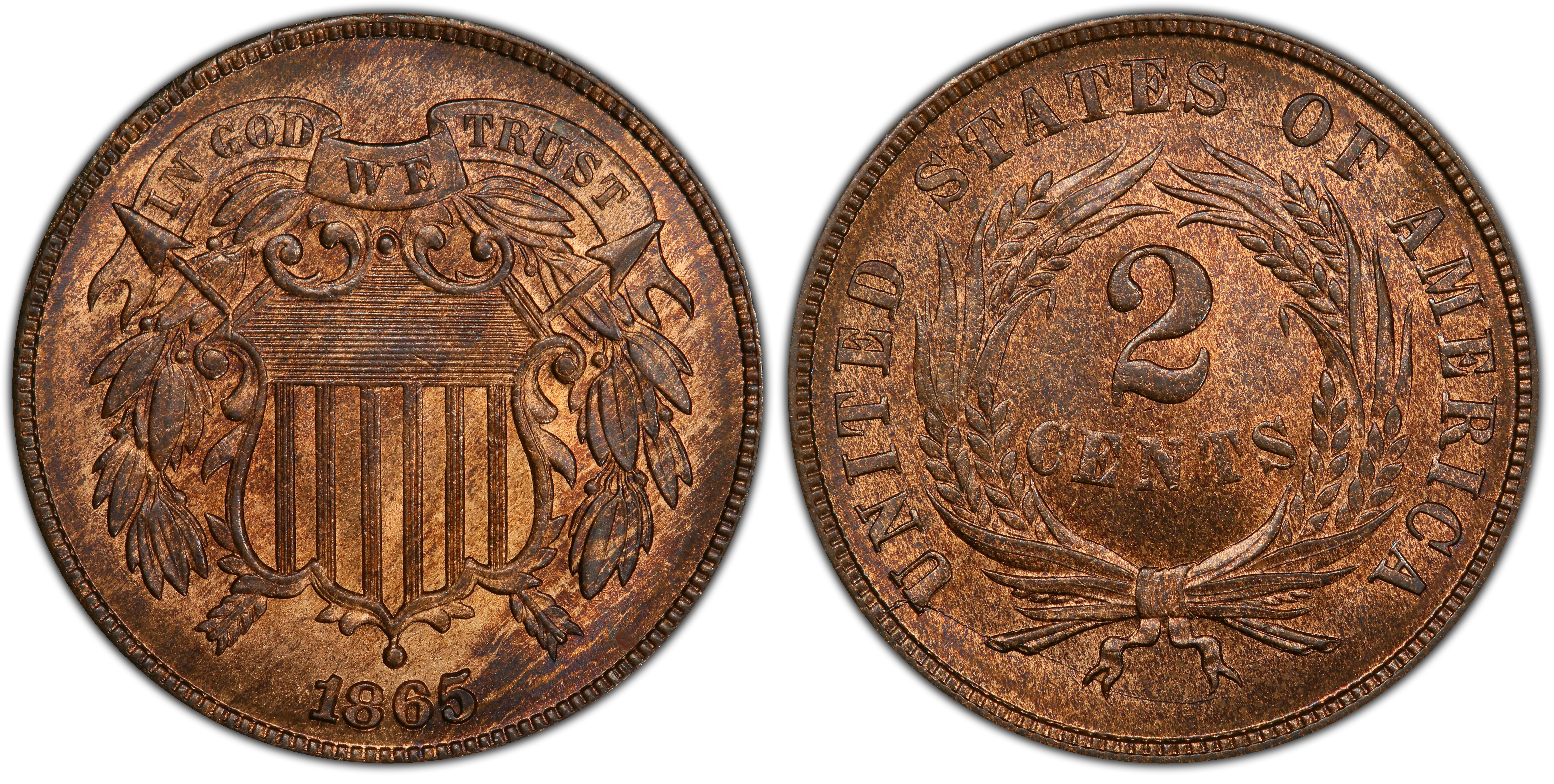 #5 PCGS MS66RB
"The jctavoian Collection" (PCGS Set Registry). Plain 5. "Woodie" diagonal planchet grain. |
 #5 PCGS MS66RB
Plain 5. Denticles weak at the lower half of the obverse and the upper right of the reverse. |
The 1865 Two-Cent Piece
First struck in 1864 to alleviate the nationwide coin shortage caused by the Civil War, the Two-Cent Piece ultimately struggled to gain long-term traction. The coin, identical in diameter to the deprecated half-cent but slightly heavier, was conceived as an instrument to increase the circulation of small change in the Northeast and Midwest. For a few years, the coin fulfilled its purpose; however, a glut of base-metal issues—specifically the Indian Head Cent, the Three-Cent Nickel, and the Shield Nickel five-cent coin—eventually crowded out the "double cent."
This eventuality was not yet apparent in 1865. For the second year of the series, the Philadelphia Mint struck 13,640,000 pieces, representing a 31% decline from the inaugural year. This downward trend accelerated in 1866, with mintage falling by another 77% before stabilizing briefly over the following two years.
The Plain 5 and Fancy 5 Varieties
For completionists, the 1865 Two-Cent Piece offers two major varieties: the Plain 5 (PCGS #38247) and the Fancy 5 (PCGS #38256), along with several Cherrypickers' Guide varieties. These descriptors refer specifically to the style of the numeral "5" in the date.
The Plain 5 is the primary date style for the 1865 issue and is characterized by a straight, horizontal crossbar at the top of the digit. In contrast to the Fancy 5—which features a distinctively curved or "flipped" flag—the Plain 5 presents a more utilitarian, geometric profile. Within the Plain 5 and Fancy 5 families, collectors often hunt for several popular sub-varieties, including:
Plain 5
- Doubled Die Obverse: FS-101 (#38250) and FS-102 (#569397)
- Repunched Date: FS-301 (#38253)
- Die Clash: FS-401/901 (#569400)
Fancy 5
- Repunched Date: FS-301 (#38259-#38261), FS-302 (#38262-#38264), FS-303 (#38265-38267).
- Misplaced Date: FS-304 (#38268-38270), FS-305 (#569403-#569405).
* * *