
PCGS MS66+
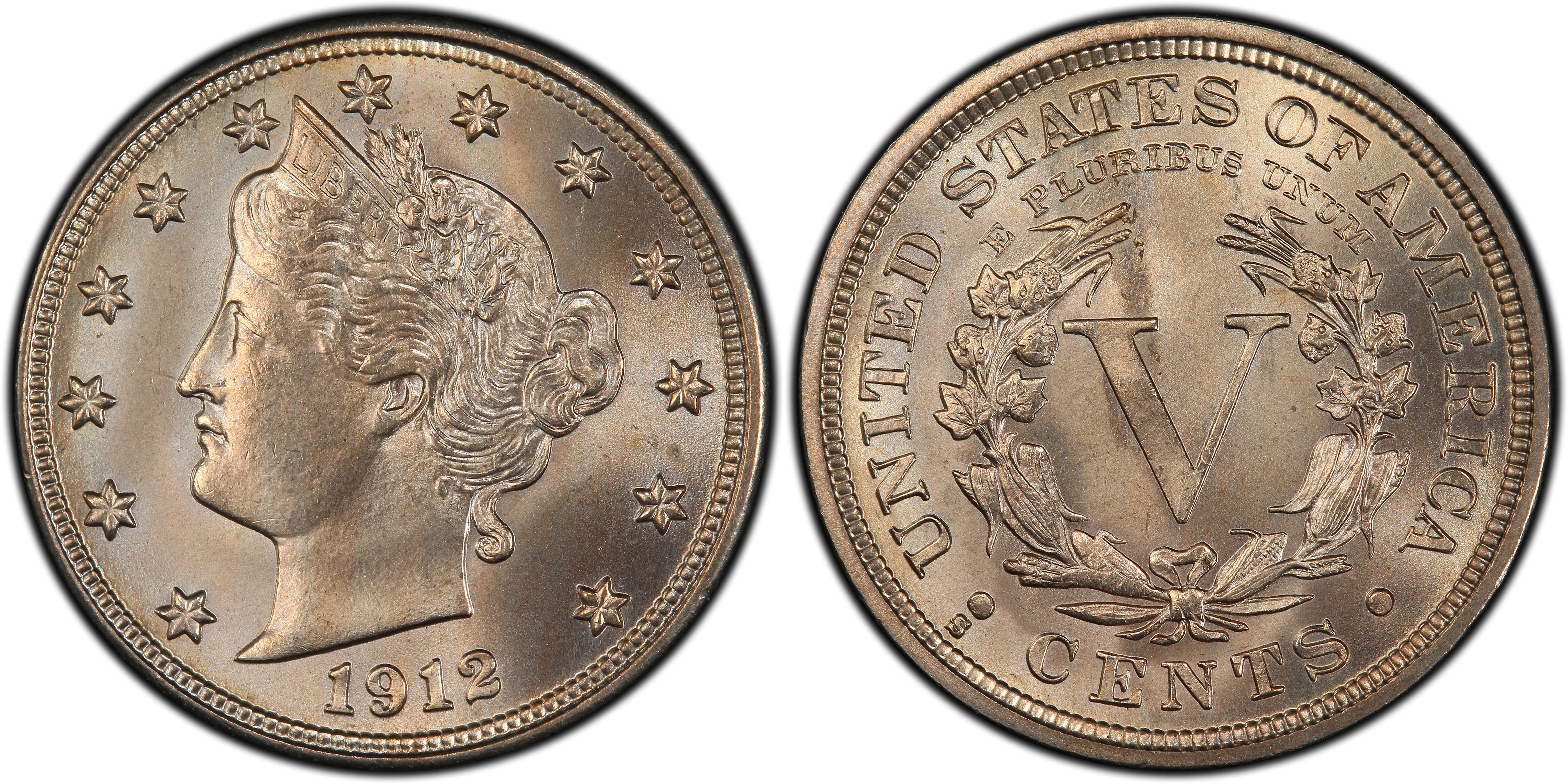
PCGS MS66+
- PCGS #:
- 3875
- Designer:
- Charles E. Barber
- Edge:
- Plain
- Diameter:
- 21.20 millimeters
- Weight:
- 5.00 grams
- Mintage:
- 238,000
- Mint:
- San Francisco
- Metal:
- 75% Copper, 25% Nickel
- Auction Record:
- $37,375 • MS66 • 01-03-2012 • Heritage Auctions
Major Varieties
- 1912-S 5C
Rarity and Survival Estimates Learn More
| Survival Estimate | |
|---|---|
| All Grades | 5,000 |
| 60 or Better | 1,500 |
| 65 or Better | 250 |
| Numismatic Rarity | |
|---|---|
| All Grades | R-4.0 |
| 60 or Better | R-4.8 |
| 65 or Better | R-6.6 |
| Relative Rarity By Type All Specs in this Type | |
|---|---|
| All Grades | 1 / 32 TIE |
| 60 or Better | 14 / 32 TIE |
| 65 or Better | 11 / 32 TIE |
| Relative Rarity By Series All Specs in this Series | |
|---|---|
| All Grades | 1 / 33 TIE |
| 60 or Better | 14 / 33 TIE |
| 65 or Better | 11 / 33 TIE |
Condition Census What Is This?
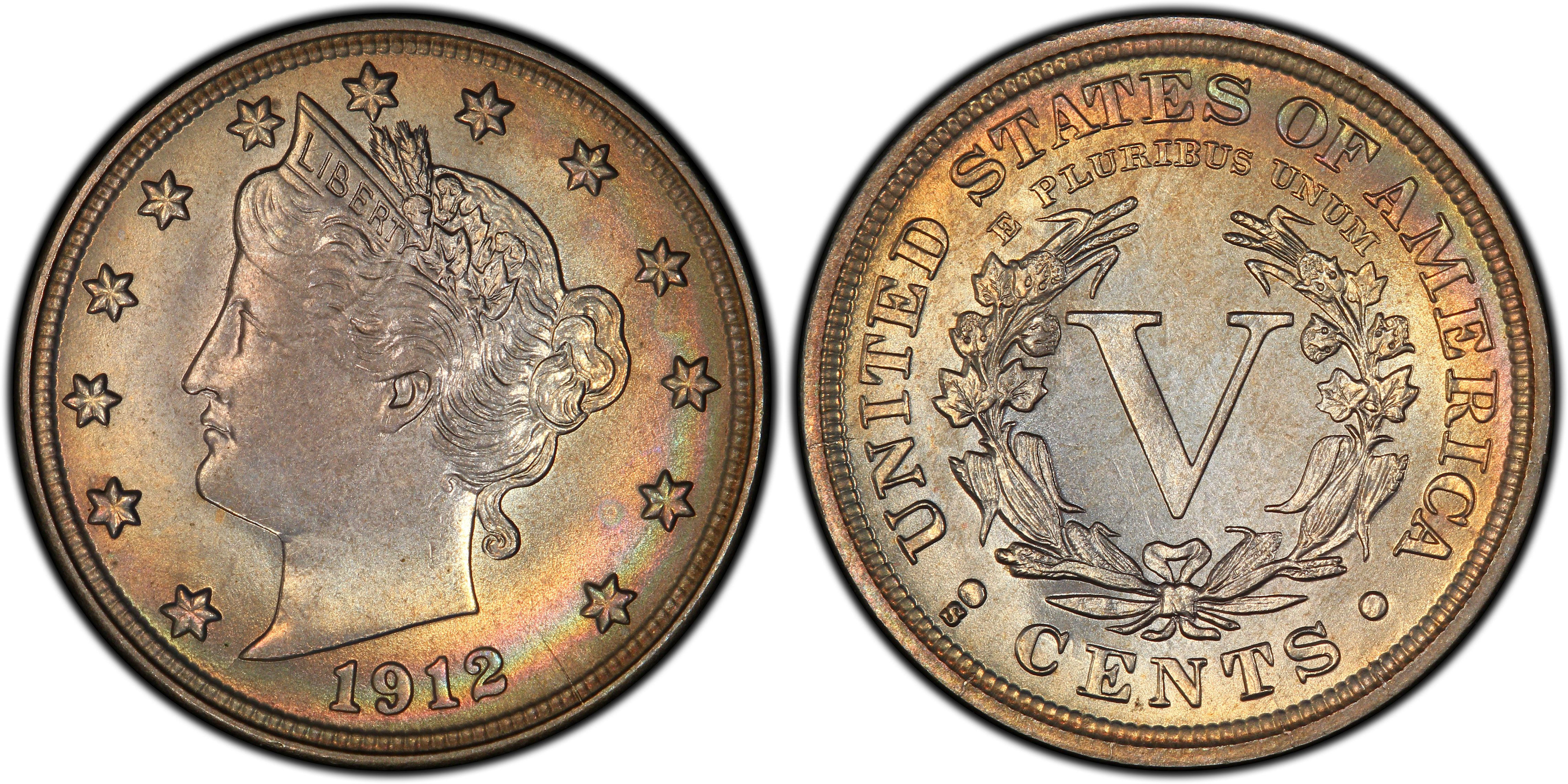 #1 PCGS MS66+
Richard Burdick. As PCGS MS66 #32213707. "The Douglas C. Kaselitz Collection," Stack's Bowers, July 2015, Lot 5095 - $32,900. As PCGS MS66+ #32213707. Richly toned in gold and apricot, framed by a circular band of prismatic rainbow toning along the obverse and reverse peripheries. The strike is exceptional and full, notably crisp on the typically problematic left ear of corn. |
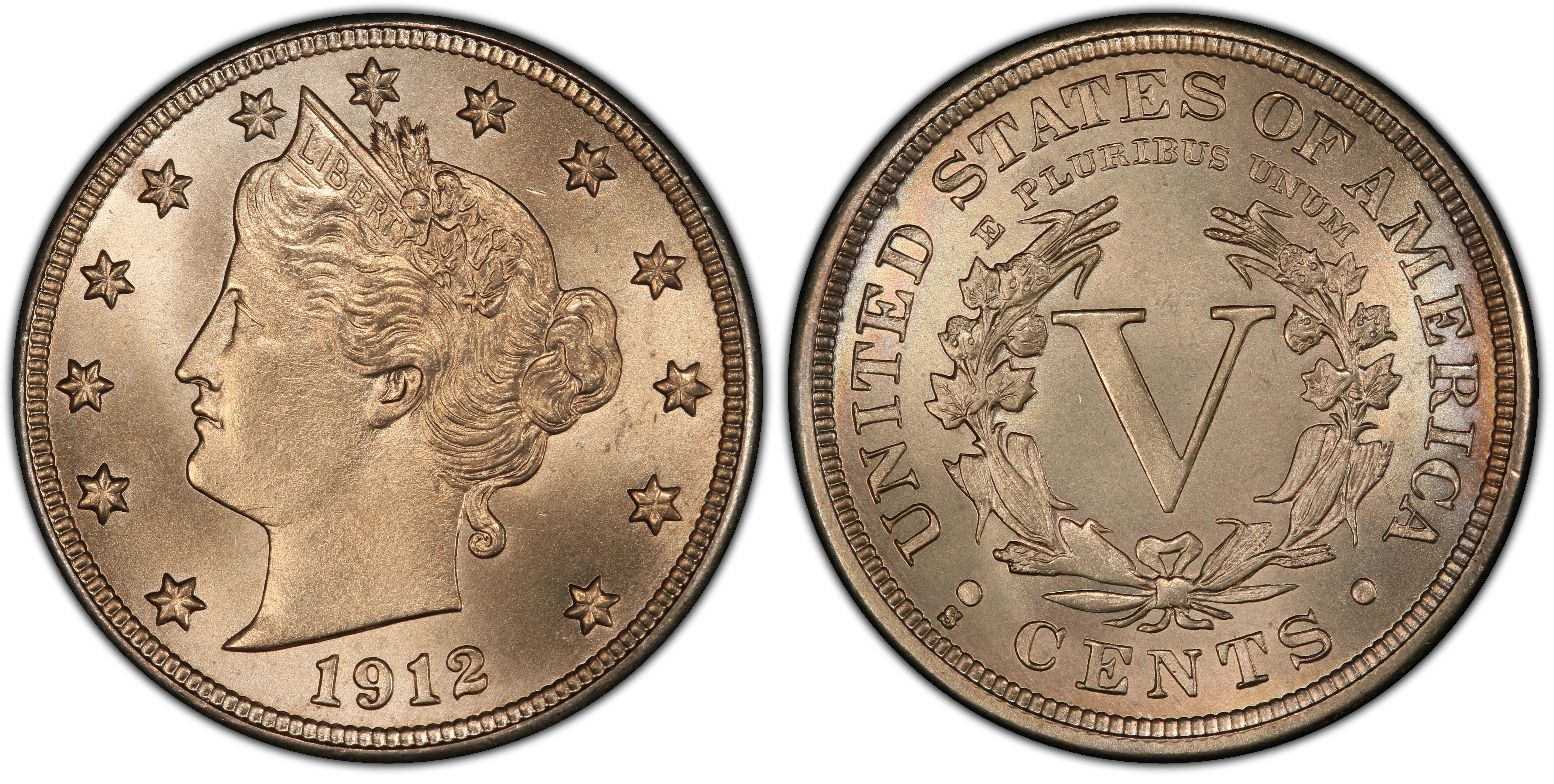 #1 PCGS MS66+
Intense coppery-gold patination, with vibrant hints of blue, purple, and apricot along the reverse periphery. This colorful toning is most prominent above the "TED" in UNITED and "MERIC" in AMERICA. |
 #1 PCGS MS66+
Pearlescent patination blends ice-blue with champagne-peach hues. A localized streak of toning is noted above Star 13, while the radials are flat on Stars 11 through 13. A minor tick resides between Stars 3 and 4. |
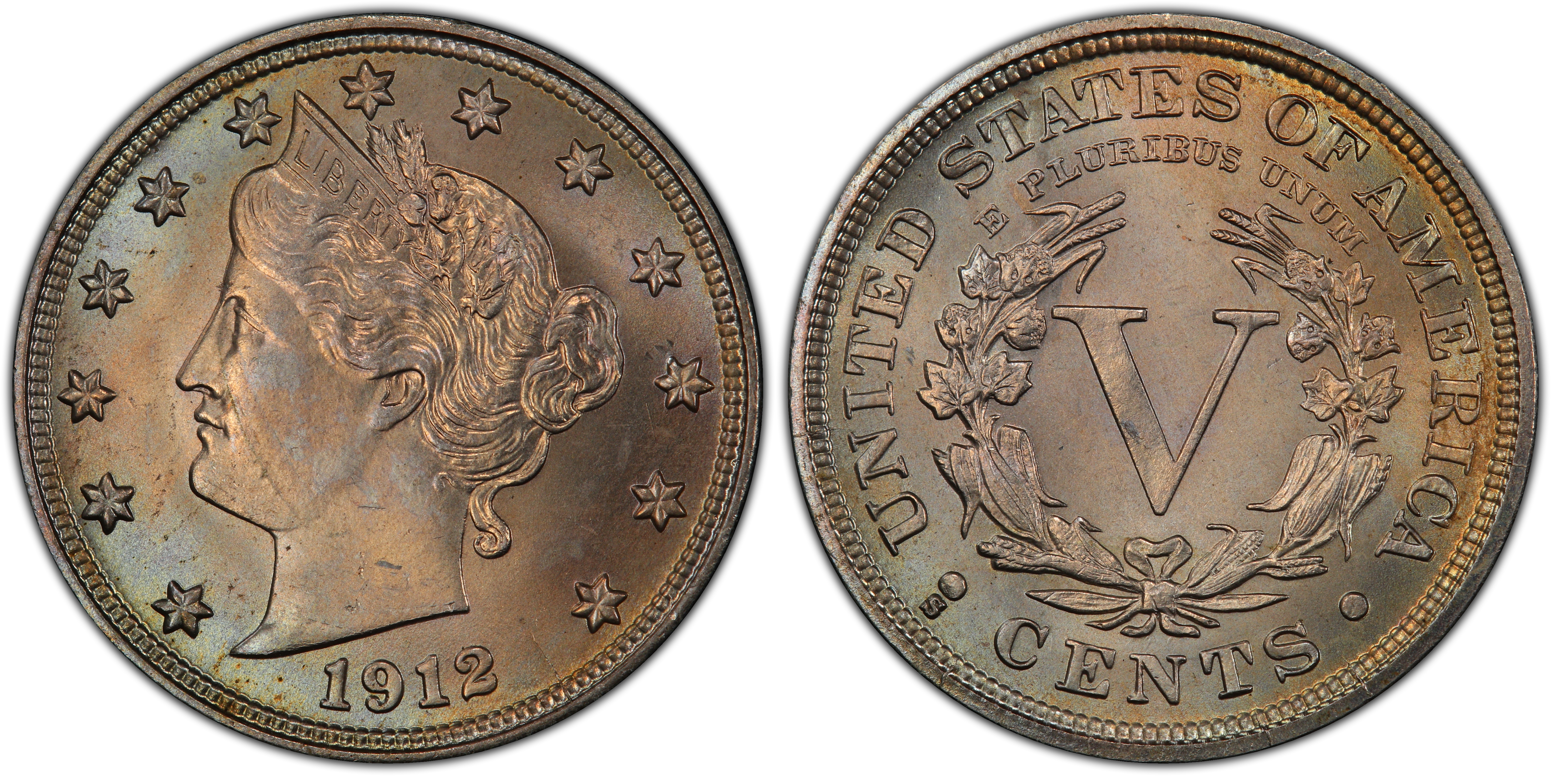 #1 PCGS MS66+
GreatCollections, October 28, 2018, Lot 602787 - $10,968.75; Bruce Scherr; "The Scherr Family Collection," Heritage Auctions, April 26, 2020, Lot 3239 - $9,900; "The tcc Collection" (PCGS Set Registry). Awash in a rich array of iridescent blue, peach, lavender, and green toning. Subtle, pin-sized copper spots at the lower-left obverse serve as distinct pedigree markers. Full left ear of corn. |
|
#1 PCGS MS66+
Stack's Bowers, March 25, 2020, Lot 3121 - $7,200; Stack's Bowers, August 11, 2020, Lot 1170 - $6,000; "The Grand Cru Collection" (PCGS Set Registry). Draped in iridescent gold, green, and peach toning. A small tick is noted on Liberty’s cheek, complemented by two overlapping, arced toning marks above the 'V'. |
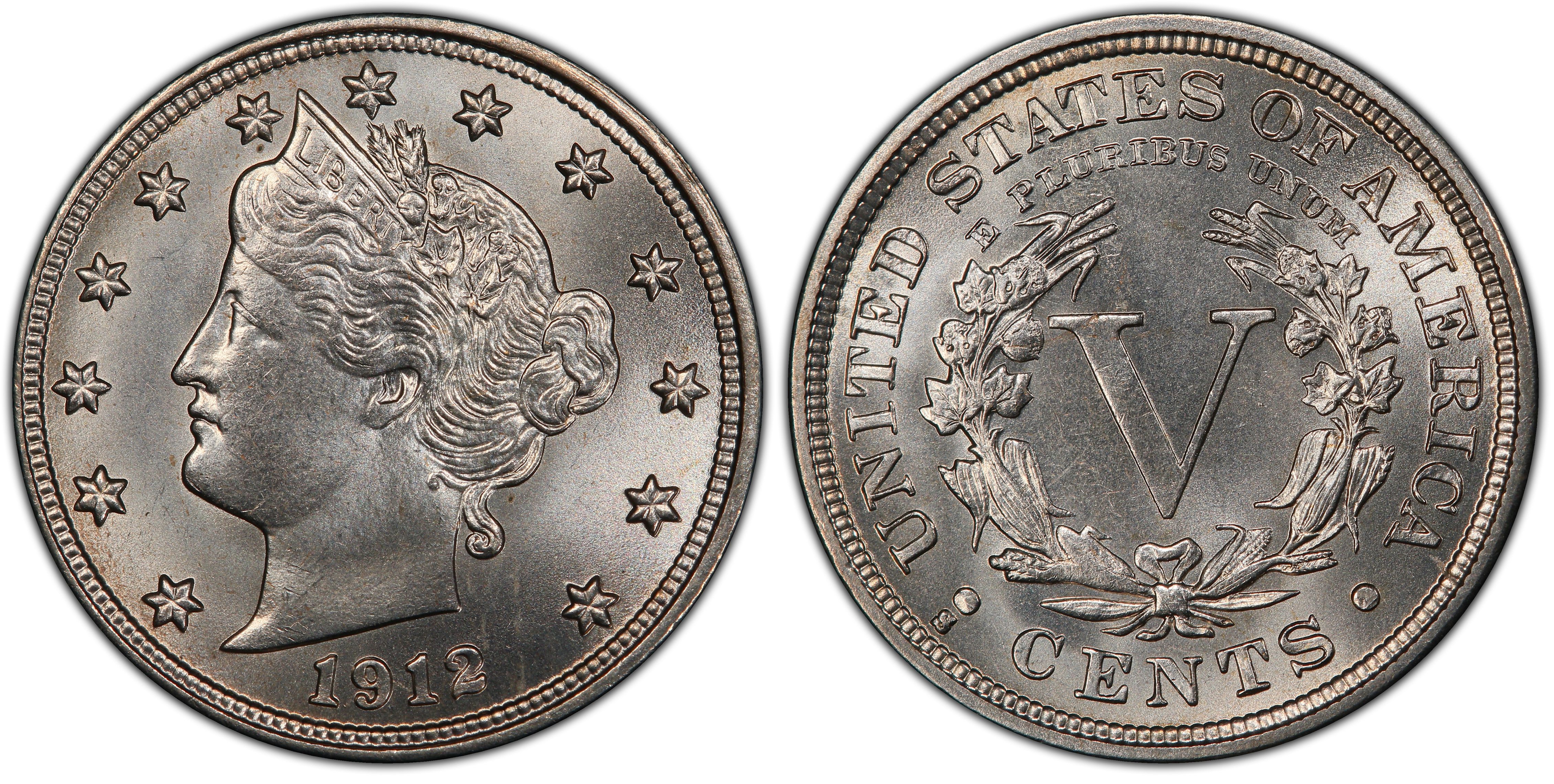 #1 PCGS MS66+
Heritage Auctions, April 26, 2020, Lot 3238 - $5,160. Virtually mark-free, save for faint contact marks on Liberty’s neck and hair, with a single toning spot situated below Star 6. A small tick is noted below the 'UR' in PLURIBUS. The surfaces exhibit flashy, brilliant luster throughout. |
 #1 PCGS MS66+
Heritage Auctions, December 15, 2024, Lot 3008 - $15,000. "The GG V's Collection" (PCGS Set Registry). Champagne-gold patination with hints of steel blue. |
 #1 PCGS MS66+
Intense rainbow toning defines this specimen. The obverse is dominated by vibrant gold and seafoam hues, while the reverse echoes this palette and introduces a vivid raspberry coloration along the lower-left periphery. |
The 1912-S Liberty Head Nickel
The Liberty Head Nickel’s days were numbered as it entered the 1912 production year. Mint leadership had been angling to refresh the five-cent design since at least 1909, though Chief Engraver Charles Barber’s own Washington Head proposals failed to generate enthusiasm. In May 1911, Treasury Secretary Franklin MacVeagh reached out to sculptor James Earle Fraser to solicit sketches for a new design. Initial models were sent to the Mint in July 1912, alongside electrotype patterns that Fraser had commissioned from the Medallic Art Company to produce privately—a strategic move to ensure his artistic vision would not be "Barberized" or otherwise tampered with by the Mint’s engraving department.
Fraser’s design was largely finalized by August 1912. Despite the imminent arrival of the Buffalo Nickel, the Treasury authorized the dispatch of 1912-dated Liberty Head dies to Denver and San Francisco. This marked a historic milestone: 1912 was the first year either branch mint struck the five-cent nickel denomination.
The 1912-S Liberty Head Nickel’s (#3875) meager mintage of 238,000 is explained by its late start; production did not begin until December 24, 1912. It followed the 1908-S Indian Head Cent (BN #2232) as the second "minor" coin struck at the San Francisco Mint. This set in motion a period of roughly 40 years during which San Francisco served the West Coast as a fully functioning facility, striking whichever denominations were required by commerce.
In The Complete Guide to Shield & Liberty Head Nickels, authors Gloria Peters and Cynthia Mohon note that a slight bulge on the lower-left obverse, near Liberty’s neck, is a common diagnostic for this issue. This feature can be difficult to discern in photographs, making PCGS authentication essential. The 1912-S is a frequent target for counterfeiters, who often "add" an "S" mintmark to common Philadelphia-struck specimens.
Nearly all known examples exhibit strike weakness on the left ear of corn on the reverse; in many instances, the ear appears completely flat. The overall "softness" of the 1912-S, compared to the crisp strikes usually seen from Philadelphia, likely resulted from the San Francisco Mint’s relative inexperience with the specific pressures required for the hard cupronickel alloy. Nevertheless, a truly high-grade 1912-S nickel with original luster is a centerpiece of any advanced 20th-century collection.
* * *