1999-P 25C Pennsylvania (Regular Strike)
Series: (None)

PCGS MS68+
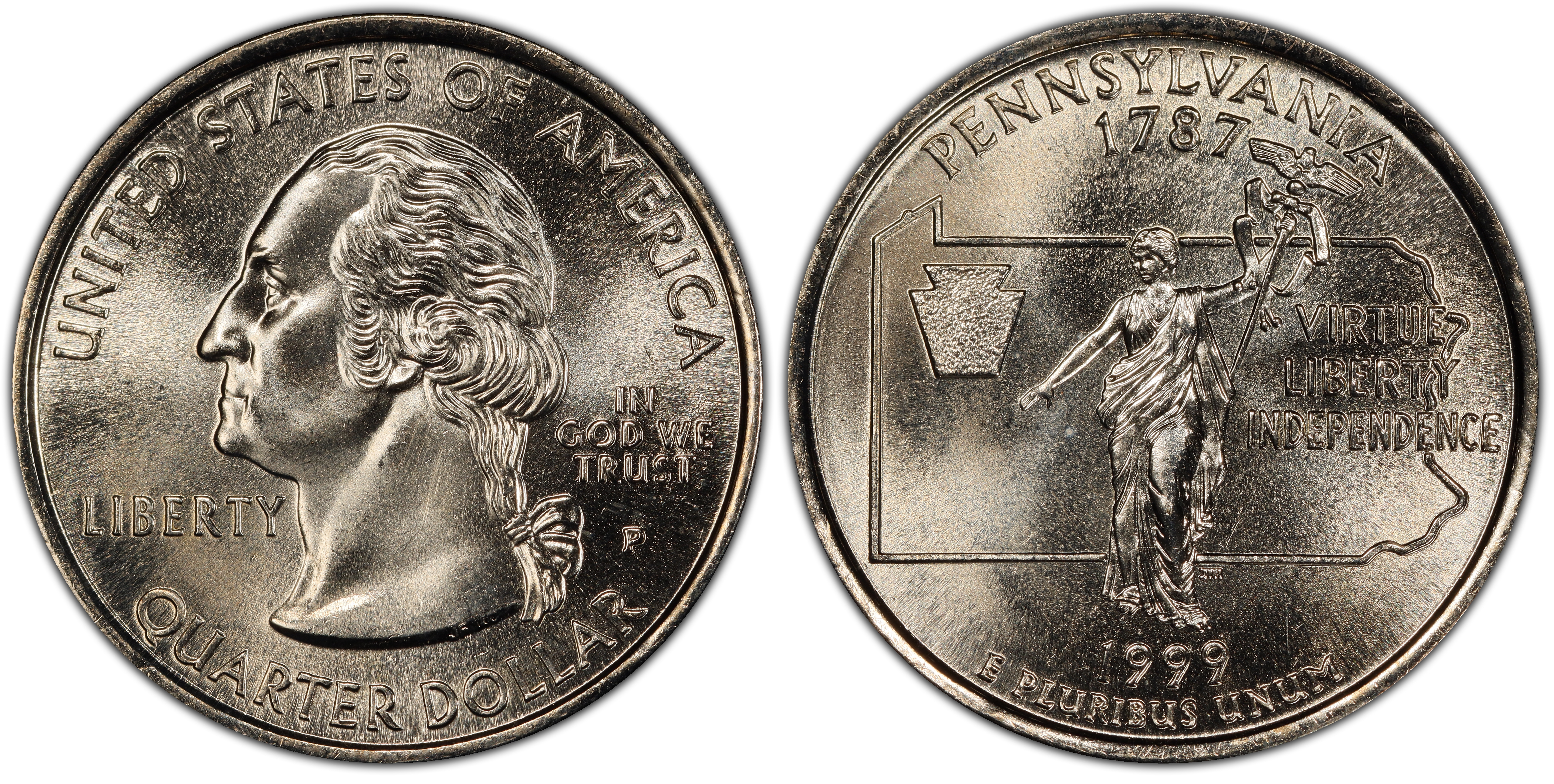
PCGS MS68
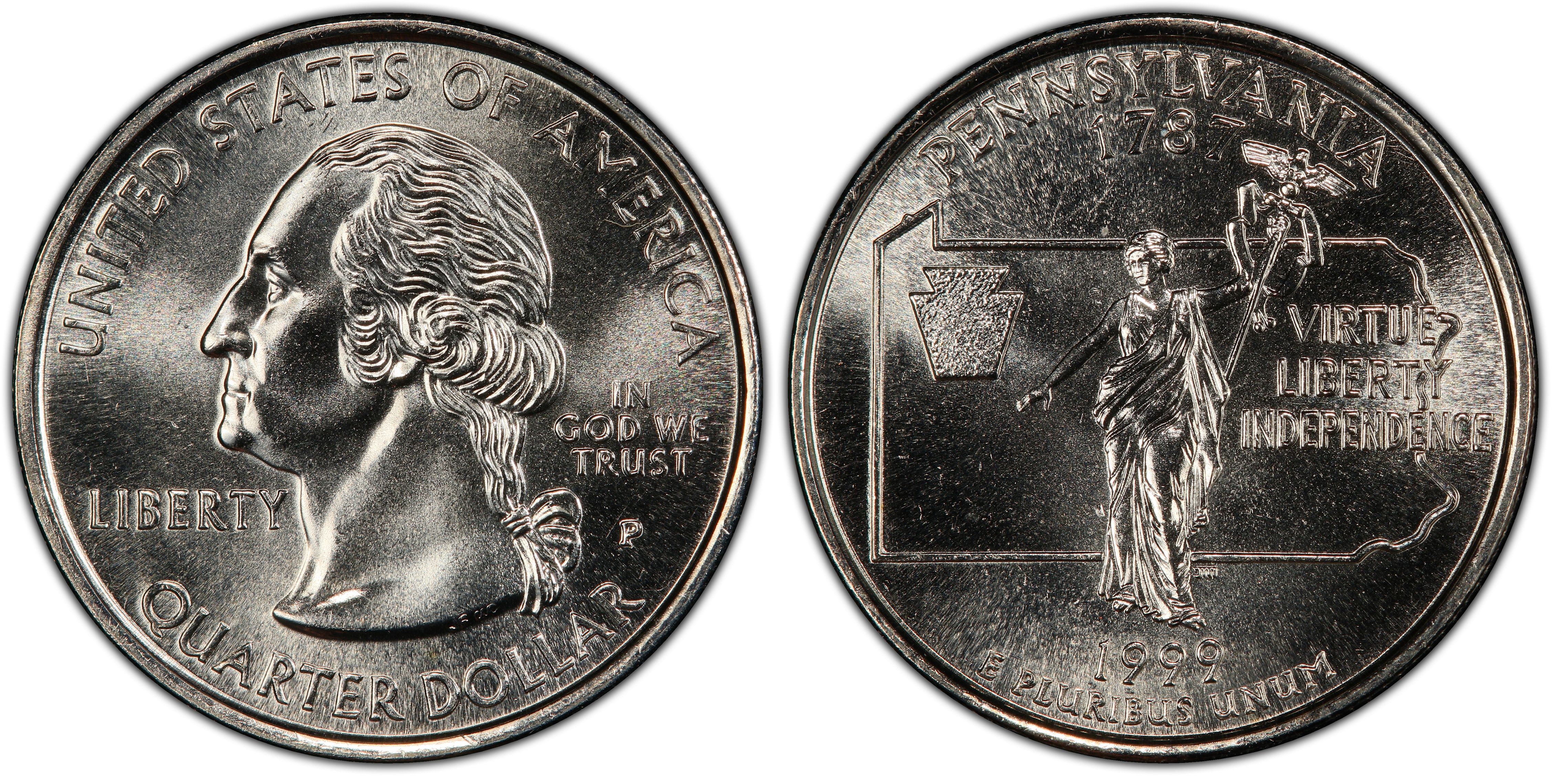
PCGS MS68
- PCGS #:
- 5946
- Designer:
- John Flanagan/John Mercanti
- Edge:
- Reeded
- Diameter:
- 24.30 millimeters
- Weight:
- 5.67 grams
- Mintage:
- 349,000,000
- Mint:
- Philadelphia
- Metal:
- 75% Copper, 25% Nickel
- Auction Record:
- $10,200 • MS67 • 10-24-2006 • Heritage Auctions
Major Varieties
- 1999-P 25C Pennsylvania
Go To Grade
Current Auctions - PCGS Graded
Current Auctions - NGC Graded
For Sale Now at Collectors Corner - PCGS Graded
For Sale Now at Collectors Corner - NGC Graded
Rarity and Survival Estimates Learn More
| Survival Estimate | |
|---|---|
| All Grades | 261,750,000 |
| 60 or Better | 78,525,000 |
| 65 or Better | 39,262,500 |
| Numismatic Rarity | |
|---|---|
| All Grades | R-1.0 |
| 60 or Better | R-1.0 |
| 65 or Better | R-1.0 |
| Relative Rarity By Type All Specs in this Type | |
|---|---|
| All Grades | N/A |
| 60 or Better | N/A |
| 65 or Better | N/A |
| Relative Rarity By Series All Specs in this Series | |
|---|---|
| All Grades | N/A |
| 60 or Better | N/A |
| 65 or Better | N/A |
Condition Census What Is This?
| #1 MS68 PCGS grade |
| #1 MS68 PCGS grade |
| #1 MS68 PCGS grade |
| #1 MS68 PCGS grade |
| #1 MS68 PCGS grade |
| #1 MS68 PCGS grade |
| #1 MS68 PCGS grade |
| #1 MS68 PCGS grade |
| #1 MS68 PCGS grade |
| #1 MS68 PCGS grade |
Jaime Hernandez:
The Pennsylvania State Quarter is the second design which was introduced in the 50 States Quarter Program.
The Pennsylvania State Quarters were released on March 8, 1999. The state of Pennsylvania was admitted into the Union on December 12, 1787.
The reverse design features an outline of Pennsylvania and the Commonwealth Statue along with the legends Virtue, Liberty and Independence.
Pennsylvania circulation strike quarters were produced at Philadelphia and at the Denver Mints. Philadelphia coins will display a P mint mark and the Denver coins will display a D mint mark.
Pennsylvania Clad and Silver Proof Quarters where also produced by the U.S Mint. Both Clad and Silver Proof Quarters will contain an S mint mark, since they were produced at the San Francisco Mint. Proof Clad Quarters will display copper on the reeded edge. Silver Quarters will display a silver looking edge.
The Pennsylvania State Quarters were released on March 8, 1999. The state of Pennsylvania was admitted into the Union on December 12, 1787.
The reverse design features an outline of Pennsylvania and the Commonwealth Statue along with the legends Virtue, Liberty and Independence.
Pennsylvania circulation strike quarters were produced at Philadelphia and at the Denver Mints. Philadelphia coins will display a P mint mark and the Denver coins will display a D mint mark.
Pennsylvania Clad and Silver Proof Quarters where also produced by the U.S Mint. Both Clad and Silver Proof Quarters will contain an S mint mark, since they were produced at the San Francisco Mint. Proof Clad Quarters will display copper on the reeded edge. Silver Quarters will display a silver looking edge.