

PCGS PR68

PCGS PR68
- PCGS #:
- 5976
- Designer:
- John Flanagan
- Edge:
- Reeded
- Diameter:
- 24.30 millimeters
- Weight:
- 6.30 grams
- Mintage:
- 5,542
- Mint:
- Philadelphia
- Metal:
- 90% Silver, 10% Copper
- Auction Record:
- $18,400 • PR68 • 07-27-2005 • Heritage Auctions
Major Varieties
- 1937 25C
Rarity and Survival Estimates Learn More
| Survival Estimate | |
|---|---|
| All Grades | 4,500 |
| 60 or Better | 4,500 |
| 65 or Better | 2,500 |
| Numismatic Rarity | |
|---|---|
| All Grades | R-4.1 |
| 60 or Better | R-4.1 |
| 65 or Better | R-4.5 |
| Relative Rarity By Type All Specs in this Type | |
|---|---|
| All Grades | 2 / 22 |
| 60 or Better | 2 / 22 |
| 65 or Better | 2 / 22 |
| Relative Rarity By Series All Specs in this Series | |
|---|---|
| All Grades | 2 / 22 |
| 60 or Better | 2 / 22 |
| 65 or Better | 2 / 22 |
Condition Census What Is This?
 #1 PCGS PR68
|
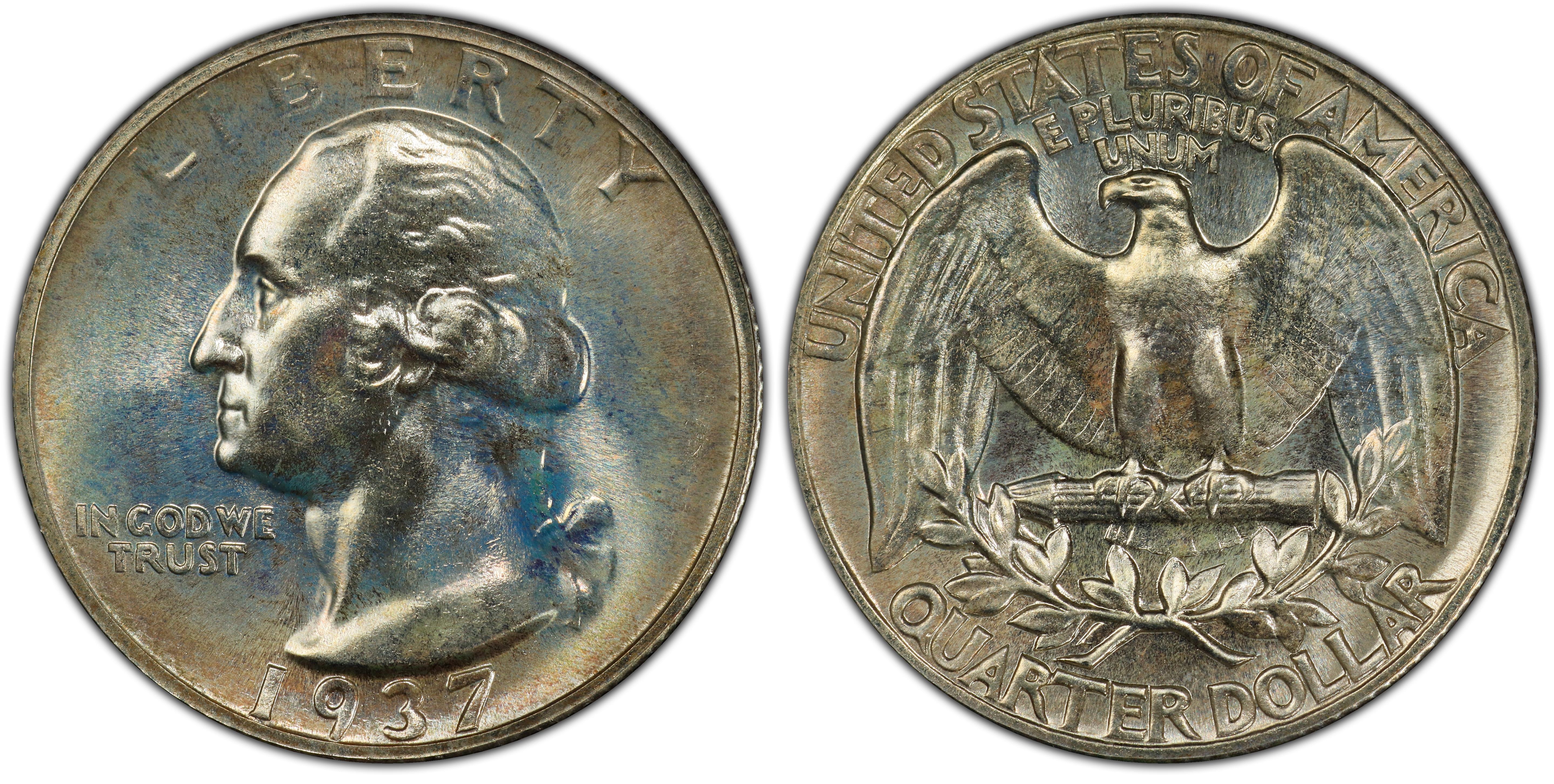 #1 PCGS PR68
Heritage Auctions, January 13, 2022, Lot 3411 – $11,700; "The CDF Collection" (PCGS Set Registry). Pale blue and peach-colored toning. |
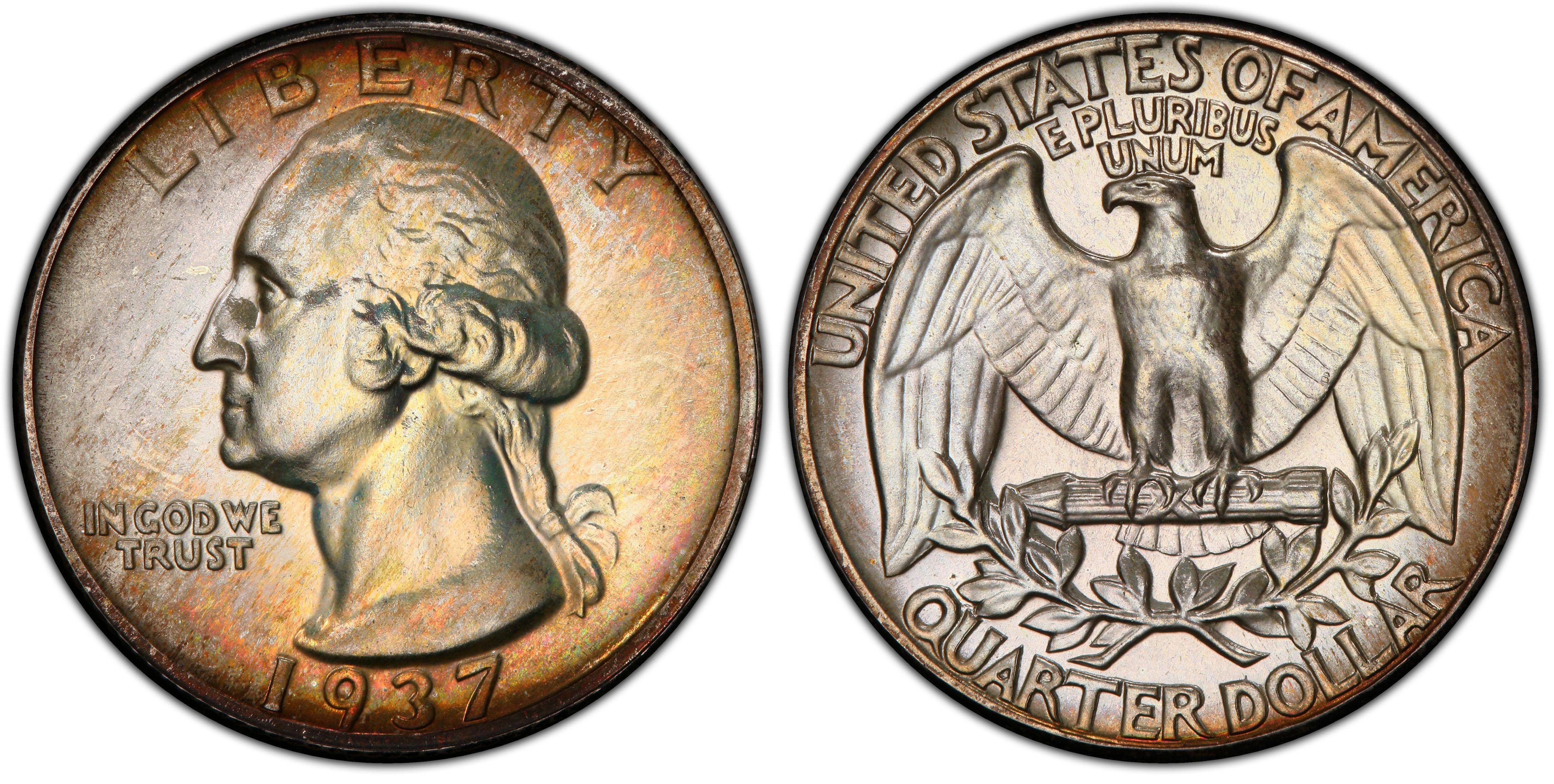 #1 PCGS PR68
GreatCollections, June 6, 2021, Lot 998485 - $13,062.38; "The Two Bits Collection" (PCGS Set Registry). Thin layer of gold toning covers both sides, with ice blue and purple centers, and tan-red coloration along the rims. |
| #1 PCGS PR68 |
 #1 PCGS PR68
GreatCollections, November 17, 2019, Lot 748763 - $6,197.63; Dr. John O. Phillips; "The Dr. John O. Phillips Collection" (PCGS Set Registry). Ice blue and lilac centers with gold patination along the periphery. |
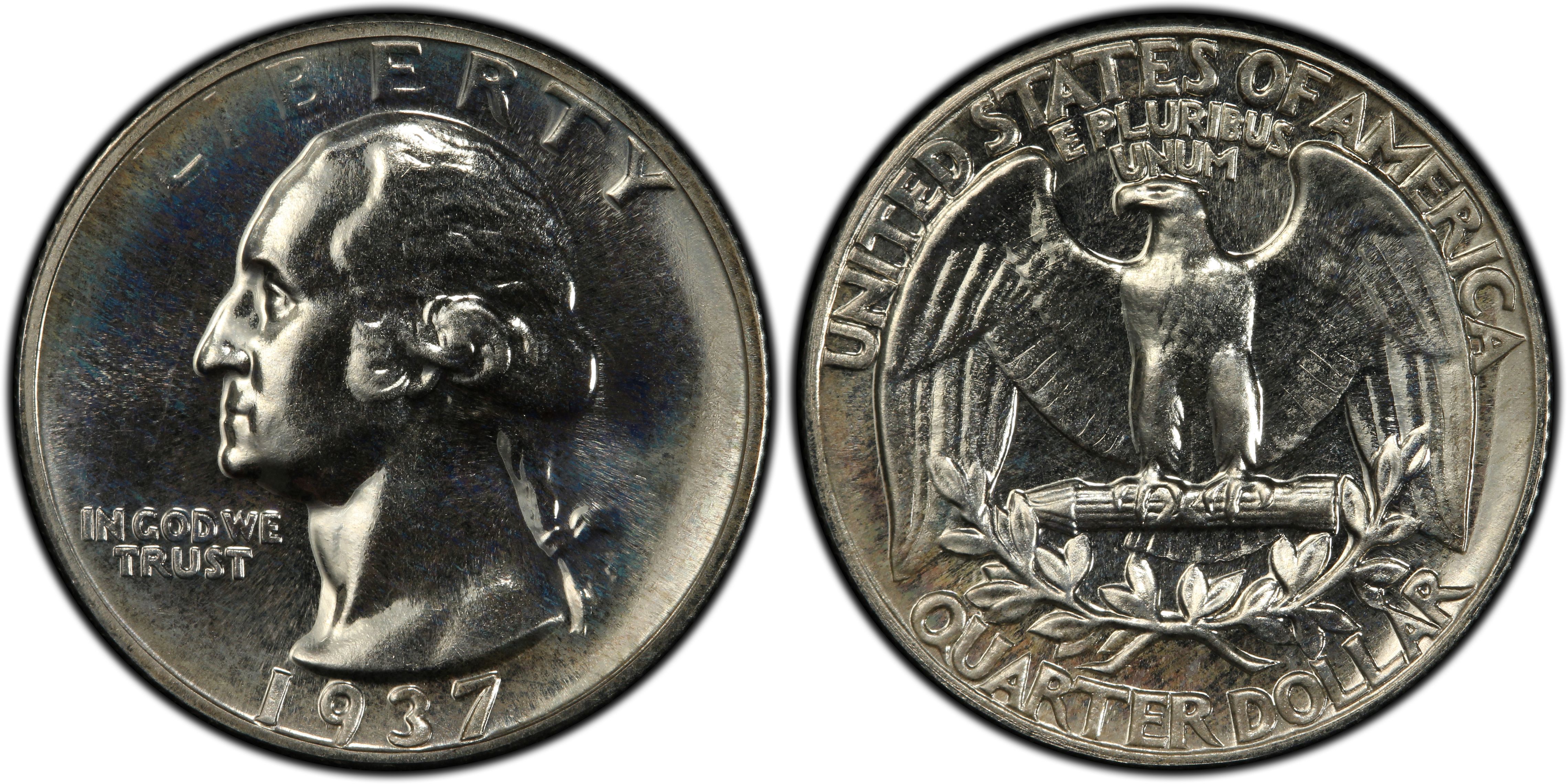 #1 PCGS PR68
Heritage Auctions, April 23, 2015, Lot 5051 – $7,637.50. Blue and gold toning around the periphery. |
|
#1 PCGS PR68
"The Daniel D. Biddle Collection, Part One," Heritage Auctions, September 1, 2005, Lot 3056 - $13,800; Heritage Auctions, September 1, 2008, Lot 914 - $11,500; "The Big Stone Collection" (PCGS Set Registry). Lightly toned throughout. |
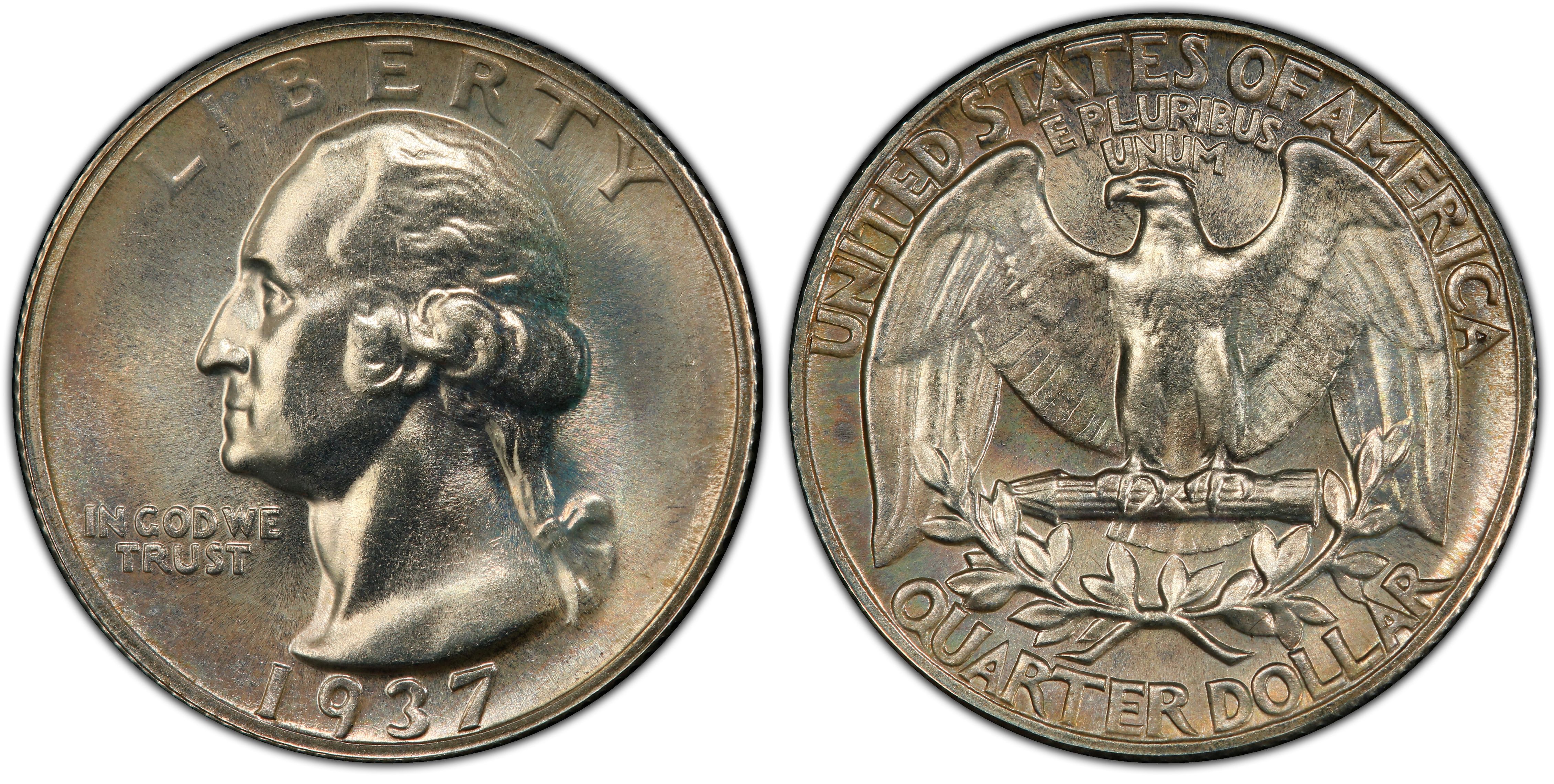 #1 PCGS PR68
Dell Loy Hansen; "The D.L. Hansen Complete U.S. Proof Coins (1801-1964) Collection" (PCGS Set Registry). Iridescent toning in gold, purple, and aqua. |
|
#1 PCGS PR68
"The Clay King Collection" (PCGS Set Registry). Lightly toned. |
|
#1 PCGS PR68
"The Uncle Bill's DCAMs & Proofs Collection" (PCGS Set Registry). |
|
#1 PCGS PR68
Thin layer of toast-colored toning; diagonal brown streak from Washington's chin to rim. |
 #1 PCGS PR68
|
The 1937 Washington Quarter Proof
The Washington Quarter underwent several revisions following its 1932 release. Most famously, the motto "IN GOD WE TRUST" was reworked twice in 1934. Less well known are the changes made in 1937 to accommodate Proof production.
This year marked the birth of the modern Proof production method at the United States Mint. For the first time, Proof dies were specially prepared for that specific purpose rather than being repurposed business-strike dies. Flanagan’s original design precipitated this change because critical details were often lost during the traditional die-polishing process.
To create these dedicated Proof dies, the Mint developed a new master hub featuring reinforced lettering and a lowered field to ensure a crisper strike. Numismatic researcher Herb Hicks discovered this transition, detailing it in the February 1986 issue of The Numismatist in his article, "The Washington Quarter Reverse: A Die-Variety Bonanza."
I am proud to say that Herb and I became friends later in his life. He was a top-tier numismatist whose discriminating eye for minor die details was even admired by the legendary Walter Breen.
Collecting the 1937 Washington Quarter Proof
While the official Mint figure for the 1937 Washington Quarter Proof (#5976) is 5,542 pieces, this number reflects distribution rather than total mintage. At the time, collectors could purchase Proof coins individually or as part of a set. Research by Roger W. Burdette suggests a gross mintage closer to 7,390, with roughly 5,505 net sales after accounting for rejected pieces.
When first struck, all examples exhibited deep mirrored fields and a fully brilliant finish; none are known to exist with Cameo contrast. Nearly 90 years after their issue, most surviving examples have developed some form of patination, ranging from the champagne-gray haze typical of vintage Proofs to, in rarer cases, vivid toning.
PCGS reports over 2,000 grading events for this date, with the majority of examples falling between PCGS PR64 and PCGS PR66. While the issue remains relatively affordable in premium Gem grades, examples in the "Top Pop" grade of PCGS PR68 are highly sought after by Set Registry participants.
* * *