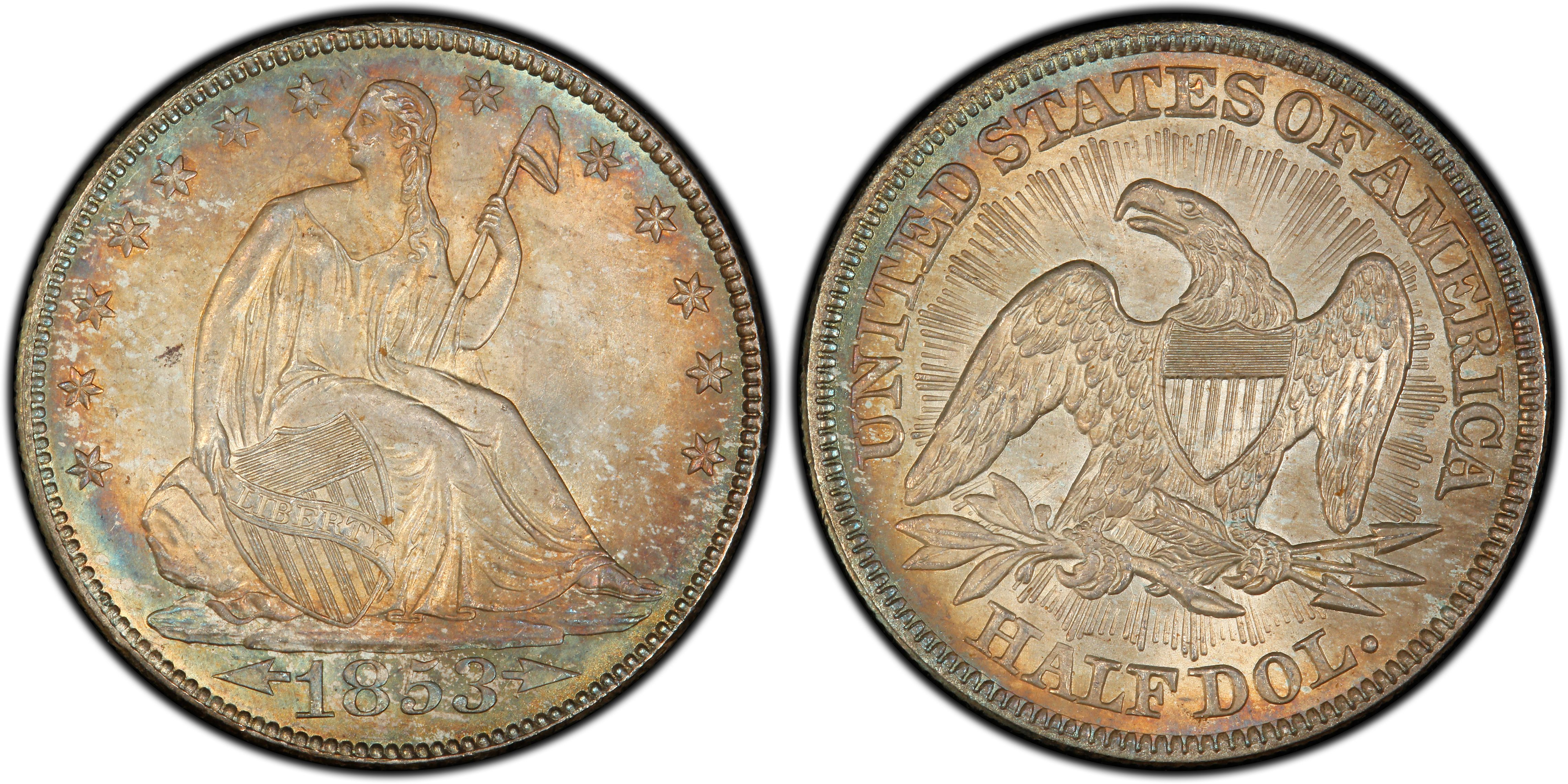
1853 50C Arrows & Rays (Regular Strike)
Series: Liberty Seated Half Dollars 1839-1891
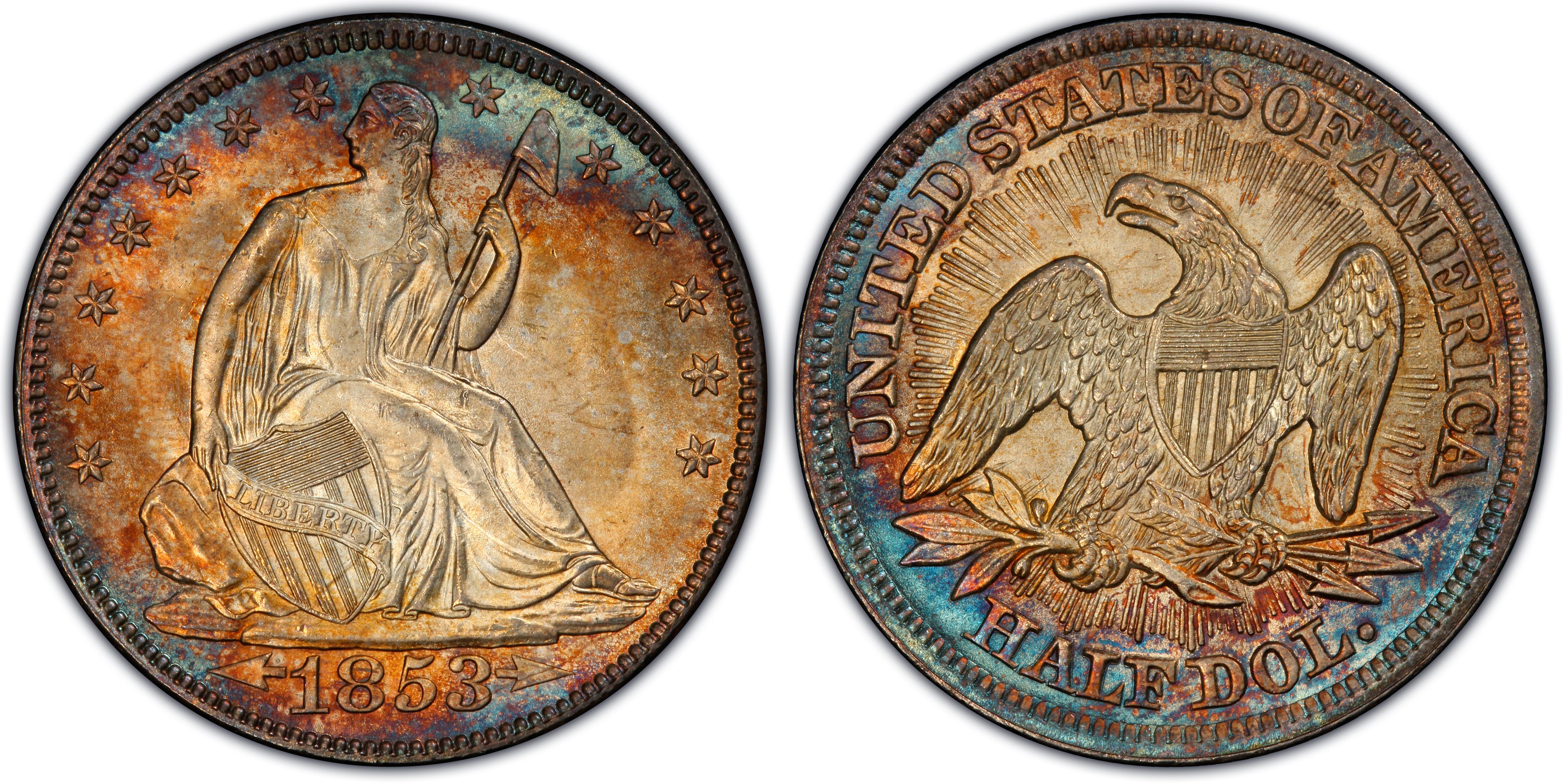
PCGS MS67
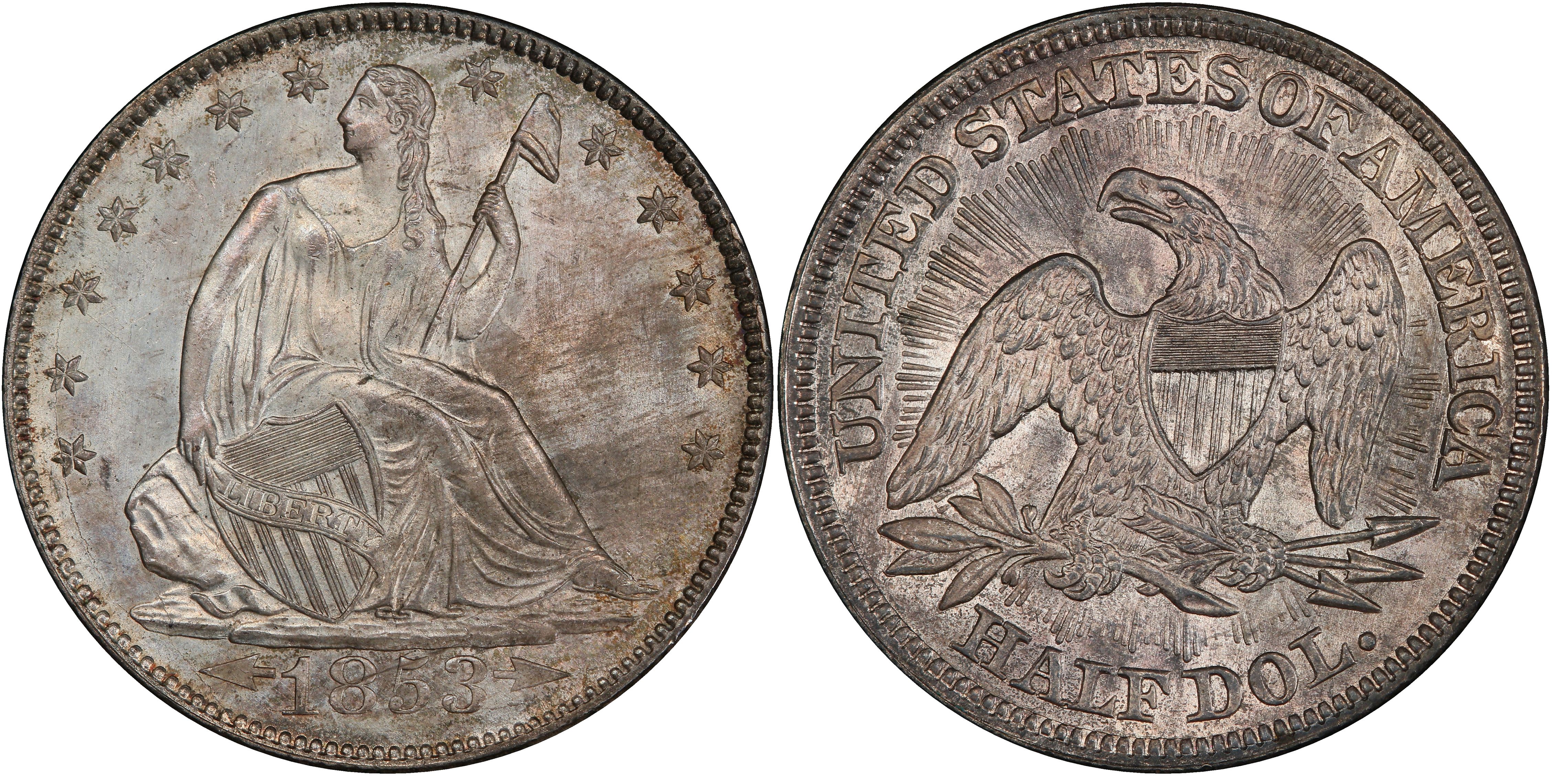
PCGS MS67

PCGS MS66+
- PCGS #:
- 6275
- Designer:
- Thomas Sully/Christian Gobrecht
- Edge:
- Reeded
- Diameter:
- 30.00 millimeters
- Weight:
- 12.40 grams
- Mintage:
- 3,532,708
- Mint:
- Philadelphia
- Metal:
- 90% Silver, 10% Copper
- Auction Record:
- $94,000 • MS66+ • 07-17-2015 • Stack's Bowers
Major Varieties
- 1853 50C Arrows & Rays
Rarity and Survival Estimates Learn More
| Survival Estimate | |
|---|---|
| All Grades | 6,000 |
| 60 or Better | 600 |
| 65 or Better | 30 |
| Numismatic Rarity | |
|---|---|
| All Grades | R-3.8 |
| 60 or Better | R-5.8 |
| 65 or Better | R-8.9 |
| Relative Rarity By Type All Specs in this Type | |
|---|---|
| All Grades | 2 / 2 |
| 60 or Better | 2 / 2 |
| 65 or Better | 2 / 2 |
| Relative Rarity By Series All Specs in this Series | |
|---|---|
| All Grades | 126 / 126 |
| 60 or Better | 125 / 126 |
| 65 or Better | 83 / 126 TIE |
Condition Census What Is This?
|
#1 PCGS MS67
Bob R. Simpson Collection |
|
#1 PCGS MS67
|
| #3 PCGS MS66+ |
 #3 PCGS MS66+
Ed Hipps, 1979 - $25,000; "The Douglas C. Kaselitz Collection," Stack's Bowers, July 2015, Lot 5179 - $94,000. WB-101. |
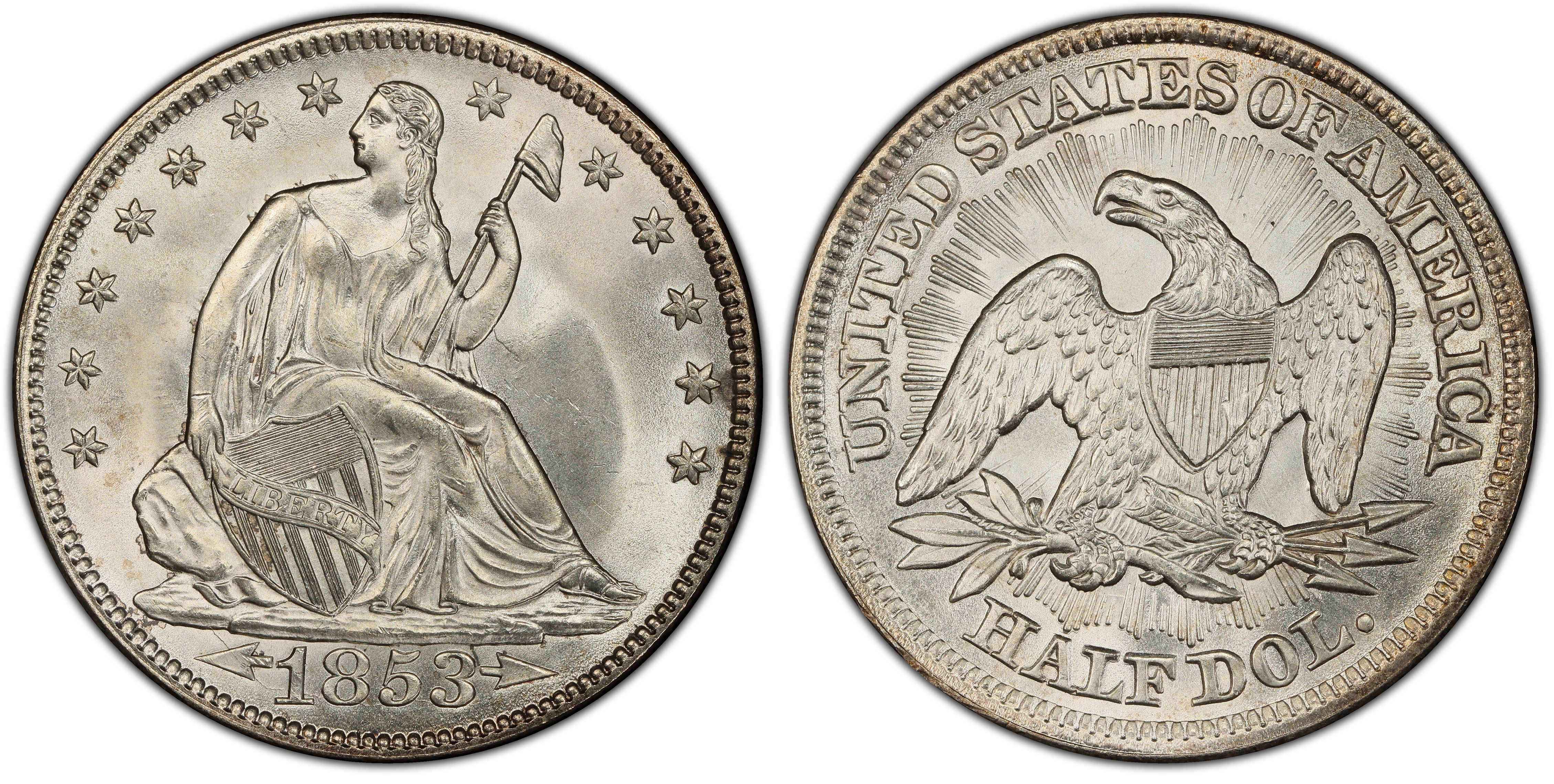 #3 PCGS MS66+
Heritage Auctions, September 2013, Lot 6436 - $76,375. Brilliant. |
 #3 Est. MS66+
As PCGS MS66+ #26193996. Legend Rare Coin Auctions, December 14, 2017, Lot 237 - $67,562.50; Dell Loy Hansen. This coin is not currently encapsulated in a PCGS holder. |
|
#3 PCGS MS66+
|
 #6 PCGS MS66
As NGC MS66 #957212-05. Dr. Claude E. Davis, M.D. ("The Foxfire Collection"), sold en bloc to the Pogue Family via Richard Burdick. As PCGS MS66 #38634057. "The D. Brent Pogue Collection, Part VII," Stack's Bowers, March 20, 2020, Lot 7289 - $38,400. WB-101. Intense rainbow toning. |
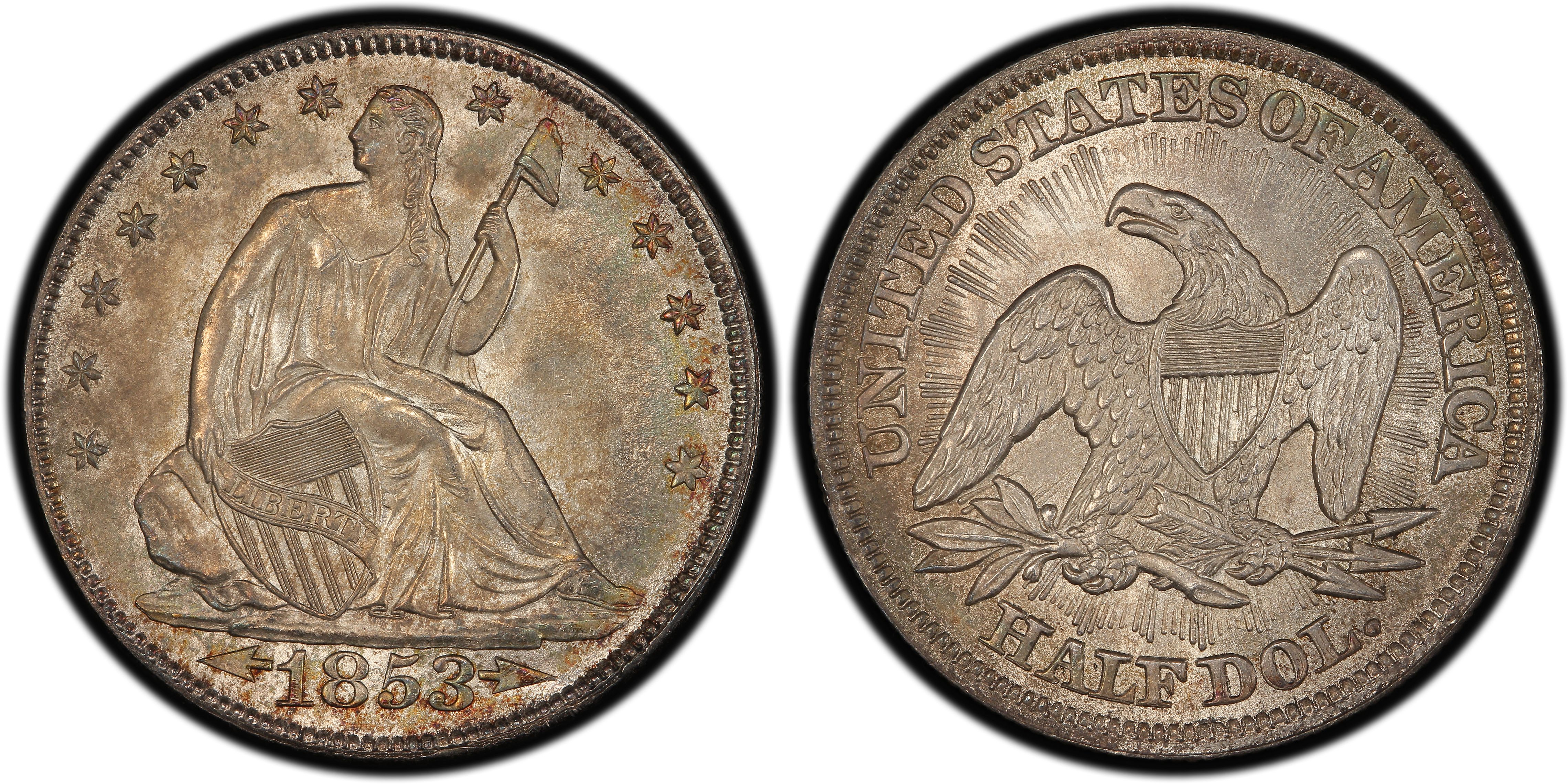 #6 PCGS MS66
"Colonel" E.H.R. Green; Green Estate to Eric P. Newman / B.G. Johnson - $5; Eric P. Newman. As NGC MS66 #2037663-028. "The Eric P. Newman Collection, Part II," November 15, 2013, Lot 33475 - $36,718.75. As PCGS MS66 #25340670. Heritage Auctions, August 2014, Lot 5584 - $42,593.75. FS-802. |
 #6 PCGS MS66
|
 #6 PCGS MS66
Mike Chipman. |
| #6 PCGS MS66 |
| #6 PCGS MS66 |
| #6 PCGS MS66 |
1853 Liberty Seated Half Dollar, Arrows & Rays
The influx of California gold drastically disrupted the gold-to-silver ratio, making circulating silver coins worth more as bullion than as face value. Speculators capitalized by melting silver coins and exchanging the metal for gold, triggering a severe nationwide shortage that left only copper cents, three-cent silver pieces, and gold coins in active circulation.
To resolve the crisis, U.S. Mint Director George N. Eckert urged Congress to lower the weight and total silver content of every silver coin denomination except the dollar. Congress complied, passing the Coinage Act of February 21, 1853.
Design Changes & Production
The Act reduced the half dollar’s weight from 13.36 to 12.44 grams, effectively eliminating the profit incentive for wholesale melting. To signal the new weight standard, Eckert ordered arrowheads added beside the date and a halo of rays added to the reverse. The first coins featuring this modified design were Proofs (#6405) struck on March 3, 1853.
Business-strike production began on May 21, with an initial delivery of 80,000 pieces from the Philadelphia Mint, which struck this type exclusively for the remainder of the year. However, the high-relief rays drastically shortened die longevity. Philadelphia required 49 obverse and 53 reverse dies to produce 3,532,708 coins, while the New Orleans Mint consumed 26 obverse and 19 reverse dies to strike 1,328,000 pieces.
Collecting the 1853 Liberty Seated Half Dollar
The 1853 Liberty Seated Half Dollar with Arrows and Rays (#6275) remains immensely popular with collectors as a distinct, one-year design type. Given its larger production run, the Philadelphia issue is slightly more affordable than the 1853-O (#6276) in circulated grades, and significantly more accessible in Mint State.
* * *
Regency XVIII Preview | Legend Rare Coin Auctions | September 29, 2016
(Starts at 7:04)