1873 50C No Arrows (Proof)
Series: Liberty Seated Half Dollars 1839-1891

PCGS PR67+
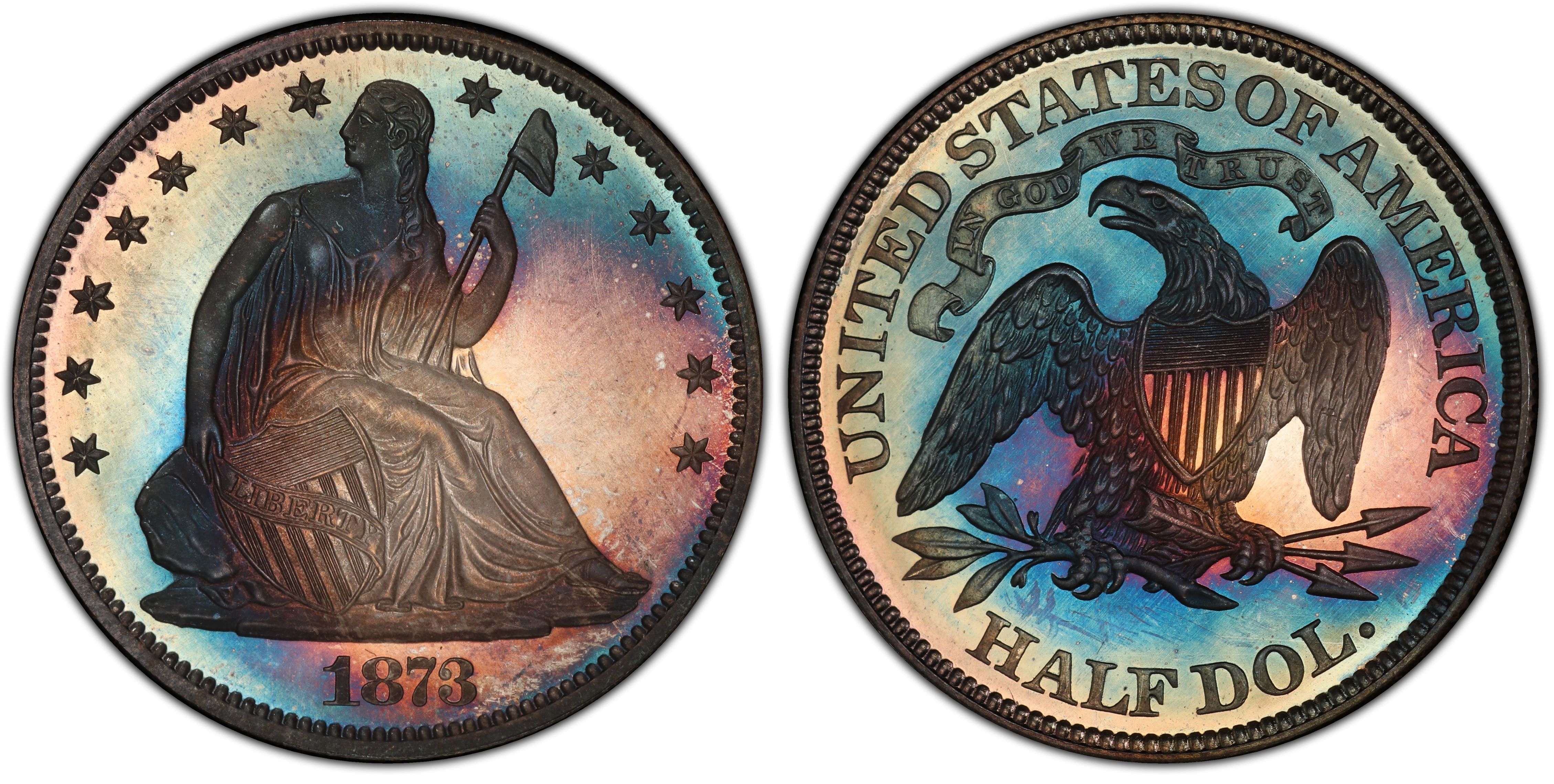
PCGS PR67+
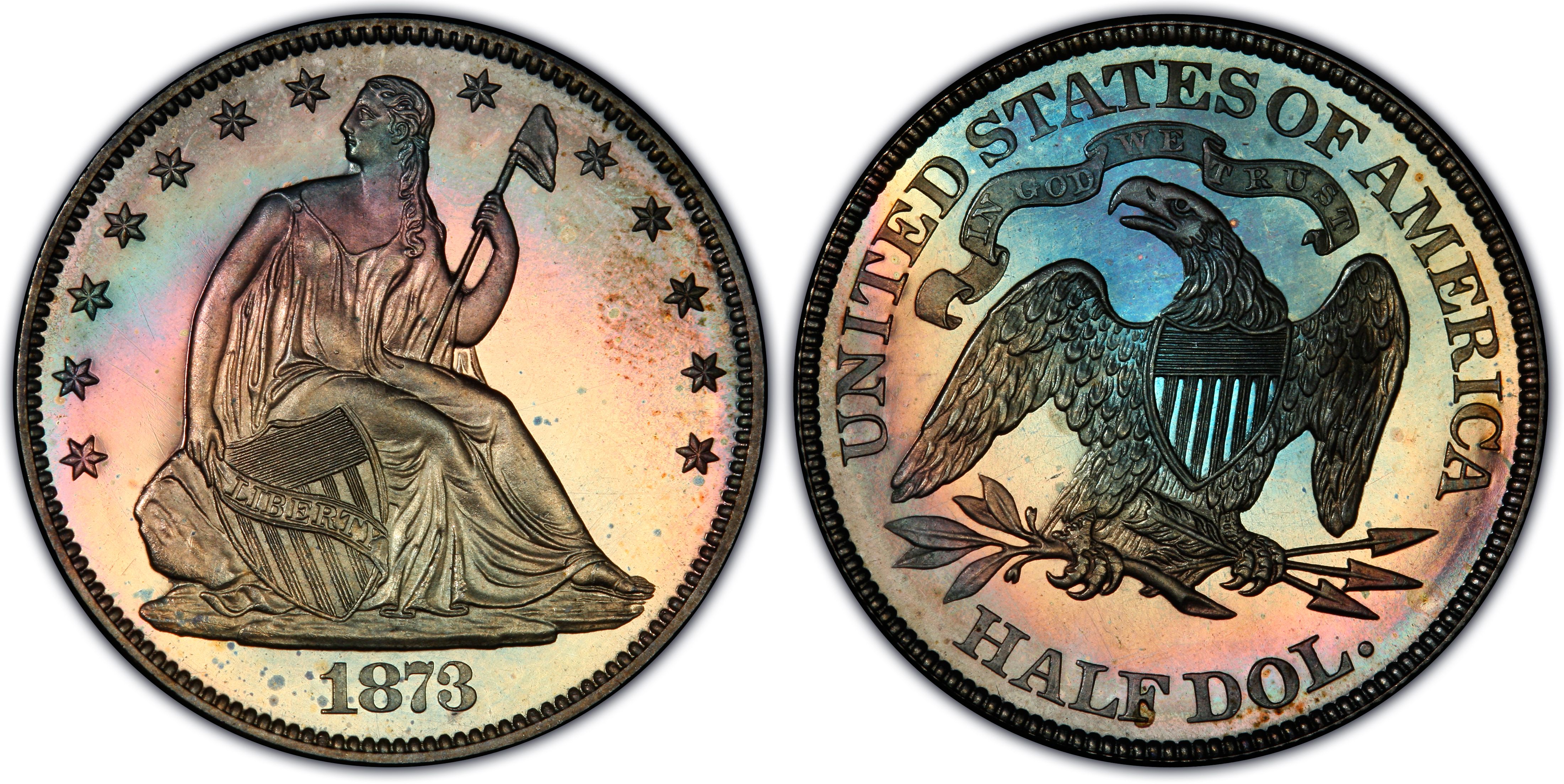
PCGS PR67+
- PCGS #:
- 6431
- Designer:
- Thomas Sully/Christian Gobrecht
- Edge:
- Reeded
- Diameter:
- 30.00 millimeters
- Weight:
- 12.40 grams
- Mintage:
- 600
- Mint:
- Philadelphia
- Metal:
- 90% Silver, 10% Copper
- Auction Record:
- $27,600 • PR67 • 05-29-2007 • Goldberg Auctioneers
Rarity and Survival Estimates Learn More
| Survival Estimate | |
|---|---|
| All Grades | 525 |
| 60 or Better | 500 |
| 65 or Better | 60 |
| Numismatic Rarity | |
|---|---|
| All Grades | R-5.9 |
| 60 or Better | R-6.0 |
| 65 or Better | R-8.4 |
| Relative Rarity By Type All Specs in this Type | |
|---|---|
| All Grades | 5 / 25 TIE |
| 60 or Better | 2 / 25 TIE |
| 65 or Better | 12 / 25 |
| Relative Rarity By Series All Specs in this Series | |
|---|---|
| All Grades | 34 / 55 TIE |
| 60 or Better | 30 / 55 TIE |
| 65 or Better | 37 / 55 |
Condition Census What Is This?
|
#1 PR67+ PCGS grade
Phil Kaufman Collection, Part III - Heritage 1/2003:7216, $5,635 - American Numismatic Rarities 8/2004:459, $12,650 - Bob R. Simpson Collection - Heritage 1/2016:5380, $14,688 |
 #2 PR67 PCGS grade
Heritage 1/2017:4413, $10,575 |
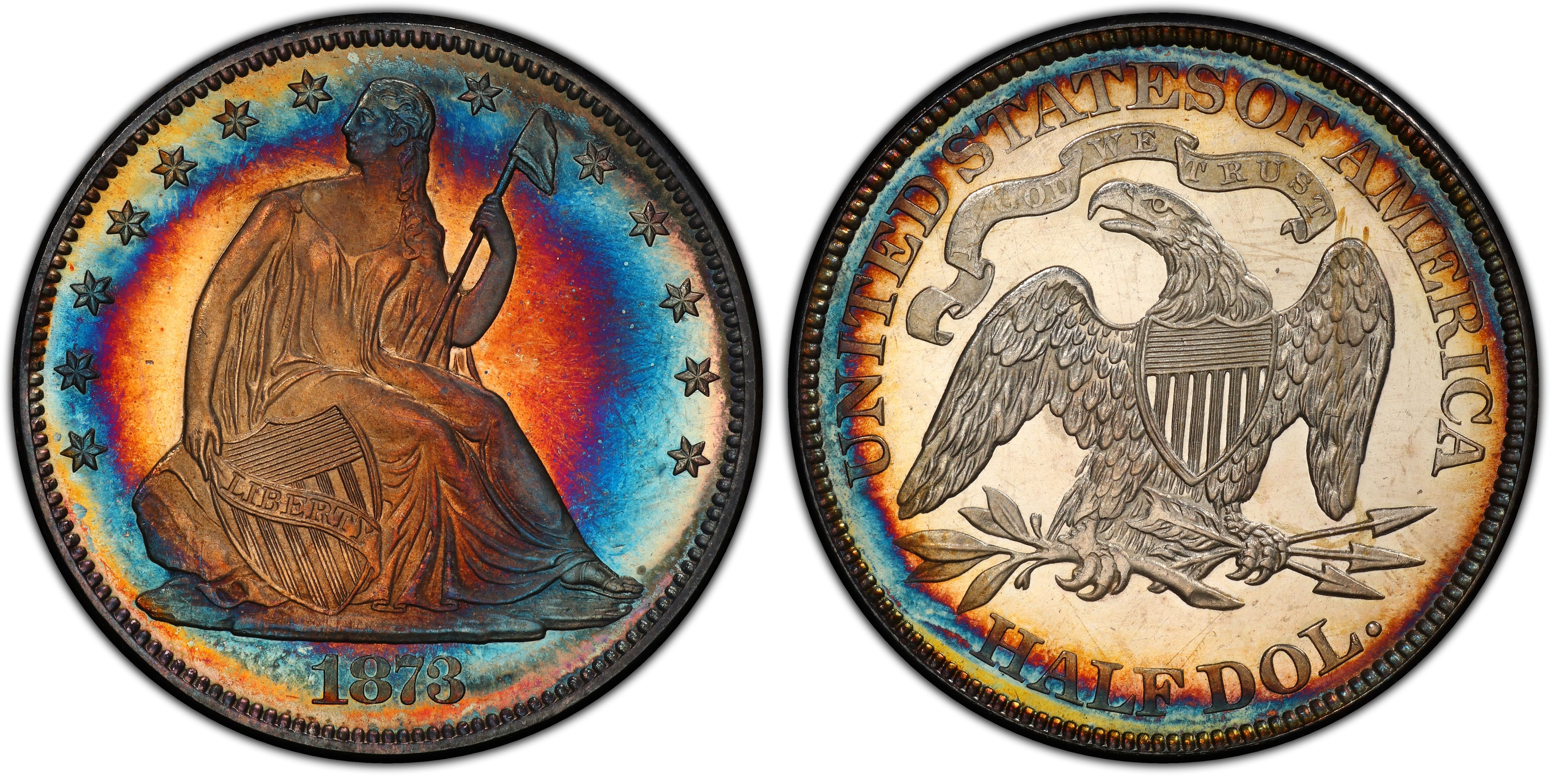 #2 PR67 PCGS grade
|
| #2 PR67 PCGS grade |
| #2 PR67 PCGS grade |
| #2 PR67 PCGS grade |
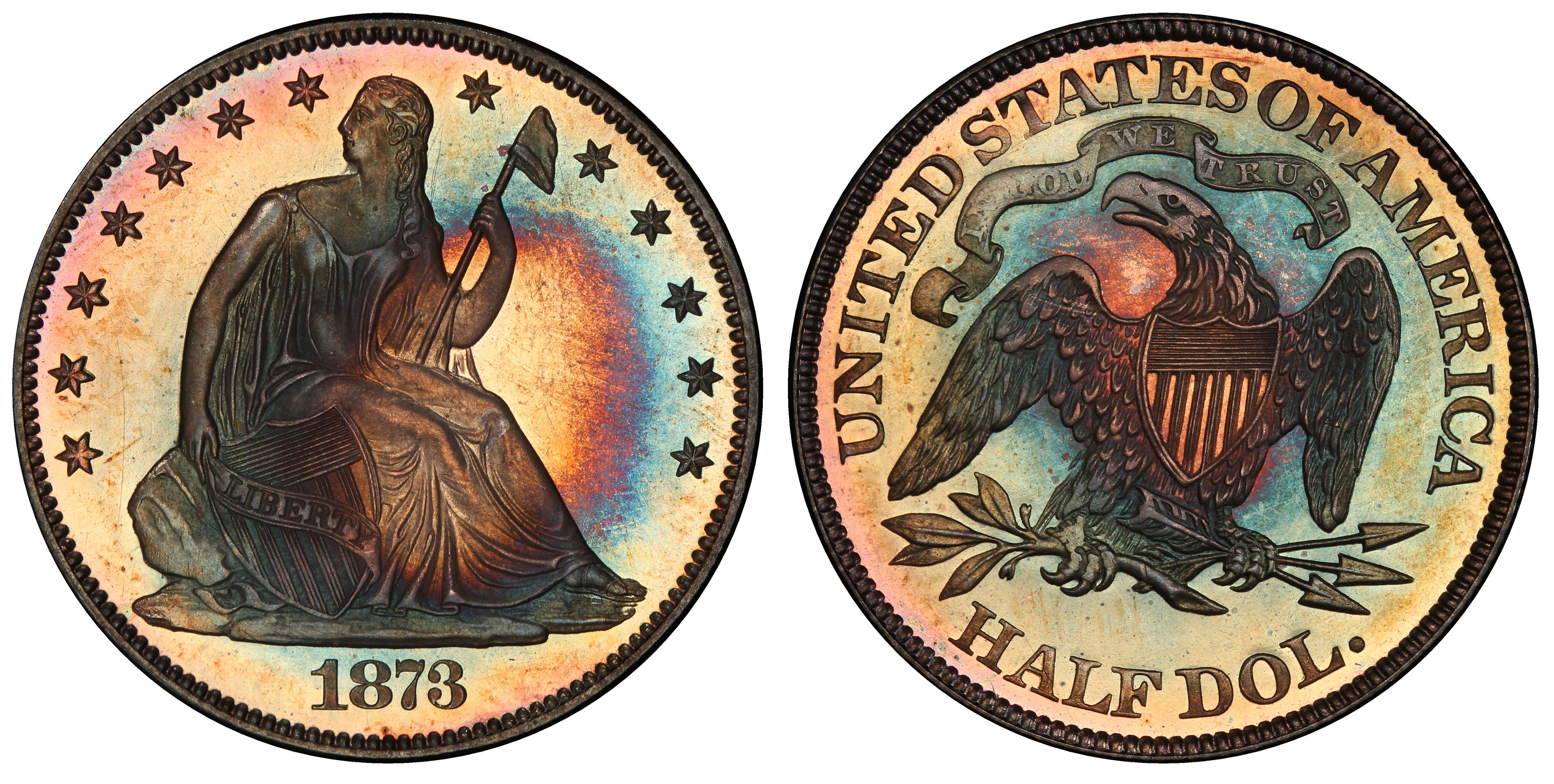 #7 PR66+ PCGS grade
“Chrismor” Collection (PCGS Set registry) - D.L. Hansen Collection |
 #7 PR66+ PCGS grade
Heritage 6/2015:3993, $8,813 - Heritage 3/2016:4908, $4,465 - Heritage 9/2016:5517, $7,638 |
| #9 PR66 PCGS grade |
| #9 PR66 PCGS grade |
In the beginning of 1873, emloyees at the Philadelphia Mint began striking Proof Half Dollars. The first versions were of the No Arrows "Close 3" variety, so-called because the balls of the 3 were so close to each other that they resembled an 8. This was amended later in the year, but not until after the Mint produced 600 Proofs. According to researchers Wiley and Bugert, two different die pairs were used to strike all of the Close 3 Proofs -- a low average of 300 Proofs per die pair. No Open 3, No Arrows Half Dollars were made.
Today, the Proof 1873 Close 3 Half Dollars are fairly common and they can be found in most Proof grades, but especially in a range from PR62 to PR64. Gems are scarce, but it is not until PR67 that this date becomes truly rare. Cameo examples are common and their percentage of the total population will increase over time as more and more coins are regraded (PCGS and NGC did not recognize Cameo ro Deep Cameo examples for many years).
Regency XVII | Legend Rare Coin Auctions | May 19, 2016
(Starts at 5:57)