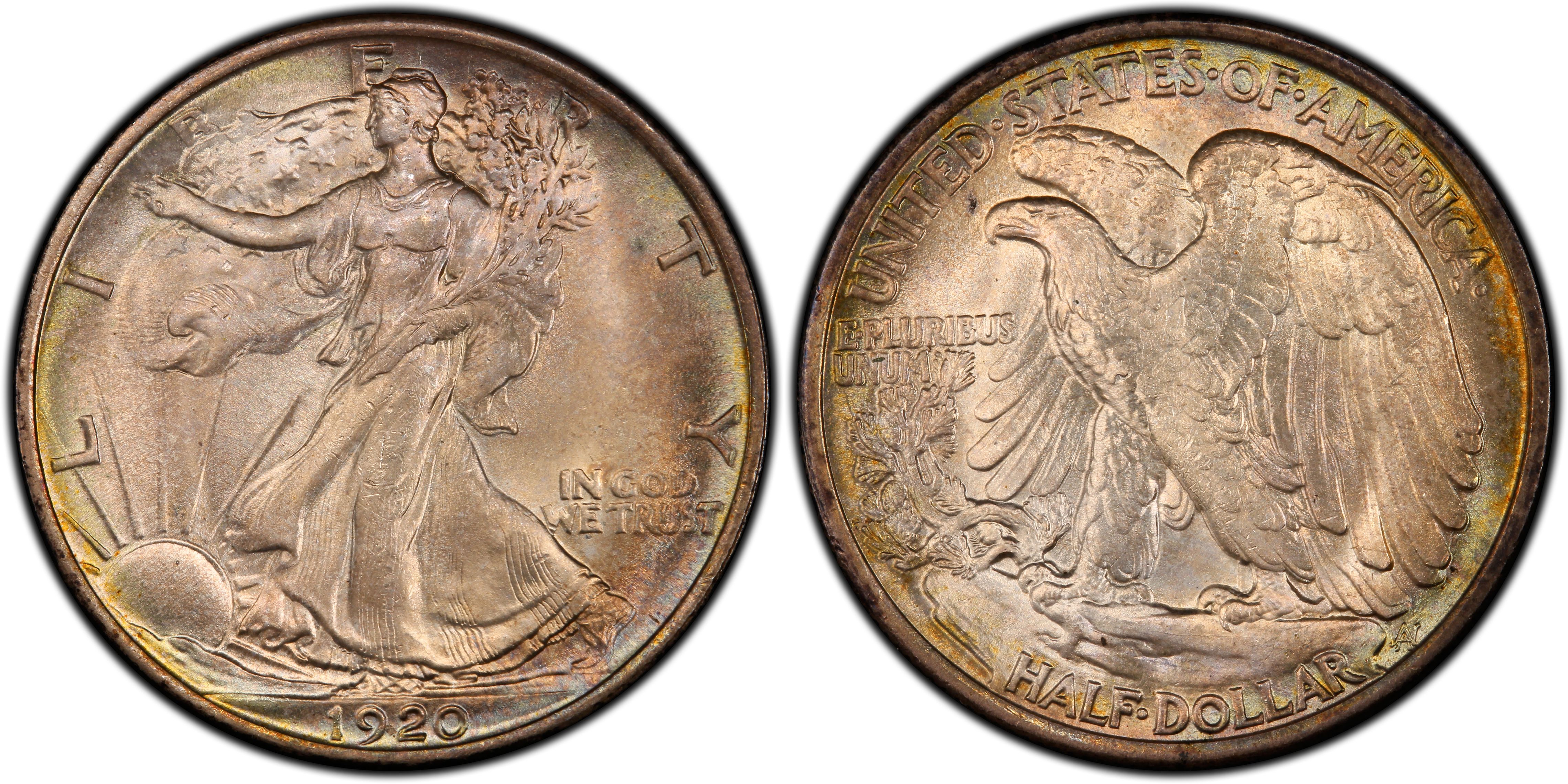
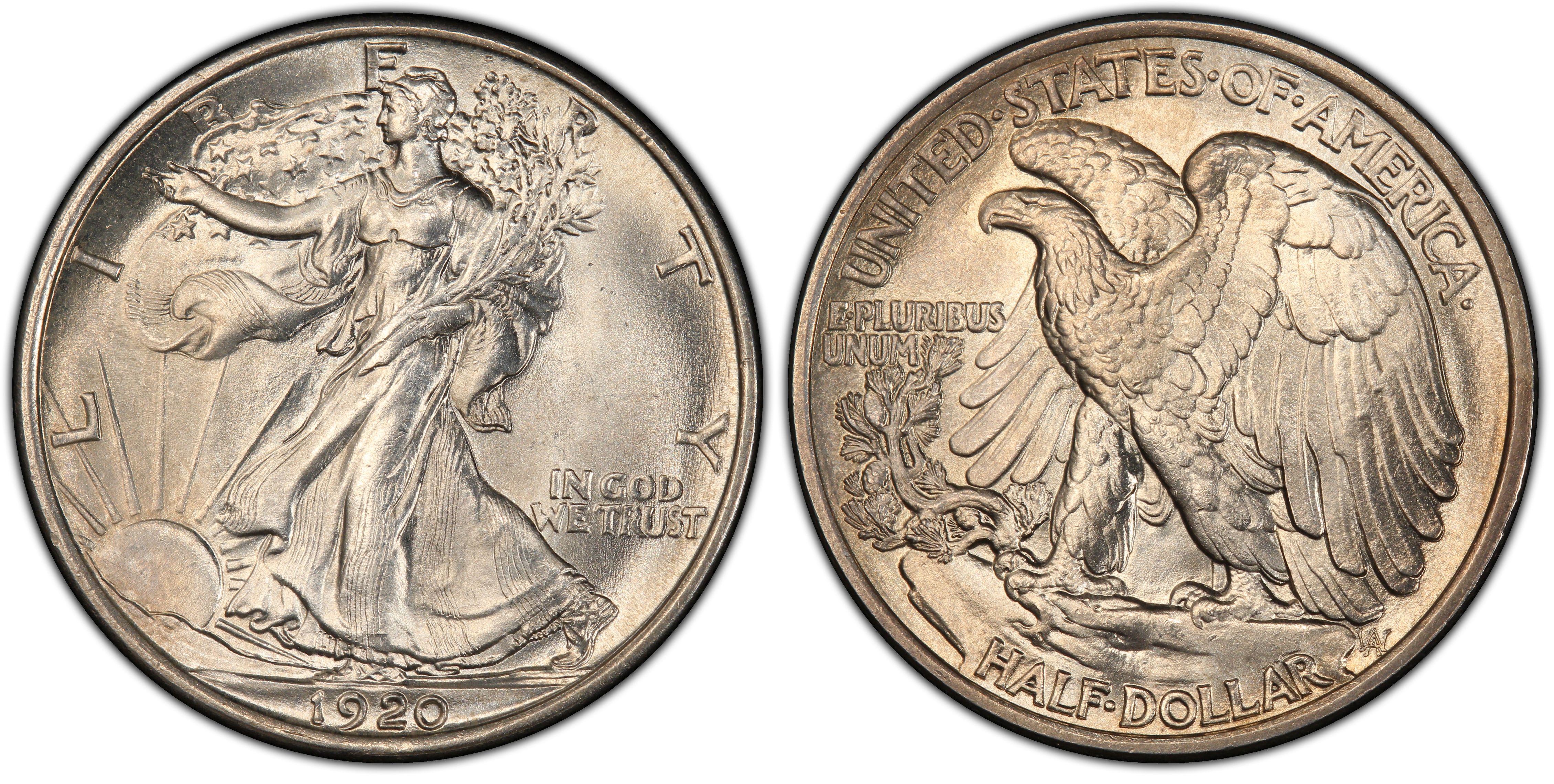
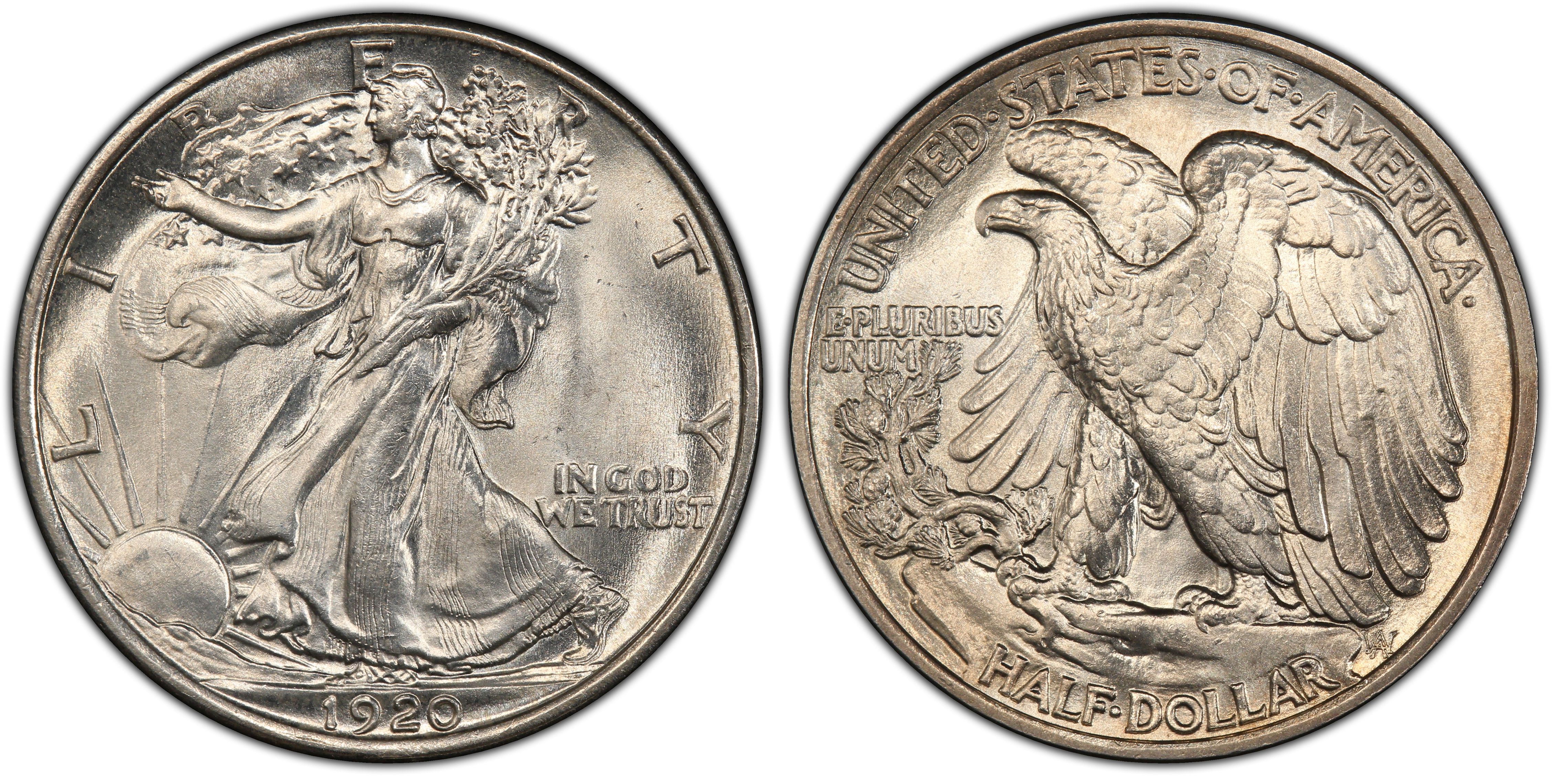
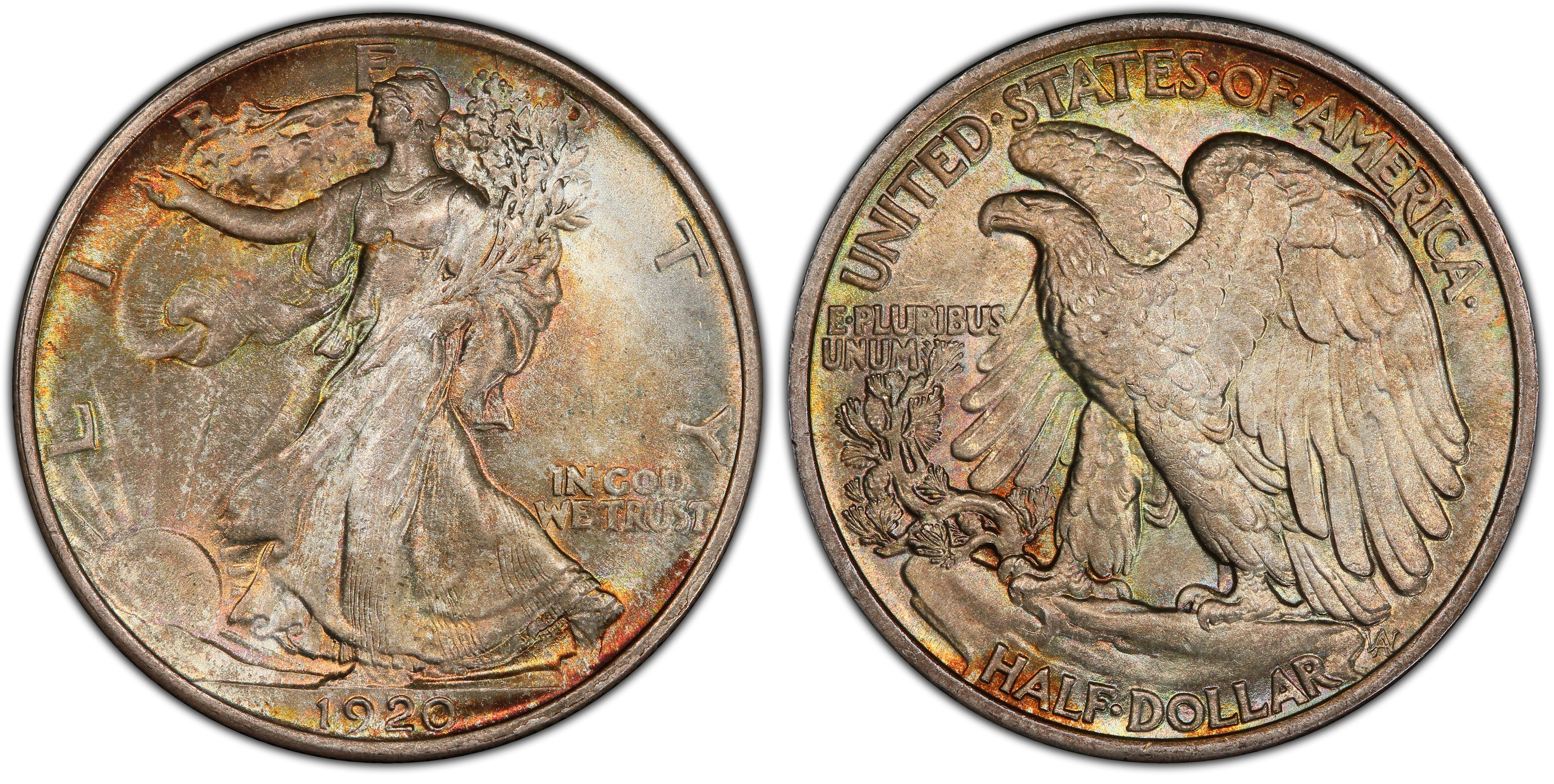
1920 50C (Regular Strike)
Series: Walking Liberty Half Dollars 1916-1947
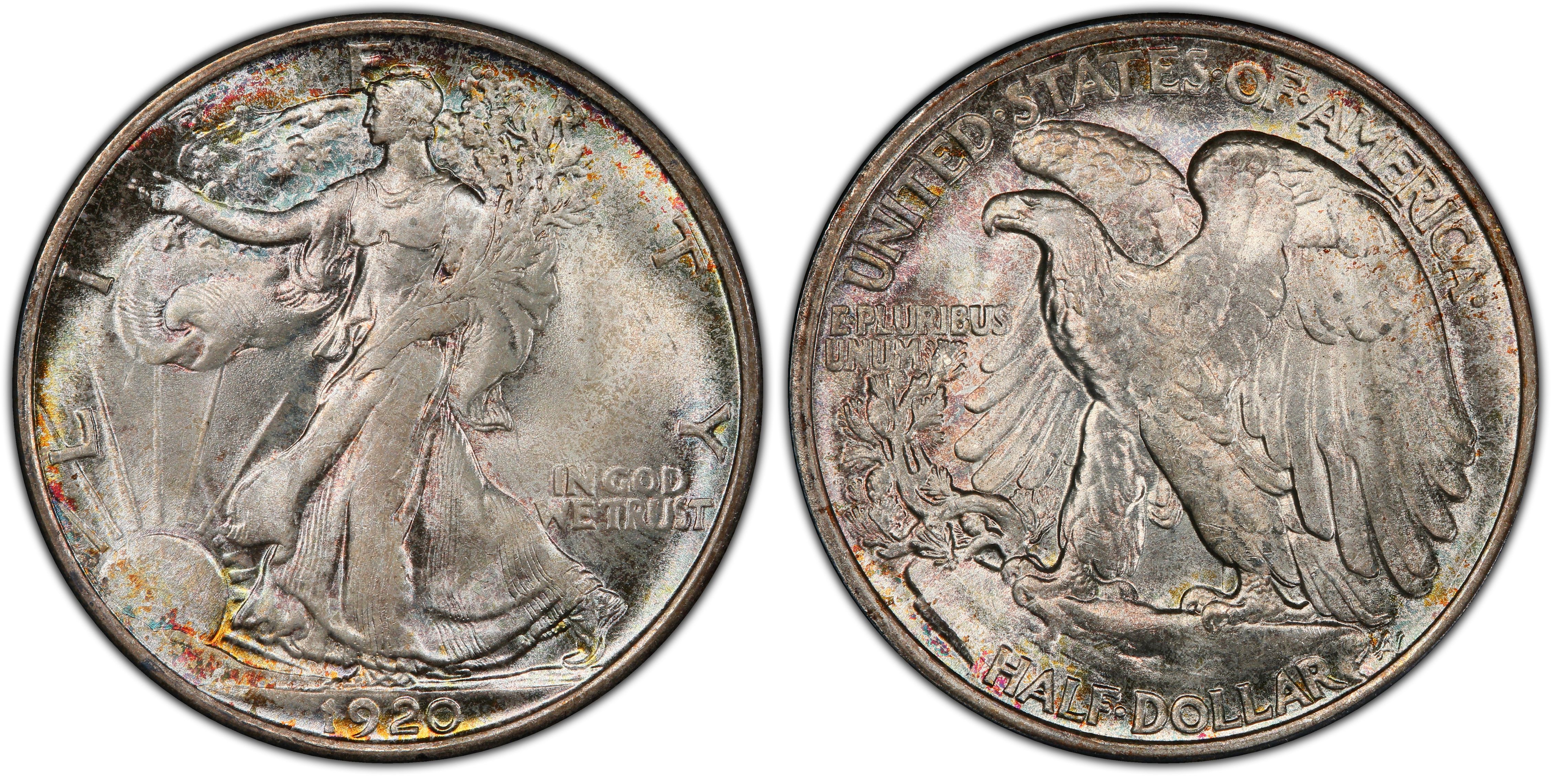
PCGS MS66+
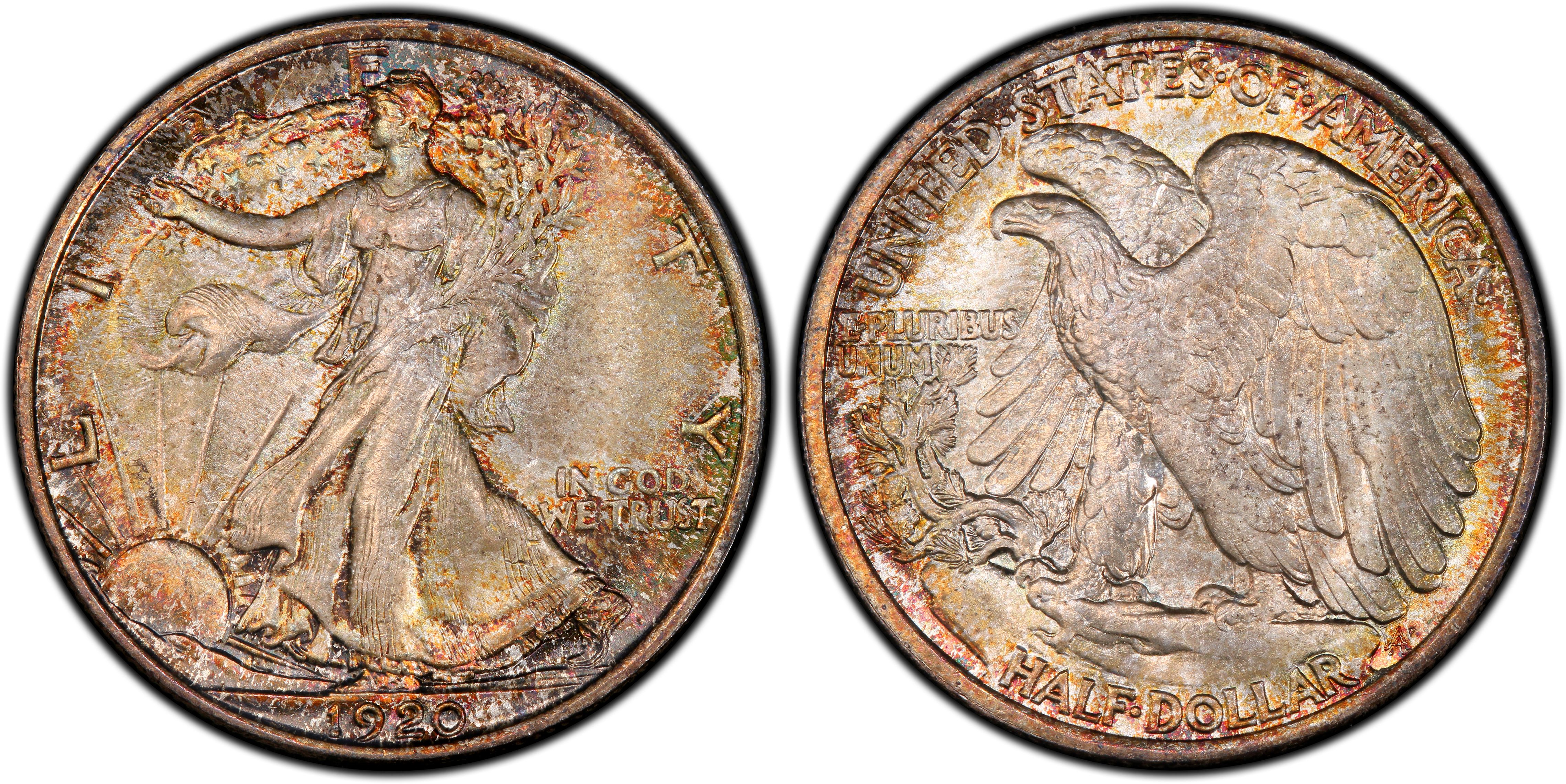
PCGS MS66+
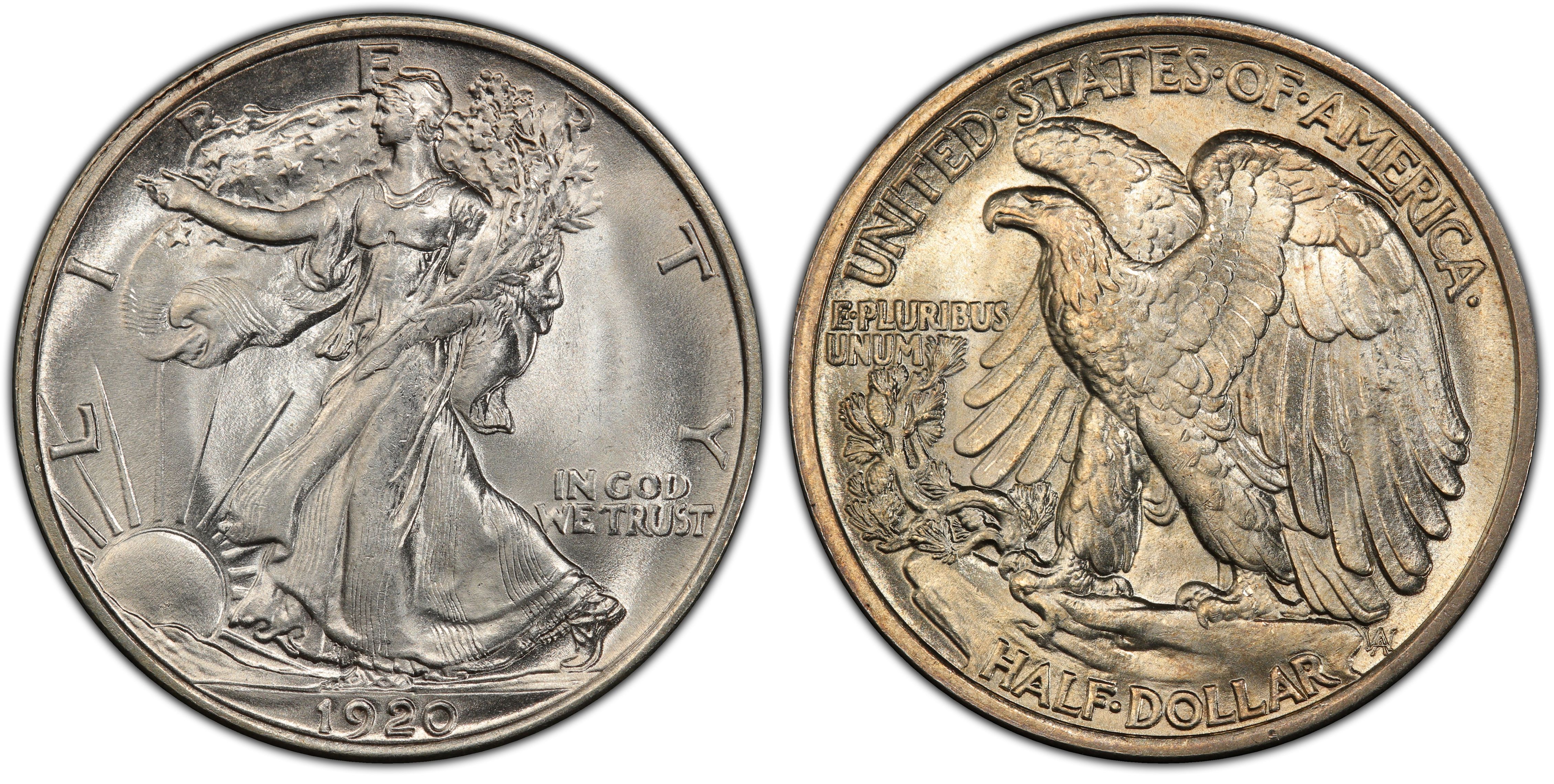
PCGS MS66+
- PCGS #:
- 6580
- Designer:
- Adolph Alexander Weinman
- Edge:
- Reeded
- Diameter:
- 30.00 millimeters
- Weight:
- 12.50 grams
- Mintage:
- 6,372,000
- Mint:
- Philadelphia
- Metal:
- 90% Silver, 10% Copper
- Auction Record:
- $31,725 • MS66+ • 09-27-2018 • Legend Rare Coin Auctions
Major Varieties
- 1920 50C
Go To Grade
Current Auctions - PCGS Graded
Current Auctions - NGC Graded
For Sale Now at Collectors Corner - PCGS Graded
For Sale Now at Collectors Corner - NGC Graded
Rarity and Survival Estimates Learn More
| Survival Estimate | |
|---|---|
| All Grades | 300,000 |
| 60 or Better | 2,000 |
| 65 or Better | 165 |
| Numismatic Rarity | |
|---|---|
| All Grades | R-1.8 |
| 60 or Better | R-4.6 |
| 65 or Better | R-7.3 |
| Relative Rarity By Type All Specs in this Type | |
|---|---|
| All Grades | 35 / 66 TIE |
| 60 or Better | 21 / 66 |
| 65 or Better | 20 / 66 |
| Relative Rarity By Series All Specs in this Series | |
|---|---|
| All Grades | 35 / 66 TIE |
| 60 or Better | 21 / 66 |
| 65 or Better | 20 / 66 |
Condition Census What Is This?
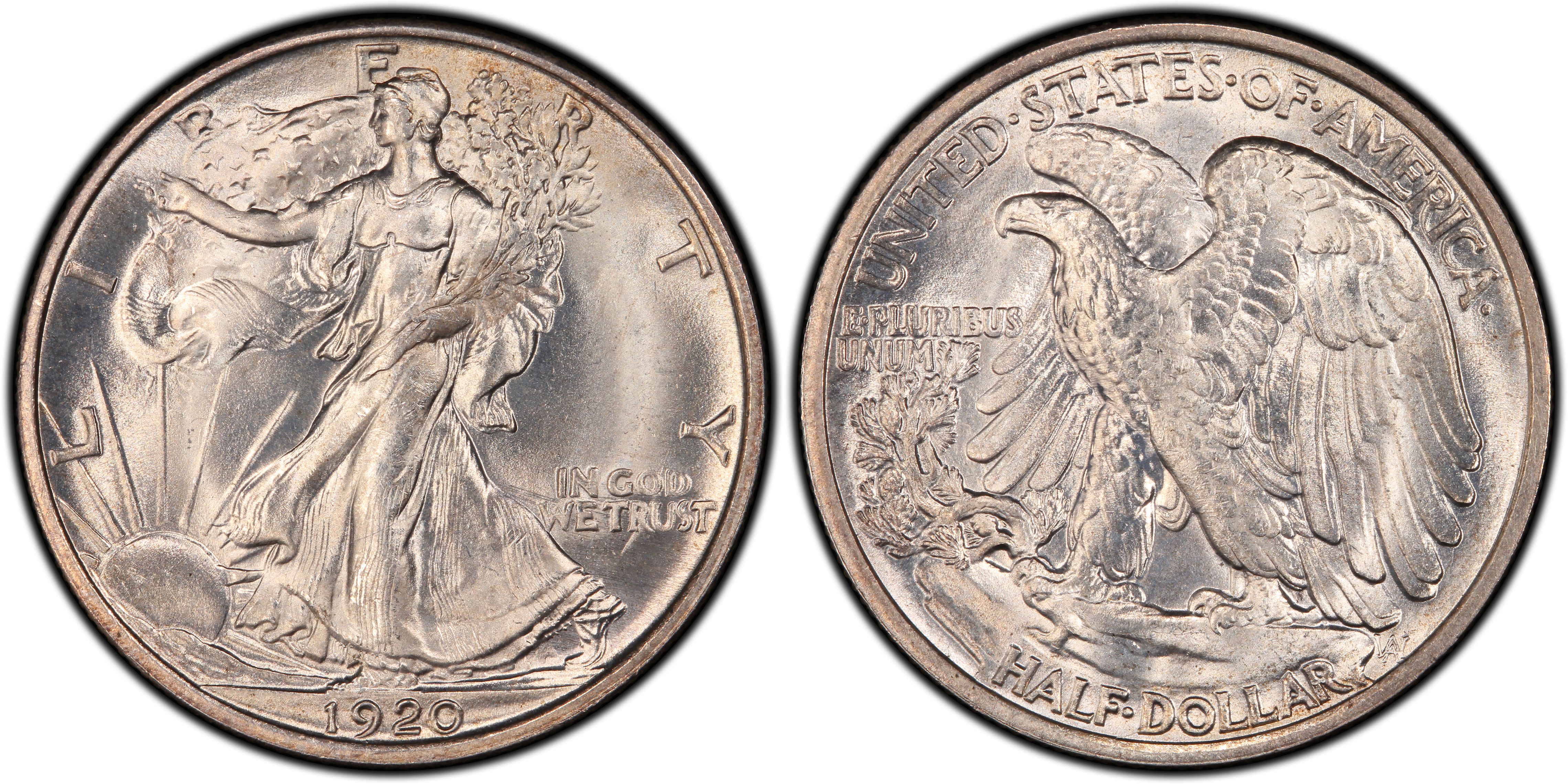 #1 MS66+ PCGS grade
Pryor Collection |
 #2 MS66 PCGS grade
GBW Collection - Eric Lane Collection of Walking Liberty Half Dollars - Heritage 8/2015:5169, $23,500 - Duckor Family Collection |
 #2 MS66 PCGS grade
|
 #2 MS66 PCGS grade
|
 #2 MS66 PCGS grade
|
 #2 MS66 PCGS grade
|
 #2 MS66 PCGS grade
|
 #2 MS66 PCGS grade
|
| #2 MS66 PCGS grade |
| #2 MS66 PCGS grade |
David Hall:
In mint state condition, the 1920 is not quite as rare as the 1918, but the two coins are about equal rarity in Gem (MS65 or better) condition. A Gem MS65 1920 is a rare coin and grades above MS65 are very rare. The 1920 is almost always very well struck. The luster is the soft satiny look of the earlier Walkers.