1936 1C Doubled Die Obverse, Type 1, BN (Regular Strike)
Series: Lincoln Cents 1909-1958

PCGS MS64BN
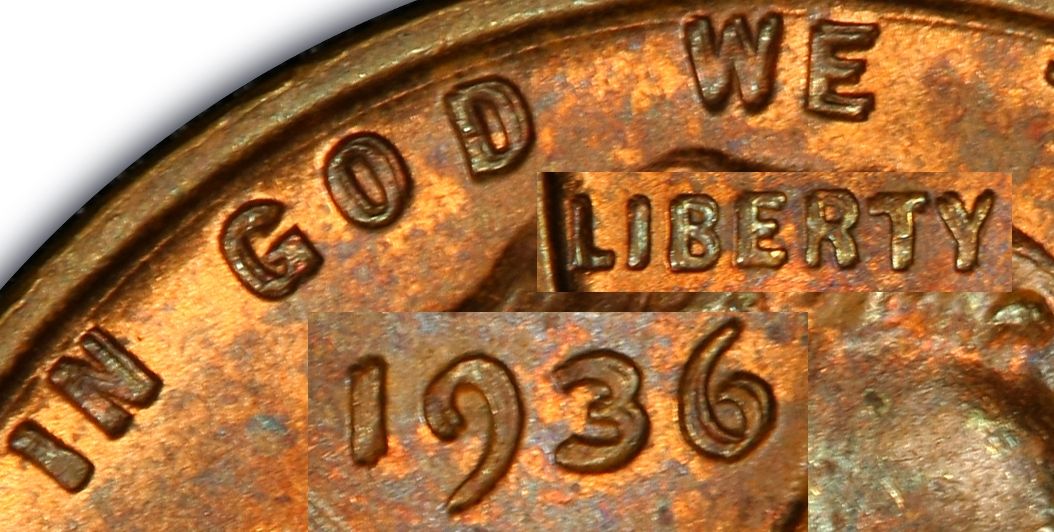
TYPE 1 - COMPARE WITH TYPES 2 AND 3

PCGS MS63BN
- PCGS #:
- 82648
- Designer:
- Victor David Brenner
- Edge:
- Plain
- Diameter:
- 19.00 millimeters
- Weight:
- 3.11 grams
- Mintage:
- 309,632,000
- Mint:
- Philadelphia
- Metal:
- 95% Copper, 5% Tin and Zinc
- Auction Record:
- $2,875 • MS63 • 05-30-2012 • Heritage Auctions
Major Varieties
- 1936 1C, BN
- 1936 1C, RB
- 1936 1C, RD
- 1936 1C Doubled Die Obverse, Type 1, BN
- 1936 1C Doubled Die Obverse, Type 1, RB
- 1936 1C Doubled Die Obverse, Type 1, RD
Go To Grade
Current Auctions - PCGS Graded
Current Auctions - NGC Graded
For Sale Now at Collectors Corner - PCGS Graded
For Sale Now at Collectors Corner - NGC Graded
Rarity and Survival Estimates Learn More
| Survival Estimate | |
|---|---|
| All Grades | 230 |
| 60 or Better | 27 |
| 65 or Better | 20 |
| Numismatic Rarity | |
|---|---|
| All Grades | R-6.7 |
| 60 or Better | R-8.9 |
| 65 or Better | R-9.1 |
| Relative Rarity By Type All Specs in this Type | |
|---|---|
| All Grades | 2 / 143 |
| 60 or Better | 1 / 143 |
| 65 or Better | 1 / 143 |
| Relative Rarity By Series All Specs in this Series | |
|---|---|
| All Grades | 5 / 146 |
| 60 or Better | 3 / 146 |
| 65 or Better | 1 / 146 |
Condition Census What Is This?
| #1 MS63BN PCGS grade |
| #1 MS63BN PCGS grade |
| #1 MS63BN PCGS grade |
| #4 MS62BN estimated grade |
| #5 AU58 PCGS grade |
| #6 AU55 PCGS grade |
| #6 AU55 PCGS grade |
| #6 AU55 PCGS grade |
| #6 AU55 PCGS grade |
| #6 AU55 PCGS grade |
Jaime Hernandez:
The 1936 Doubled Die Lincoln cent is a very difficult coin to locate in any condition. PCGS has only graded a total of about 150 examples in all grades combined in over twenty years.
The doubling on this coin is significant and can easily be seen with the naked eye. However, there are three different doubled dies for this year and mint mark. The Type 1 is definitely the most dramatic and most popular variety of the three. As of September 2009, the Type 1 is also very underrated and if being compared to the 1917 Doubled Die cent, they both seem to be very comparable in scarcity. In over 20 years, PCGS has also graded a total of about 125 of the 1917 Doubled Die cents or about 25 less than the 1936 Doubled Die Type 1.
Surprisingly, the 1936 Doubled Die Type 1 is significantly more dramatic than the 1917 Doubled Die by a long shot. However, for some reason the 1917 Doubled Die seems to be more popular and tends to command much higher prices.
For example, a 1936 Doubled Die Type 1 in XF40 sells for about $300, while the 1917 Doubled Die in the same grade brings about $1500. In the grade of MS60 Brown, the 1936 Doubled Die Type 1 brings around $600 while the 1917 Doubled Die in the same grade brings about $4500. This is despite the fact that the 1936 Doubled Die is much more dramatic and almost as scarce as the 1917 Doubled Die.
The 1936 Doubled Die Type 1 has been somewhat ignored for many years. They also tend to come up for sale much more often than the 1917 Doubled Die. It would not surprise me if the 1936 type 1 Doubled Dies became more difficult to find as time goes by and prices sky rocketed like other varieties have, such as the 1917 Doubled Die has done in the past.
The 1936 Doubled Die Type 1 is a coin which has a lot going for it. It is from a very popular series, it's considered a major variety, the doubling is very evident and there are very few in existence. In the end, this coin has all the key ingredients of being a very exciting coin to own.
The doubling on this coin is significant and can easily be seen with the naked eye. However, there are three different doubled dies for this year and mint mark. The Type 1 is definitely the most dramatic and most popular variety of the three. As of September 2009, the Type 1 is also very underrated and if being compared to the 1917 Doubled Die cent, they both seem to be very comparable in scarcity. In over 20 years, PCGS has also graded a total of about 125 of the 1917 Doubled Die cents or about 25 less than the 1936 Doubled Die Type 1.
Surprisingly, the 1936 Doubled Die Type 1 is significantly more dramatic than the 1917 Doubled Die by a long shot. However, for some reason the 1917 Doubled Die seems to be more popular and tends to command much higher prices.
For example, a 1936 Doubled Die Type 1 in XF40 sells for about $300, while the 1917 Doubled Die in the same grade brings about $1500. In the grade of MS60 Brown, the 1936 Doubled Die Type 1 brings around $600 while the 1917 Doubled Die in the same grade brings about $4500. This is despite the fact that the 1936 Doubled Die is much more dramatic and almost as scarce as the 1917 Doubled Die.
The 1936 Doubled Die Type 1 has been somewhat ignored for many years. They also tend to come up for sale much more often than the 1917 Doubled Die. It would not surprise me if the 1936 type 1 Doubled Dies became more difficult to find as time goes by and prices sky rocketed like other varieties have, such as the 1917 Doubled Die has done in the past.
The 1936 Doubled Die Type 1 is a coin which has a lot going for it. It is from a very popular series, it's considered a major variety, the doubling is very evident and there are very few in existence. In the end, this coin has all the key ingredients of being a very exciting coin to own.