1958 1C Doubled Die Obverse, RD (Regular Strike)
Series: Lincoln Cents 1909-1958
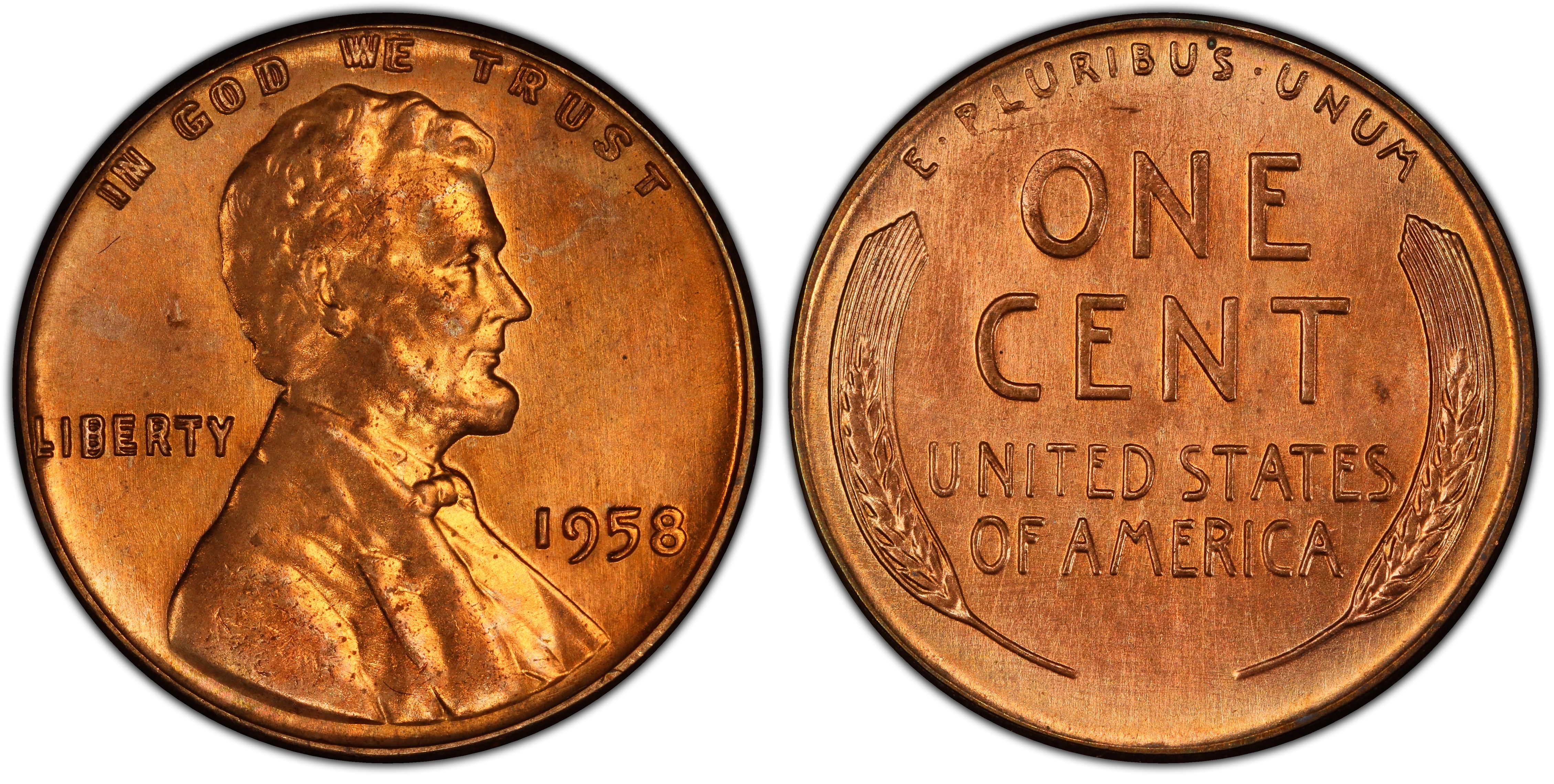
PCGS MS65RD

OBVERSE DETAIL
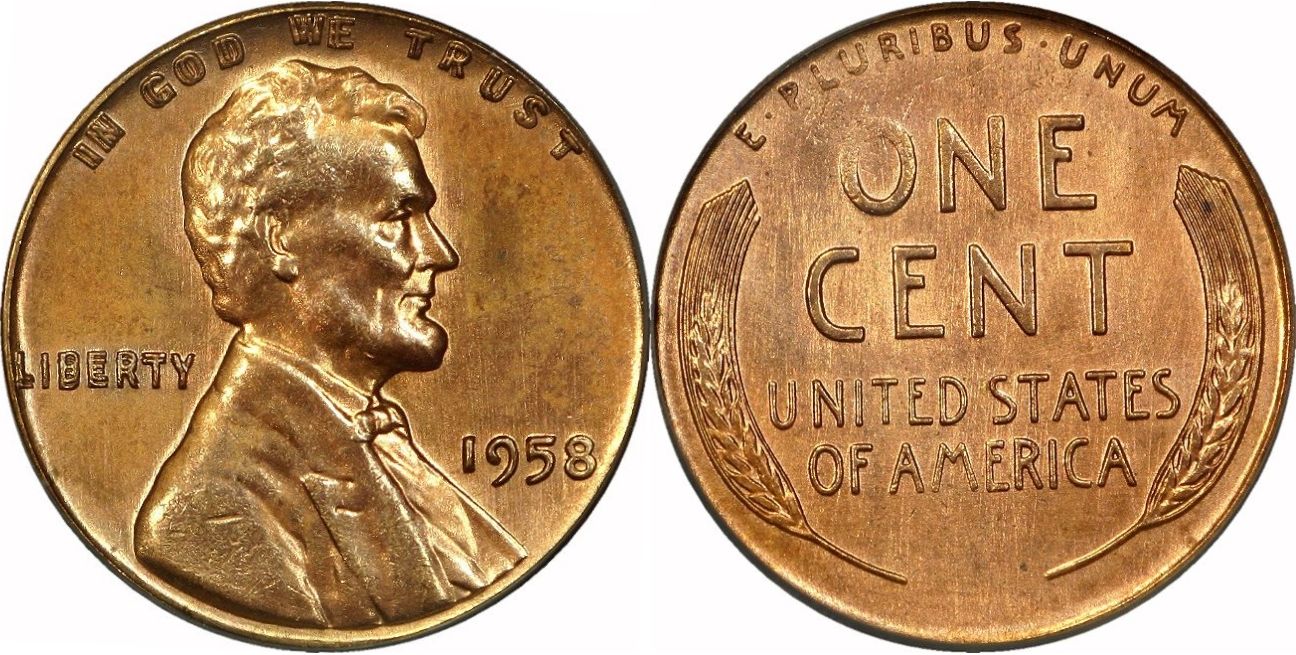
PCGS MS64RD
ESM Collection
- PCGS #:
- 92848
- Designer:
- Victor David Brenner
- Edge:
- Plain
- Diameter:
- 19.00 millimeters
- Weight:
- 3.11 grams
- Mintage:
- 252,525,000
- Mint:
- Philadelphia
- Metal:
- 95% Copper, 5% Tin and Zinc
- Auction Record:
- $336,000 • MS64RD • 03-21-2018 • Stack's Bowers
Major Varieties
- 1958 1C, BN
- 1958 1C, RB
- 1958 1C, RD
- 1958 1C Doubled Die Obverse, BN
- 1958 1C Doubled Die Obverse, RB
- 1958 1C Doubled Die Obverse, RD
Condition Census What Is This?
|
#1 PCGS MS65RD
“The Stewart Blay Collection,” GreatCollections, January 22, 2023, Lot 1272983 – $1,136,250. |
|
#2 PCGS MS64RD
“The ESM Collection,” Stack’s Bowers, March 22, 2018, Lot 2146 – $336,000. |
|
#2 PCGS MS64RD
Certified in 2006. No public auction records. |
The 1958 Lincoln Cent Doubled Die
The 1958 Lincoln Cent Doubled Die (#9248) is an incredibly rare mint error with a backstory that remains vague on details and is often misreported in popular numismatic literature. Struck three years after the Philadelphia Mint released the famous 1955 Doubled Die, this coin features dramatic doubling that is most noticeable on "LIBERTY" and "IN GOD WE TRUST."
Only three examples are known, all certified by PCGS. Their discovery occurred sometime around 1960—note the vagueness of the timeline—when Philadelphia collector Charles Ludovico found at least two of them in a $50 bag of 1958 Lincoln Cents (#2848). After receiving confirmation from the Mint that the coins were genuine, he notified Coin World, which published the first report of the error in the "Collectors Clearinghouse" section of the January 1966 issue.
While I cannot confirm if that 1966 report mentioned any more than one example, error and variety expert Ken Potter wrote in the January 26, 2023, issue of Numismatic News that he was surprised to learn Ludovico had a second one when the collector handed it to him for examination at the 1986 Errorama Convention. The "first" coin was a last-minute addition to John Wexler’s The Lincoln Cent Doubled Die (1984), which featured close-up images of the coin's most striking features.
Ludovico was a well-known collector of high-end mint errors who maintained close contact with the leading error dealers of his time. He was unlikely to be the source of the third example, which was later submitted to CONECA by an individual named W. Marira. Currently, photographs of only two examples are readily accessible online: the Stewart Blay specimen (PCGS MS65RD) and the ESM specimen (PCGS MS64RD).
A close inspection of the Blay and ESM examples reveals several tell-tale diagnostics of the 1958 Doubled Die:
- Obverse: Both feature micro-pitting on Lincoln’s portrait and vertical die polishing lines.
- Reverse: Crisscrossing die polishing lines are visible, primarily running horizontally below "OF AMERICA." The top of the "O" in "ONE" is weak, and the bottoms of "PLU" are flatly struck. Additionally, a die spike extends from the top right of the second "A" in "AMERICA."
With only three known examples—at least two of which are tied to a single collector—some have questioned whether the coin was ever officially released into circulation. However, if Ludovico’s account of their discovery in a mint bag is accurate, and a third example found its way to a separate collector, it is probable that they were.
The superior of Ludovico’s two coins was a highlight of Stewart Blay’s historic Lincoln Cent Collection. It is one of only a handful of Lincoln Cents to sell for over $1 million, crossing that threshold on January 22, 2023, when the finest known example (PCGS MS65RD) sold via GreatCollections for $1,136,250.
* * *