1920 50C Pilgrim (Regular Strike)
Series: Silver Commemoratives

PCGS MS68
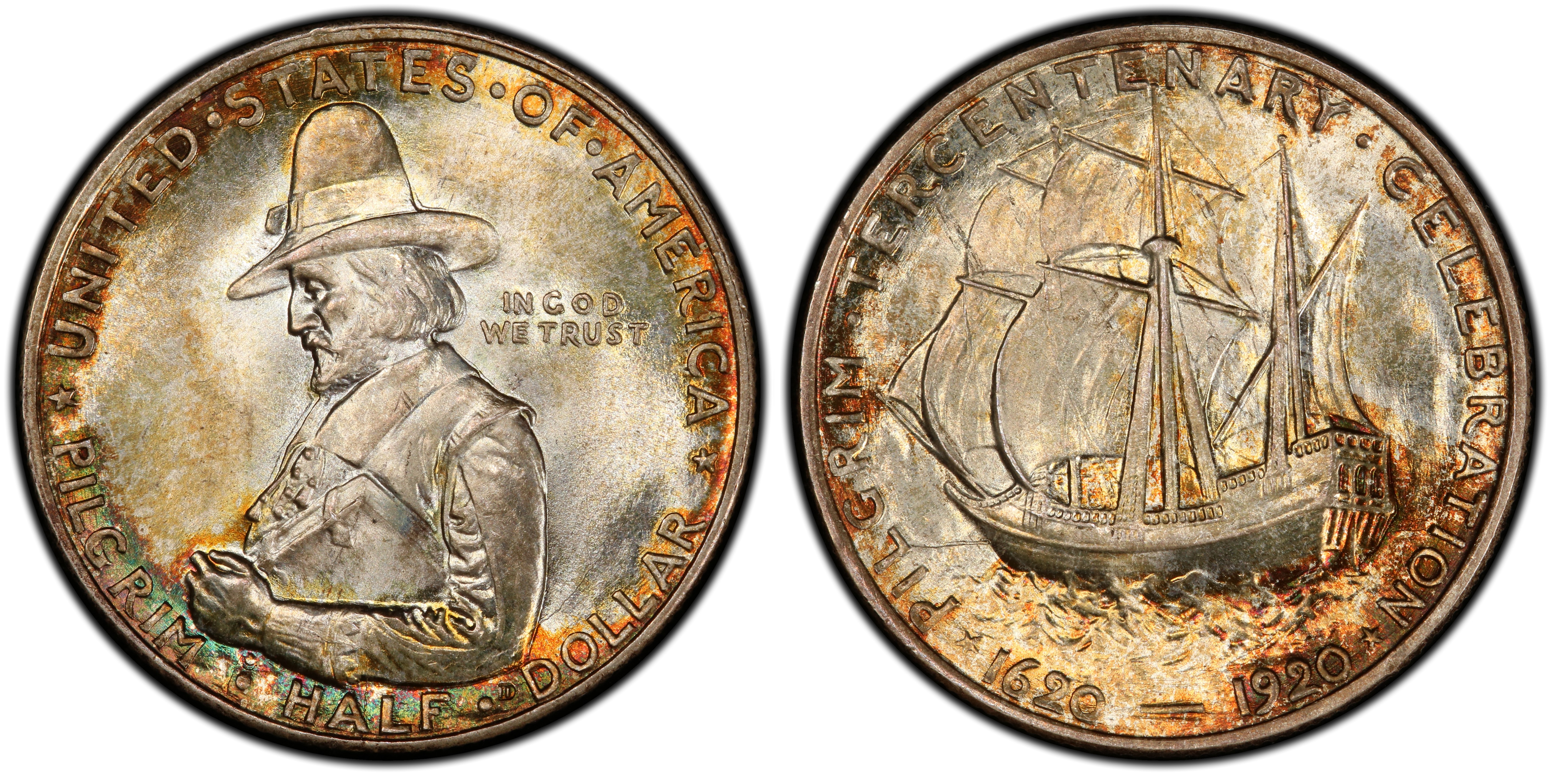
PCGS MS68
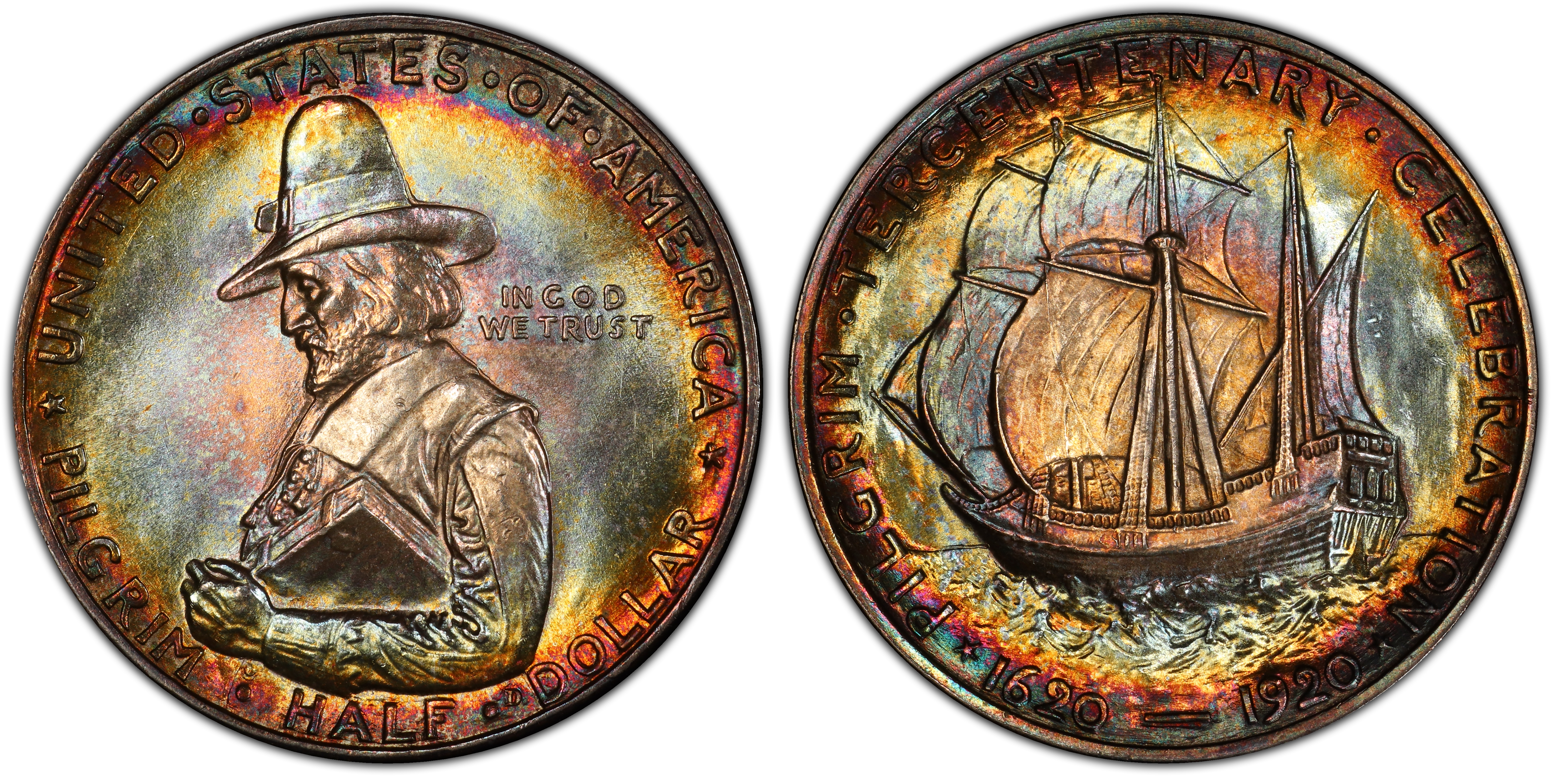
PCGS MS68
- PCGS #:
- 9359
- Designer:
- Cyrus E. Dallin
- Edge:
- Reeded
- Diameter:
- 30.60 millimeters
- Weight:
- 12.50 grams
- Mintage:
- 152,112
- Mint:
- Philadelphia
- Metal:
- 90% Silver, 10% Copper
- Auction Record:
- $10,350 • MS66 • 07-26-2008 • Bowers & Merena
Major Varieties
- 1920 50C Pilgrim
Rarity and Survival Estimates Learn More
| Survival Estimate | |
|---|---|
| All Grades | 70,000 |
| 60 or Better | 47,500 |
| 65 or Better | 10,375 |
| Numismatic Rarity | |
|---|---|
| All Grades | R-2.3 |
| 60 or Better | R-2.5 |
| 65 or Better | R-2.9 |
| Relative Rarity By Type All Specs in this Type | |
|---|---|
| All Grades | 123 / 144 TIE |
| 60 or Better | 121 / 144 TIE |
| 65 or Better | 119 / 144 TIE |
| Relative Rarity By Series All Specs in this Series | |
|---|---|
| All Grades | 123 / 144 TIE |
| 60 or Better | 121 / 144 TIE |
| 65 or Better | 119 / 144 TIE |
Condition Census What Is This?
 #1 MS68 PCGS grade
|
 #2 MS67+ PCGS grade
|
 #2 MS67+ PCGS grade
|
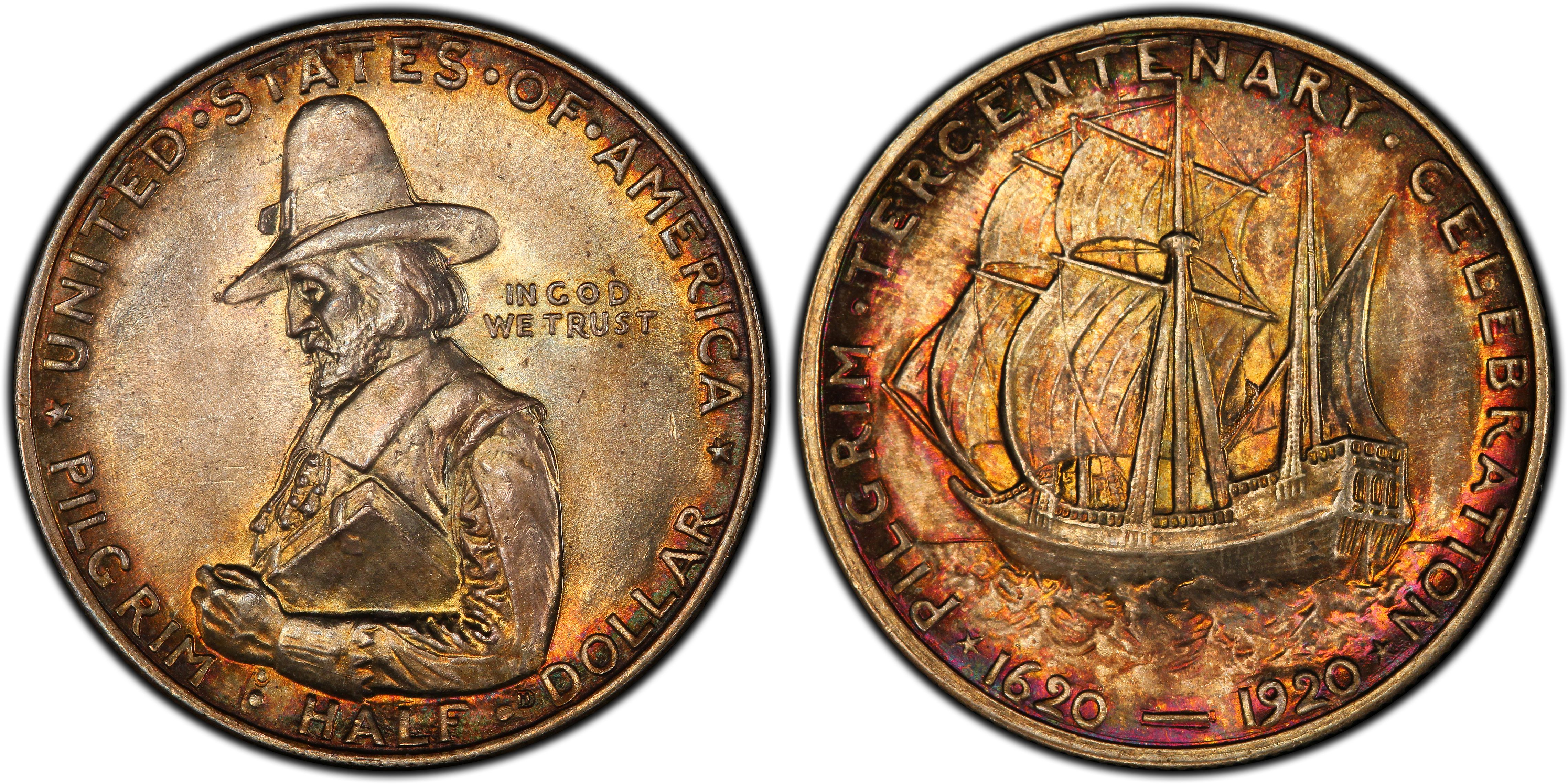 #2 MS67+ PCGS grade
|
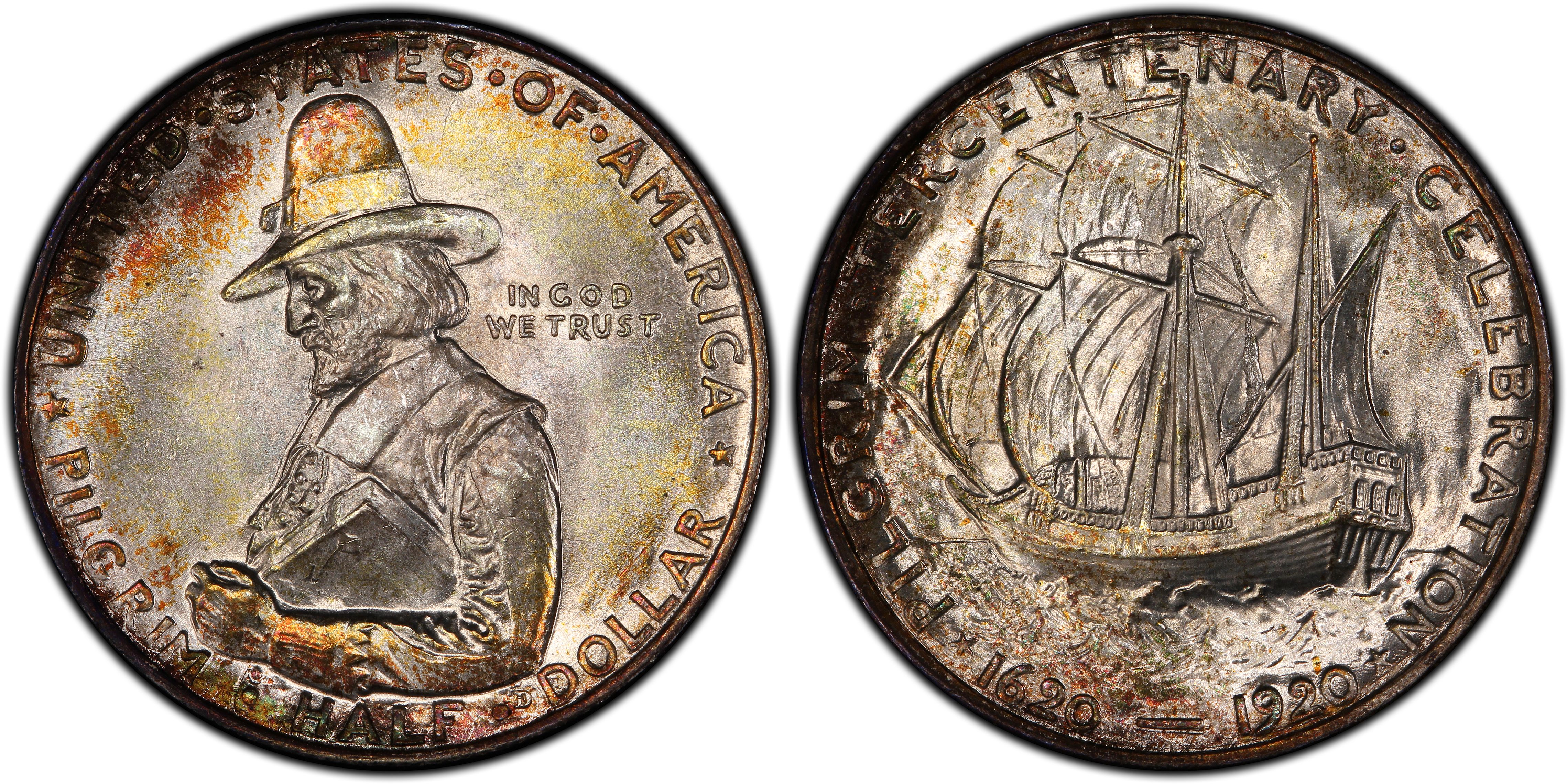 #2 MS67+ PCGS grade
|
| #2 MS67+ PCGS grade |
| #7 MS67 PCGS grade |
| #7 MS67 PCGS grade |
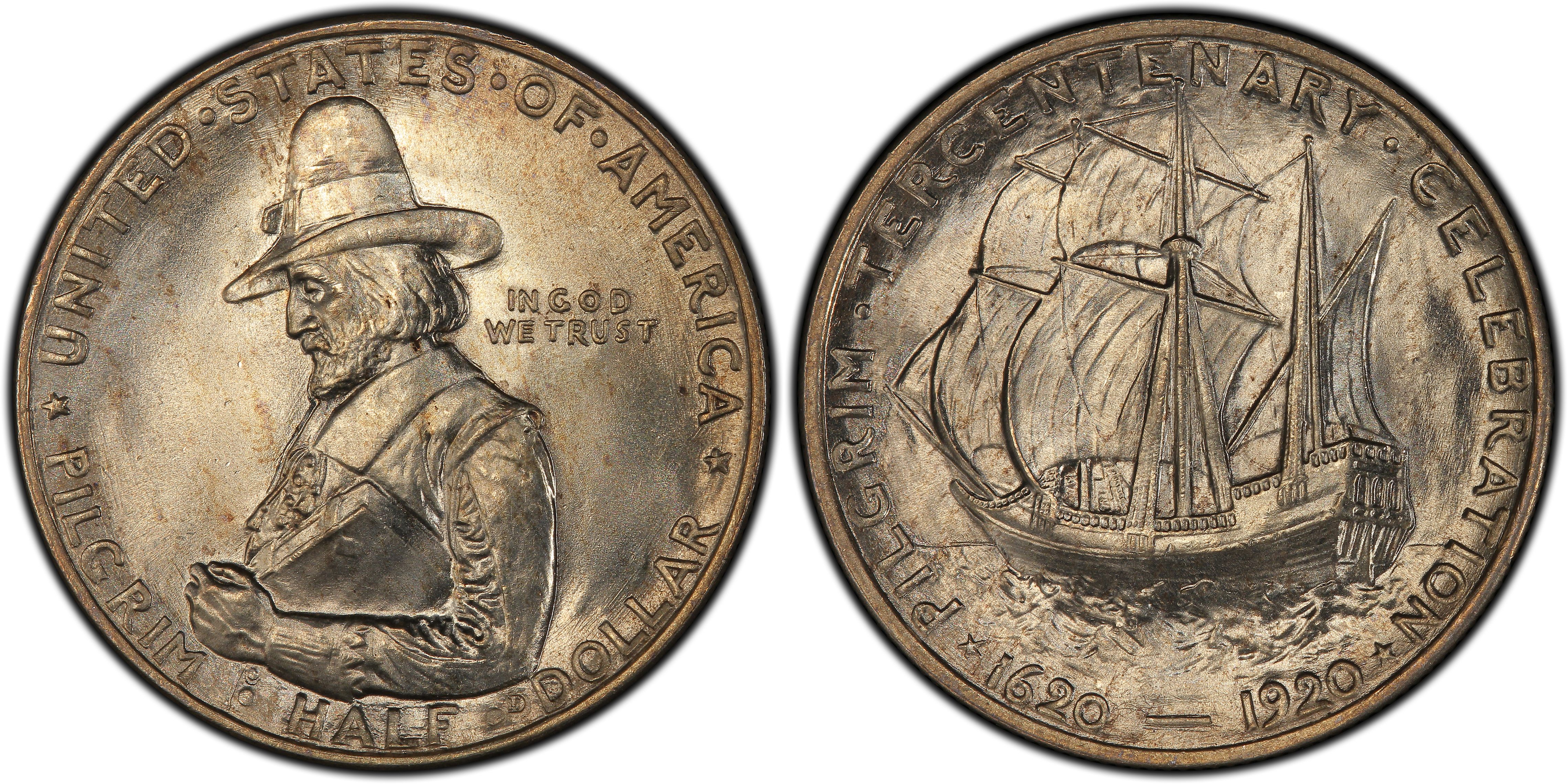 #7 MS67 PCGS grade
|
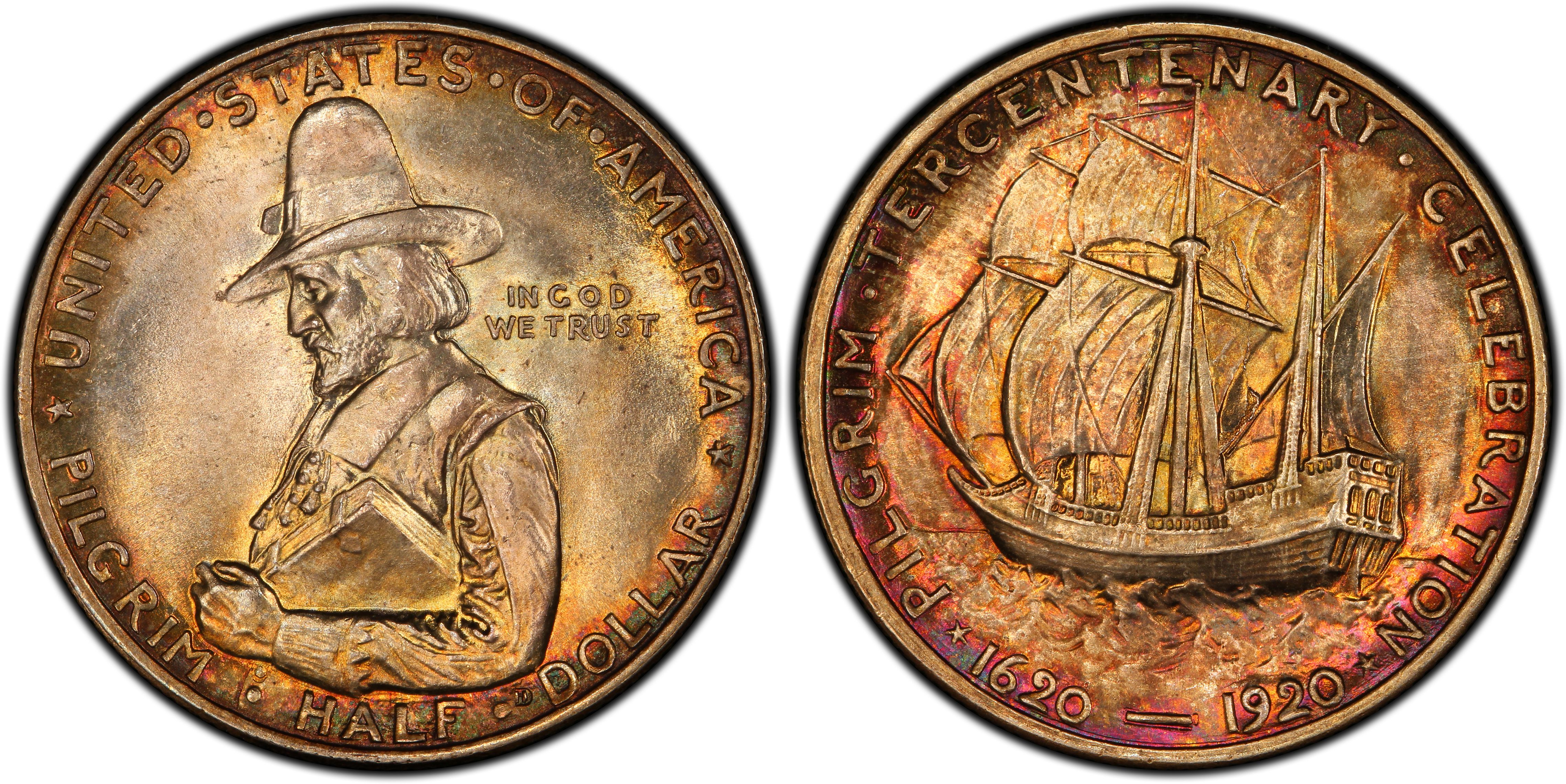 #7 MS67 PCGS grade
|
The 1920 Pilgrim Half Dollars has a small, incuse D underneath the Pilgrim's elbow. While this might appear to be a mintmark (for Denver) to the uninitiated, this was put on the coin to indicate the designer, Cyrus Dallin, and the D represents his last name. All 1920 Pilgrim Half Dollars were struck in Philadelphia, making this the only modern "D"-mint coin NOT struck at Denver!
The 1920 Pilgrim half dollar was struck to commemorate the 300th anniversary of the landing of the Pilgrims at Plymouth. The original distribution was 152,112 coins, making the 1920 Pilgrim one of the most plentiful silver commemoratives. However, they are one of the few pre-1930 issues and most of those were not saved by collectors at the time of issue in as high a percentage as the post-1930 issues. Consequently, most 1920 Pilgrims only grade MS63 or MS64. MS65 Gems are scarce, and Superb MS66 examples are rare.
The typical 1920 Pilgrim has decent frosty luster. Toning is an issue and can range fron beautiful to downright ugly. Obviously, eye appeal is very important with this issue.