1925 AR Medal Norse American, Thick (Regular Strike)
Series: (None)
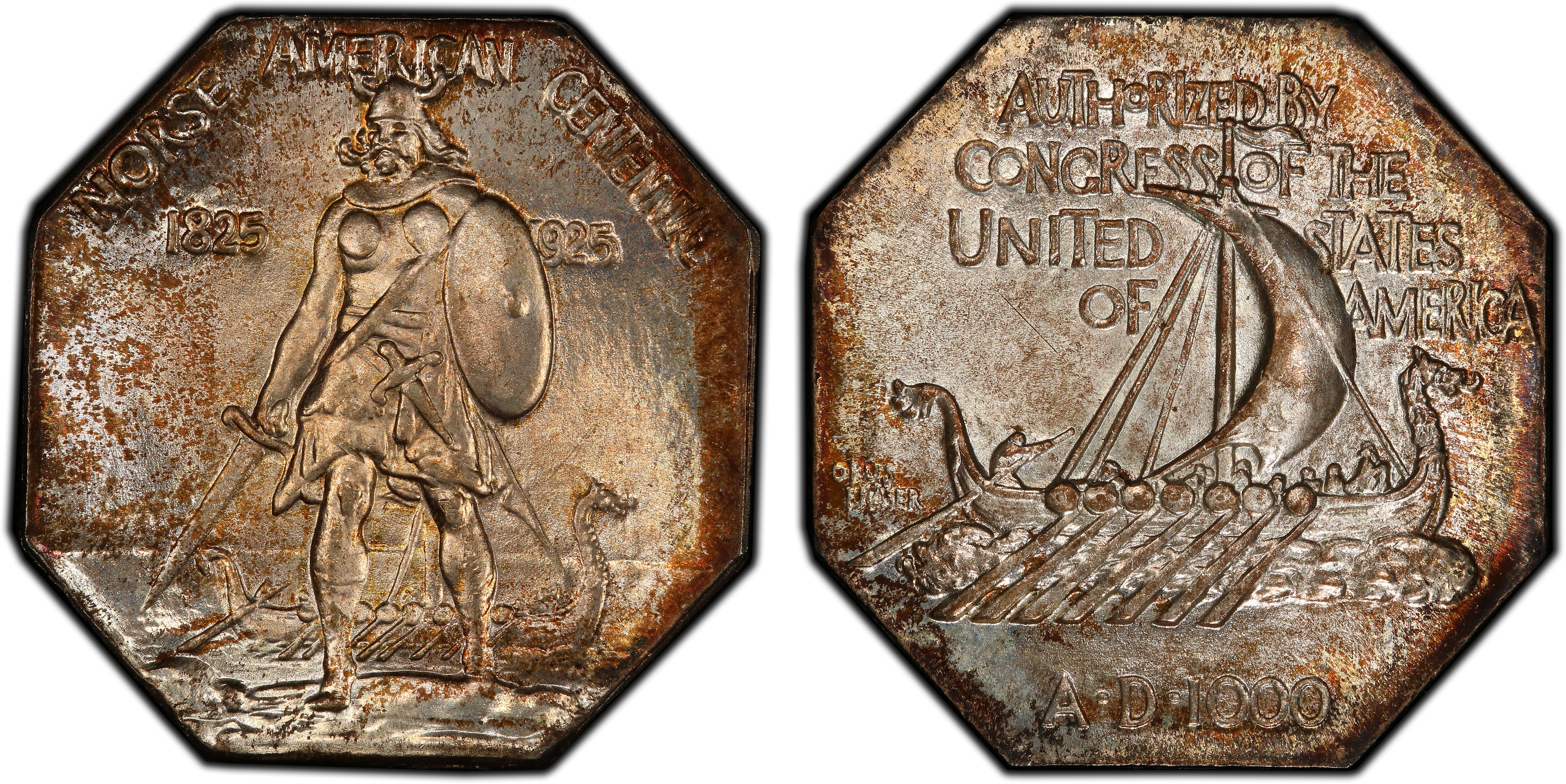
PCGS MS67

PCGS MS67
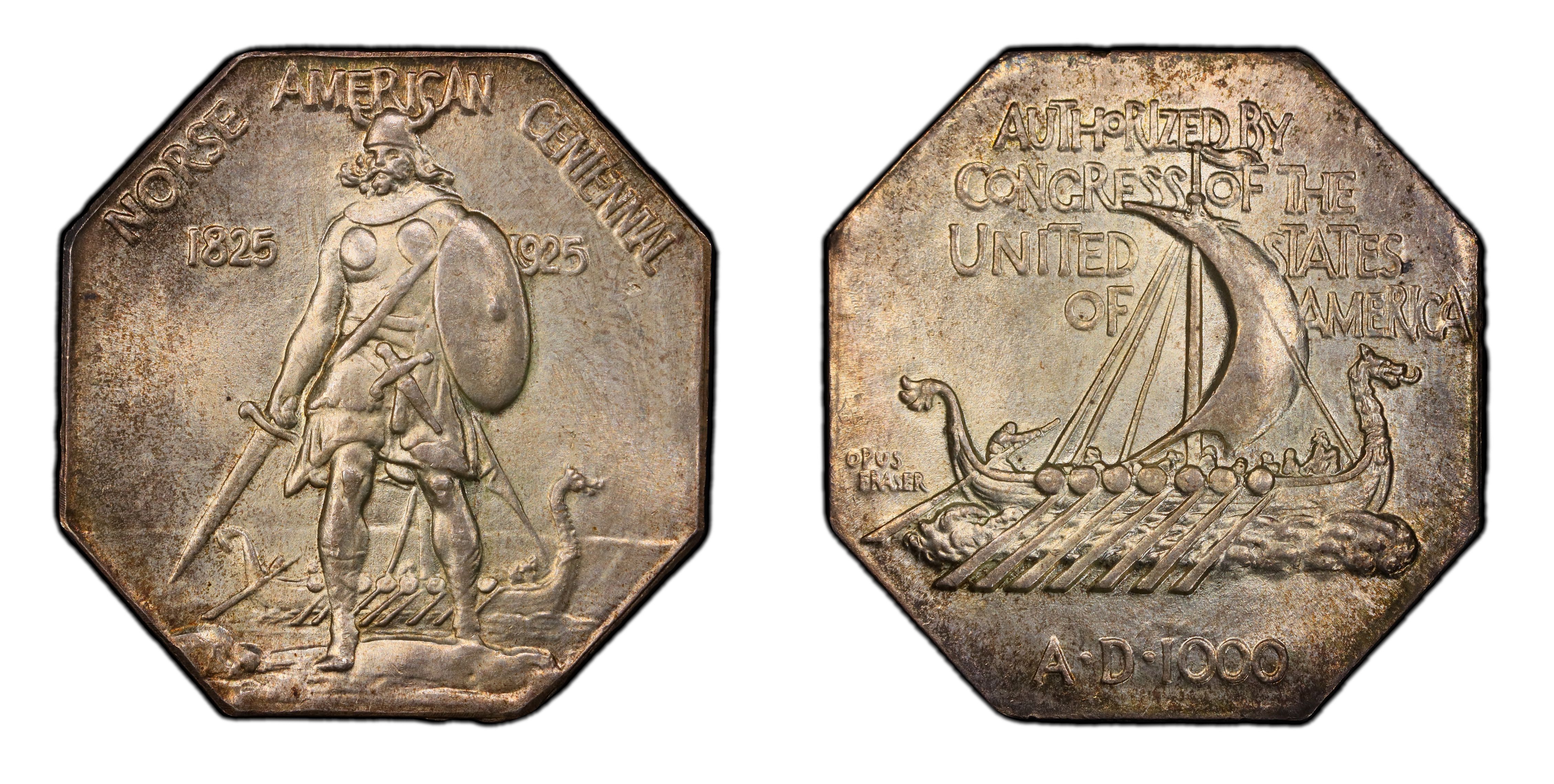
PCGS MS66+
- PCGS #:
- 9450
- Designer:
- N/A
- Edge:
- N/A
- Diameter:
- N/A
- Weight:
- N/A
- Mintage:
- N/A
- Mint:
- N/A
- Metal:
- Silver
- Auction Record:
- $12,600 • MS67 • 03-25-2020 • Stack's Bowers
Condition Census What Is This?
|
#1 PCGS MS67
"The Russell Collection". As "Gem Unc." "The Foxfire Collection," April 1997. As PCGS MS67 #38855722. "The D. Brent Pogue Collection, Part VII," Stack's Bowers, March 20, 2020, Lot 7358 - $12,600. Iridescent silvery-pink and blue patination with bold gold, orange, and green toning along the edges. |
|
#1 PCGS MS67
"The J & L Norse Set" (PCGS Set Registry). Goldish-red patination with deeper reddish-russet toning along the periphery. Highly lustrous surfaces. |
|
#3 PCGS MS66+
GreatCollections, April 7, 2024, Lot 1555031 - $2,531.25. Frosty rose-silver surfaces with pointillated russet and steel-gray toning along the periphery. A pin-sized toning spot sits to the left of the hilt. |
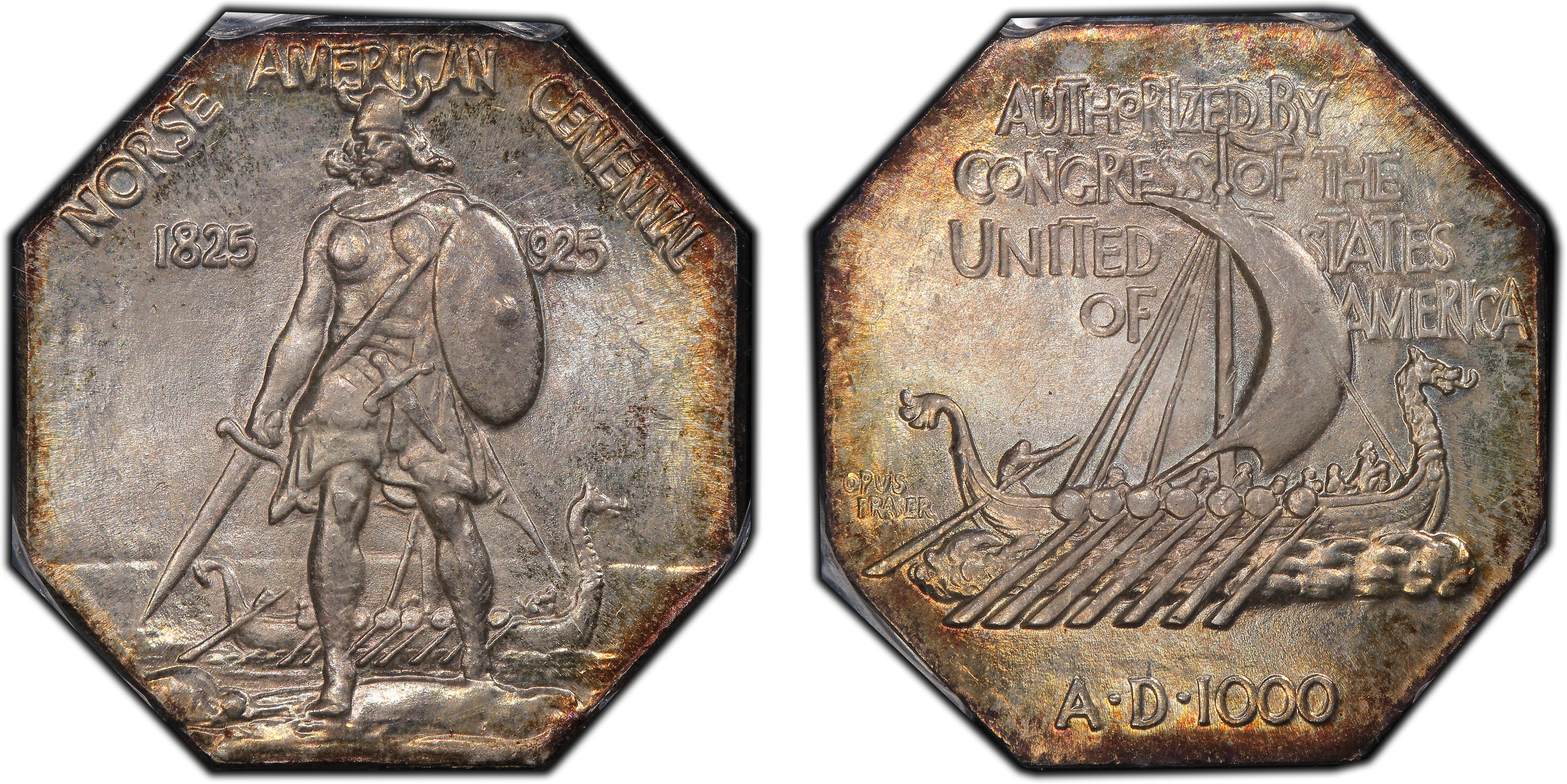 #3 PCGS MS66+
"The Paul Denby Collection of U.S. Gold Commemoratives," Heritage Auctions, April 27, 2016, Lot 6269 - $3,760; GreatCollections, June 4, 2023, Lot 1374753 - $3,722.63. Rose-silver patination dominates both the obverse and reverse. The borders exhibit deeper olive-green, gold, and russet toning. An "untoned" circular spot is visible above the T in AUTHORIZED. |
 #3 PCGS MS66+
GreatCollections, October 24, 2021, Lot 1066451 - $3,094.88. Lustrous example with champagne-gold patination. A band of rainbow toning appears along the border of the reverse. |
 #3 PCGS MS66+
|
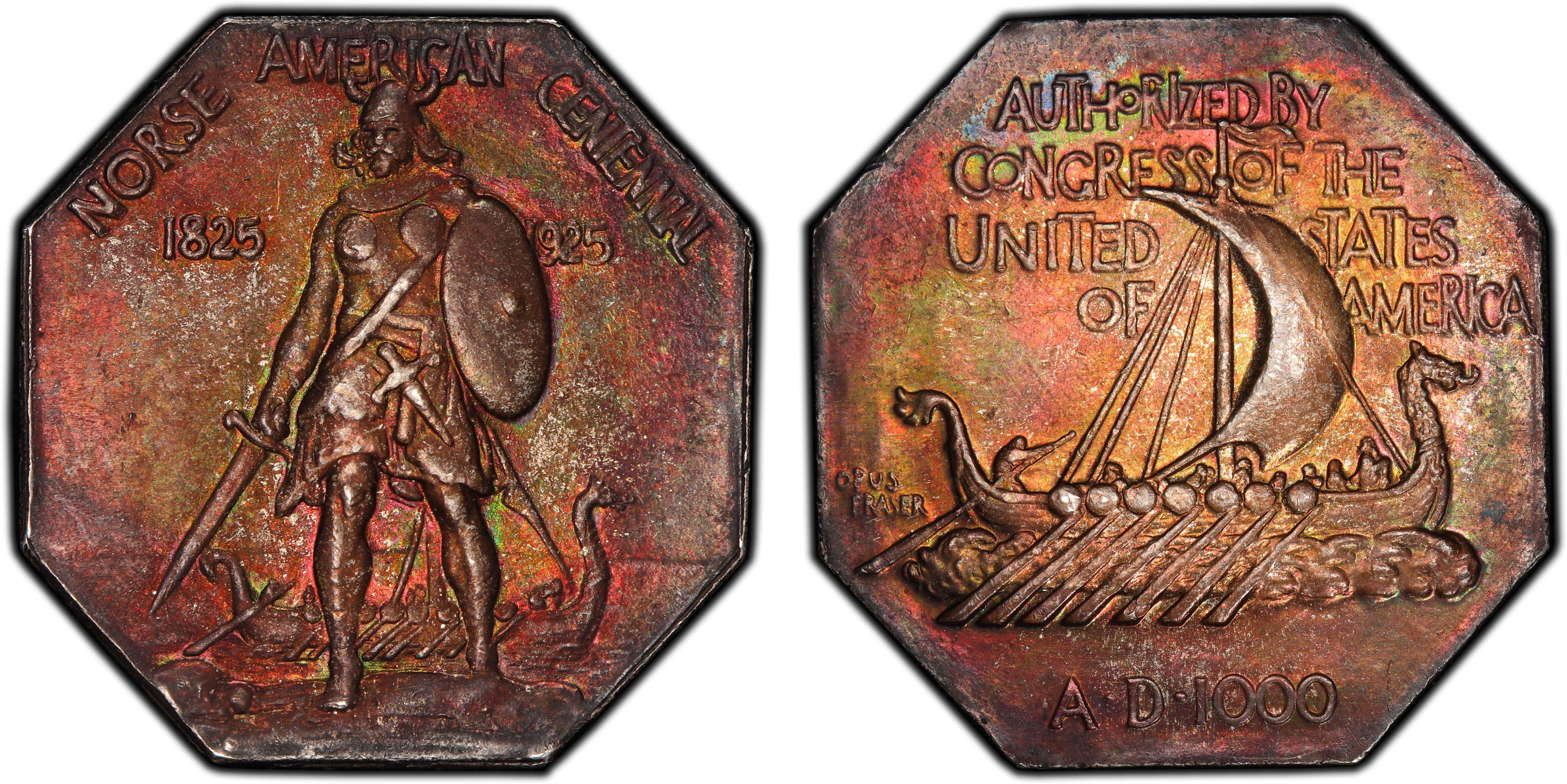 #3 PCGS MS66+
As PCGS MS66+ #34715849. Legend Rare Coin Auctions, May 17, 2018, Lot 659 - $5,875. As PCGS MS66+ #37301059. "The Dedham Collection - Norse Medals" (PCGS Set Registry). Deeply toned in red, orange, and green. |
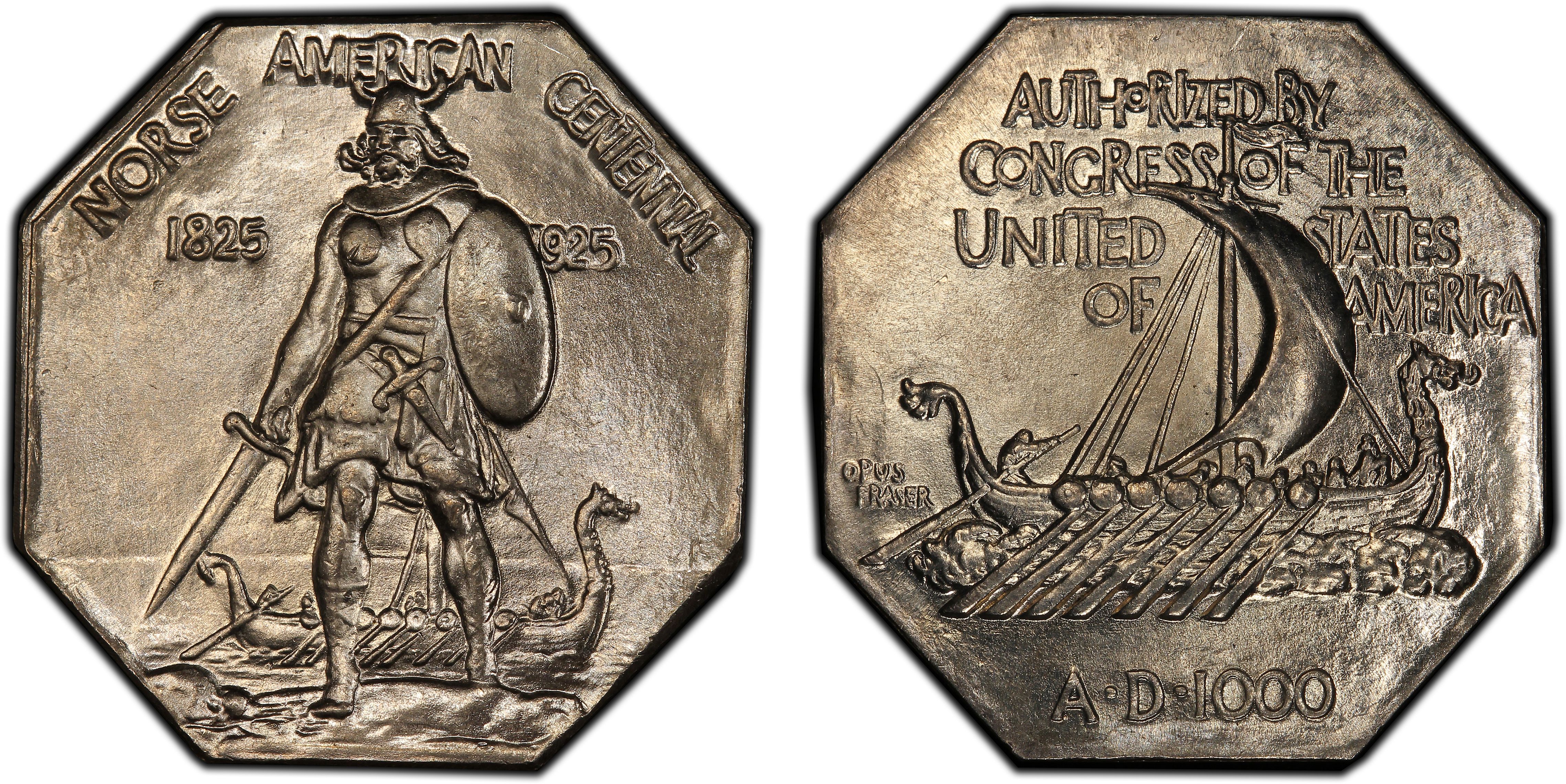 #3 PCGS MS66+
"The Chippewa Collection of Norse Medals" (PCGS Set Registry). Lustrous example that exhibits a faint hint of mint yellow patination. Small tick on the Viking's chest armor. |
 #3 PCGS MS66+
Champagne-colored centers give way to a thin band of gold, orange, magenta, and blue-green toning along the border. A small tick is visible to the left of the hilt, with another small tick appearing below the 5 in 1925. |
 #3 PCGS MS66+
Sea-green, blue, and magenta patination with vivid edge toning in gold and orange. |
The 1925 Norse American Centennial AR Medal, Thick Planchet
The 1925 Norse American Centennial AR Medal (Thick Planchet, #9450) holds a unique distinction: it is the only United States Mint medal commonly collected as a "member" of the classic commemorative coin series (1892–1954). Designed by James Earle Fraser, the medal celebrates Norse exploration, depicting an armor-clad chieftain on the obverse and a Viking longship on the reverse. Authorized by Congress on March 2, 1925, the medals were struck in multiple formats beginning in May of that year.
The program was the brainchild of Congressman Ole Juulson “O.J.” Kvale of Minnesota’s 7th District. Kvale originally sought a commemorative half dollar to mark the centennial of the ship Restauration’s arrival. However, "commemorative fatigue" had already taken hold at the Treasury Department. Despite Kvale’s influential seat on the Committee on Coinage, Weights, and Measures, he could not secure support for another coin. He pivoted when the Treasury indicated it would instead approve a commemorative medal.
A primary obstacle was the physical specifications of the piece. To prevent the medals from being confused with legal tender, the Treasury insisted they be distinctly larger, thicker, or heavier than standard circulating coinage. The medal's iconic octagonal shape is widely attributed to Kvale’s son and secretary, Paul Kvale, who suggested the polygonal design as a clear visual differentiator.
In a tragic historical footnote, after the elder Kvale died in a house fire in 1929, Paul won a special election to succeed him. Ironically, Paul Kvale served in Congress during the mid-1930s commemorative boom—an era of legislative excess that his father had unsuccessfully tried to navigate just a decade prior—and, unlike those serving during father's era of restraint, he did not formally object to the era's prolific issuance.
1925 Commemorative Coin & Medal Authorization Timeline
The 1925 Norse American Medal was the fourth commemorative measure signed into law that year. This legislation followed closely on the heels of the Vermont, Fort Vancouver, and the California Diamond Jubilee coin bills. A day after its passage, Congress had also authorized the 1926 Sesquicentennial Half Dollar and Quarter Eagle.
This surge followed the controversial 1925 Stone Mountain Memorial half dollar, which—though dated 1925—had been authorized in early 1924 and was already being struck in massive quantities. This parade of issues was a sharp departure from the previous three years, when Congress typically authorized only a single commemorative program annually. The Treasury Department would not see a similar explosion of interest until the mid-1930s, eventually culminating in the 1936 peak of the "classic" commemorative era.
1925 Stone Mountain Half Dollar
- Authorized: March 17, 1924.
- Struck: January through March 1925 at the Philadelphia Mint.
- Note: This was a massive production, with over 1.3 million coins being struck and distribution being carried out on a massive scale throughout the South.
1925 Lexington-Concord Sesquicentennial Half Dollar
- Authorized: January 14, 1925.
- Struck: April and May 1925 at the Philadelphia Mint.
- Mintage: 162,099 coins (including 99 for assay).
1925-S California Diamond Jubilee Half Dollar
- Authorized: February 24, 1925.
- Struck: August 12 to August 26, 1925, at the San Francisco Mint.
- Mintage: 150,200 coins (including 200 for assay).
1925 (S) Fort Vancouver Centennial Half Dollar
- Authorized: February 24, 1925.
- Struck: August 1, 1925, at the San Francisco Mint.
- Mintage: 50,028 coins (including 28 for assay).
- Note: Despite being struck in San Francisco, these coins do not bear an "S" mint mark.
1927 Vermont-Benninngton Sesquicentennial Half Dollar
- Authorized: February 24, 1925
- Struck: January to February 1927.
- Mintage: 40,034 (including 34 for assay).
1925 Norse American Centennial Medal
- Authorized: March 2, 1925 (Authorized as a medal, not a coin).
- Struck: At the Philadelphia Mint on the following schedule:
- Thin Silver: May 21–23, 1925.
- Thick Silver: May 29; June 1–6; June 8–13, 1925.
- Gold: June 3–4, 1925 (100 pieces).
- Copper-Bronze: Struck after November 27, 1925.
1926 Sesquicentennial of American Independence ($2.50 Gold & Half Dollar)
- Authorized: March 3, 1925.
- Struck: May through June 1926 (even though the law passed in 1925).
Production Costs and Distribution
The Norse Centennial Commission received the medals at cost, paying the Mint 30¢ for the thin silver, 45¢ for the thick silver, and $10.14 for the gold. The thick silver medals were the primary retail offering at $1.25, while the scarcer thin silver examples reportedly commanded a higher premium. The gold medals were offered at approximately $20.00 each.
Distribution patterns varied; the thick silver medals were sold first, primarily during the June celebration. The gold and thin silver versions were not widely offered until later in the year, often marketed to non-collectors. While the Commission sold the majority of its silver stock—returning only 2,000 thick pieces and a few thin examples to the Mint—the gold medal proved a more difficult sell. Ultimately, 53 of the 100 gold pieces were returned for melting.
Collecting the AR 1925 Norse American Medals
PCGS Hall of Fame coin dealer Wayte Raymond is largely responsible for the inclusion of the 1925 Norse American Centennial Medal in the "classic" commemorative half dollar series. By providing a dedicated space for it in his popular National Coin Albums, he cemented its status as an honorary member of the silver commemorative set. However, specialists recognize that this issue is far more complex than a single album hole; collecting the Norse American can be as straightforward or as specialized as a collector desires.
The Silver Variants: Thick vs. Thin
For those focusing on silver, the Thick Planchet variety is the most accessible. These medals measure 30 mm x 29 mm, with a 2.0 mm thickness and a weight of 14.74 grams. Struck between May 29 and June 13, 1925, the total mintage reached 33,750 pieces.
The Thin Planchet variety (#9451) shares the same dimensions but is 0.4 mm thinner and 4.54 grams lighter. These were struck over a three-day window:
- May 21: 2,000 struck
- May 22: 3,000 struck
- May 23: 1,000 struck
Data from the Grading Room
The PCGS Population Report provides a clear snapshot of the issue's state of preservation. The bulk of surviving examples grade between PCGS MS63 and PCGS MS64, a result of many pieces being originally purchased by non-numismatists and stored improperly.
While the thick medals were struck with strong luster, many have suffered from heavy tarnish or environmental contaminants over the last century. A small minority of survivors exhibit pleasing iridescence, rainbow toning, and exceptionally bold design features. Notably, the Thin Planchet variety is significantly more difficult to locate in PCGS MS66 or higher compared to its thicker counterpart.
* * *