1979-P SBA$1 (Regular Strike)
Series: Susan B. Anthony Dollars 1979 to Date
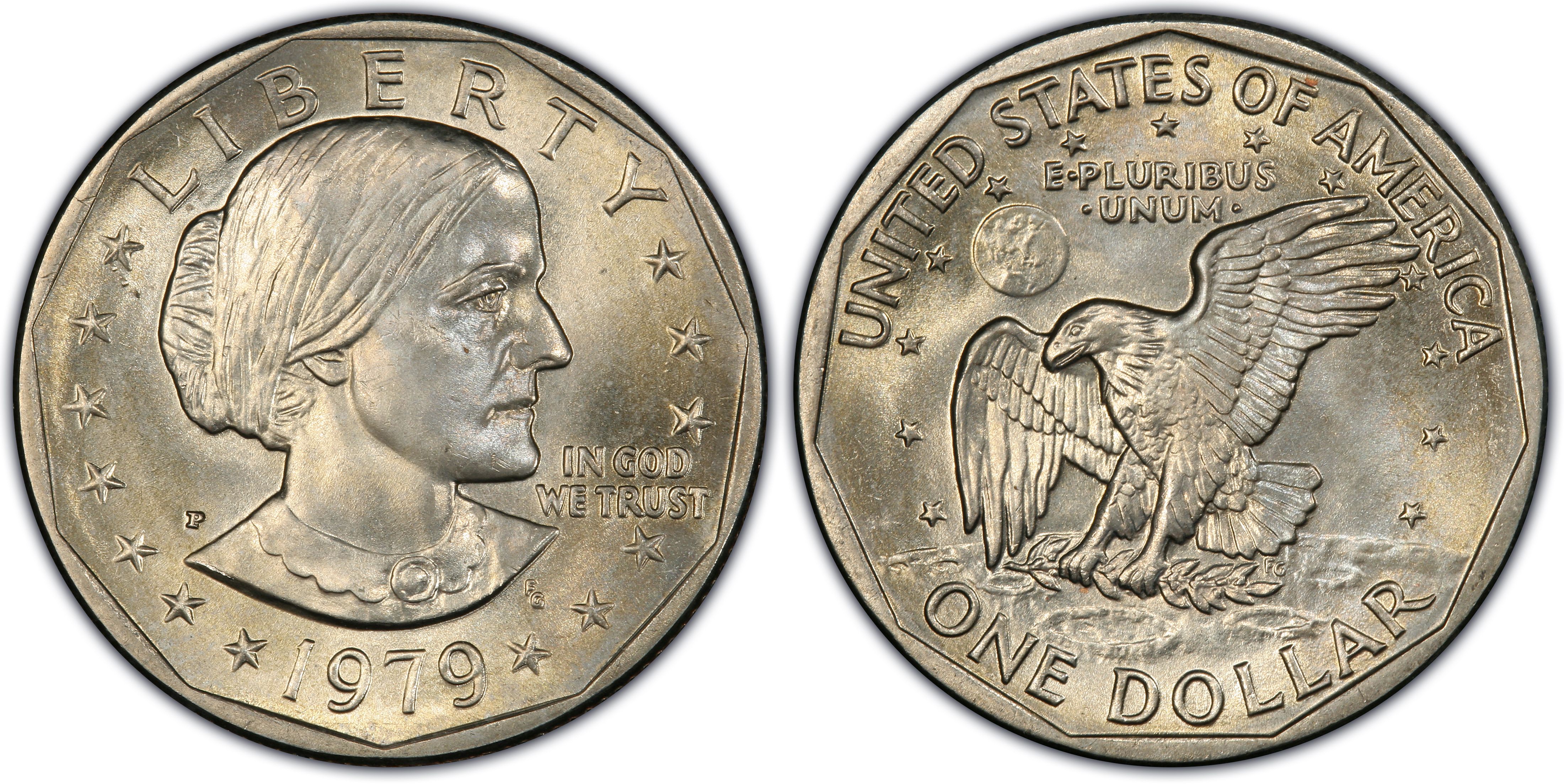
PCGS MS68
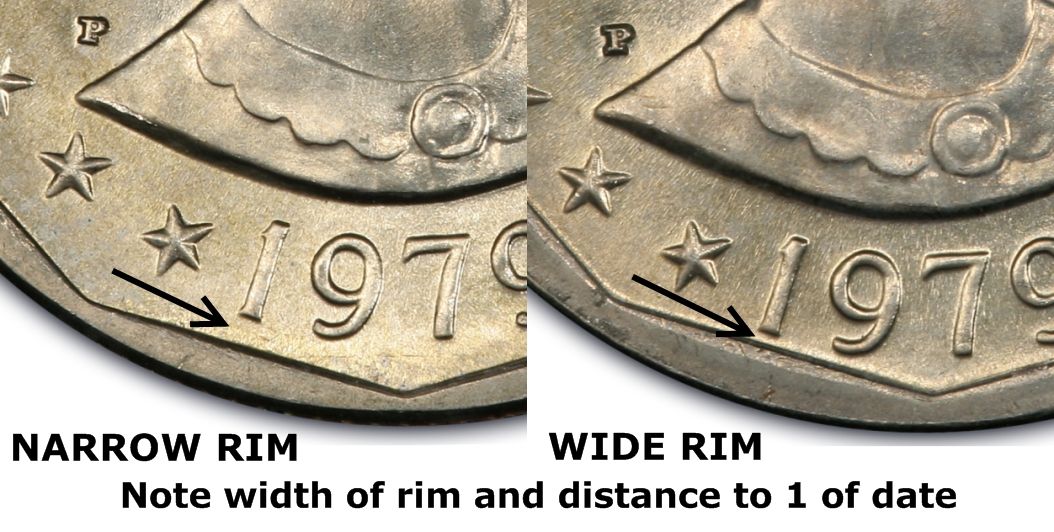
NARROW OR WIDE?

PCGS MS67+
- PCGS #:
- 9571
- Designer:
- Frank Gasparro
- Edge:
- Reeded
- Diameter:
- 26.50 millimeters
- Weight:
- 8.10 grams
- Mintage:
- 360,222,000
- Mint:
- Philadelphia
- Metal:
- 75% Copper, 25% Nickel over a pure Copper center
- Auction Record:
- $3,819 • MS65 • 01-08-2014 • Heritage Auctions
Rarity and Survival Estimates Learn More
| Survival Estimate | |
|---|---|
| All Grades | 342,500,000 |
| 60 or Better | 30,500,000 |
| 65 or Better | 1,650,000 |
| Numismatic Rarity | |
|---|---|
| All Grades | R-1.0 |
| 60 or Better | R-1.0 |
| 65 or Better | R-1.0 |
| Relative Rarity By Type All Specs in this Type | |
|---|---|
| All Grades | 2 / 12 TIE |
| 60 or Better | 5 / 12 TIE |
| 65 or Better | 11 / 12 TIE |
| Relative Rarity By Series All Specs in this Series | |
|---|---|
| All Grades | 2 / 12 TIE |
| 60 or Better | 5 / 12 TIE |
| 65 or Better | 11 / 12 TIE |
Condition Census What Is This?
|
#1 PCGS MS68
"The DRG Collection," GreatCollections, April 7, 2019, Lot 675354 - $5,288.63; "John Q Little SBAs Collection" (PCGS Set Registry). Pale golden hue. Light mark on the jaw near the ear. Small diagonal mark below star 7. |
|
#2 PCGS MS67+
Brian Garcia's "The Taco Collection" (PCGS Set Registry). |
 #2 PCGS MS67+
|
The 1979-P Susan B. Anthony Dollar
Of all the coins struck in the long history of the United States Mint, none received as much support in Washington only to be quickly abandoned as the Susan B. Anthony (SBA) Dollar.
Proclaimed the “Dollar of the Future” but later derided as the “Carter Quarter,” the Susan B. Anthony Dollar was born from President Jimmy Carter’s signature on October 10, 1978. While it enjoyed overwhelming bipartisan support in Congress, the small dollar coin project was plagued by ignored expert advice from the start.
A Failure by Design
In 1975, the Research Triangle Institute (RTI) recommended a small dollar to replace the bulky Eisenhower Dollar. However, several critical technical recommendations were ignored during production:
- Color & Texture: Experts advised a distinct color and edge to differentiate it from the quarter. Instead, the Mint used the same copper-nickel clad composition and a reeded edge.
- Shape: While an 11-sided coin was proposed, the vending industry lobbied for a round coin to avoid expensive machine refits. The Mint compromised by placing an 11-sided inner rim on a round planchet—a move that did little to help tactile recognition.
- Marketing: A recommended massive public awareness campaign never materialized, leaving the public confused when the coin debuted.
In 1976, Federal Reserve Governor Phillip E. Coldwell supported the coin, seeing a savings of more than $4.5 million over the Eisenhower Dollar, and perhaps more, if they replaced the $1 bill.
Rejecting Allegory: A Political Shift
The SBA Dollar was the first circulating U.S. coin to feature a non-mythical woman. However, this shift was not the original plan.
The Treasury originally proposed an allegorical Liberty based on the 1793 Liberty Cap Cent. Chief Engraver Frank Gasparro even prepared models for this "Liberty" dollar; however, Representative Mary Rose Oakar (D-OH) pushed for a likeness of Susan B. Anthony, arguing that women deserved a place in the "Great Men" tradition of U.S. coinage. Oaker's bill garnered support from a number of high-profile women's groups, including the League of Women Voters, Daughters of the American Revolution, the National Organization for Women, and the American Association for University Women. Eventually, Gasparro also voiced his support for the design change.
Opposing the shift was Treasury Secretary W. Michael Blumenthal, who argued against the "politization" of the coin. He suggested that no woman's accomplishments had yet reached a level of historical importance comperable to the presidency.
The design itself was famously influenced by a request for "realism." When Anthony’s niece suggested Gasparro’s initial sketches were "too pretty," the Commission of Fine Arts urged him to depict the suffragette with a more stern, aged appearance—a decision some believe contributed to the coin’s lack of public appeal.
The 1979-P Susan B. Anthony Dollar: Rim Varieties
There are two distinct rim styles for the 1979-P dollar, one of which carries a substantial premium: the scarce Wide Rim (Near Date) and the common Narrow Rim (Far Date).
- Wide Rim: The date is positioned very close to the rim, which is thick and rounded.
- Narrow Rim: There is a significant gap between the date and the rim; the rim itself is thin and sharp.
* * *