1949 1C, BN (Regular Strike)
Series: Lincoln Cents 1909-1958
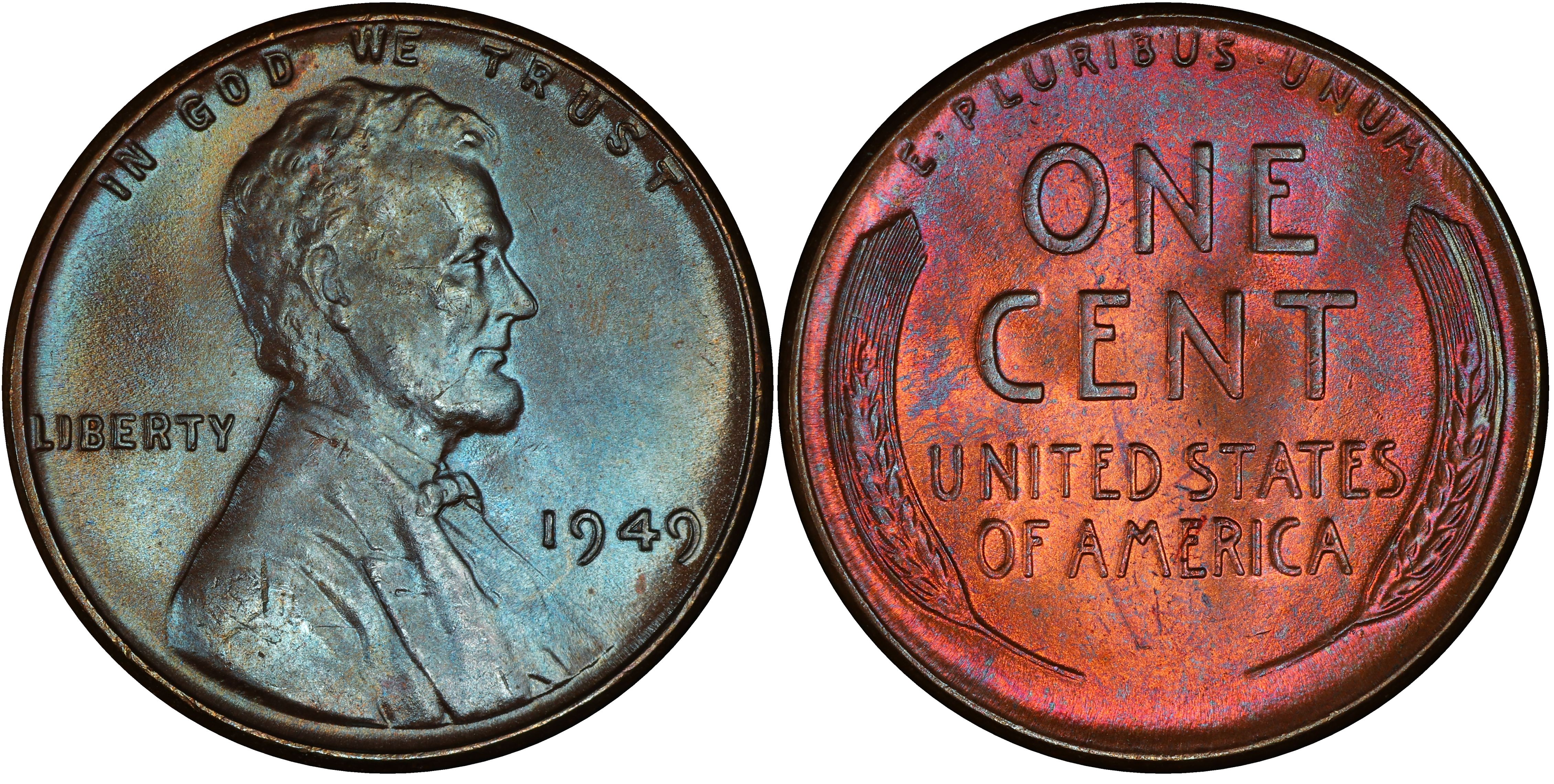
PCGS MS66BN
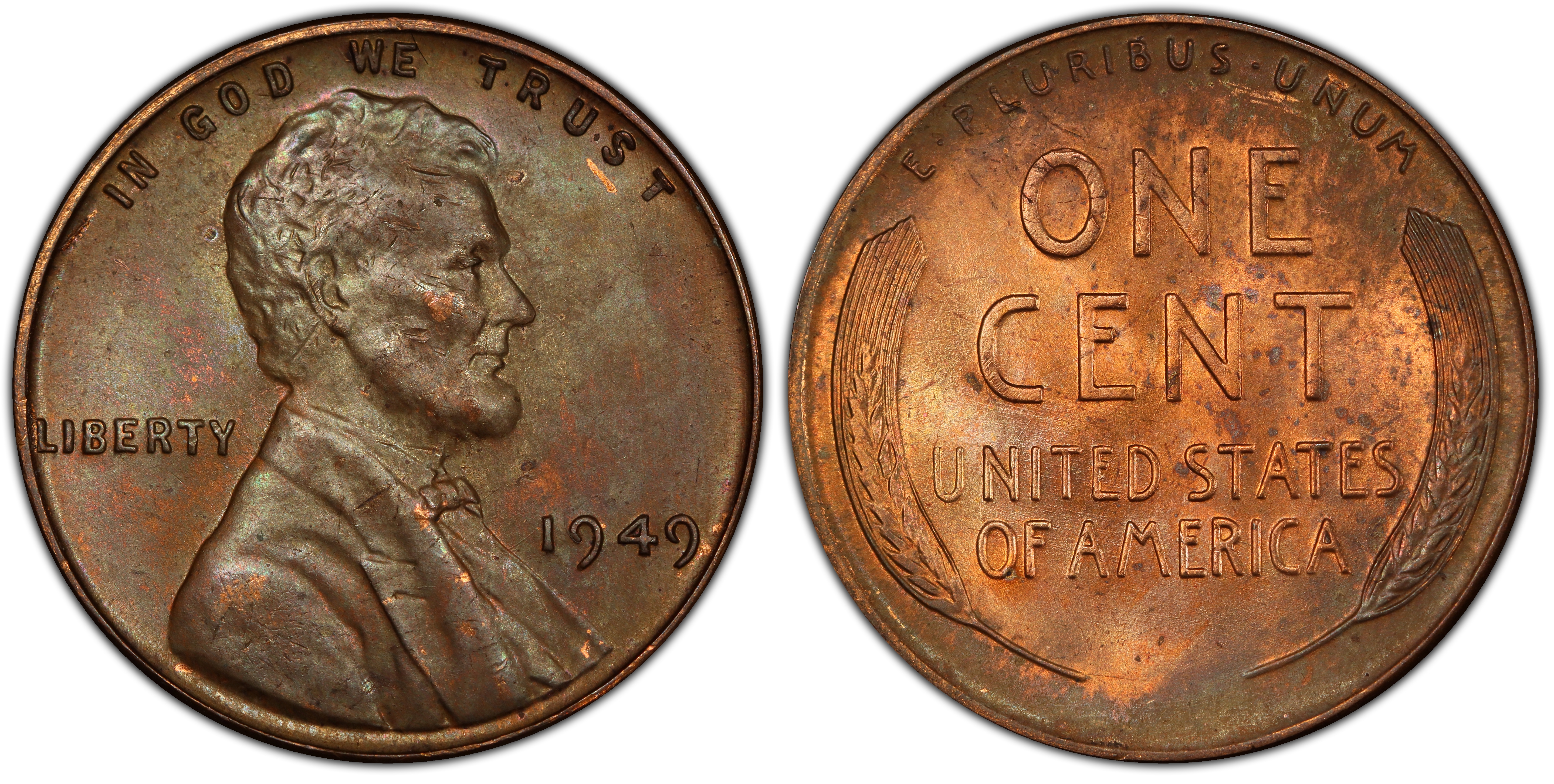
PCGS MS65BN
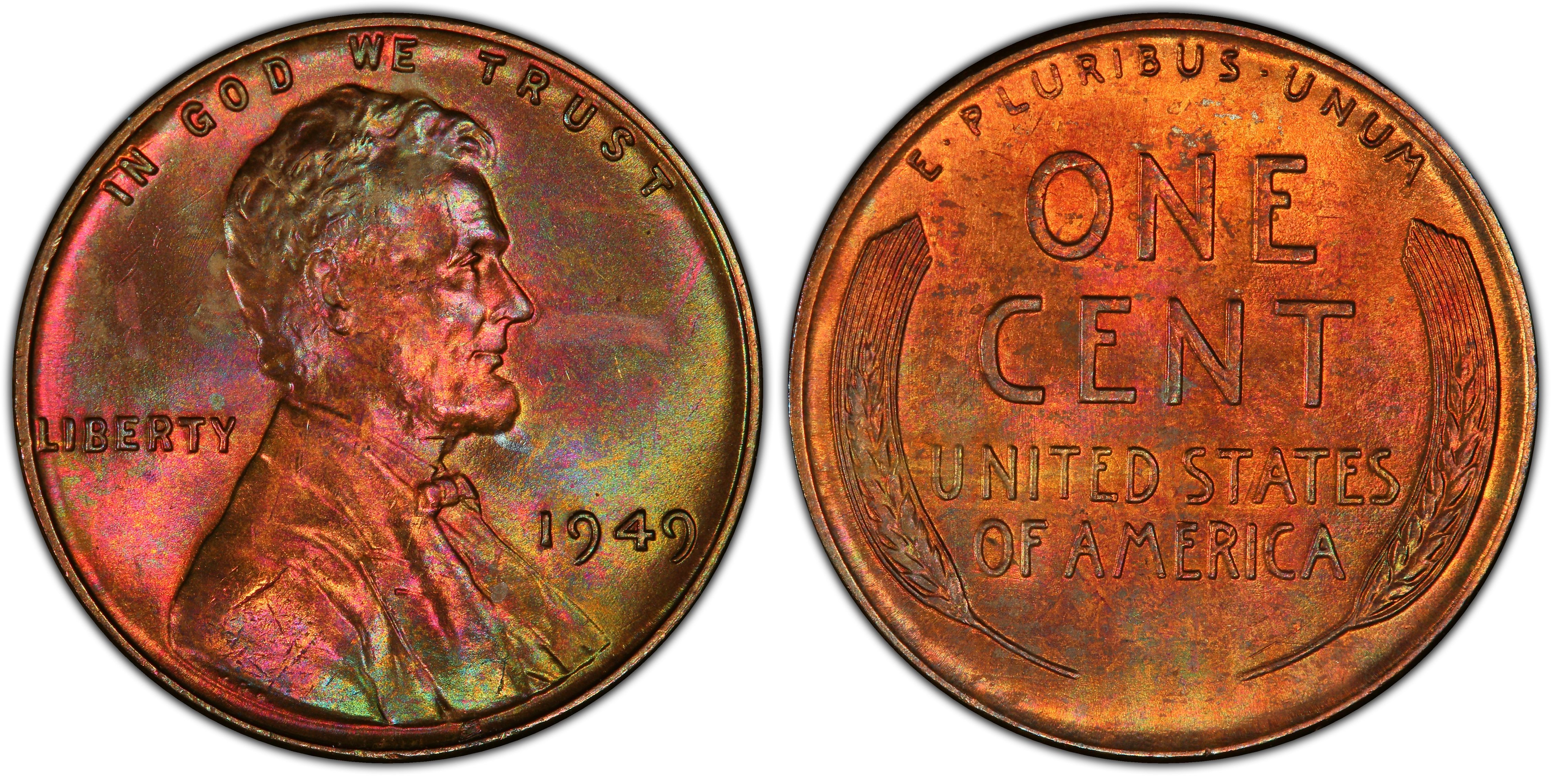
PCGS MS65BN
- PCGS #:
- 2768
- Designer:
- Victor David Brenner
- Edge:
- Plain
- Diameter:
- 19.00 millimeters
- Weight:
- 3.11 grams
- Mintage:
- 217,775,000
- Mint:
- Philadelphia
- Metal:
- 95% Copper, 5% Tin and Zinc
- Auction Record:
- $1,495 • XF45 • 09-18-2006 • Heritage Auctions
Rarity and Survival Estimates Learn More
| Survival Estimate | |
|---|---|
| All Grades | 21,000,000 |
| 60 or Better | 5,000 |
| 65 or Better | 2,500 |
| Numismatic Rarity | |
|---|---|
| All Grades | R-1.0 |
| 60 or Better | R-4.0 |
| 65 or Better | R-4.5 |
| Relative Rarity By Type All Specs in this Type | |
|---|---|
| All Grades | 26 / 143 TIE |
| 60 or Better | 67 / 143 TIE |
| 65 or Better | 57 / 143 TIE |
| Relative Rarity By Series All Specs in this Series | |
|---|---|
| All Grades | 29 / 146 TIE |
| 60 or Better | 69 / 146 TIE |
| 65 or Better | 57 / 146 TIE |
Condition Census What Is This?
|
#1 PCGS MS66BN
|
|
#2 PCGS MS65BN
"The Lincolncentman Collection" (PCGS Set Registry). |
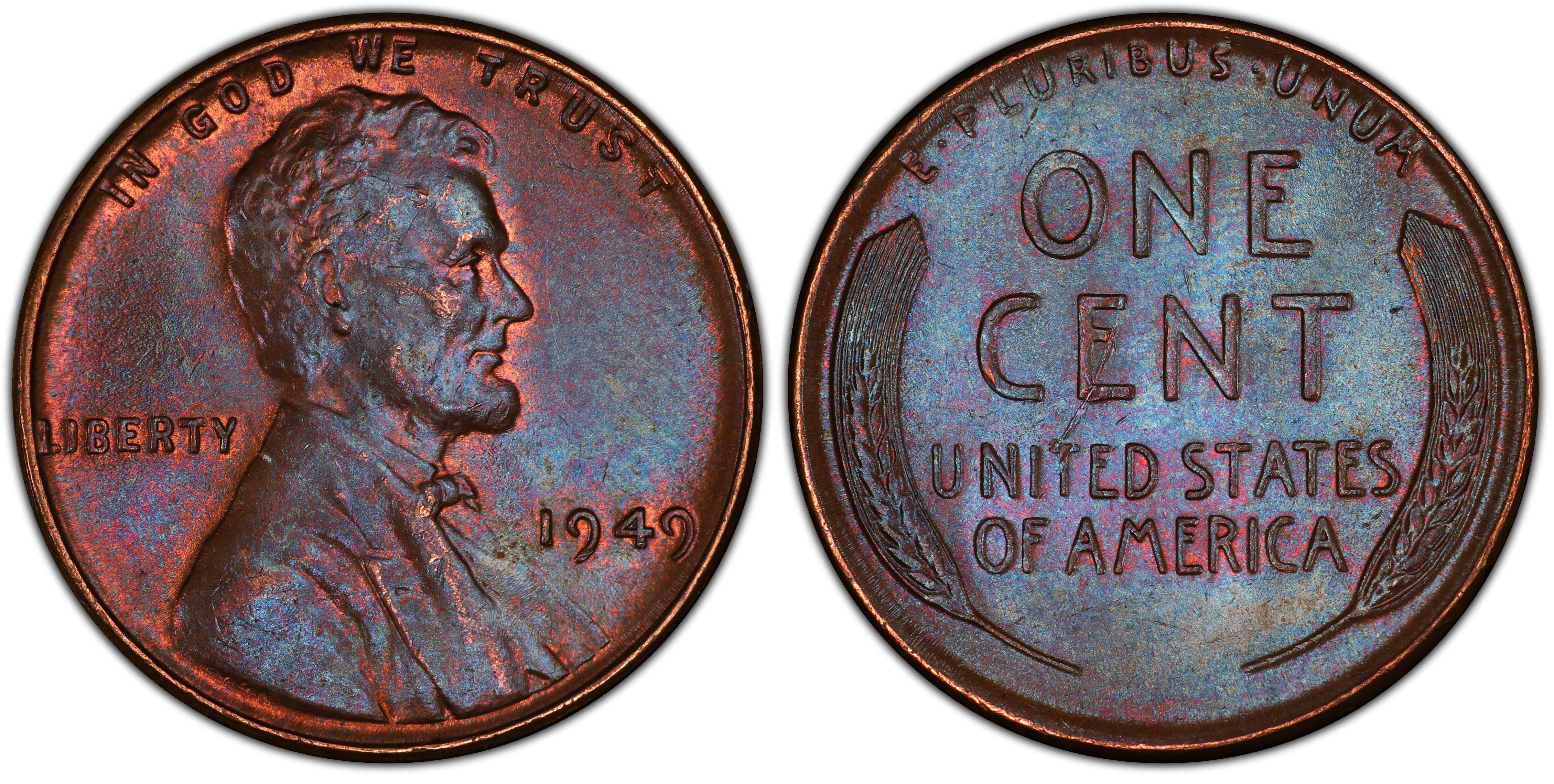 #2 PCGS MS65BN
"The Texas Collection" (PCGS Set Registry). |
|
#2 PCGS MS65BN
"The Lincolnfetti Collection" (PCGS Set Registry). |
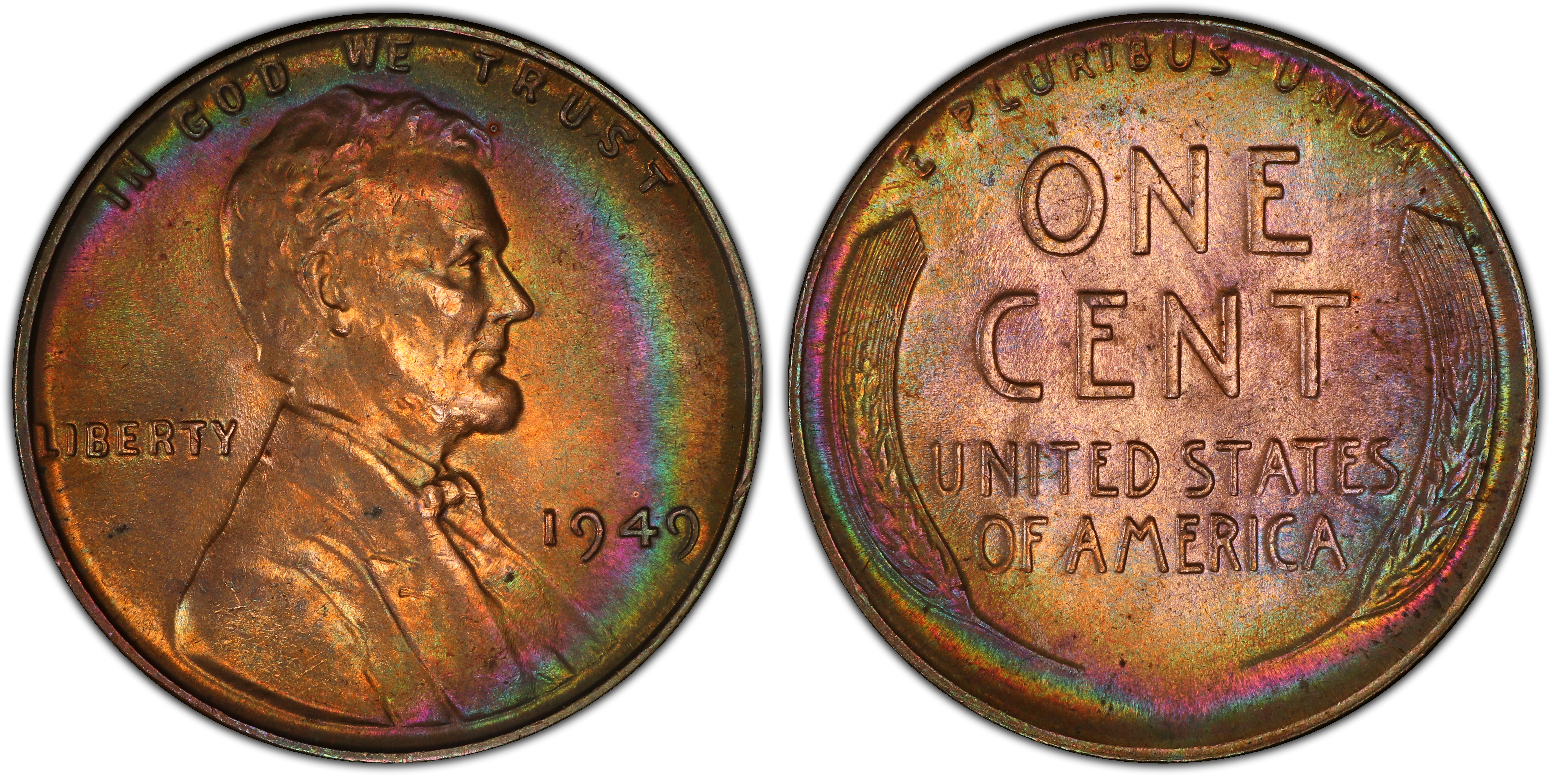 #2 PCGS MS65BN
|
The 1949 Lincoln Cent
Despite the country experiencing a mild economic downturn, the Philadelphia Mint produced a robust mintage of 217,775,000 1949 Lincoln Cents (BN #2770), making this date highly accessible issue for collectors. However, unlike its San Francisco and Denver counterparts, the Philadelphia Mint produced remarkably well-struck pieces with sharp details this year.
A notable quirk of this issue is the prevalence of a dark, web-like carbon staining often referred to as "cobwebbing." Mostly seen on Lincoln cents struck between 1949 and 1952, this staining is believed to stem from an unidentified chemical cleaning treatment applied to the blank planchets prior to coining. Unlike the unsightly white "milk spots" that frequently plague modern American Silver Eagles, this carbon staining typically affected entire original rolls of cents rather than isolated coins. If you are hunting for brilliant, untarnished red examples, finding a clean roll from these years can be a challenge.
Collecting the 1949 Lincoln Cent
Post-war Lincoln Wheat cents circulated for decades after they left the mint, gradually dwindling in number due to normal attrition and the massive influx of modern Lincoln Memorial cents. Even today, it wouldn’t be unusual to find a 1949 cent hiding in everyday pocket change, tucked away in an old penny jar, or waiting to be discovered while roll-hunting.
A Note from the Field: Around the year 2000, I conducted a circulation survey by withdrawing $100 in cent rolls from an Armed Forces Bank branch in Arizona. The results were telling: I managed to assemble partial rolls of many later-date "Wheaties" and even pulled About Good to Good examples dating all the way back to the 1910s (mostly 1919-P). Clearly, Philadelphia-minted Wheat cents remained active in Western circulation for generations.
The Mint State Market
While collecting these worn, circulated coins is a time-honored tradition in the hobby, the market shifts dramatically for collectors chasing Mint State examples. Up through the PCGS MS66RD tier, the 1949 cent behaves like a typical, readily available 1940s issue. However, once you cross into PCGS MS67RD, the survivor population plummets sharply. Because no example has ever been certified finer than PCGS MS67+RD, competition in this elite segment is fierce. Consequently, PQ specimens boasting pristine, lustrous surfaces with minimal spotting command extraordinary market premiums.
* * *