1884 10C (Regular Strike)
Series: Liberty Seated Dimes 1837-1891
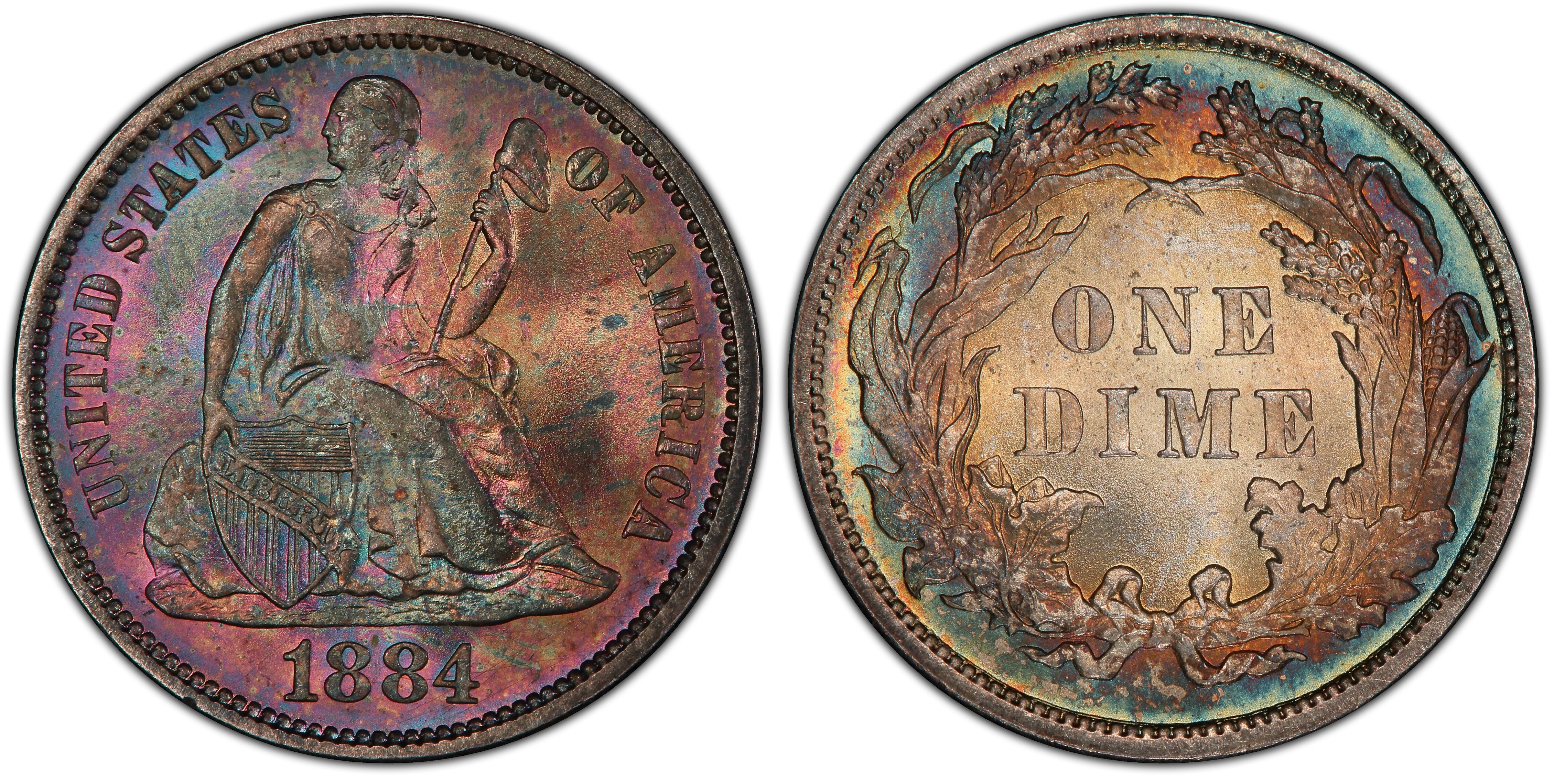
PCGS MS68

PCGS MS67+
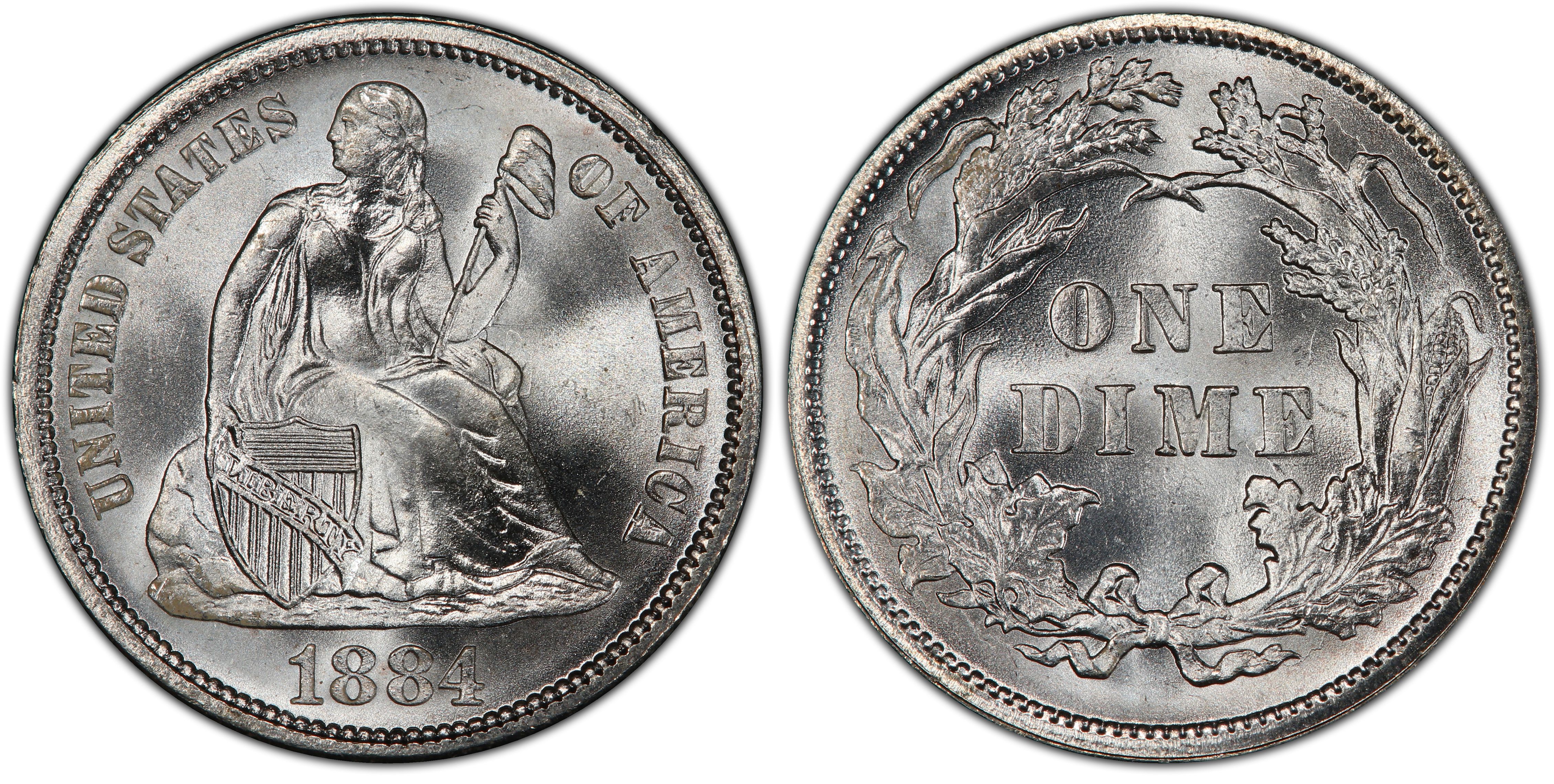
PCGS MS67+
- PCGS #:
- 4692
- Designer:
- James Barton Longacre
- Edge:
- Reeded
- Diameter:
- 17.90 millimeters
- Weight:
- 2.50 grams
- Mintage:
- 3,365,505
- Mint:
- Philadelphia
- Metal:
- 90% Silver, 10% Copper
- Auction Record:
- $17,250 • MS68 • 06-01-2002 • Heritage Auctions
Major Varieties
- 1884 10C
Rarity and Survival Estimates Learn More
| Survival Estimate | |
|---|---|
| All Grades | 3,500 |
| 60 or Better | 600 |
| 65 or Better | 120 |
| Numismatic Rarity | |
|---|---|
| All Grades | R-4.3 |
| 60 or Better | R-5.8 |
| 65 or Better | R-7.8 |
| Relative Rarity By Type All Specs in this Type | |
|---|---|
| All Grades | 57 / 67 TIE |
| 60 or Better | 58 / 67 TIE |
| 65 or Better | 56 / 67 |
| Relative Rarity By Series All Specs in this Series | |
|---|---|
| All Grades | 111 / 122 TIE |
| 60 or Better | 112 / 122 TIE |
| 65 or Better | 105 / 122 |
Condition Census What Is This?
|
#1 MS68 PCGS grade
Goldbergs 1/2015:1200, $13,512.50 |
|
#1 MS68 PCGS grade
Stack's/Bowers 11/2012:3081, not sold - Stack's/Bowers 3/2013:2032, $17,038 |
 #3 MS67 PCGS grade
|
| #3 MS67 PCGS grade |
| #3 MS67 PCGS grade |
| #3 MS67 PCGS grade |
| #3 MS67 PCGS grade |
| #3 MS67 PCGS grade |
| #3 MS67 PCGS grade |
| #3 MS67 PCGS grade |
In 1884, as in the previous five years, only the Philadelphia Mint produced Dimes. The mintage dropped to 3,365,505 -- less than half that of 1883 -- yet the 1884 Dime is still a common coin. In Mint State, collectors are most likely to encounter an MS63 or an MS64, with slightly fewer pieces appearing in MS62 and MS65. Even Gems are relatively common, as evidenced by a PCGS CoinFacts Condition Census that consists entirely of MS67 examples with a pair of MS68's at the top end. The 1884 Dime usually comes well struck, with frosty to brilliant luster.
Dime researcher Gerry Fortin has identified 11 die pairs for this date. However, one of those pairs was used to strike only Proofs, which is in variance with preceding years, where Proof dies were sometimes used to strike coins for circulation.