1953 50C (Proof)
Series: Franklin Half Dollars 1950-1963

PCGS PR68

PCGS PR68
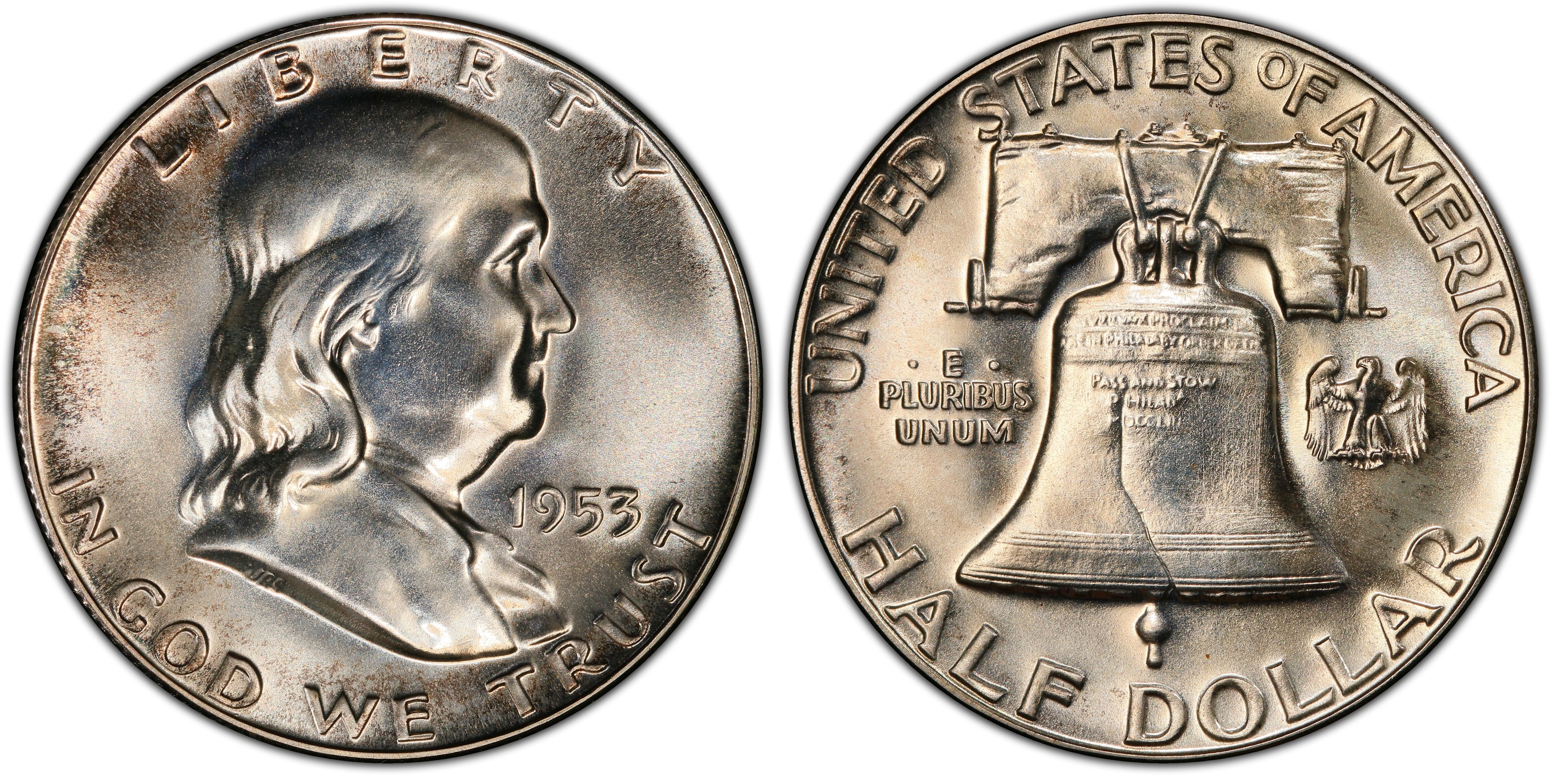
PCGS PR68
- PCGS #:
- 6694
- Designer:
- John R. Sinnock/John Frederick Lewis
- Edge:
- Reeded
- Diameter:
- 30.00 millimeters
- Weight:
- 12.50 grams
- Mintage:
- 128,800
- Mint:
- Philadelphia
- Metal:
- 90% Silver, 10% Copper
- Auction Record:
- $9,000 • PR69 • 10-24-2019 • Heritage Auctions
Rarity and Survival Estimates Learn More
| Survival Estimate | |
|---|---|
| All Grades | 90,000 |
| 60 or Better | 90,000 |
| 65 or Better | 15,000 |
| Numismatic Rarity | |
|---|---|
| All Grades | R-2.1 |
| 60 or Better | R-2.1 |
| 65 or Better | R-2.9 |
| Relative Rarity By Type All Specs in this Type | |
|---|---|
| All Grades | 6 / 16 |
| 60 or Better | 7 / 16 TIE |
| 65 or Better | 3 / 16 TIE |
| Relative Rarity By Series All Specs in this Series | |
|---|---|
| All Grades | 6 / 16 |
| 60 or Better | 7 / 16 TIE |
| 65 or Better | 3 / 16 TIE |
Condition Census What Is This?
| #1 PCGS PR69 |
 #2 PCGS PR68
|
|
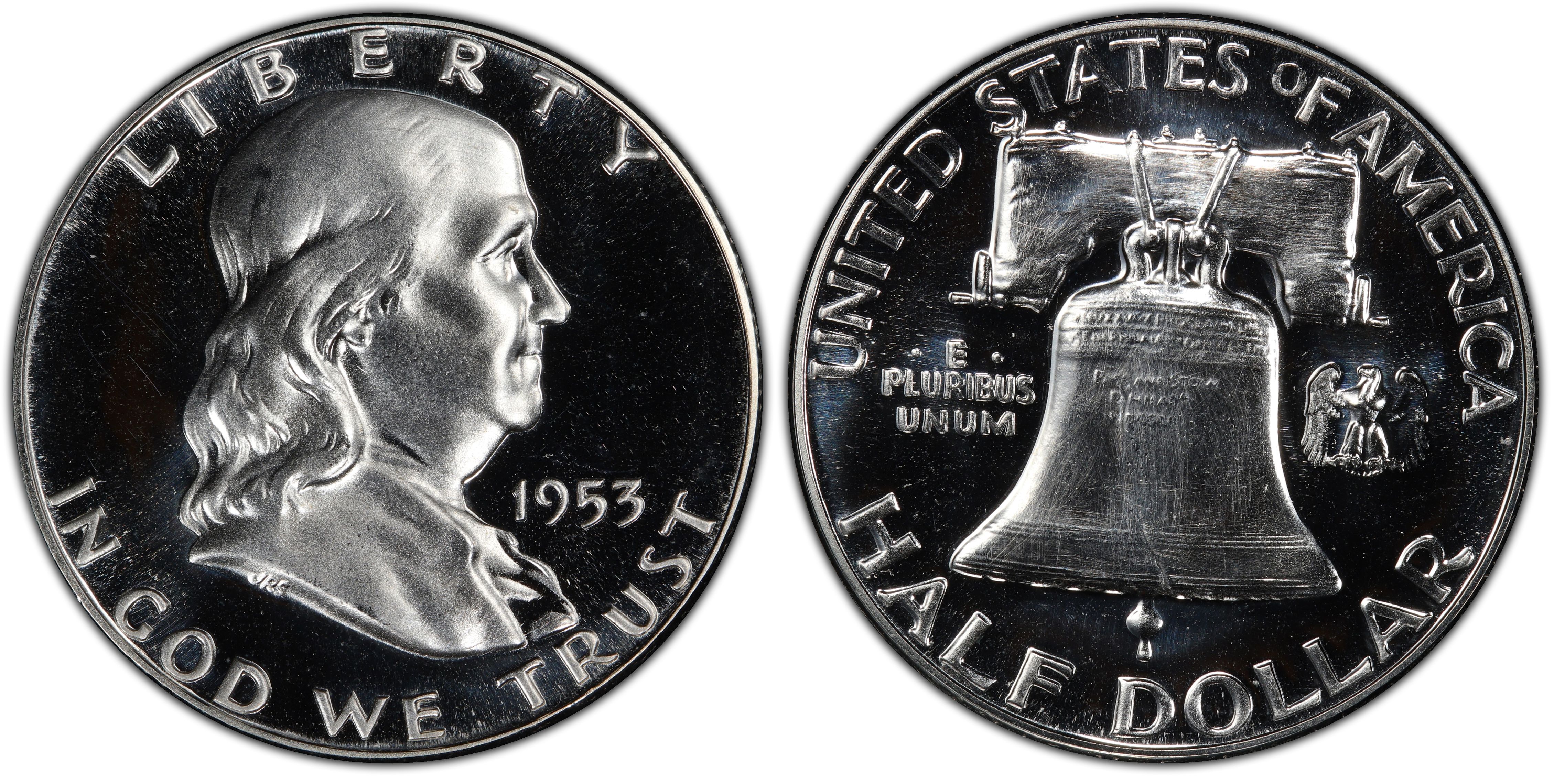
#2 PCGS PR68
GreatCollections, October 11, 2020, Lot 889867 - $1,406.25. |
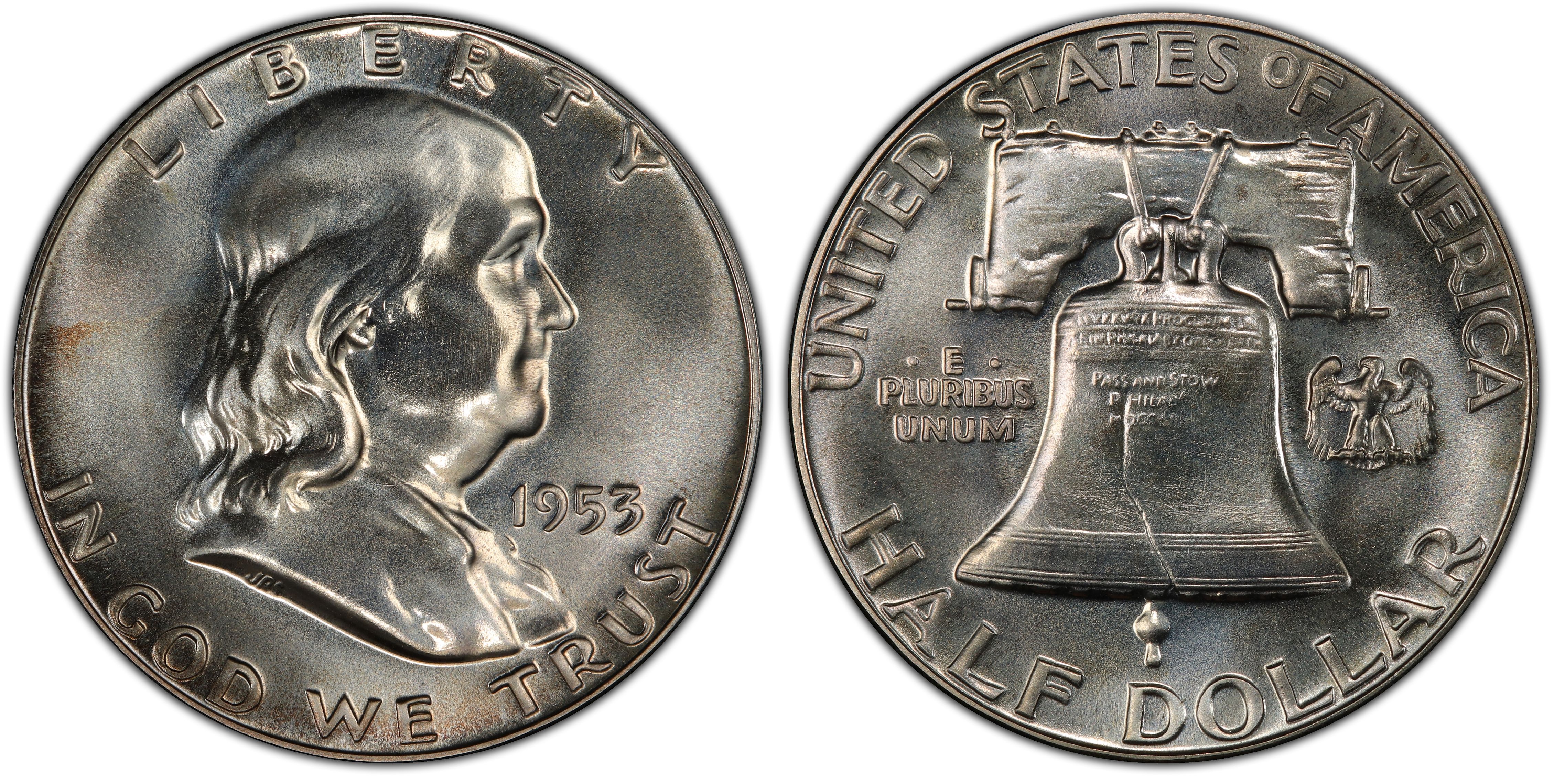 #2 PCGS PR68
GreatCollections, July 26, 2020, Lot 630725 - $1,192.50. |
| #2 PCGS PR68 |
 #2 PCGS PR68
GreatCollections, September 23, 2018, Lot 623712 - $1,753.88. |
|
#2 PCGS PR68
GreatCollections, July 8, 2018, Lot 598016 - $1,866.38. |
| #2 PCGS PR68 |
| #2 PR68 PCGS grade |
| #2 PR68 PCGS grade |
The 1953 Franklin Half Dollar Proof
When the United States Mint resumed Proof coinage production in 1950 - two years after the debut of the Franklin Half Dollar - it sparked an unprecedented collector craze. By 1953, demand for annual Proof Sets had surged by over 150%. By the time the ordering window closed, the Philadelphia Mint had produced exactly 128,800 sets.
This early-decade jump in demand presaged a massive coin boom that would peak first in 1964 with the inaugural release of the Kennedy Half Dollar, and again in 1976 with the blockbuster release of the Bicentennial Proof Sets.
As for the rest of the Franklin Half Dollar's Proof run, 1953 represents the final chapter of the ultra-scarce early period. While its Cameo and Deep Cameo survivors are slightly more numerous than the extremely tough 1950–1952 issues (largely due to the increased mintage), they remain fiercely elusive. True relief for Cameo hunters wouldn't arrive until the Mint reworked the dies in 1956, meaning pristine, heavily frosted 1953 gems still command intense competition and massive market premiums today.
Design Backstory: Rejection by the CFA
Did You Know? Both the obverse and reverse designs of the Franklin half dollar were flatly rejected by the United States Commission of Fine Arts (CFA). The commission disliked the heavy realism of Benjamin Franklin’s bust and argued that the tiny eagle next to the Liberty Bell was "unworthy" of a major US coin.
Fortunately, the Treasury Department had the final say. They ignored the CFA's recommendations and pushed the design into production anyway. Decades later, history has proven the Treasury right: the Franklin Half Dollar's clean, mid-century simplicity has made it a classic of modern American numismatics, with frosted Cameo Proofs standing as some of the most beautiful coins ever struck by the US Mint.
Production Pains
As the Philadelphia Mint rushed to scale up production in the early 1950s, quality control suffered. The 1953 Proof Franklin Half Dollar (#6694), in particular, was plagued by over-polished dies and clumsy re-engraving.The most notorious example of this is on the reverse: on many specimens, the small eagle to the right of the Liberty Bell was over-polished to the point of fading, then poorly re-engraved, resulting in bizarre, unnatural-looking details.
* * *